Inspiration
Small and medium businesses run on machines that are decades old. The knowledge of how to fix them is in manuals nobody can find, and in one person's head. When that person is away, or the machine fails, nobody knows what to do. These businesses can't afford a big IT team or a full replacement.
We wanted a simple tool that helps them keep what they already have running, because repairing and adapting is better than scrapping and buying new.
What it does
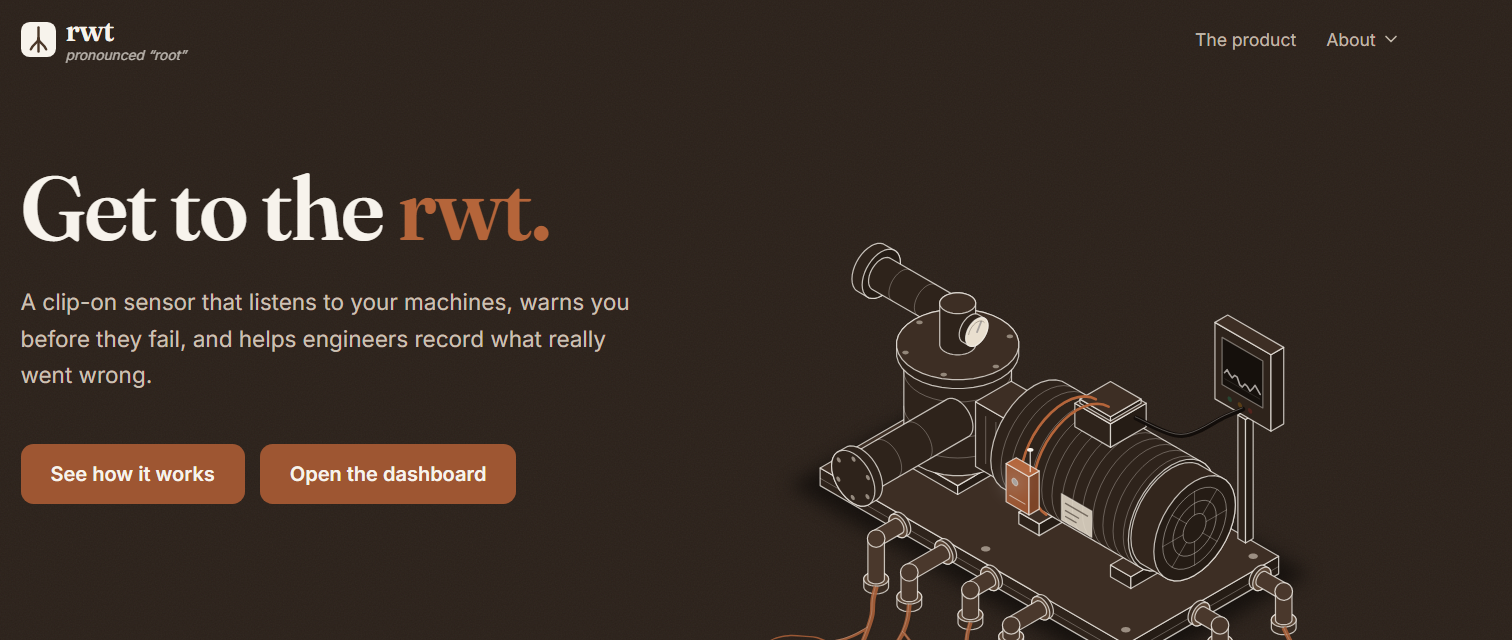
Rwt is a repair assistant that learns from every fix.
- You add a machine, and Rwt searches the web for its manual.
- When something goes wrong, you describe it. An AI assistant reads the manual, the machine's past repairs and its latest sensor readings. It then suggests what to check, how likely each cause is, and which parts to buy.
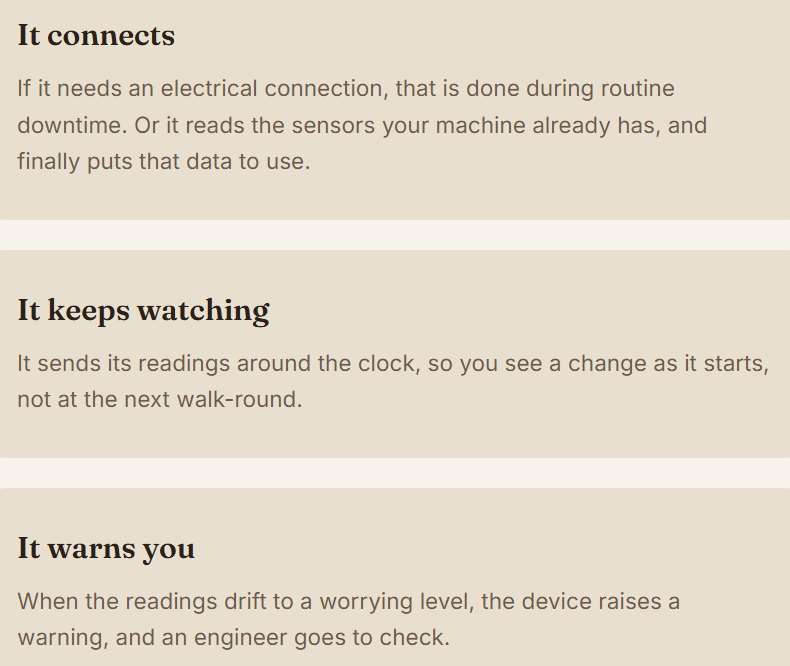
- A small, optional sensor sends live readings. We demo it with a temperature sensor in a grain silo. If the temperature gets too high, the app raises a warning and, for our demo silo, sends an email.
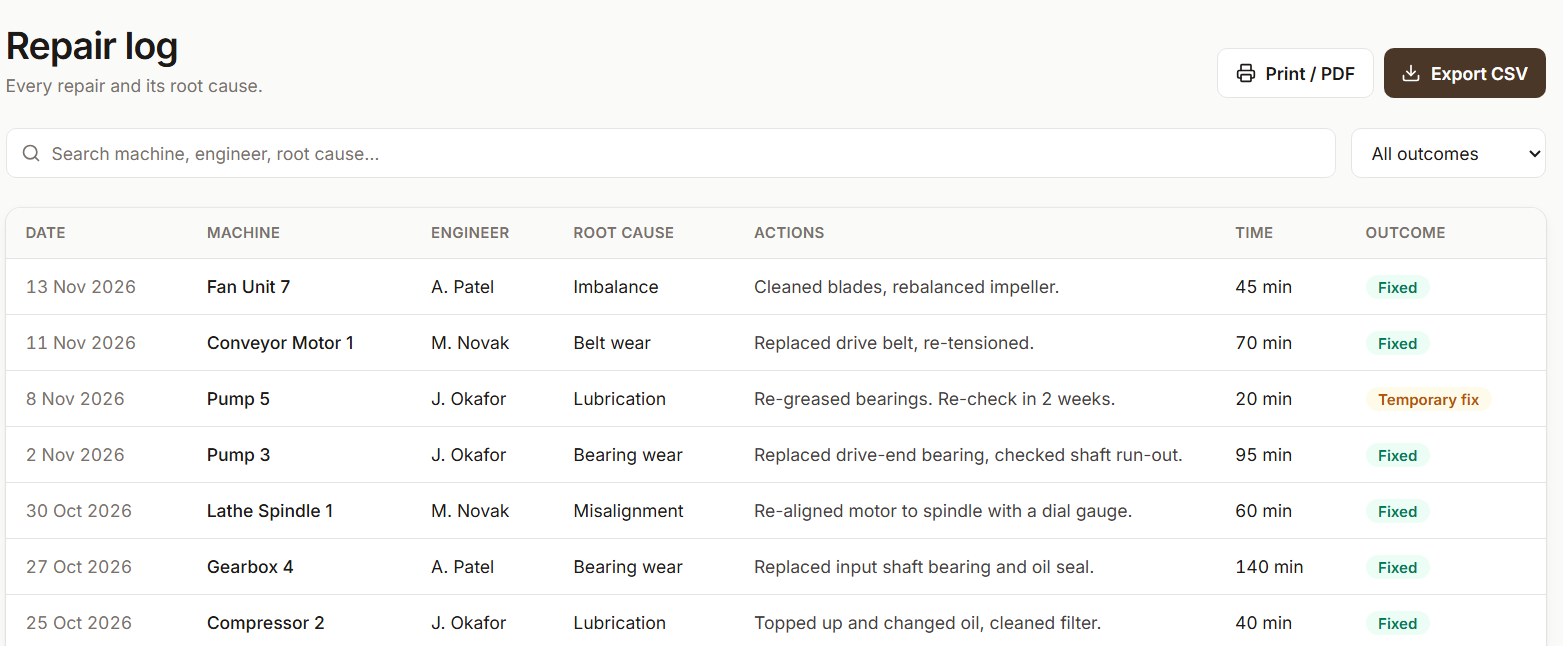
- When someone fixes the problem, they log the cause. The next answer is better because of it.
How we built it
- The website: React, Vite and Tailwind CSS, with isometric illustrations from the Hairline library
- Data and sign-in: Supabase, so each person only sees their own machines
- AI and manuals: Claude gives the repair advice, and Firecrawl finds manuals and shop listings for parts
- Email alerts: Resend
- Sensor: an ESP32 board with a temperature sensor (optional)
- How we worked: we split the work between the app and the back end. The front end was built with AI help from Claude Code.
Challenges we ran into
- Changing direction mid-project: we started with machine diagnosis and moved towards grain storage, so the pages and wording had to change with it.
- Joining the pieces: the website and the back end were built separately, and merging them meant fixing conflicts without losing each other's work.
- Keeping the story honest: we kept checking that what the pages say matches what the code does.
- Making it feel simple: the app is for people who aren't technical, so we cut or reworded anything that needed explaining.
Accomplishments that we're proud of
- A working path from "something's wrong" to AI advice and a logged repair
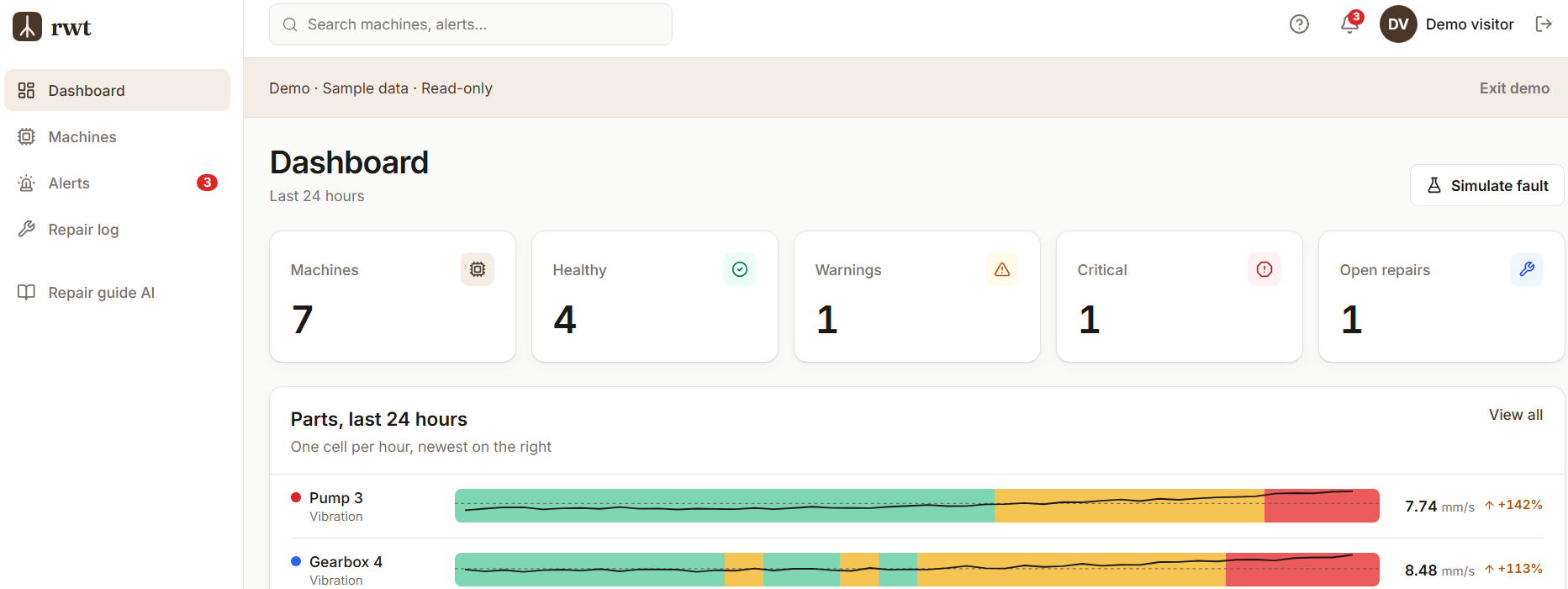
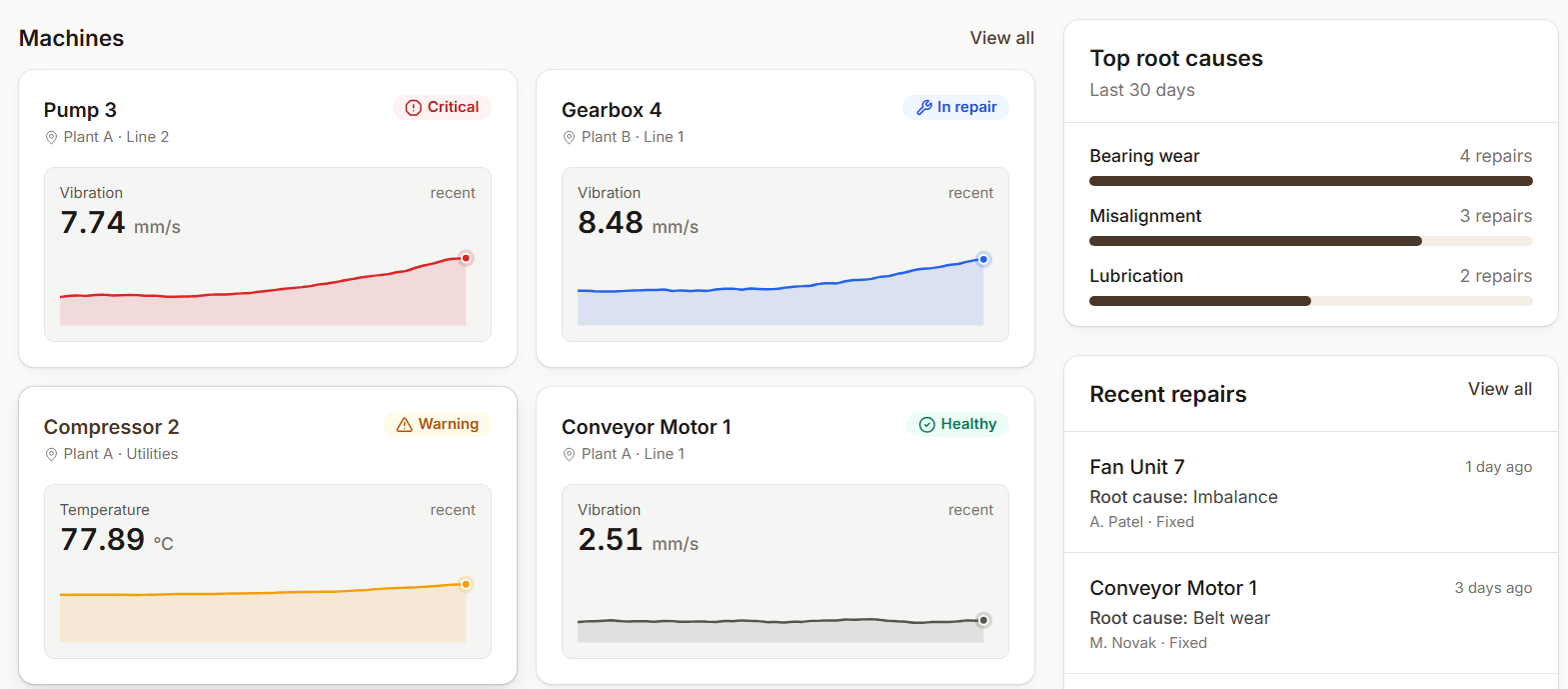
- A calm, clear dashboard that shows how every part has behaved over the last 24 hours, not only when it breaks
- A first-login tour that points at the real menu, so new users aren't lost
- A sensor that can warn you by email before the grain spoils
What we learned
- Small businesses need clear next steps, not more data.
- Being honest about what is a demo and what is real builds trust.
- Splitting the front end and back end works if you agree early on where they meet.
- Every repair people record is valuable, because it becomes better advice for the next person.
What's next for rwt
*Sleep, Sleep and Sleep for now atleast
