-
-
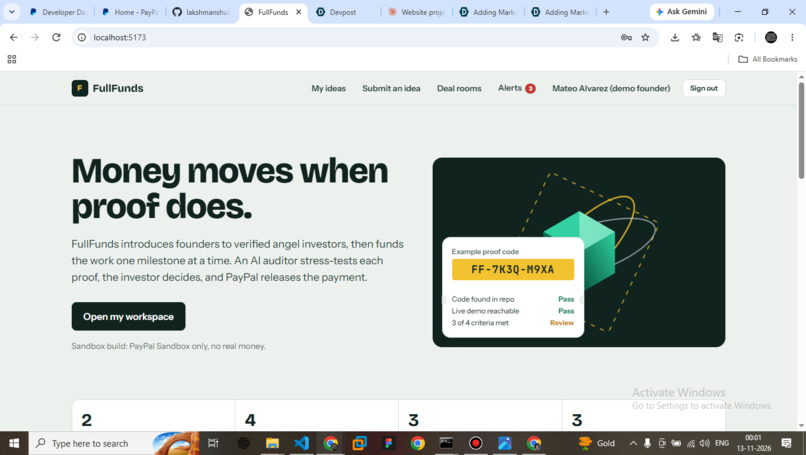
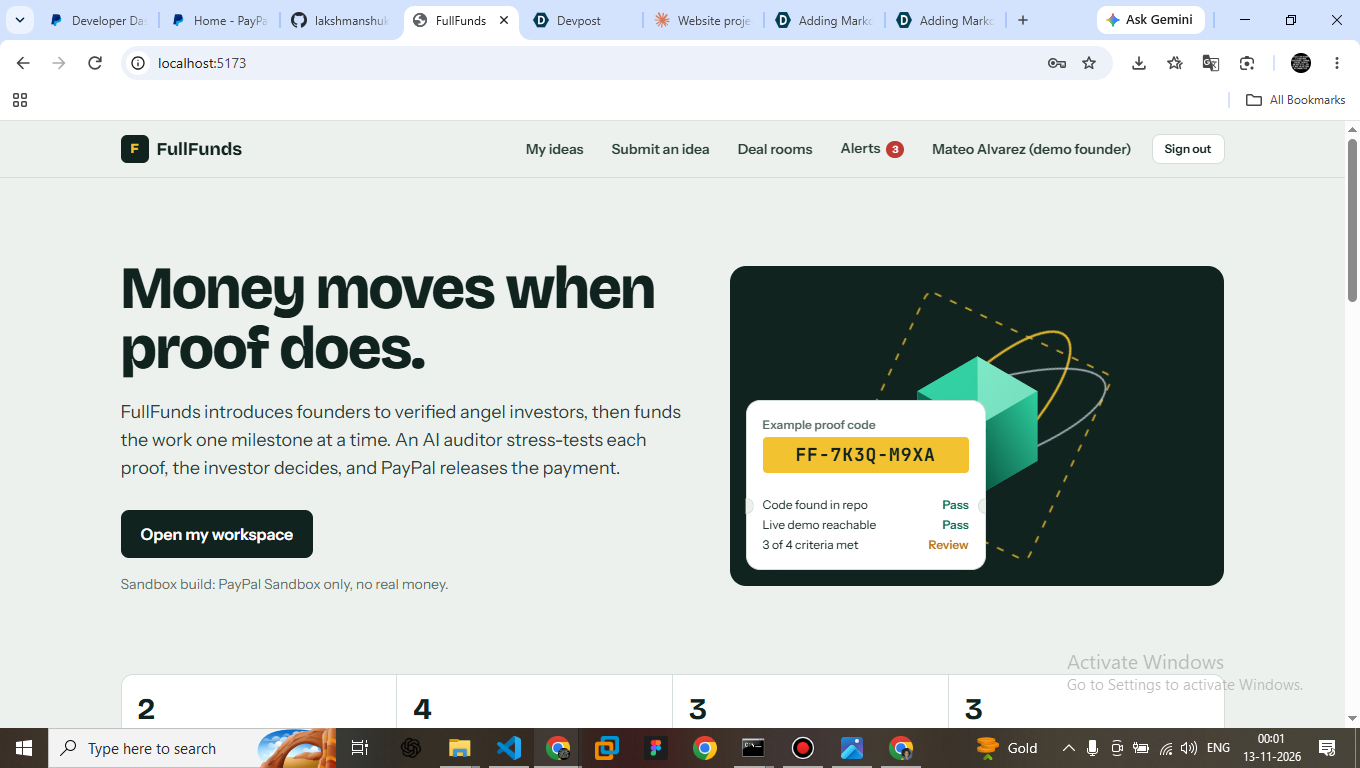
Landing Page
-
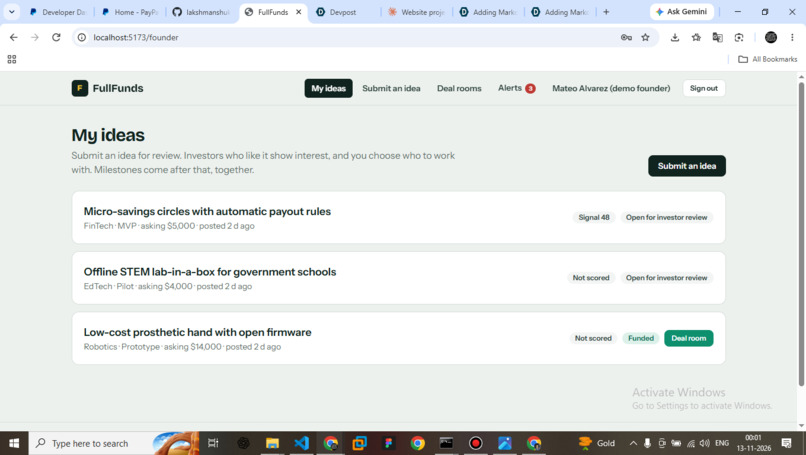
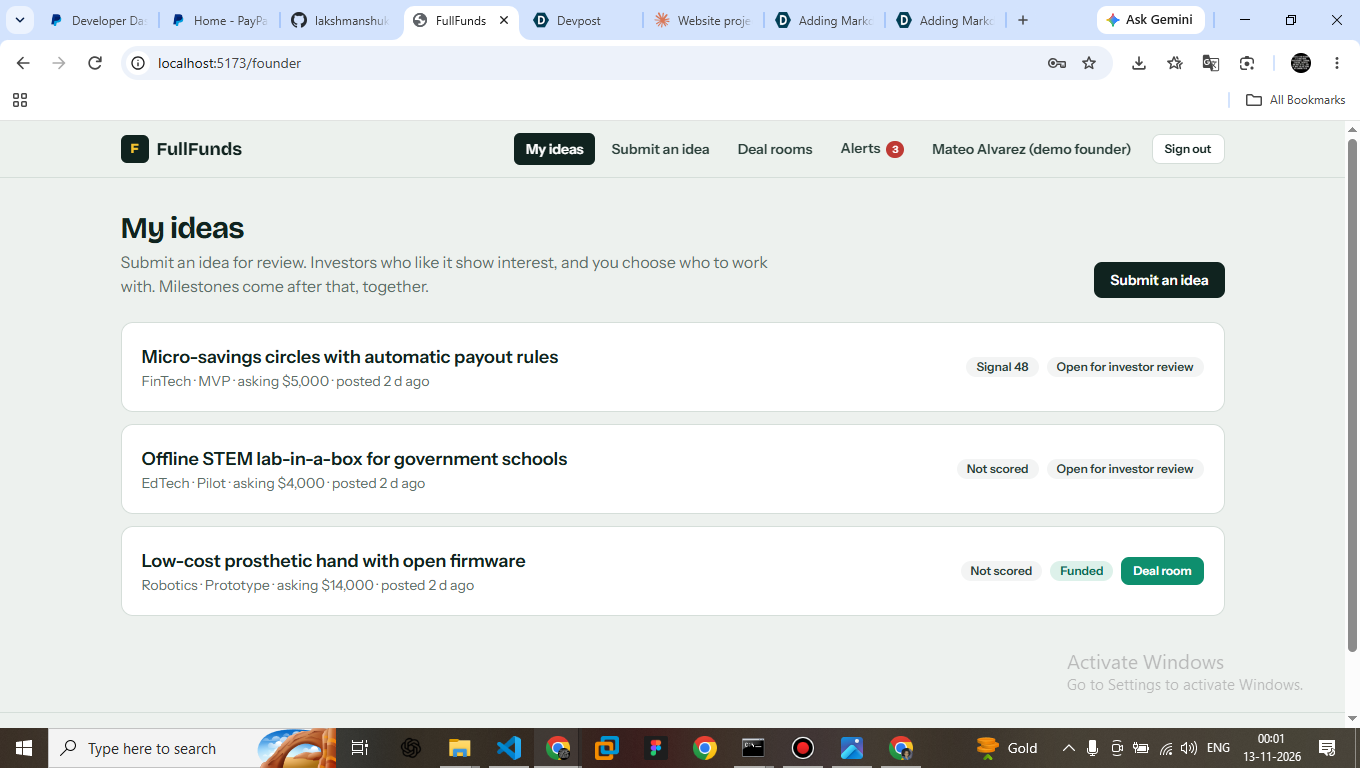
Ideas listed by founders
-
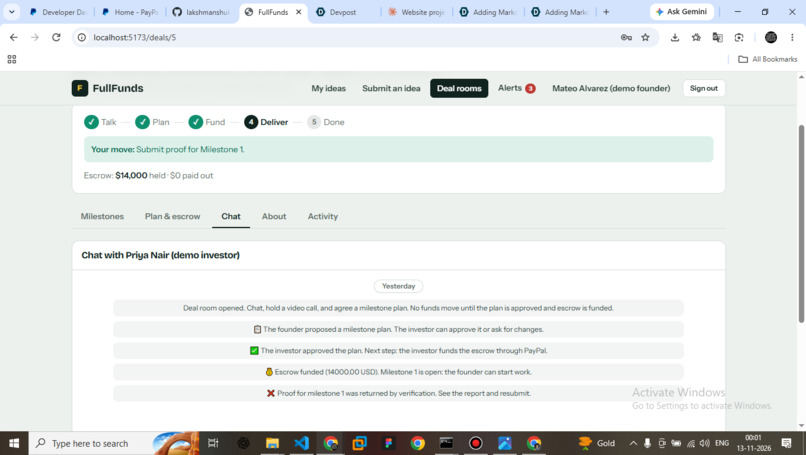
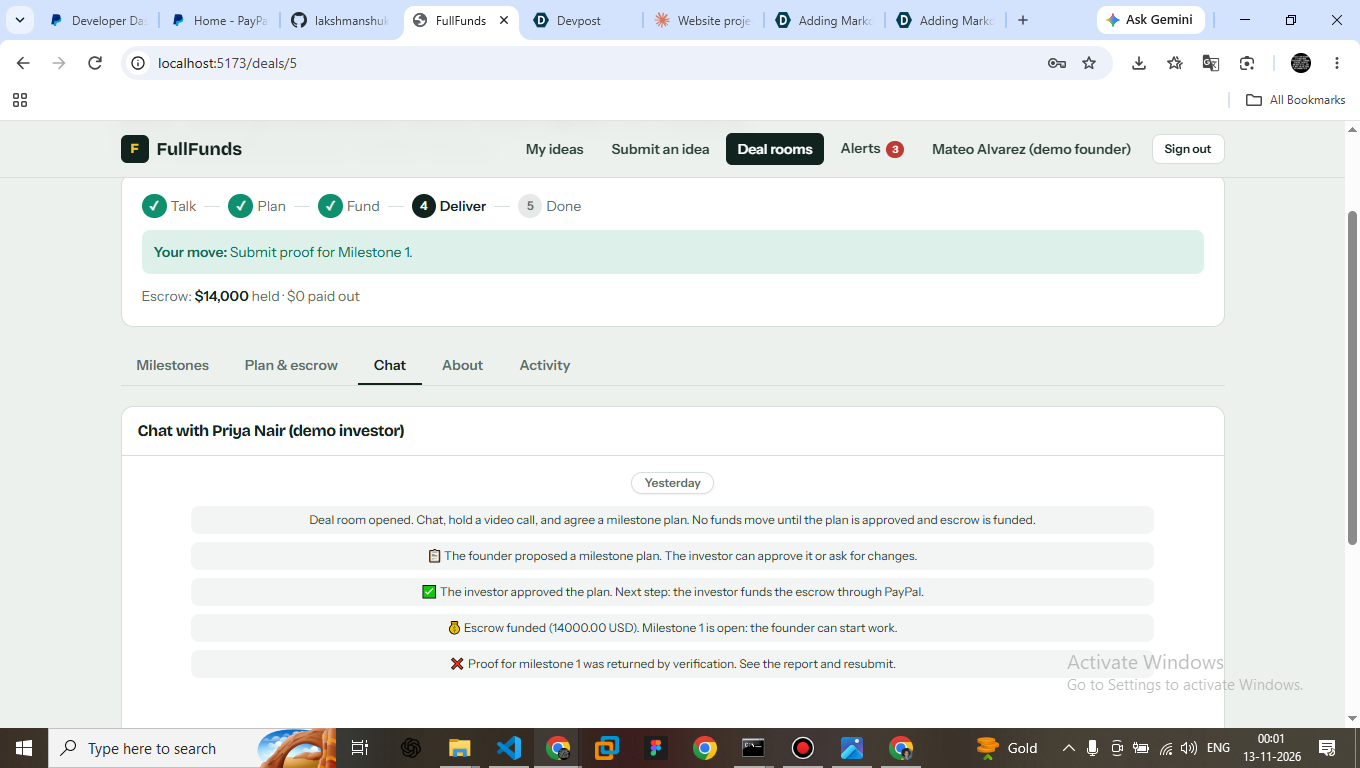
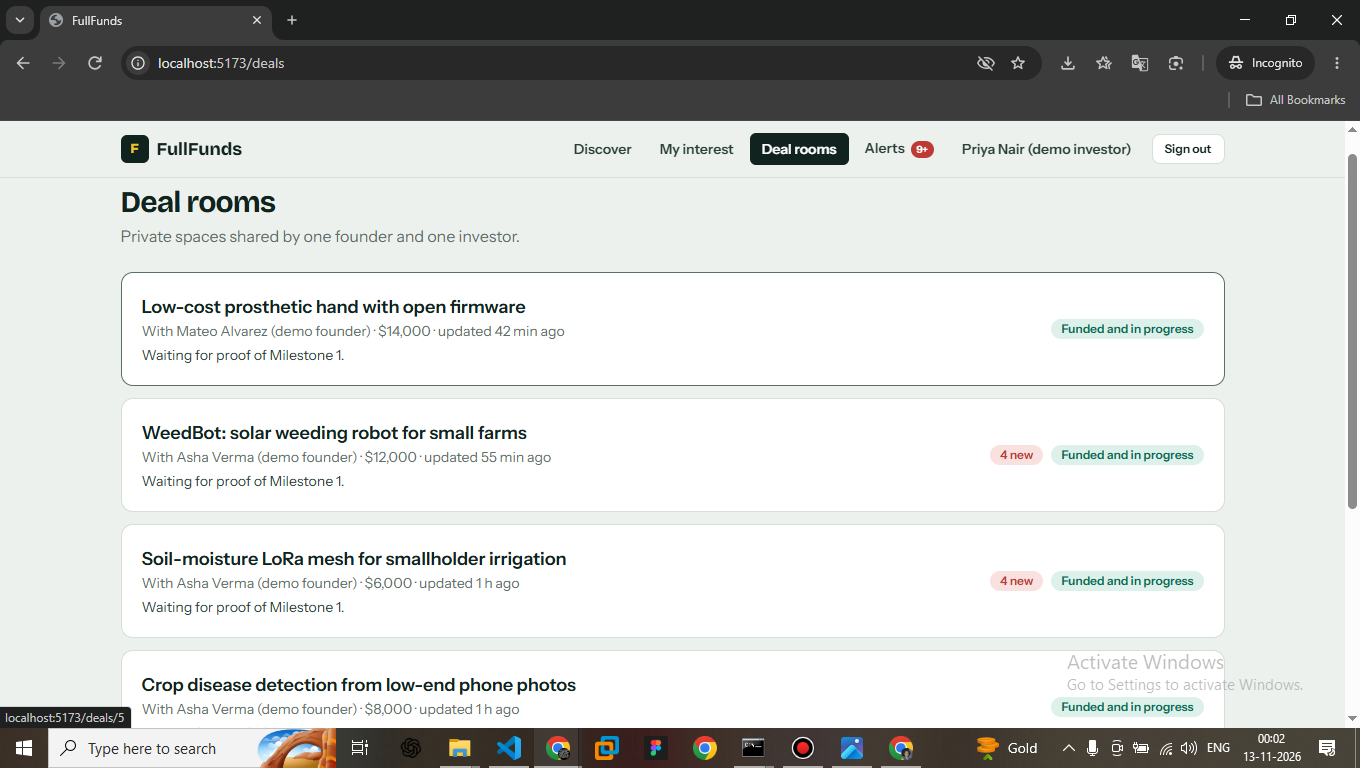
Deal Room showing the chat functionality
-
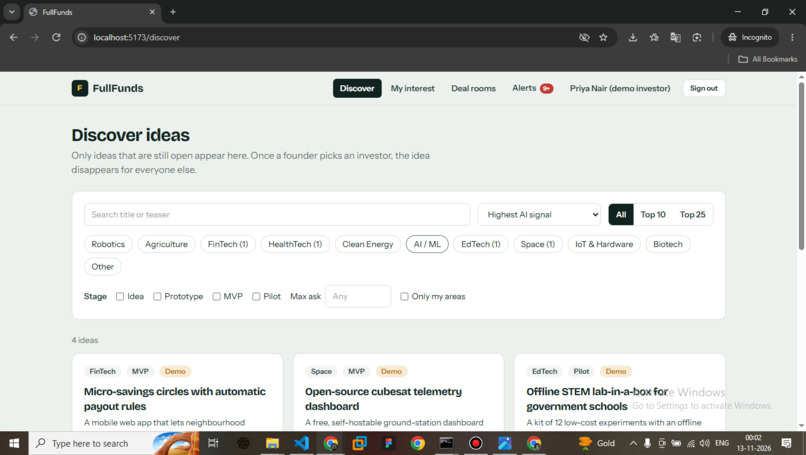
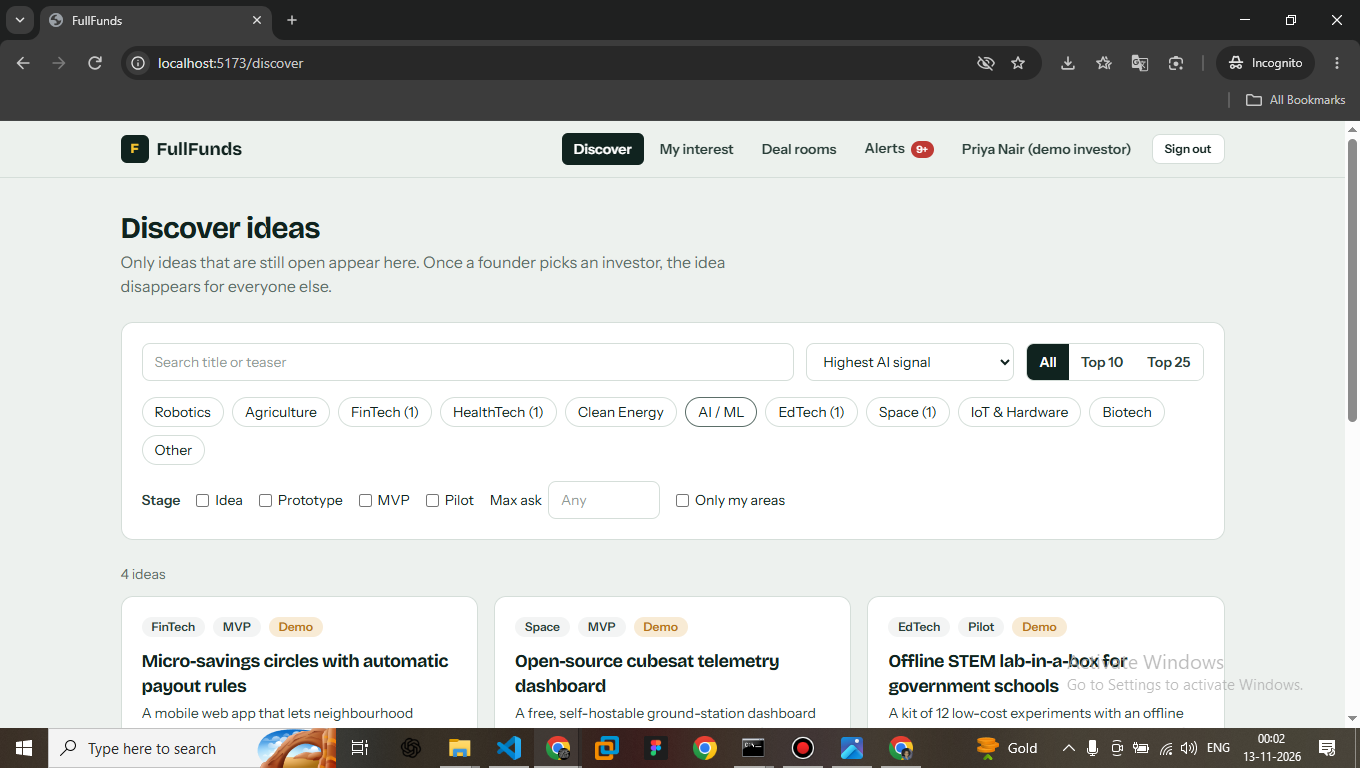
Ideas discovery page on investor's side
-
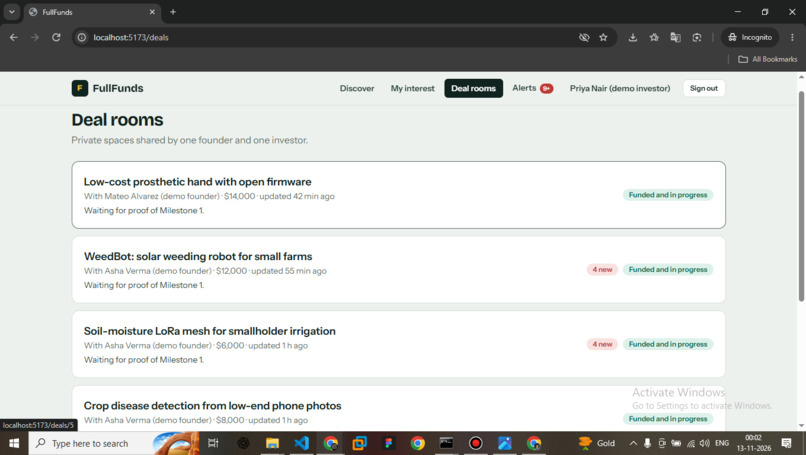
List of all currently funded ideas by an investor
-
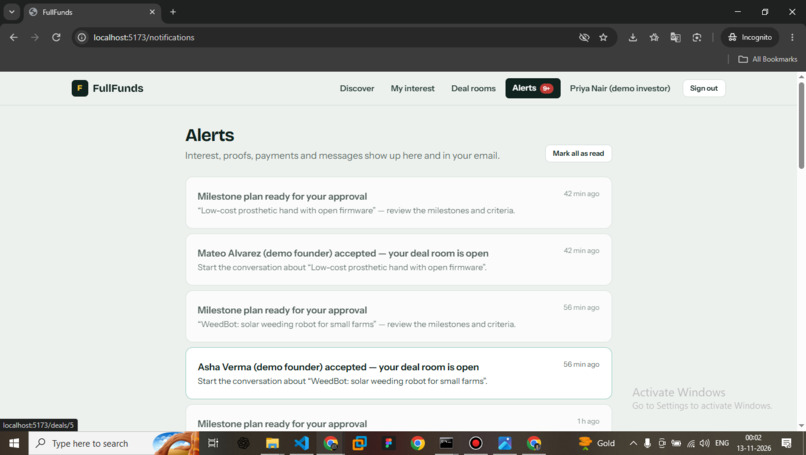
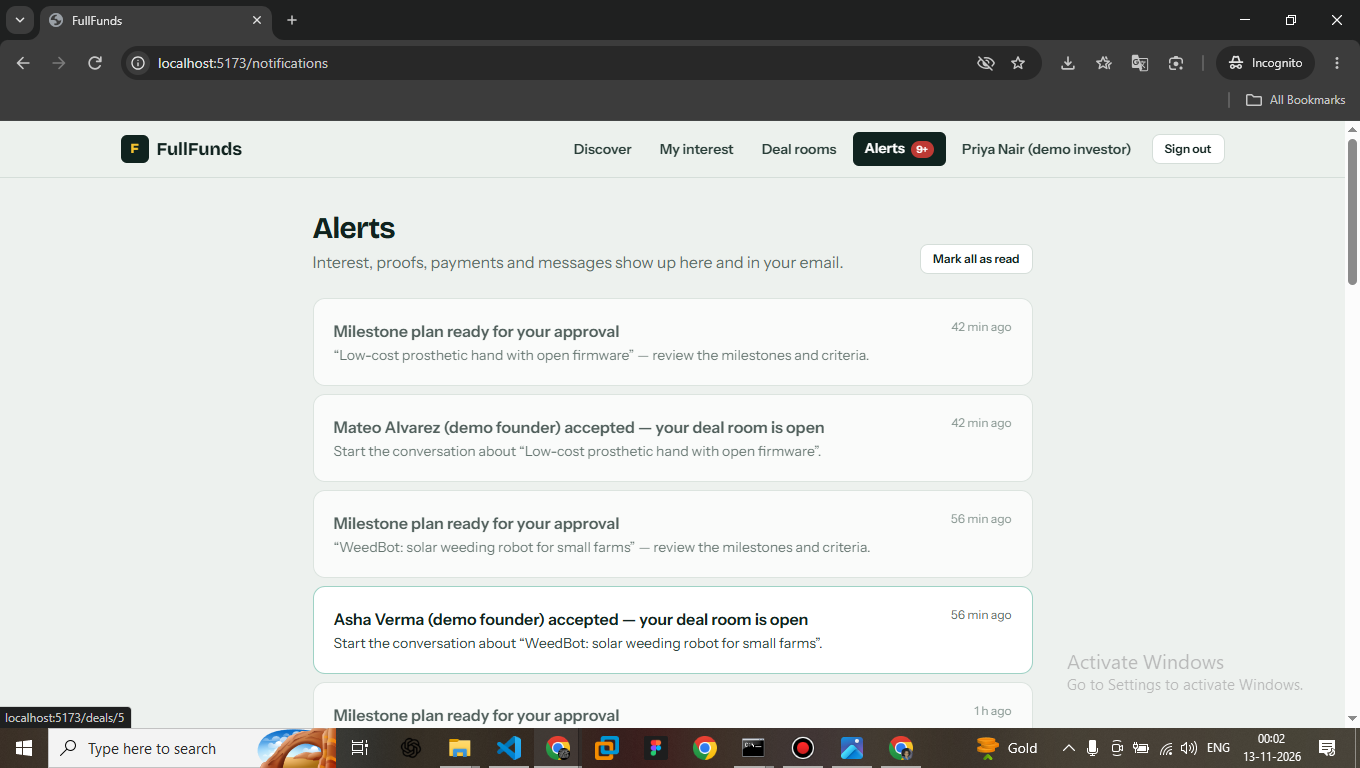
Alerts tab showing important notifications from both investor and founder
-
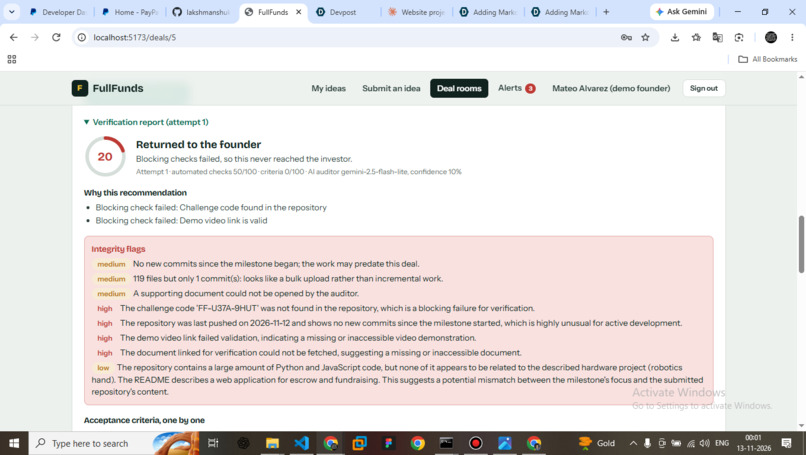
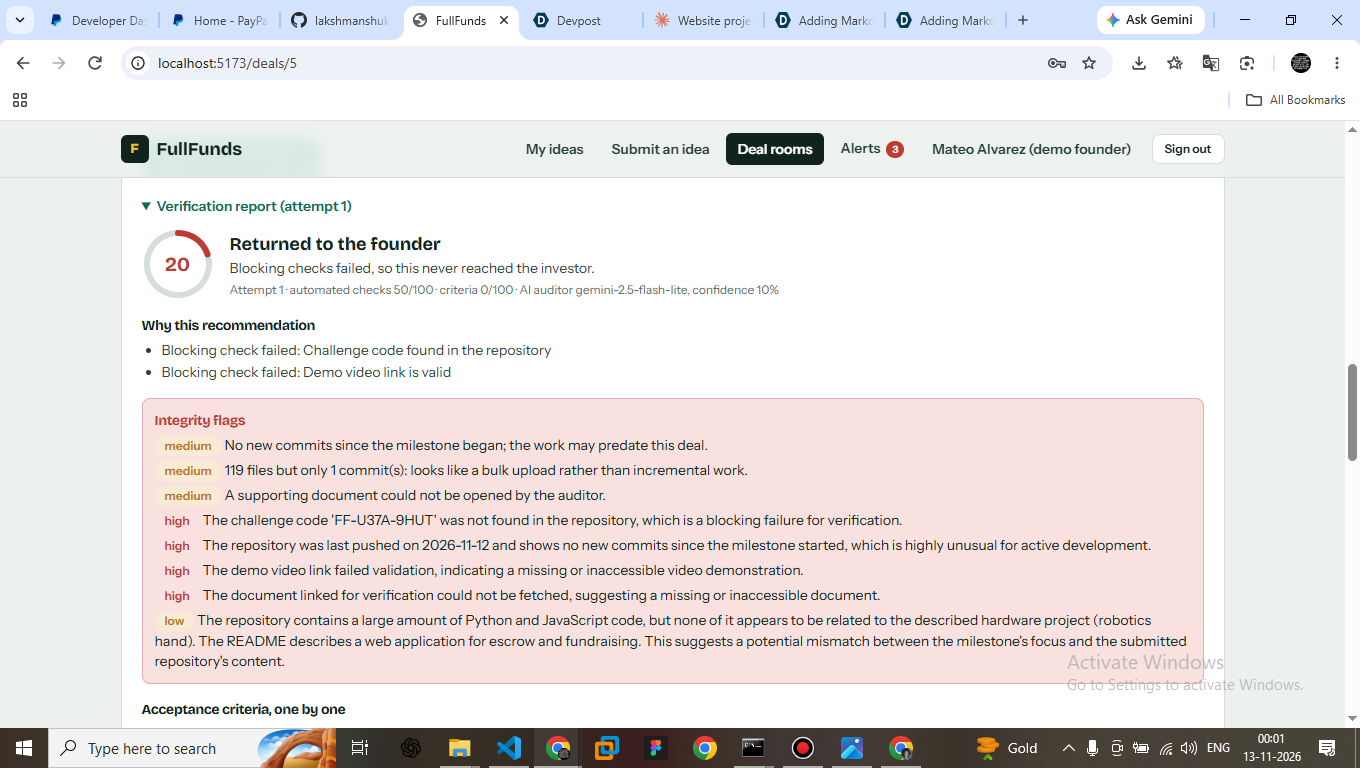
Failure of submission of milestone and proof of work by founder and no money transferred from escrow to founder account
-
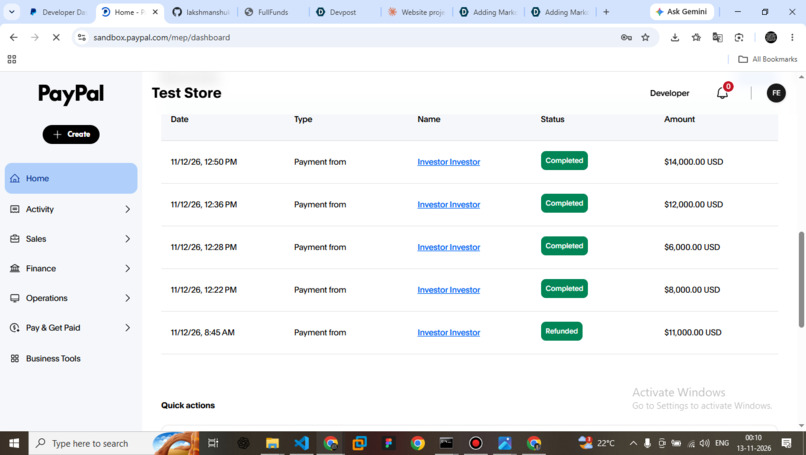
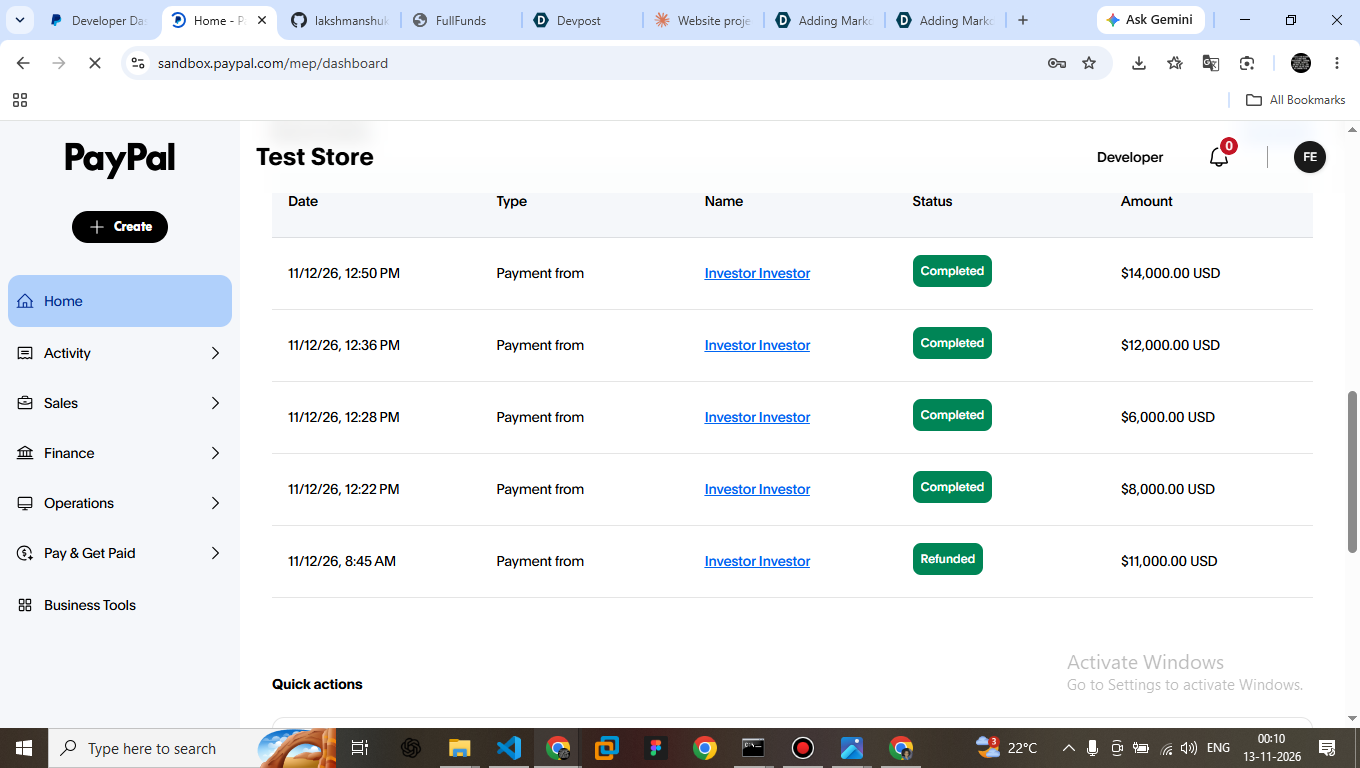
Proof that money flows from investor to escrow account and is ready to be released into founder's account upon milestone verification.
Inspiration
Early-stage funding runs mostly on trust. An investor hears "the prototype is done" and has no cheap way to check, while an honest founder, especially outside the big startup hubs, has no way to prove they are credible. Milestone-based funding already exists informally, but someone still has to verify each milestone by hand, and the money sits with a person rather than a neutral party. I wanted to see whether PayPal's payment tools plus an AI auditor could make "pay for proof, not promises" practical.
What it does
FullFunds is a deal room for one founder and one investor.
- Founders post an idea. Verified investors see only a teaser.
- Investor shows interest, founder decides. Accepting opens a private room with chat and hides the idea from everyone else.
- AI drafts the plan inside the deal. Gemini proposes 3 to 5 milestones, each with acceptance criteria and the kinds of proof required. The founder edits and proposes the plan, and the investor approves it.
- Escrow through PayPal. The investor funds the deal and PayPal holds the money.
- Proof per milestone. The founder submits a public GitHub repo, a live site, a document or a demo video. Every milestone has a one-time challenge code that must appear in that proof. The system checks the real repo or site, then Gemini audits each criterion. False or recycled proof is bounced back with the reason, and the money stays in escrow.
- Release. If the proof passes, the investor reviews it and approves, which triggers a PayPal payout for that milestone. An optional Escrow Agent can release within limits the investor sets. Note:- the video shows funding and the rejection of false proof. The payout to the founder after an approved milestone is implemented (PayPal Payouts API) and described in the README and project PDF, but is not shown in the video.
How we built it
- Backend: Django and Django REST Framework with JWT login, on Postgres or SQLite.
- Frontend: React, Vite and Tailwind CSS.
- AI: Google Gemini (
google-genaiSDK) for idea review, milestone drafting and the criterion-by-criterion audit. Outputs are validated against fixed schemas. - Payments: PayPal Sandbox using Orders (funding), Payouts (milestone release), Refunds (unreleased money if a deal ends) and Webhooks.
- Proof checks: Plain Python inspectors for GitHub (public repo, challenge code, recent commits), live sites and documents. A rules-based policy decides pass, review or fail. The AI cannot approve a milestone on its own, and if the AI service is down the result goes to a human instead of passing.
Challenges we ran into
- Making AI judgement safe. "Looks good" from an AI is not enough when money is involved. I separated the checks: deterministic checks (code present, repo public) are blocking, the AI audits the criteria, and a policy engine combines them.
- Gemini integration problems. Structured output only worked on the
v1betaAPI version, and early calls failed with "client has been closed" until I fixed how the client was kept alive during a request. - PayPal sandbox setup. Getting the Business and Personal sandbox accounts, app keys and Payouts permission right took time.
- Scope. I built a video-call feature in the deal room, found it unreliable, and removed it instead of shipping something broken.
- Time. Most of the work happened in a short window, so some parts are less polished than I wanted.
Accomplishments that we're proud of
- A full flow from idea to deal room, AI milestone plan, PayPal sandbox escrow funding and a verification step that really rejects wrong proof.
- The one-time challenge code, which is simple but makes pre-made or copied evidence fail.
- A clean split between what the AI judges and what the rules enforce, backed by unit tests on the policy and proof logic.
- Sandbox demo accounts and documentation so judges can try it without setup guesswork.
What we learned
- AI works well as an auditor when it is boxed in by schemas and hard rules, and badly as the final decision-maker.
- Payment flows need care around amounts, retries and duplicate requests, which is why funding and payouts use idempotency keys.
- Cutting a weak feature early is better than debugging it at the deadline.
What's next for FullFunds
- Real investor verification with a KYC provider instead of manual review.
- Live end-to-end testing of payouts and refunds with webhooks enabled on a hosted site, and a full payout demo.
- More proof inspectors, such as CI results and app-store builds.
- Group funding, where several investors back one deal.
- A portable, evidence-based reputation record for founders.
