-
-
front_page
-
front_page_output
Inspiration
As college students, we know how difficult it can be to prepare for internships and jobs. Sometimes we find a position that interests us, but we're not sure if we have the right skills or what we should learn next.
That's where the idea for RutaUp came from. We wanted to create something that could help students, especially at FIU, understand where they currently stand and what steps they can take to prepare for their future careers.
Our goal wasn't just to tell students what skills they're missing. We also wanted to connect them with free learning resources so they could actually do something about it.
What It Does
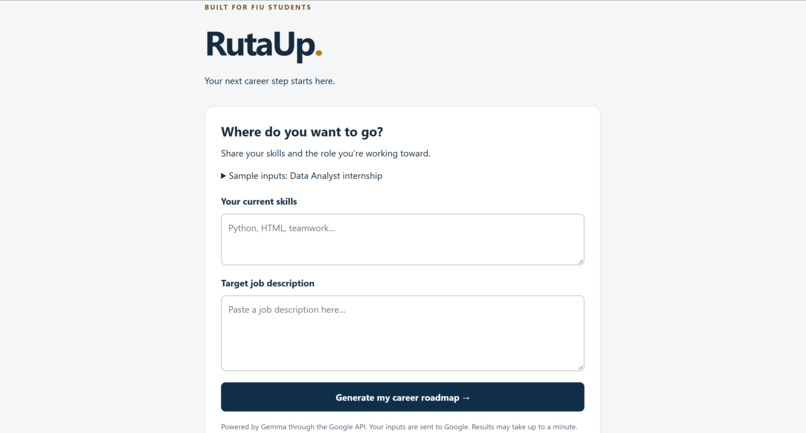
RutaUp is an AI-powered career readiness assistant designed for FIU students.
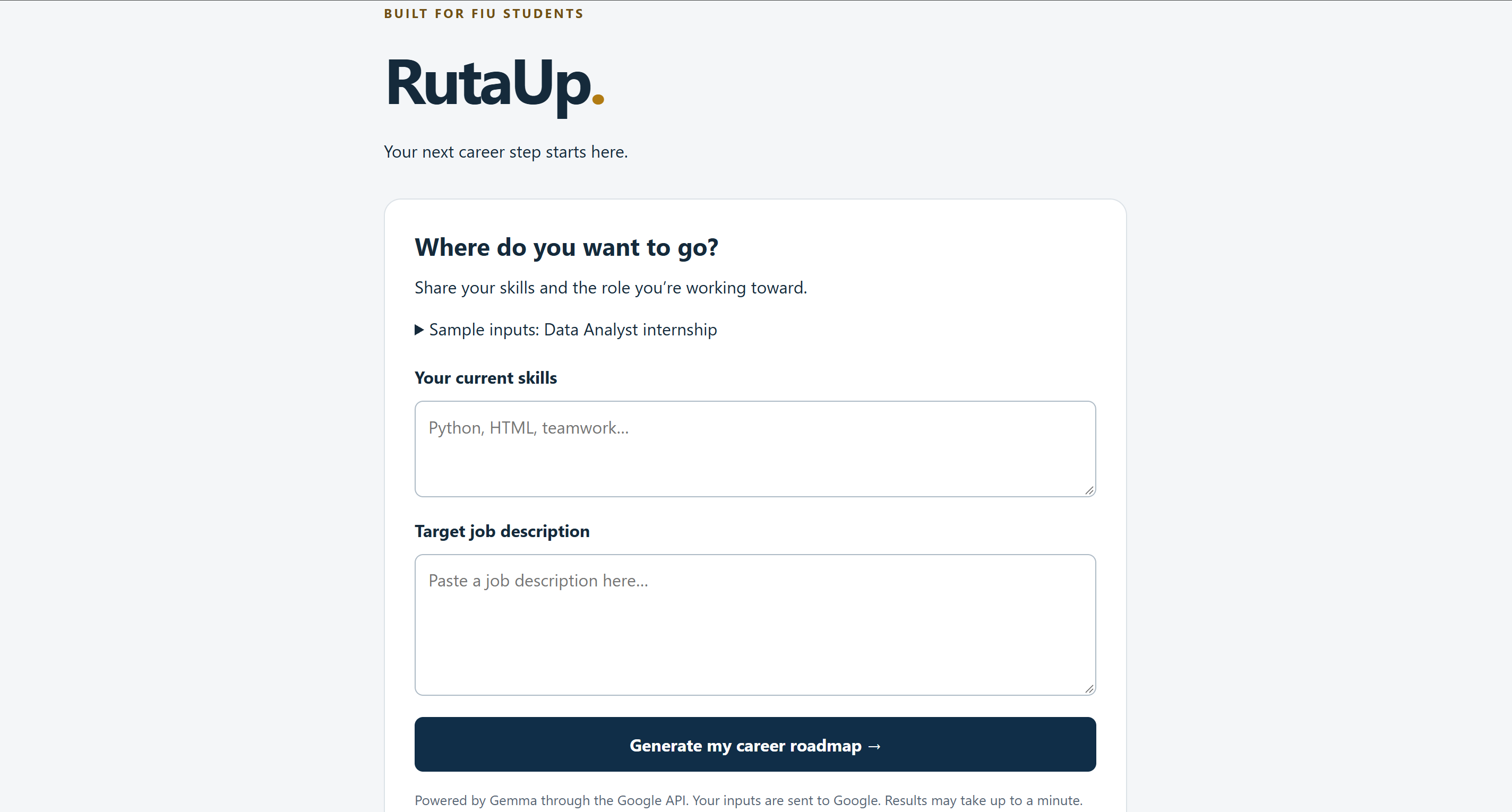
Students enter their current skills and paste a job description they're interested in. RutaUp then uses Google's Gemma 4 model to:
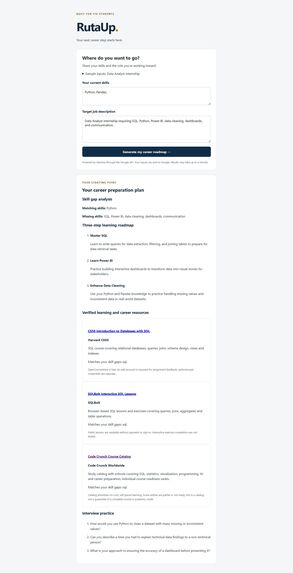
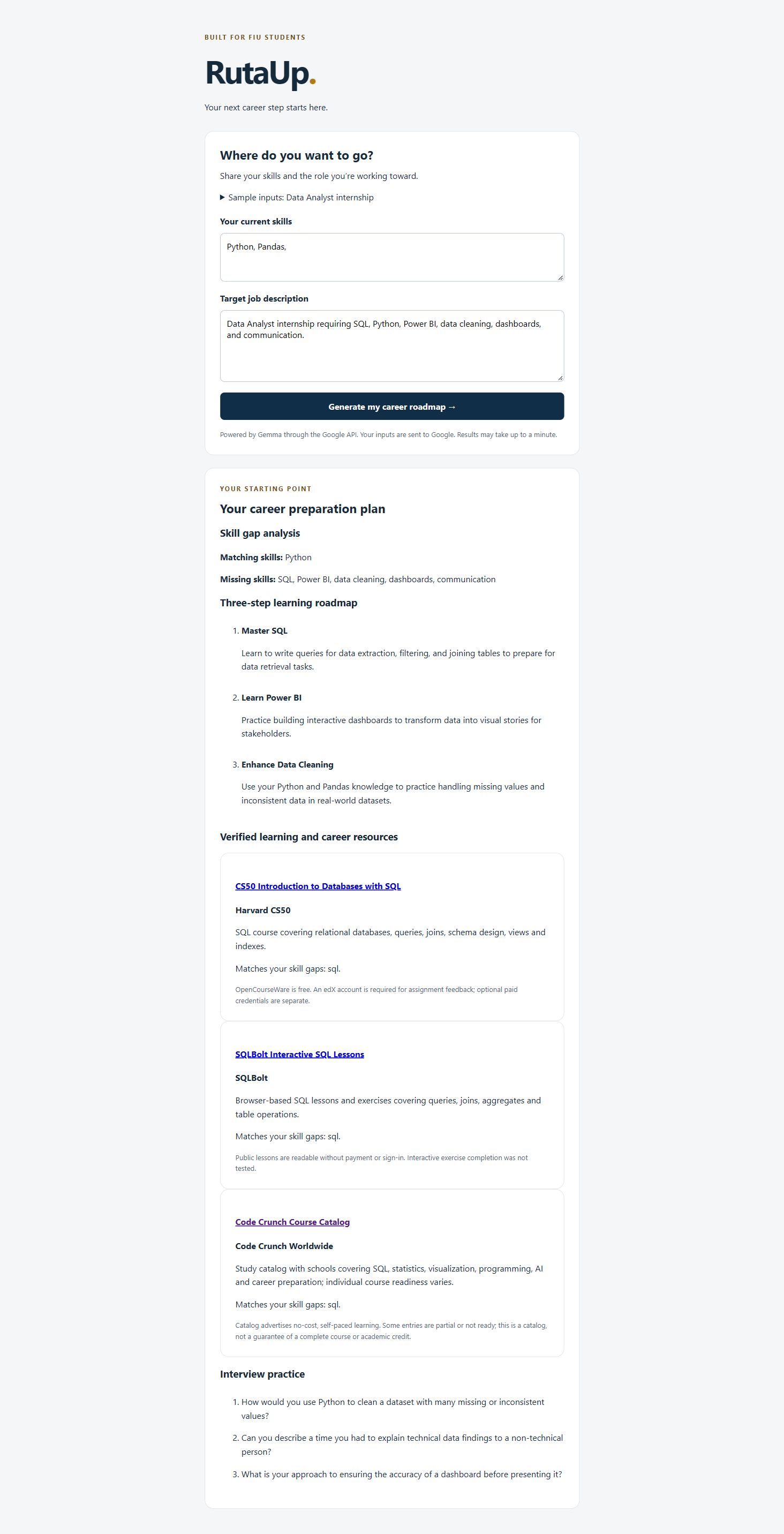
- Identify skills they already have and skills they need to develop.
- Create a personalized three-step learning roadmap.
- Recommend free learning resources, including FIU-related opportunities, Harvard CS50, SQLBolt, and roadmap.sh.
- Generate three interview practice questions based on the job.
The idea is to make career preparation easier and give students a clear starting point.
How We Built It
We developed RutaUp using Python, FastAPI, HTML, CSS, JavaScript, and Google's GenAI SDK.
For the AI integration, we used Gemma 4 through the Gemini API. The model analyzes the student's skills and the job requirements, then generates structured results that our application can display.
We also created our own resource recommendation system using Python and a JSON catalog of verified learning resources. This system matches the student's missing skills with relevant resources instead of relying on AI-generated links that might not exist.
We worked together using GitHub branches and Codex to help us develop, test, and integrate different parts of the application.
Challenges We Faced
One of our biggest challenges was connecting everything together in a limited amount of time.
We divided the work between the AI integration and the learning resource system. Both parts worked independently, but we still needed to make sure they could communicate correctly.
Another challenge was getting Gemma to return information in a consistent format so we could display the skill analysis, roadmap, and interview questions separately.
We also had to make sure the learning resources were real and relevant instead of showing random links.
After testing and making changes, we successfully connected all four features into one working prototype.
Accomplishments We're Proud Of
We're proud that we were able to build a working application during the hackathon.
We successfully integrated the real Gemma 4 model, created our own resource recommendation system, and connected everything into a simple website.
We also passed 46 automated tests and successfully tested the application with real Gemma 4 API requests.
What makes RutaUp special to us is that it goes beyond identifying missing skills. It gives students practical next steps and free resources they can use to start learning.
What We Learned
This project helped us understand how to integrate an AI model into a real application, work with APIs, validate AI responses, and connect different parts of a project.
We also learned how important teamwork and GitHub collaboration are, especially when working under a deadline.
Most importantly, we learned that we don't need to build a huge application to solve a real problem. Sometimes a simple tool with a clear purpose can make a difference.
What's Next for RutaUp
In the future, we'd like to expand RutaUp beyond FIU and support students from other universities.
We'd also like to add resume uploads, direct job posting links, more personalized learning resources, and additional career paths.
For now, RutaUp is our first step toward making career preparation more accessible and easier for students.
RutaUp — Your Skills. Your Path. Your Future.
Built With
- codex
- css
- fastapi
- gemini
- gemma
- html
- javascript
- python
- vercel
- vscode
