Inspiration
Our main inspiration came from the freedom found in open-world titles like GTA V. We aimed to bring that same open-world freedom into XR, giving players the ability to seamlessly switch between controlling a character on foot (running, climbing, swimming, diving) and piloting a wide variety of vehicles. In VR, games are often segregated: you are either a “floating camera” in a cockpit or a pair of hands in a room. We wanted to break those boundaries. Our goal was to translate that open-world freedom into VR without ever breaking immersion.
What it does
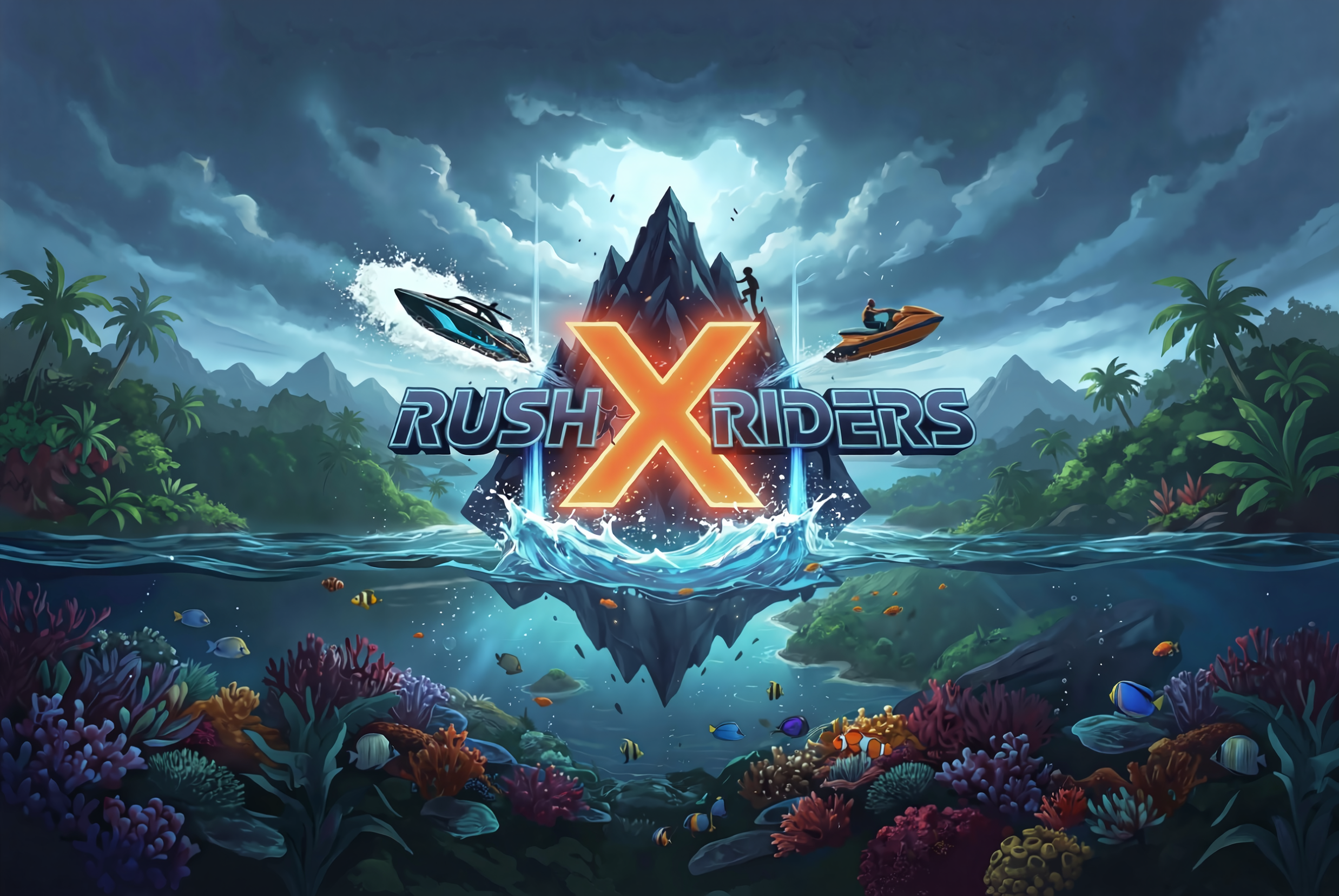
Rush X Riders is an open-world VR racing and exploration game set in vibrant worlds with a living, evolving environment and a dynamic day–night cycle. Its core innovation is the seamless transition system. Players utilize a fully physical interaction system to:
• Swim and dive
• Climb and perform parkour
• Operate speedboats, and in future other vehicles
How we built it
The project is built in Unity 6, using OpenXR. To achieve “GTA-like” freedom, we developed a state machine that handles instant transitions between states such as Swimming and Driving. We also implemented a dynamic day–night cycle system that adjusts ambient lighting, fog, and sun position in real time to create an immersive atmosphere, fully optimized for mobile VR.
Challenges we ran into
Optimizing the game to run smoothly on standalone headsets while maintaining the visual fidelity of large, beautiful environments — and balancing that with the complexity of an open world — was our biggest hurdle.
Accomplishments that we're proud of
Getting the physics engine to cooperate when a player jumps from a cliff (falling logic), hits the water (buoyancy logic), and then climbs onto a speedboat (vehicle physics) without major stutters or glitches was a massive technical achievement. We are also proud of creating a visually rich day–night cycle that runs efficiently on Meta Horizon OS, proving that mobile VR doesn’t have to look static or “baked.”
What we learned
We deepened our understanding of XR locomotion, proving that players don’t need to be glued to a virtual seat to enjoy a racing game. By allowing the freedom to enter and exit any vehicle at will, we learned that giving players total choice in how they play creates a much more immersive and dynamic experience than a traditional, restricted racer.
What's next for Rush X Riders
Our vision extends far beyond this demo. The roadmap includes:
• Evolving Open World: A central hub unlocking diverse regions filled with race routes, hidden treasures, and dynamic events driven by the day–night cycle.
• Expanded Arsenal & Traversal: A wider variety of fully tunable boats, jet skis, and other vehicles.
• Progression System: Players unlock high-tier performance modules and enhanced rider physical capabilities.
• Large, Diverse Maps: Multiple race routes, time-limited delivery missions, climbing paths, and special events.
• Multiplayer: Our long-term roadmap includes plans for competitive racing and social hangout zones. We aim to evolve the project into a shared physics-driven ecosystem, depending on the game's post-launch performance and community interest.


Log in or sign up for Devpost to join the conversation.