-
-
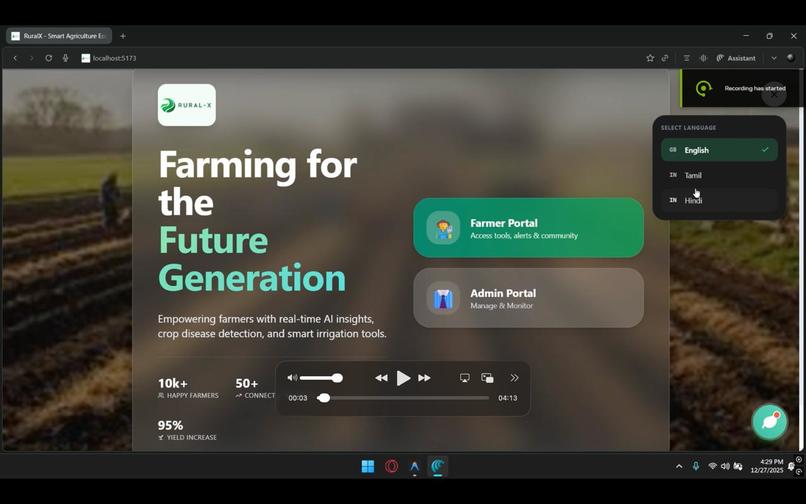
RuralX: Empowering Rural Farmers with AI-Driven Simulations
-
-
-
RuralX: Empowering Rural Farmers with AI-Driven Simulations
Inspired by the stark challenges faced by Indian farmers in rural areas—such as language barriers, poor connectivity, frequent natural disasters like floods, and inefficient resource management like irrigation and fertilizers—the RuralX project emerged as a practical solution. Drawing from real-world needs in agriculture tech, a domain of strong personal interest, the goal was to create tools beyond mere alerts, enabling proactive decision-making.
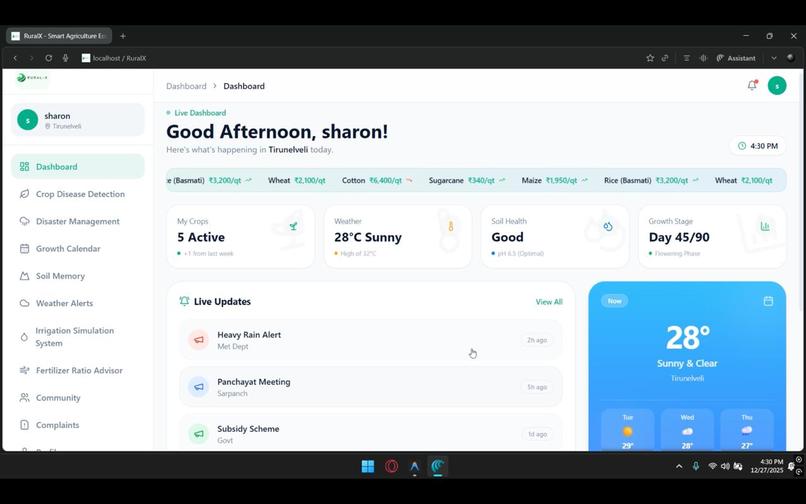
Key Learnings Developed expertise in meta-learning for crop disease detection, which excels in adapting to new crops with limited data through few-shot learning techniques, outperforming traditional models in data-scarce scenarios. Gained insights into multilingual AI deployment, full-stack development with Next.js for seamless frontend-backend integration, and lightweight databases like SQLite for low-connectivity environments. These reinforced the value of simulation-based tools for real-world testing, shifting from reactive to preventive agriculture.
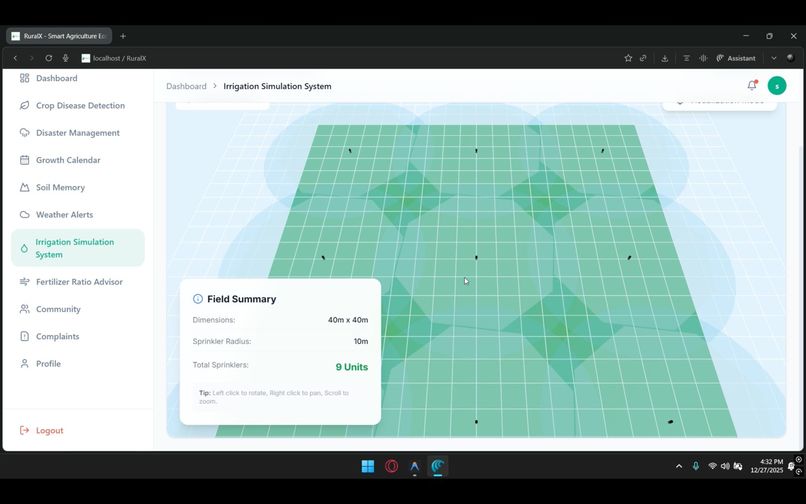
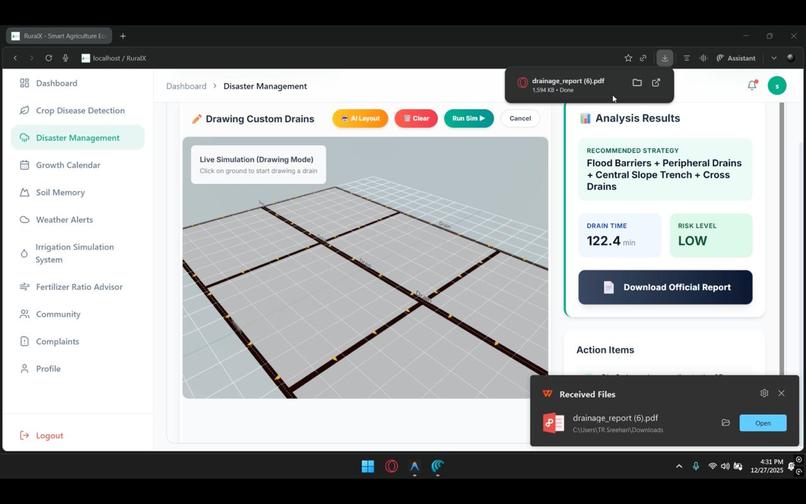
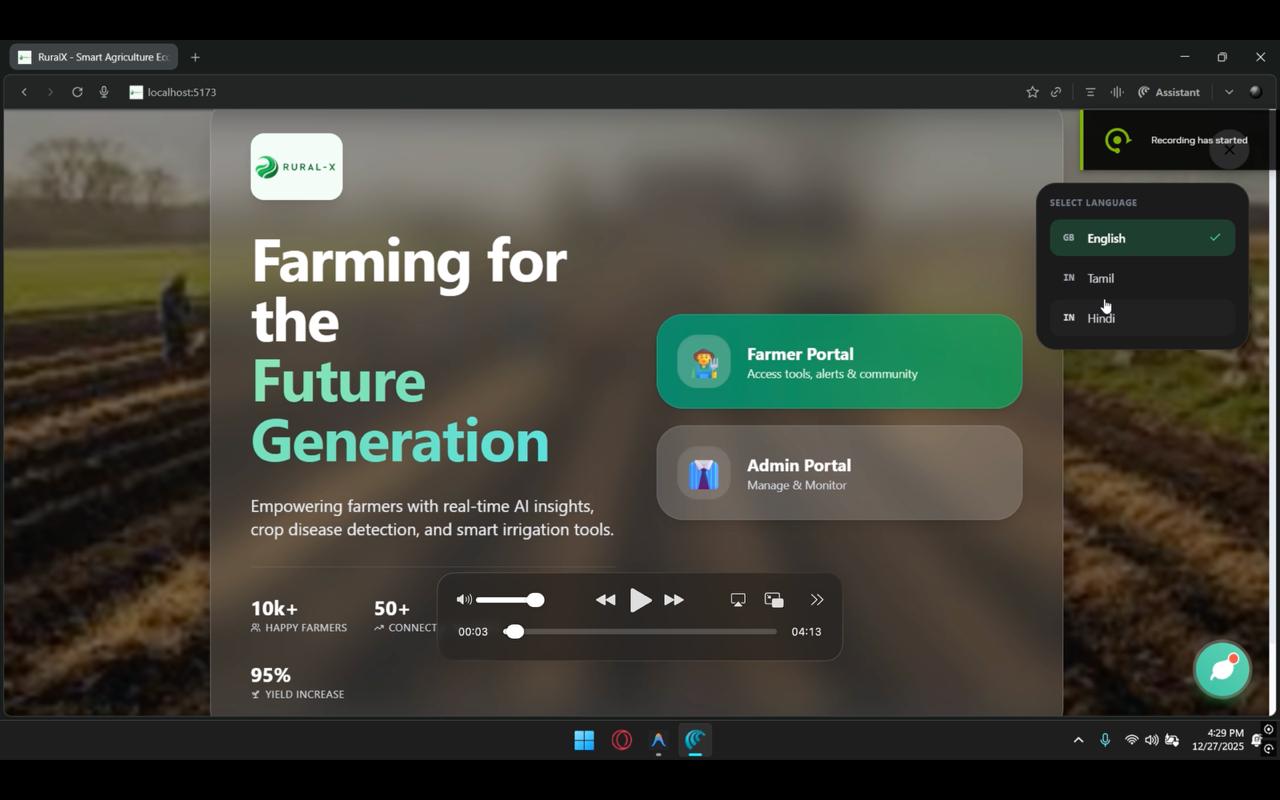
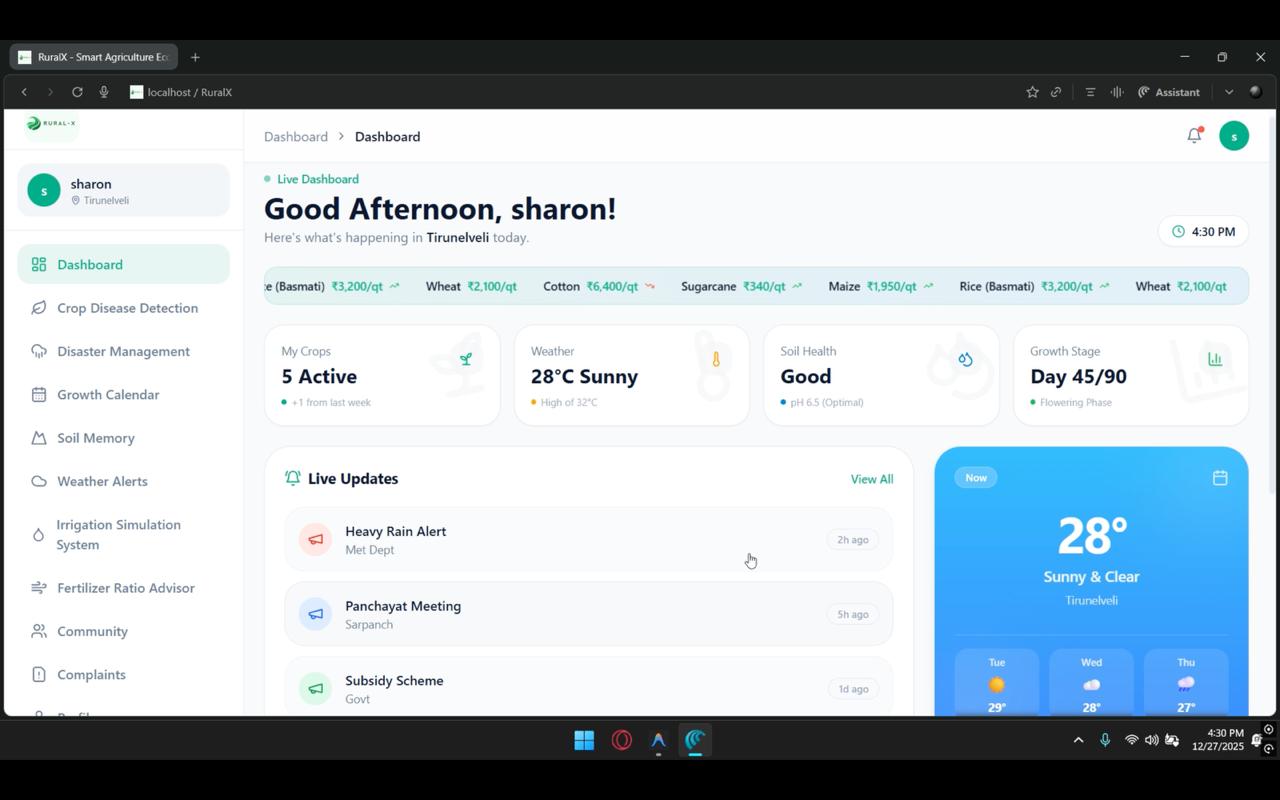
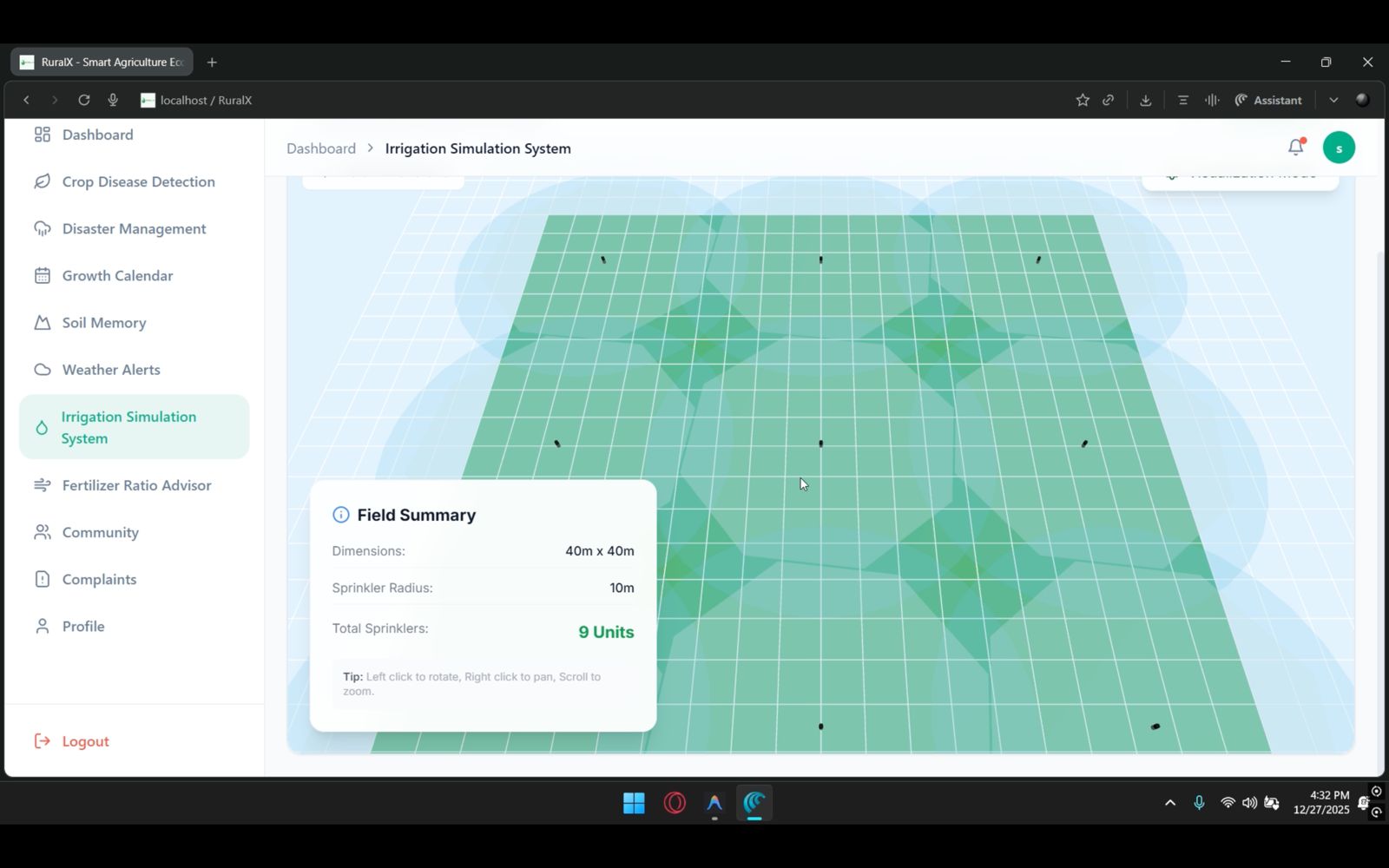
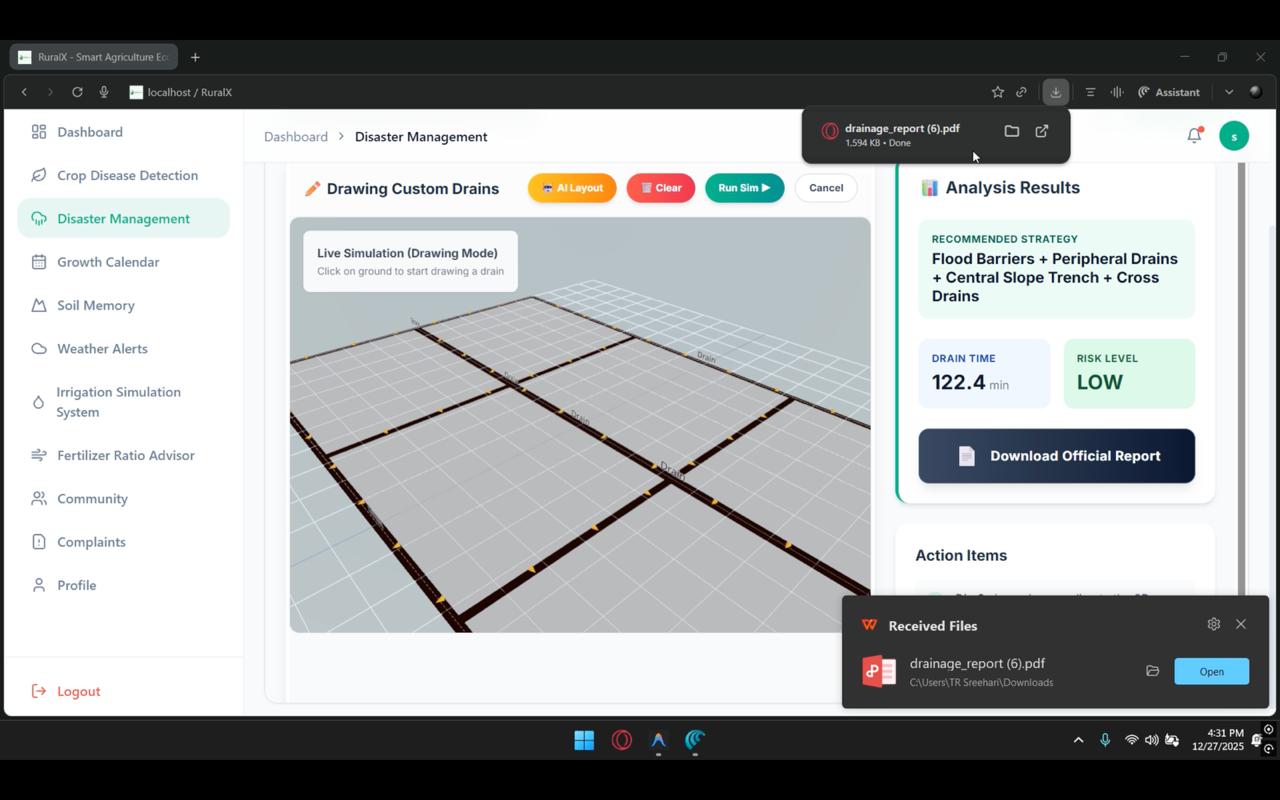
Building the Project The platform was constructed using Next.js for both frontend and backend, ensuring rapid performance and easy deployment. Core features include a farmer portal with grid-based irrigation simulations (allowing sprinkler placement on real field dimensions), flood drainage planners, AI-recommended fertilizer ratios based on crop and soil inputs, and AgriPal—a multilingual chatbot for queries in local languages. Meta-learning models handle disease detection, while an admin dashboard verifies reports and broadcasts alerts, all optimized for simplicity with visual feedback and guided inputs.
Challenges Overcome Major hurdles included handling diverse rural languages and dialects for the chatbot, requiring robust multilingual NLP models. Limited data for meta-learning demanded innovative few-shot techniques to avoid overfitting, while ensuring offline functionality amid poor connectivity involved aggressive caching and lightweight SQLite choices. Balancing simulation accuracy (e.g., precise water coverage calculations) with intuitive UI for low-literacy users tested iterative design, ultimately yielding a deployable prototype.


Log in or sign up for Devpost to join the conversation.