-
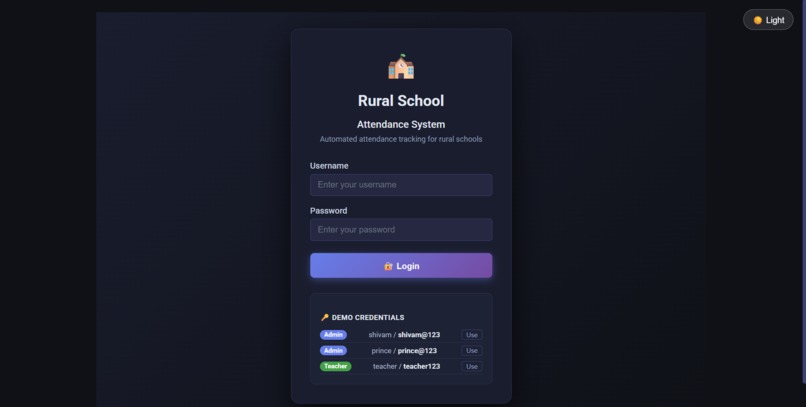
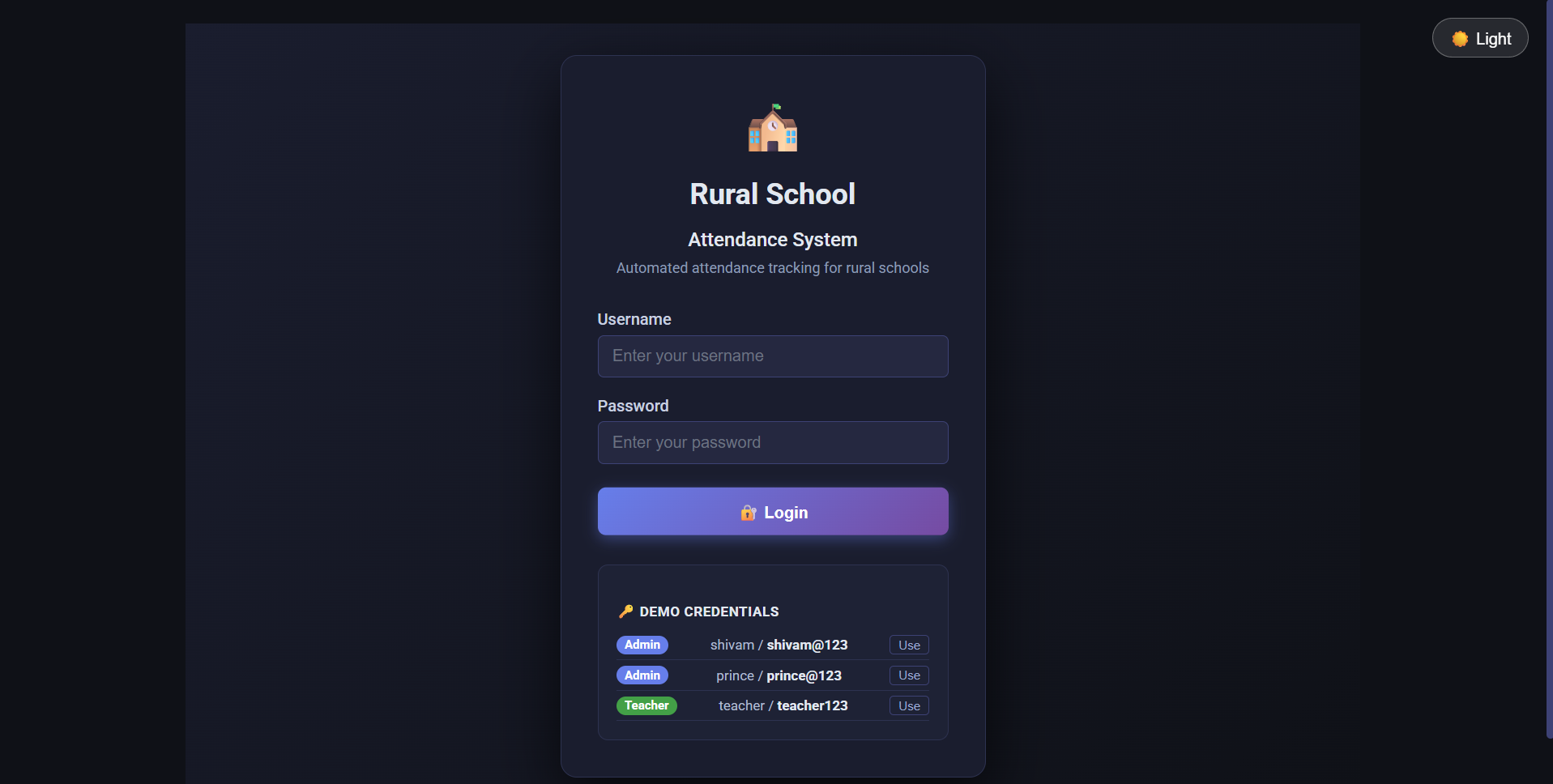
Login Page
-
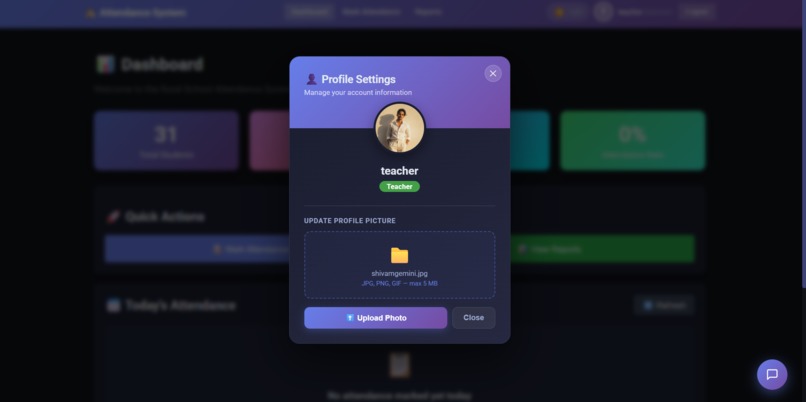
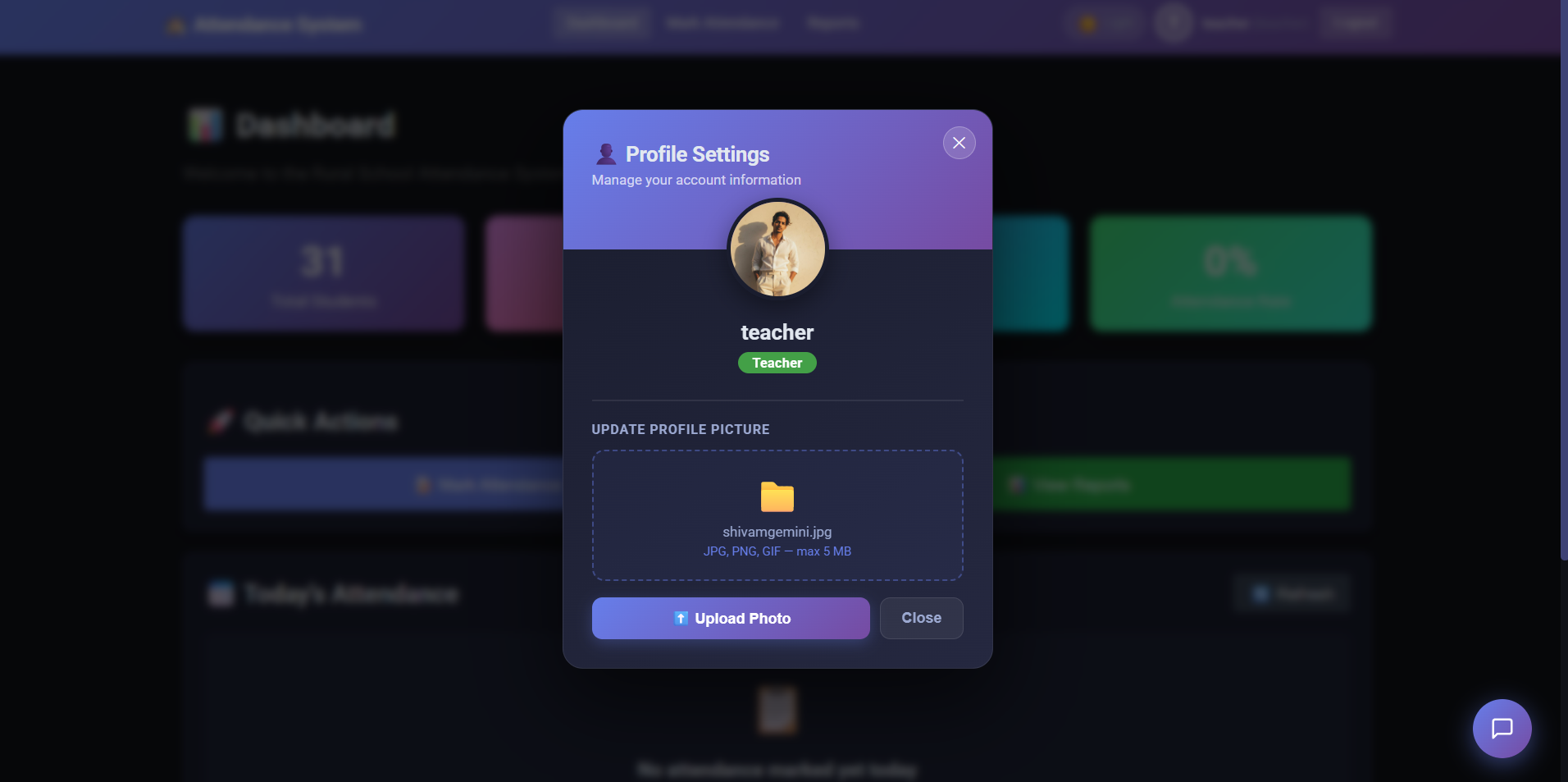
Dashboard profile page edit
-
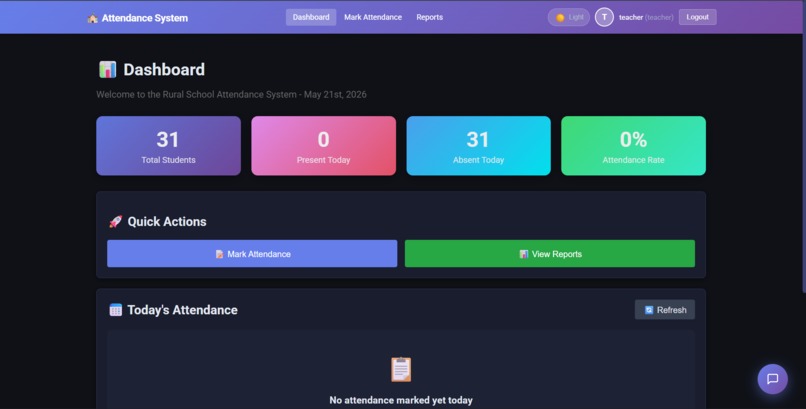
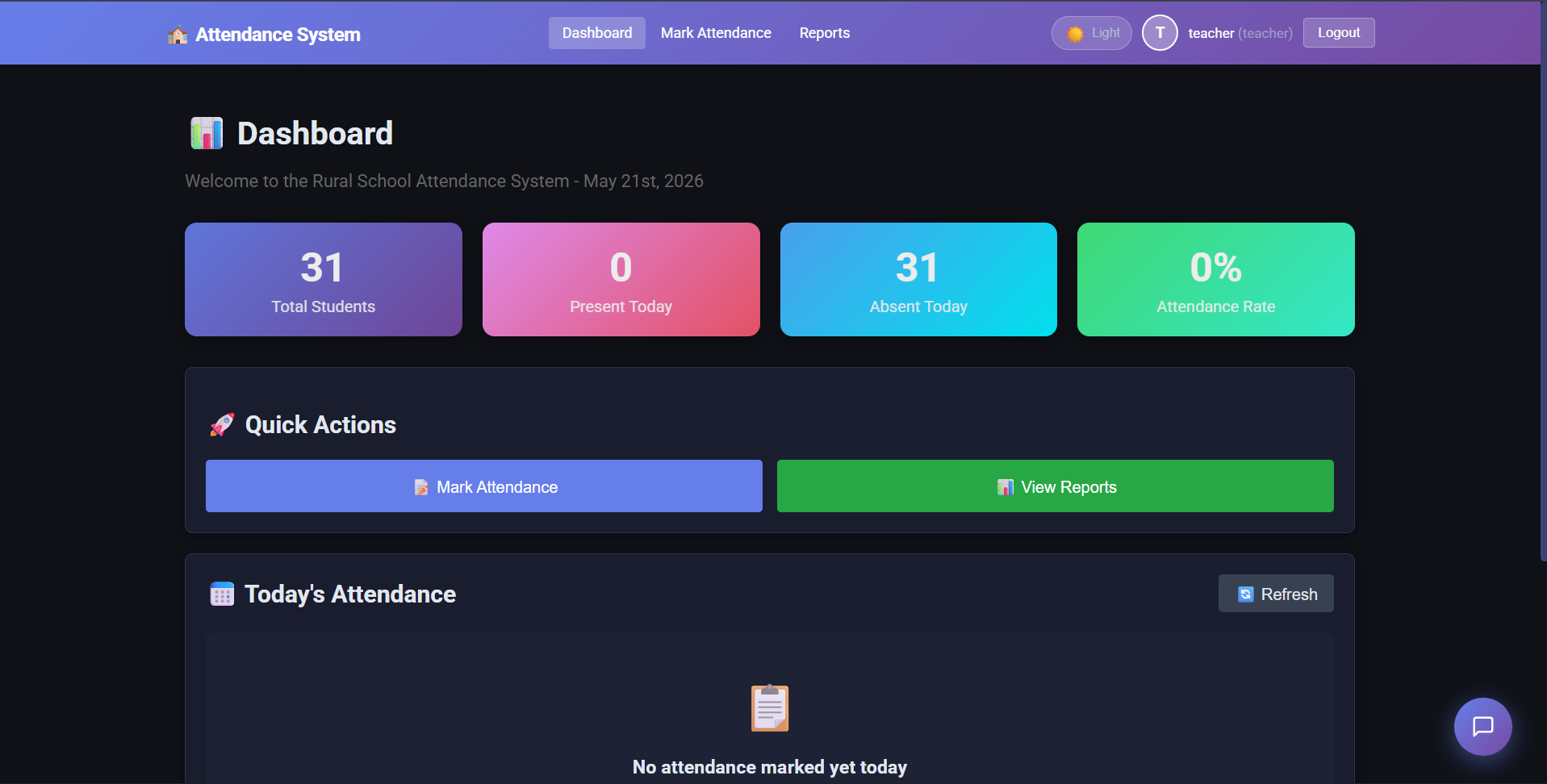
Dashboard
-
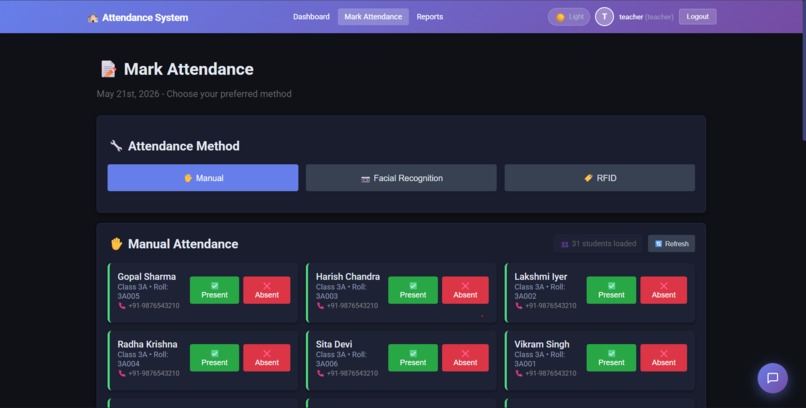
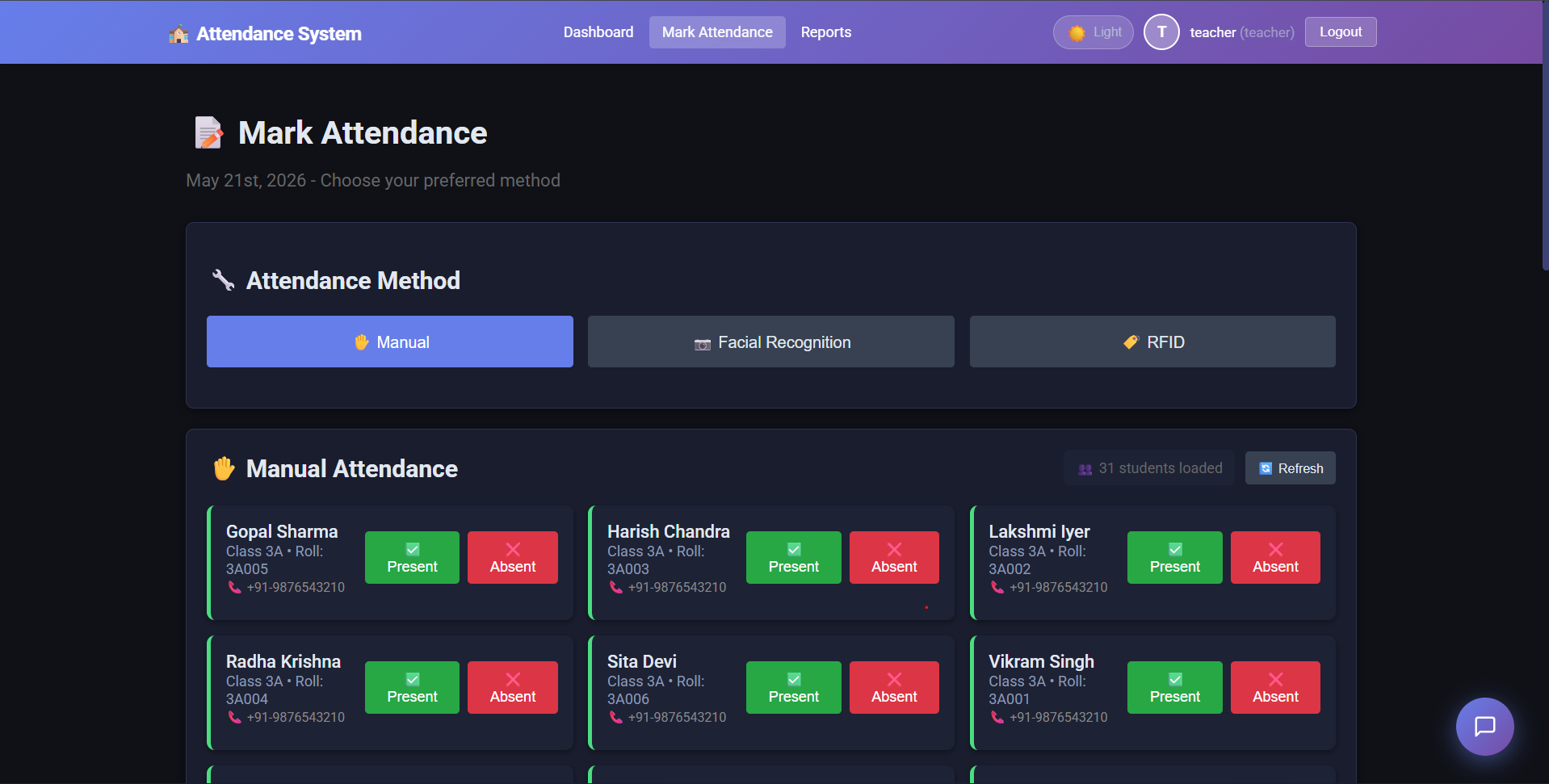
Attendance marking via manually, RFID and facial .
-
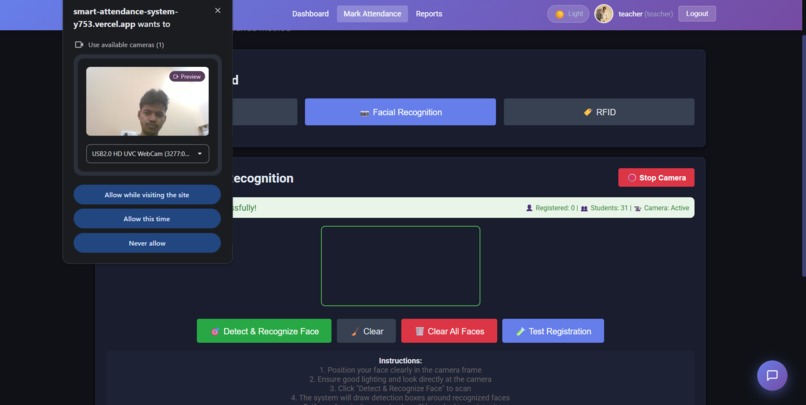
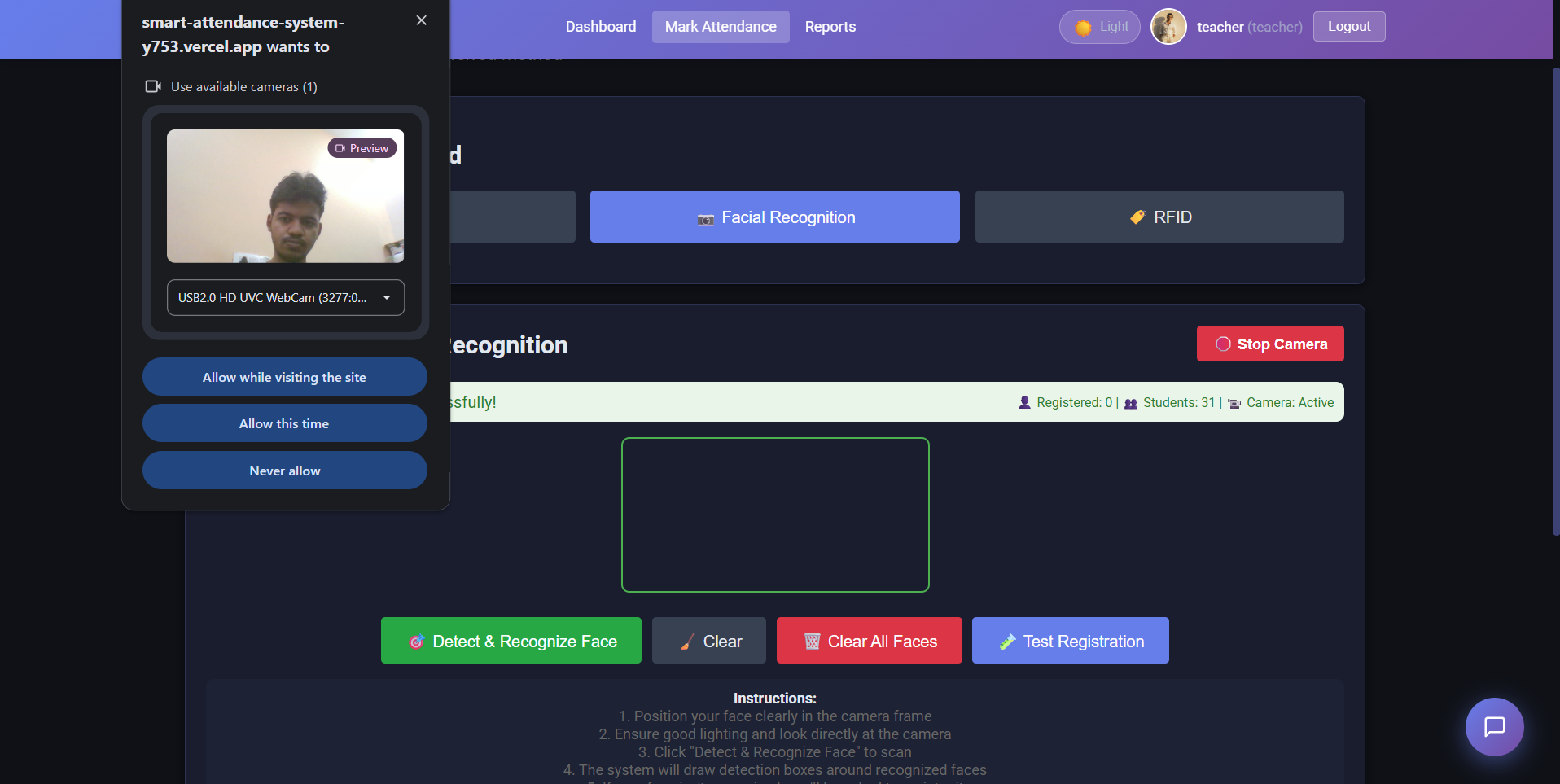
giving access for camera permission
-
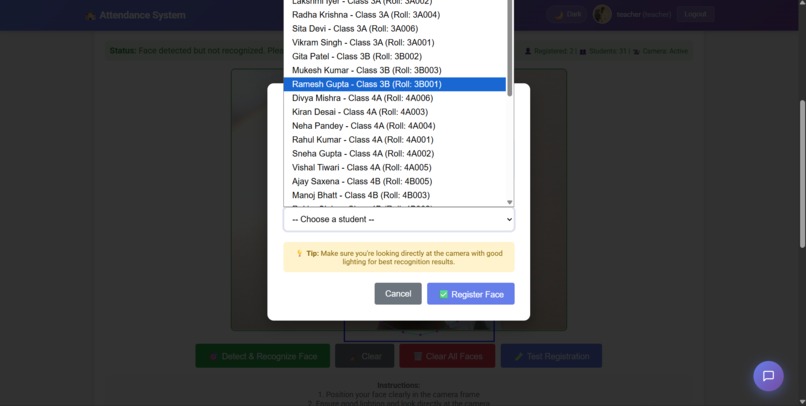
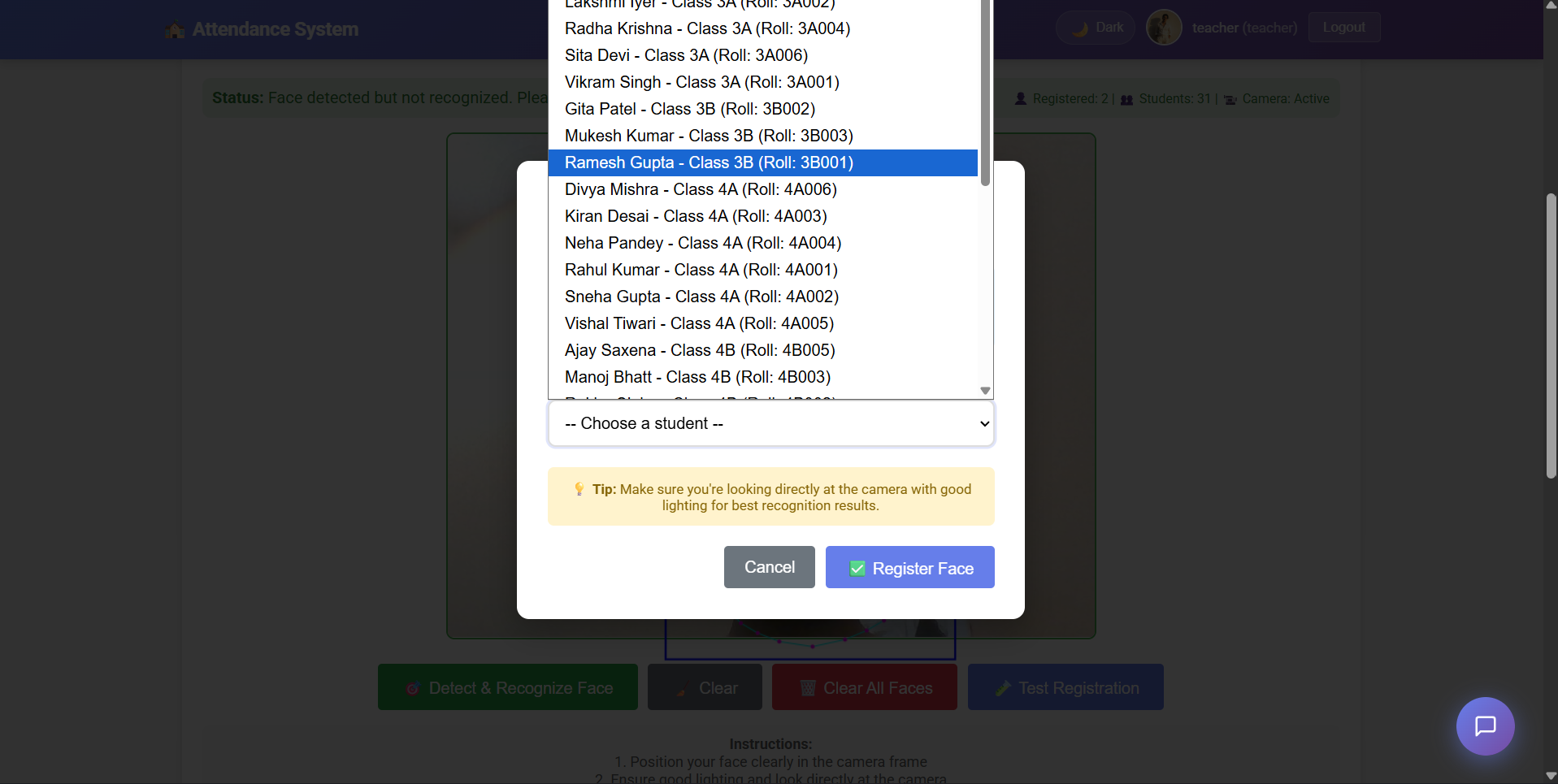
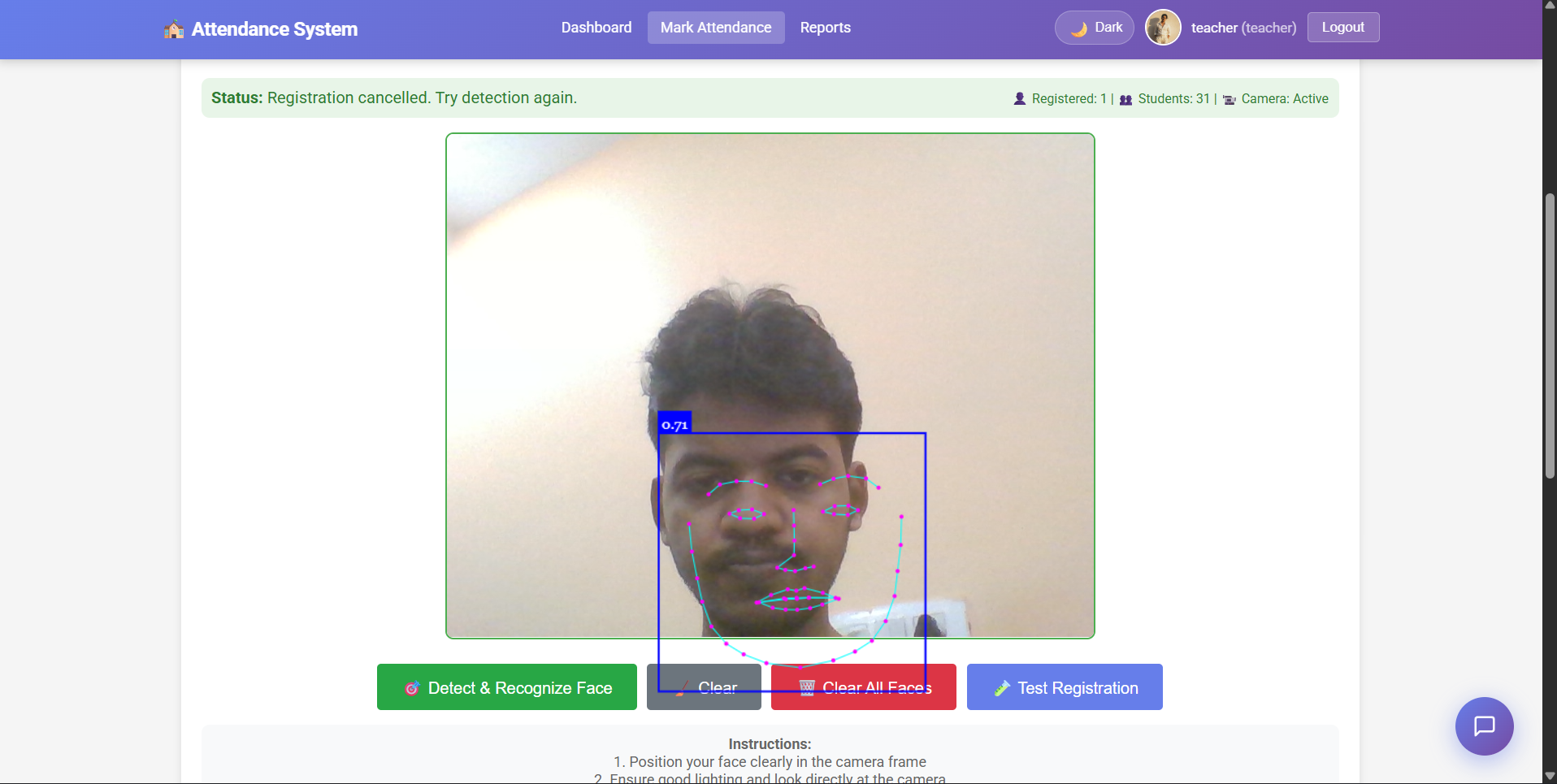
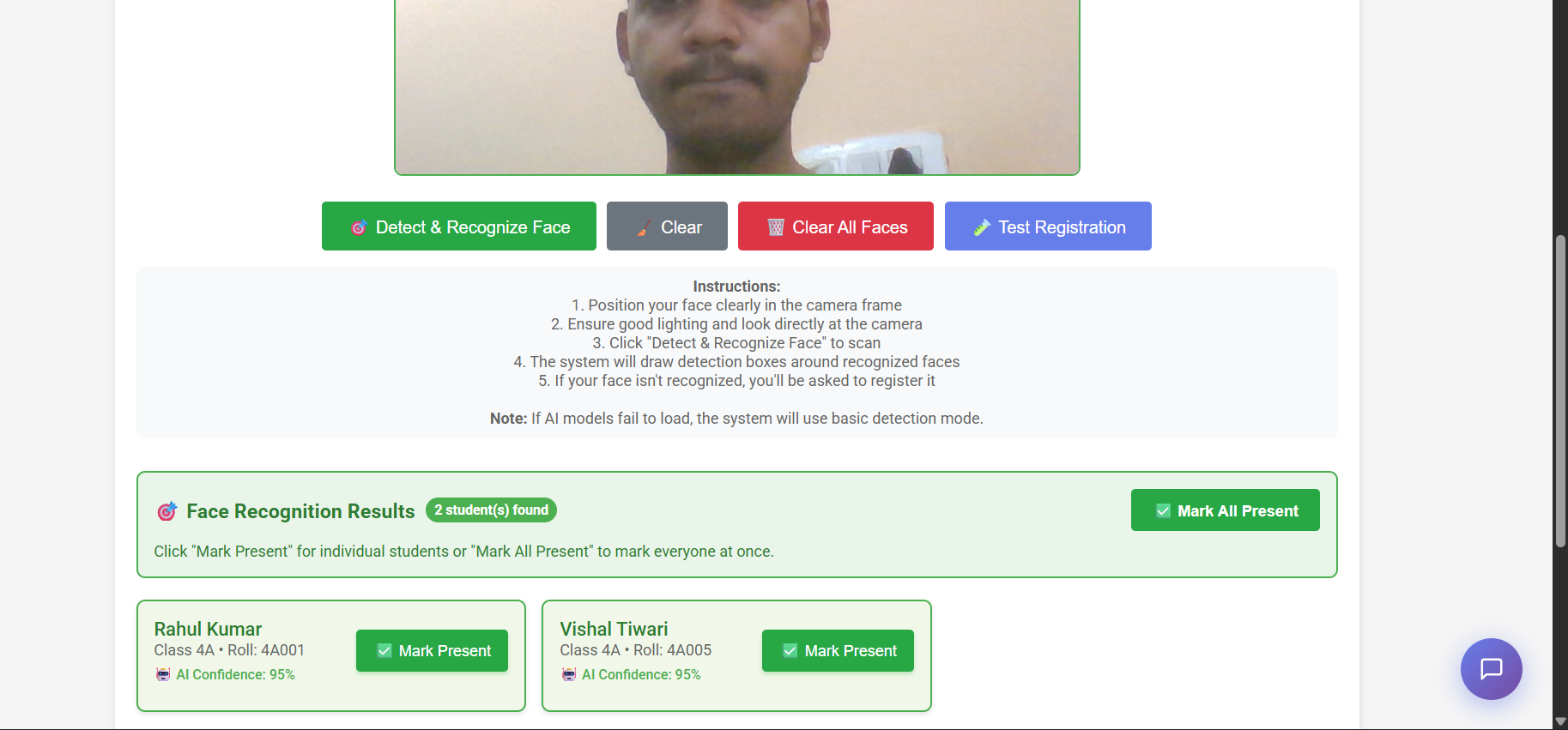
facial recognition and detection and marking through ai matching
-
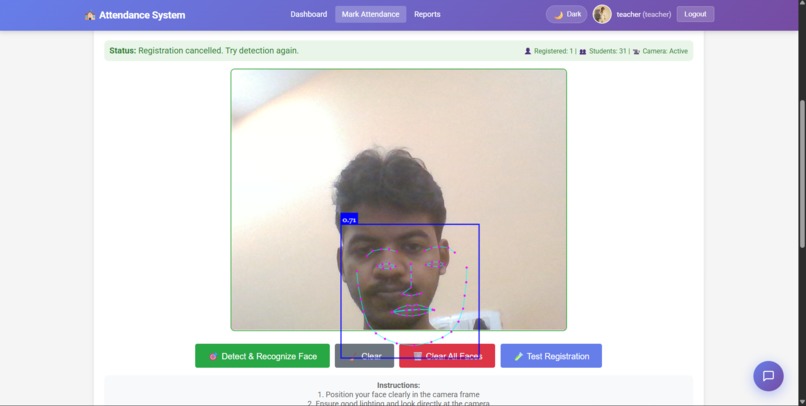
Ai facial detection
-
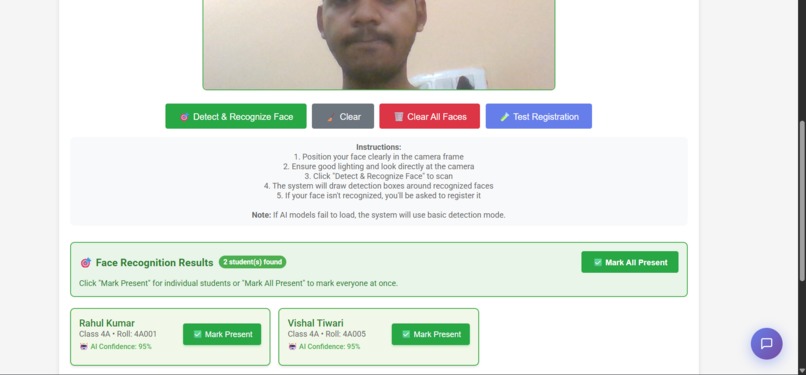
attendance marking via facial detection
-
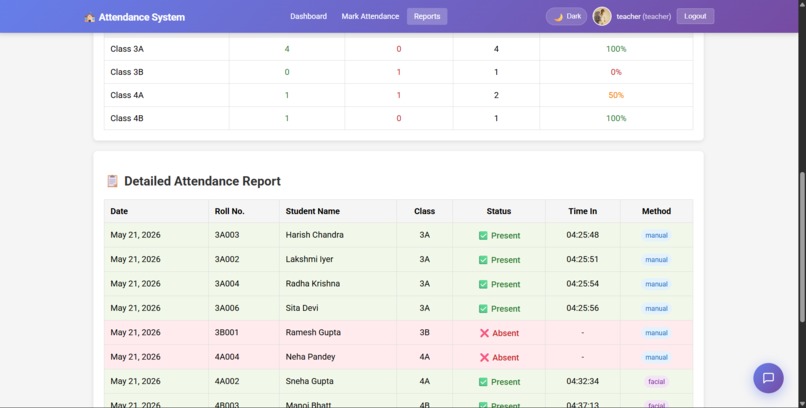
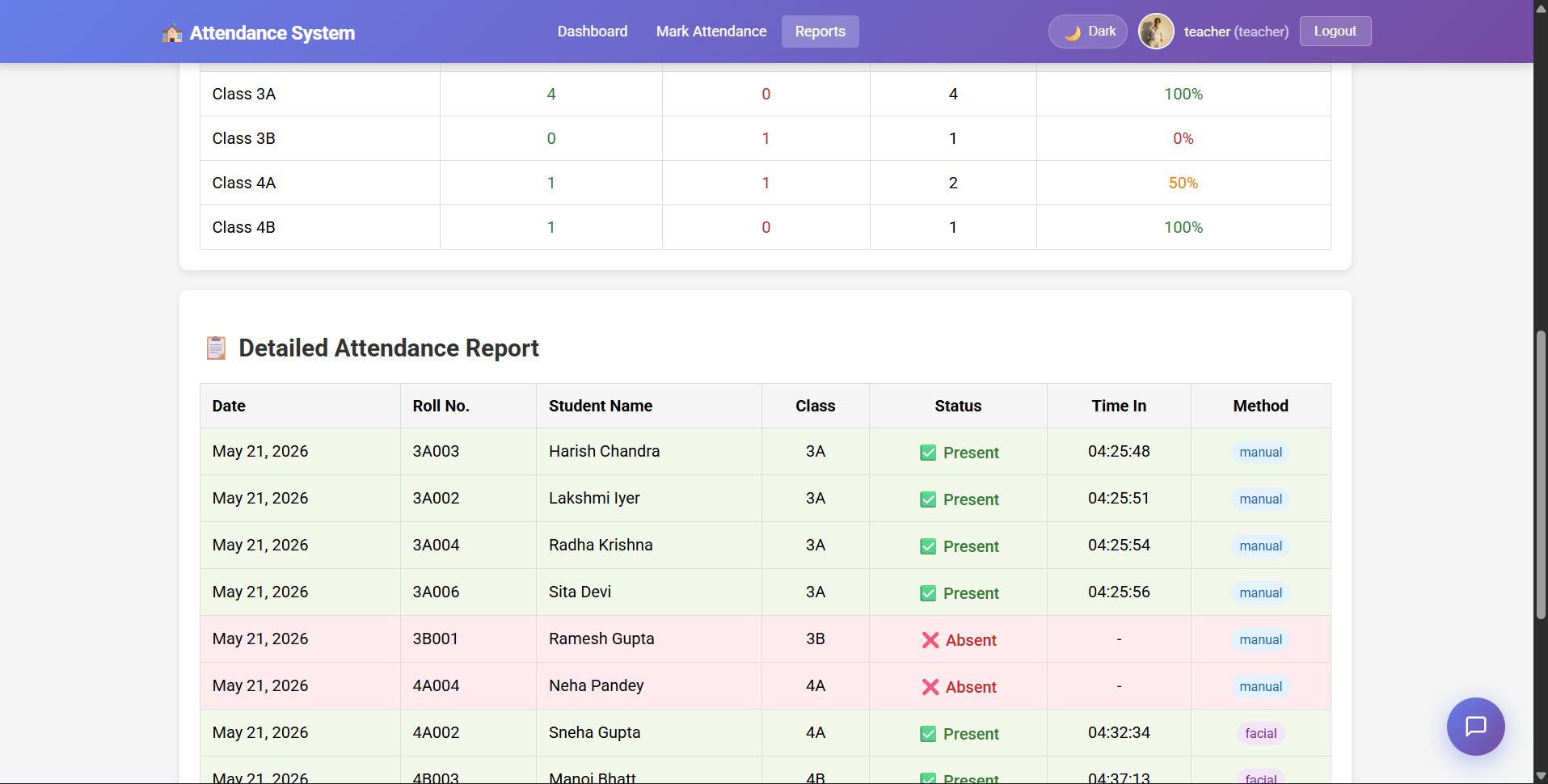
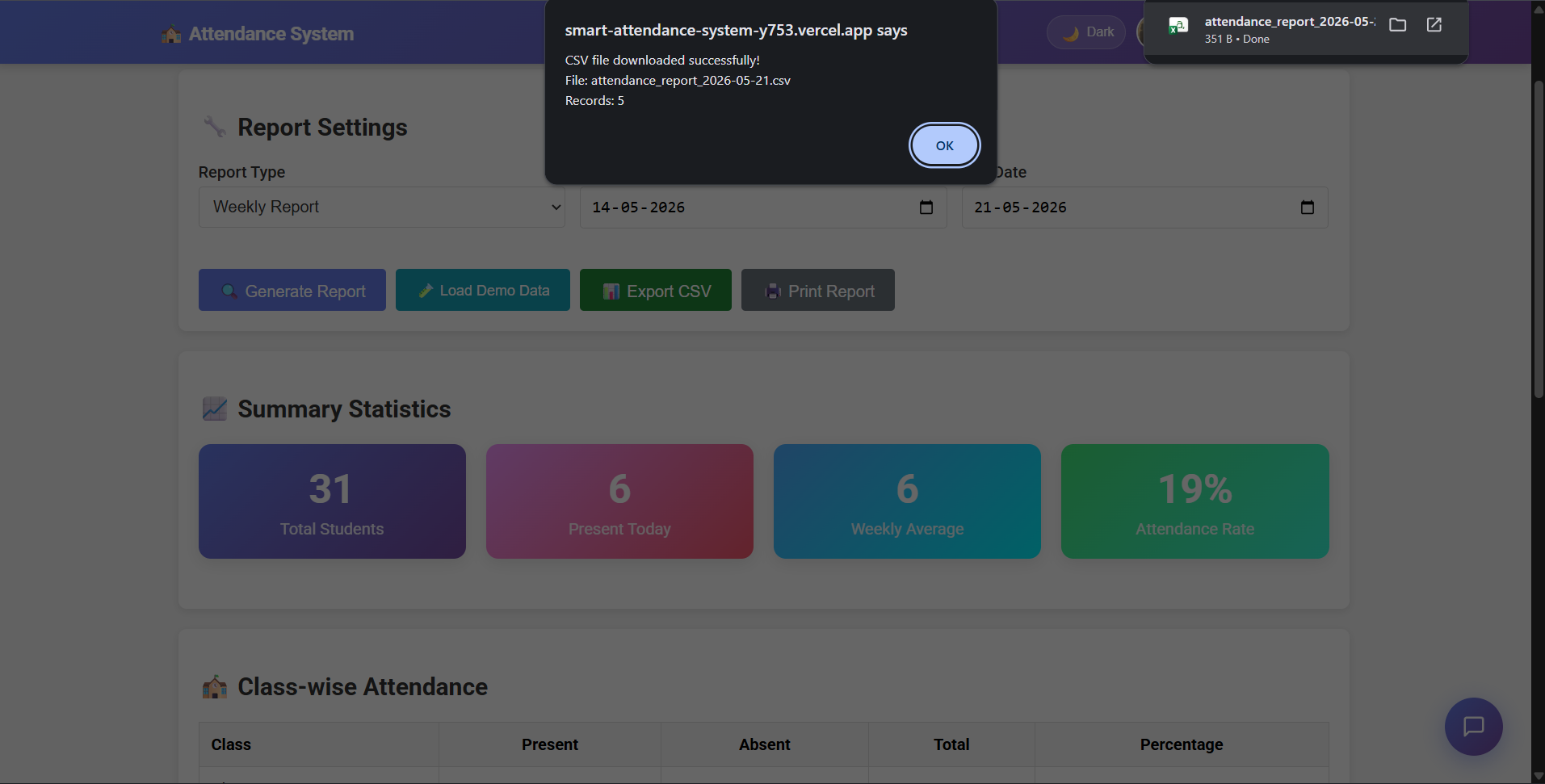
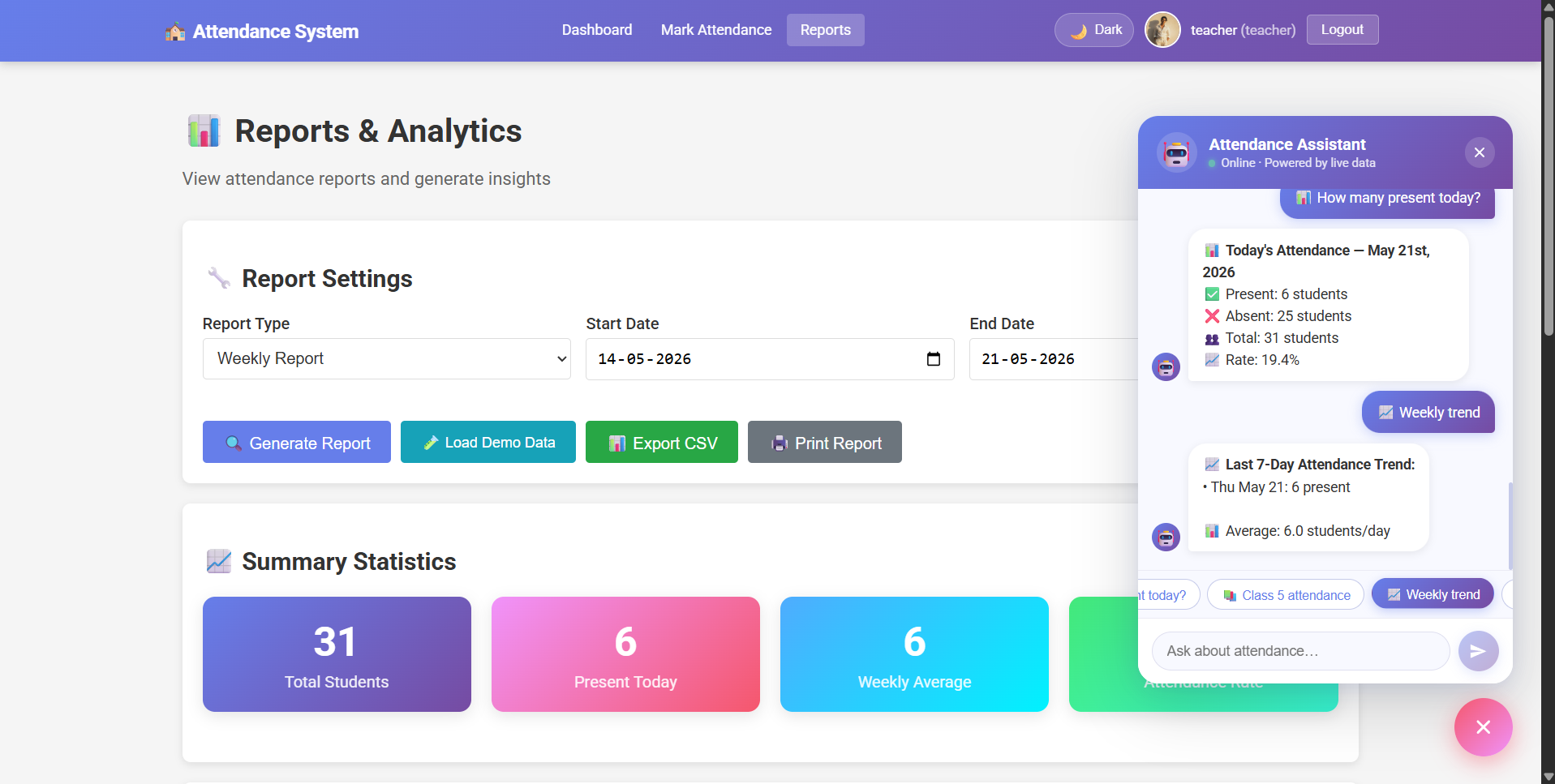
Attendence report
-
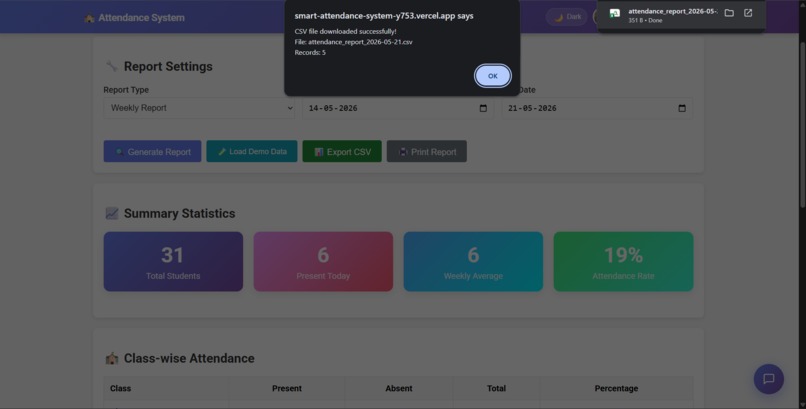
Downloading csv format report
-
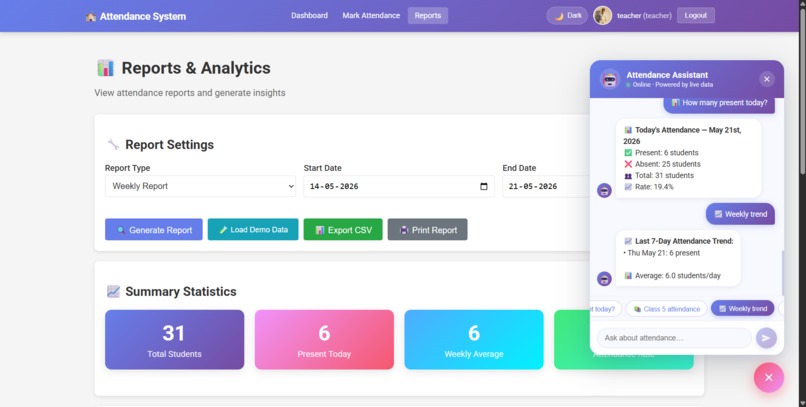
Heurisitical based ai chatbot to answer basic questions
🏫 Global Rural School Attendance System An automated, edge-optimized tracking architecture leveraging manual backup, facial AI, and hardware-less RFID validation for under-resourced schools worldwide. "Our goal was simple: bridge the brutal digital divide in remote classrooms globally, and turn lost morning administrative chaos back into high-quality teaching time."
💡 The Spark (Inspiration)
If you step into almost any marginalized rural school around the world, you’ll see teachers battling the exact same invisible time-sink: morning paperwork. Traditional, manual roll calls end up eating away nearly 10% of the active instructional day. In under-funded classrooms, this administrative leak isn't just annoying—it directly compromises student engagement and distorts critical data tracking.
What's worse is that major international aid structures—like the UN's Sustainable Development Goal 4 (Quality Education), global School Feeding Programmes, and longitudinal literacy metrics—depend entirely on bulletproof daily verification data. When schools rely on messy manual paper ledgers, it leads to massive resource misallocation and logistical shortfalls. We built this project to take heavy, expensive tech (Computer Vision, AI, and IoT) and strip away the cloud dependencies, creating a hyper-accessible, offline-first platform tailored for the world's toughest infrastructure constraints.
🛠️ What It Actually Does
Flexible Tri-Modal Check-Ins: Teachers aren't forced into one box. They can log attendance manually on a clean grid, let our client-side facial AI (face-api.js) do the heavy lifting, or utilize quick RFID scans.
True Browser-Side Edge AI: By running face detection and vector matching directly inside the local browser page, the app handles biometric check-ins seamlessly without requiring any internet connection at all.
Natural Language Data Companion: Instead of forcing non-technical users to navigate confusing data tables, we built a floating AI assistant widget. Teachers can simply ask it questions like "Who missed class today?" or "Is Maria present?" to get instant answers parsed straight from the database.
Instant Regulatory Exports: The system generates automated daily, weekly, and monthly attendance charts that can be printed or exported to CSV instantly to satisfy administrative or nutritional audits.
Power-Failure Resilience: A custom dark-mode state machine dynamically smooths visual transitions, adapting instantly to harsh classroom glare or sudden, unexpected power grid outages.
🏗️ Engineering: How We Built It
The core philosophy behind our architecture was simple: zero external network reliance. We accomplished this by pushing all heavy computing straight to the edge (the teacher's device browser).
The Tri-Modal Core Pipeline Manual Grid: Built using a lightweight UI state manager with persisted local overrides for instant, zero-hardware adjustments.
On-Device Facial Recognition: We configured face-api.js alongside WebGL browser acceleration. Face detection and embedding alignments happen strictly locally, skipping the need to stream heavy video data to an expensive cloud server over patch 2G or 3G networks. RFID Stream Integration: We built hardware emulators to process incoming tag streams on the fly, writing custom filters to ensure duplicate scans are caught and dropped instantly before polluting the session database.Session Integrity & The Interaction Layer We wrapped the session layer in strict, locally managed JSON Web Tokens (JWT) mapped to the typical 24-hour academic cycle. For the AI assistant, rather than using rigid hardcoded responses, we wrote a translation layer that reads the user’s natural intent, queries the active database tables locally, and formats the response back in plain text.
🛑 Roadblocks & Technical Challenges We Faced
Developing Reliable Metrics for Global Efficiency: Designing a clean data structure that accurately catches attendance anomalies across wildly diverse classroom sizes and schedules. The Ambient Lighting Nightmare: Erratic, low-light classroom conditions frequently caused computer vision models to throw unstable confidence scores. We solved this by locking down our Euclidean distance threshold to a strict <= 0.45 limit.
Severe Network Latency: Dealing with heavy web dependencies in environments where cloud-based video streaming is fundamentally broken.
Grid Multi-稳定性(stability) (Infrastructure Drops): Handling constant power-shedding without risking database corruption or losing active session data.
The User-Adoption Hurdle: Ensuring that complex data structures remained readable and completely un-intimidating for teachers who have never used digital management software before.
🏆 Wins We're Genuinely Proud Of
A Flawless Tri-Modal Engine: Successfully building a system that lets manual overrides, browser-based facial AI, and RFID inputs live together inside a single, beautifully synchronized UI dashboard.
Beating the Cloud Dependency: Proving that you can deliver reliable, state-of-the-art computer vision to schools with terrible internet connections by forcing the browser to handle the computational math.
Humanizing Data Analytics: Turning complex backend database queries into a natural conversation, effectively giving remote teachers their own virtual assistant.
Bridging Code to Real-World Impact: Designing a tool that generates verified, instant compliance data exports to keep global literacy and school meal programs flawlessly funded.
🧠 Core Takeaways (What We Learned)
This build taught us that a piece of software's user interface is just as critical as its underlying math. You can write the most sophisticated computer vision scripts in the world, but if the end-user finds it confusing or cold, it’s useless. Integrating the conversational database tool completely shifted user adoption—it turned cold, clinical backend analytics into a friendly, relatable daily helper for teachers.
🚀 The Next Horizon
Offline-First Synchronization Mesh: We are currently building out an offline-first Service Worker architecture. This will enable the entire application to run seamlessly during prolonged infrastructure grid failures, queuing up local mutations and syncing them to central servers only when a stable connection returns.
Transitioning to Predictive ML Chatbots: We intend to evolve our current rule-based database assistant into a trained machine learning model. Instead of just answering questions about what has happened, it will proactively analyze historic trends to flag student dropout risks and assist school administrators with predictive scheduling.
Built With
- express.js
- face-api.js
- material-ui
- moment.js
- multer
- node.js
- react
- sqlite
- vanilla


Log in or sign up for Devpost to join the conversation.