Inspiration
🌾 Rural Health Navigator — Project Description
🚀 Inspiration
In rural areas, people often lack quick access to healthcare and cannot spend time filling long forms during emergencies. This project was built to provide fast, simple, and accessible health guidance, even in urgent situations and multiple languages.
💡 Idea
What it does
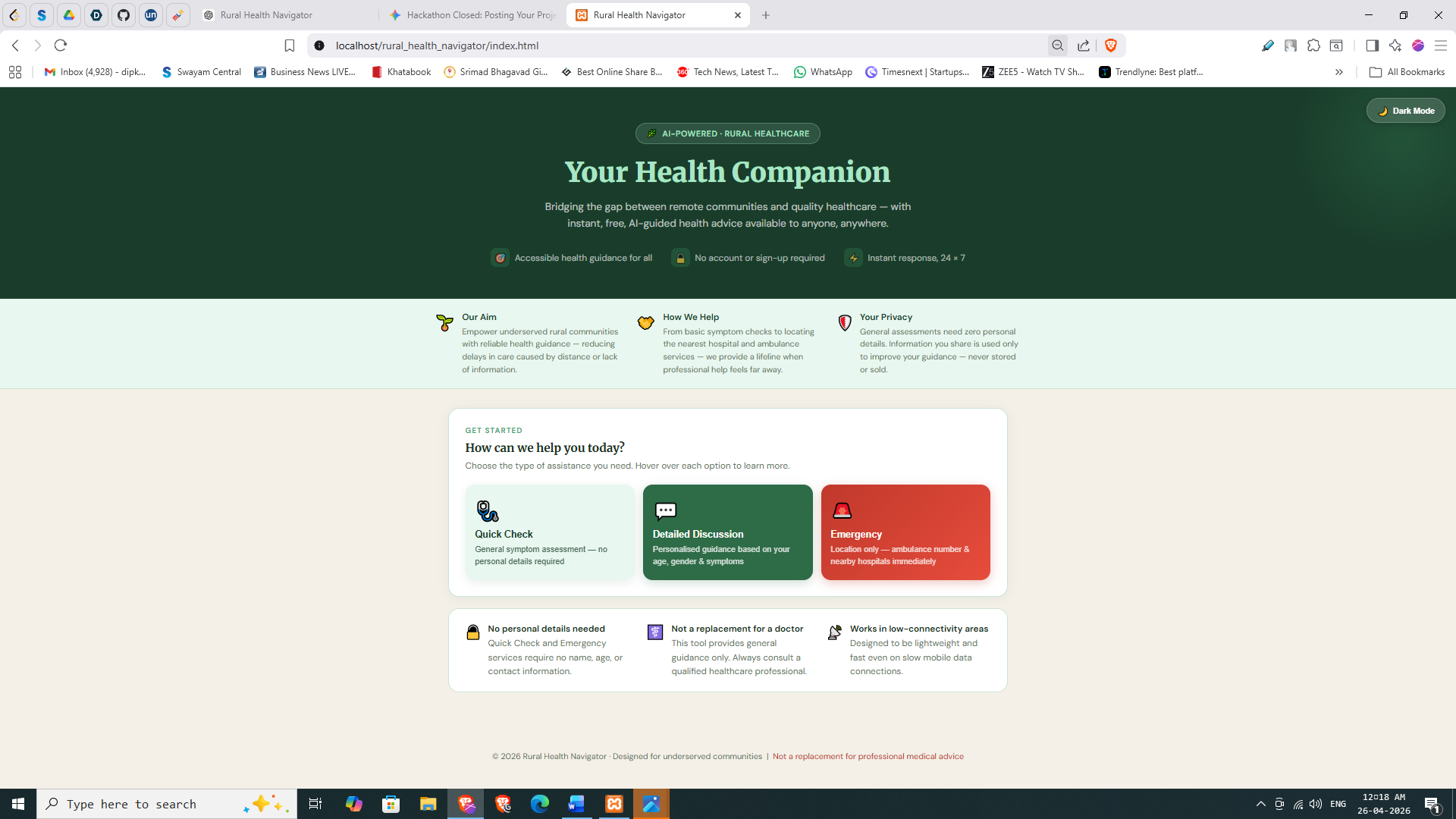
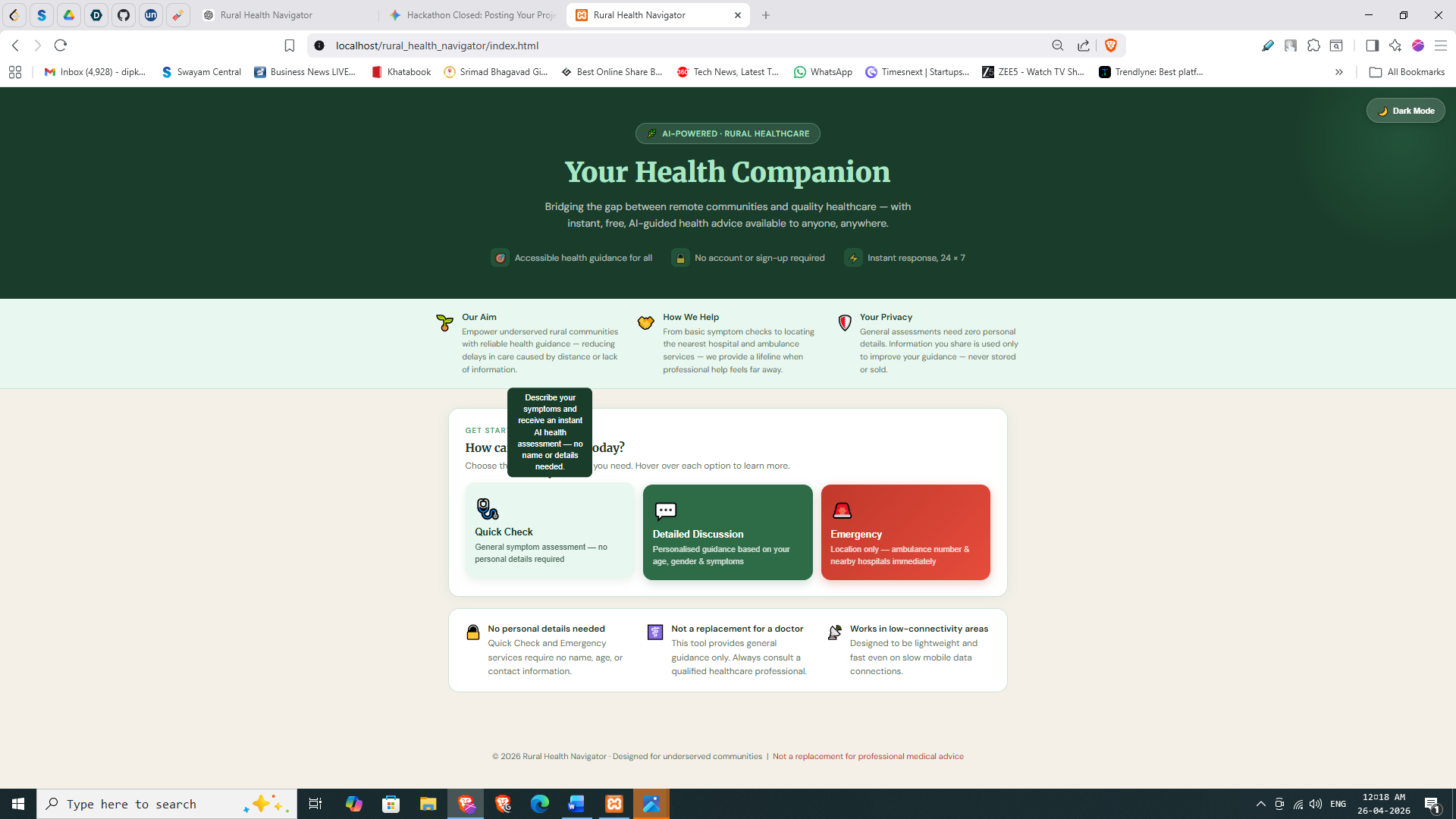
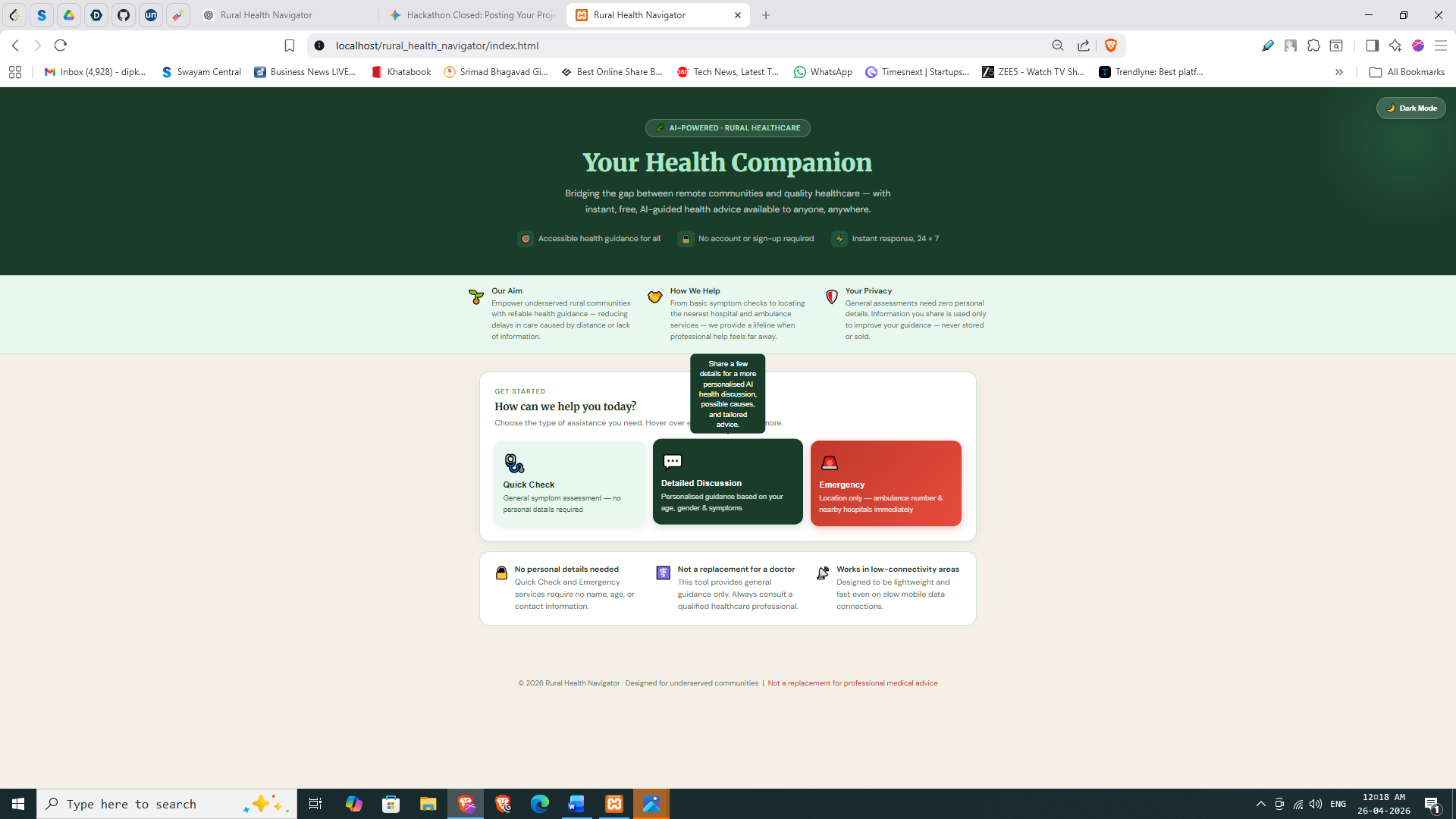
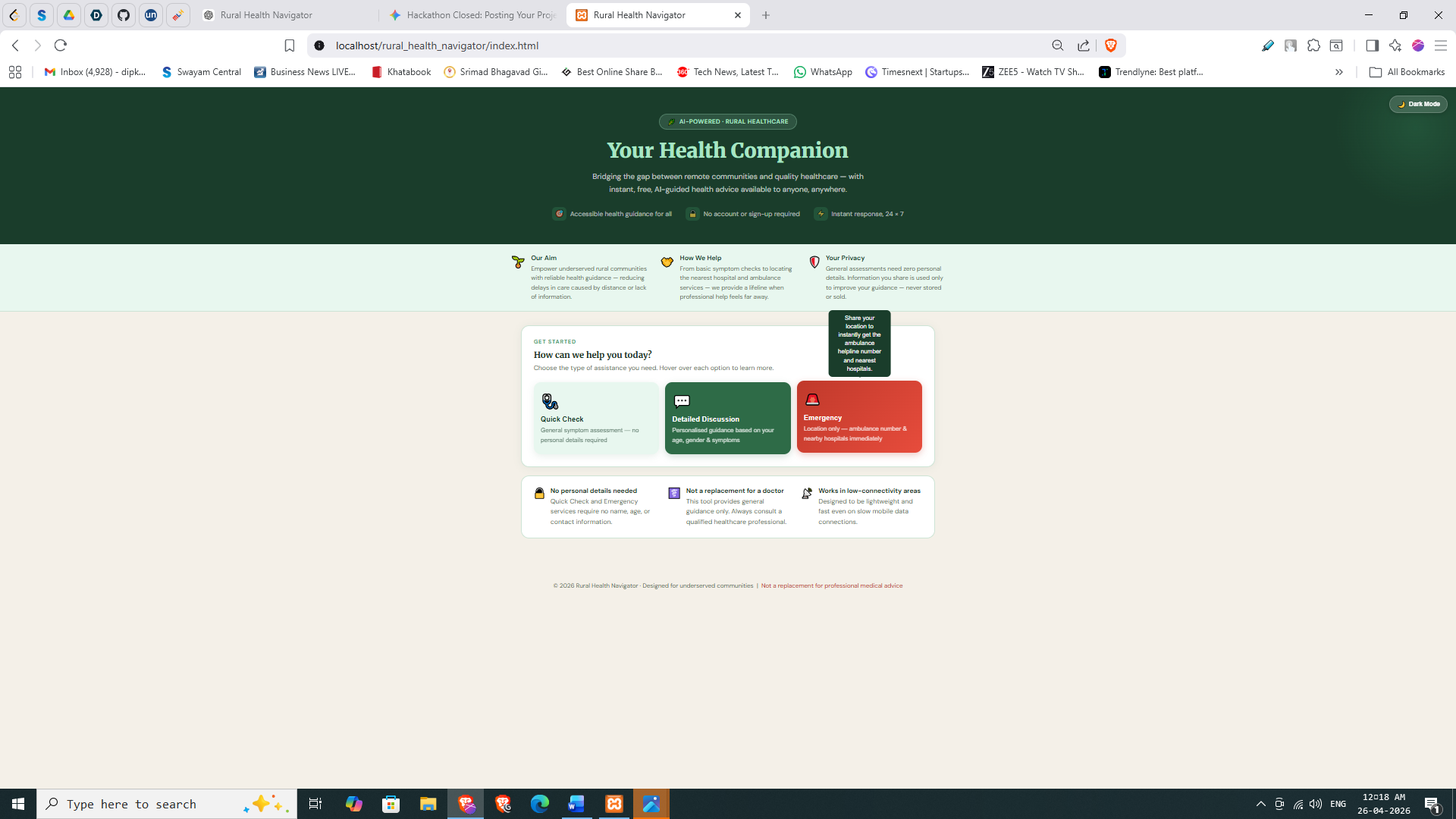
Rural Health Navigator is an AI-based web app where users can:
- Select their preferred Indian language
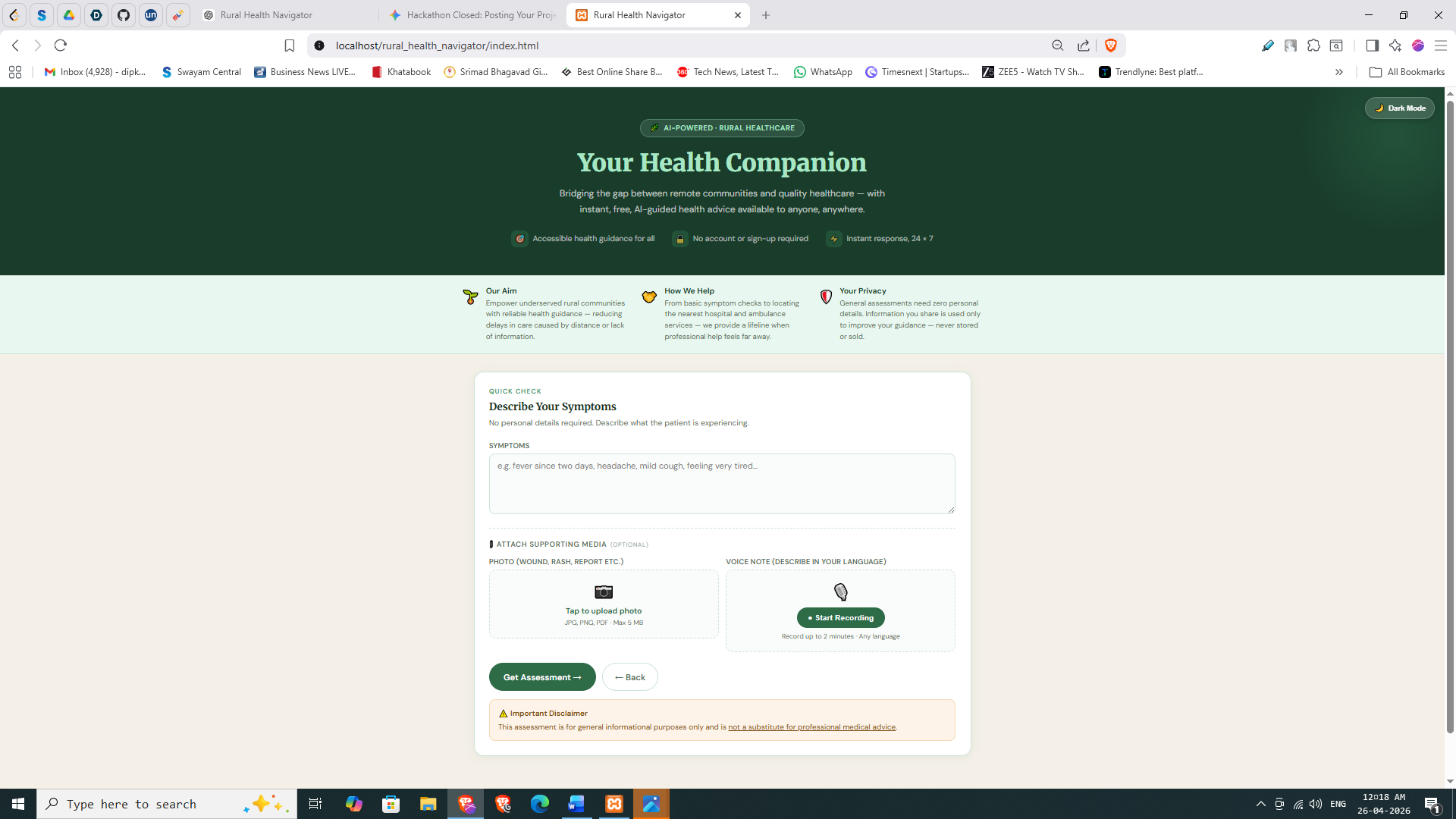
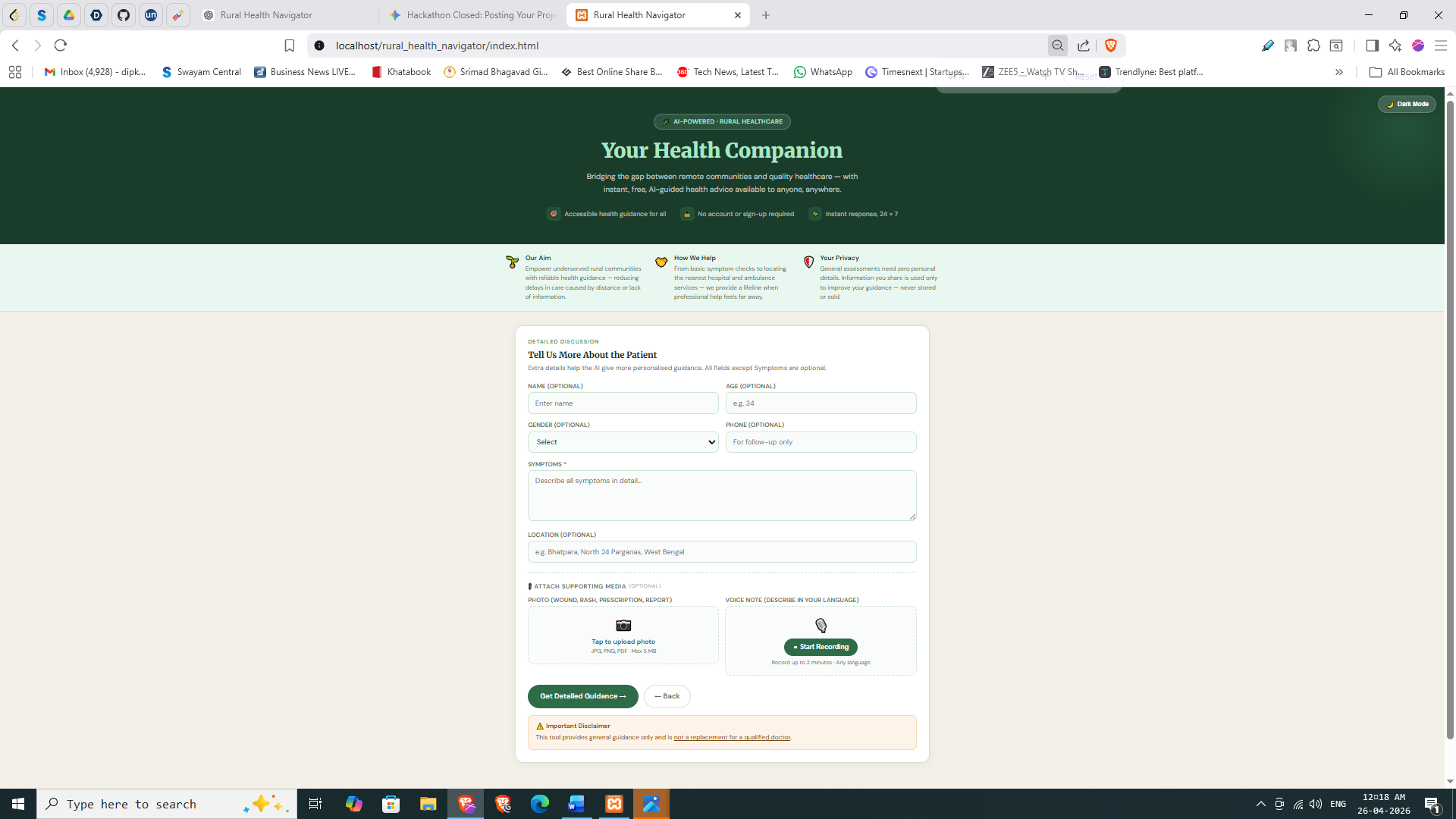
- Enter symptoms via text, voice, or image
- Get AI-based analysis (category, urgency, missing info)
- Answer follow-up questions if needed
- Receive final health advice and next steps
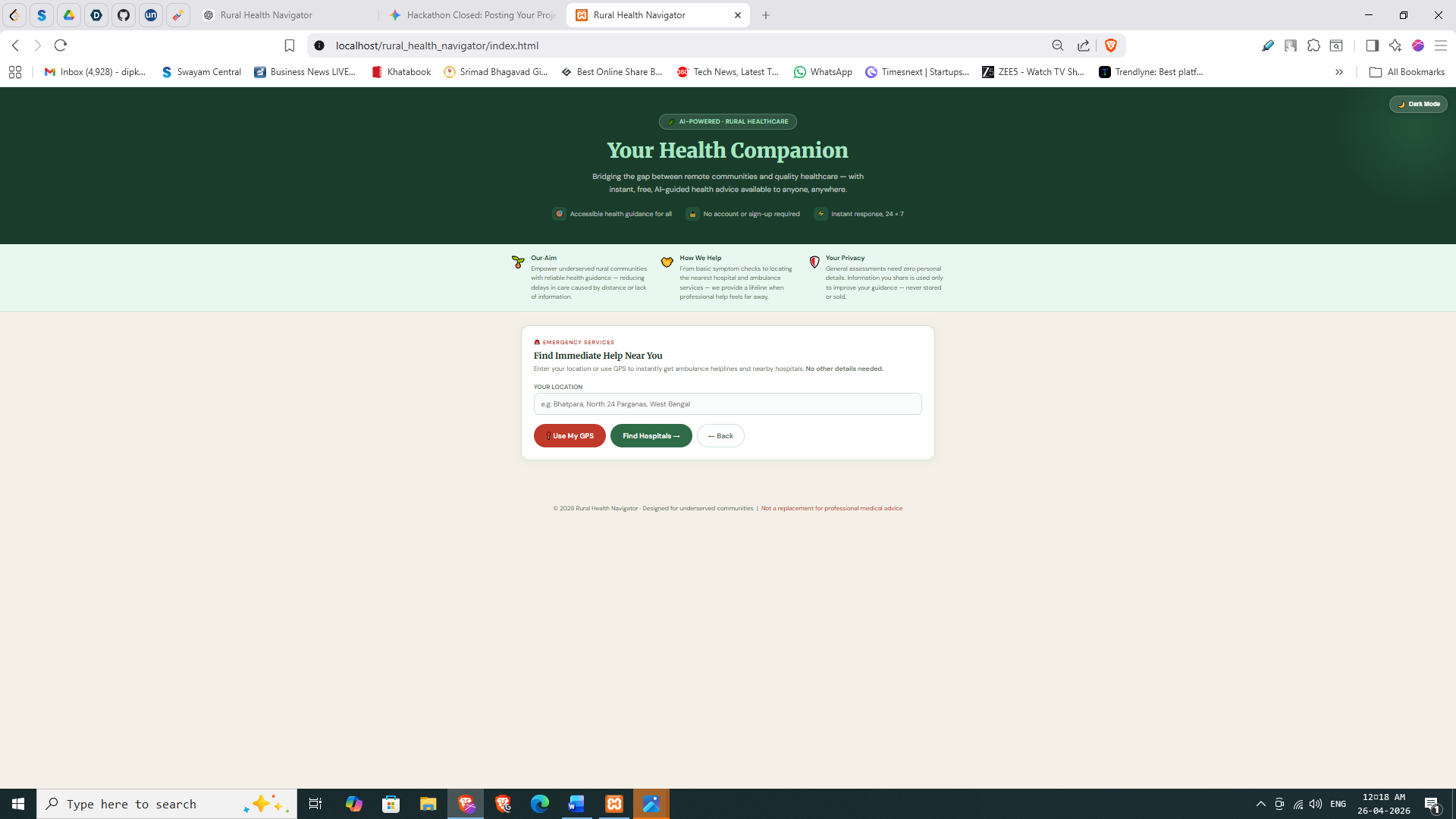
- Access emergency help with location-based hospital suggestions
🔄 Flow
User selects language → enters symptoms → backend stores data → AI analyzes → asks follow-ups (if needed) → gives final guidance → emergency support (optional)
🛠️ How I Built It
- Frontend: Simple, user-friendly interface focused on accessibility
- Backend: PHP + MySQL with structured database (sessions, assessments, media, emergency, etc.)
Features:
- Voice + image support
- AI-based decision logic
- Location-based hospital suggestions
📚 What I Learned
- Backend system design and database structuring
- Building AI-like decision flows
- Designing for real-world users, especially in emergencies
- Importance of privacy and data handling
⚠️ Challenges
- Designing for emergency use (users won’t type much)
- Handling voice and multi-language inputs
- Simulating AI without a full ML model
- Managing location and real-time data
🏁 Conclusion
This project focuses on making healthcare guidance fast, simple, and accessible, especially for rural users where timely decisions can save lives.
🏆 Accomplishments that I'm Proud Of
- Designed a complete system architecture from scratch, including frontend, backend, and database
- Built a real-world problem-focused solution instead of just a basic CRUD project
- Created a well-structured and scalable database schema with proper relationships and privacy considerations
- Implemented symptom input handling (text + media support) and data storage
- Added session-based tracking to manage user interactions cleanly
- Thought through emergency scenarios and user behavior, which most beginner projects ignore
- Laid the groundwork for AI integration, including flow for analysis, follow-up questions, and decision-making
🔮 What's Next for Rural Health Navigator Agent
Implement the actual AI/ML model for:
- Symptom classification
- Urgency prediction
- Intelligent follow-up questioning
Add speech-to-text processing for voice inputs
Integrate multi-language support for major Indian languages
Build location-based emergency assistance using maps and nearby hospital APIs
Improve backend with:
- Automated data cleanup (cron jobs)
- Faster queries (indexing, optimization)
Develop a real-time response system instead of static/general outputs
Add user authentication (optional) for long-term tracking and personalization
Move towards a mobile-friendly or app version for better accessibility in rural areas
Current Status: The system currently collects user problems, stores them efficiently, and provides general guidance. The core AI intelligence is planned and structured but not fully implemented yet — making this a strong foundation for future development rather than a finished product.

Log in or sign up for Devpost to join the conversation.