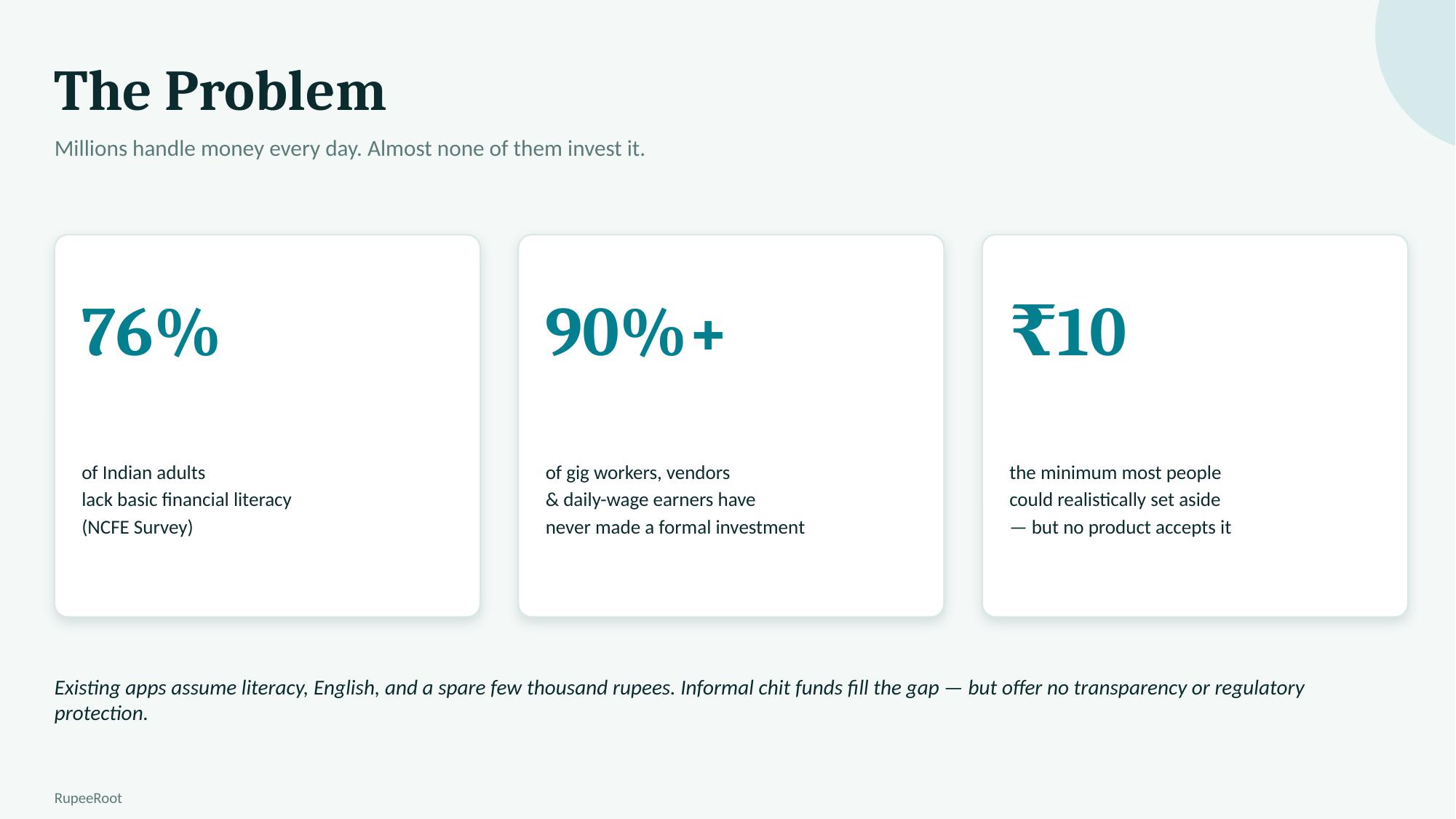
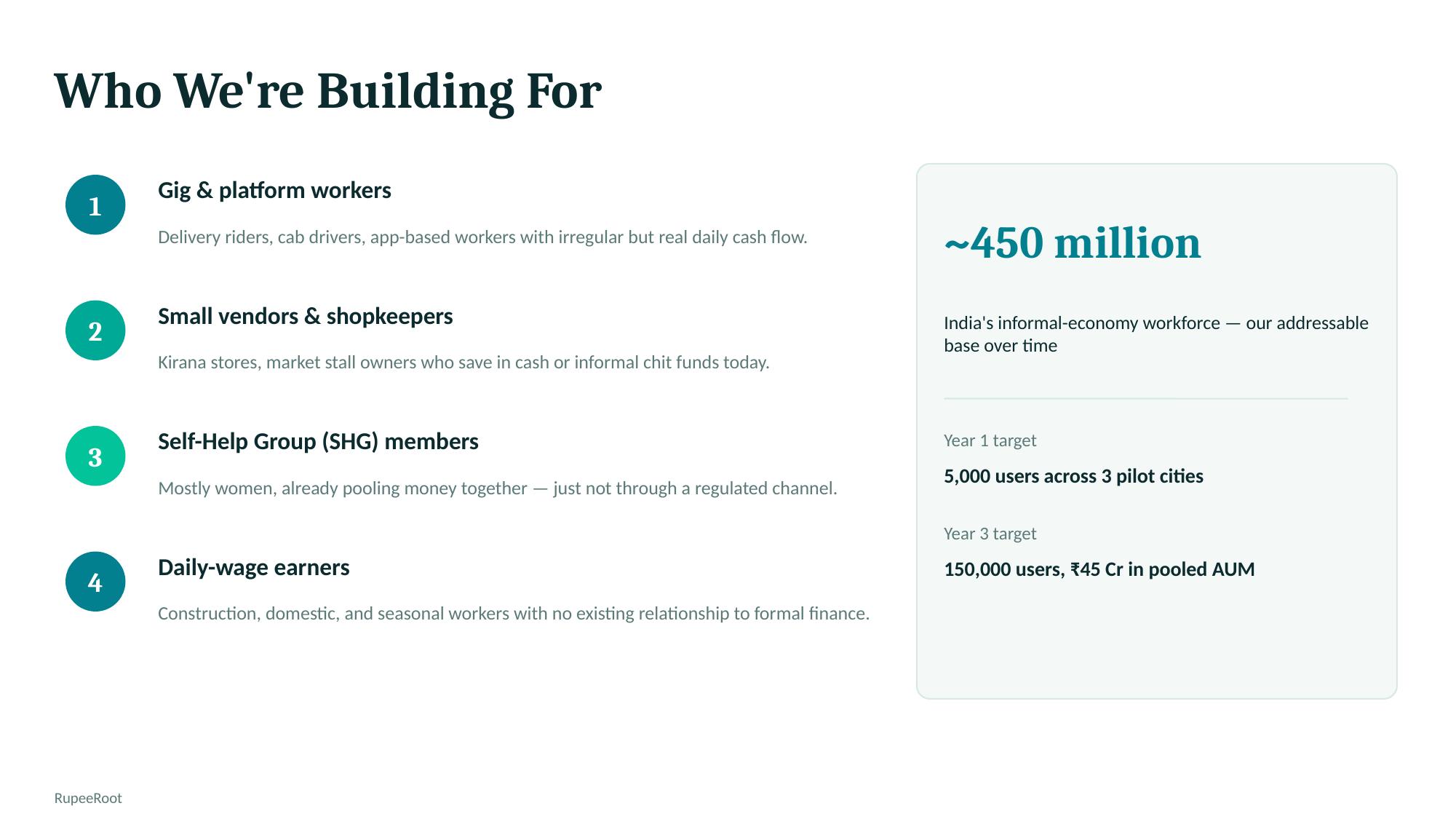
RupeeRoot is a micro-investment and financial literacy concept built for India's gig workers, small vendors, and daily wage earners, the 90% of the country that handles money every day but has never made a single formal investment.
The idea: pool tiny amounts (starting at ₹10) into safe, regulated instruments through "Money Circles" - small trust-based groups modelled on the informal chit funds and self help groups people already use, but made transparent and regulator backed. A voice first, vernacular onboarding flow replaces forms and jargon with everyday explanations.
It's a non code submission: the work here is the business model, the financial structure, and the service design that could make formal investing feel as familiar as the informal saving habits people already trust.
Inspiration
Every day, millions of gig workers, small vendors, and daily wage earners across India handle real money, but almost none of them have ever invested a single rupee. Not because they don't want to, but because the entire financial system is built for people who already have savings, English literacy, and a bank relationship manager on speed dial.
I kept coming back to one question from my own work in finance: why does "investing" still feel like a service for the wealthy, when the tools to democratize it have existed for years? RupeeRoot started as an answer to that question, not a new app for people who already use Zerodha or Groww, but a financial on ramp for the 90% of India that doesn't.
What it does
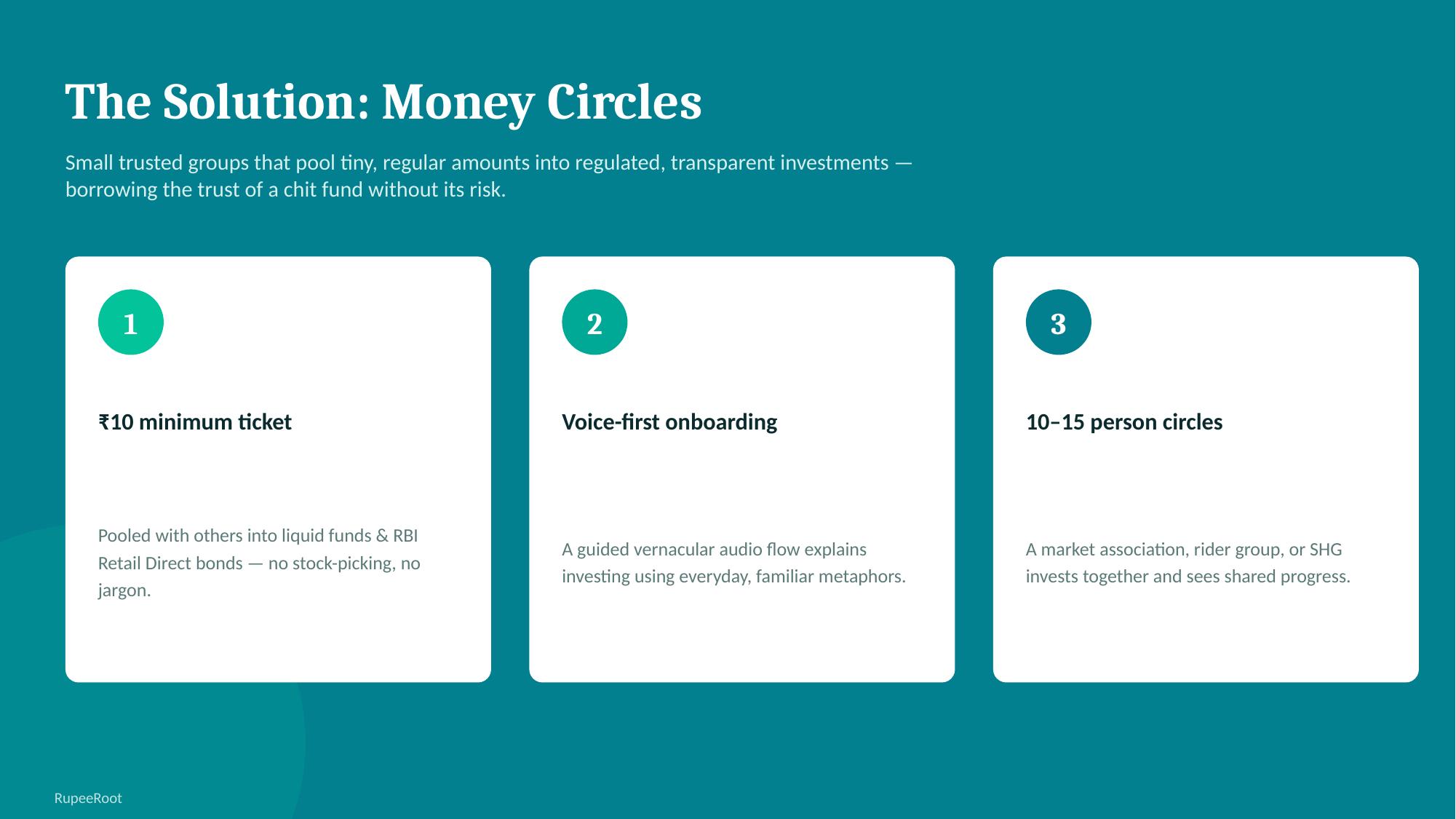
RupeeRoot is a community-first micro-investment and financial literacy model built around three ideas:
- ₹10 minimum investment, pooled into low risk, government backed instruments (liquid funds, RBI retail direct bonds) — no stock picking, no jargon.
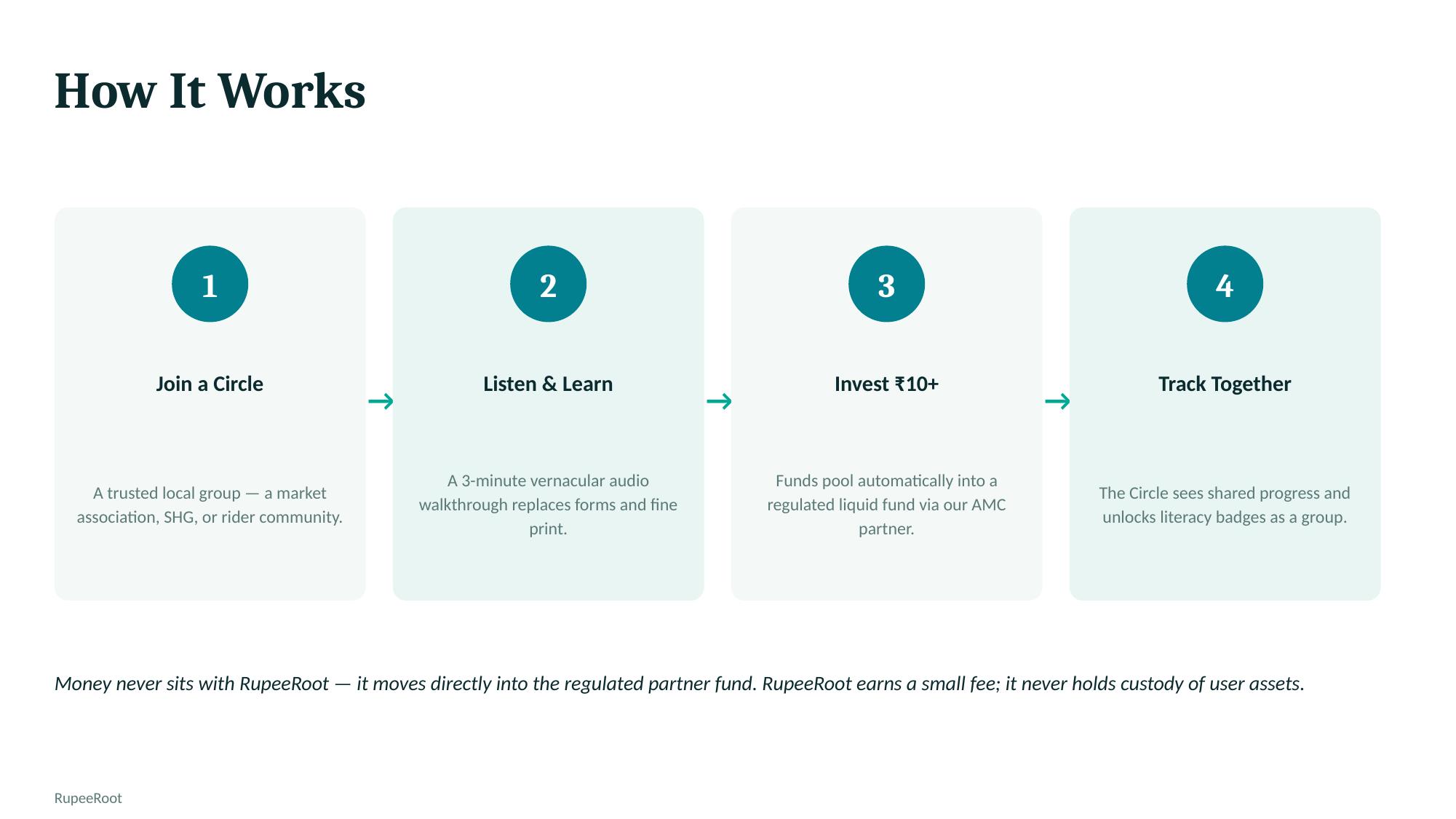
- Voice first, vernacular onboarding. No forms to read - a guided audio flow in the user's own language explains what a "mutual fund" actually is, using everyday metaphors (a chit fund, but transparent and regulated).
- Local "Money Circles" groups of 10–15 people (a market association, a delivery rider WhatsApp group, a women's self help group) invest together, see each other's progress, and unlock small literacy badges, borrowing the trust and peer accountability of India's existing informal savings groups (chit funds, SHGs) but wrapping it in a regulated, transparent structure.
How I built it
Since this is a non-code challenge, "building" here meant building the business, not the app:
- Problem validation through informal conversations with gig workers, local kirana store owners, and members of self help groups in and around Hyderabad, to understand where their money actually goes and why formal investment products feel intimidating or irrelevant to them.
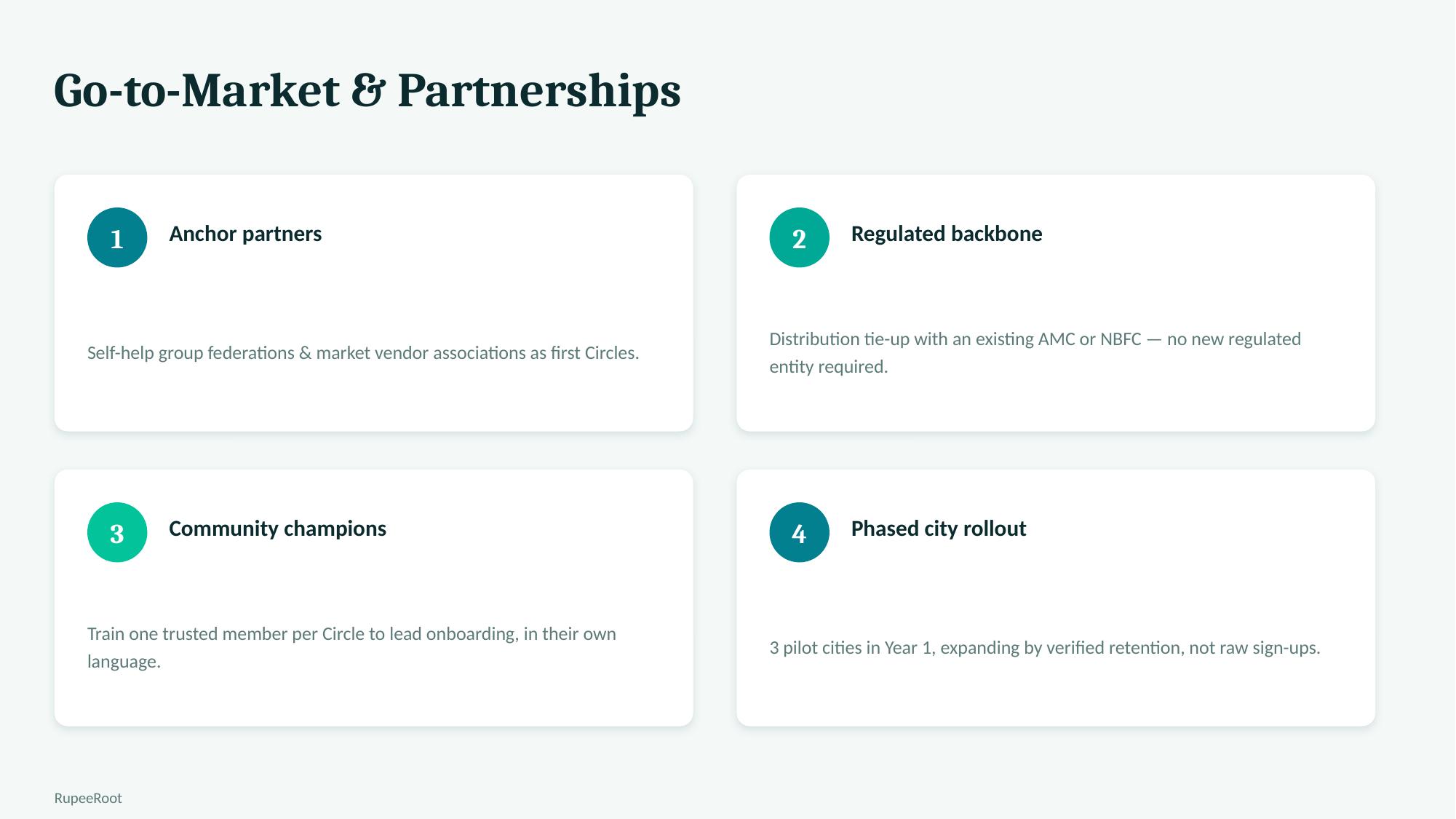
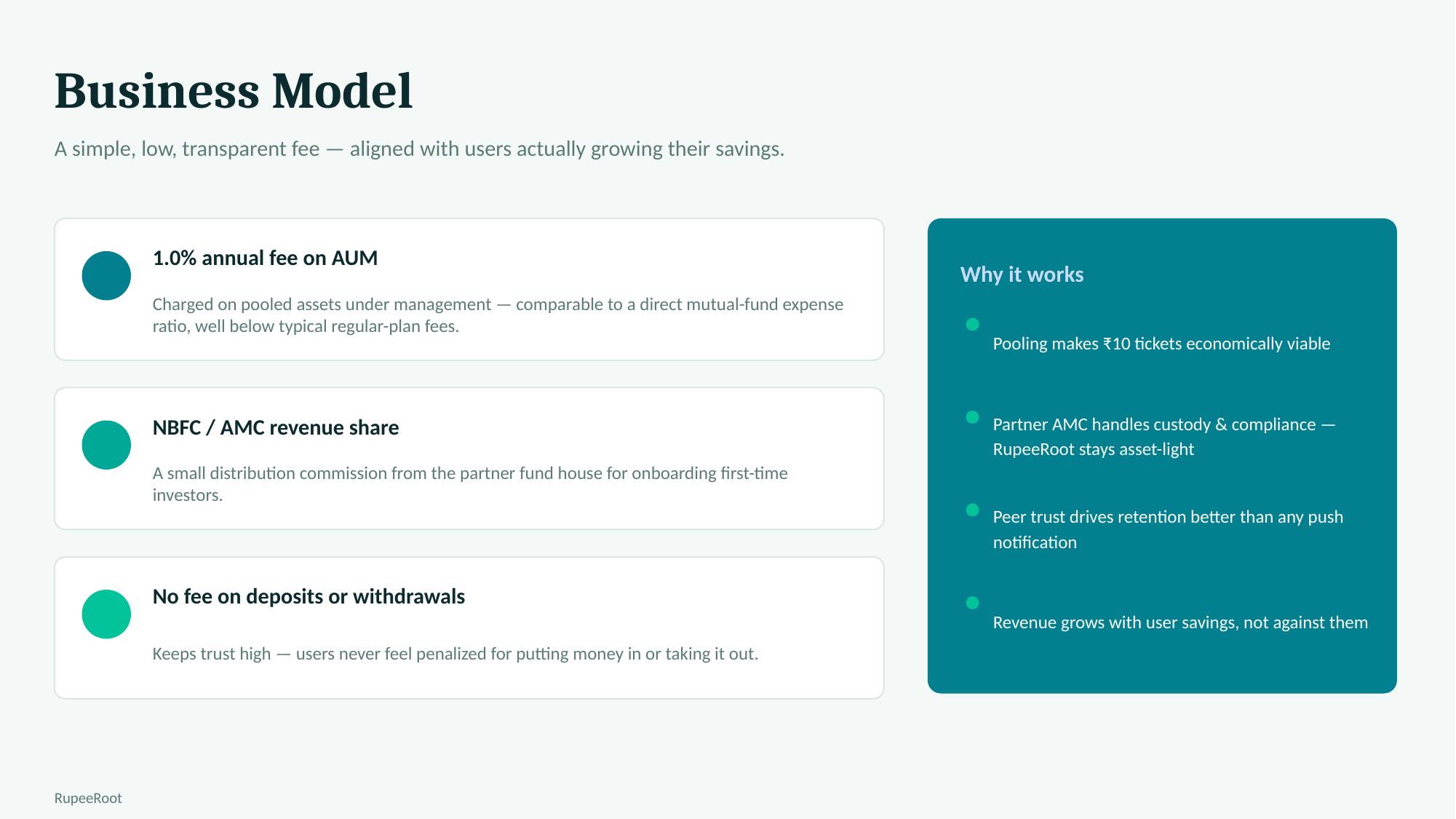
- Financial modelling of the pooled micro investment structure - unit economics, break-even AUM, partner fund selection, and a realistic compliance pathway working with an existing AMC or NBFC rather than building a new regulated entity from scratch.
- Service design of the Money Circle flow - literally sketching the onboarding, group formation, and withdrawal journeys on paper before turning them into wireframes.
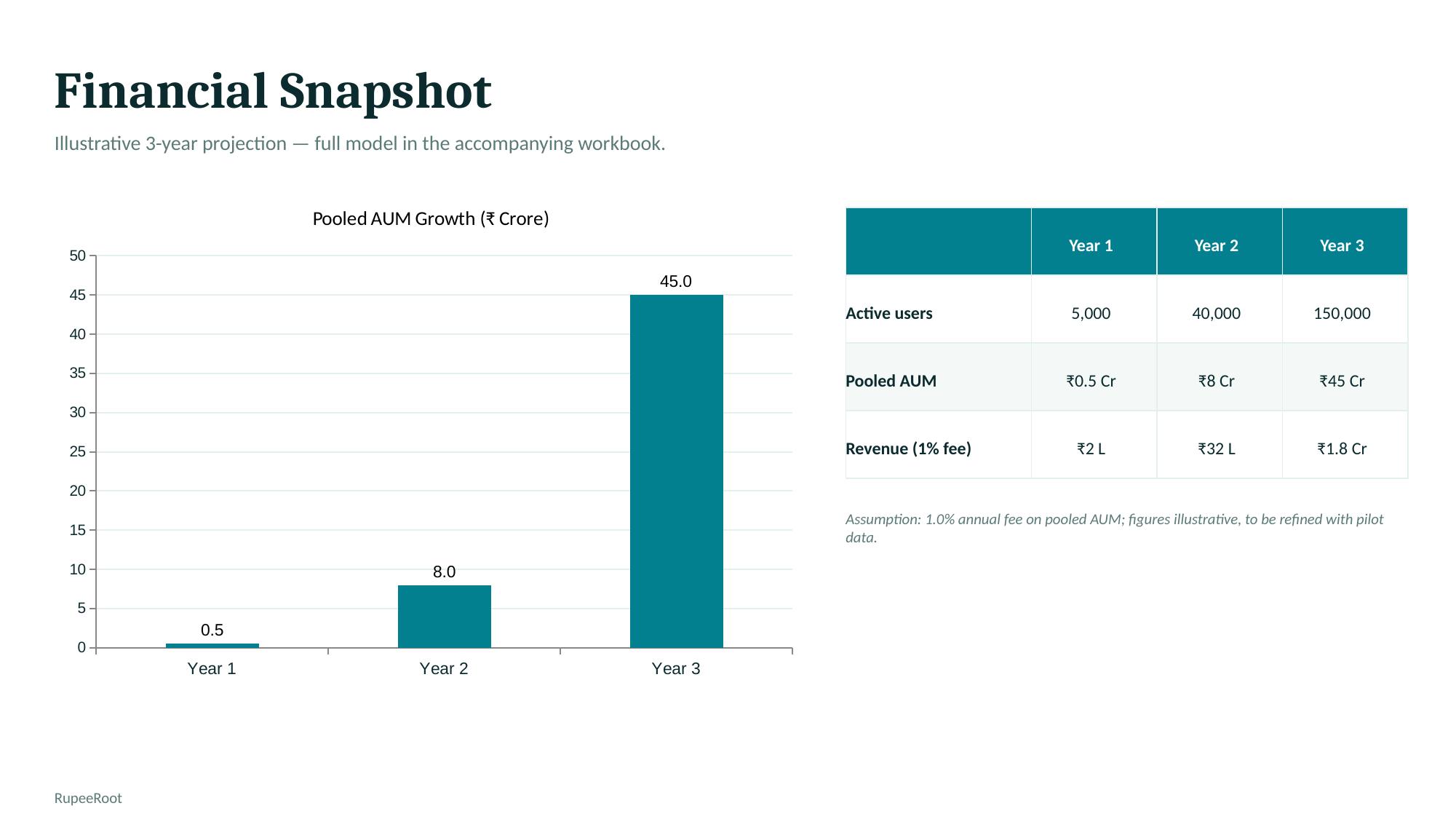
- A go-to-market and revenue model - a small annual fee on assets under management, kept deliberately low, plus potential partnerships with NBFCs and micro lenders who already have trust in these communities.
Challenges I ran into
- Trust is the real product. No amount of clean UI fixes the fact that people have been burned by informal chit funds before. Designing the "Money Circle" so it feels familiar but is structurally transparent and Regulator friendly took more iteration than any financial model did.
- Keeping the minimum investment low without making the unit economics fall apart. ₹10 tickets sound great on a slide and terrible on a spreadsheet, most of the financial modelling time went into figuring out how pooling and partner fund selection could make that number sustainable.
- Resisting the urge to over build. It was tempting to design ten features. The hardest and most useful discipline was cutting the concept down to the two or three things that actually move someone from "I've never invested" to "I just made my first ₹10 investment."
Accomplishments that I’m proud of:
- Designed a micro investment structure that works at ₹10 tickets without breaking the underlying unit economics, the hardest constraint of the entire project.
- Built a "Money Circle" model that borrows the trust of existing informal savings groups (chit funds, SHGs) instead of asking people to abandon what already works for them.
- Mapped a realistic compliance pathway through an existing AMC or NBFC partner, rather than proposing a new regulated entity that would take years to stand up.
- Grounded the whole concept in real conversations with gig workers and Self help group members, not assumptions about what "financial inclusion" should look like.
What I learned
Financial inclusion isn't a product problem, it's a trust and translation problem. The instruments already exist, what's missing is a bridge that respects how people already save money, instead of asking them to abandon that behaviour for something unfamiliar.
What's next for RupeeRoot
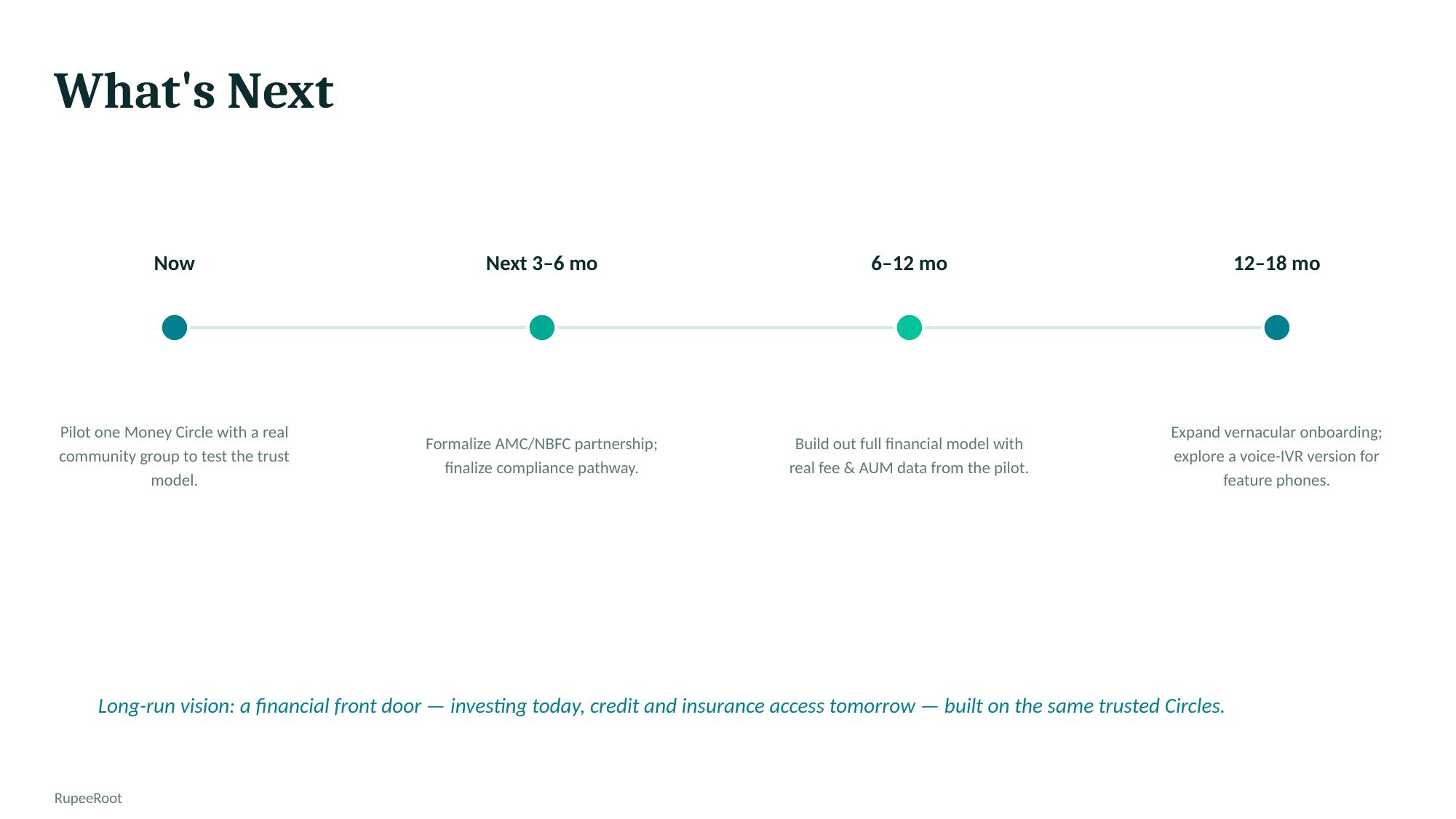
- Pilot a single Money Circle with one real community group to test whether the trust model actually holds up outside a slide deck.
- Formalize partnership conversations with an AMC or NBFC to validate the compliance and custody pathway.
- Build out the full financial model with real fee and AUM assumptions from pilot data.
- Expand the vernacular onboarding to more languages based on where the pilot succeeds.
- Explore a small hardware free "voice IVR" version for users with limited smartphone access.
Built With
- behavioral-finance
- business-model-canvas
- excel
- figma
- financial-inclusion
- financial-modelling
- fintech
- gig-economy
- india
- market-research
- micro-investing
- mutual-funds
- rbi-retail-direc
- service-design
- user-interviews
- vernacular-ux
- wireframing

Log in or sign up for Devpost to join the conversation.