-
-

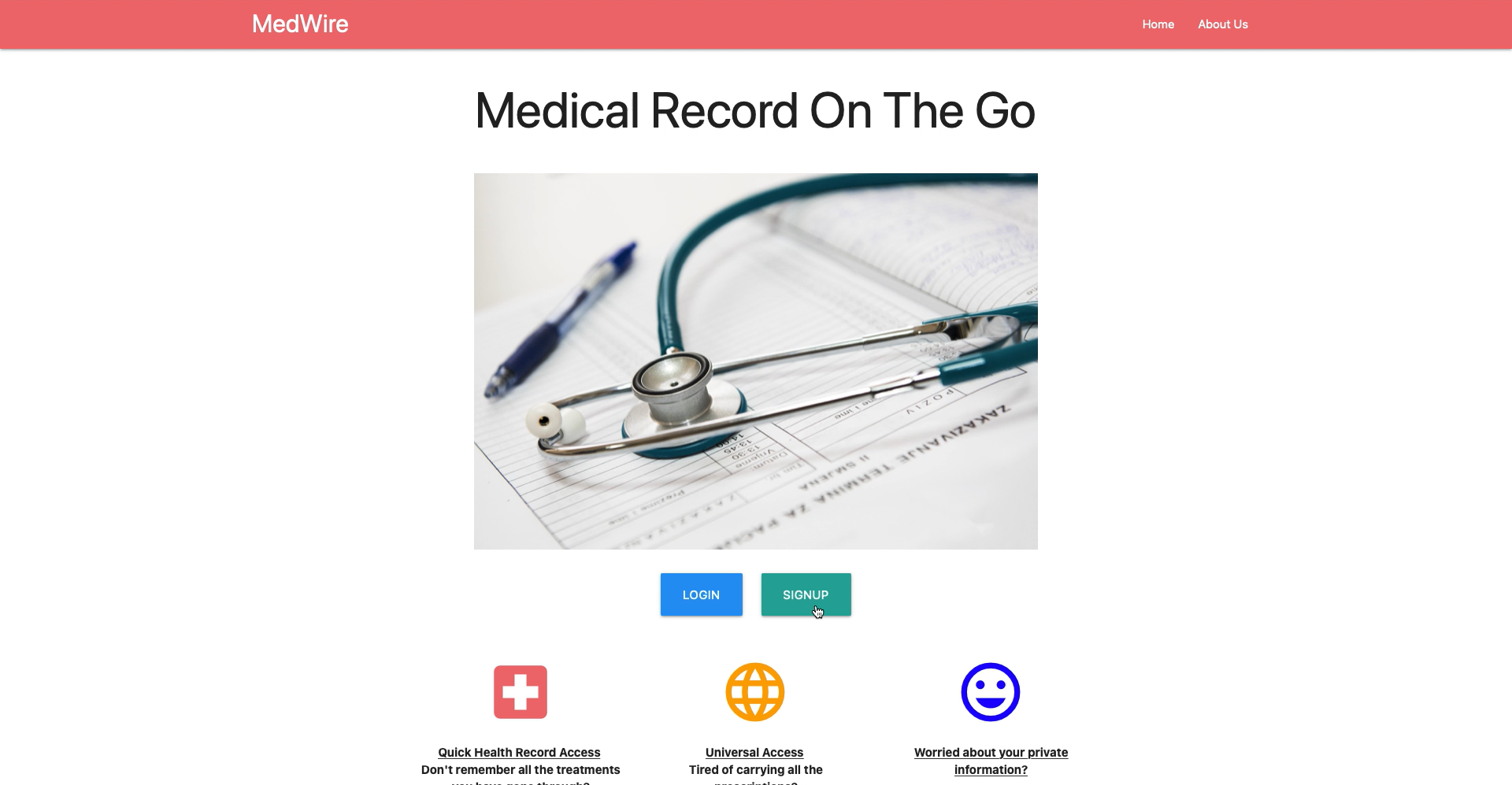
MedWire Logo
-
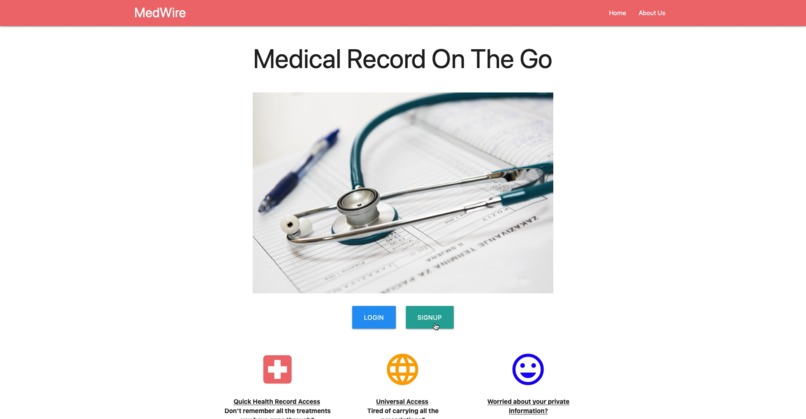
Home Page
-
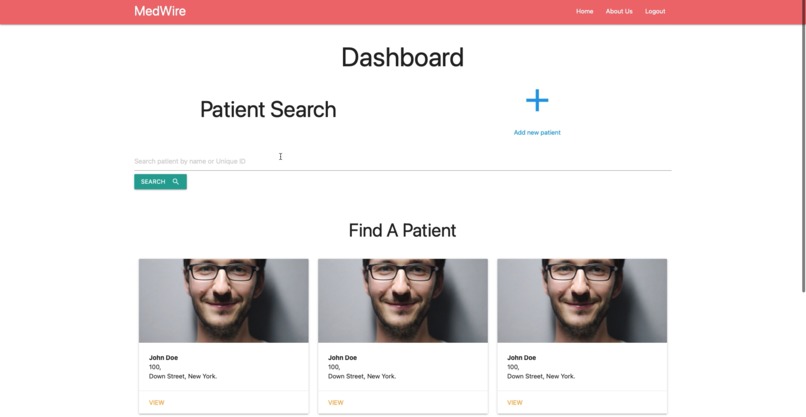
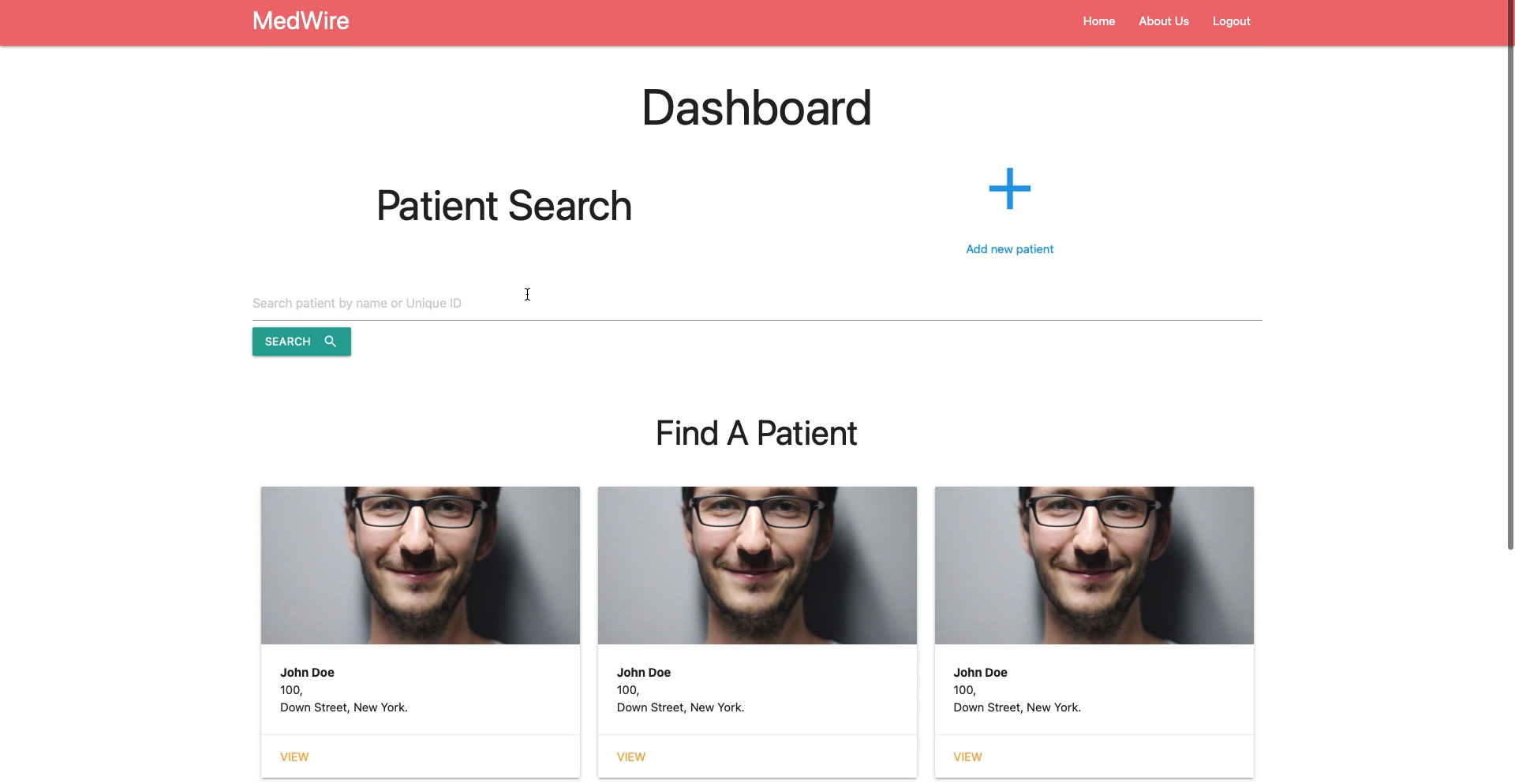
Dashboard
-
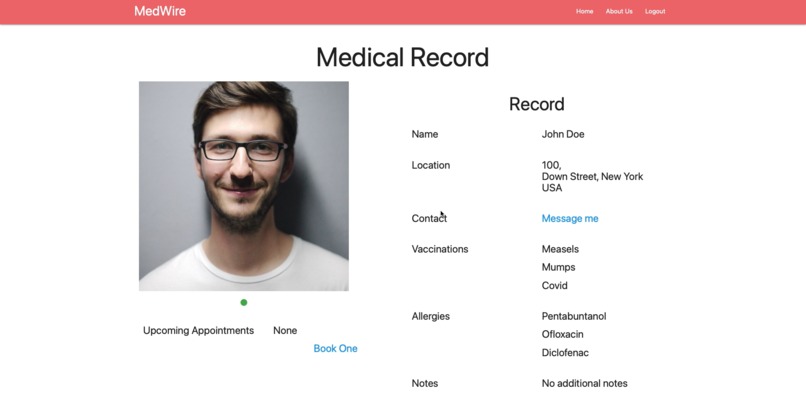
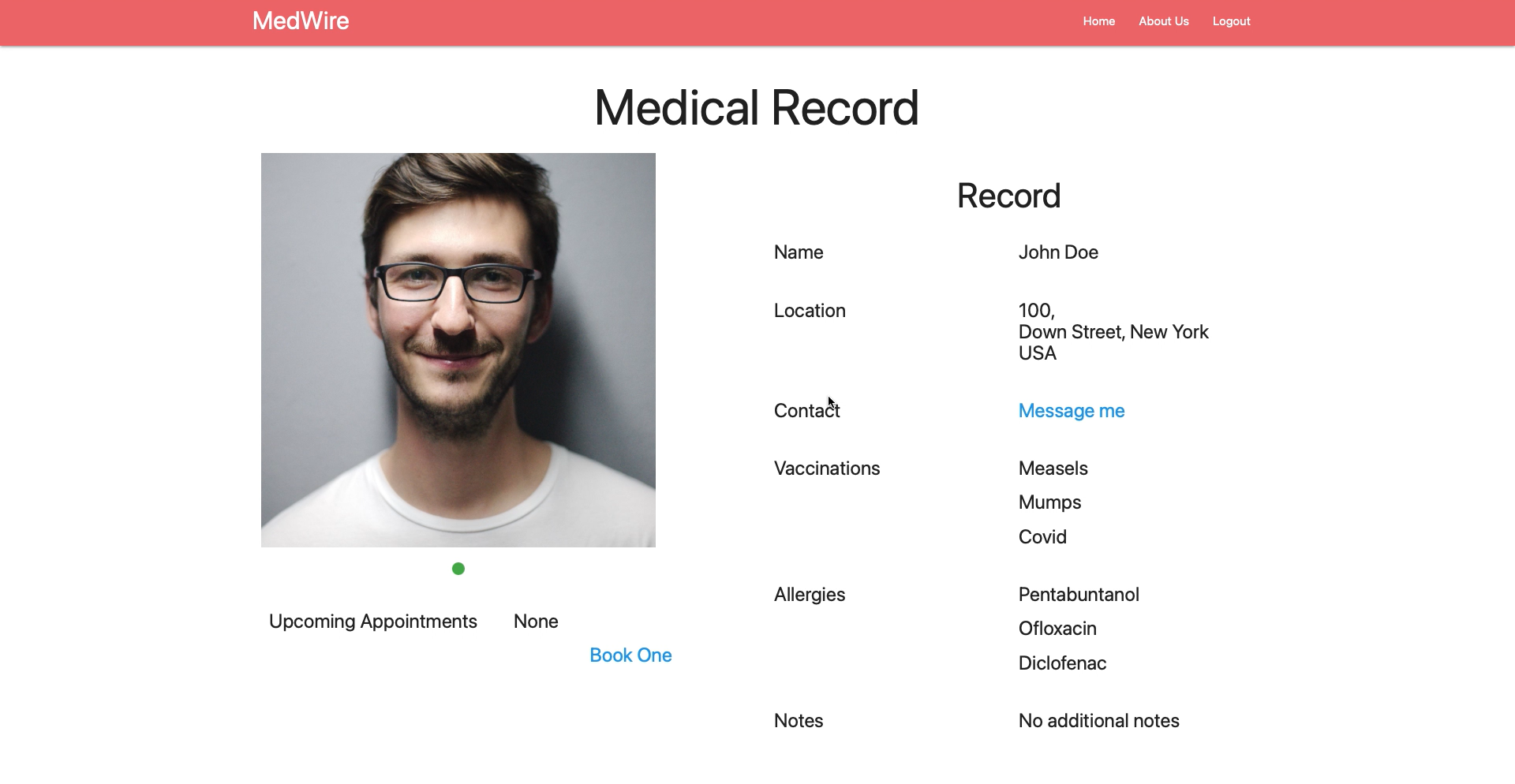
Medical Record
-
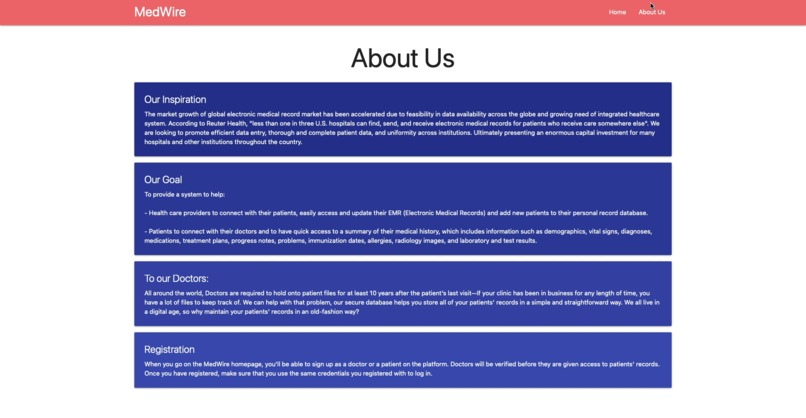
About Us
-
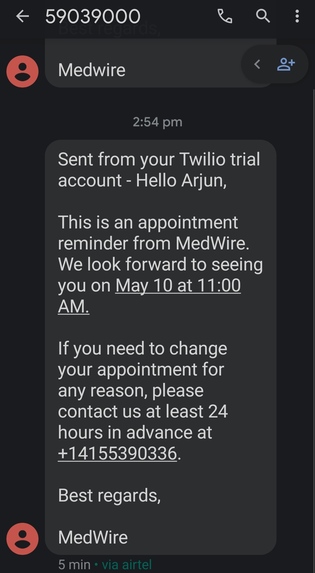
Courier SMS Service

Inspiration
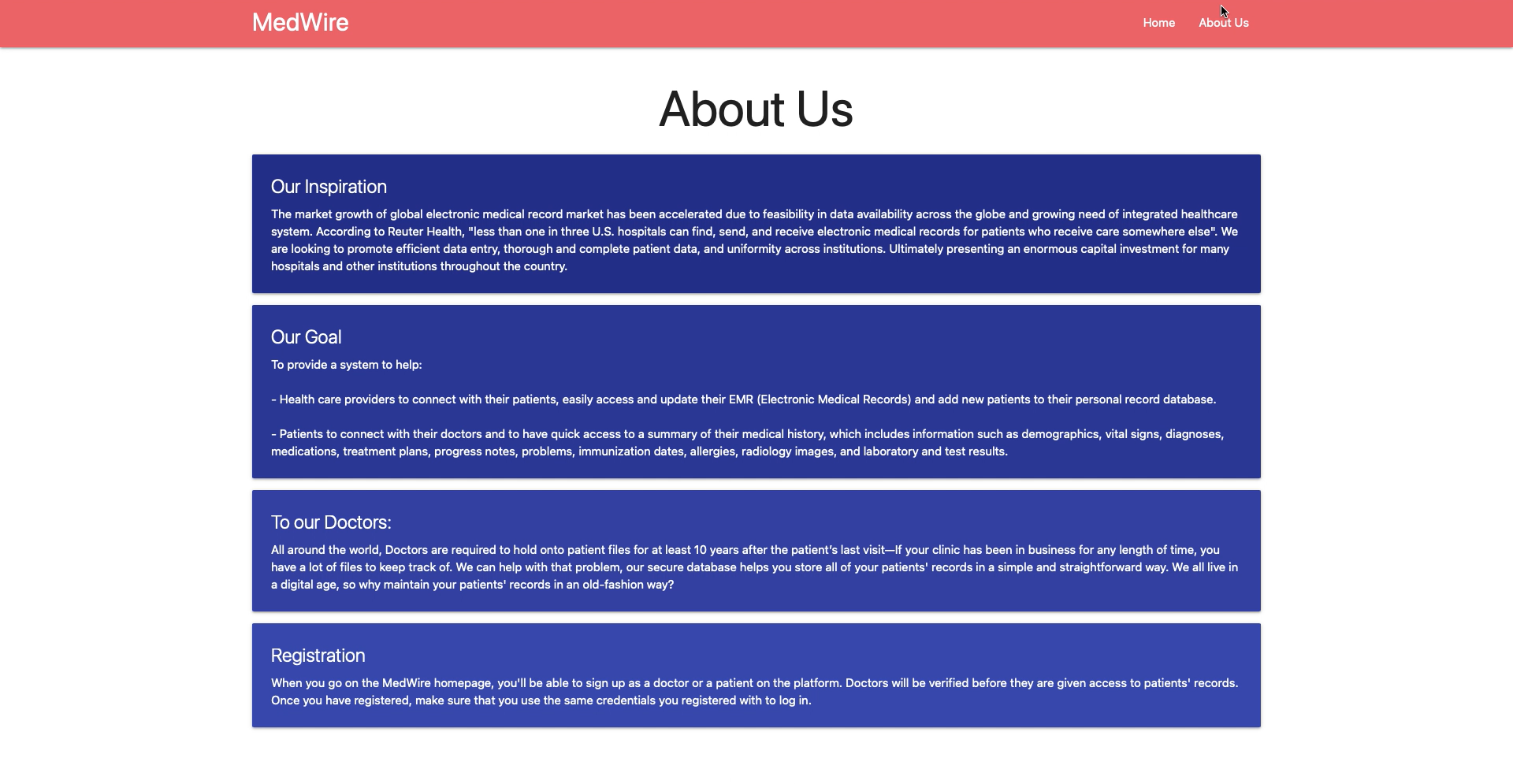
The market growth of global electronic medical records has greatly accelerated due to the growing need for an integrated healthcare system. According to Reuter Health, "less than one in three U.S. hospitals can find, send, and receive electronic medical records for patients who receive care somewhere else". We want to promote efficient data entry, thorough and complete patient data, and uniformity. Ultimately preventing an enormous capital investment for many hospitals and other institutions everywhere. Moreover, we want to bridge the connectivity gap between different healthcare providers as there is no sharing of info of the medical records among them which is necessary as it deals with health of a person.

What it does
Health care providers can easily access their current patient EMR (Electronic Medical Records) and add new patients to their personal record database. The information is store securely and is only visible once a patient-physician relationship is formed and verified - no one else.
Patients can quickly access a summary of their medical history and filter for the information they are searching for as well as save PDF copies of their entire medical record, selecting for the information they want to be shown or hidden. This valuable database includes information such as demographics, vital signs, diagnoses, medications, treatment plans, progress notes, problems, immunization dates, allergies, radiology images, and laboratory and test results.
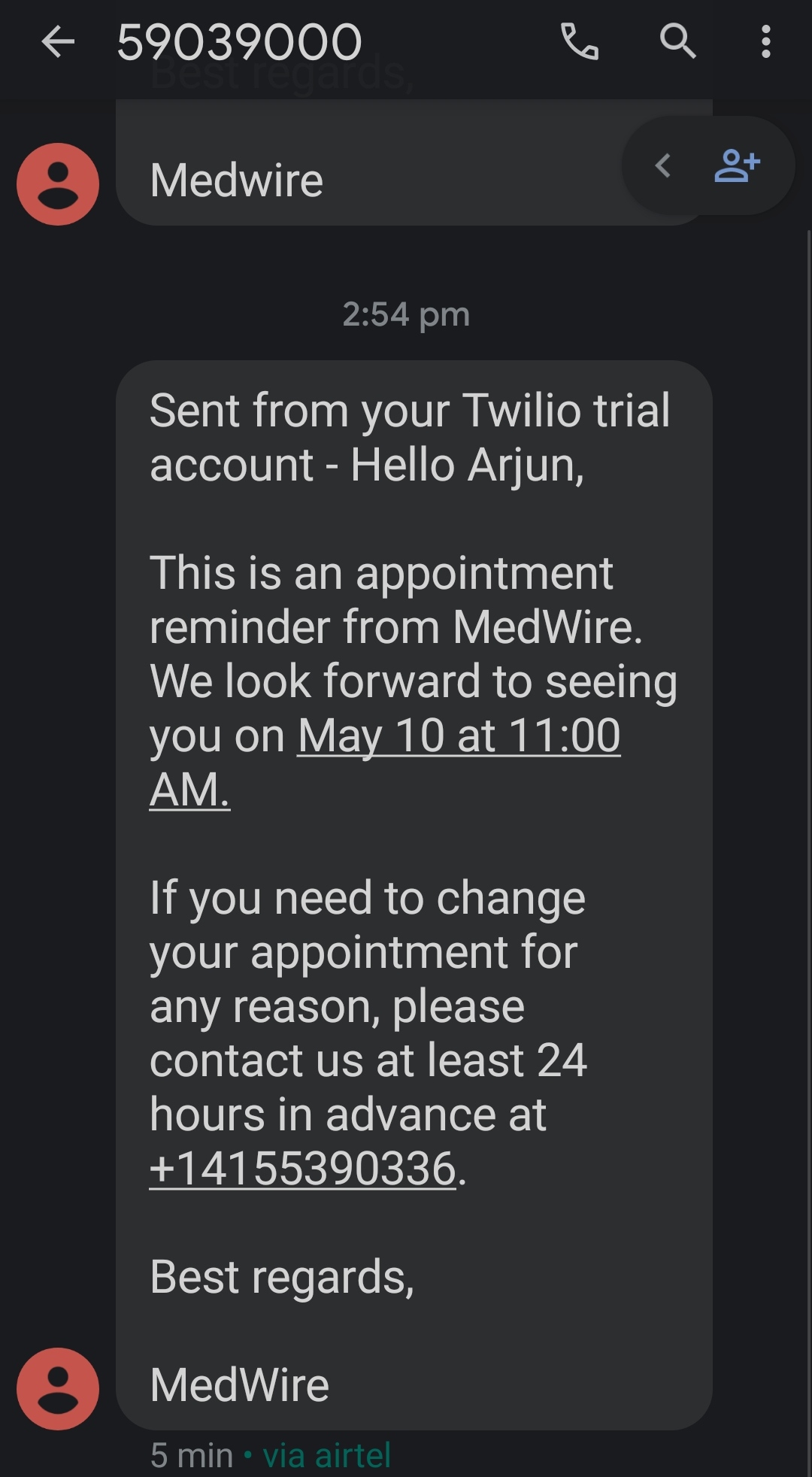
In addition, this web service has an integrated calendar, which sends automated and personalized messages to the patient via SMS and other notifications. These personalized messages include information on upcoming appointments, changes made to the patient's medical history, and reminders to take medications and follow the treatment plan. Patients can customize the frequency of these messages to their preferences.

How we built it
Django, Twilio, Courier, Python, MaterializeCSS, HTML, CSS, JavaScript, SQLite For the full stack application, we are using Python's framework Django to completely take care of the client side and server side scripting. For the structure of the webpage itself, we are using HTML and CSS. Moreover, to add client side scripting features, we are utilising JavaScript for the purpose. To get aesthetic components like NavBar and text forms, icons we are using MaterializeCSS. Finally, we are using SQLite for the database.
What's next for MedWire
We genuinely believe that our project has a real world market. Since there is a big lack of such infrastructure where the patient can store his medical info and have access to it throughout the world. However a patient today takes physical copies or plethora of emails with him as medical records which is not up to the standard of the current digital are. Hence we have the current aims-
Technical Aims
- Have a mobile app for the project for iOS & Android.
- Invest more in security, QA, DevOps etc. to create an ultimate user experience for the users.
- Implement Blockchain to main sturdy & more secure records of patients.
- We will expand the platform in the future to have video chatting and voice calling facilities where doctors and patients can have virtual appointments where a physical one is not necessary.
- Look into creating a forum(social media per say) inside the platform where doctors and patients can talk about general concerns.
Marketing Aims
- Reach out to customers to get the initial actual customer base(doctors and patients) on the project.
- Once we have reasonable amount of users, we will reach out to investors and seek capital for scaling our product immensely.
- Create incentives for the users to hop on to our platforms to get a mass user base. Thereby, making the use of our project a habit in the healthcare industry.


Log in or sign up for Devpost to join the conversation.