-
-
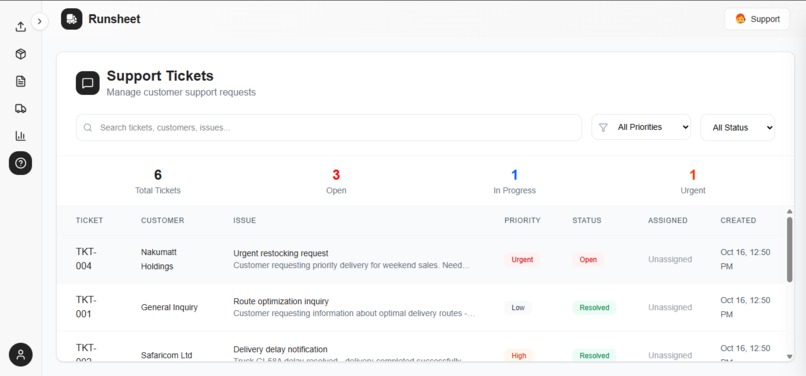
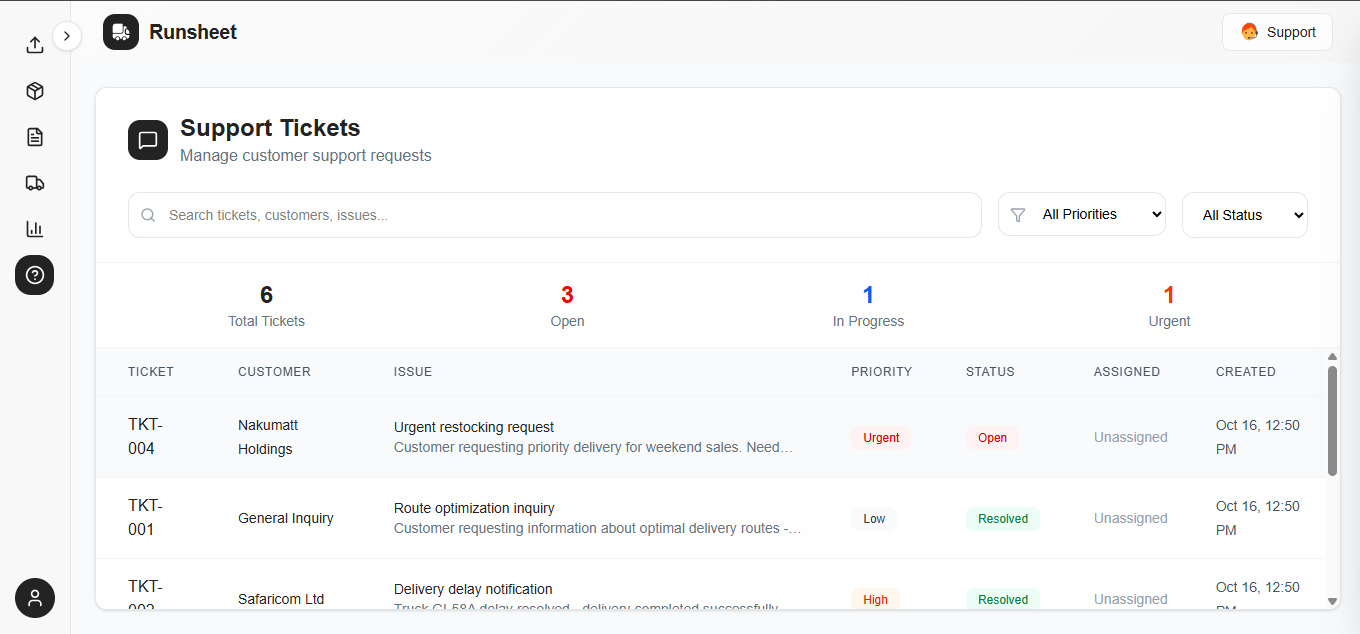
open tickets
-
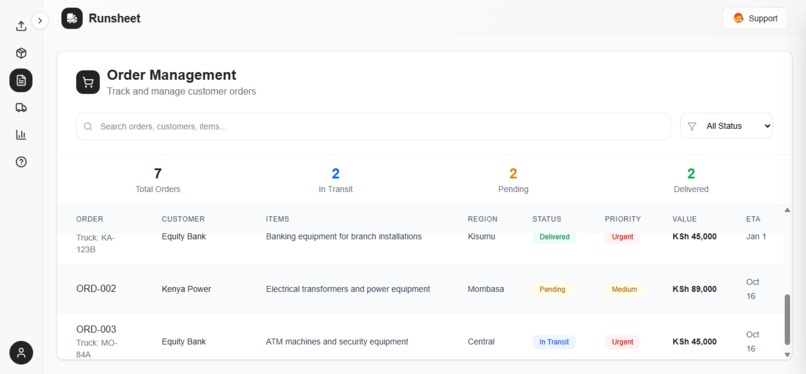
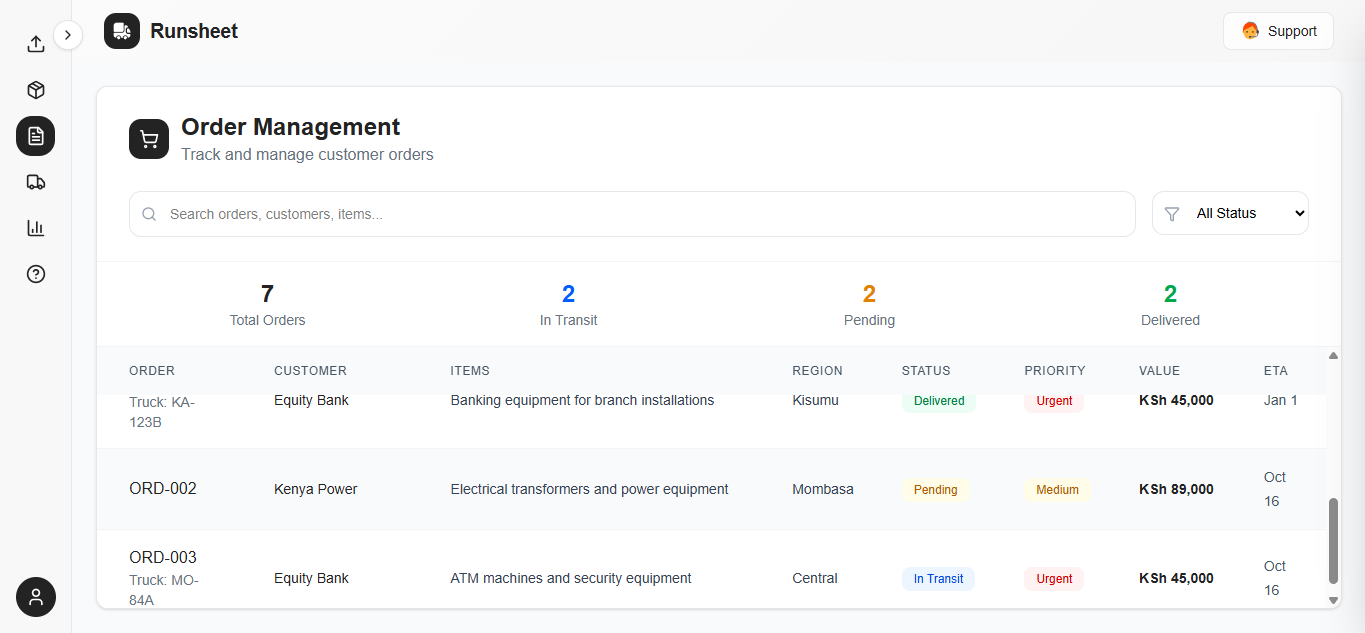
order management
-
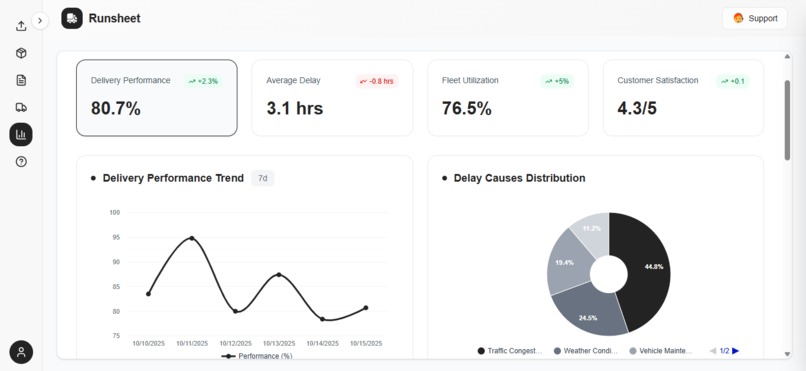
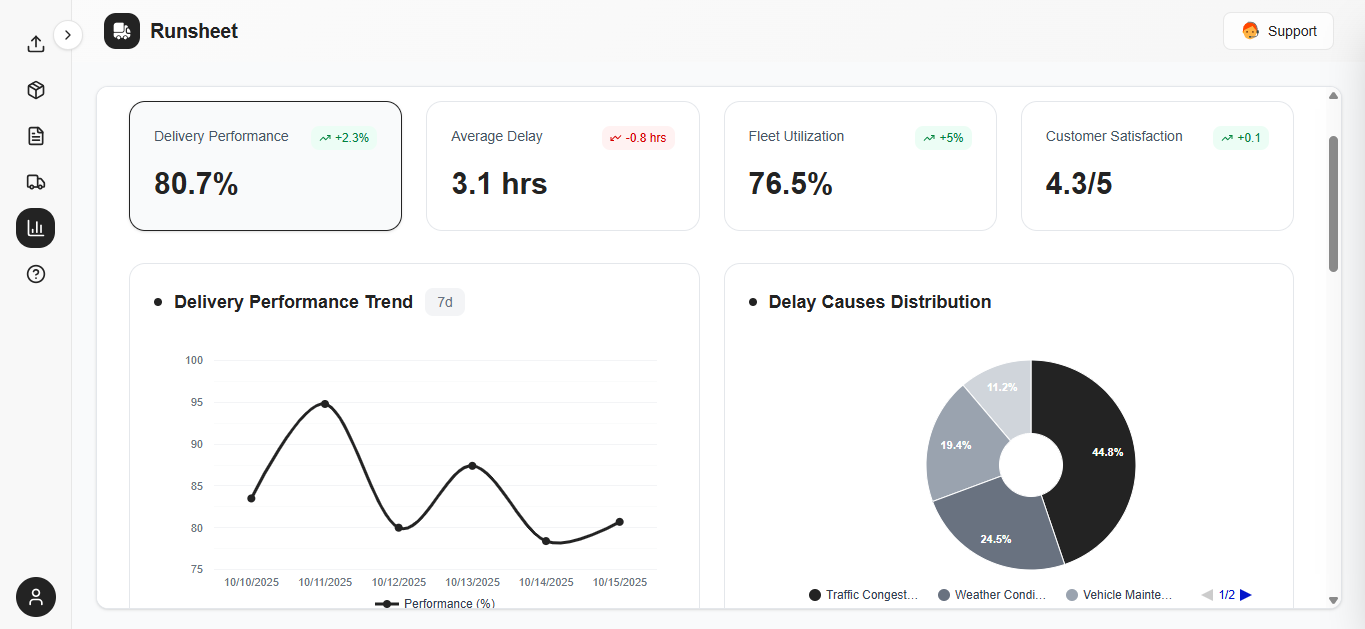
analytics view
-
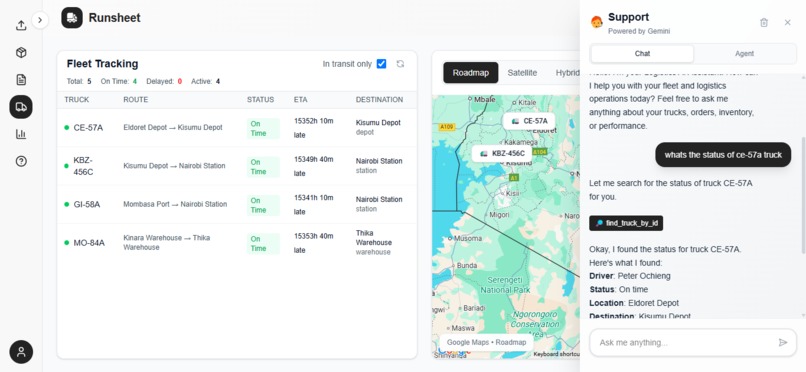
chatmode-assistant
-
Runsheet-ui
Inspiration
We were driven by a real problem we kept seeing across Kenya's logistics sector. Fleet owners and operators were losing significant money every single day due to inefficiencies, lack of visibility, and poor decision-making during transit. Trucks would disappear from communication, inventory would go missing, orders would be delayed with no one knowing why, and support teams had no way to respond quickly to emerging issues. The frustration was real, the losses were substantial, and we knew there had to be a better way.
We wanted to build something that would give logistics operators the clarity and control they needed to protect their assets and make smarter decisions in real-time.
What it does
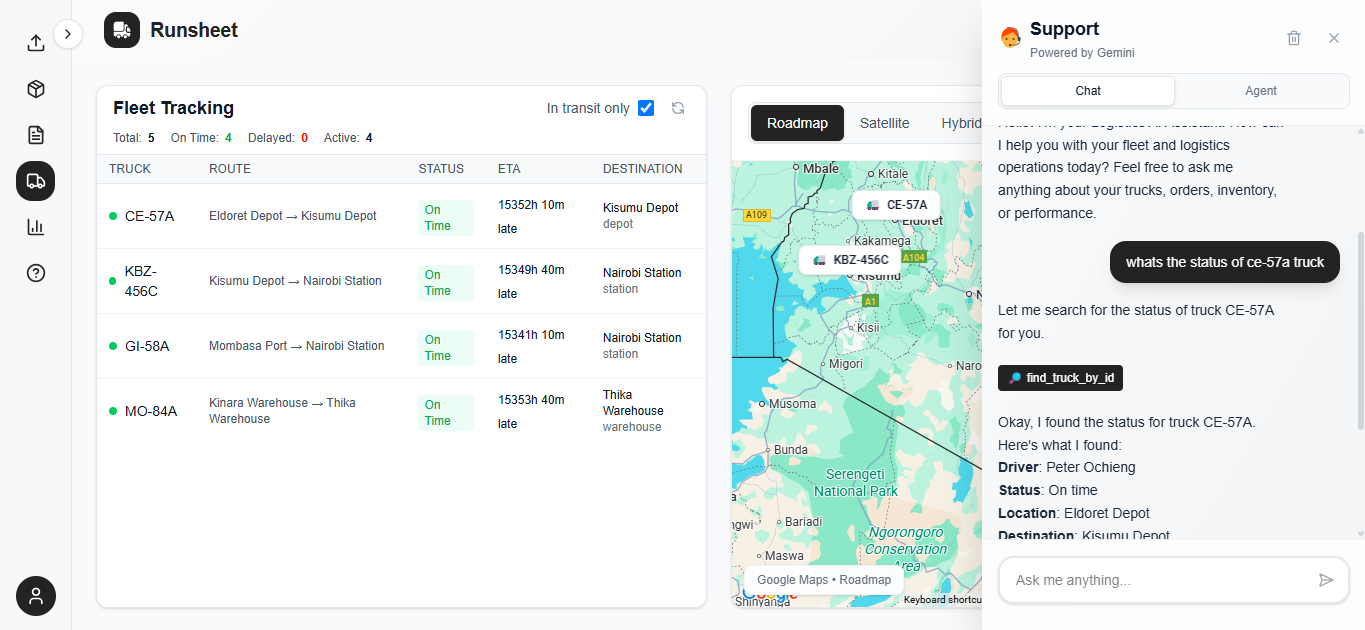
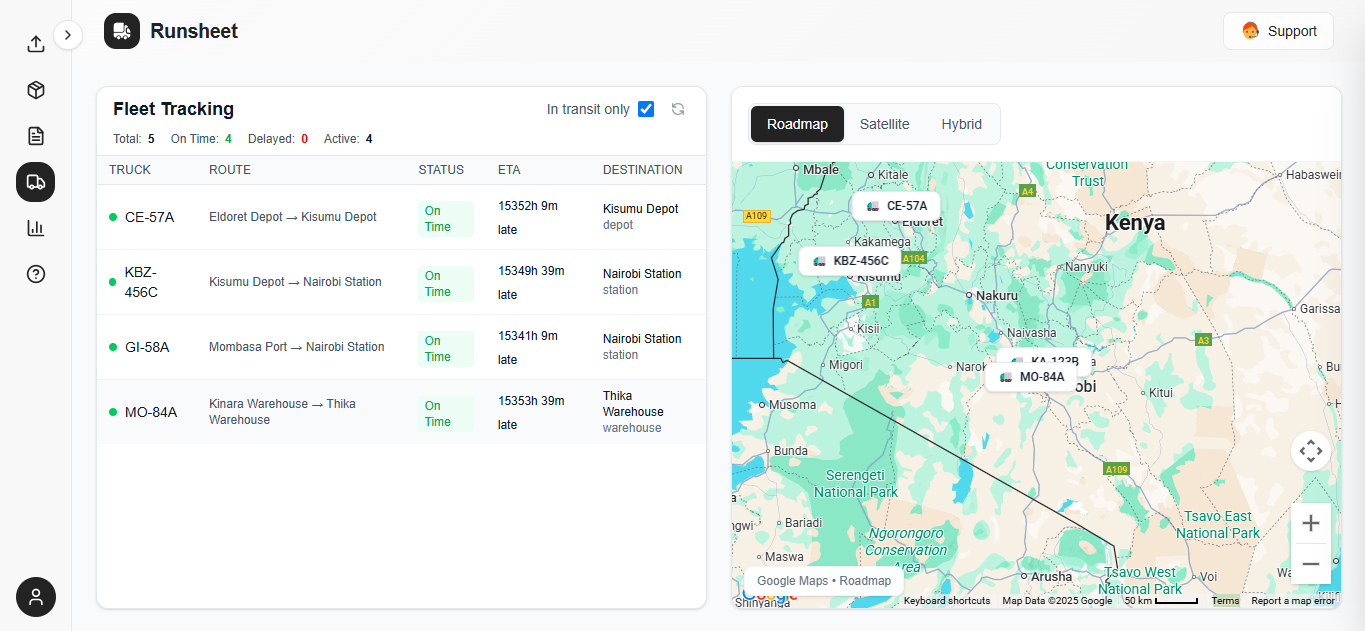
Runsheet is an AI-powered logistics monitoring dashboard built specifically for Kenyan fleet operators. It gives you complete visibility into your entire operation through a single, intelligent interface.
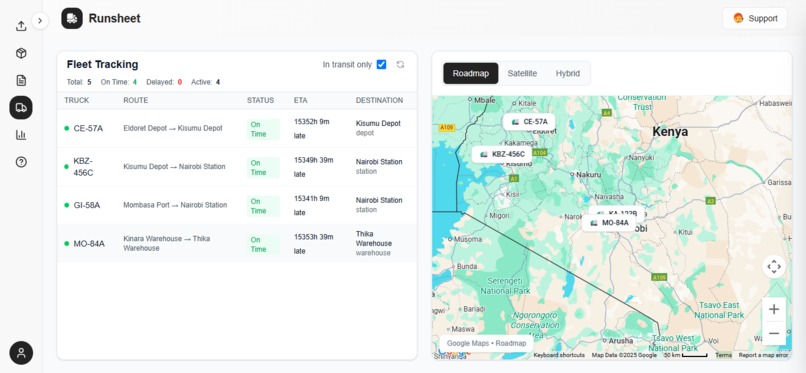
You can track your fleet in real-time on interactive maps, monitor inventory levels as goods move between locations, and keep on top of customer orders from pickup to delivery. The system automatically analyzes your operations data and surfaces insights you might otherwise miss, like delayed shipments, efficiency bottlenecks, and risk factors that could lead to losses.
The real magic is the AI assistant. Instead of digging through spreadsheets and dashboards, you simply ask questions in natural language. "Show me all trucks delayed by more than two hours," "Find shipments carrying high-value equipment," or "Generate me an incident analysis for this week." The AI understands your logistics operations and instantly pulls together the answer you need.
How we built it
We created a full-stack application designed to handle the complexity of real-world logistics operations in Kenya. On the frontend, we built a modern dashboard using Next.js 15 and TypeScript that displays fleet tracking, analytics, inventory management, orders, and customer support tickets all in one place. We integrated Google Maps for real-time vehicle tracking with an intuitive, responsive interface.
The backend runs on FastAPI in Python, creating a robust API layer that powers all the dashboard features. We connected everything to Elasticsearch, which lets us index and search through large volumes of logistics data with incredible speed and relevance.
The AI agent sits at the heart of the system, built using the Strands framework and powered by Google Gemini 2.5 Flash. It has access to specialized tools for searching fleet data, orders, and inventory, generating detailed reports, pulling summaries, and looking up specific information. This means the AI can understand complex logistics queries and respond with precisely the data operators need.
We implemented intelligent data ingestion so the system can auto-seed baseline data and accept CSV uploads, making it easy to bring in your existing operations data.
Challenges we ran into
Building a system for Kenya's logistics space came with unique challenges. First, we had to design the data models and AI tools to really understand the nuances of fleet operations here, including local challenges around transit times, communication reliability, and the specific types of cargo and routes that matter most.
Getting real-time tracking to work smoothly at scale required careful optimization of our Elasticsearch queries and the frontend map rendering. We had to balance responsiveness with the ability to handle historical data lookups.
Integrating the AI agent to understand natural language queries about logistics operations was trickier than expected. The agent needed context about what "high priority," "delayed," and "at risk" meant within your specific operation. We had to carefully design the tool definitions and response formats to ensure the AI would give operators the exact information they needed.
We also faced infrastructure decisions around cloud services, API rate limiting, and ensuring that the system could reliably handle the data volumes from active fleet operations.
Accomplishments that we're proud of
We're genuinely proud of the seamless integration between the AI assistant and the actual fleet data. It's one thing to build a dashboard, but it's another to make an AI understand your logistics operation well enough to answer real questions instantly. The system works.
We built something specifically tailored to the Kenyan logistics context rather than trying to adapt a generic tool. The dashboard reflects the actual workflows and pain points that fleet operators face here, and the AI has been trained to understand this specific domain.
The architecture is clean and scalable. We made smart choices about separating concerns between the frontend, backend, and AI layer, which means we can add features and scale the system as more operators use it without everything falling apart.
We created an intelligent data ingestion pipeline that means operators can get up and running quickly with their existing data, and the AI starts delivering insights from day one. That's the kind of practical thinking that matters when you're solving real business problems.
What we learned
We learned that solving real problems in logistics isn't just about technology. It's about deeply understanding the operational realities of fleet owners in Kenya, the specific risks they face, and the decisions they need to make every single day.
We learned that AI is most powerful not when it's flashy, but when it's practical. An AI that answers one real question better than a human spending twenty minutes digging through spreadsheets is more valuable than a hundred fancy features nobody uses.
We learned that the backend infrastructure choices matter immensely. Elasticsearch proved to be the right call because logistics data is fundamentally searchable data, and having a system that understands semantic search meant the AI could give genuinely useful results.
We also learned that building for a specific market requires humility and willingness to iterate based on feedback from people who actually work in that space every day.
What's next for Runsheet
We're focused on expanding what the system can predict and prevent. We want to build machine learning models that can forecast delays before they happen, identify trucks that are at risk of losing cargo, and predict which routes might face issues based on historical patterns.
We're planning to add more specialized tools for different types of logistics operations, whether that's ride-hailing networks, courier services, or large-scale fleet management companies.
Integration with local payment systems and financial institutions is on the roadmap too, so operators can move seamlessly from tracking problems to getting financial support when they need it.
We want to scale Runsheet across East Africa, adapting it for the specific contexts of Tanzania, Uganda, and Ethiopia while maintaining the core insights that make it work so well in Kenya.
Most importantly, we want to keep listening to operators and building features that actually reduce losses and give people the confidence that their fleet and cargo are protected. That's the real measure of success for us.
P.S. We built this entire system while working within some pretty tight budget constraints, and honestly, we ran through our API credits faster than expected during development and testing. The live demo might not be up right now, but the code is solid and everything works as described. Feel free to clone the repository and spin it up locally—you'll see exactly what we built and how it all comes together. Sometimes the best proof is in the code itself.

Log in or sign up for Devpost to join the conversation.