-
-
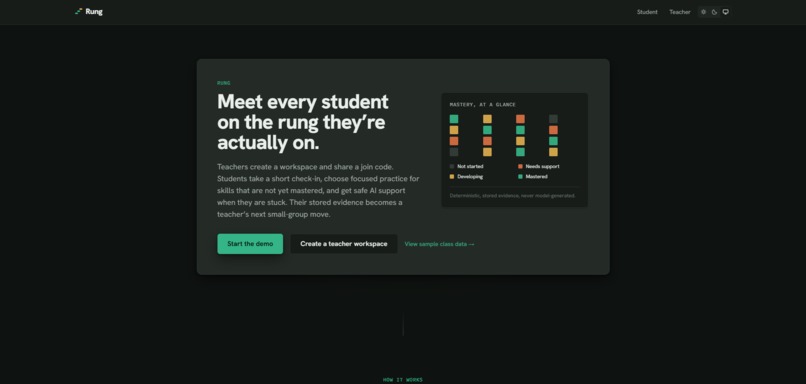
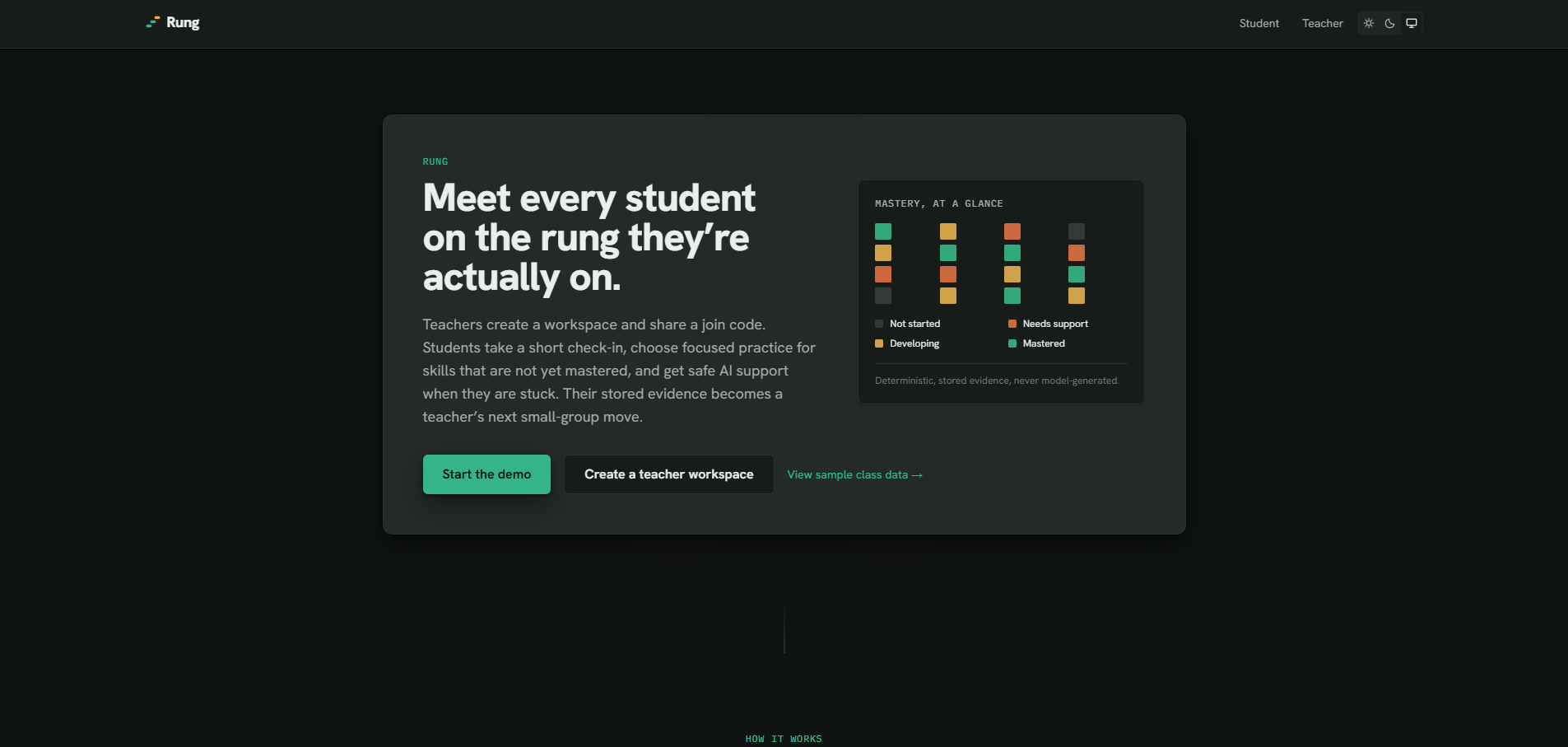
Rung's landing page: teachers spin up a class, students take a check-in, and every mastery cell traces to stored evidence, not the model.
-
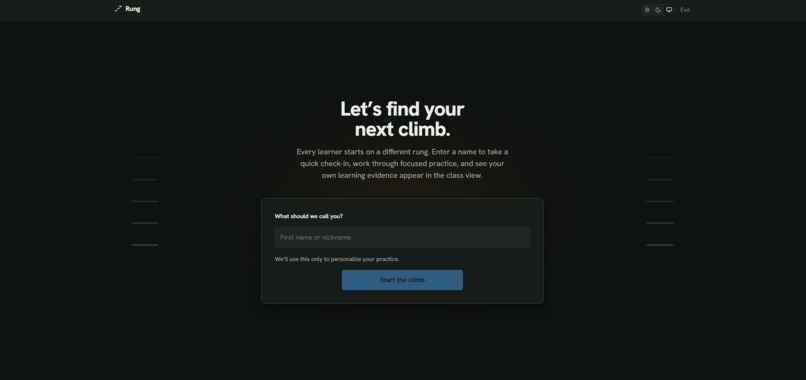
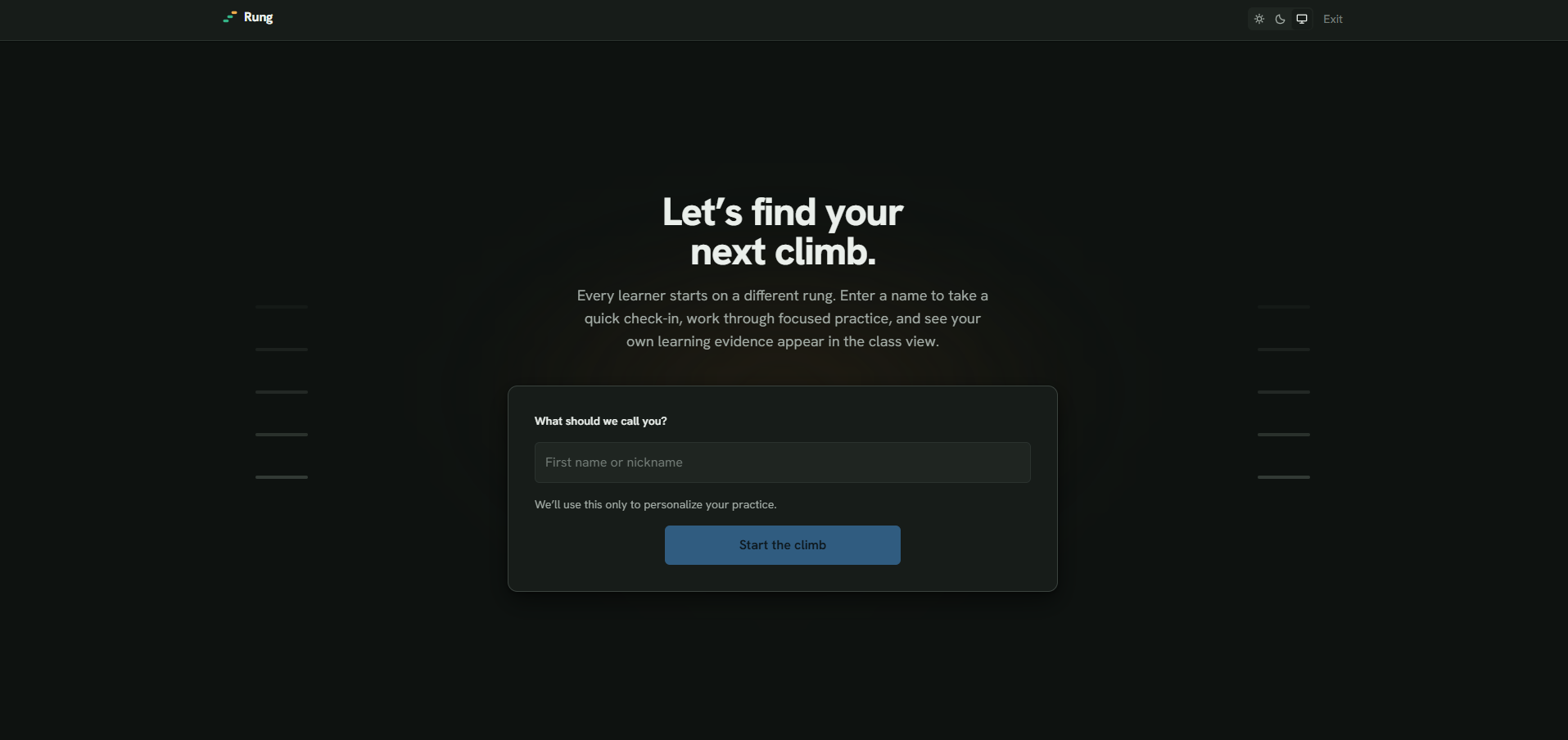
Students start with just a first name. No account, no password: a cookie-bound session keeps the walkthrough isolated from real data.
-
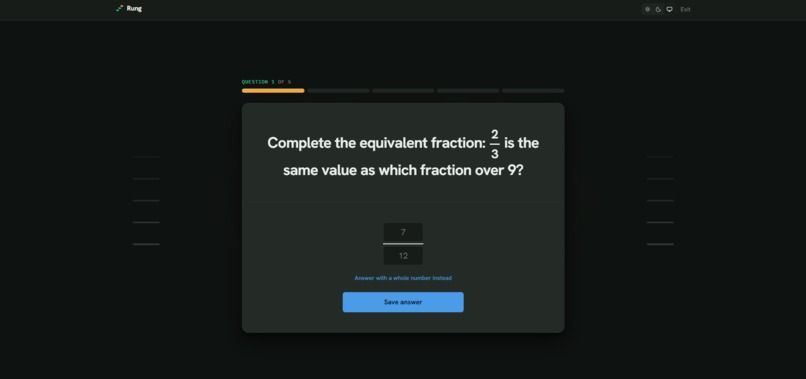
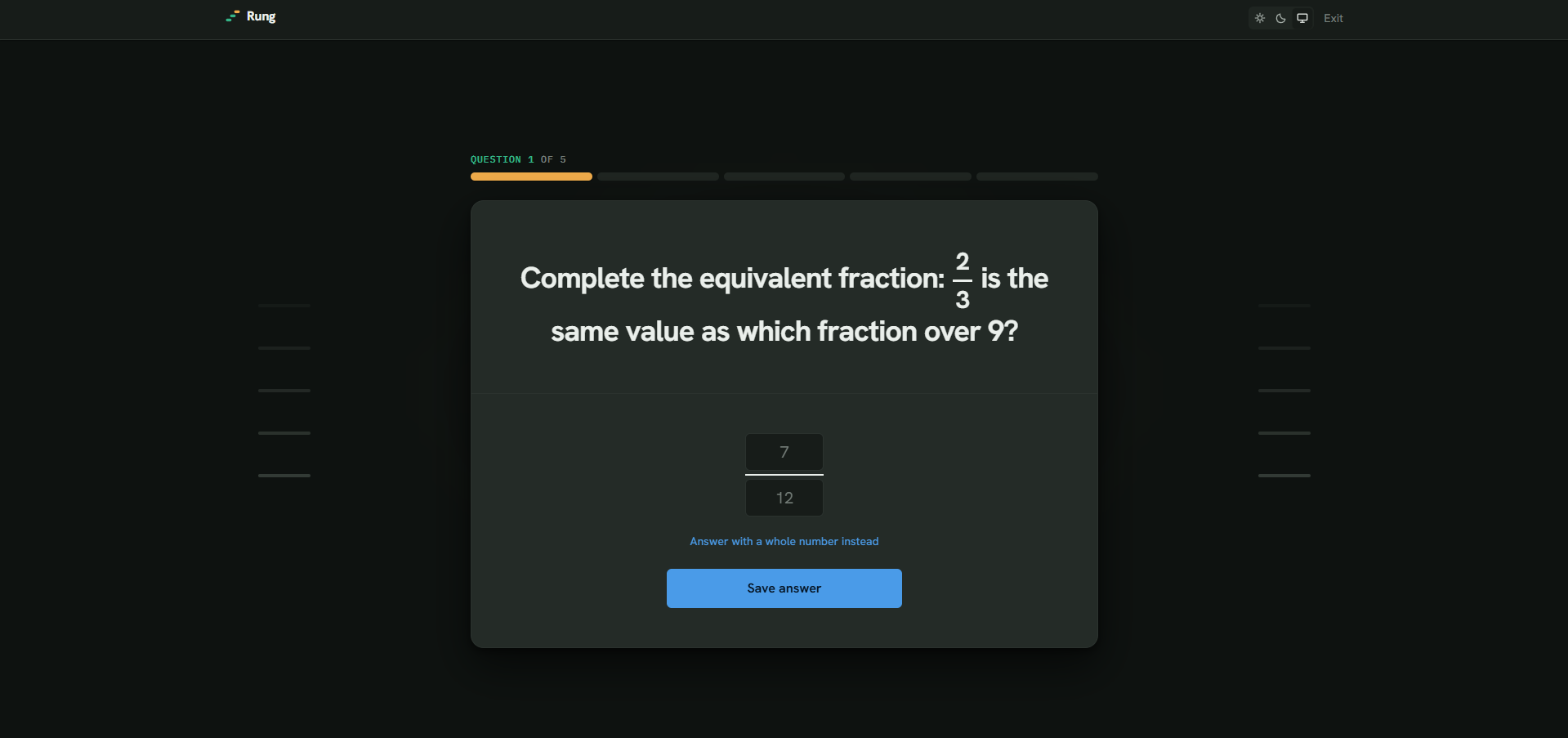
The five-question check-in is answer-free by design. It records each response and never reveals correctness until the diagnosis is ready.
-
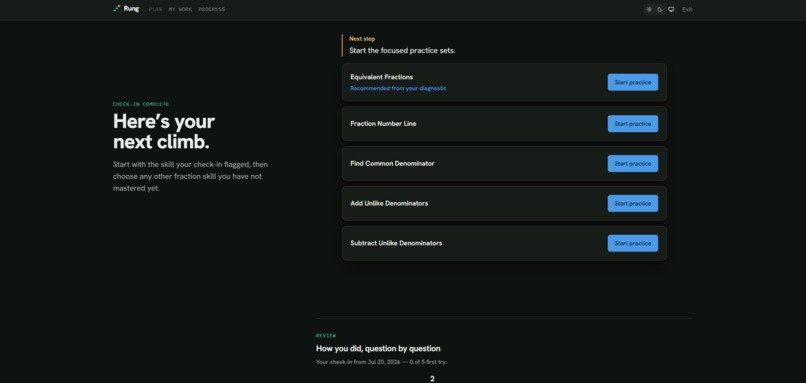
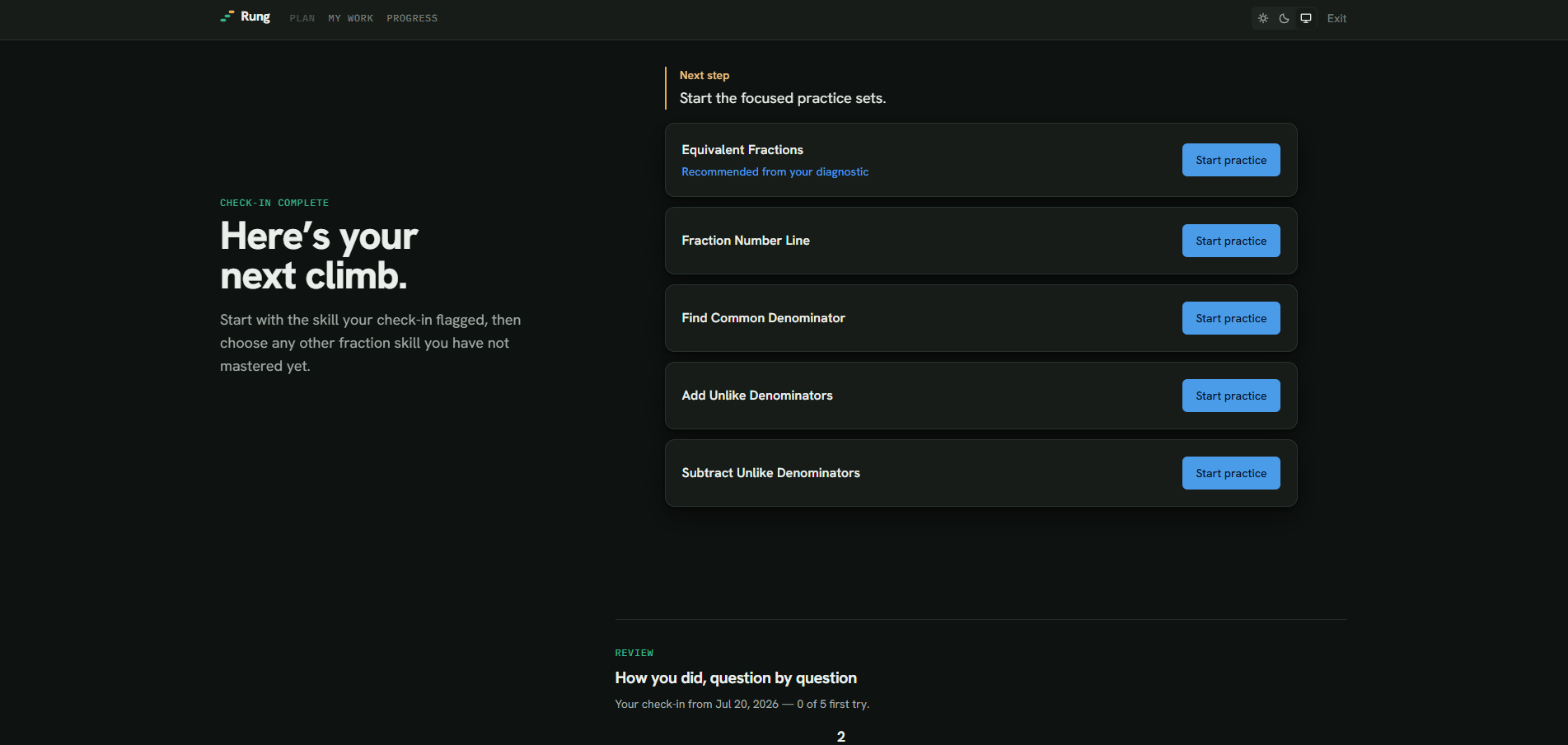
After the check-in, every unmastered skill becomes its own practice plan, plus a question-by-question review of what they missed.
-
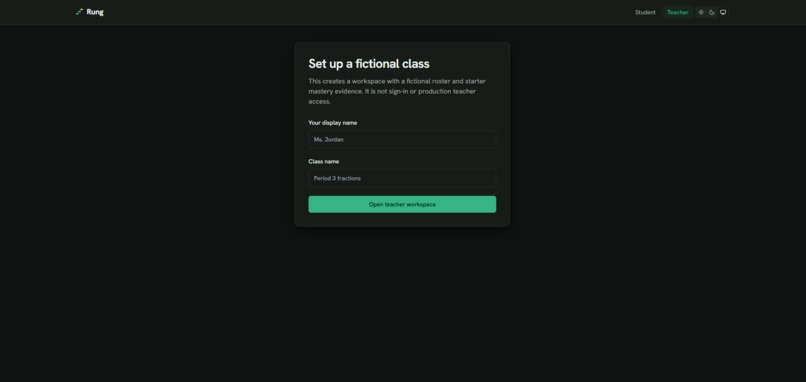
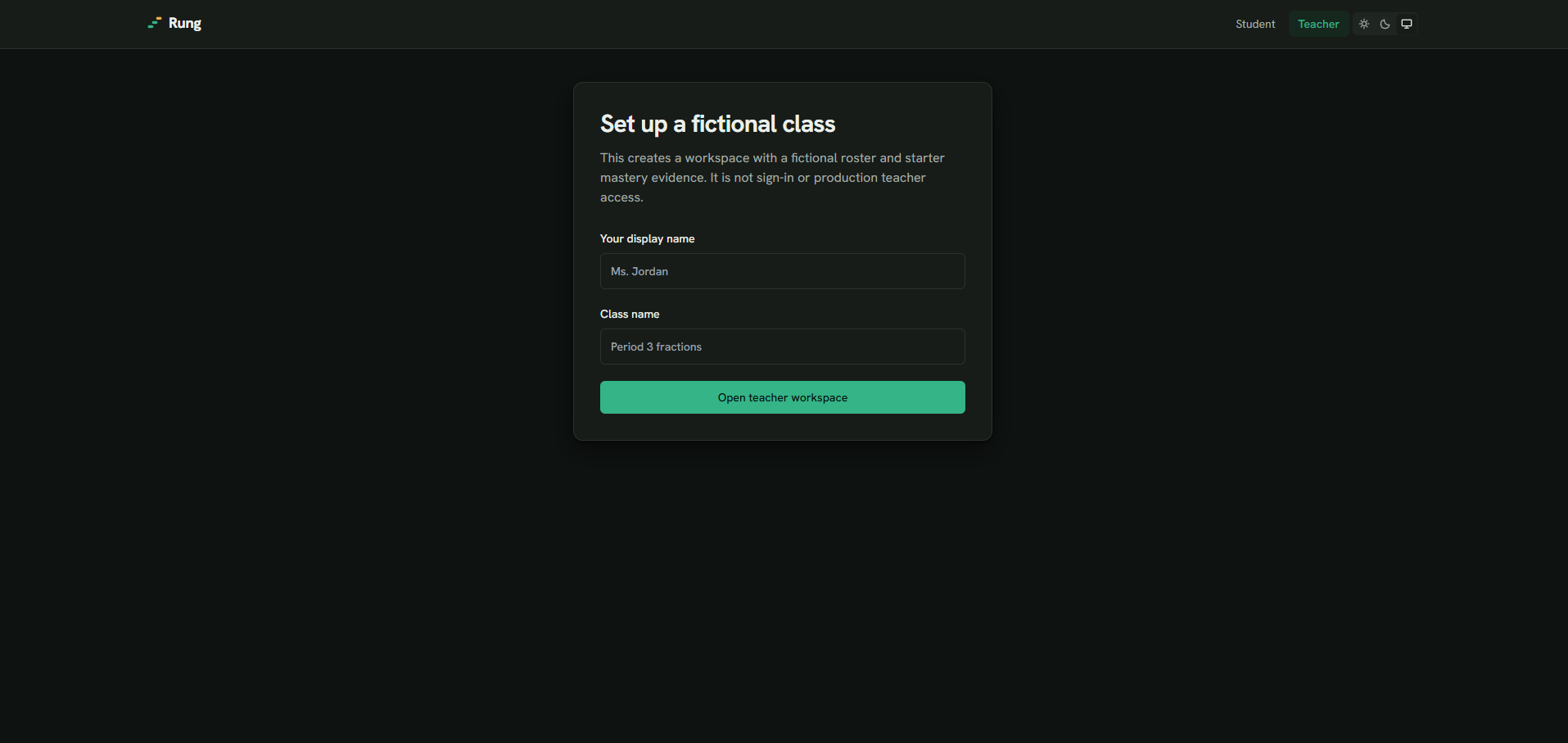
A teacher opens a workspace in seconds with just a display name and class name.
-
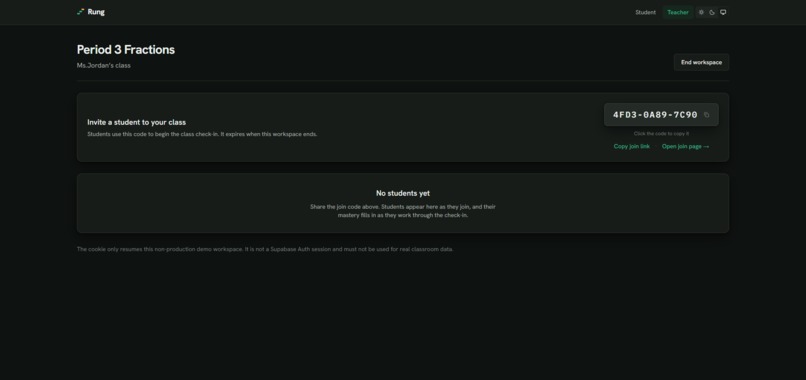
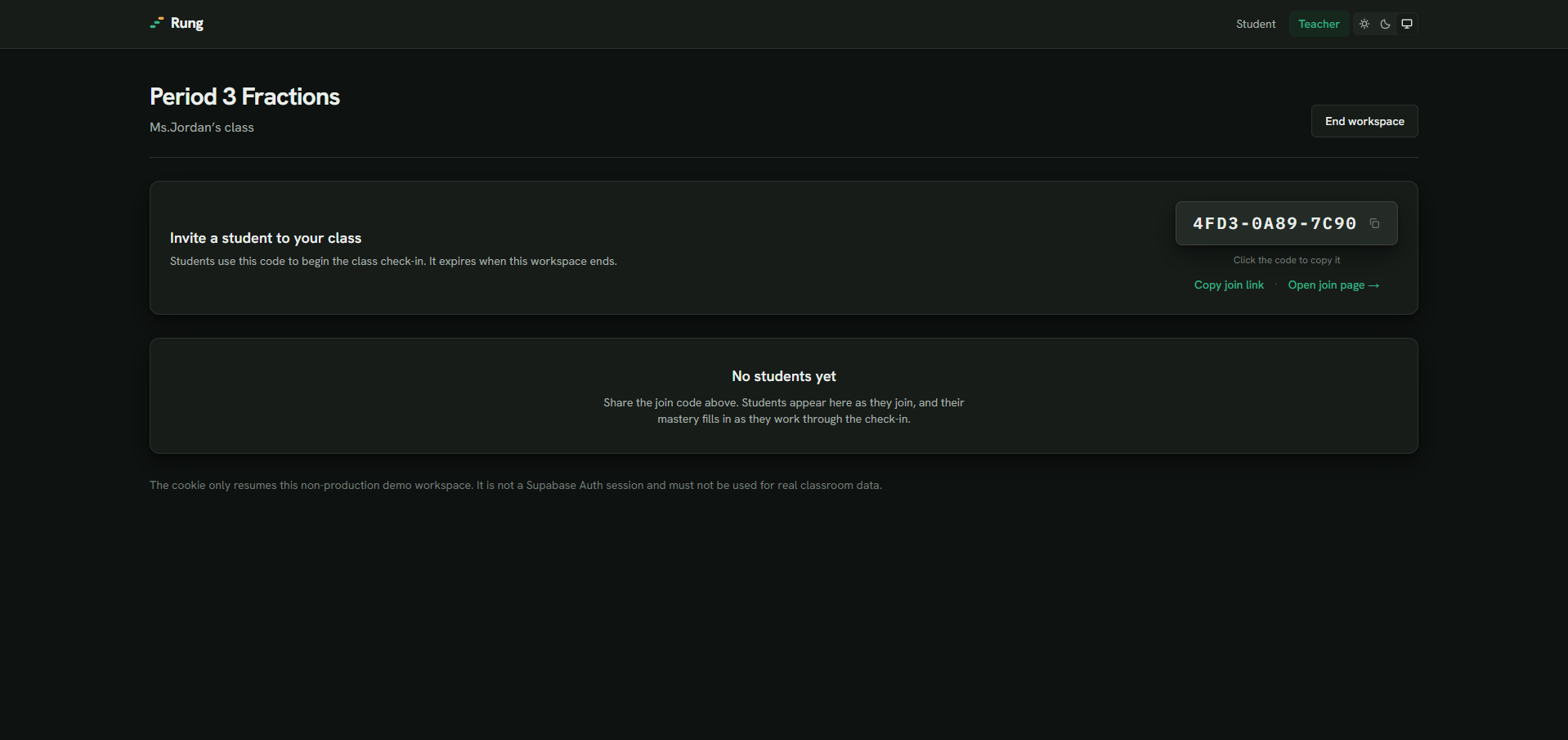
Every workspace mints a join code. Students enter it to land in that teacher's class, and their evidence shows up only on that roster.
-
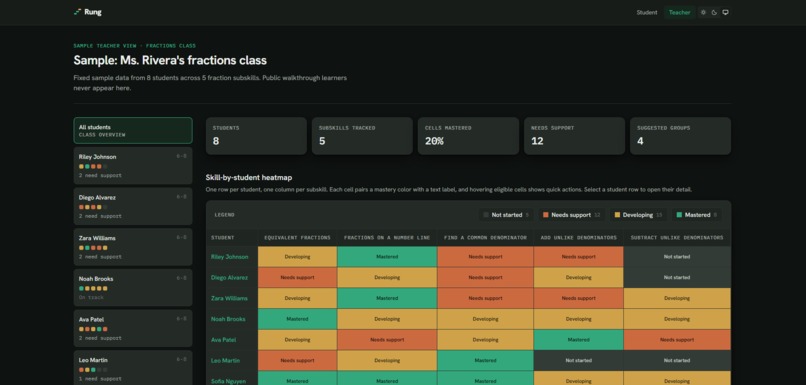
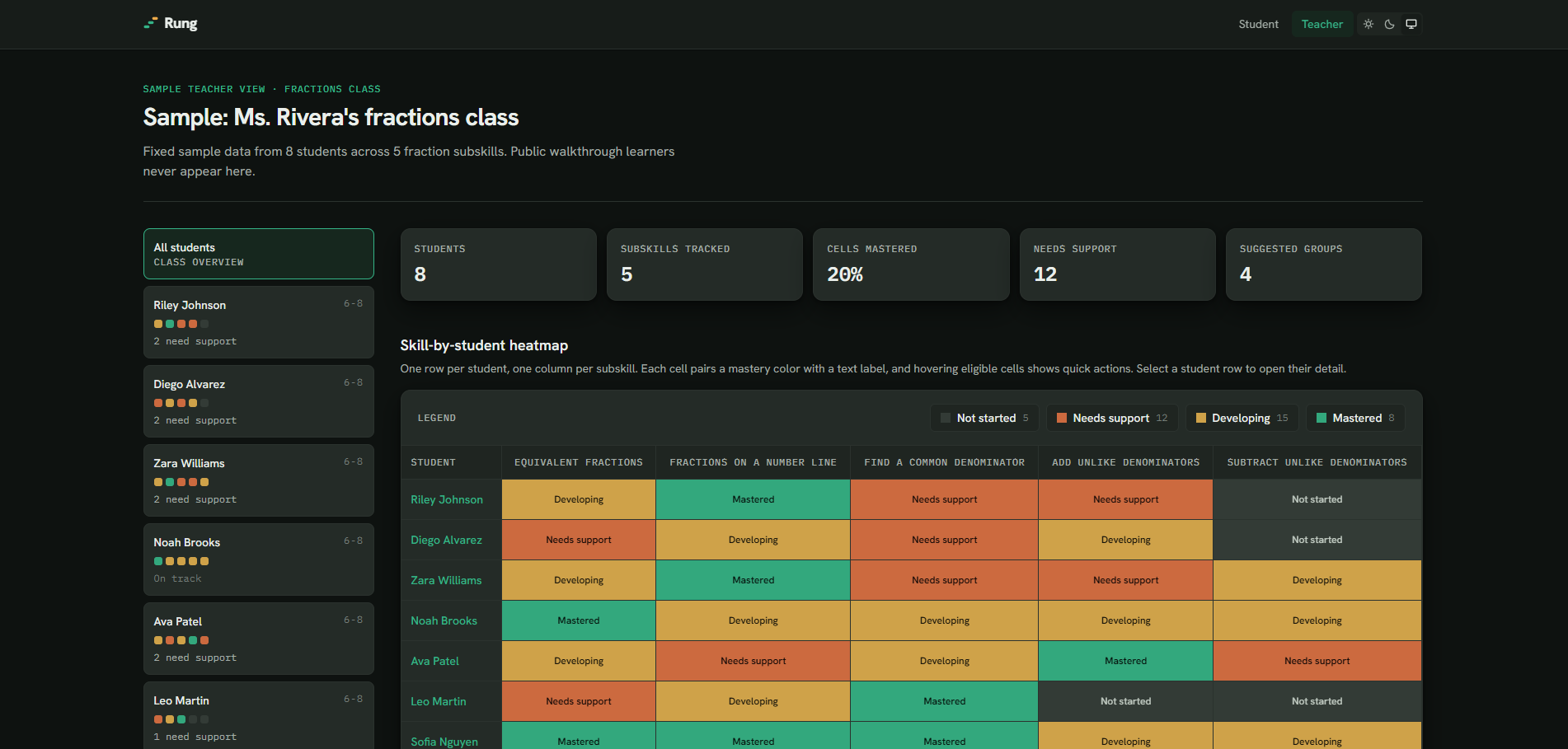
The teacher heatmap: 8 students by 5 subskills, each cell showing mastery as both color and text label, with support groups suggested.
-
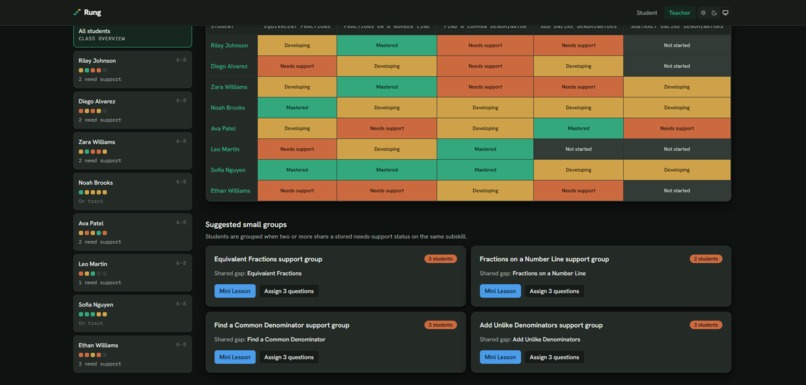
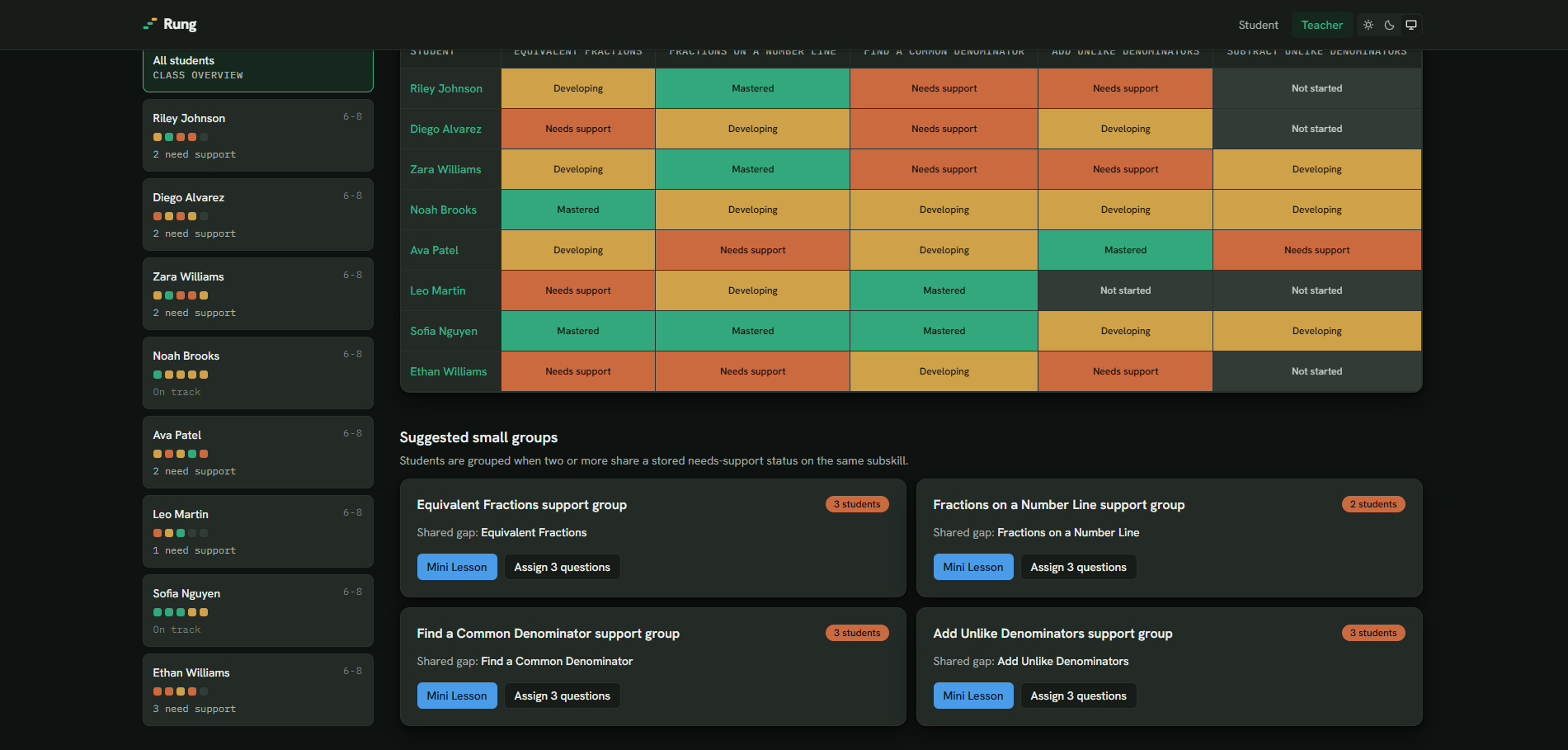
Students sharing a gap are grouped automatically. One click opens an AI-drafted mini-lesson or pushes a 3-question follow-up to their plans.
Inspiration
In high school, we took a calculus class with a teacher named Ms. Collins, and we struggled. Not the kind of struggle you fix with pure hard work and grit, but the kind where the class moves on, and you quietly fall further behind every week. What made Ms. Collins different is that she took time out of class and, based on daily quizzes, she would then match students into groups based on what they struggled with on the quiz, and had the students do problems together for the rest of class, then step in to interact with each mini group. She would never treat the class as one group moving at one speed. She figured out exactly what level each student was at, met us there, and never gave us the answer, only stopping by and giving well-placed hints to let us find the answer ourselves. She changed what learning felt like for us, and she made us want to turn around and help others teach the way she taught us.
When this hackathon started, we read that students across the world are still performing below pre-pandemic levels. That statistic hit us hard, because we knew what being behind feels like from the inside, and we knew what it took to get out: not more content, but a teacher who could see precisely where we were stuck and respond to that. Most students will never get a Ms. Collins. This felt like the moment to take the imprint she left on us and build it into something anyone, anywhere, could use.
That's why we built Rung, a differentiated-instruction platform that does what she did: find the exact rung each learner is standing on, and help them take the next one.
What it does
The teacher sets up a digital classroom for students, and when students join, they must take a short diagnostic. After students have taken it, based on the results, Rung builds a separate focused practice plan for every skill that needs work. When they get stuck, an AI tutor offers three escalating levels of help: a nudge, a hint, and a guided step, but never the answer, because Ms. Collins never just gave us the answer either. On the other side, teachers get a live heatmap of exactly where each student stands, one-click actions from that evidence, and AI-drafted mini-lessons for small groups who share the same gap that include YouTube videos that the students can watch for guidance.
How we built it
We built Rung on Next.js, Supabase, and GPT 5.6. We drew a clear line between what GPT helps with and what the app decides itself. GPT helps with explanations, tutoring students through a problem, creating practice sets, and crafting lessons for teachers. The app handles answer scoring, skill updating, and group formation.
Before writing any code, we created our features list and crafted architecture.md and contracts.md so we had clear guidance for Codex to build the data flow and UI. This made it much easier to efficiently implement each feature, make modifications where necessary, and verify the functionality of the app. We validated model outputs before showing them, prevented any answer leaks in hints, and used safe fallbacks when the model failed to provide valid input. Before pushing a new feature, we iterated on our test cases to ensure functionality was preserved, growing our test suite up to 230 tests across 36 files.
Challenges we ran into
The hardest challenge was preventing AI from being used to shortcut learning. We did not want a tutor that simply reveals an answer after one wrong attempt. The hint flow needed to progress from a small nudge to a more direct hint to one actionable guided step, while still leaving the student to do the actual problem.
Generated practice created a similar challenge. Early outputs could be malformed, target the wrong kind of problem, repeat an item, or use math parameters that did not make sense. We solved that by limiting what the model can return. It only proposes structured problem parameters; server code validates those parameters, rejects anything outside the supported formats, and then constructs the prompt, number-line visual, and answer rule itself. The model never supplies the answer key. Moreover, we built fallback behavior for every AI feature so the core student and teacher experience still works if an API key, model call, or network request is unavailable.
Lastly, we ran into quite a few UI edge cases that Codex did not flag and were only seen through the app itself. This made us much more intentional about manually testing each flow after implementation. We had to verify loading states, ensure the application acts differently when within a workspace versus sample data, and provide stylistic updates to better structure the UI.
What we learned
We learned that great teaching is an algorithm and a heart, and software can only carry the first part, so it had better carry it faithfully. Practically, we learned that writing precise specs up front is the single biggest multiplier when building with AI; that the right question isn't "what can the model do?" but "what should the model never do?"; and that deterministic guarantees are what turn an impressive demo into something a real teacher could trust.
Mostly, though, we learned that the way one teacher made us feel in a calculus classroom could be translated into product decisions: diagnose precisely, meet learners where they are, hint before you tell, and always show them the next rung. Ms. Collins did that for one classroom. Rung is our attempt to do it for every student the pandemic left behind.
Built With
- codex
- nextjs
- postgresql
- react
- typescript

Log in or sign up for Devpost to join the conversation.