-
-
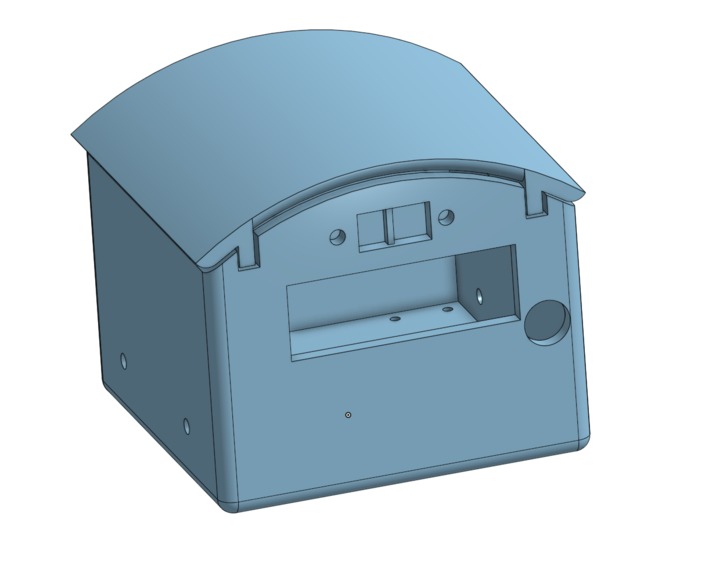
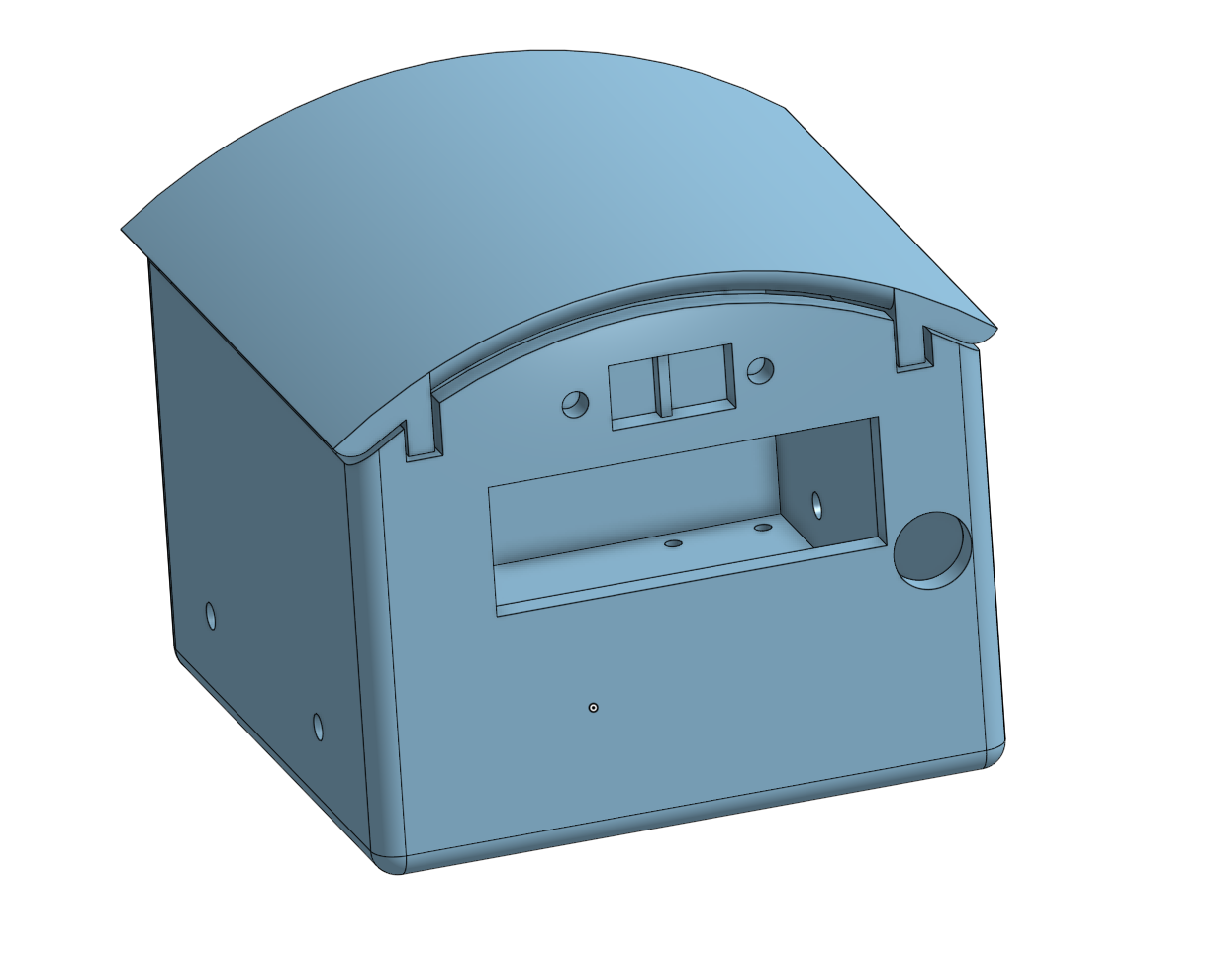
CAD of the roof + base
-
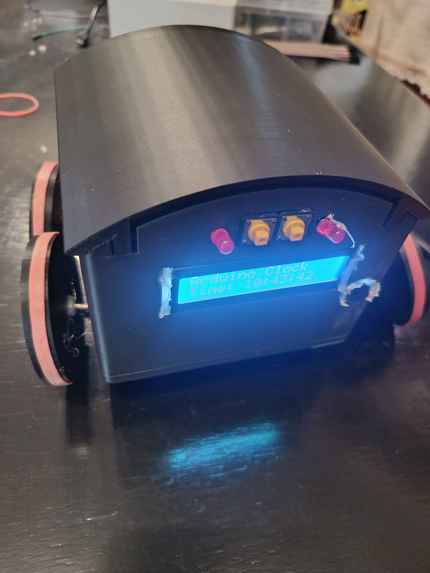
Finished assembly of clock
-
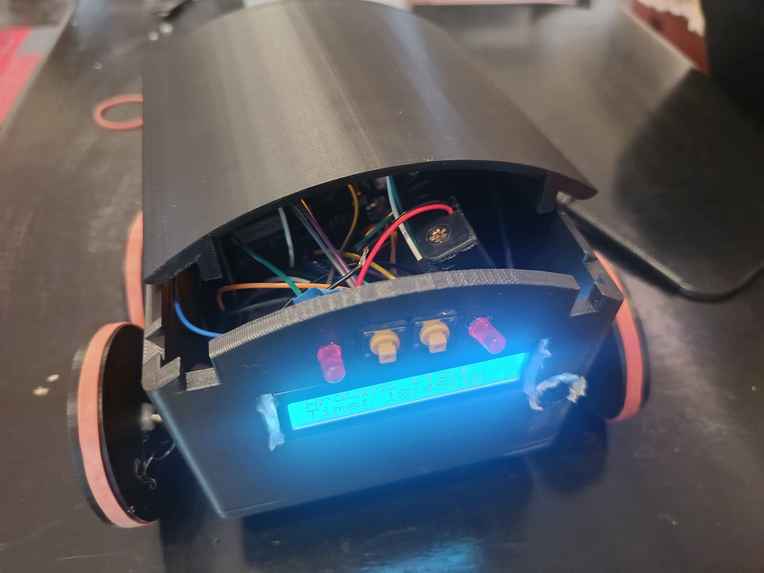
Finished assembly of clock, roof not closed in to see some internals
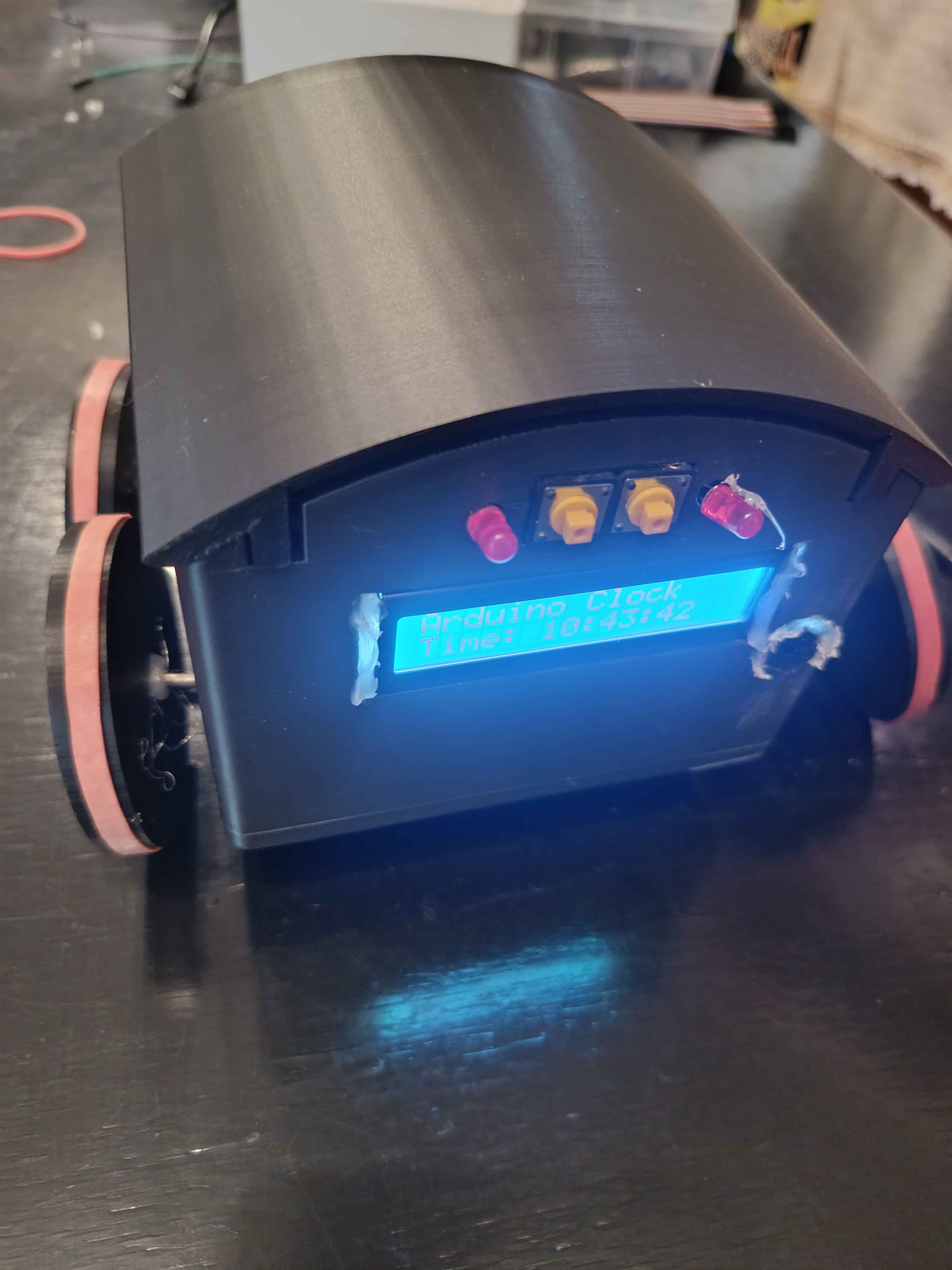
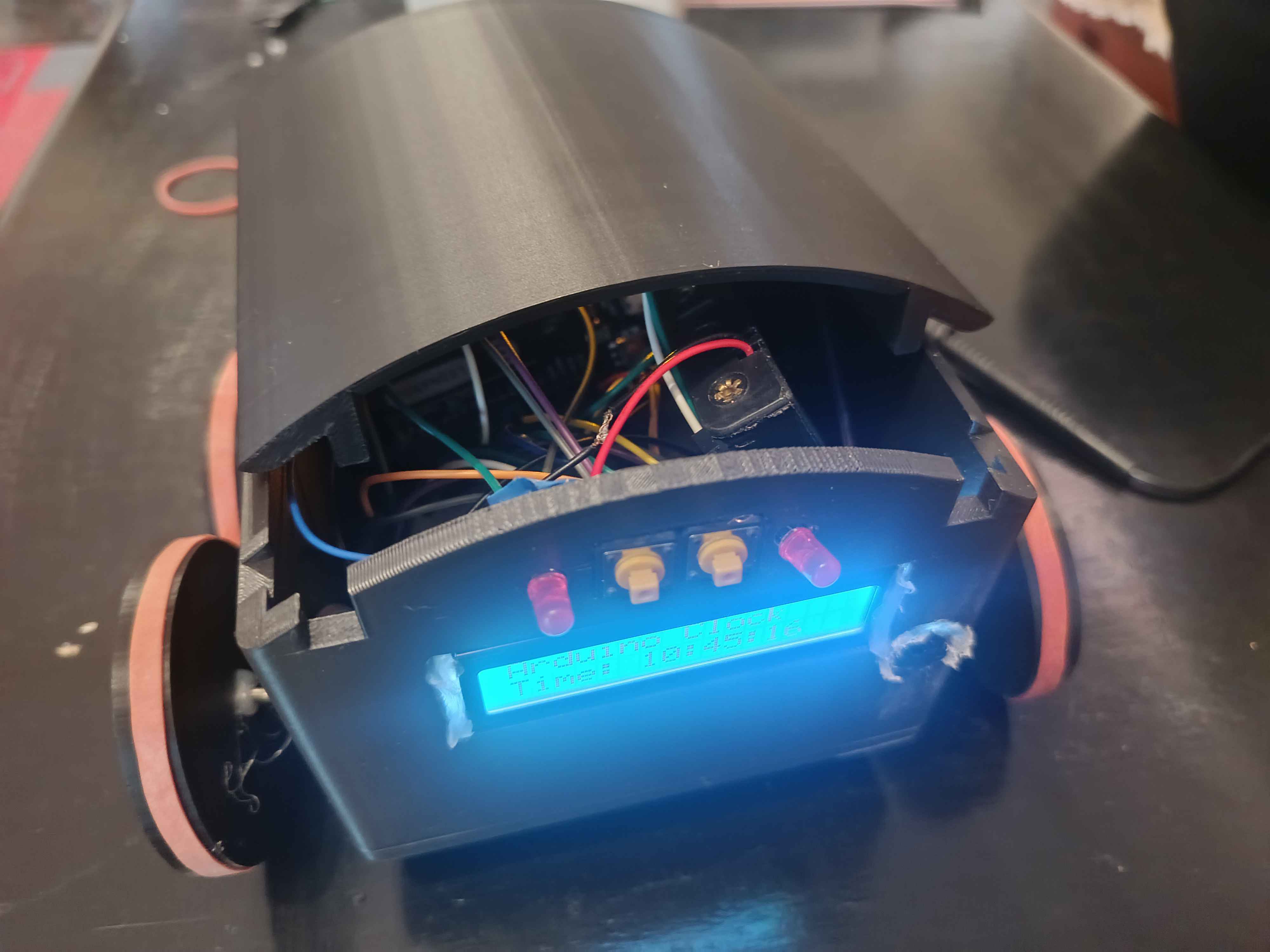
Inspiration
When we sat down at Unihack 2026, we wanted to build something that solves a problem we actually face. Most of our team are chronic oversleepers, with some of us even making it late for our final VCE exams. We figured if we could build a physical device that forces you to get out of bed, we might actually make it to our morning Monash engineering lectures. That was the core idea behind our project, an alarm clock that physically runs away from you to solve the issue of people being asleep.
What it does
The device is an alarm clock that actively fights you. Instead of just beeping until you hit snooze, the alarm triggers a physical sequence. When the time hits, it sounds the buzzer and uses its wheels to drive away from you bed. We programmed it with a linear movement pattern so it actively moves away from you for 5 seconds while sounding the buzzer. By the time you actually catch it to turn off that annoying sound, you are out of bed and going back to sleep is way too much effort. Should I mention - there's no snooze button on the clock. This is absolutely an intended feature to reduce the desire of "5 more minutes" whenever you get waken up in the morning. You either get up to catch this clock, or let the buzzer ring in your ears until you are annoyed enough to get up and turn it off. It's a wake-wake situation.
How we built it
We split the workload between CAD, circuitry, and software. The main brain of the operation is an Arduino UNO. We hooked it up to an LCD screen and some buttons from a standard Arduino kit so the user can set the timer. For the movement, we used two 130 size DC stepper motors controlled by L293D motor drivers, powered by a 9V battery. On Friday, Kevin measured the components and designed the 12x12cm base, roof and wheels in CAD so we could leave it to 3D print overnight. Meanwhile, Alen handled connecting the batteries to the breadboard, coding the clock logic for the LCD, and setting up the speaker.
On Saturday, we began the physical assembly of the clock. Using the few successful 3D prints from the previous night, we inserted the buttons and LCD screen and managed to achieve a system that would spin two motors and sound a buzzer as soon as the alarm went off. However, at this point the motors were not fixed down to the clock base and no wheels were attached to them yet, providing no movement but rather a mildly infuriating sound to wake up to. Fixing all the dimension errors and new components that needed to be created, the .stl files to 3D print our final pieces were sent to a 3D printer to prepare for Sunday.
Sunday was a hectic day of trying to get everything to work without breaking anything. All the new 3D prints were created, yet at the start of Sunday we only had a few detached components, motors spinning with no wheels attached with a roof that now fit the base. Paired with our tight personal schedules, we first fixed down the motor housings onto the base, slid the motors in, then finally managed to attach the wheels to the motor shafts and ultimately get the clock to move away from you as the buzzer sounds.
Challenges we ran into
The largest issue we ran into would be the extremely tight time frame to design and assemble everything. With our previous personal projects having much more generous time frames of several months, a 3-day deadline was a tiny bit more than a simple step up if we had to say.
In addition to this, we originally planned to use NEMA 17 stepper motors paired with A4988 motor drivers recycled from a previous project to spin the wheels. This was made too difficult by both our inability to source a functional 12V battery in time along with the complexity of the circuitry demanding to be finished in such a short time frame. In the end, we deduced that it was not worth it trying to use the steppers and pivoted to the size 130 DC motors. This also meant we had to completely redesign some of our CAD, mainly the motor housings, the base board's cutout screws, and the wheels fitted onto the motors.
This, paired with the fact that we had less than 2 hours on Sunday to fully assemble everything meant things had to move at a rapid pace, and that they had to work the first time or we'd spend too much time bug fixing to actually produce anything meaningful in time.
Accomplishments that we're proud of
Finishing the project within this extremely tight time-frame with a small team would definitely be our biggest accomplishment. By building this working prototype that solves the millennia-old problem of not waking up on time, we devised a plan that can solve half the world's issues, in the span of only two days.
We're also especially proud of the detachable roof. It's may look like nothing special, but it's special to our hearts.
What we learned
Stick to the basics. If a weaker motor demanding less power will still function fine for your project, use that.
At around 3 AM on Sunday, we also lost an embarrassing amount of time because Kevin designed the CAD improperly, with the screw cutouts on the base rotated 90 degrees from where they were meant to be. We suppose this is a lesson as to how important it is to get a Runalarm Clock in your life. If Kevin simply woke up early the next morning from this clock, he wouldn't be fatigued to make such a silly mistake.
What's next for Runalarm Clock
We want to incorporate the ability to play mp3 files alongside the buzzer next. This way, your least favourite song can be blasting in your ears while you drift between consciousness and slumber. Isn't that a fun way to wake up?
We would also like to add more fun ways to wake up the user when the alarm sounds. For example, a water gun and a fan pointed directly toward their face on top of everything we already have sounds like an even more enjoyable way to wake up!


Log in or sign up for Devpost to join the conversation.