-
-
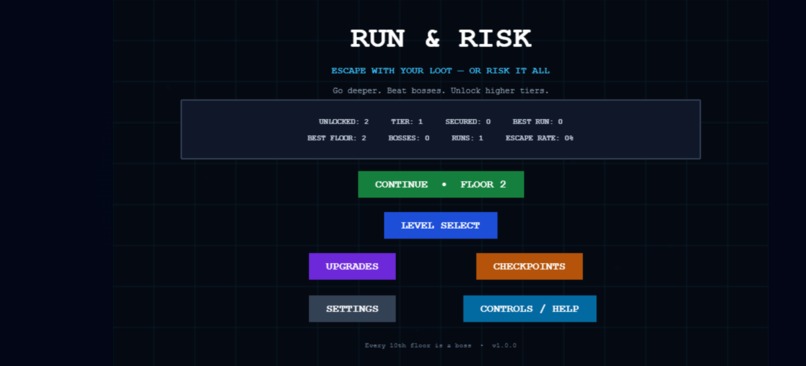
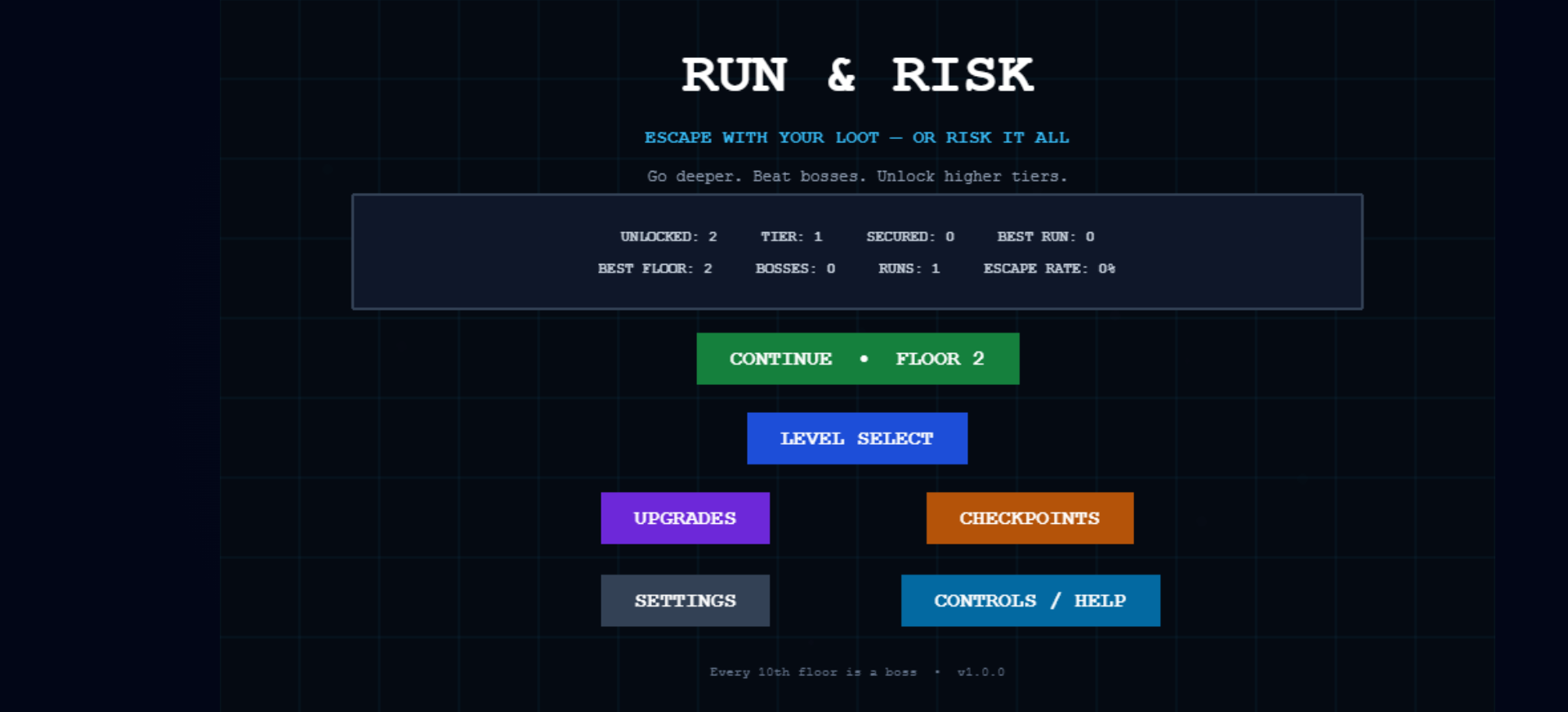
The starting point of the roguelite journey, showing progression, unlocked floors, secured loot, and core navigation.
-
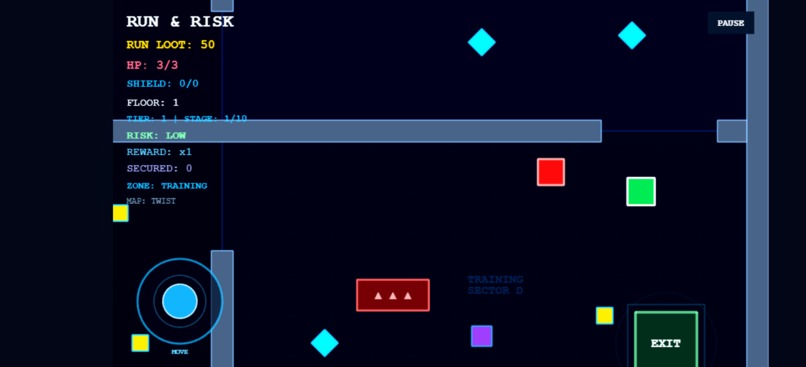
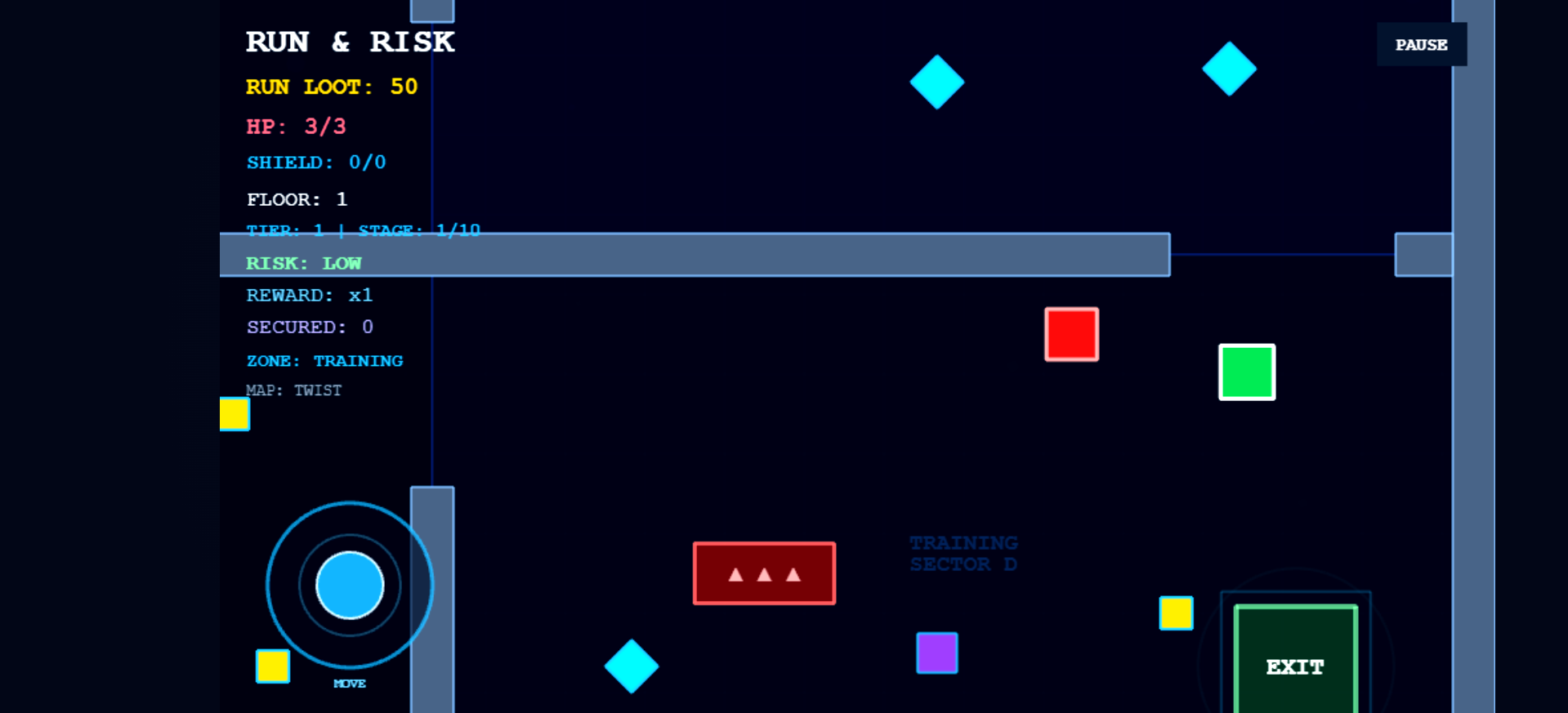
Collect loot, avoid hazards, survive enemies, and push deeper as the reward multiplier increases.
-
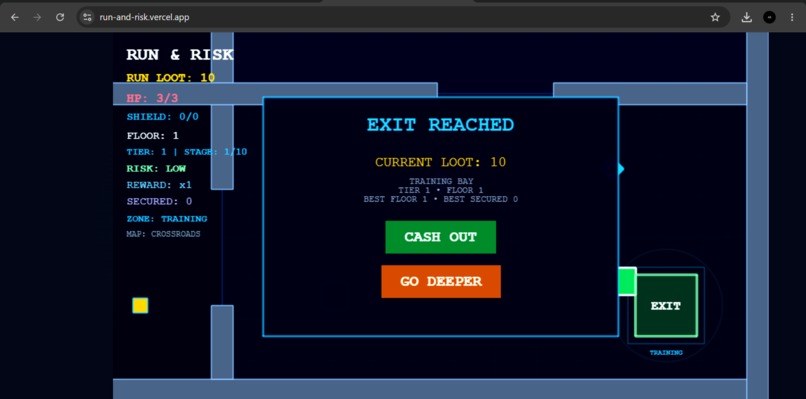
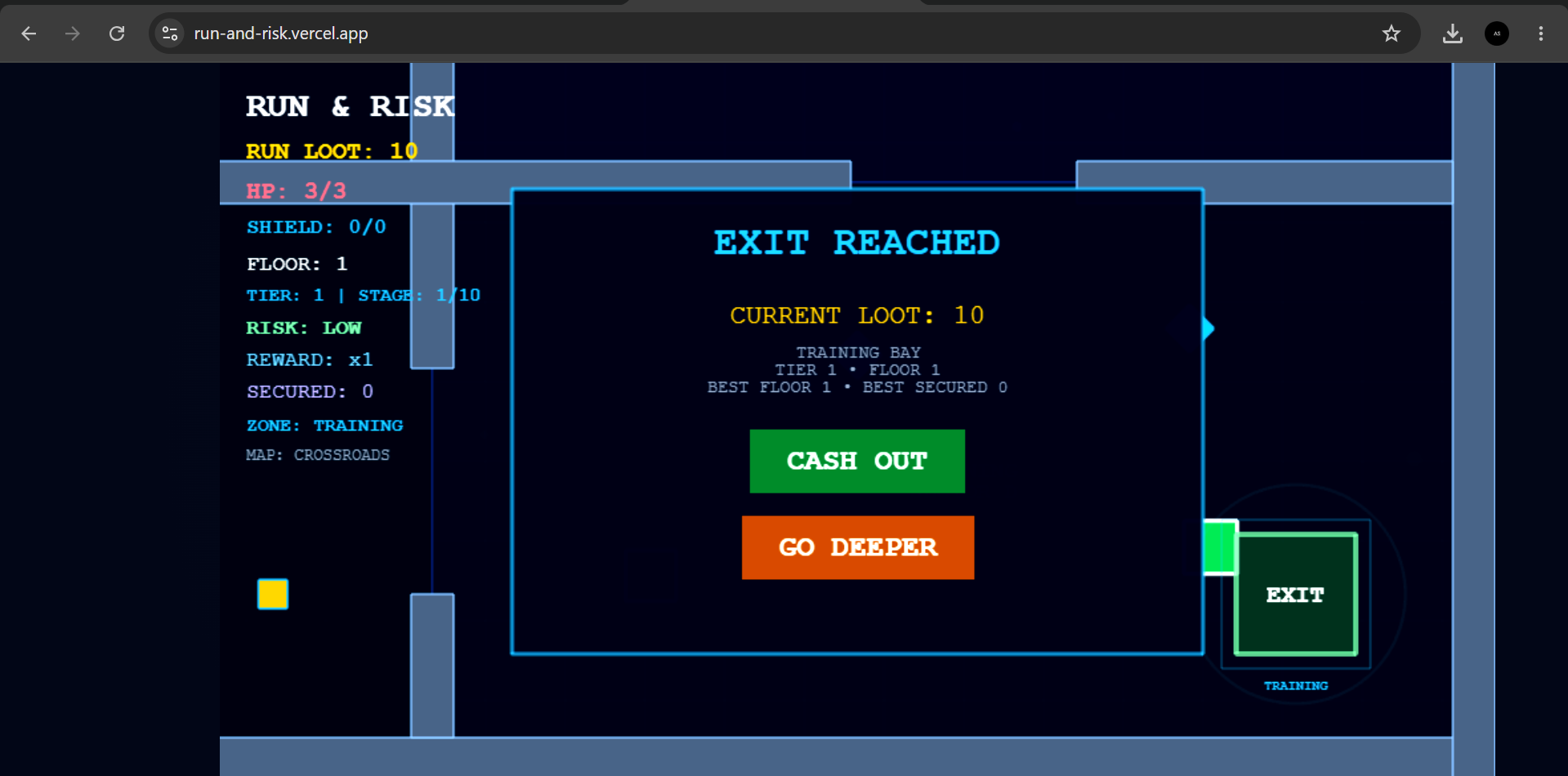
The core decision of RUN & RISK: secure your loot now, or continue deeper and risk losing everything.
-
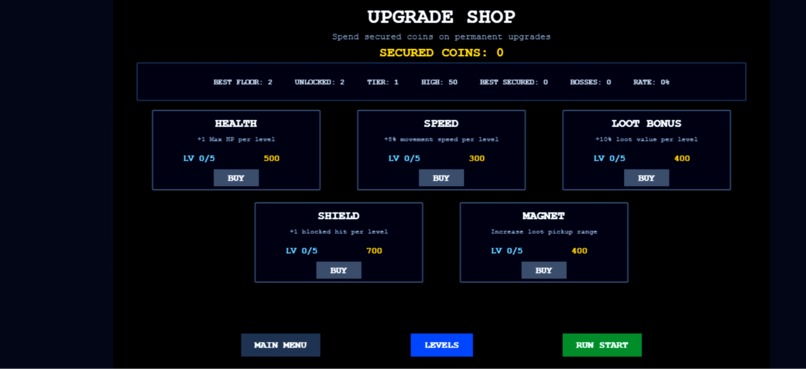
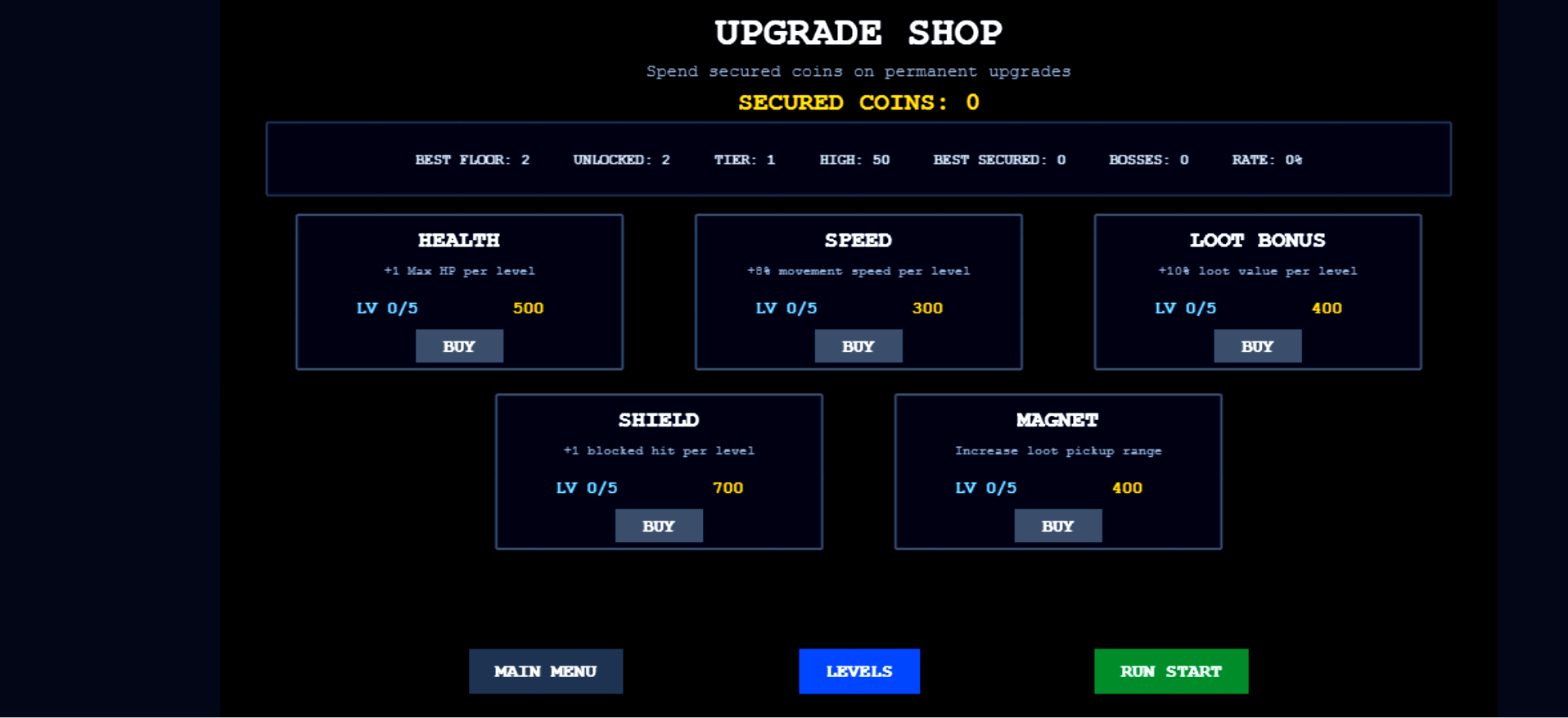
Use secured coins to improve Health, Speed, Loot Bonus, Shield, and Magnet abilities.
-
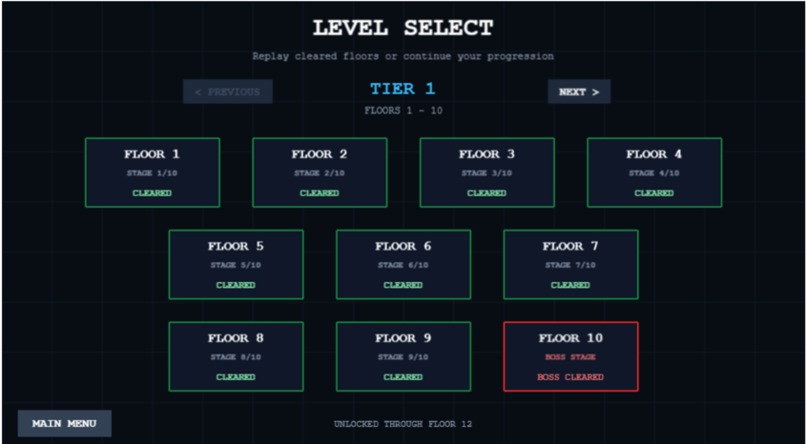
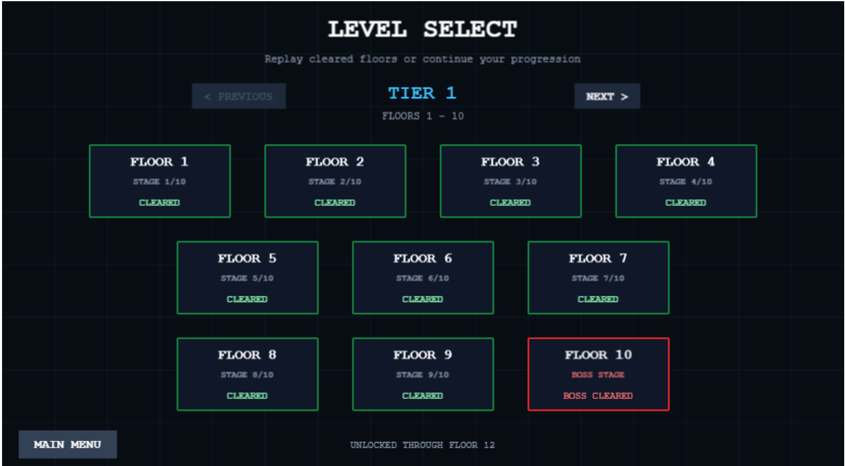
Track cleared floors, upcoming stages, boss milestones, and unlocked tiers through the Level Select screen.
-
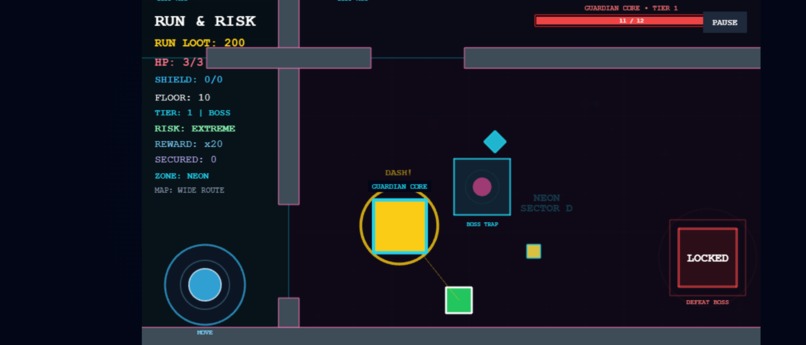
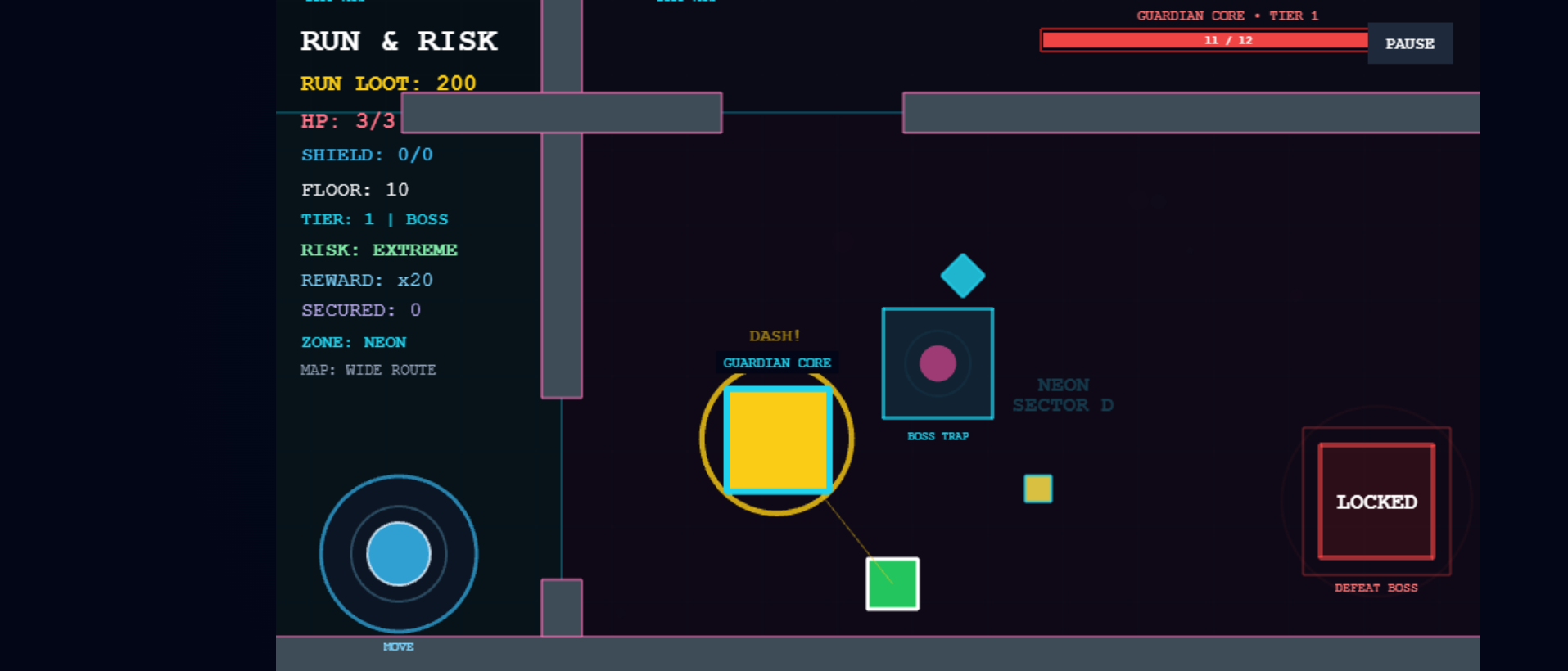
Every 10th floor becomes a boss battle where the exit remains locked until the boss is defeated.
-
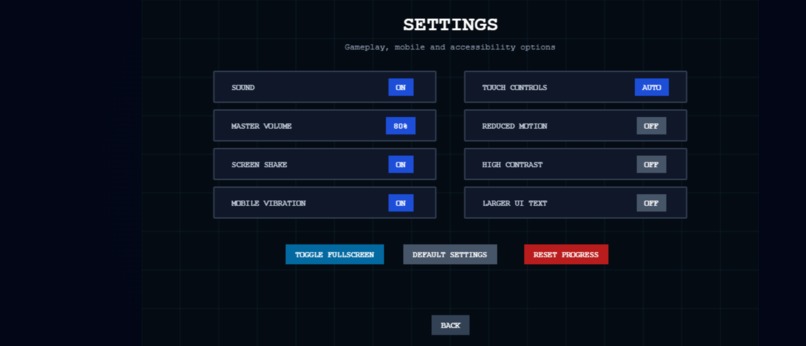
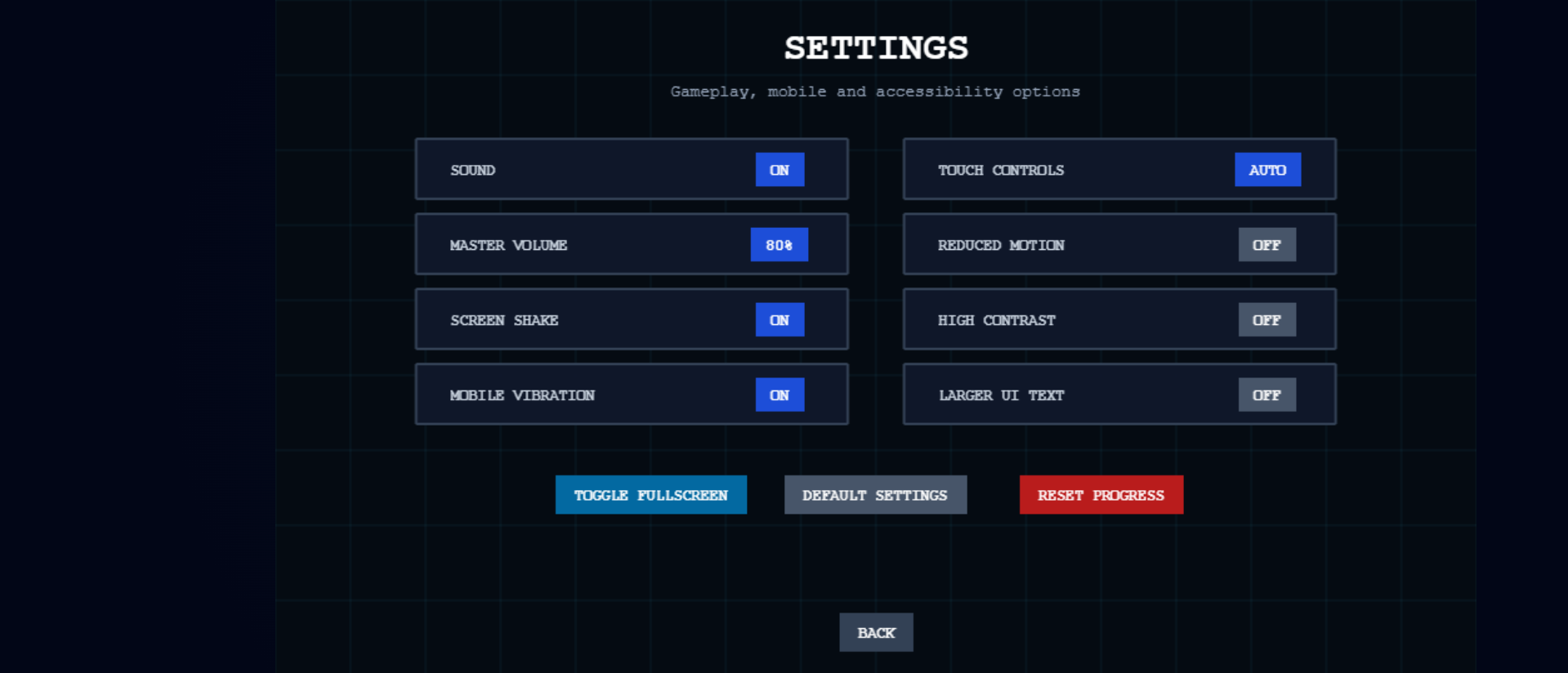
RUN & RISK includes mobile controls, vibration, reduced motion, high contrast, larger text, fullscreen, and other accessibility options.
Inspiration
RUN & RISK started from one simple idea:
What if reaching the exit was not the end of a level, but the moment where the player had to make the hardest decision?
Instead of automatically completing a floor, the player chooses between two options:
- Cash Out and permanently secure the loot collected so far
- Go Deeper for bigger rewards while risking everything that is still unsecured
That risk-versus-reward decision became the core of the entire game.
The goal was to build a browser game that is easy to understand, but becomes more tense and meaningful the deeper the player goes.
What it does
RUN & RISK is a browser-based roguelite action game where players explore increasingly dangerous floors, collect loot, avoid hazards, survive enemies, and reach an exit.
At every exit, the player must decide whether to:
- Cash Out and secure the current run loot
- Go Deeper and continue with higher rewards while keeping everything at risk
If the player dies before escaping, all unsecured loot from that run is lost.
The game also includes:
- Progressive floors and reward multipliers
- Boss fights every 10 floors
- Permanent upgrades
- Tier-based progression
- Checkpoints
- Dynamic room layouts
- Persistent browser saves
- Career statistics
- Desktop and mobile controls
- Settings and accessibility options
How we built it
RUN & RISK was built with JavaScript, Phaser 3, and Vite.
Phaser handles the main game loop, rendering, movement, collisions, enemies, hazards, loot, and boss encounters.
The project was organized into separate systems rather than placing all logic inside one large file.
Some of the main systems include:
ProgressManagerfor persistent progression, upgrades, coins, and statisticsTierManagerfor floors, tiers, checkpoints, and boss progressionRoomManagerfor map layoutsEnemyManagerfor enemy spawning and behaviorLootManagerfor loot generation and collectionHazardManagerfor environmental hazards- Dedicated scenes for gameplay, menus, upgrades, level selection, checkpoints, settings, help, and pause state
Browser localStorage is used to save progression between sessions.
The final production build was created with Vite and deployed on Vercel.
Challenges we ran into
One of the biggest challenges was managing game state correctly between floors.
Choosing Go Deeper needed to preserve the player's current loot, health, and remaining shield charges, while fresh runs and checkpoints needed to restore the correct upgraded stats.
Boss encounters were another challenge because boss floors use a different gameplay flow. The exit stays locked, special traps are used to damage the boss, and progression should only unlock after the boss is defeated.
Scene navigation also required careful handling. Phaser reuses scene instances, so navigation flags, input state, and camera effects had to be reset correctly when moving repeatedly between Settings, Help, Level Select, Pause, and the Main Menu.
Adding mobile support was also challenging because the same gameplay system needed to support both keyboard and touch input without creating separate desktop and mobile versions.
Accomplishments that we're proud of
We are especially proud that RUN & RISK became a complete playable browser game rather than a single-level prototype.
The final game includes:
- A complete risk-versus-reward gameplay loop
- Multi-floor progression
- Boss encounters
- Permanent upgrades
- Checkpoints
- Multiple themed environments
- Persistent progression
- Career statistics
- Mobile touch controls
- Accessibility options
- Complete menu and pause navigation
- A production-ready deployment
The game is publicly playable directly in a browser and works across desktop and mobile devices.
What we learned
Building RUN & RISK improved our understanding of:
- Phaser scene architecture
- Arcade physics
- Collision systems
- Persistent state management
- Roguelite progression
- Boss state machines
- Risk-versus-reward game design
- Responsive browser gameplay
- Mobile touch input
- Accessibility-focused settings
- Production builds with Vite
- Web deployment with Vercel
The biggest design lesson was that a simple mechanic can become much more engaging when every system supports the same central decision.
For RUN & RISK, that decision is always:
Take the reward — or risk it.
What's next for RUN & RISK
Future versions could expand the game with:
- More enemy archetypes
- Additional bosses
- New boss attack patterns
- More environmental mechanics
- Additional upgrade paths
- Achievements
- Online leaderboards
- Cloud saves
- Controller support
- More procedural map variations
- More sound and music
- Expanded progression systems
The core risk-versus-reward loop will remain the heart of the game while future updates add more variety, replayability, and competitive progression.
Built With
- css
- html5
- javascript
- localstorage
- phaser.js
- vercel
- vite


Log in or sign up for Devpost to join the conversation.