Inspiration
As an avid runner in London, I’d spent hours scrolling through Facebook groups, local forums, and random websites to find a running crew that matched my pace. I kept thinking: why isn’t there one place to find all local running clubs, routes, and events? That frustration sparked Run Club Finder—built to make connecting with the running community effortless, no hoops to jump through, just straight-up access to what runners need.
What it does
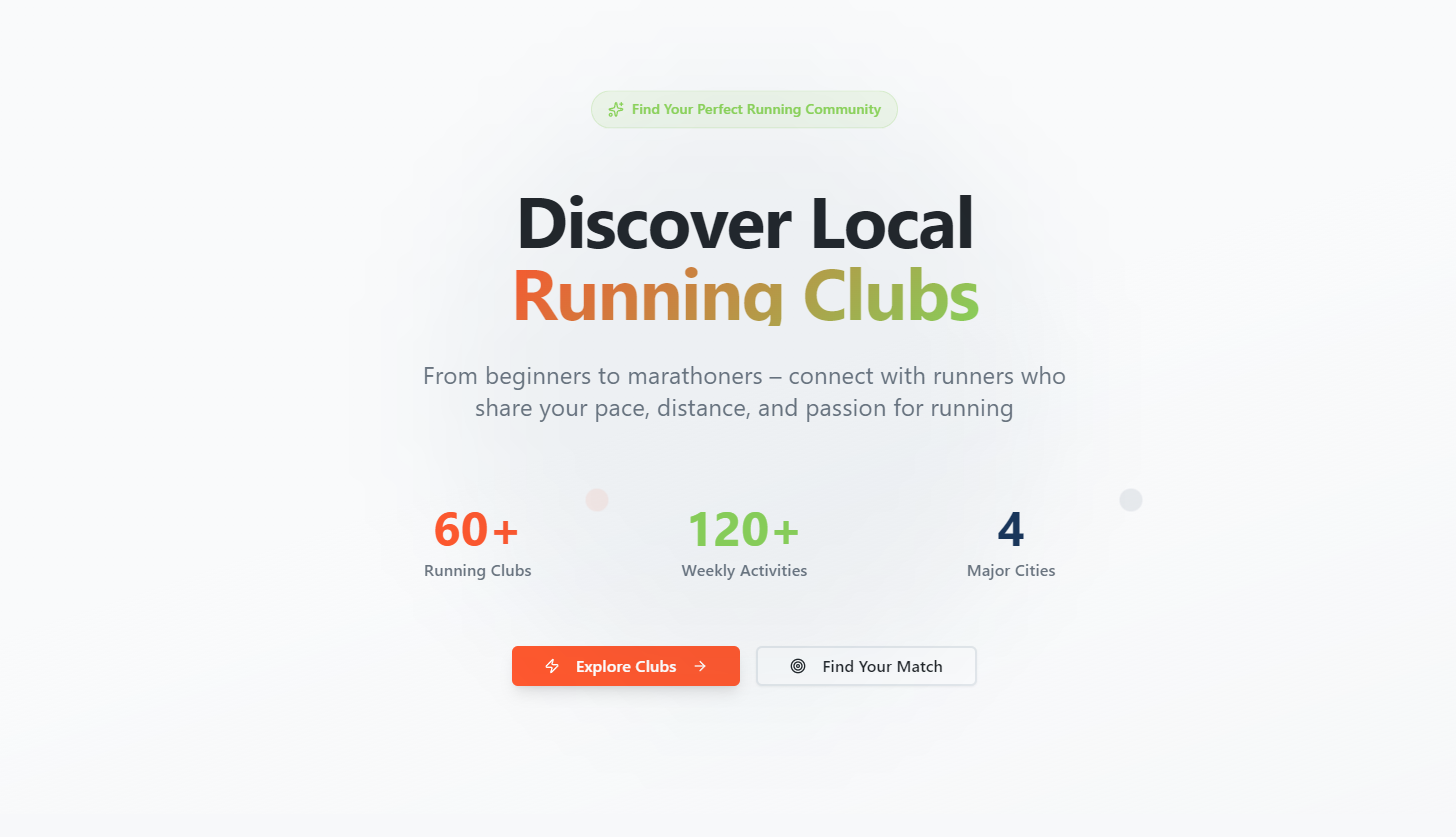
Run Club Finder is a free, login-free platform that centralizes local running resources. It lets you discover running clubs (filtered by pace, distance, schedule), browse upcoming events, explore curated running routes, and connect with runners who share your pace preferences—all accessible on web and mobile.
How we built it
We started by mapping core user needs (beginners to competitive runners) and designing a responsive UI with our brand palette. We built the frontend with React and TailwindCSS, integrated Mapbox for map views, and used LocalStorage to save favorite routes locally. All features were built to work without login, with intuitive real-time filtering for club searches.
Challenges we ran into
The biggest hurdle was perfecting the multi-filter logic—ensuring clubs only appear when matching all selected criteria (pace, distance, schedule) while keeping results updated instantly. We also struggled with making the map view fallback seamlessly to list view if it failed to load, testing across mobile and desktop to ensure consistency.
Accomplishments that we're proud of
We created a fully functional platform that serves runners of all skill levels, with a polished, intuitive interface that works flawlessly across devices. Seeing 60+ local clubs, 120+ events, and 30+ routes come together in one place—all accessible without a single login step—feels like solving the exact problem that inspired us.
What we learned
We deepened our understanding of responsive design for cross-device use, mastered real-time filter logic, and learned how to prioritize user experience by removing friction (like login requirements). Most importantly, we learned to center the product on real runner pain points, not just technical features.
What's next for this project
We plan to expand coverage to more European and US cities, add user-submitted route sharing (moderated for quality), and integrate lightweight fitness tracking compatibility. We also want to build a community feedback loop to refine filters and add features that runners ask for—keeping the focus on making running more social and accessible.

Log in or sign up for Devpost to join the conversation.