Inspiration
We wanted to rethink how people interact with physical spaces.
- Most spaces force humans to adapt to them
- We asked: what if spaces adapted to how you feel instead?
Rumo is inspired by the idea of emotionally adaptive environments, spaces that respond to mood, intention, and energy rather than static design rules.
- Not traditional AI interior design
- Instead, an emotional-to-spatial translation engine
- Turning feelings like calm, focus, or energy into something you can physically see and explore.
Our goal was to make emotions visible through space, lighting, and layout, helping people create environments that support how they want to feel.
What it does
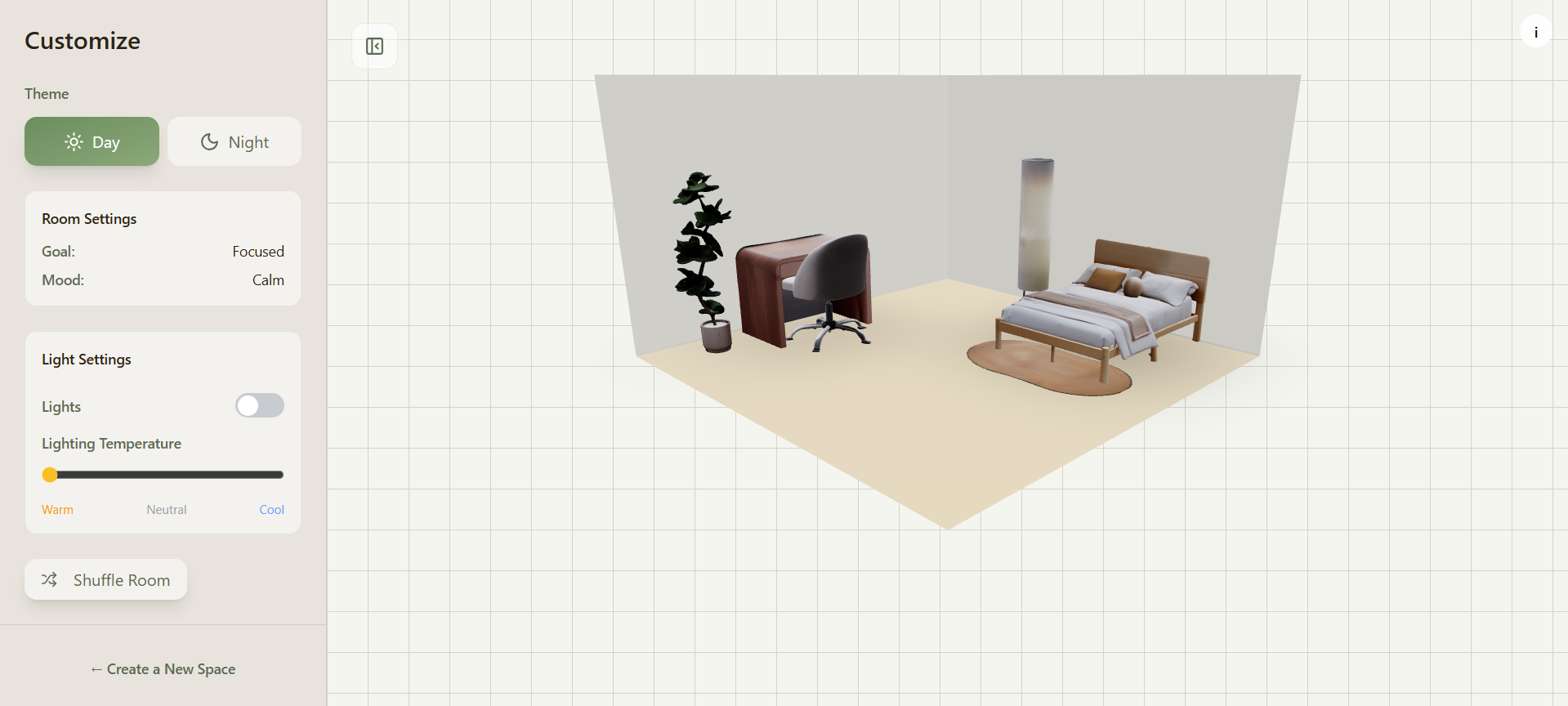
Rumo generates an interactive 3D room based on a user’s preferences. Users answer a short questionnaire (goal, mood, lighting) A personalized room is generated in 3D
Users can:
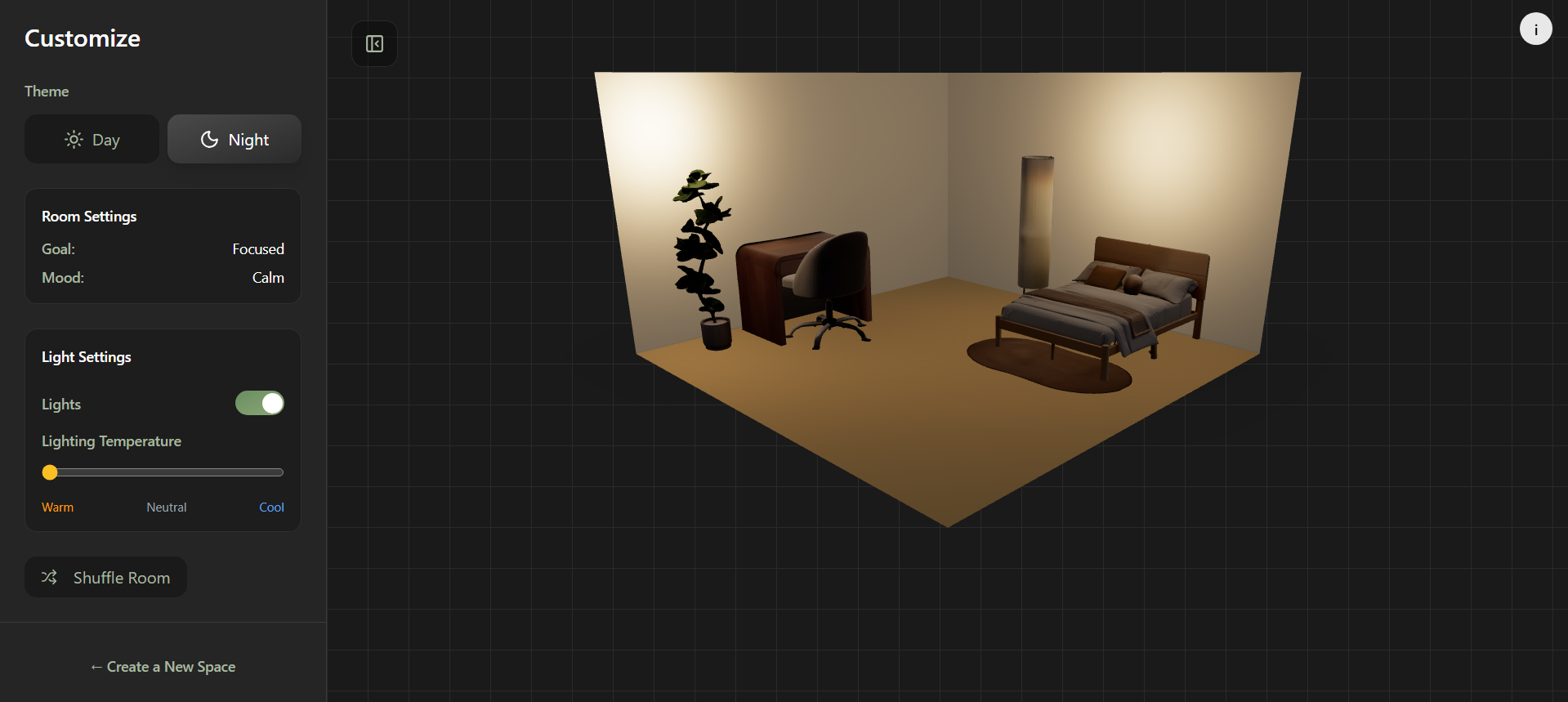
- Toggle day/night lighting
- Turn room lights on or off
- Adjust lighting temperature (warm → cool)
- Shuffle the room layout using AI
- adjust settings and explore different vibes in real time
How we built it
We combined modern frontend tools, 3D rendering, and AI.
- React + TypeScript for UI and state management
- Three.js with @react-three/fiber for real-time 3D rooms
- Tailwind CSS for fast, responsive styling
- Framer Motion for smooth UI transitions
- FastAPI + Python for backend logic and layout shuffling
- Gemini API to generate and shuffle room layouts intelligently
Challenges we ran into
- Getting AI-generated layouts to stay visually and spatially valid
Accomplishments that we're proud of
We built something that feels polished and intentional.
- A fully interactive 3D room experience
- Smooth transitions between themes and lighting states
- Lighting temperature slider that affects the actual 3D scene
- AI-powered layout shuffling
- A clean, modern UI that feels calm and usable
What we learned
- How to integrate 3D graphics into a React app
- Collaborating effectively on a multi-stack project
- How dynamically Gemini API can be applied
- Working with lighting, ambience, and realism in Three.js
- Designing user experiences that are both functional and emotional
What's next for Rumo
We see a lot of room for growth.
- Save and compare multiple room designs
- More room types, furniture, and customization
- Smarter AI suggestions based on user behaviour
- Accessibility and performance improvements
- Export or share room designs
Built With
- fastapi
- framer-motion
- gemini
- python
- react
- tailwind.css
- three.js
- typescript
- uvicorn

Log in or sign up for Devpost to join the conversation.