-
-
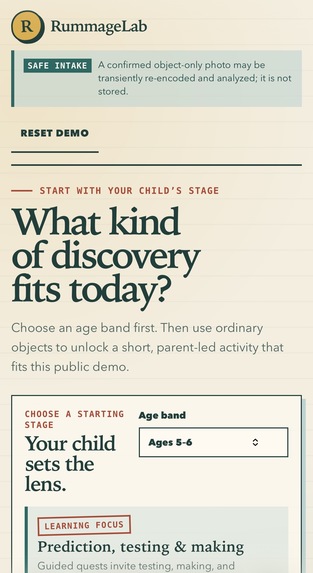
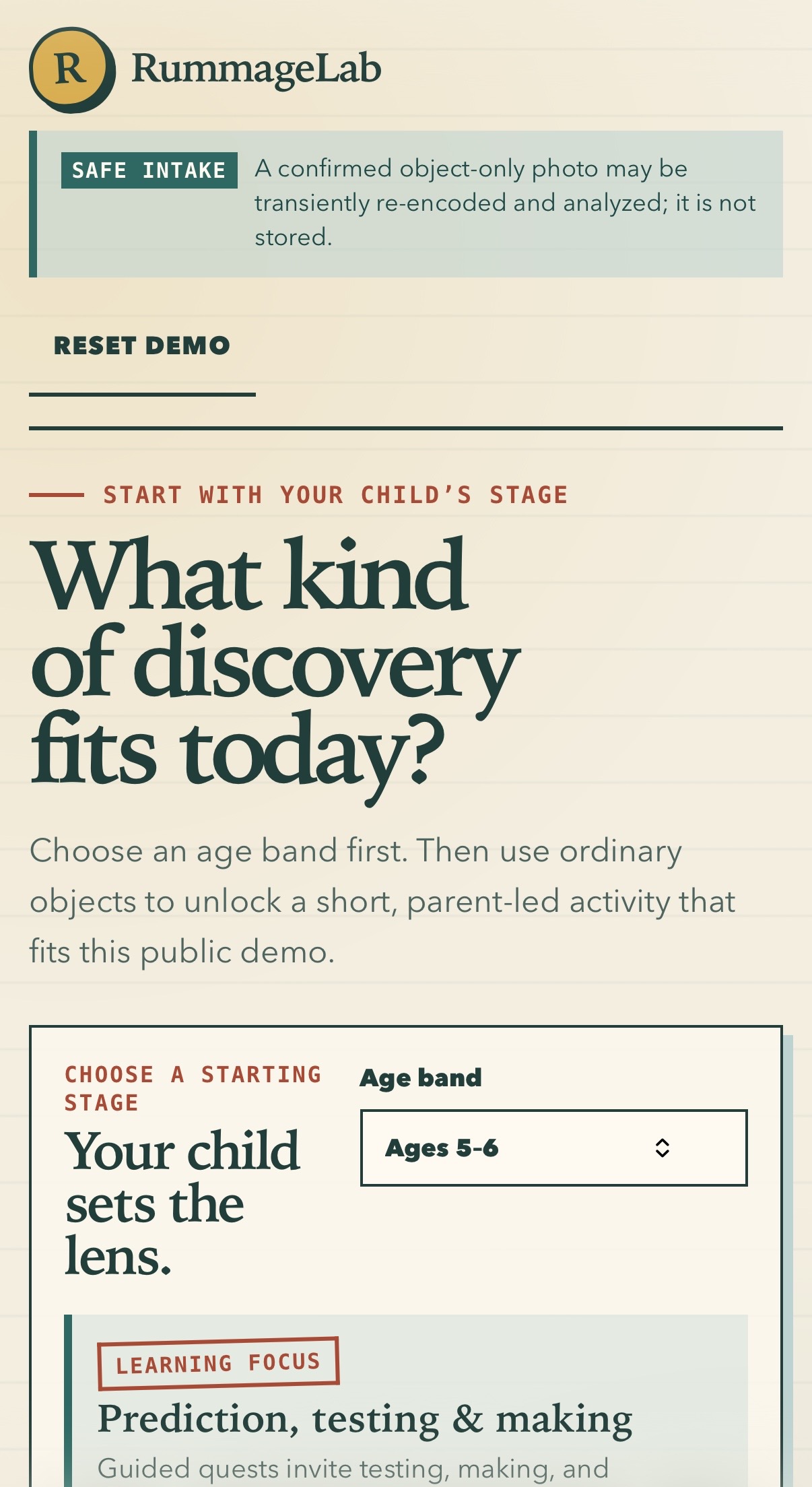
Landing Screen, age-band selection
-
-
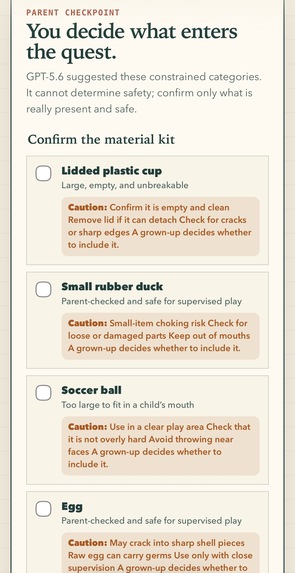
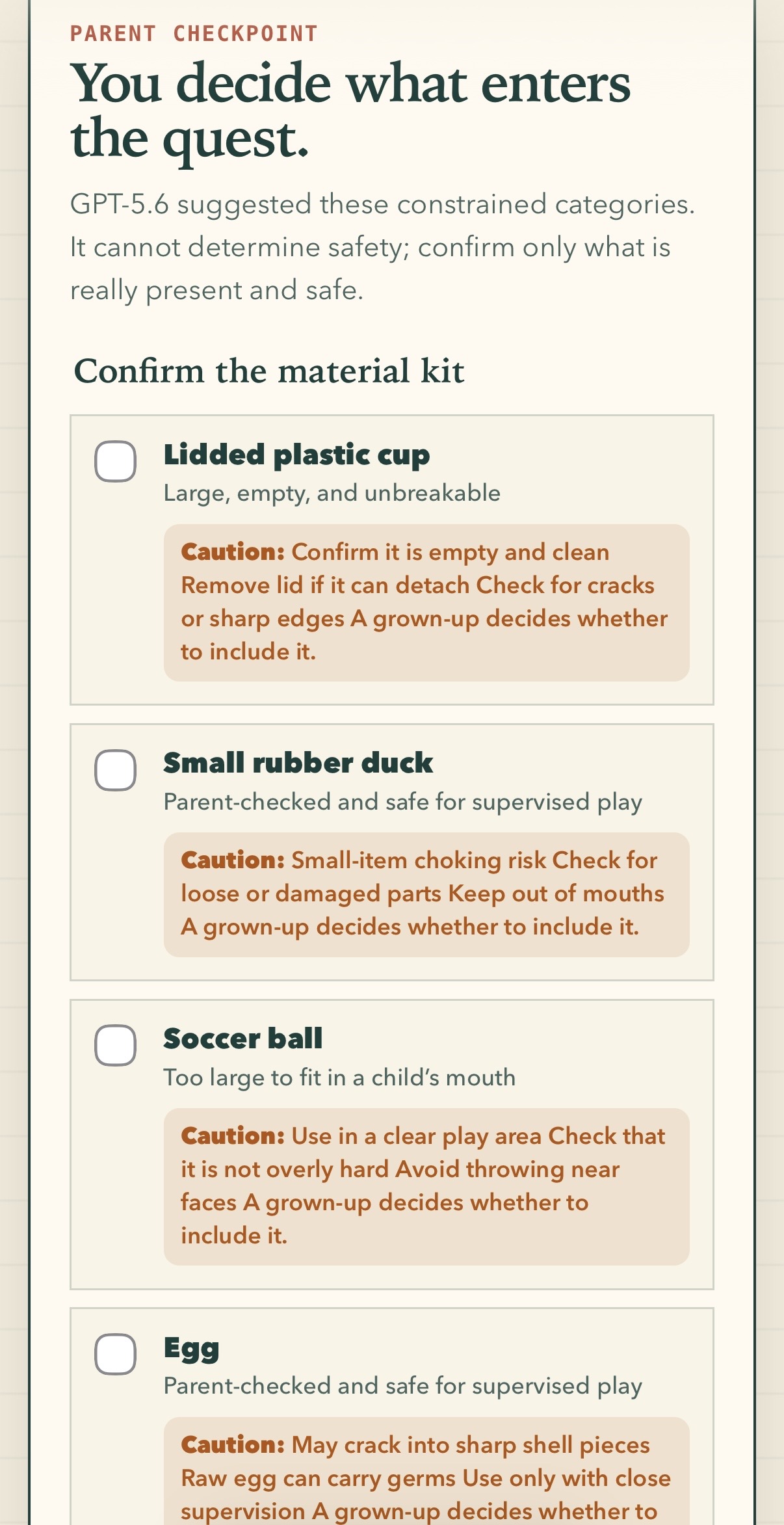
Objects after GPT analysis + parent approval
-
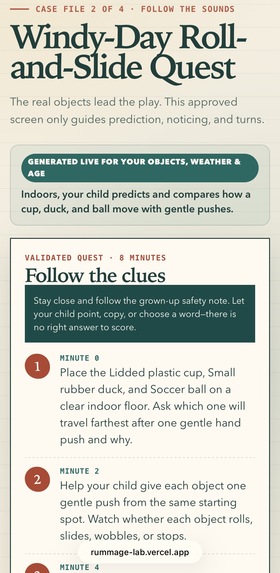
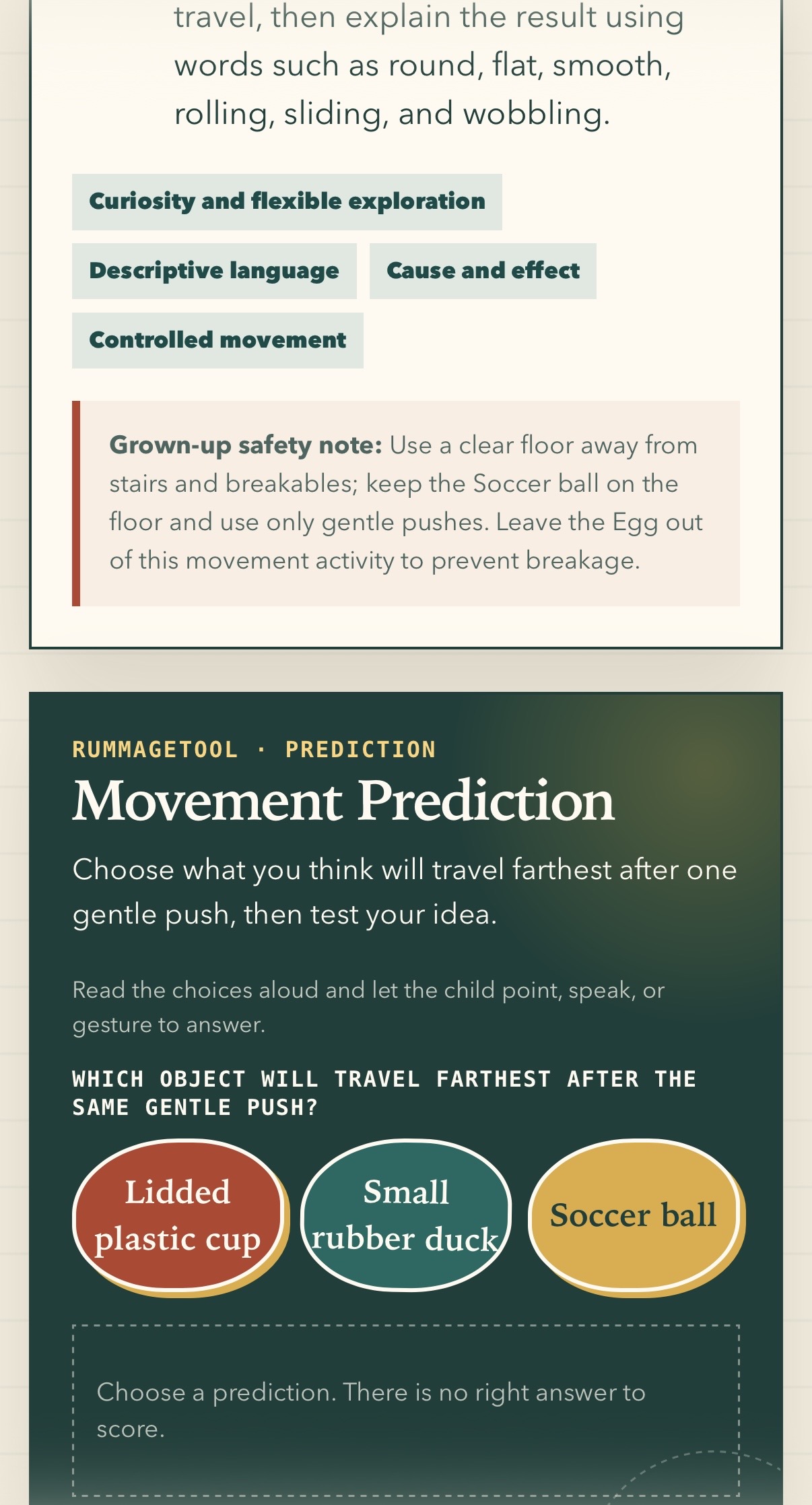
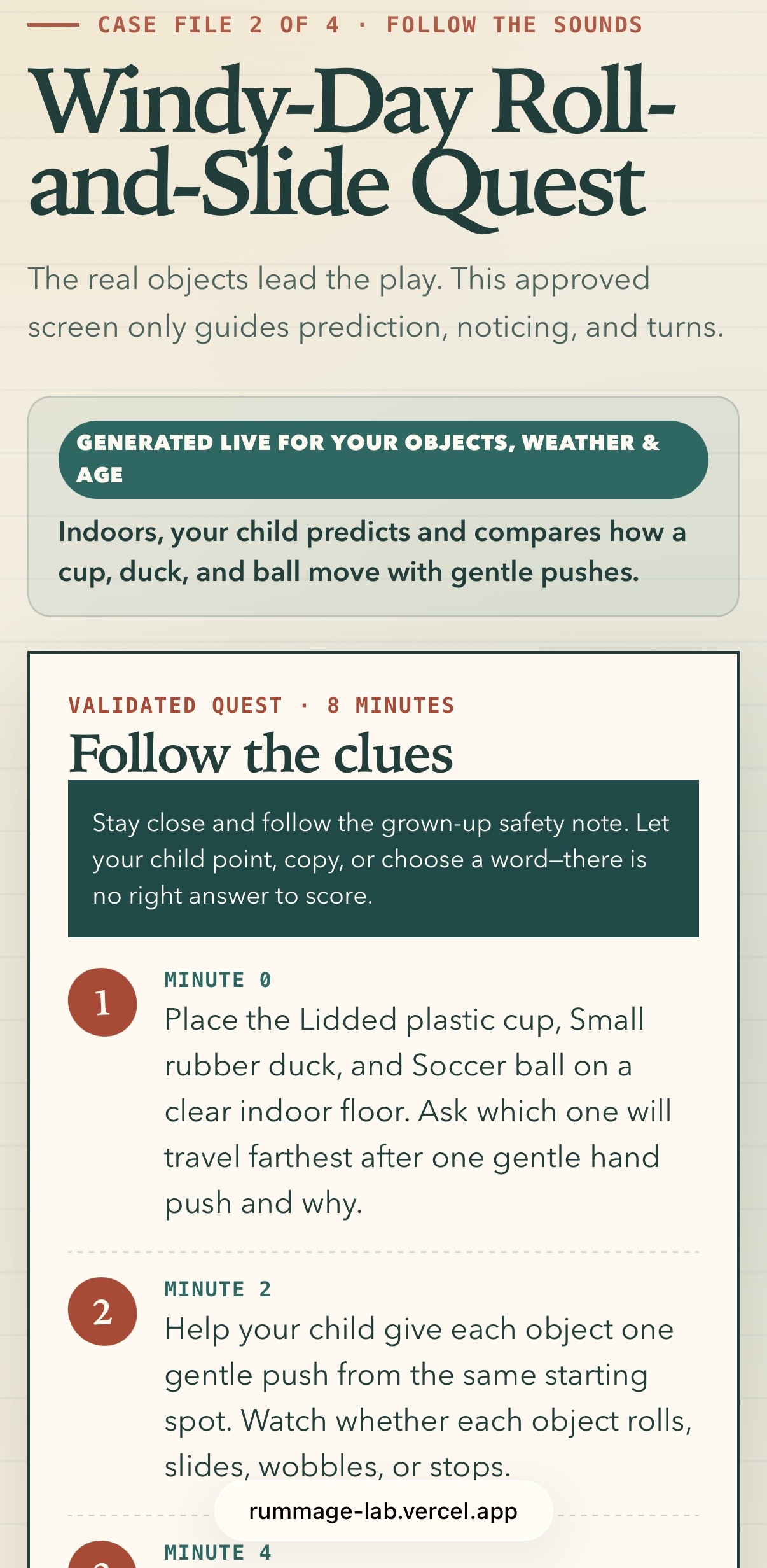
Generated quest
-
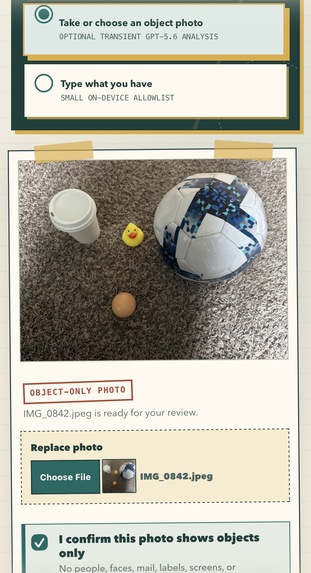
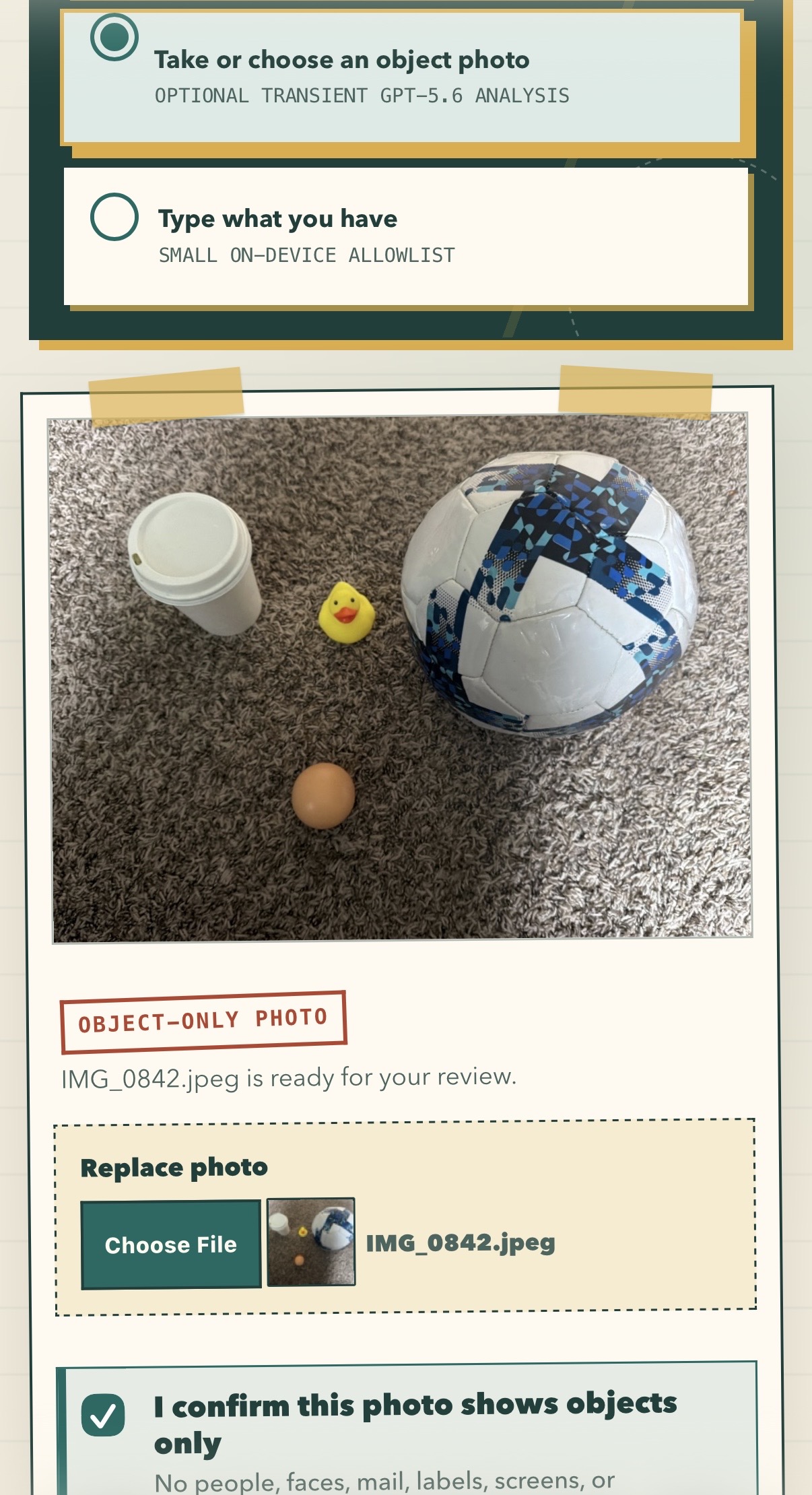
Picture of rummage items
-
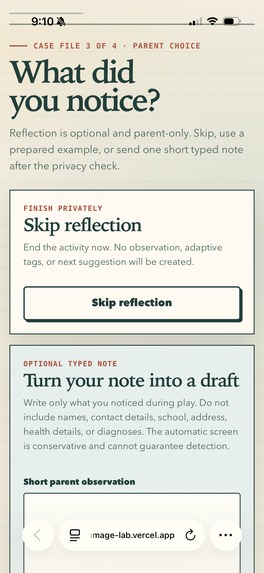
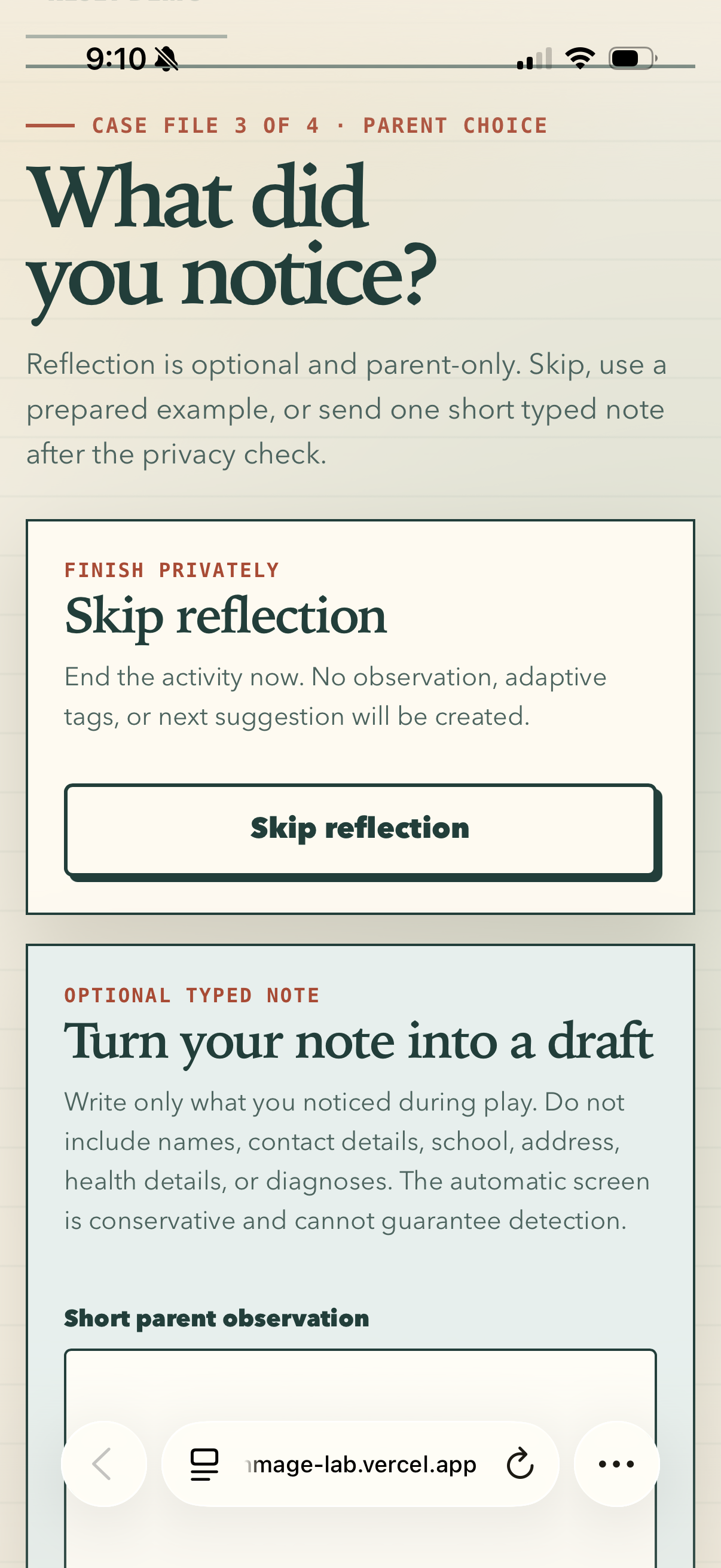
Reflections used to suggest next activity
The Story of RummageLab
Inspiration
Rainy season came early this year and refused to leave. Grey morning after grey morning stuck indoors with a baby, a toddler, and a full-time job — and every pressure valve equally unappealing: infinite snacks, more screen time, or expensive classes across town.
At the same time, I'd been itching to go deeper on modern AI tooling — pipelines, agent orchestration, scaffolding, git worktrees — and a hackathon weekend looked like a chance to solve both problems at once.
The dream workflow was honest about my life: type a /goal, send off a team of
agents, and go cook breakfast for the wailing kids while their dad is still
asleep. Come back, review, steer, repeat.
The dream product was equally simple: something that turns the junk drawer, the kitchen counter, and the backyard into short, age-right learning moments — things my kids can do with their hands, not another screen to stare at.
What it does
RummageLab turns everyday objects into safe, developmentally appropriate activities for ages 0–6. A parent picks an age band, then photographs or types what is on the table. On the live path, GPT-5.6 vets each object, and — only after the parent confirms every item — authors an activity fitted to the confirmed objects, the child's age band, and the weather. Under-threes get screen-free caregiver co-play scripts; threes-and-up get short guided quests that end with something the child noticed, made, heard, measured, or explained — not another chat transcript. A deterministic seeded path (Kitchen Sound Detectives) runs the full experience with no key configured, so the demo never depends on a live model call.
How I built it
I built RummageLab primarily with Codex 5.6 (Sol & Terra):
- Codex 5.6 did the heavy early lifting: initial planning, architecture, scaffolding the Next.js app, the Zod schema layer, the runtime contracts, tests, and CI. Work ran as one-task-per-worktree branches with dedicated review passes before merging.
- The orchestration pattern that emerged: a master orchestrator task fanning out subtasks mapped to git workflows, with dedicated reviewer agents on each feature branch before merge.
The runtime idea I'm proudest of: use live GPT-5.6 to author each activity
dynamically — age-appropriate, weather-dependent, built from parent-vetted
objects — while keeping a hard boundary around it. Nothing the model authors
reaches a child without passing a local hazard denylist, strict Zod plus
context re-validation (materials must be a subset of what the parent confirmed,
focus IDs must exist in the local catalogue, steps must fit the time window),
and explicit parent confirmation. The model composes; it never runs code, and
the app renders only prebuilt, non-recording components. Codex stays at build
time; GPT-5.6 is the only model in the learner runtime.
Challenges and what I learned
- AI orchestration is a skill of its own. Running a master orchestrator with subtasks mapped to git workflows — and dedicated reviewers per feature branch — took real iteration. Restarting agents with fresh, focused context beat letting any one context grow stale.
- Goal and loop engineering. Writing goals that agents can pursue for a long stretch without drifting, and knowing when to steer versus when to let a loop run, was half the project.
- Scaffold extensively, build in branches. Heavy upfront scaffolding plus worktree-isolated branches made parallel agent work merge cleanly instead of colliding.
- Vercel hosting for easy deployment.
- Don't use GPT-5.6 Ultra for everything. 💸 Gradiate the effort: start with high-effort planning, then drop to lower effort tiers for debugging and mechanical work. My token bill learned this lesson before I did.
- Kid safety has to be an axiom, not a feature. COPPA-adjacent design is genuinely tricky: no accounts, no stored photos, no child profiling, PII screening before any request. And it cuts both ways — my hard denylist confidently rejected the rubber duckie my one-year-old plays with incessantly. That forced a real design change: conservative automated vetting plus parental override, because the parent — not the model, and not my denylist — is the final authority on their own living room.
What's next
- Finish the adaptive feedback loop: a personal model of family preferences (with the same no-PII stance — parent-approved tags only, never raw notes or child data) so subsequent activities follow what a family actually enjoys.
- Grow RummageLab toward a K–8 audience — same everyday objects, bigger
STEM ideas.

Log in or sign up for Devpost to join the conversation.