Inspiration
The hardest problems we hit in ten years of leading engineering teams were never technical. They were human. Someone stuck on the same decision for months. A conversation nobody wanted to have. A career change that never happened. What unlocks those is coaching: someone trained to ask the question you have been avoiding.
We know it works. We also know that almost nobody gets it. At $234 an hour in the US and €215 in Europe (ICF 2025 averages), coaching is a perk for executives. And the moment you need it most is rarely Thursday at 3pm. It is 2am, when the decision is keeping you awake.
So we built the thing we wanted: a coach that costs a fraction of that, answers at 2am, speaks your language, and forgets everything you said.
What it does
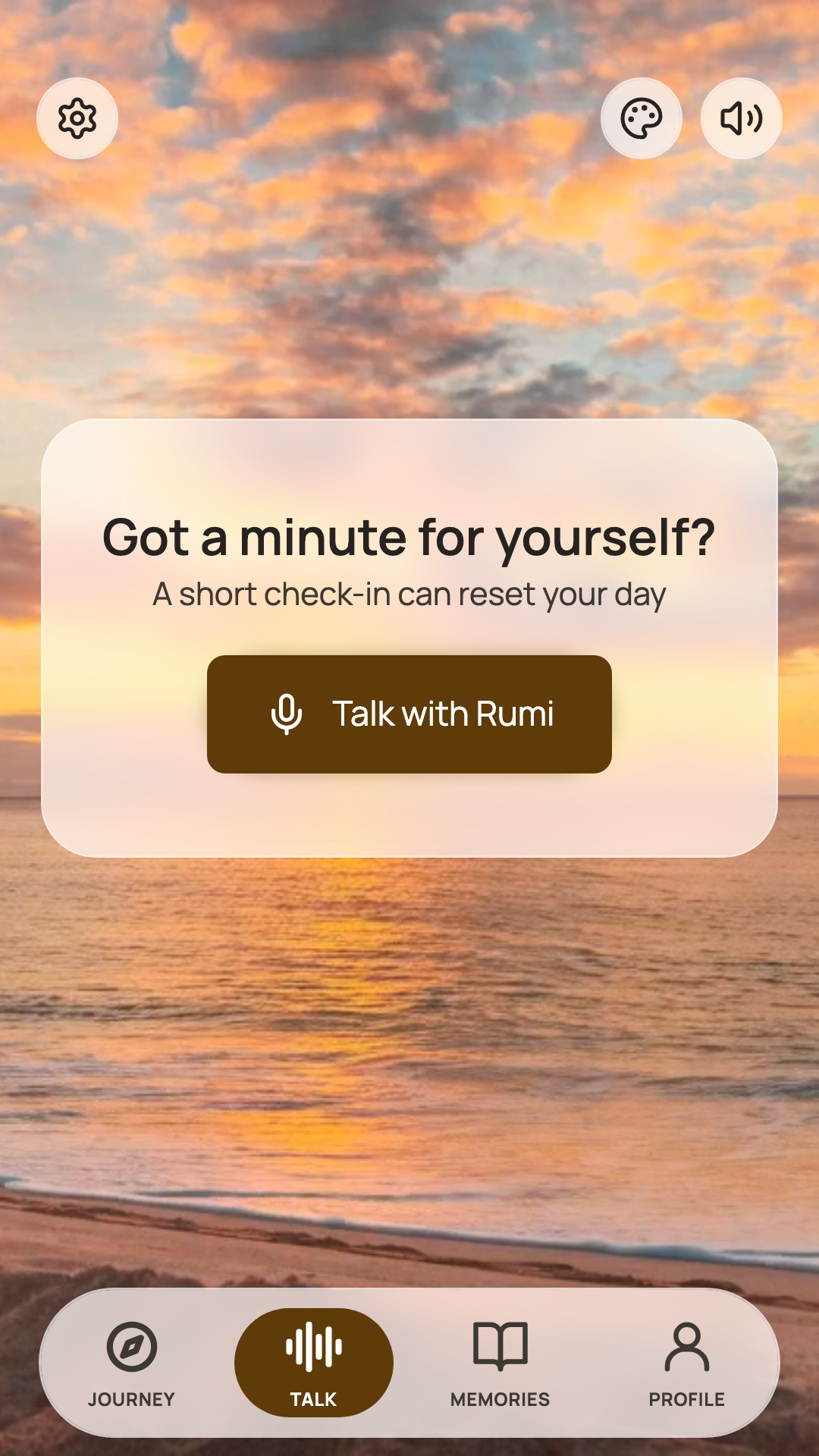
Rumi is a voice-first AI life coach. You talk. It listens and coaches, which means it asks the questions that make you think instead of handing you advice.
While you speak, the screen builds itself. Weighing two options, and a decision map appears. Spiralling, and the three things you actually said come back as a list you can look at. We call it Adaptive Generative UI: the interface is generated live out of the conversation, so what you see is always what you just said, organized.
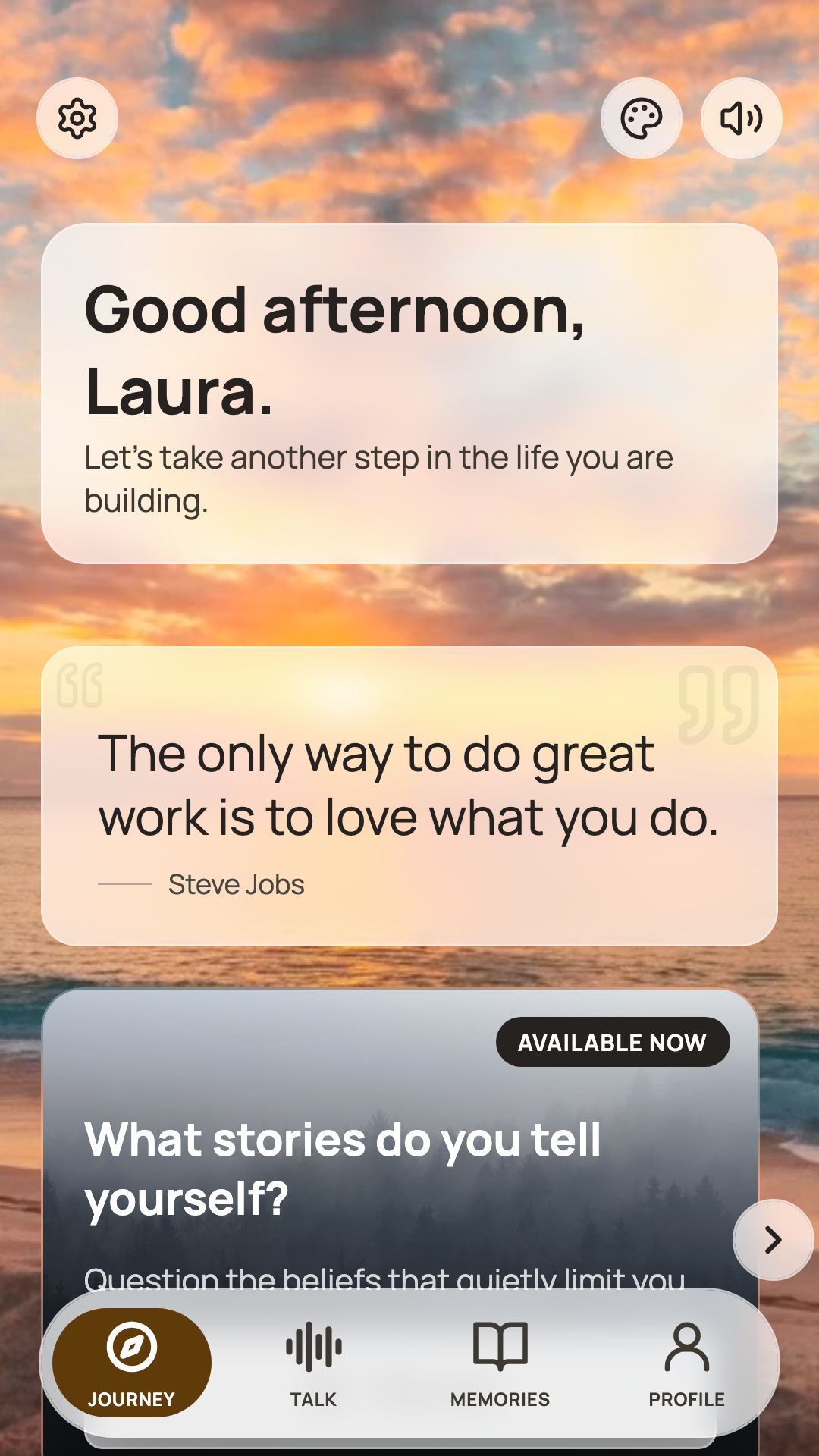
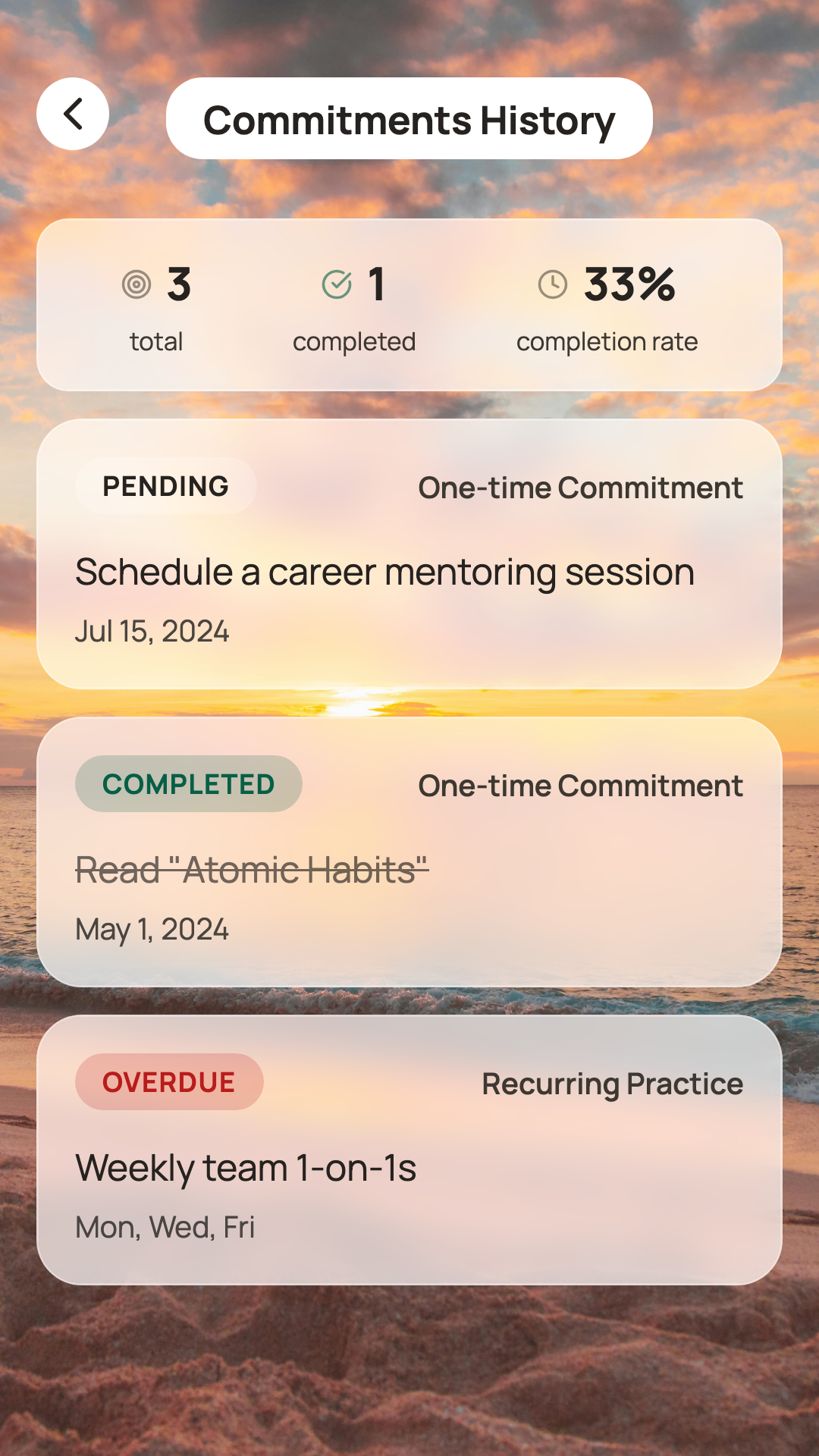
Sessions run 5 to 10 minutes. Beyond one-off conversations, Rumi runs a structured loop: pick an area of your life you want to improve, work it session by session until something actually changes, then move to the next one.
Three things separate this from a chatbot with a microphone:
- A professional coach designed the method. One of our founders is a practising life coach. She shapes how Rumi opens, when it probes, when it refuses to give advice, and how a session closes. The coaching is a methodology, not a system prompt written by engineers.
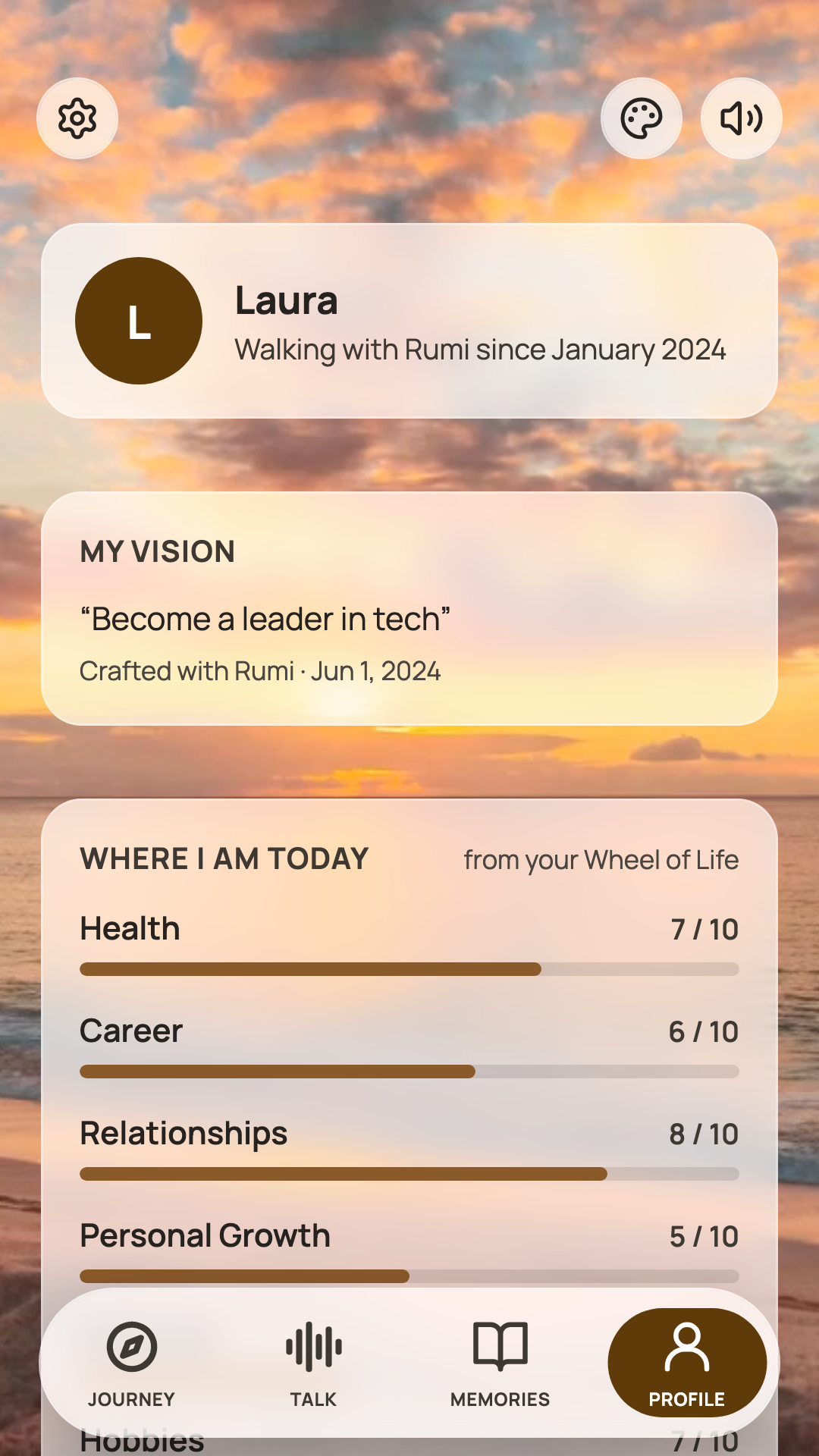
- Privacy is architecture, not a setting. Voice is processed in memory and your conversation is deleted when the session ends. Nothing is recorded, so nothing can leak.
- 20 languages from day one. Being coached in your second language is not really being coached.
How it works
Four Gemini models run the product in production through Vertex AI, and each one makes a decision a human coach would otherwise make:
- gemini-3.1-flash-live-preview holds the live audio session open for the whole conversation. It decides what to ask next, when to stay silent, when to push back, and what to build on screen as you speak.
- gemini-3.5-flash handles companion chat and transcription, and writes the session review after you hang up.
- gemini-3.1-pro-preview is the recommendation agent. It decides which growth area you work on next and what the next session should cover.
- gemini-3.1-flash-tts-preview generates the speech.
No human reviews, approves or edits any of it. There is no human in the loop during a session, and that is the whole business case: it is what takes coaching from $234 an hour to roughly $13.
How we built it
- Backend: Go on Cloud Run, with Cloud SQL (PostgreSQL), all defined in Terraform across QA and production
- AI: Gemini served through Vertex AI, deployed in EU and US regions so user data stays in the user's region
- Apps: React Native (Expo) for iOS, Android and web
- Website: Astro with React islands, statically rendered in 20 locales, served from Cloud Storage behind Cloud CDN
- CI/CD: keyless deploys through Workload Identity Federation, with no long-lived service account keys
- Compliance: Google Consent Mode v2 with a self-hosted consent layer, and full GDPR documentation in every language we ship
We are three people working part-time, and AI agents do the rest. Code, translations, legal drafts, SEO and analytics instrumentation ship to production every week, with agents doing the work and humans deciding what is right. Two years ago a company like this needed twenty people. Today it needs three.
Challenges we ran into
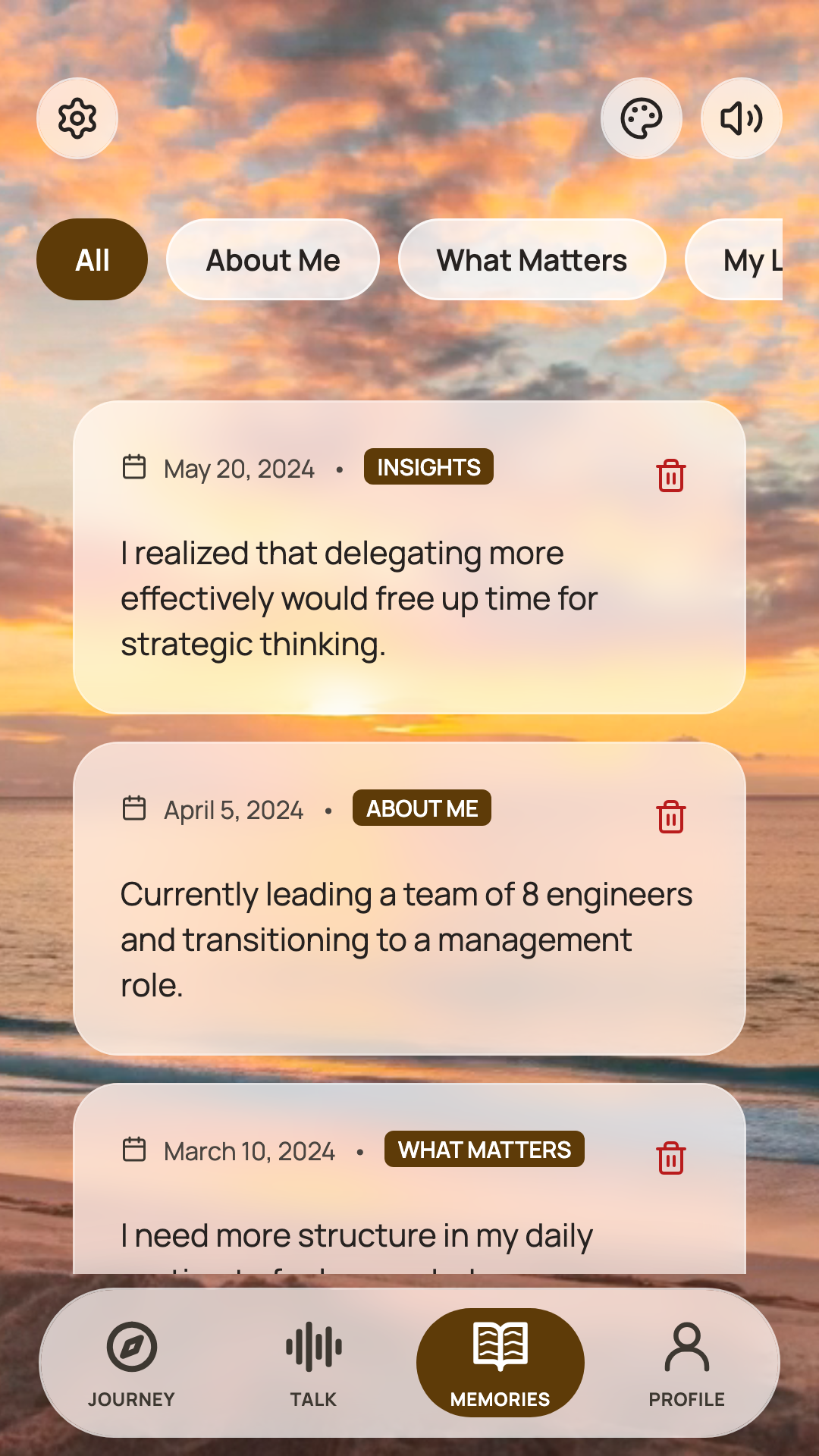
Privacy against continuity. Our hardest constraint was self-imposed. If the conversation is deleted when the session ends, how does a coach feel like it knows you next time? Answering that forced us to rethink what memory means in a voice product, and to keep only what a user would be comfortable seeing written down.
Latency is the product. In a real conversation, a pause has meaning. If the coach takes half a second too long, it stops feeling like being heard and starts feeling like waiting for a computer. Building visuals in real time without ever stealing that half second took most of our engineering effort.
Twenty languages, intimately. Coaching is close work. A clumsy translation does not read as awkward, it reads as insincere, and trust is gone in one sentence.
GDPR-grade compliance while self-funded. EU AI transparency, consent, data residency. We did the legal homework most prototypes skip, because trust is the product.
What we learned
Voice changes what people are willing to say, and deletion changes it again. People say things out loud that they would never type, and they say more when they know nothing is being kept. Our deletion policy started as an ethical commitment and turned out to be a product feature: testers open up faster precisely because nothing is being recorded.
We also learned to resist the obvious feature. Every engineering instinct said add memory, add history, add a dashboard of your moods. A good coach does none of that. The restraint is the product.
Where we are, honestly
We finished this window with $0 in revenue, and that is a sequencing decision rather than a missing business model. We spent the hackathon taking Rumi from first commit to production quality and running structured user testing, with real sessions every day. We chose not to charge testers, because we wanted honest feedback and because the first people who pay us should arrive to a stable product.
Pricing is already live and public at rumi.coach: $39.99 a month or $399.90 a year for 150 coaching minutes, with top-ups and rollover for unused minutes. We sell minutes. A minute costs us about $0.12 in inference and sells for $0.22 to $0.27, so the margin is known before the first customer signs up. The web app is live, the iOS and Android apps are in store review, and we open to the public this month.
What's next for Rumi
Launch, then talk to every single paying member. After that, Rumi for Business: the same unit, with companies buying minutes for teams whose people would never have been offered one-to-one coaching otherwise.
The goal was never an app with a lot of users. It is a lot of people who finally get to be heard.
Built With
- astro
- cloud-run
- expo.io
- gcp
- gemini
- golang
- postgresql
- react-native
- terraform
- typescript
- vertex-ai

Log in or sign up for Devpost to join the conversation.