-
-
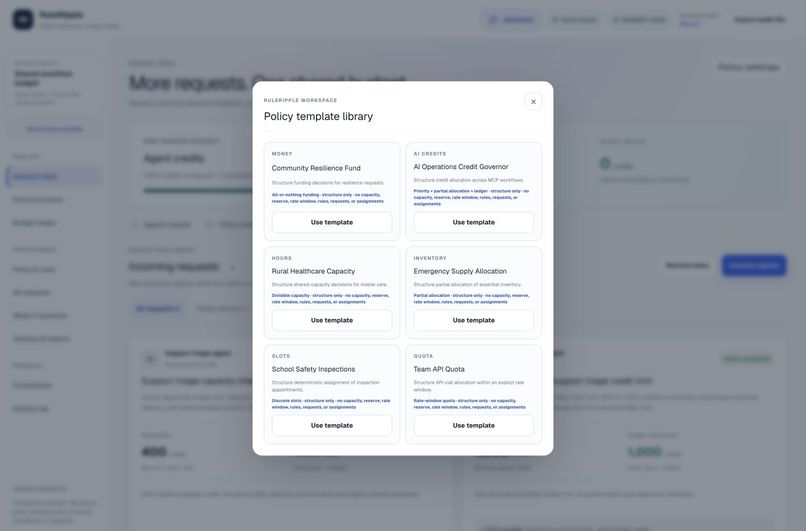
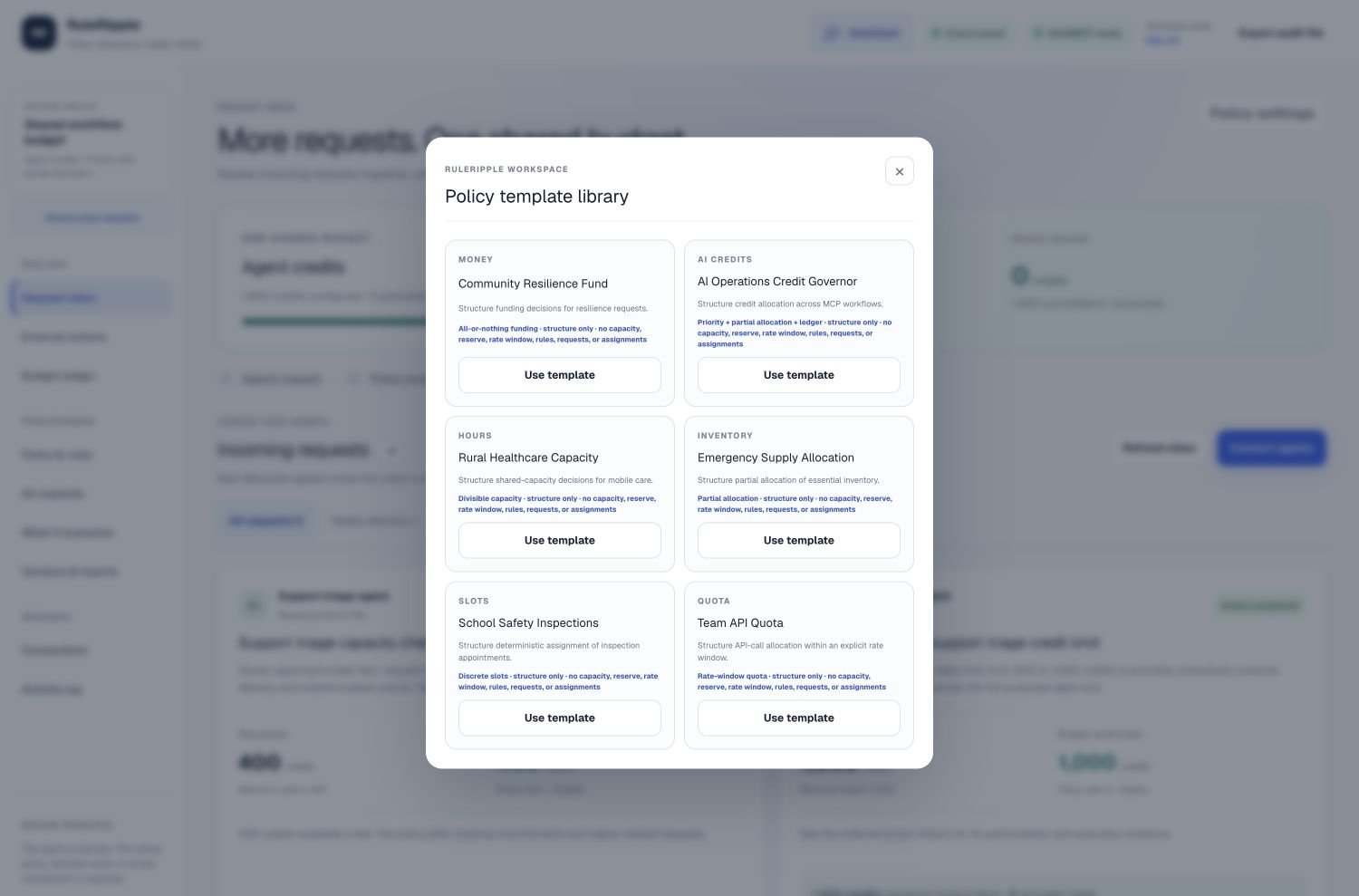
Policy templates
-
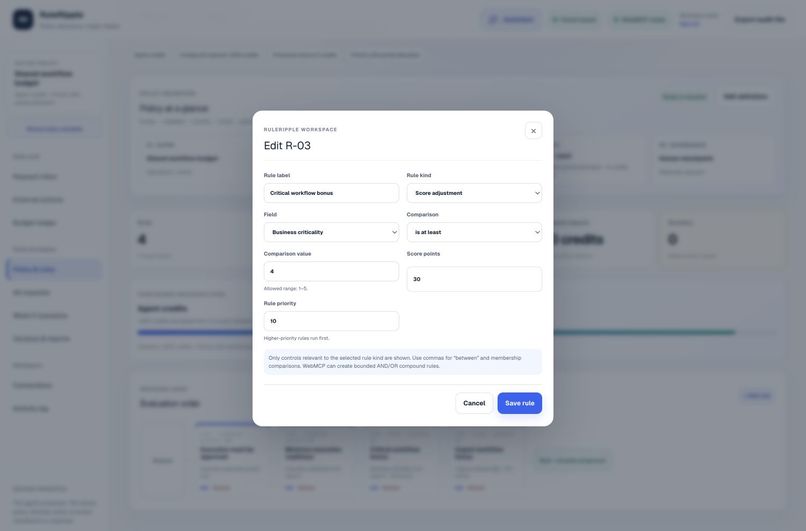
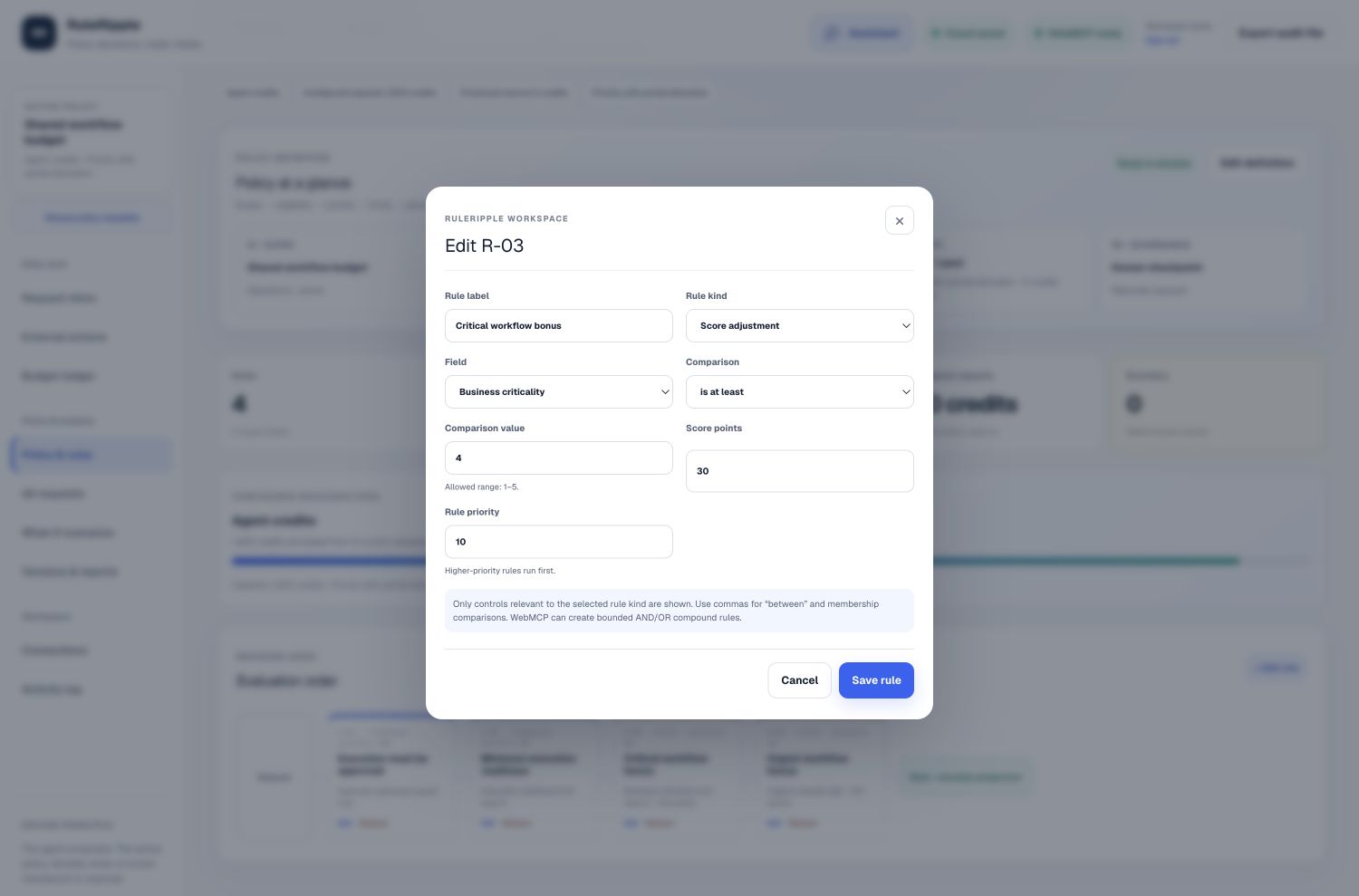
Priority rules
-
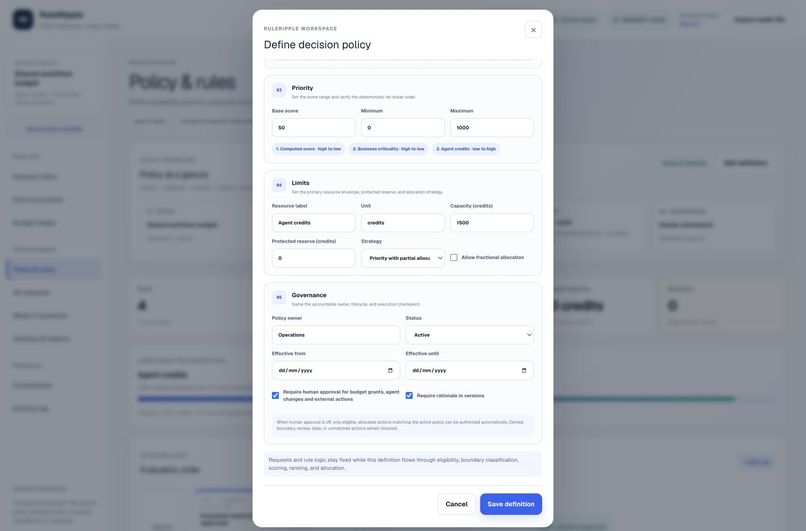
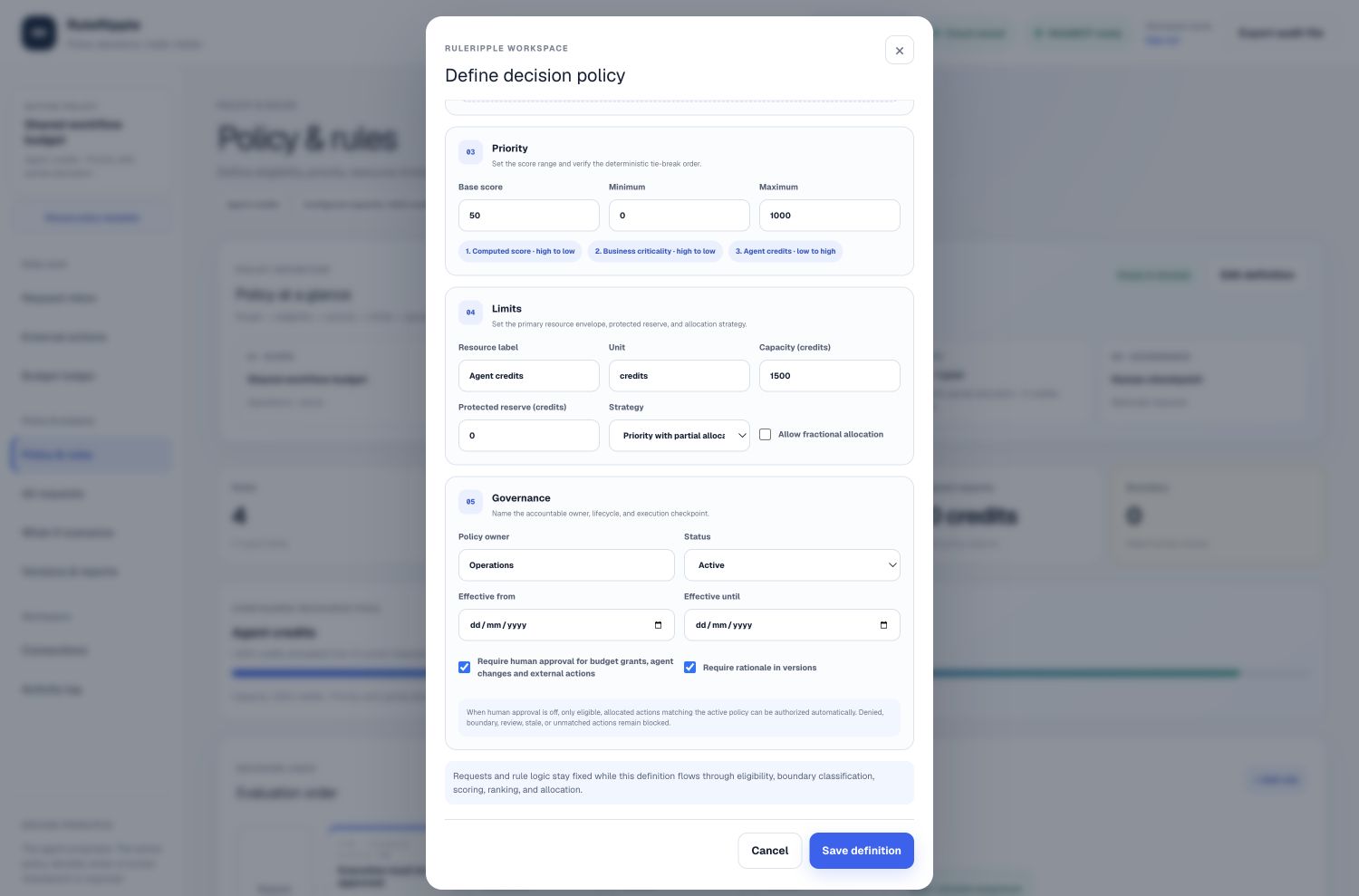
Limits and governance
-
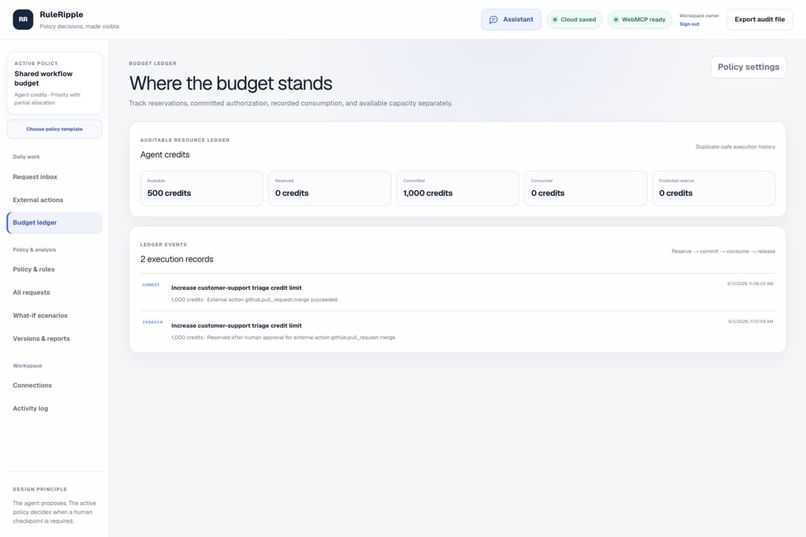
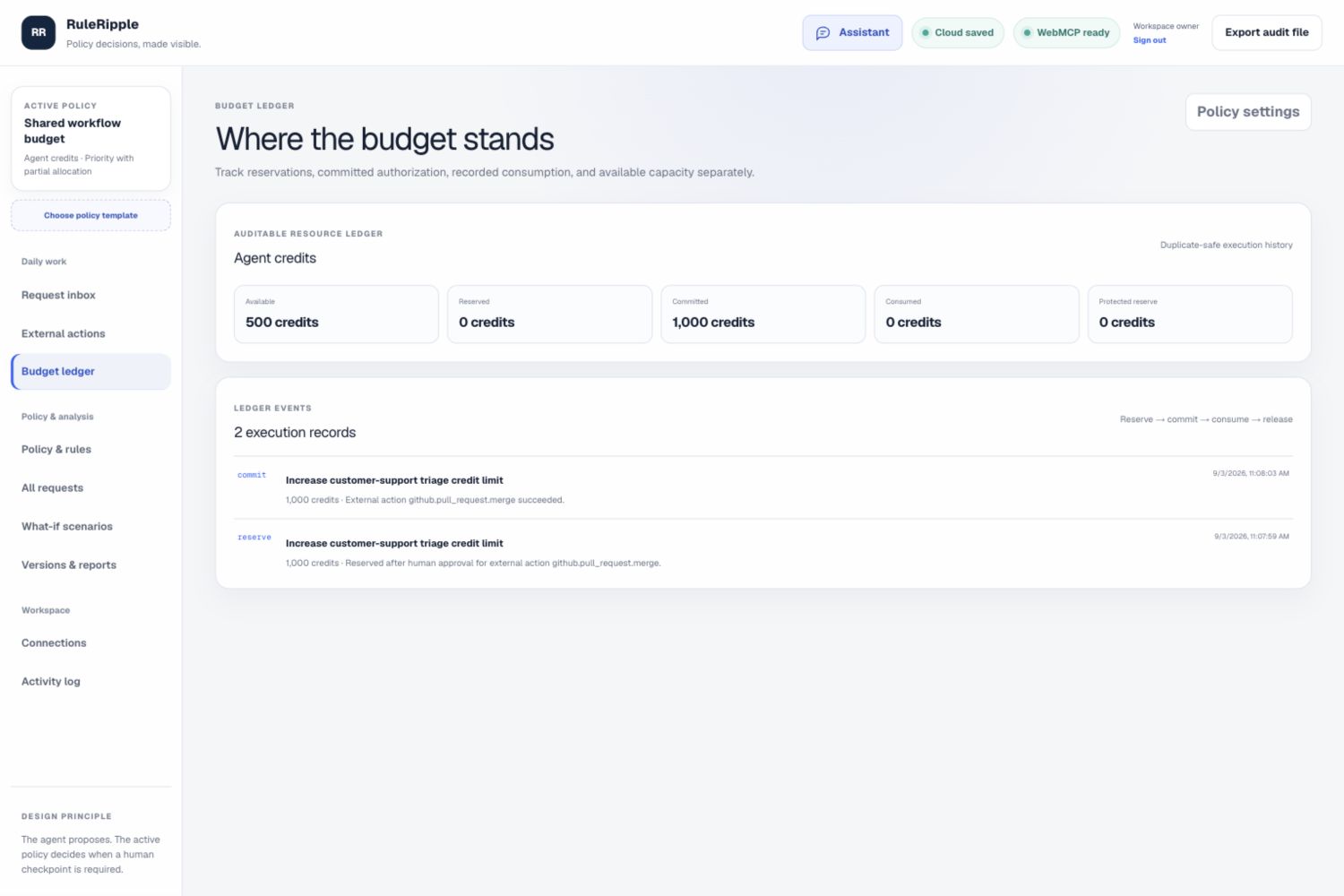
Budget ledger
-
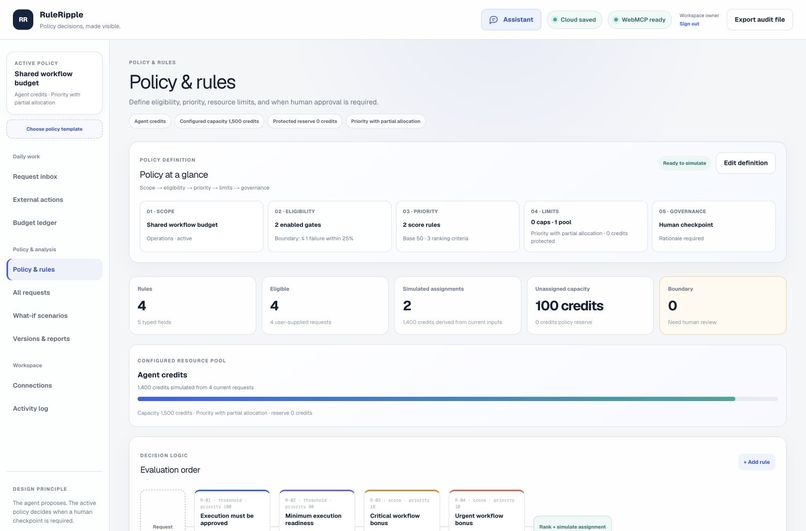
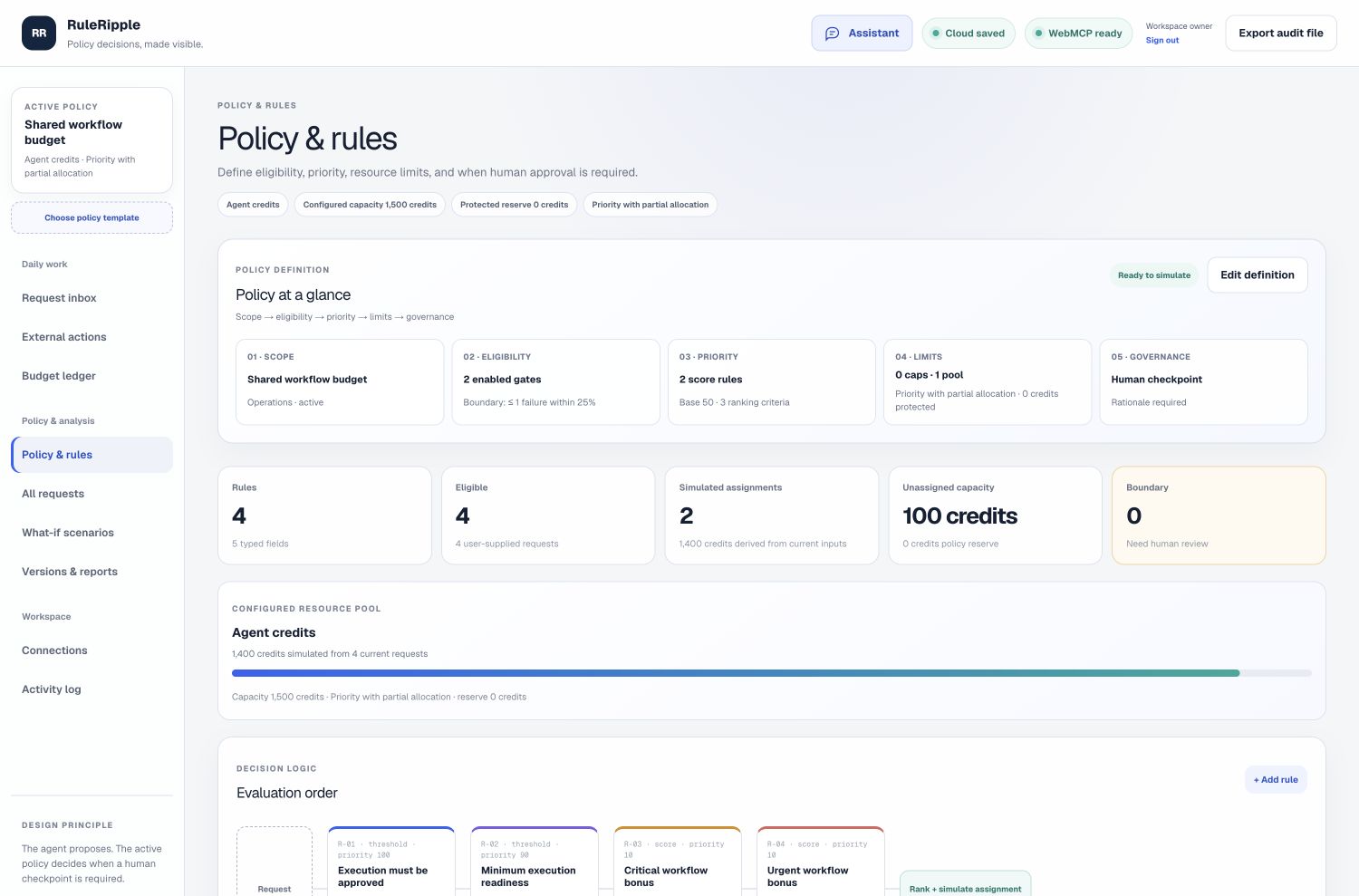
Policy overview
-
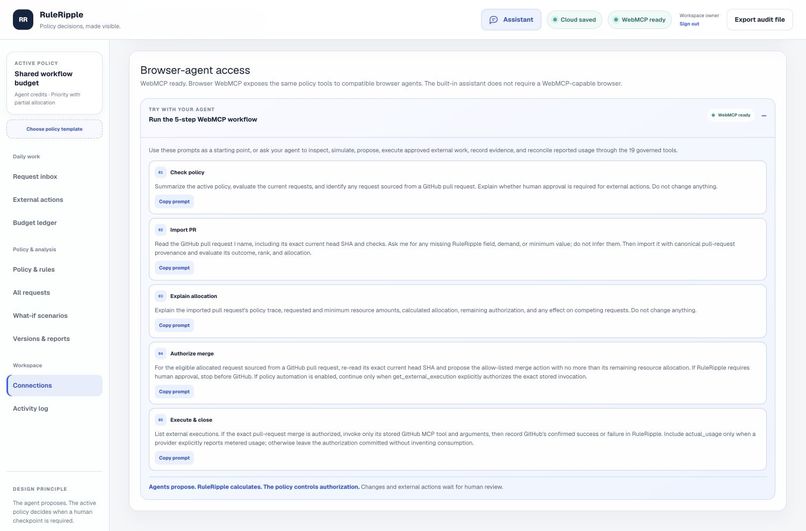
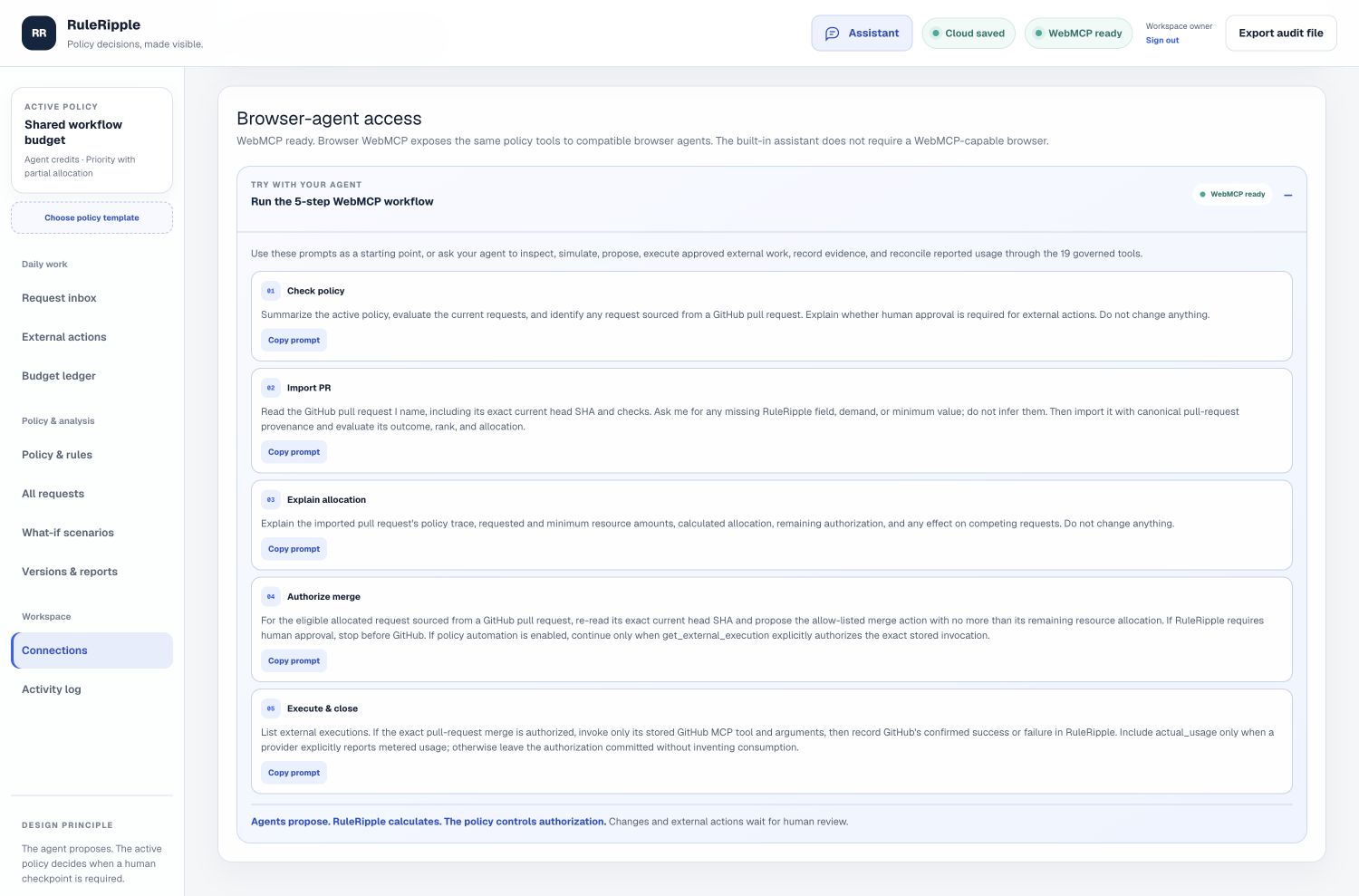
1. WebMCP workflow
-
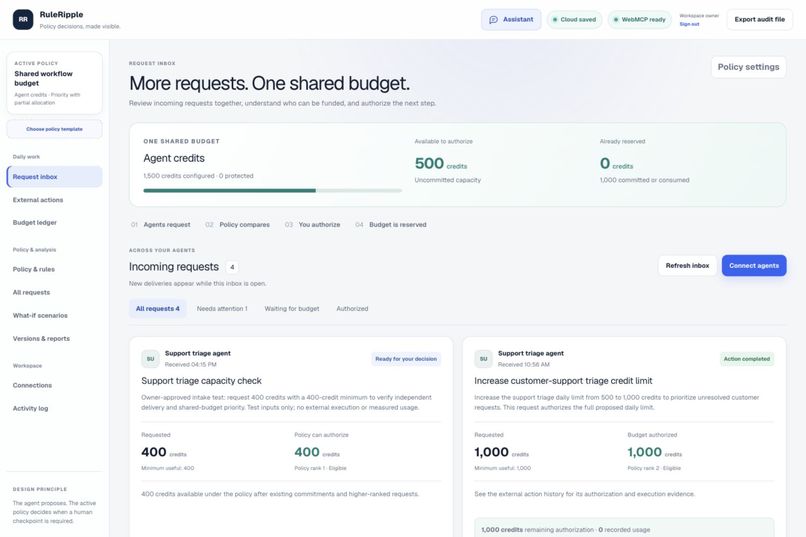
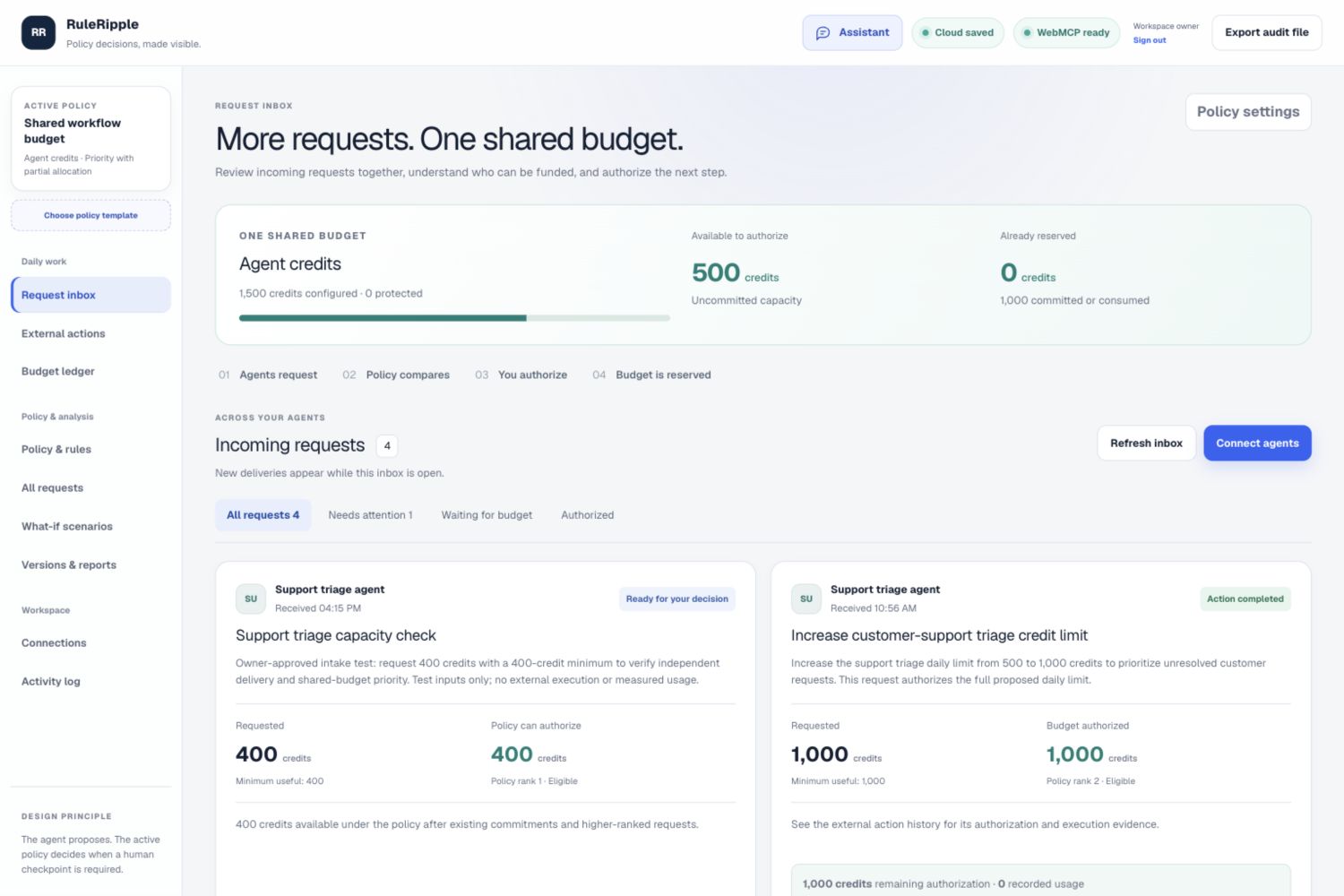
Shared budget inbox
-
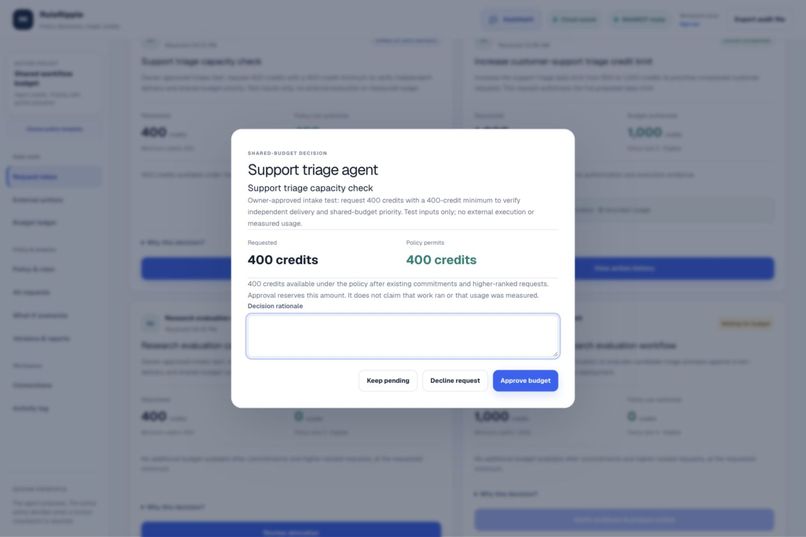
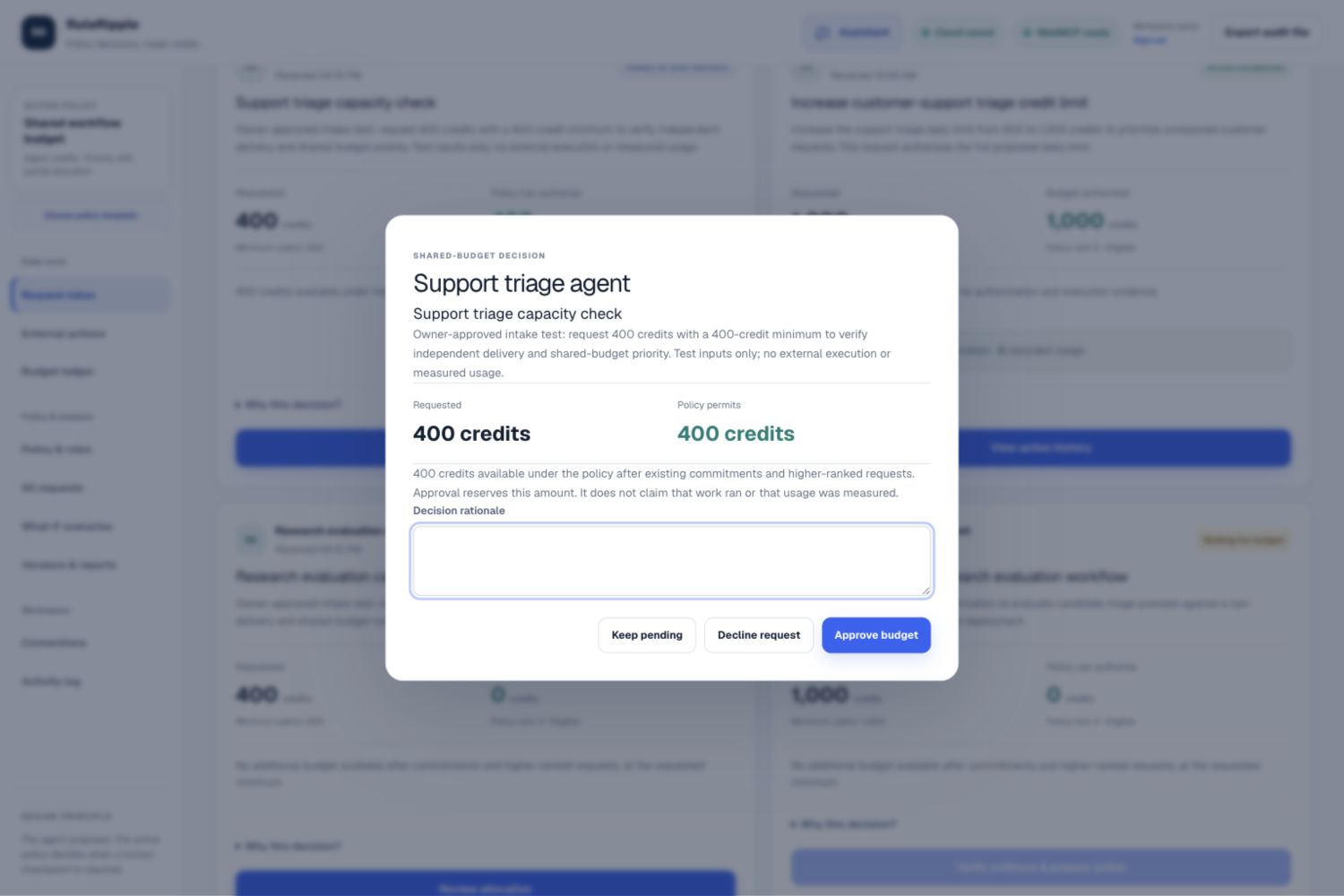
Allocation approval
-
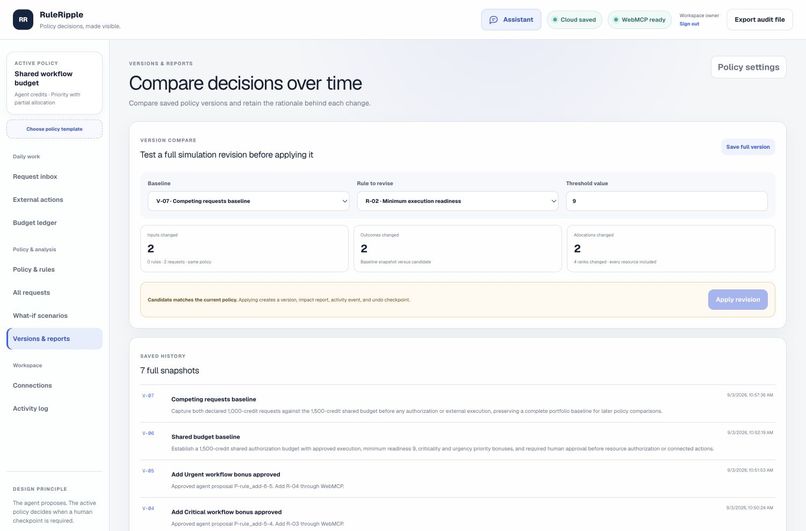
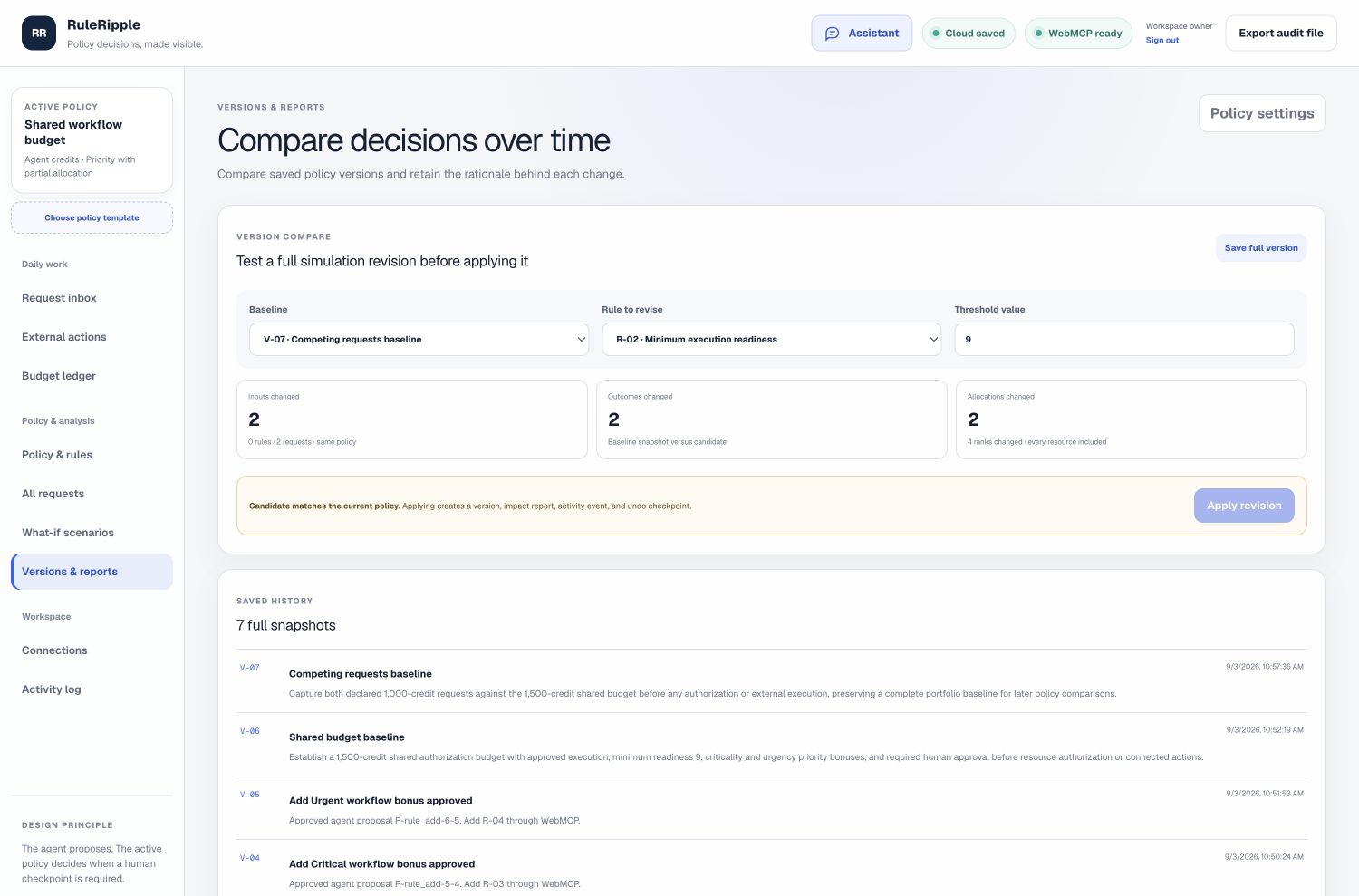
Version comparison
-
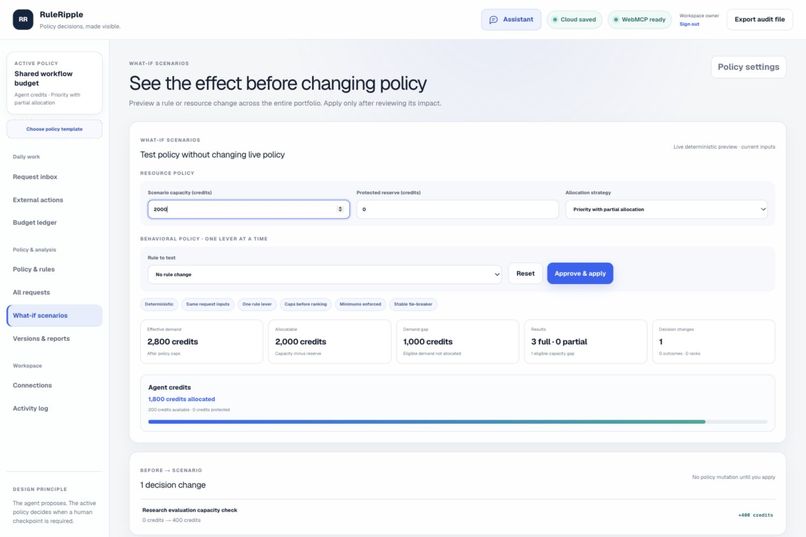
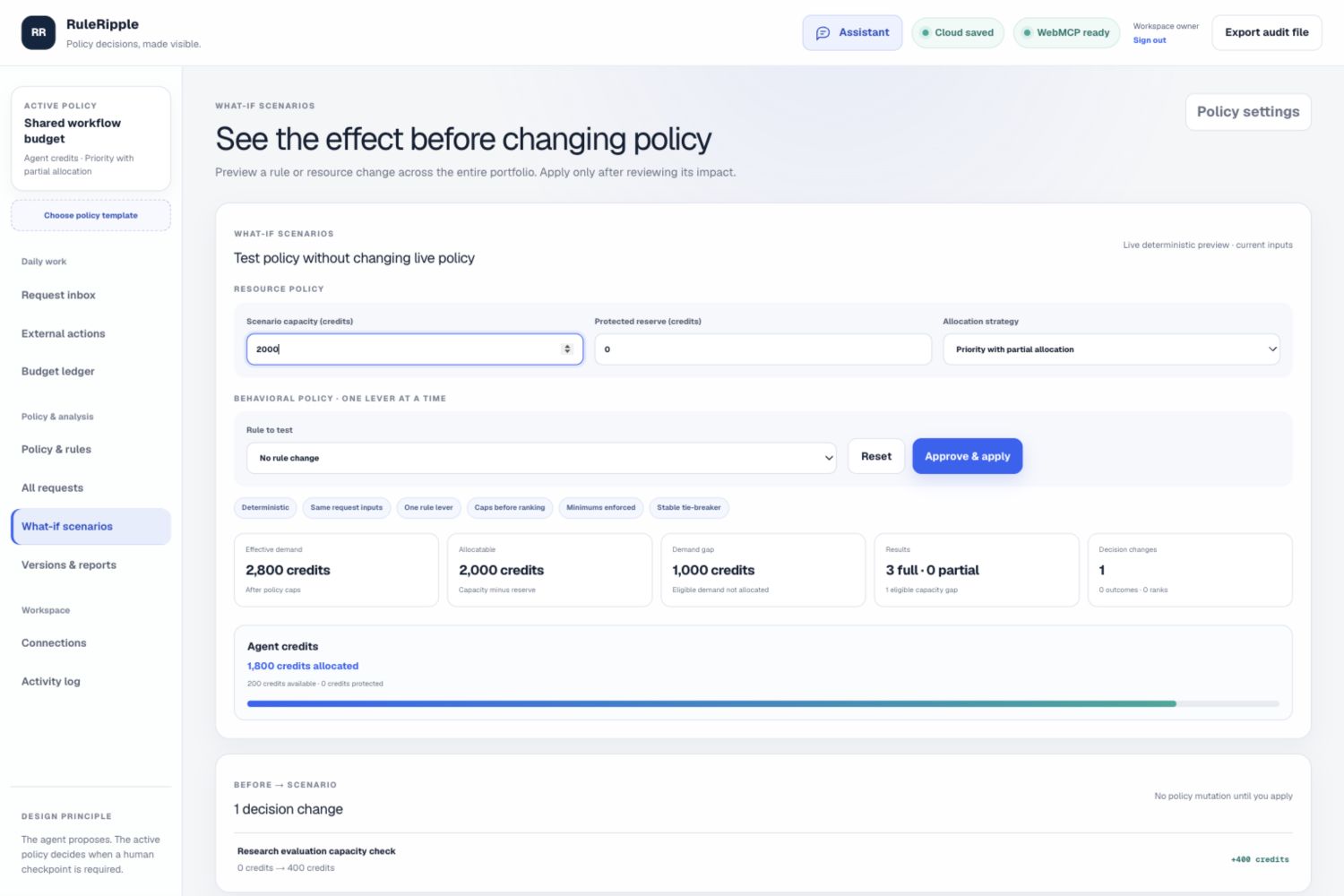
Budget simulation
-
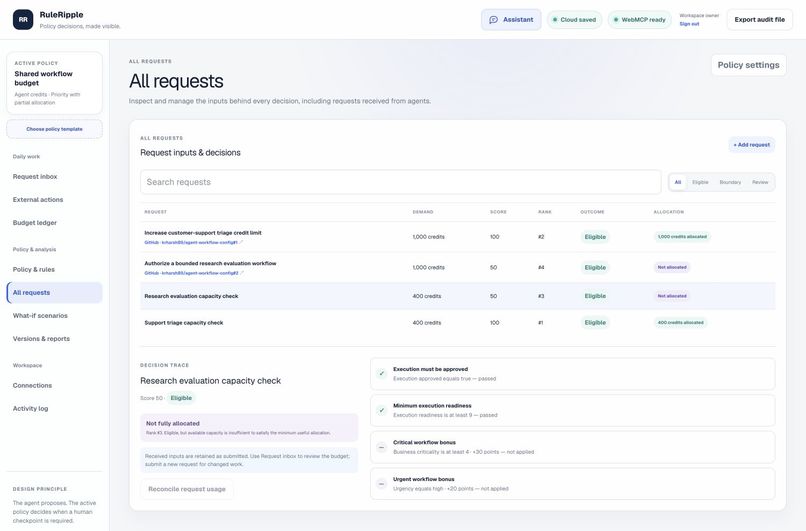
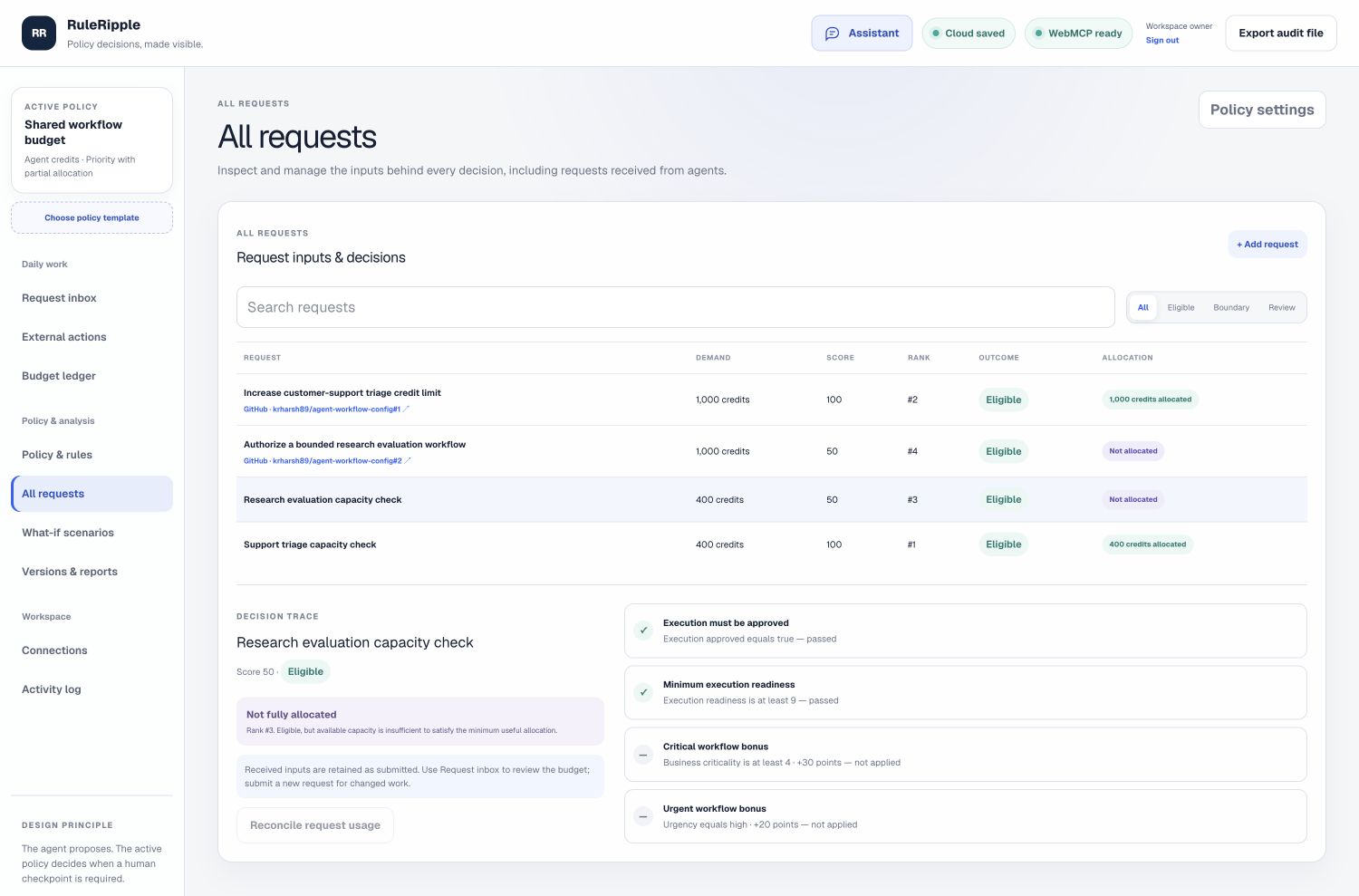
Why a request waits
-
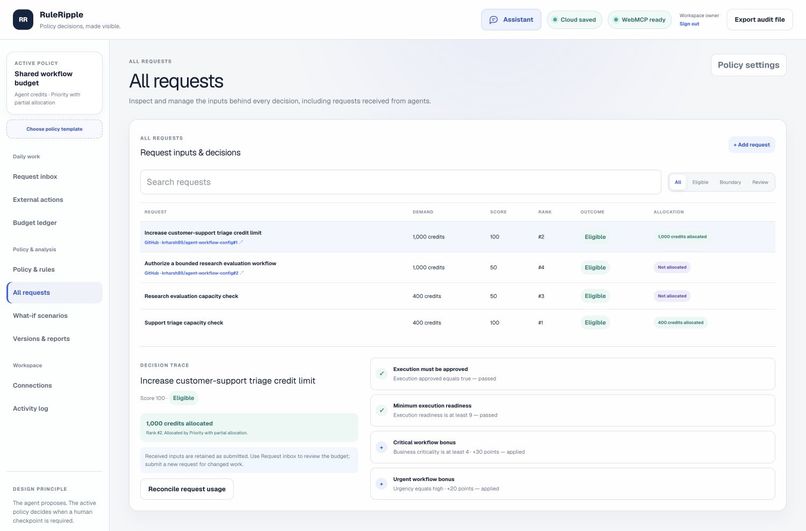
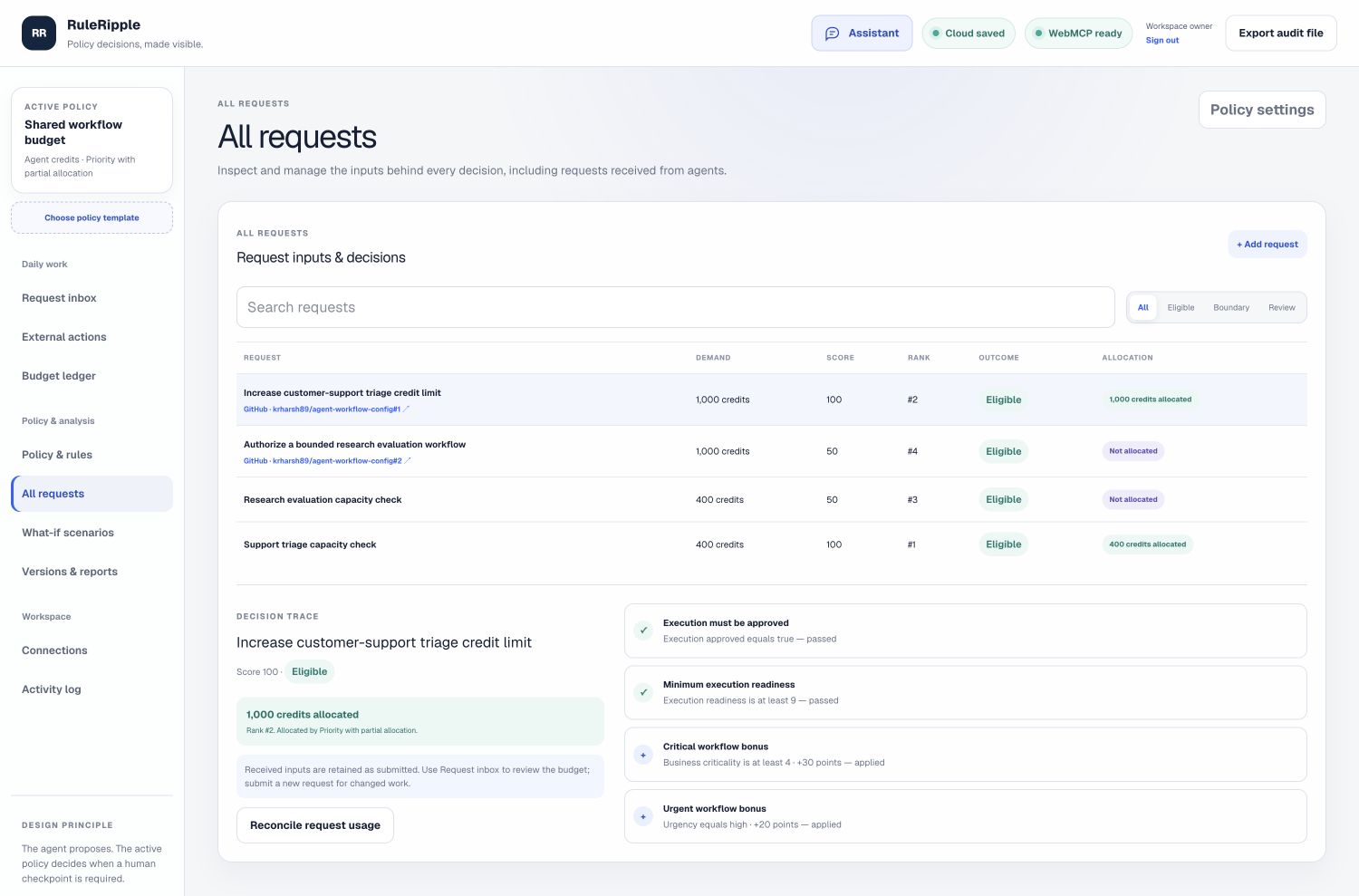
Request ranking and explanations
-
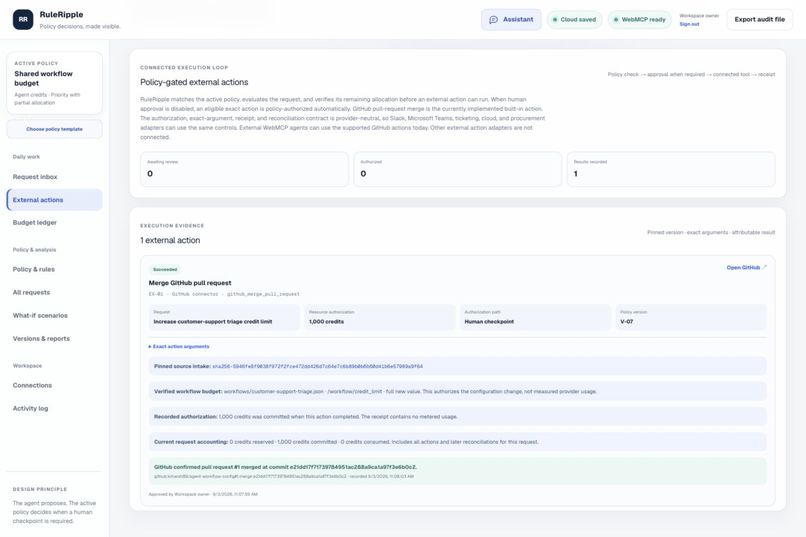
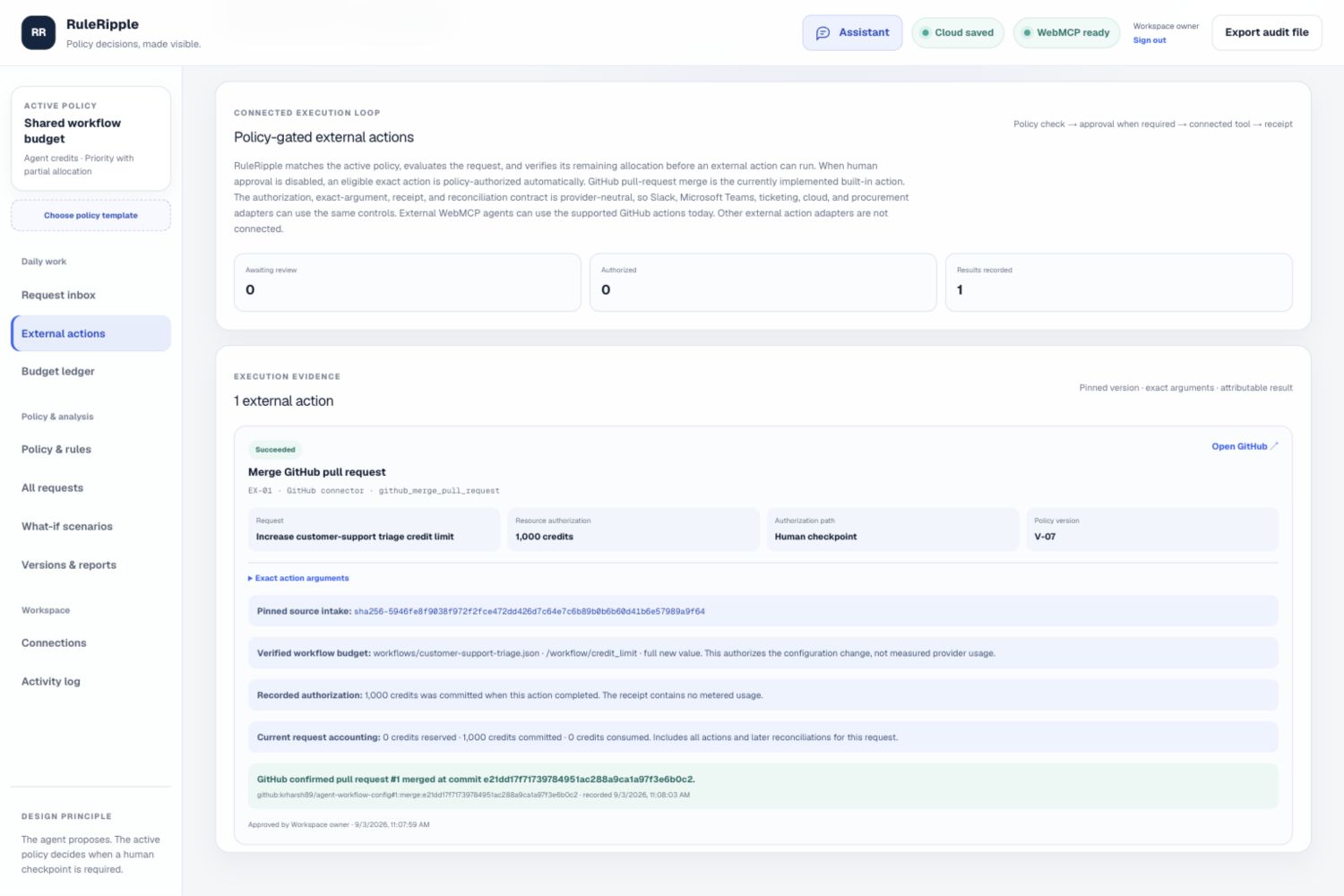
Execution receipt
-
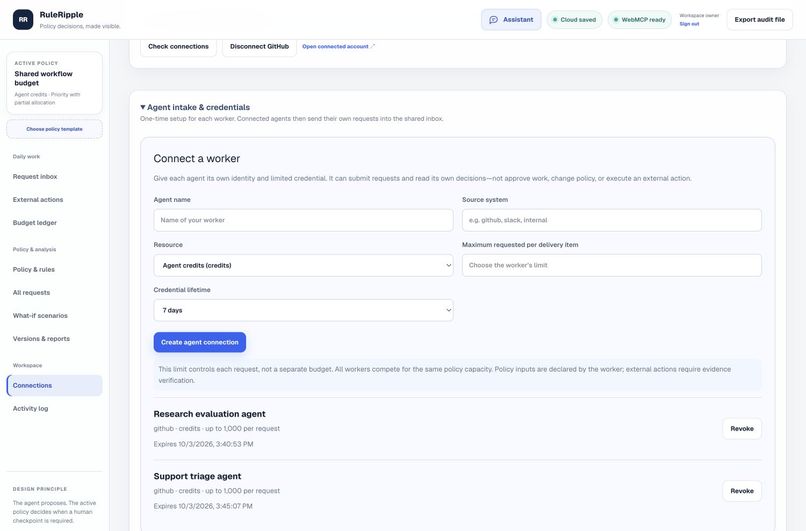
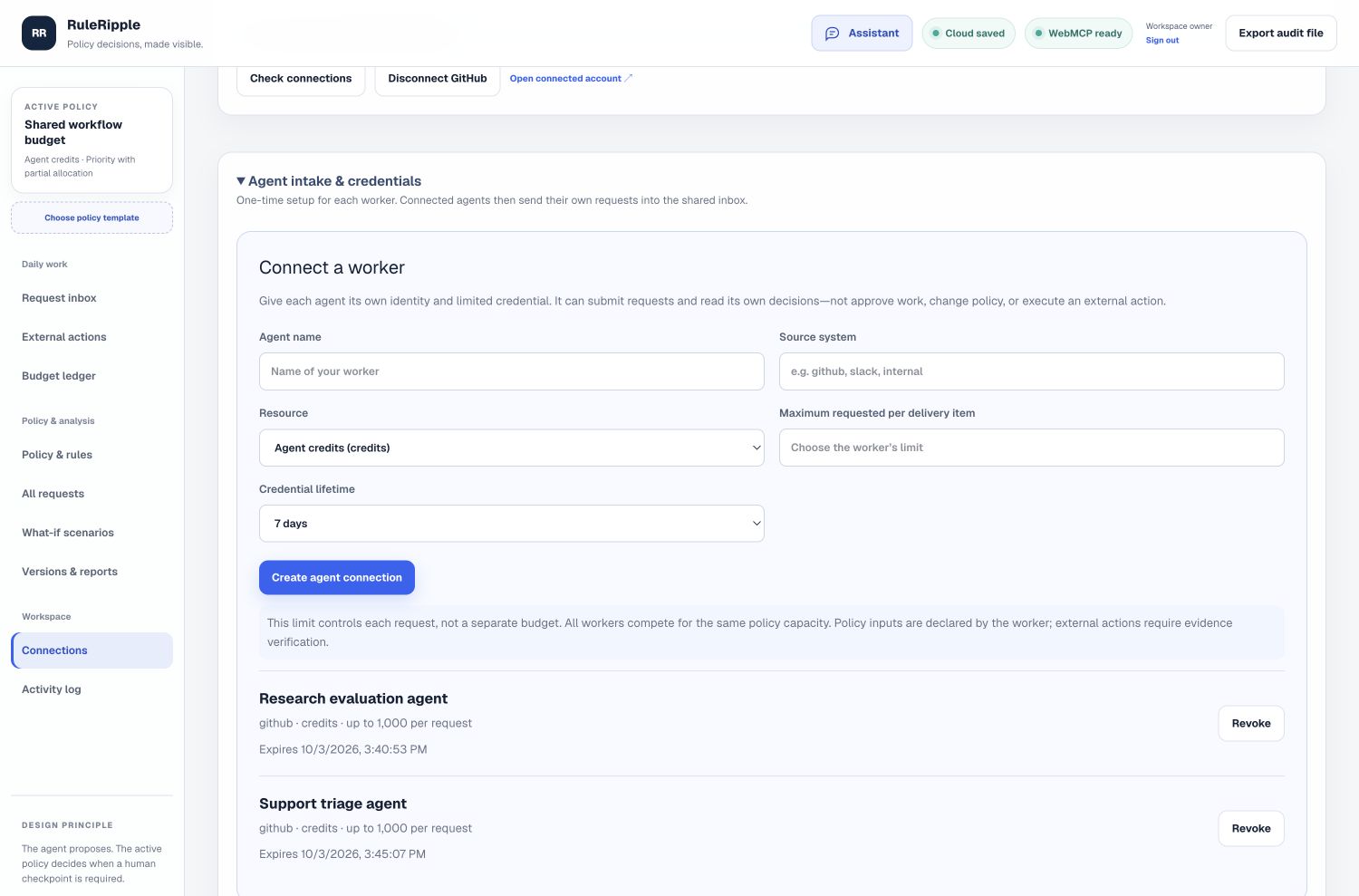
Agent connections
-
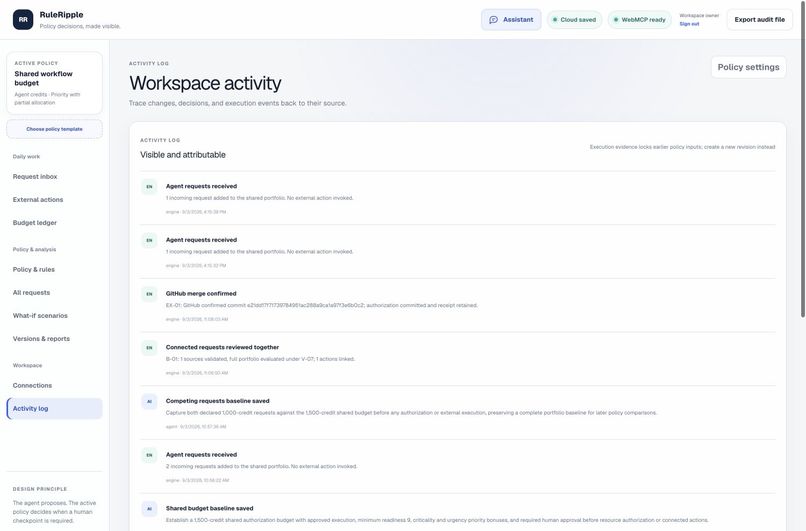
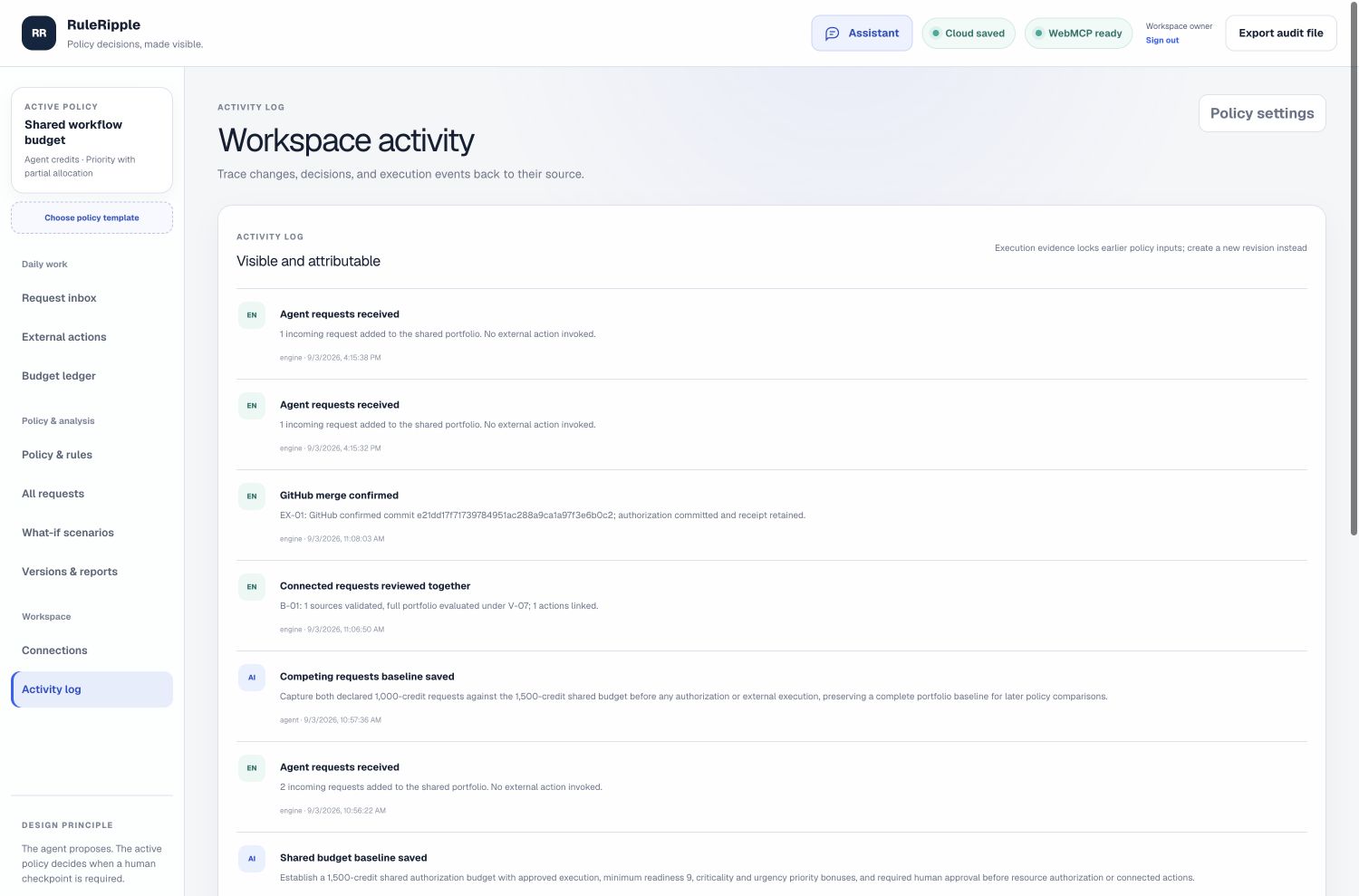
Activity audit trail
Inspiration
Inspiration
RuleRipple grew out of a problem the three of us—my sister, my wife, and I—faced while working on our own projects. AI credits were a scarce resource, and our limited budgets meant we had to be thoughtful about how we used them.
That raised a practical question: when several tasks need credits, how do we decide which ones get priority, how much each receives, and what has to wait?
We wanted to test those choices before committing our budget and understand how changing a rule would affect each request. That inspired RuleRipple: a policy simulation sandbox where humans and AI agents can explore how to allocate limited resources, understand the tradeoffs, and approve decisions with a clear trail.
What it does
RuleRipple is a WebMCP-powered policy simulation sandbox for humans and AI agents. It helps users define allocation rules, preview their effects, and approve allocations with an audit trail. WebMCP is useful here because the agent works with the same visible policy workspace as the user. Agents can inspect policies and submit structured requests, while people can see the results, understand the effect on other requests, and retain control over approvals.
Users can:
Define available resources, protected reserves, eligibility requirements, and priorities.
Receive budget requests from agents through HTTPS or WebMCP.
Simulate how a policy distributes resources across competing requests.
Change a rule and compare who becomes eligible, moves in priority, gains resources, or has to wait.
Review the reasons behind each allocation and approve exact amounts.
Track reservations, commitments, recorded consumption, and released resources in a ledger.
The same approach supports resources such as agent credits, funding, API quotas, clinic hours, inventory, and inspection slots.
A simple example
Imagine two agents each request 70 credits from a shared budget of 100.
There is enough to support either request fully, but not both. A priority-based policy might fund the urgent request first. A sharing policy might distribute credits between them, provided each receives enough to do useful work.
RuleRipple lets a user test these choices before approving an allocation. Changing a priority rule or protecting a reserve reveals the effect across all requests.
The “ripple” is the impact one policy change has on everyone competing for the same resources.
How we built it
We built RuleRipple with React and TypeScript, with a deterministic engine for policy evaluation, ranking, resource allocation, version comparison, and ledger accounting.
The WebMCP tools use structured schemas and runtime validation. Firebase Authentication and Cloud Firestore support sign-in and persistent workspaces, and the application is deployed through ChatGPT Sites.
An optional GitHub integration connects an authorized request to a specific external action, with source checks and a recorded execution receipt.
Challenges we ran into
One challenge was making the full effect of a rule change understandable. A change that helps one request can reduce the resources available to another. We built comparisons that expose those consequences across the complete set of requests.
Another challenge was handling practical allocation constraints. A partial award may be useless if a task needs a minimum amount to run. RuleRipple accounts for those minimums alongside priorities, reserves, and resource limits.
We also needed to keep simulation, authorization, and execution distinct. Previewing an allocation does not spend resources. The ledger tracks subsequent resource operations, and repeated requests must not accidentally reserve the same budget twice.
Accomplishments that we're proud of
We brought policy definition, simulation, explanations, approval, and resource accounting into one workflow.
RuleRipple supports six allocation strategies, multiple resource pools, policy version comparisons, and explanations for individual outcomes. Its WebMCP tools make that workflow accessible to agents while keeping decisions visible to people.
What we learned
An allocation can follow its rules correctly and still produce an unexpected result. Showing the consequences of those rules is essential to helping people decide whether the policy matches their intent.
We also learned the value of giving agents structured access to a shared application. Agents can help inspect and propose changes, while deterministic calculations and explicit authorization make the results reproducible and reviewable.
What's next for RuleRipple
We want to add organizational roles, richer approval workflows, more execution integrations, and live provider usage metering.
Our goal is to help teams understand the consequences of resource decisions before committing to them—and retain a clear record afterward.
Built With
- chatgpt-sites
- cloud-firestore
- cloudflare-workers
- firebase-authentication
- github-oauth
- react
- typescript
- vinext
- webmcp

Log in or sign up for Devpost to join the conversation.