-
-
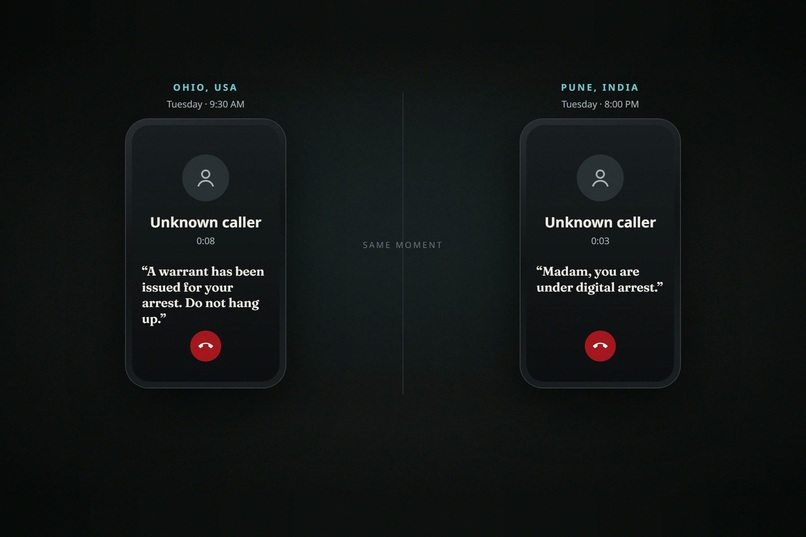
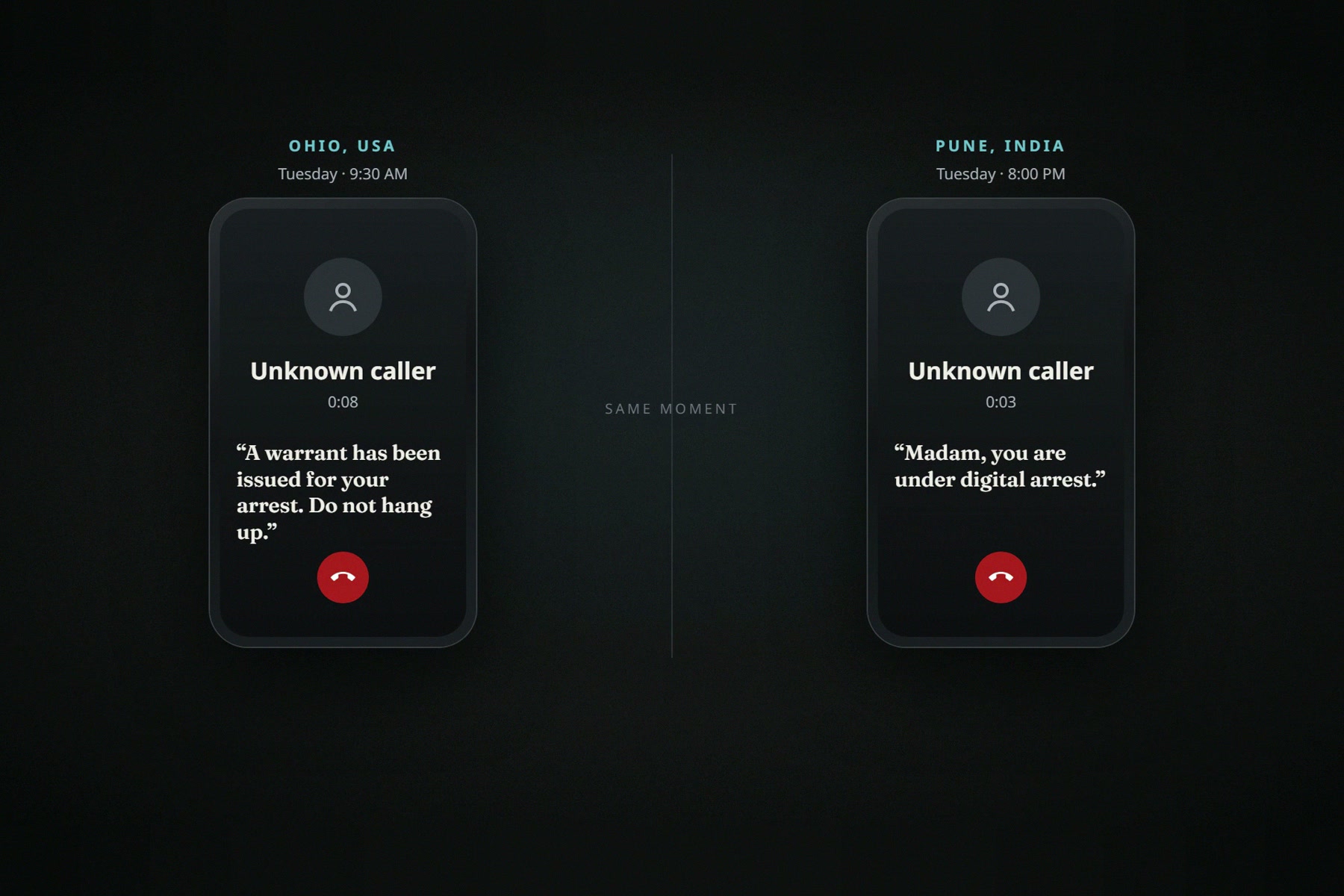
The two calls in Ohio and Pune
-
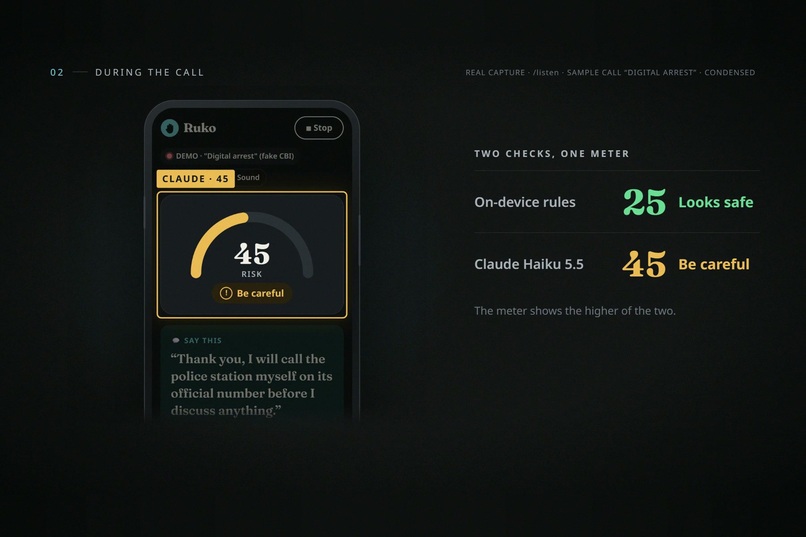
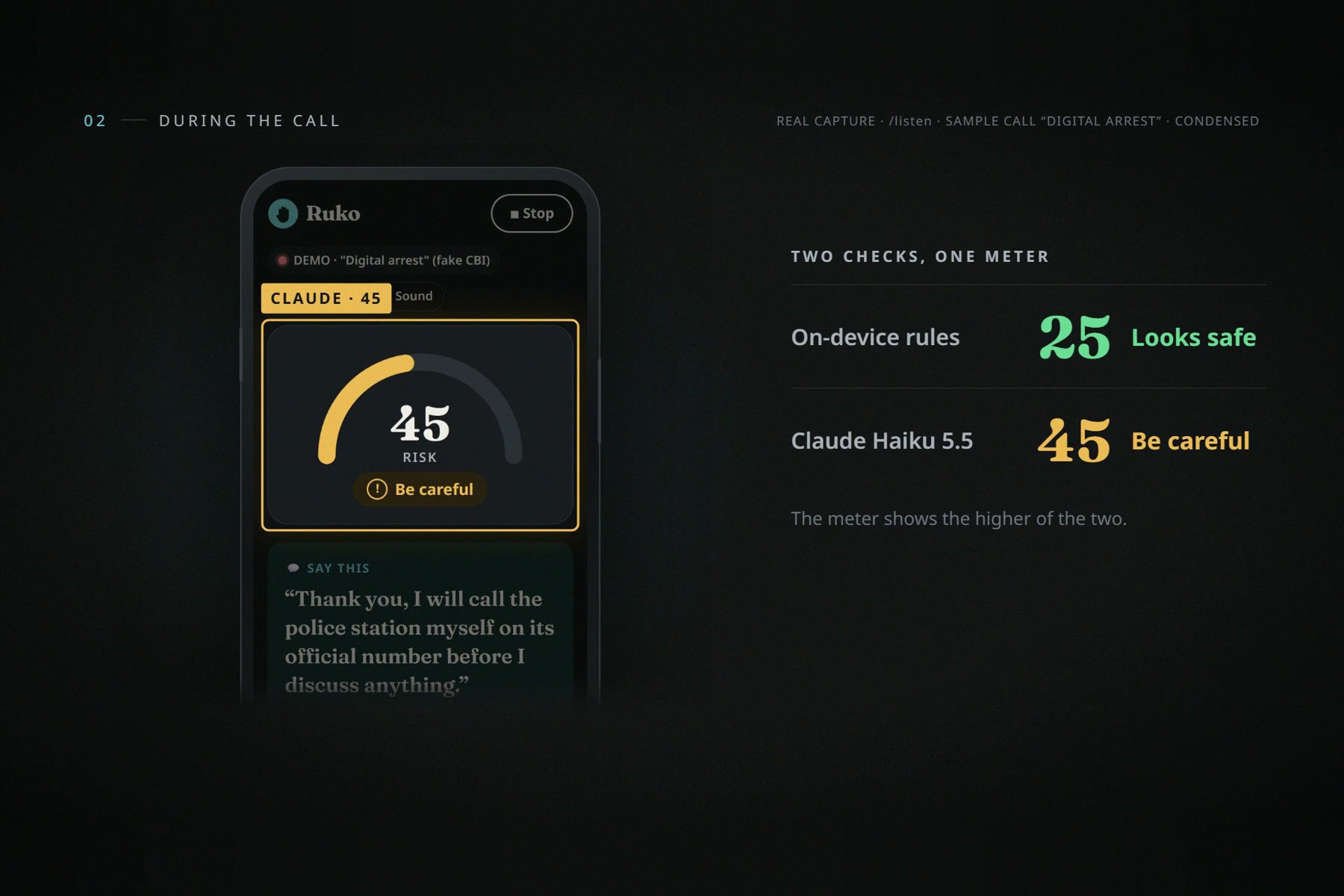
Rules 25 vs. Claude 45
-
End card
-
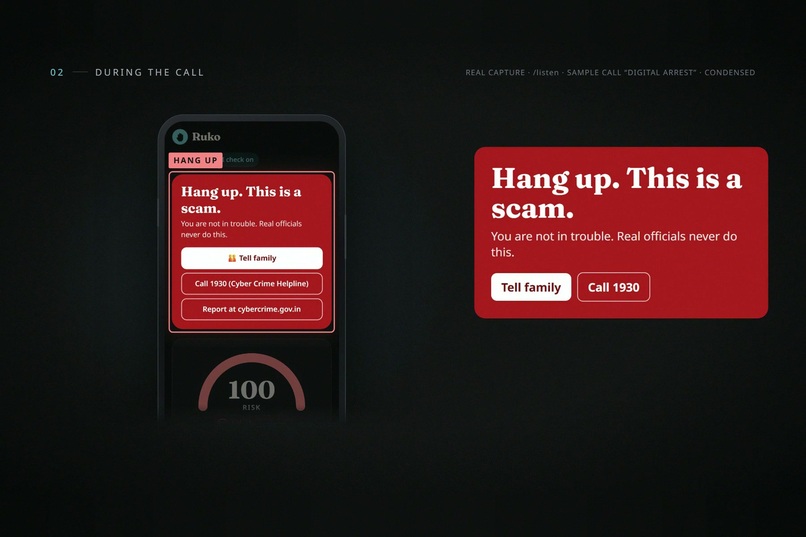
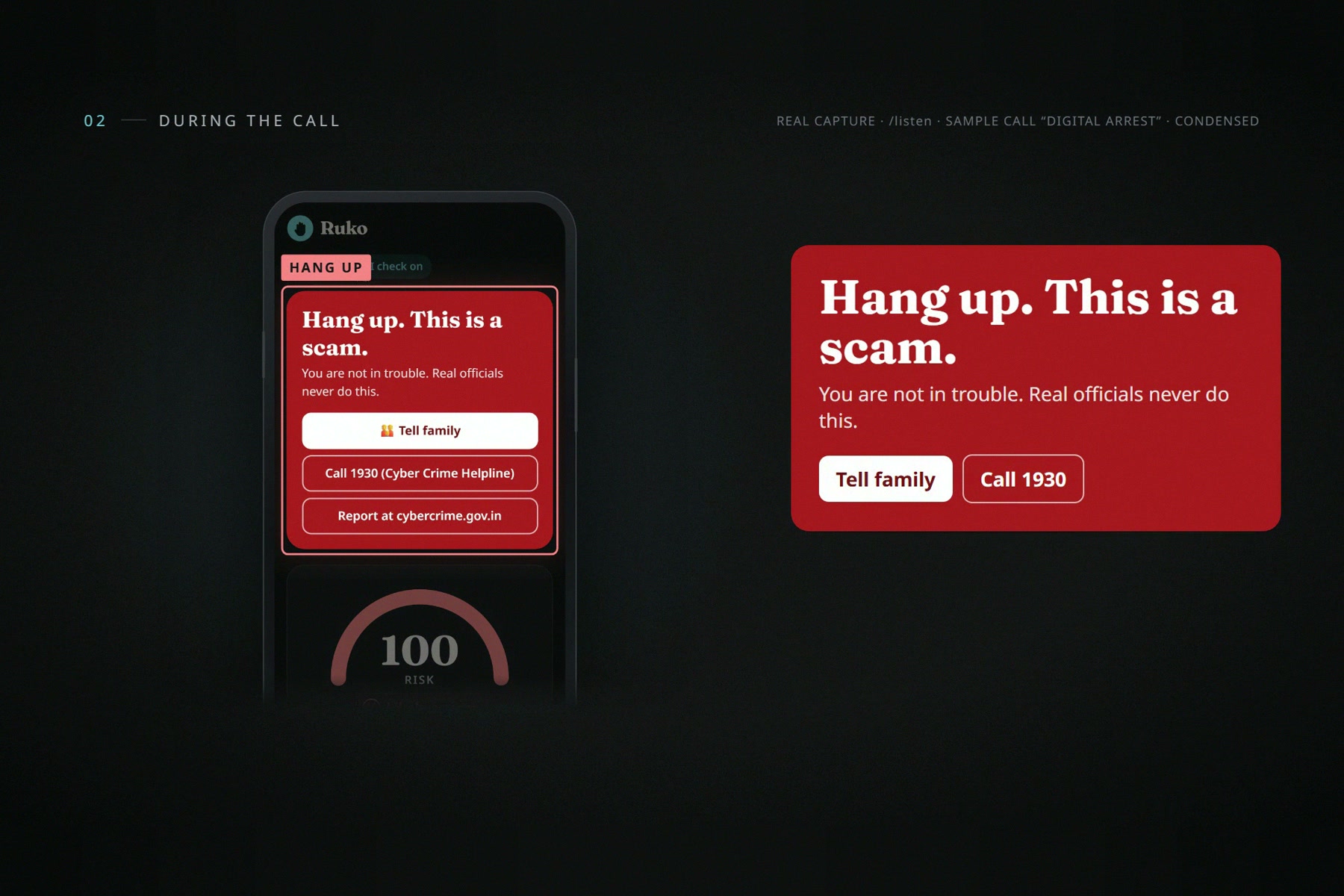
The hang-up screen
-
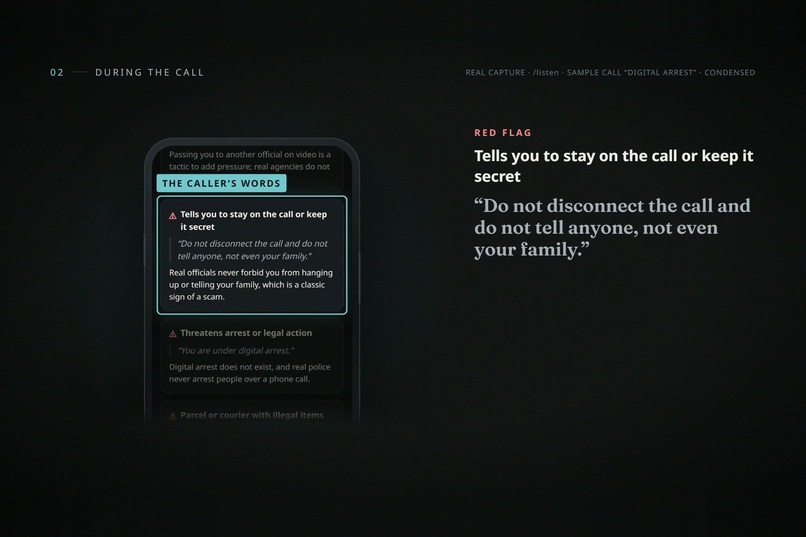
A red flag quoting the caller
-
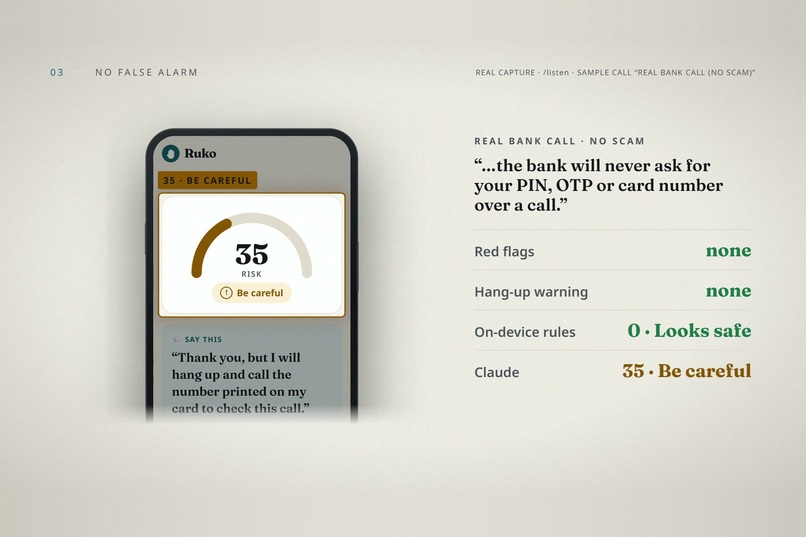
The bank call
-
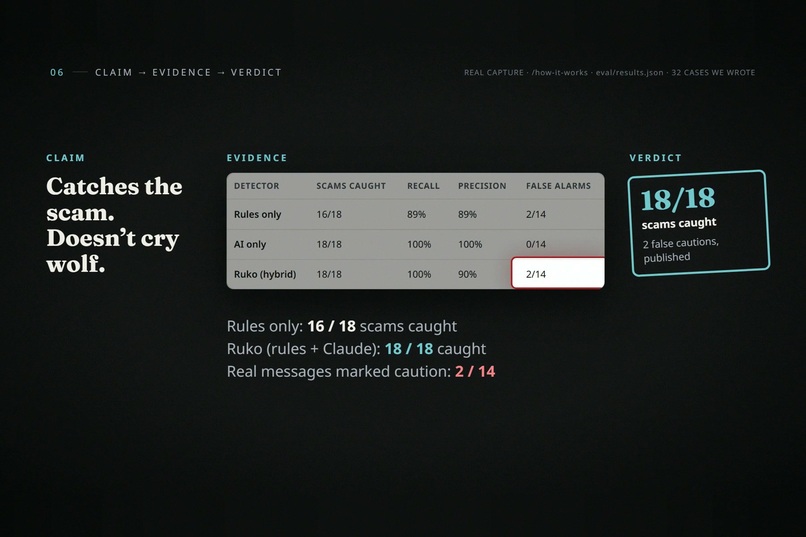
Accuracy table with "18/18"
-
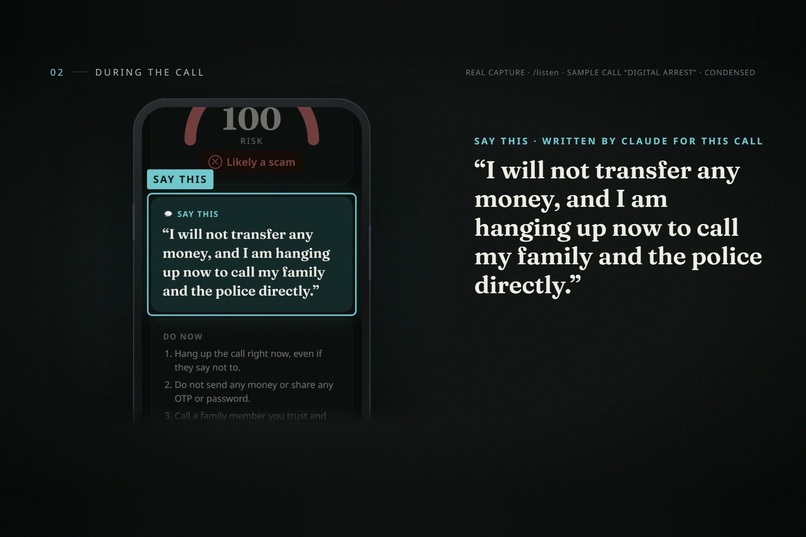
Kamala's "Say this" line
-
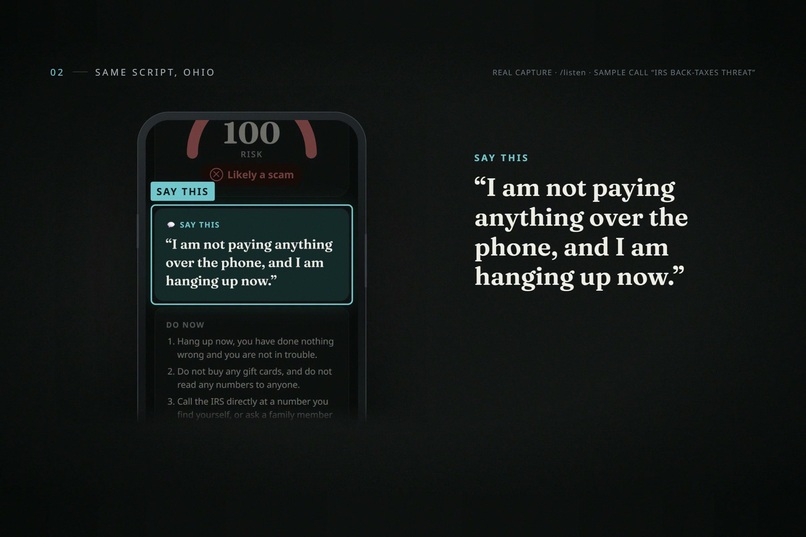
Frank's IRS call
-
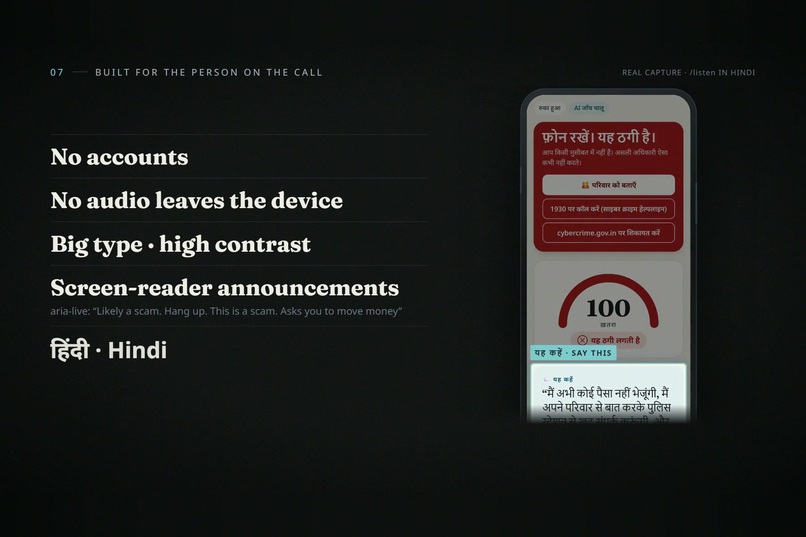
Privacy, accessibility and Hindi
-
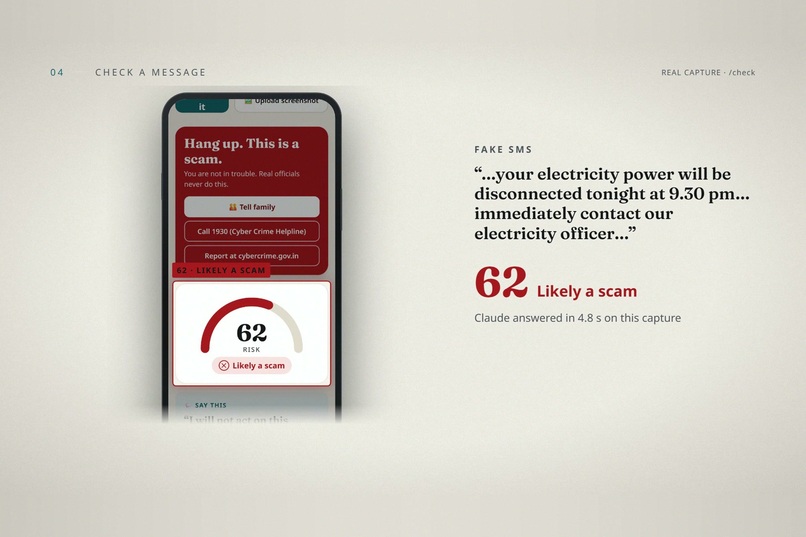
Message check at 62
-
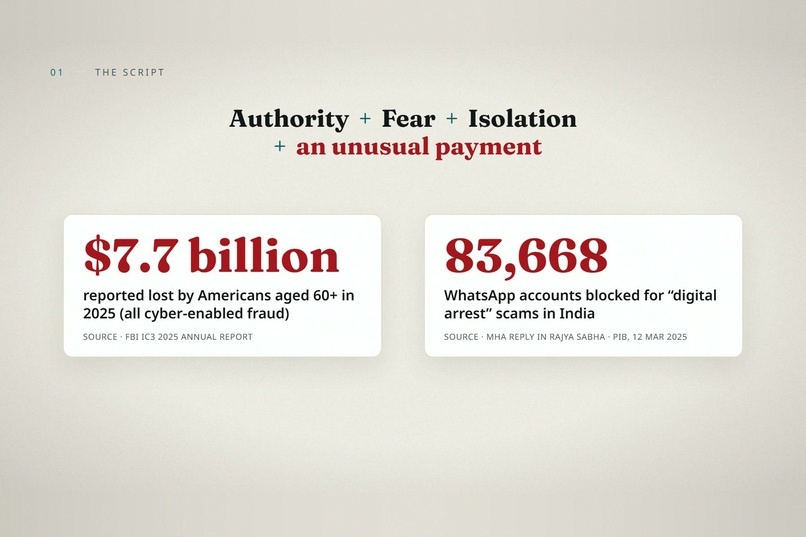
The script and the two cited stats
-
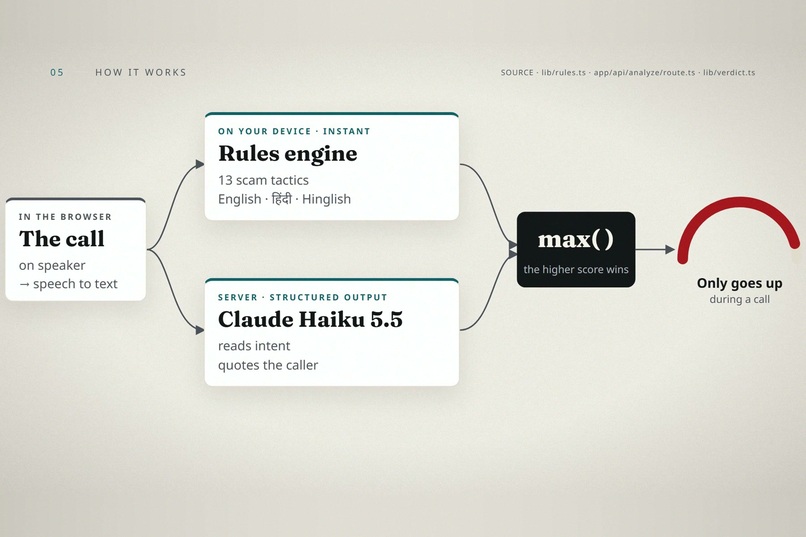
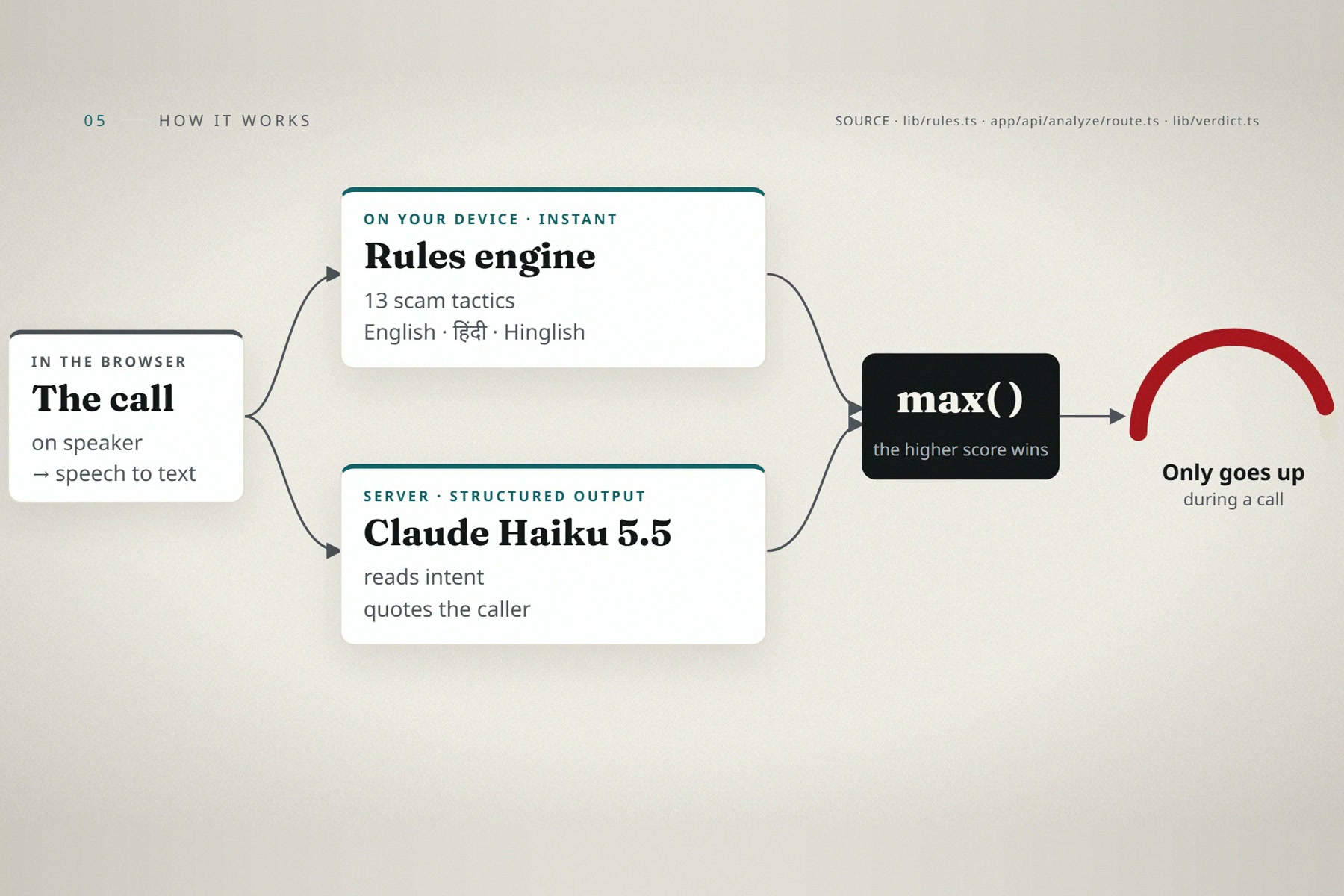
How-it-works diagram

Inspiration
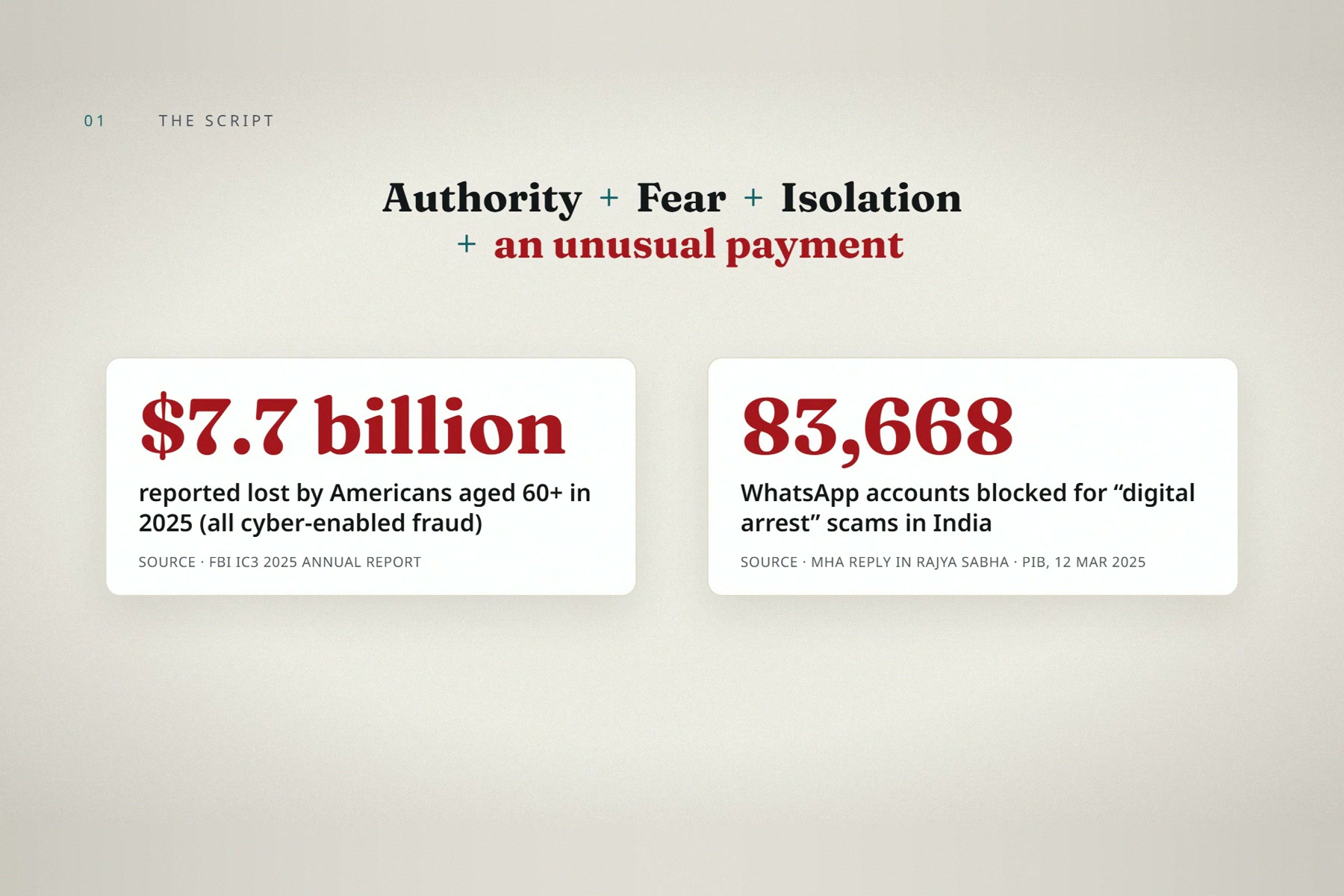
Phone scams on older adults follow the same script in every country: authority + fear + isolation + an unusual payment. In the US it's fake IRS, Medicare and "tech support" agents. In India it's "digital arrest": fake CBI or police officers keep victims on video calls for hours until they pay.
In 2025, Americans over 60 filed 201,266 complaints reporting $7.7 billion in losses to the FBI (IC3 2025 Annual Report). India has blocked 83,668 WhatsApp accounts used for digital arrest (Ministry of Home Affairs, via PIB).
Caller ID only knows numbers that were already reported, and awareness campaigns only help before the call. Nothing helps during it, while the person is scared, alone and being told "don't tell anyone." Ruko (रुको, Hindi for "wait") is that calm second voice in the room.
What it does
- Listen to a call: put a suspicious call on speaker. Ruko transcribes it live in the browser and shows:
- a risk meter that only goes up
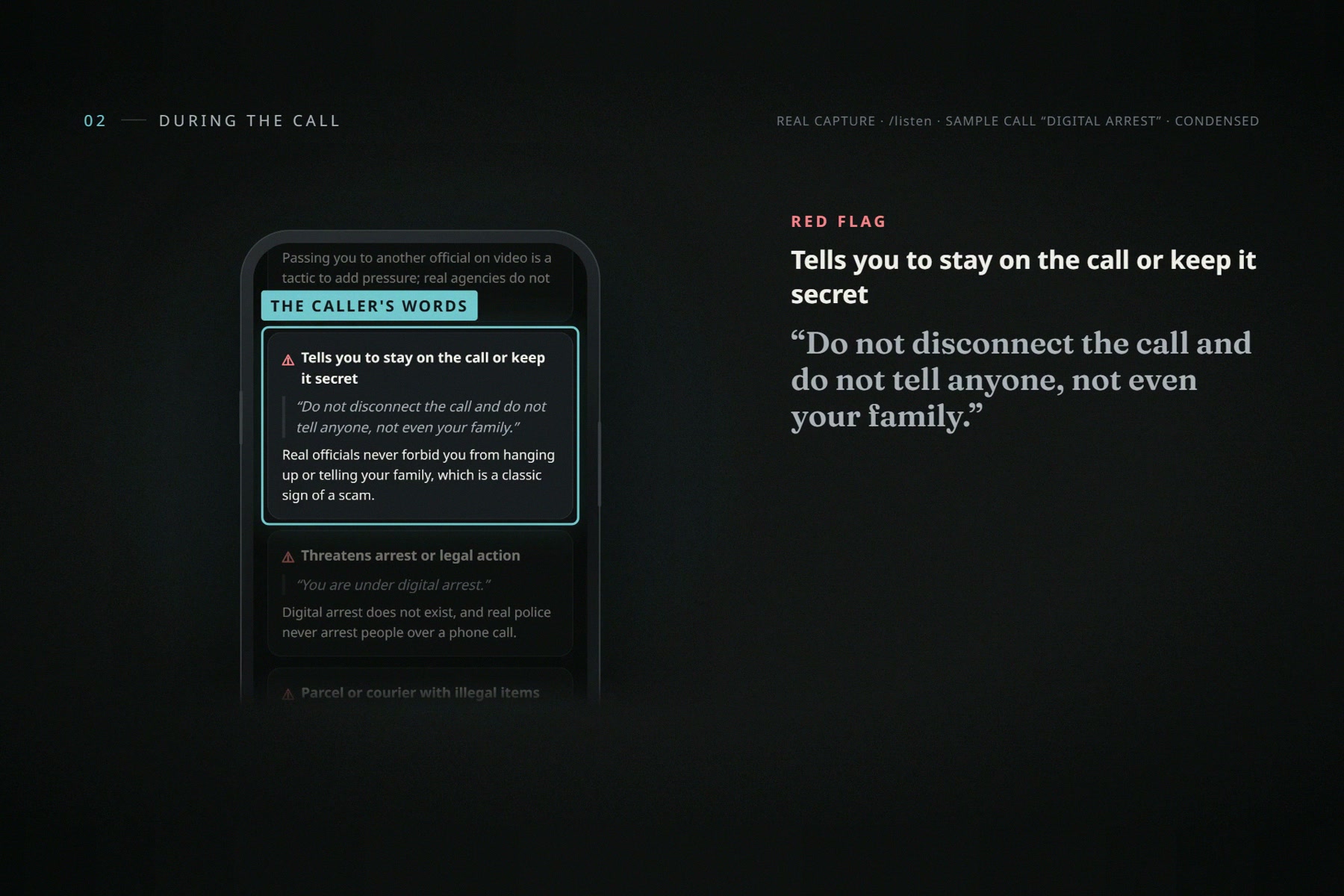
- red-flag cards quoting the caller's exact words
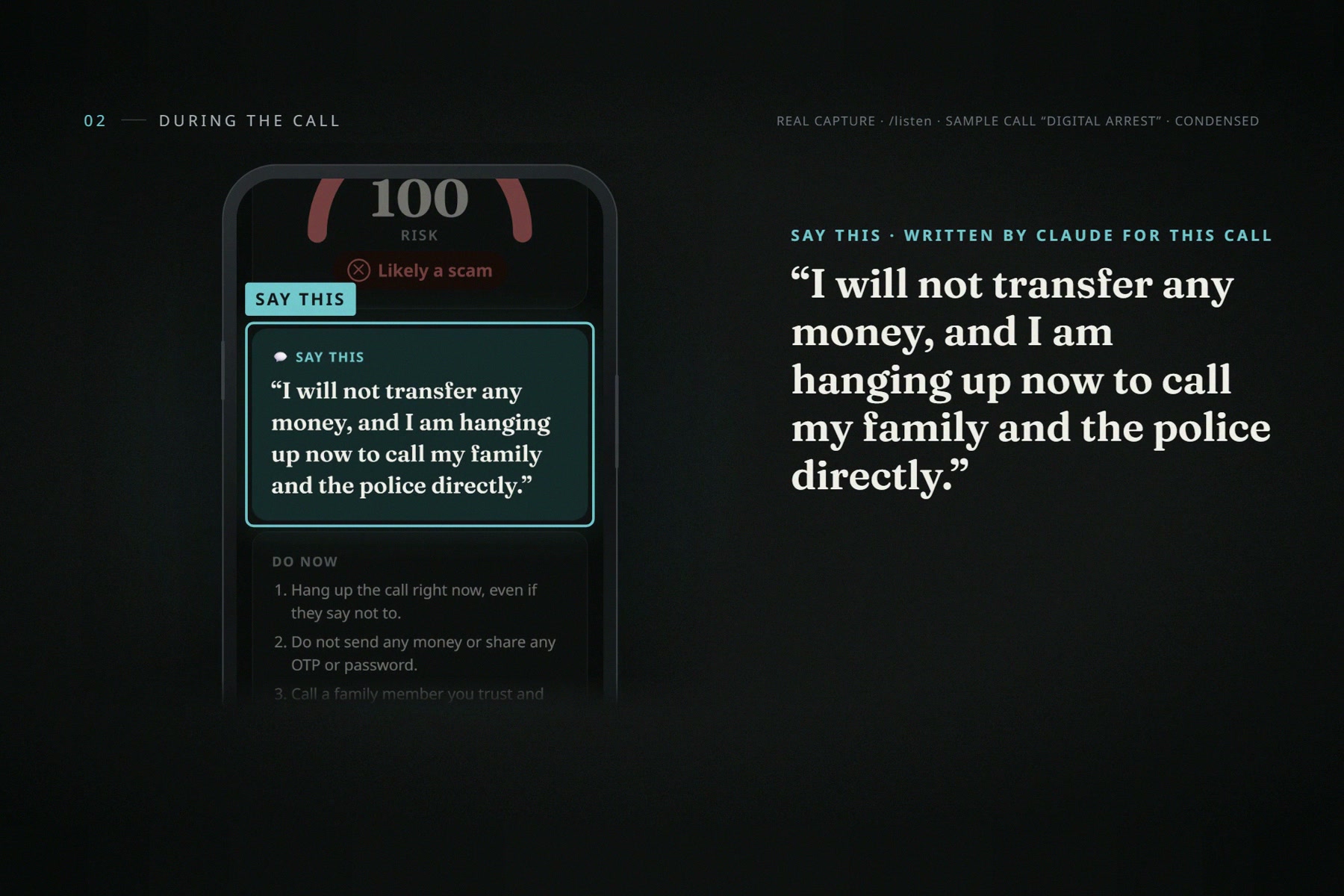
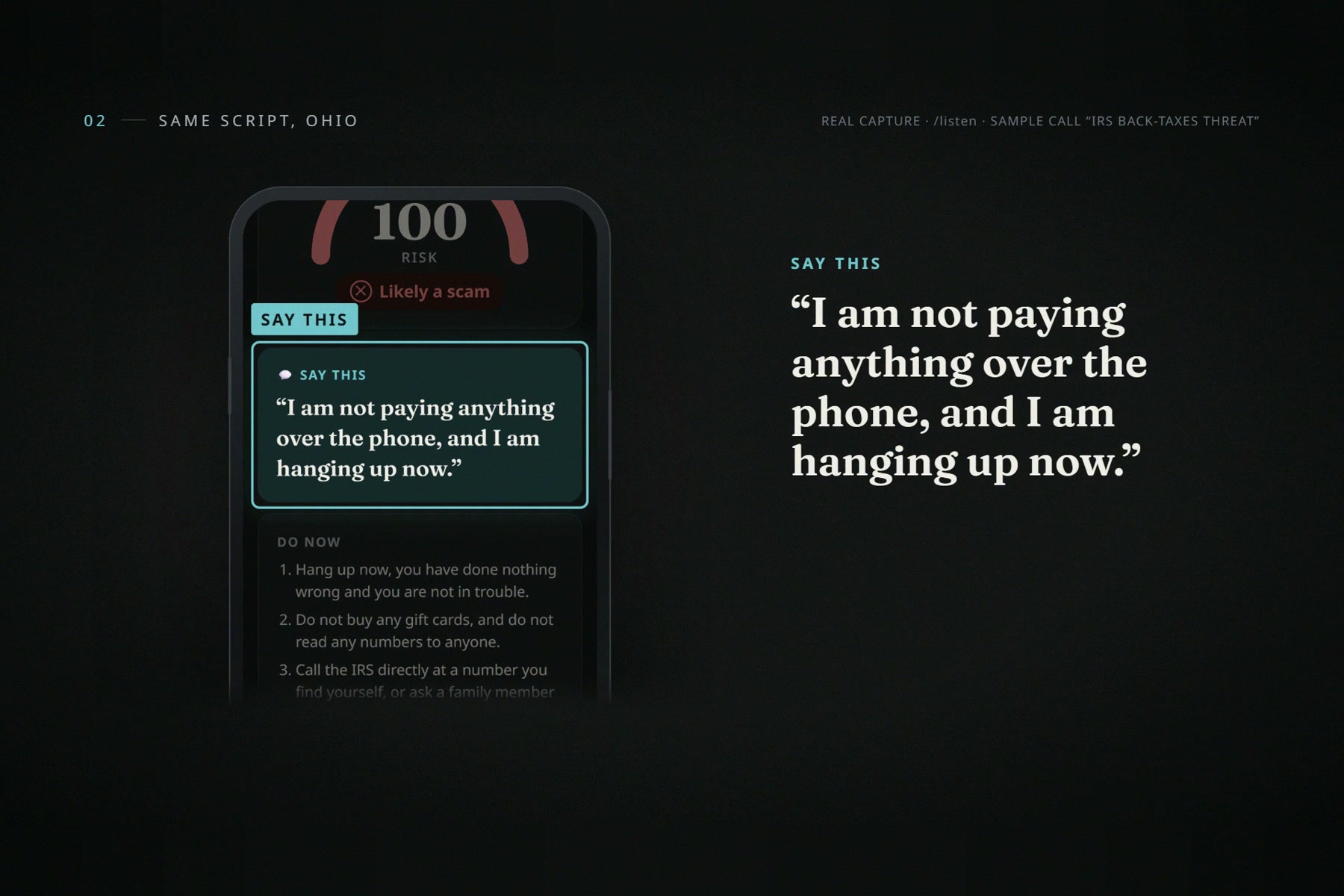
- a one-line "Say this" script
- at Danger, a full-screen "Hang up. This is a scam." with one-tap helplines and Tell family
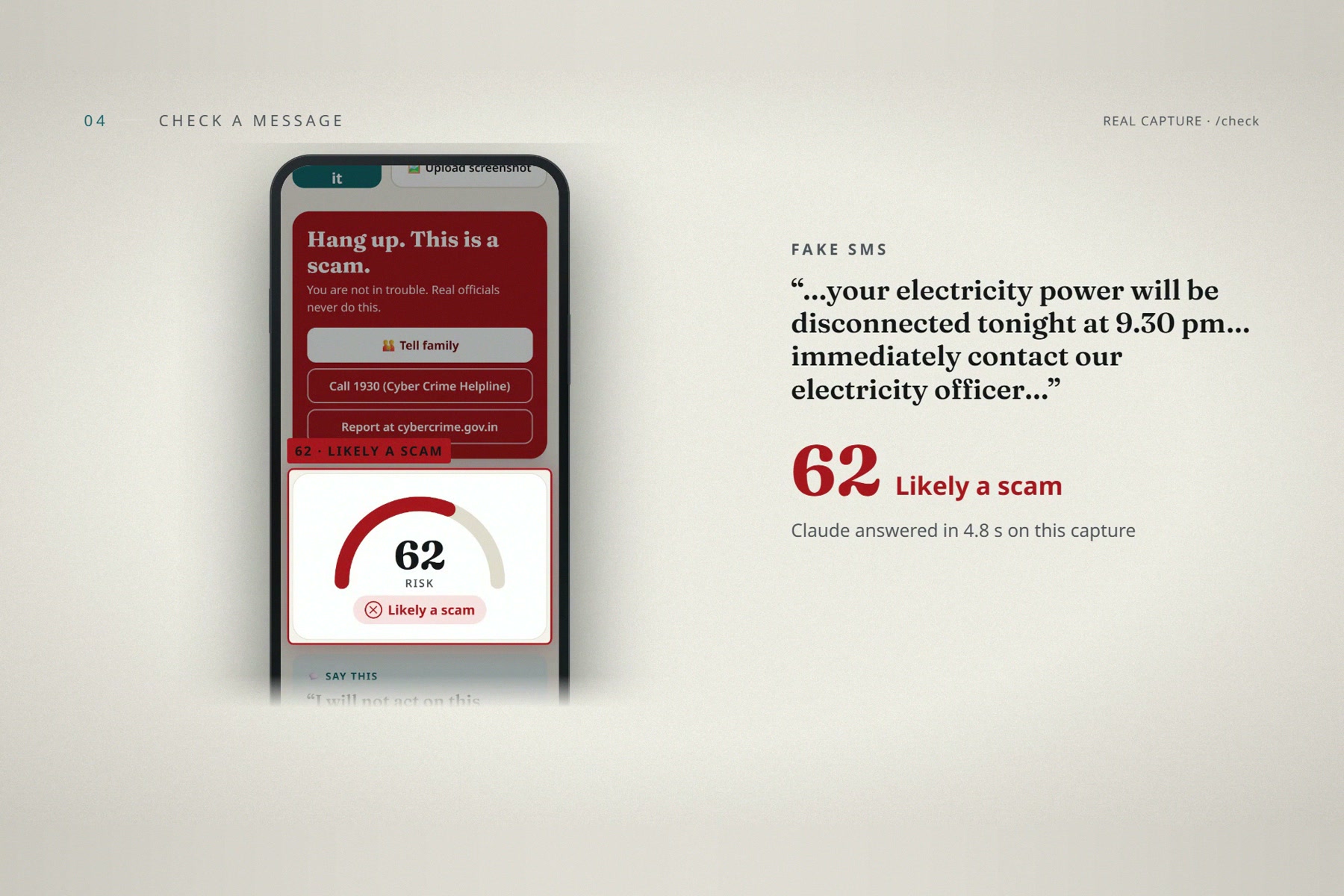
- Check a message: paste an SMS, WhatsApp or email, or upload a screenshot, and get the same verdict in seconds.
- Sample calls: four scripted calls (India digital arrest, US IRS, US tech support and a real bank call), so anyone can try it without a real scam.
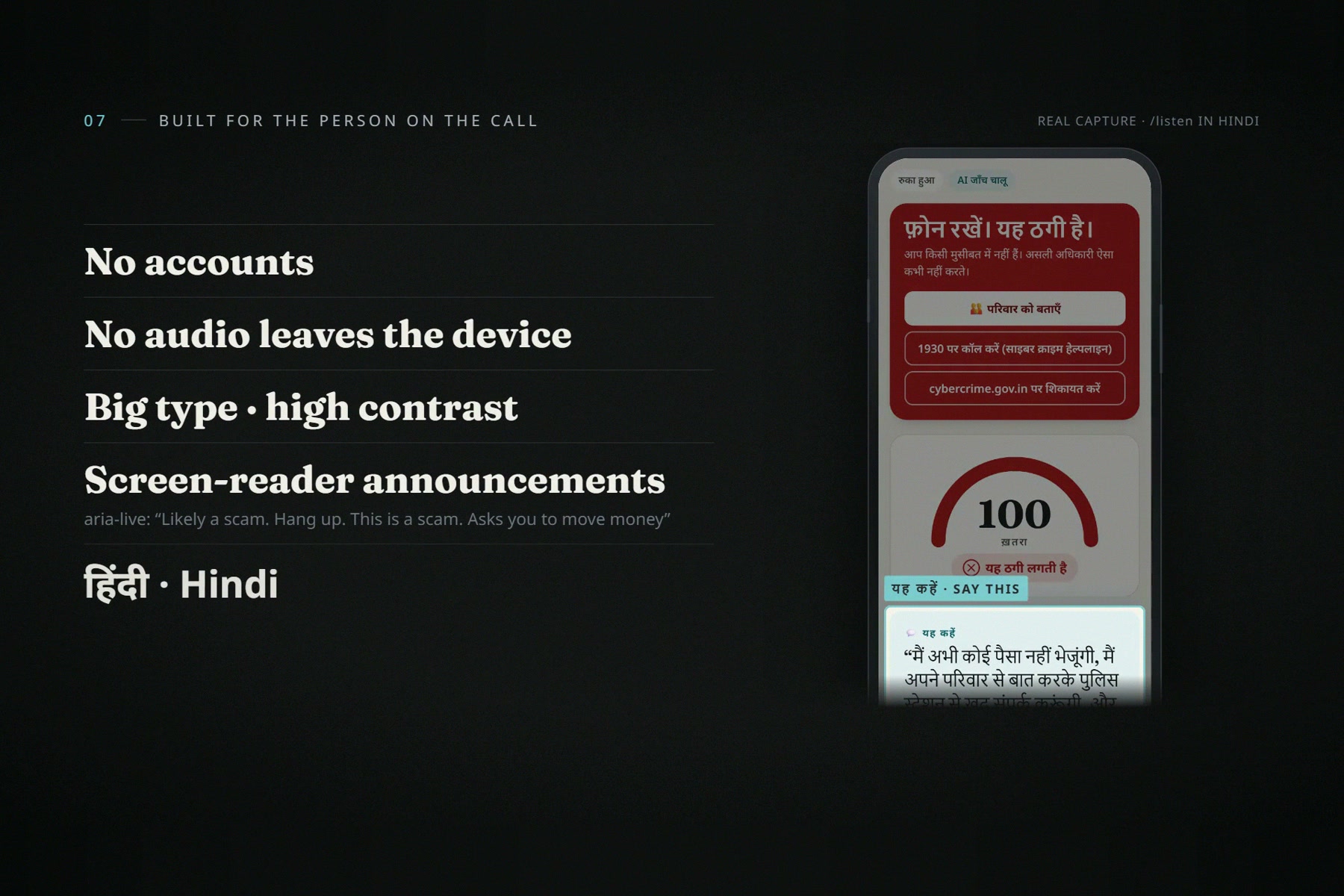
- English and हिंदी, including Hinglish, with India and US helplines (1930, cybercrime.gov.in, ReportFraud.ftc.gov, ic3.gov).
How we built it
- Next.js 16, React 19, TypeScript, Tailwind CSS 4. Speech-to-text runs in the browser through the Web Speech API, so audio never leaves the device.
- Hybrid detection:
- A rules engine checks 13 scam tactics in English, Hindi and Hinglish in milliseconds.
- Claude Haiku 5.5 reads intent through AI SDK structured output with a Zod schema. Every flag has to quote the transcript word for word.
- The verdict is
max(rules, AI), so if the AI is down, slow or talked into saying "safe" by the scammer, the warning still fires.
- Privacy: no accounts, no database, nothing logged.
- Accessibility: 18px base type, AA+ contrast in light and dark mode,
aria-liveannouncements, 48px+ tap targets, reduced-motion support. Colour is never the only signal.
Challenges we ran into
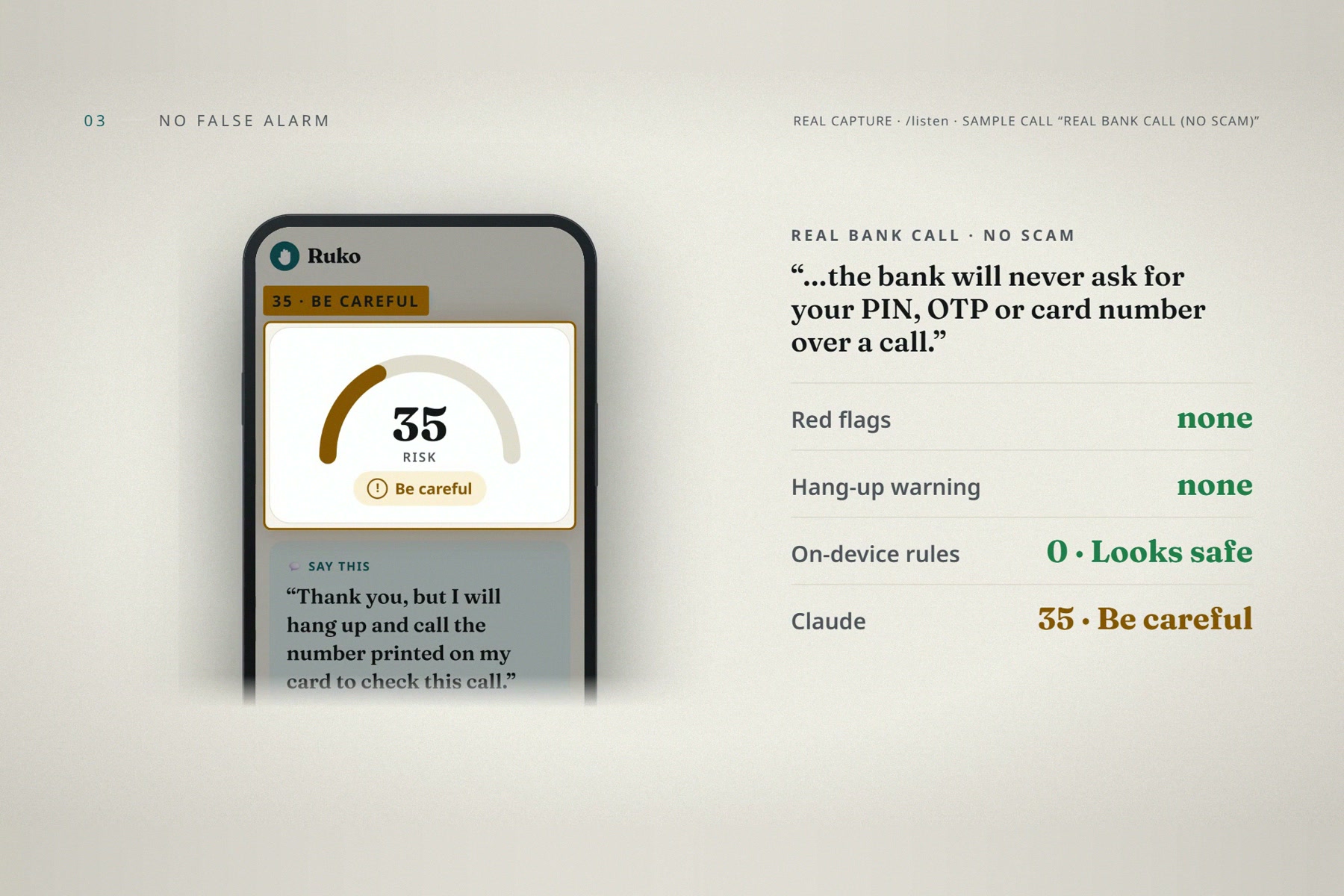
- Negation. Real banks say "we will never ask for your OTP." A keyword matcher flags that, so the rules engine treats it as a good sign, not a red flag.
- The scammer is talking to the AI too. A caller can say "this is a legitimate government call." That's why the rules score is a floor the AI can't lower.
- Caution vs. false alarms. With the AI on, our real bank sample ends at "Be careful" instead of "Safe": the model plays it safe on short calls, and the meter never drops. It never says "hang up," but we're still tuning it.
Accomplishments that we're proud of
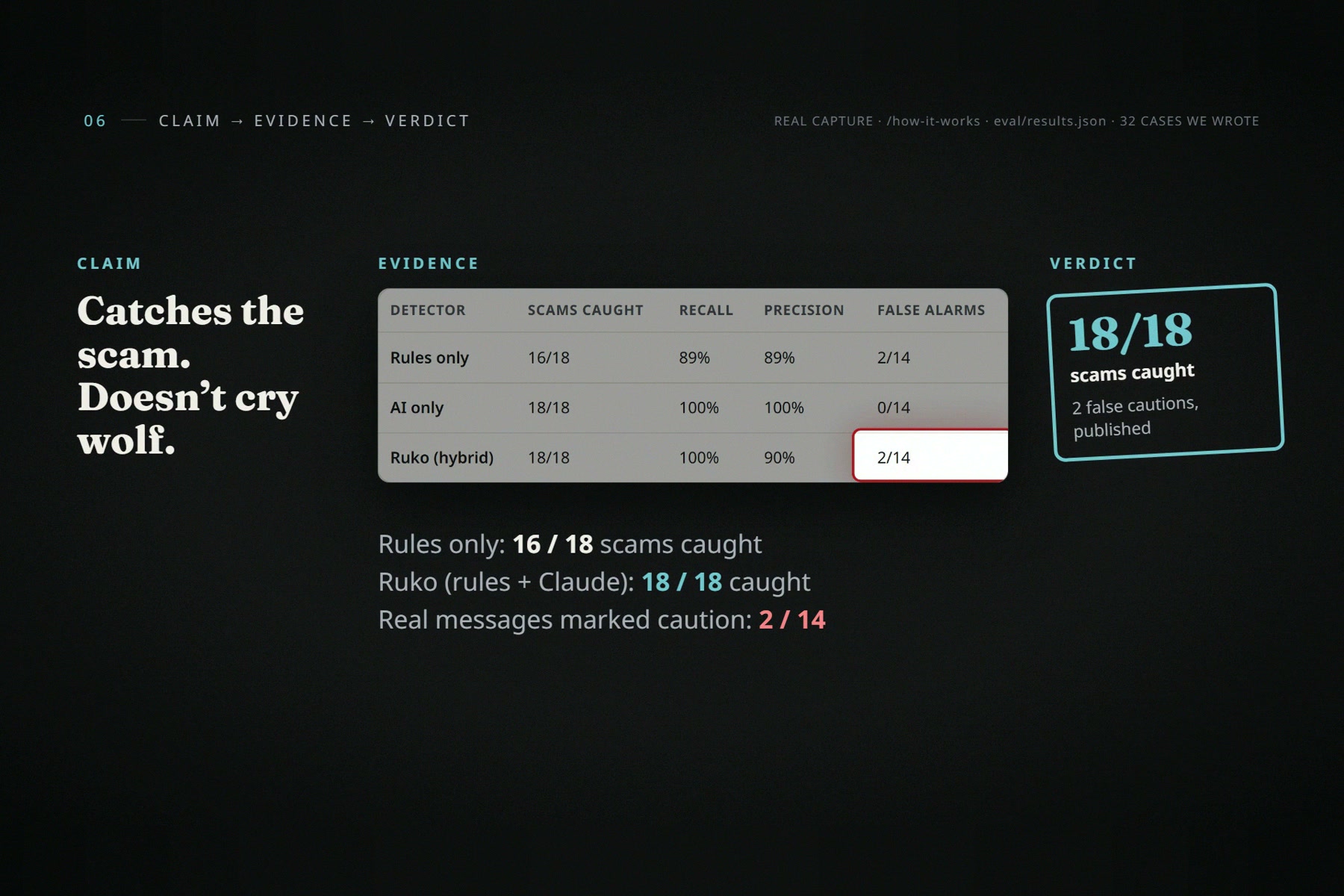
On 32 labelled cases we wrote (18 scams, 14 legitimate; US and India; English, Hindi and Hinglish):
| Detector | Scams caught | False alarms |
|---|---|---|
| Rules only | 16 / 18 | 2 / 14 |
| AI only (Claude Haiku 5.5) | 18 / 18 | 0 / 14 |
| Ruko (rules + AI) | 18 / 18 | 2 / 14 |
The same detector works on both continents, in two languages, with nothing stored.
What we learned
- Rules and AI fail in different ways. The AI caught the 2 scams the rules missed, and both false alarms came from the rules. Combining them trades 2 false alarms for a floor a scammer can't argue down.
- Scripts travel. An IRS call in Ohio and a "CBI officer" in Pune use the same four moves, so one set of tactics covers both.
What's next for Ruko
- Android call-screening integration, so no speakerphone is needed
- On-device models
- A family dashboard with alerts
- More languages: Marathi, Tamil, Bengali, Spanish
- Partnerships with banks and senior-care NGOs
Built With
- anthropic
- claude
- next.js
- node.js
- openrouter
- react
- tailwindcss
- typescript
- vercel-ai-gateway
- vercel-ai-sdk
- web-speech-api
- zod
