Inspiration
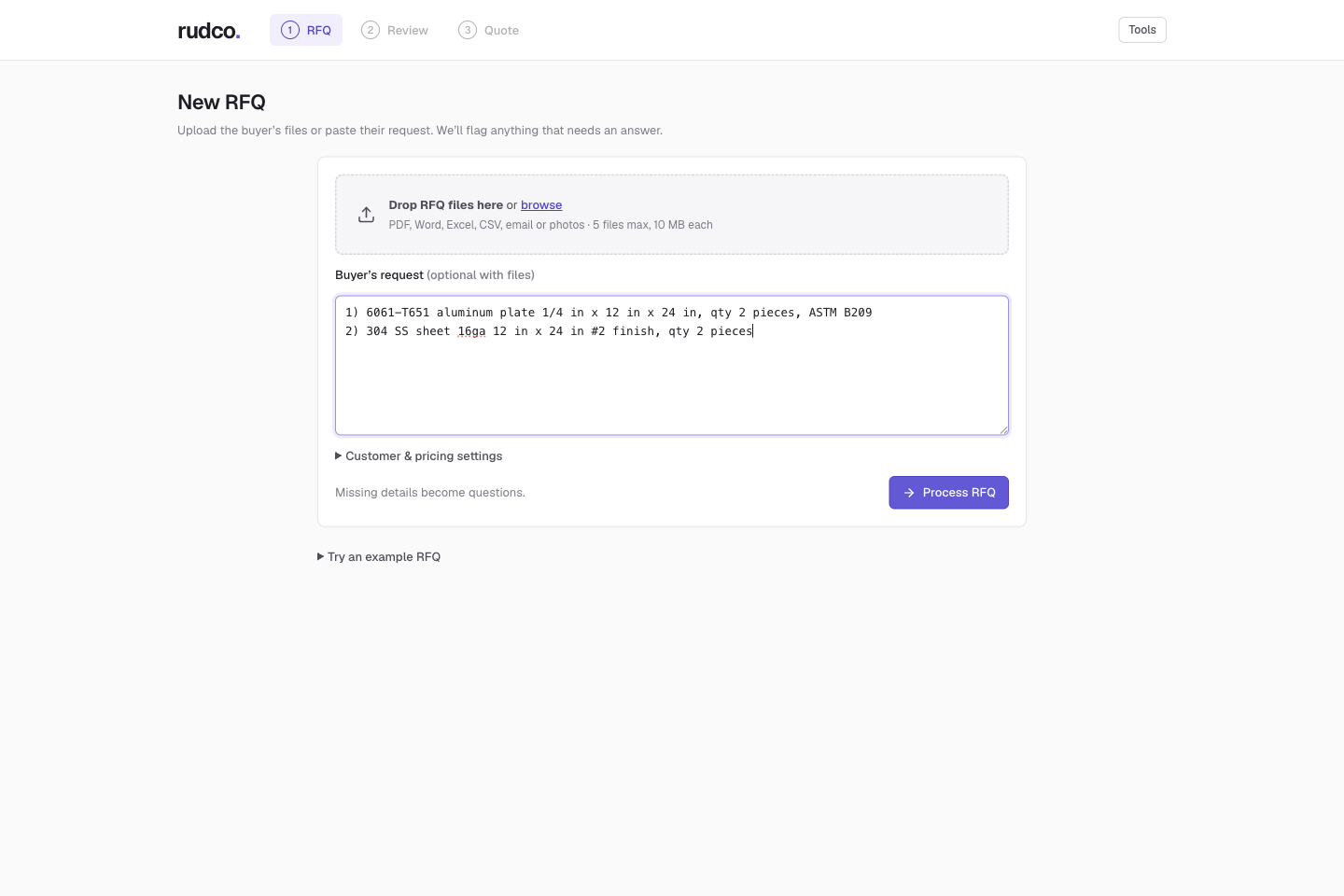
Industrial RFQs arrive as messy emails, PDFs, and spreadsheets. Someone has to decode each line before quoting it. This is bad and we were inspired by the new classification models like jev and saw a use case here.
What it does
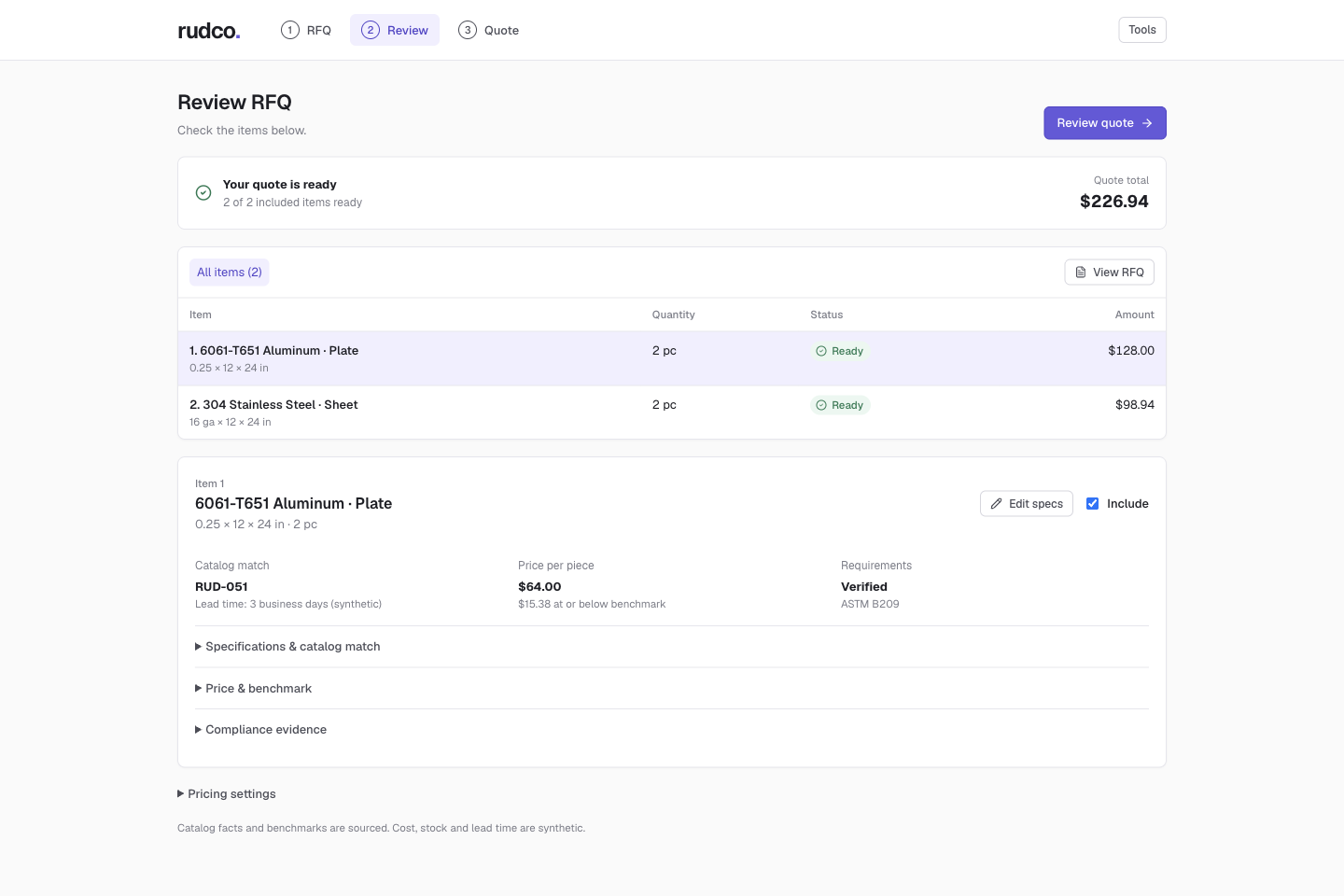
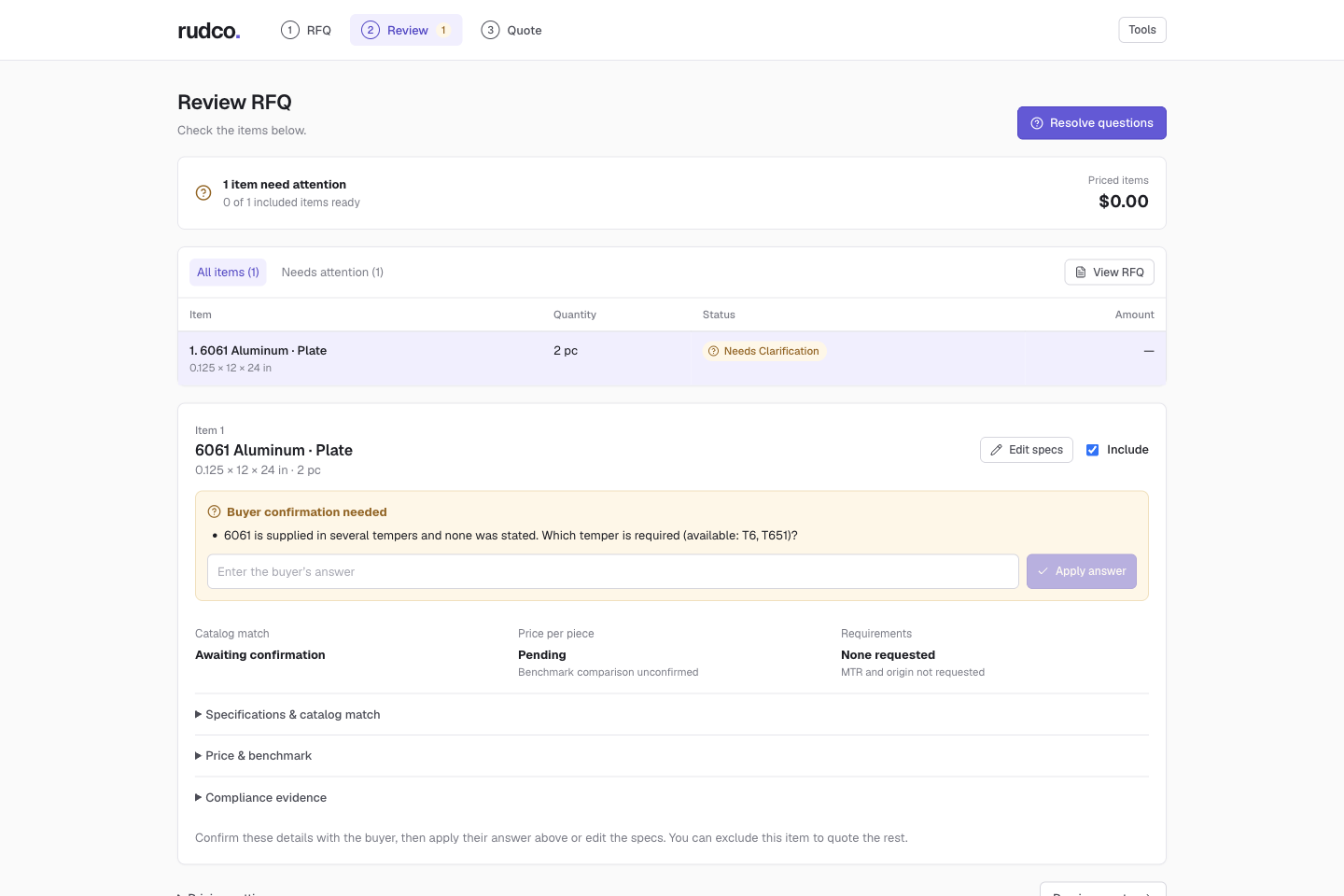
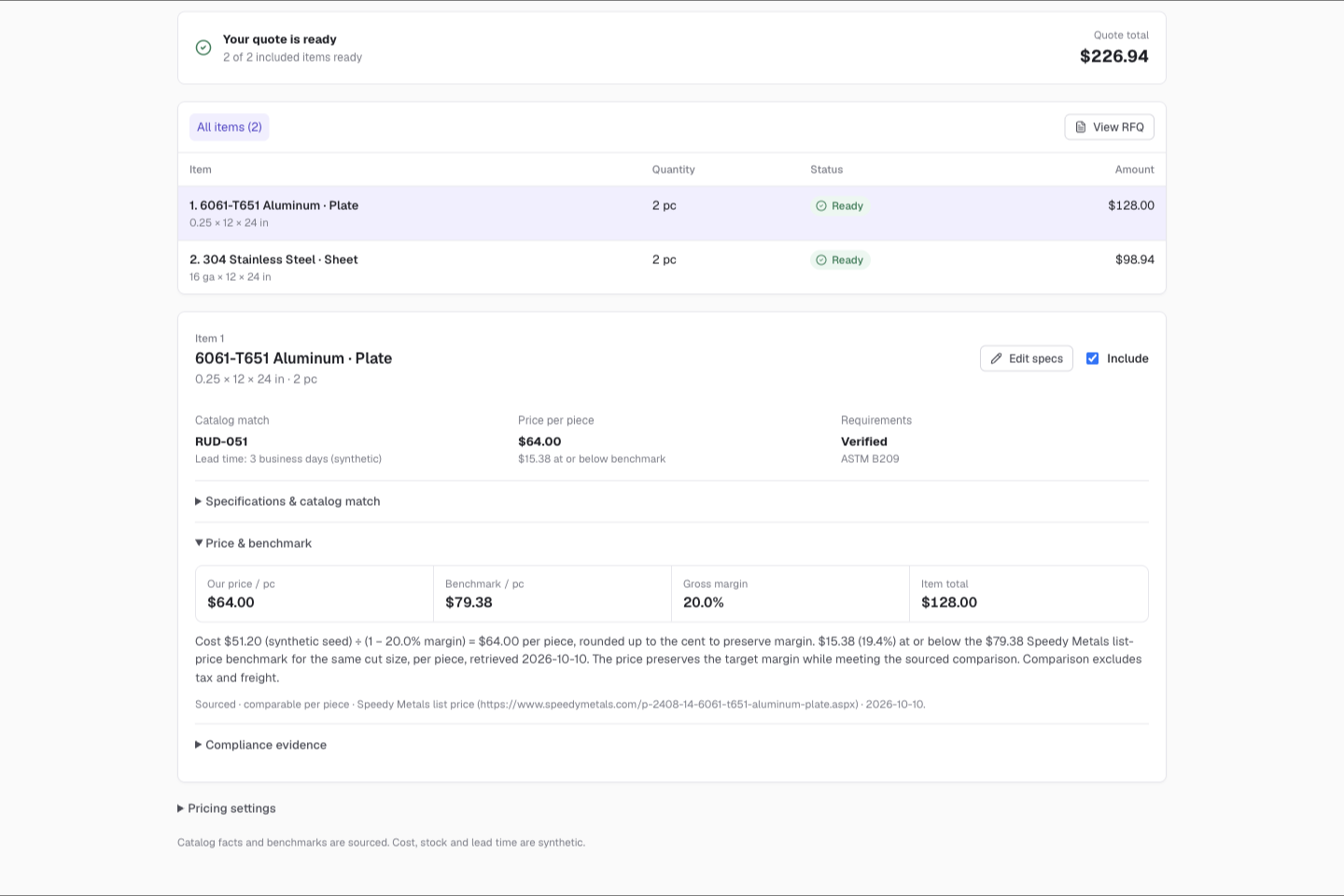
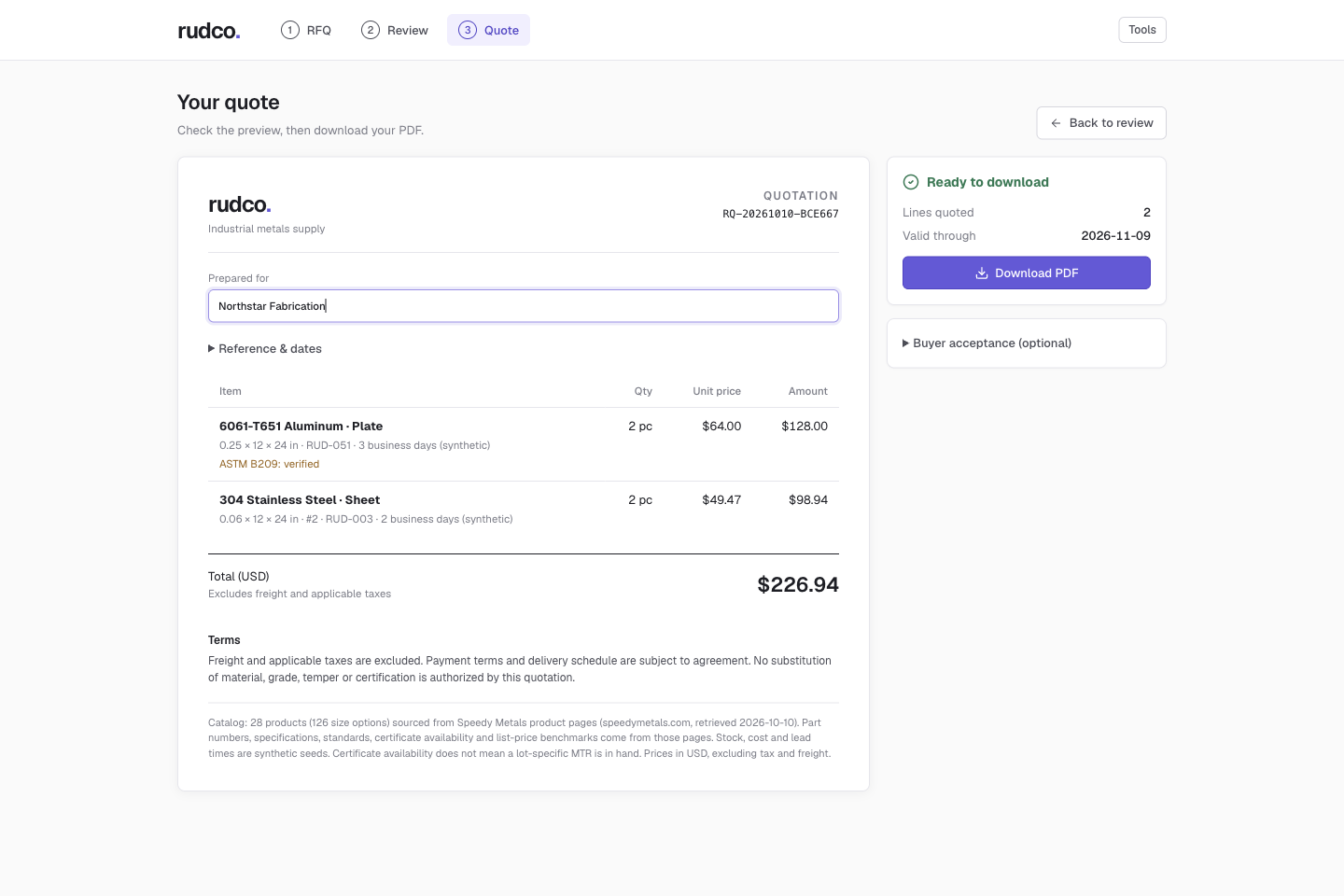
It extracts product specifications, matches supplier catalog items, calculates prices, checks compliance requirements, and generates quotation PDFs. Users can review the original request, correct details, and answer clarification questions.
How we built it
We used Next.js, React, and TypeScript. Nicrron w/ claude handles extraction and clarification, TypeSafe AI’s Jev classifies items, and Zod validates the data. Server-side rules handle matching and pricing. ExcelJS and unpdf read uploads, pdf-lib generates quotations, and PRISM traces AI calls.
Challenges we ran into / edge cases
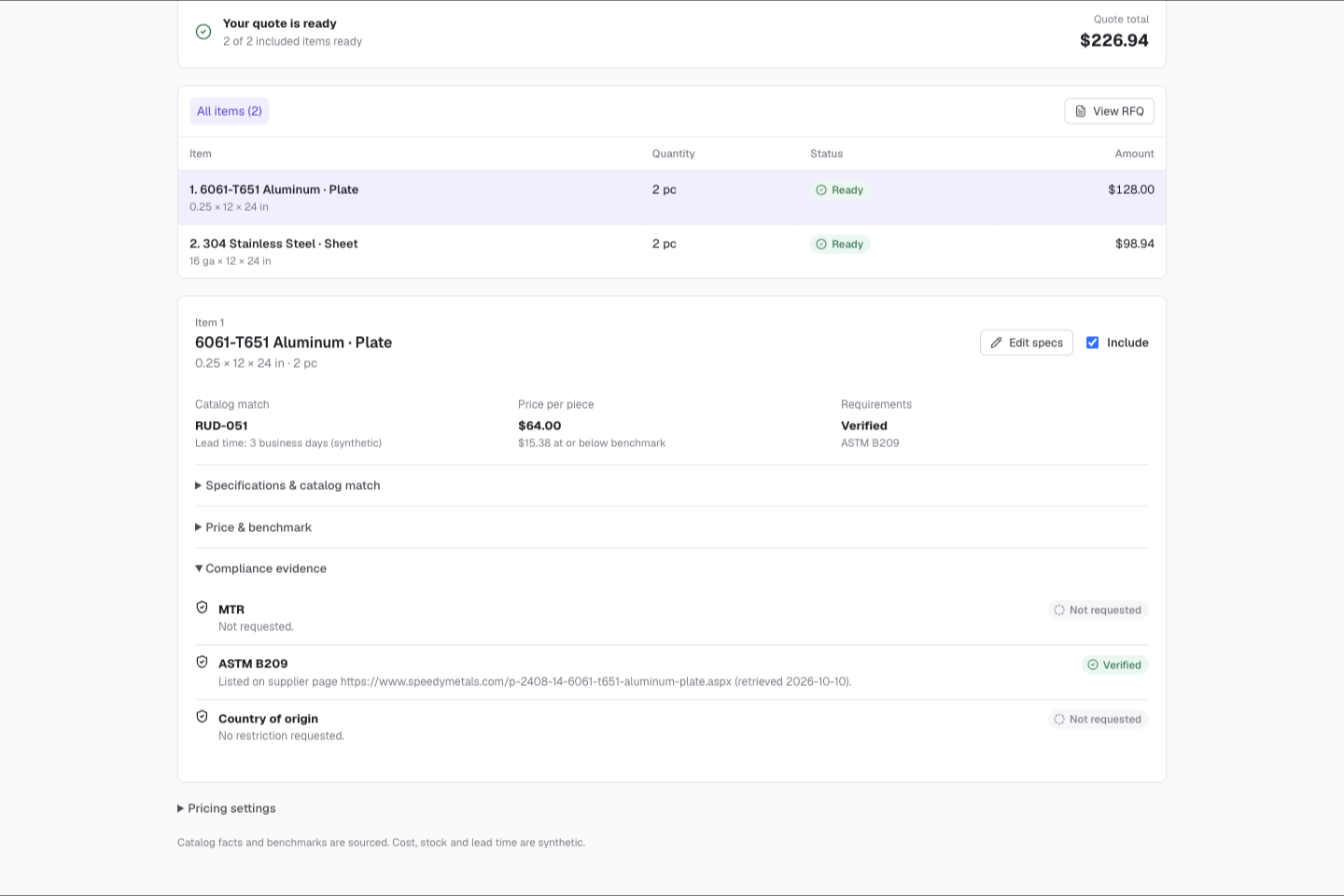
Inconsistent units, missing specifications, and conflicting descriptions made matching difficult. We kept unknown fields empty and added specific clarification questions. Unresolved requirements block export, and compliance claims require evidence. Synthetic stock, costs, and lead times are labeled. We have it clear when something doesn't work.
Accomplishments that we're proud of
We connected document processing, catalog matching, pricing, clarification, and PDF generation in one workflow. Users can trace extracted items back to their source and see why a product matched or why it couldn’t be quoted.
What we learned
A plausible AI answer isn’t enough to build a quote. We needed checks around it, clear sources, and a way to ask buyers for missing information. Corrections also had to update prices and quote readiness.
Built With
- and-prism-traces-ai-calls.-exceljs-reads-spreadsheets
- exceljs
- geist
- github-actions
- jev-classifies-items
- lucide-react.-nicrron-handles-extraction-and-clarification
- next.js
- nicrron
- node.js
- prism
- react
- render
- typesafe-ai-jev
- typescript
- unpdf
- unpdf-extracts-pdf-text
- zod

Log in or sign up for Devpost to join the conversation.