-
-
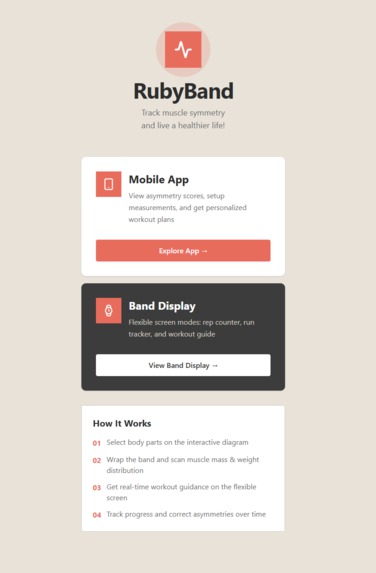
Home
-
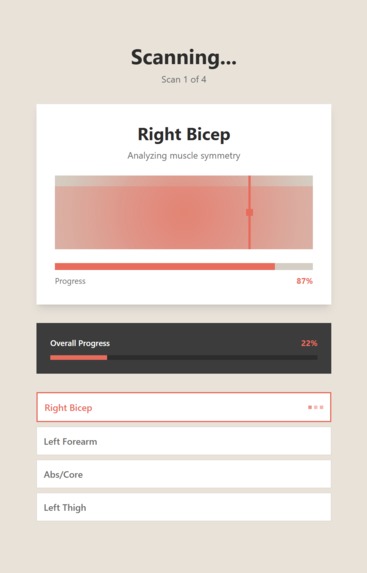
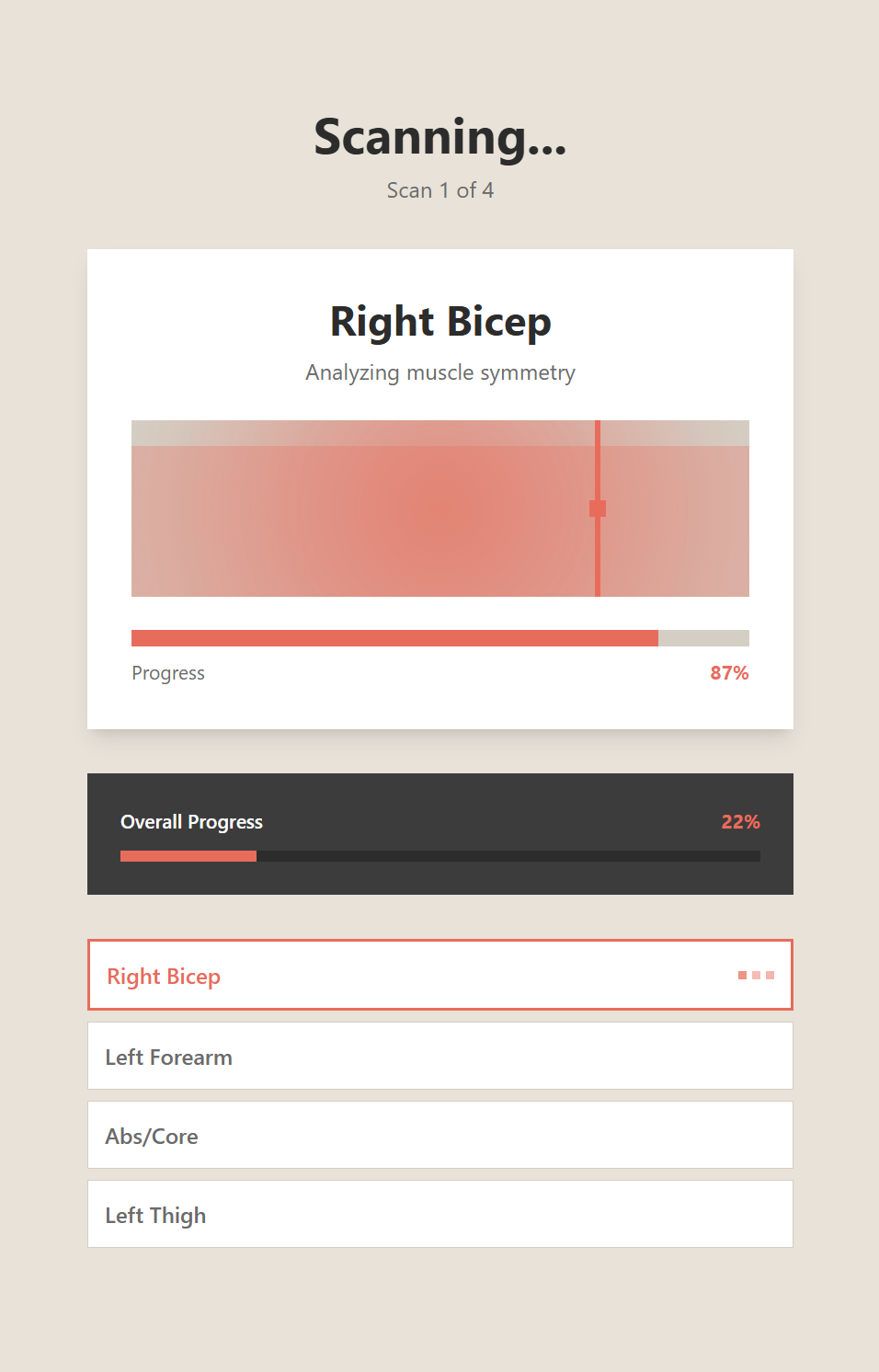
App interface while scanning for muscle density
-
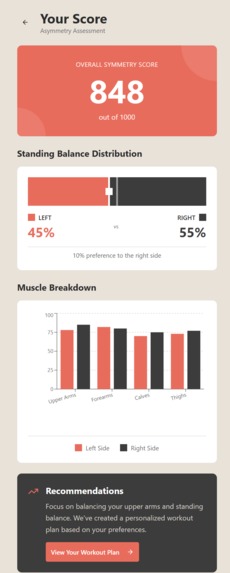
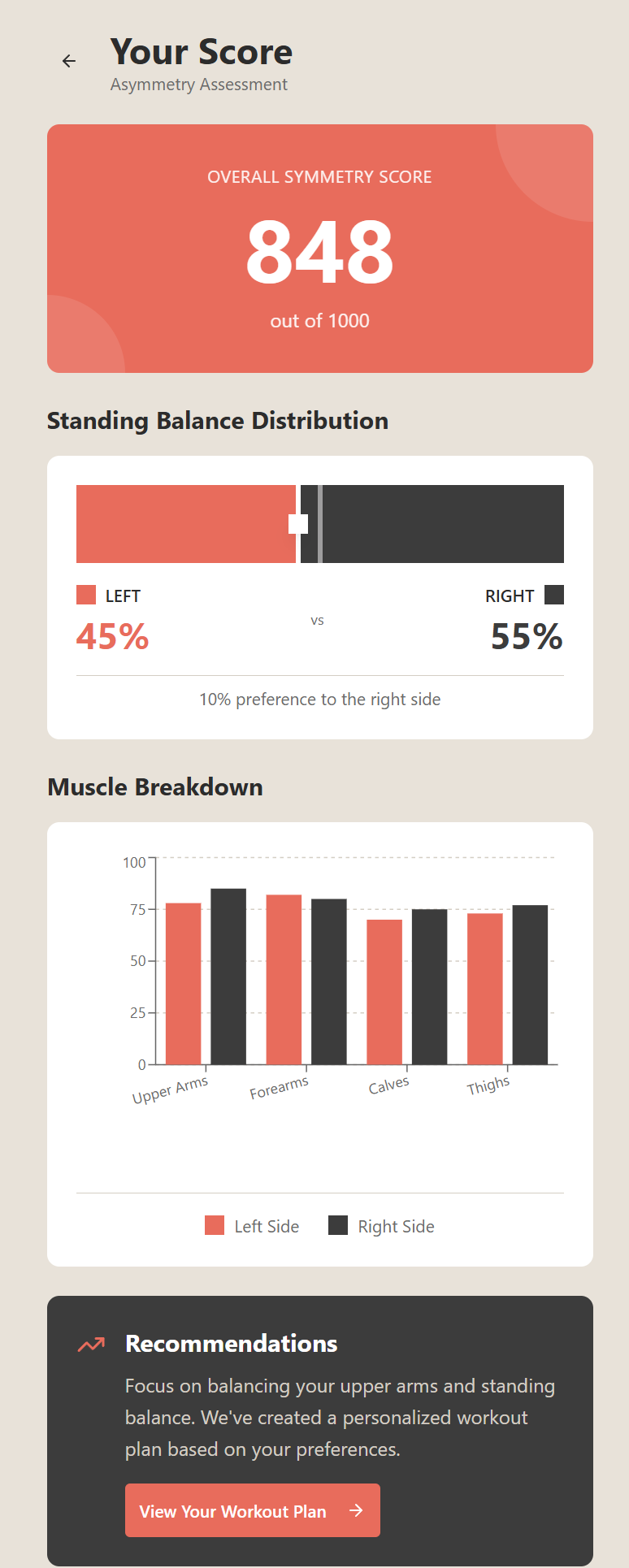
App interface showing test results
-
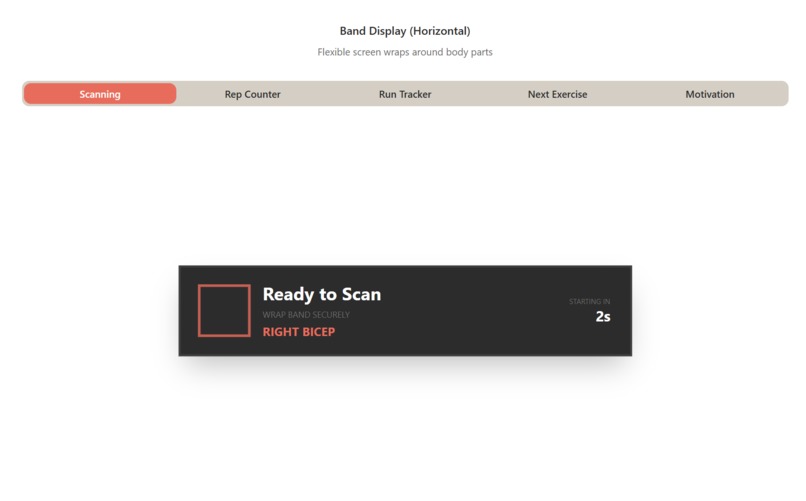
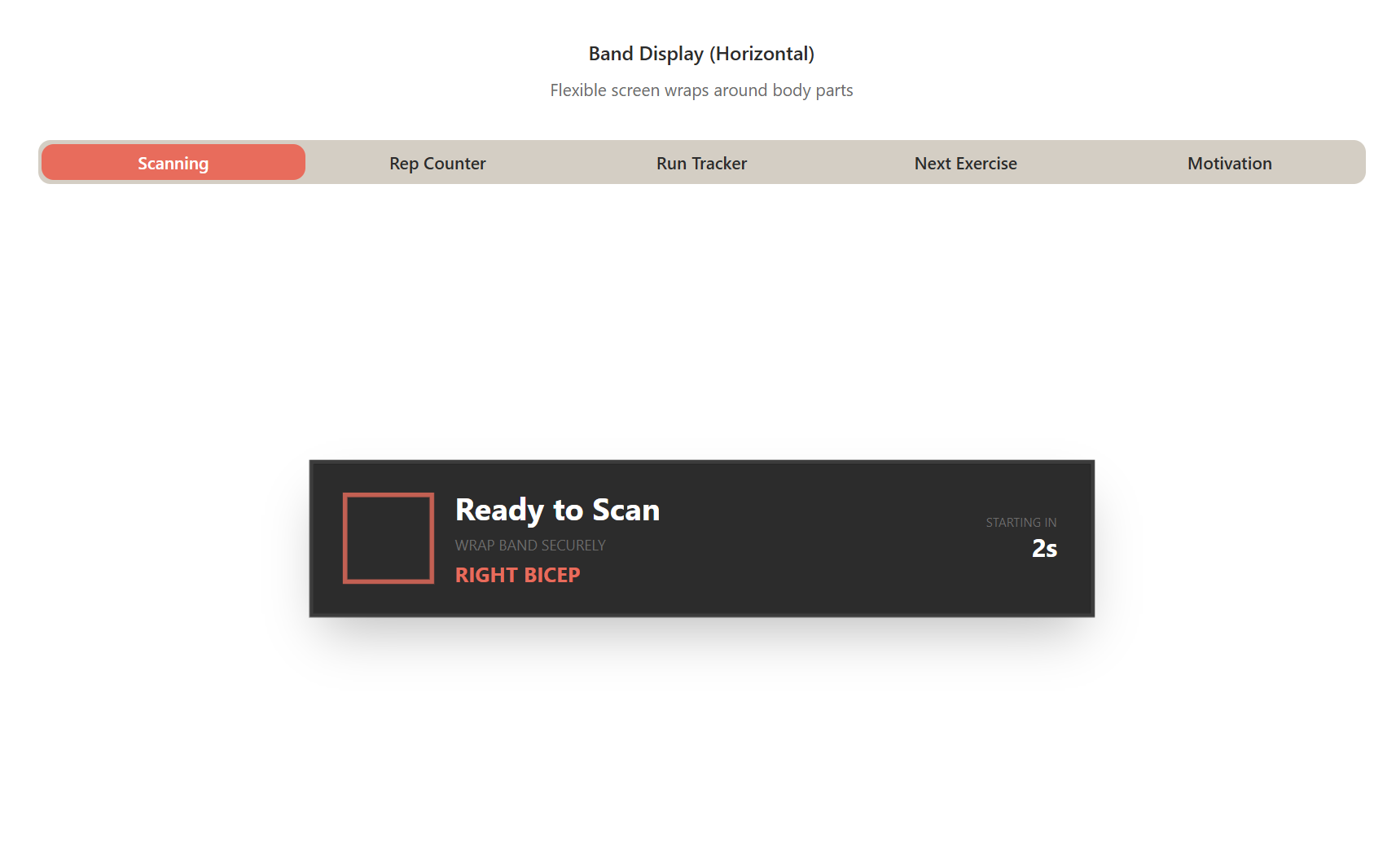
Band interface when scanning for muscle density
-
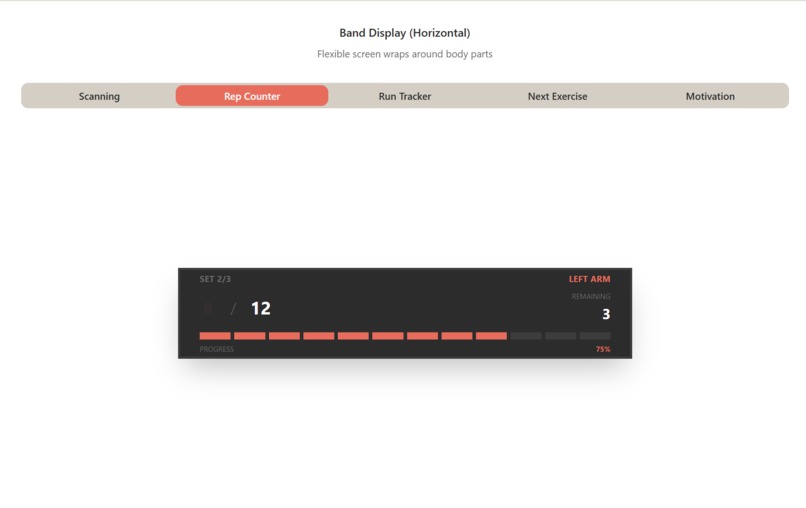
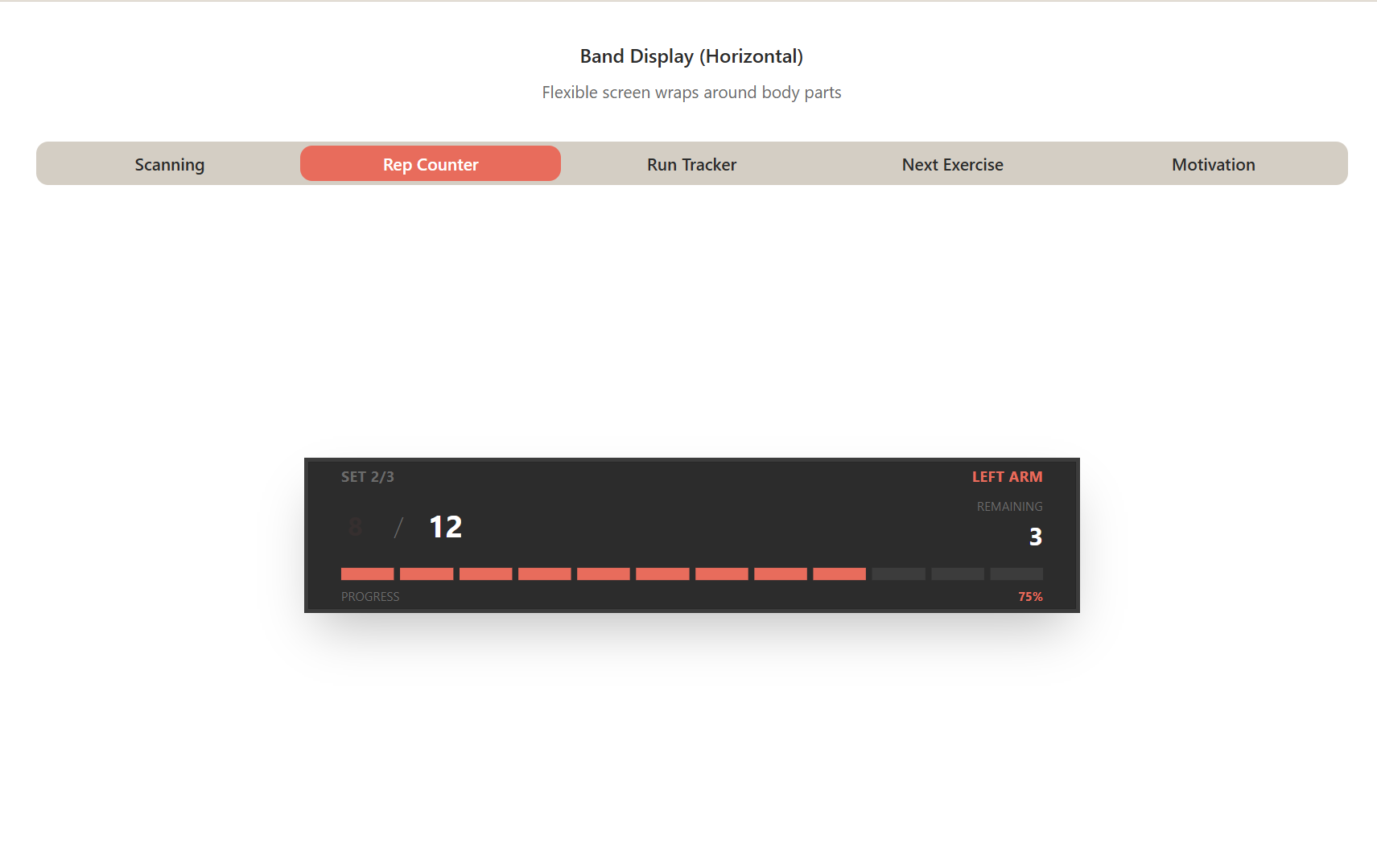
Band interface when used during a workout, tracking reps
Inspiration
RubyBand began with an idea of exploring proprioception, the body’s ability to sense its position and movement without relying on vision. While discussing everyday movement and exercise habits, we noticed a common pattern between our friends and family and something that connected a recent interest of ours! We've booted up our Wii Balance board recently and noticed that while we both exercise regularly, there are parts of our physical health that aren't fulfilled with standard routines - muscle asymmetry!
Building on this idea we noticed that our target audience had the opportunity to be specific and ranged at the same time. Athletes frequently train their dominant side more intensely during sports, while older adults may experience imbalances due to aging, injury, or reduced activity. These differences can lead to discomfort, instability, and long-term health issues. Despite how common muscle asymmetry is, it is rarely noticed early because identifying it typically requires specialized equipment or clinical evaluation. Its effects are also noticed after years of continuous strain, and we wanted to fix this.
What it does
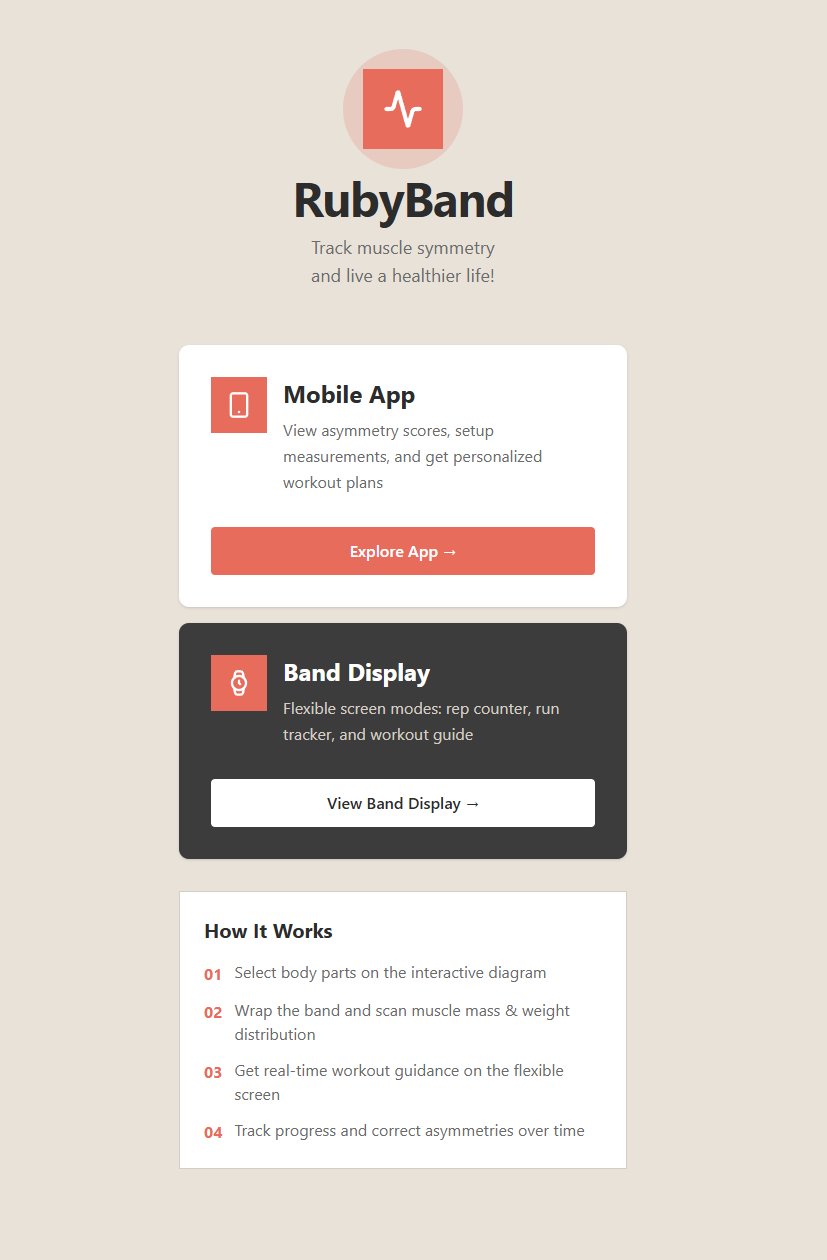
RubyBand is a concept wearable band paired with a mobile interface designed to help people better understand muscle balance and movement patterns. The system focuses on identifying asymmetries in how different parts of the body are used during exercise or everyday movement. Through the app, users can view a simple representation of their body balance and see where one side may be compensating for the other. The goal is to make people more aware of how their bodies move so they can prevent injury, improve stability, and maintain long-term mobility.
How we built it
We began by researching proprioception and muscle imbalance and then explored early ideas through sketches and concept diagrams. From there we designed the interaction between the wearable band and the mobile application, thinking about how users would understand and respond to feedback about their body movement. Using Figma, FigmaMake, and Blender, we created interface mockups that demonstrate how the system could present asymmetry scores, track movement patterns, and guide users toward exercises that help rebalance muscle use.
Challenges we ran into
One of the first challenges we faced was deciding which sense to explore. The prompt encouraged us to think beyond the traditional five senses, but that turned out to be harder than expected. Many of our early ideas naturally drifted back toward current mental and physical health solutions because those are tools we already interact with.
Another challenge was resisting the temptation to solve the problem with just a mobile app. Many health and fitness solutions already exist in app form, and we wanted to create something that felt more tangible and meaningful in a person’s daily life.
Accomplishments that we're proud of
We are proud of creating a cohesive concept that connects physical interaction and wearable design into a single experience. We are also proud of how the project connects an everyday health issue with a design solution that feels practical and actually useful to us.
What we learned
Another important lesson we learned was the value of minimalist design. When dealing with information about the body, it was tempting to present a lot of data and metrics. However, this took up the already small design space we had for our band. This meant simplifying visuals, reducing unnecessary elements, and prioritizing clarity so users could immediately understand what their body is telling them.
What's next for RubyBand
If we were to continue developing RubyBand, the next step would be expanding the concept into a more interactive prototype that demonstrates how the band and app would work together in real time. We'd love to get some real user feedback on features they would like to add or remove. And finally, we hope to make our own RubyBand prototype in the future!
Built With
- figma
- figmamake
- tsx


Log in or sign up for Devpost to join the conversation.