




Qwen Rubik Instructor
This is an interactive 3D Rubik’s Cube tutor where Qwen teaches using a cube it can actually see. It generates lessons based on your live cube state, narrates solves, offers grounded hints, and has a memory that tracks your progress and even forgets over time, plus a camera that scans the real cube in your hands so the tutor can teach using your actual cube one too.
Live at rubik.suryatresna.asia · Qwen Cloud Hackathon, MemoryAgent track ·

Inspiration
“They said an LLM couldn’t solve a Rubik’s Cube.” Most people online agreed with that, every attempt we found drifted out of sync with its own cube: moves hallucinated, the state fell apart, and the cube would “solve” itself into nonsense. At the same time, actually learning the cube as a human is famously miserable: static tutorials, algorithm walls, and no one watching your cube when you get stuck.
LLMs are bad at maintaining exact cube state. So we don’t let Qwen own the cube. A deterministic solver owns truth; Qwen owns teaching. Then MemoryAgent makes the teaching personal: it remembers the learner’s mistakes, lets old mistakes decay, resurfaces stale mastered skills for review, and injects only a compact relevant memory into the prompt.
Qwen becomes a personalized tutor because it remembers what you struggled with, forgets stale signals, and chooses what to review next.
What it does
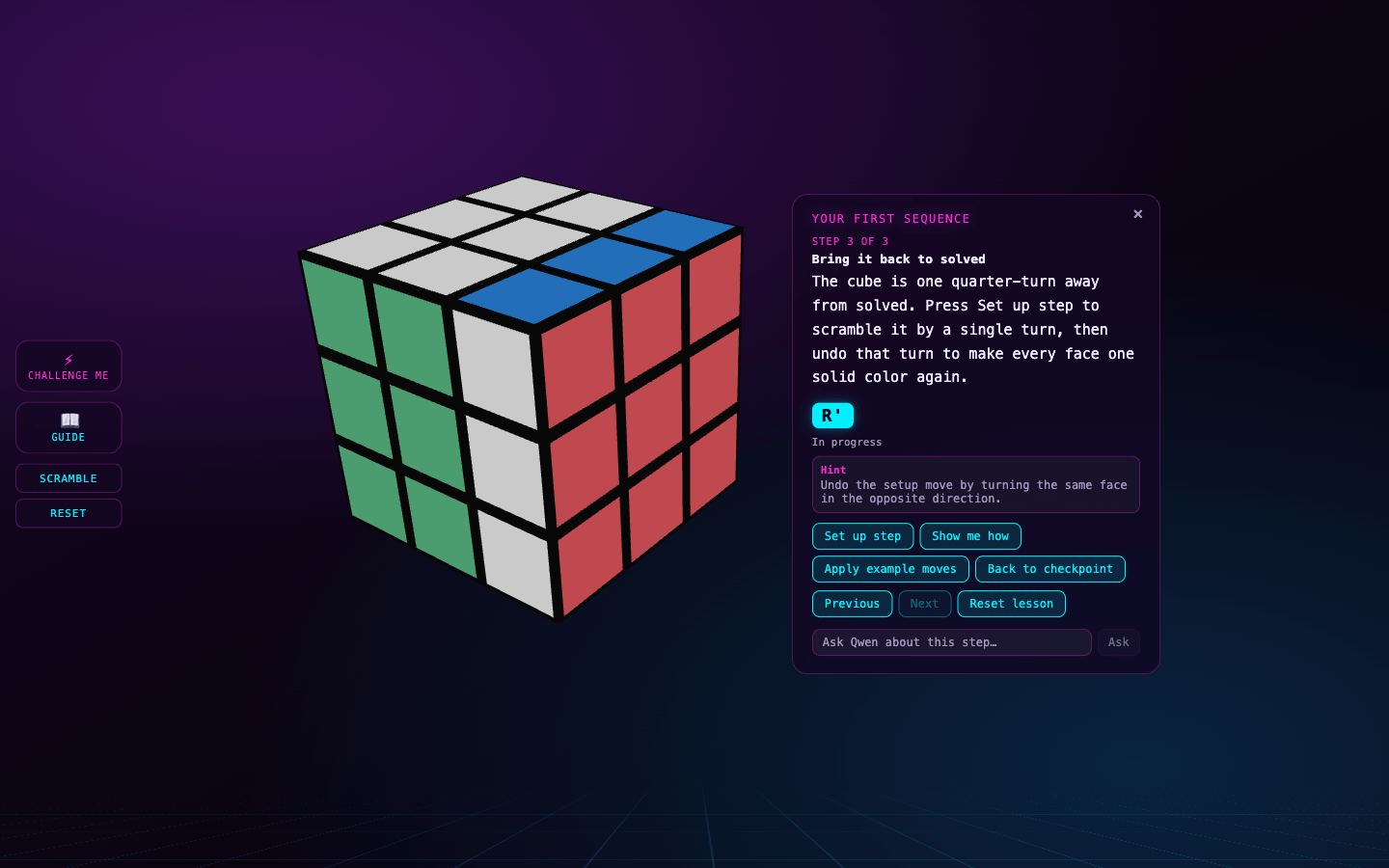
You play with a real 3D cube. You can drag a face, use full move notation on the keyboard, or a touch keypad on the phone. Everything else is a teaching layer on top of that cube:
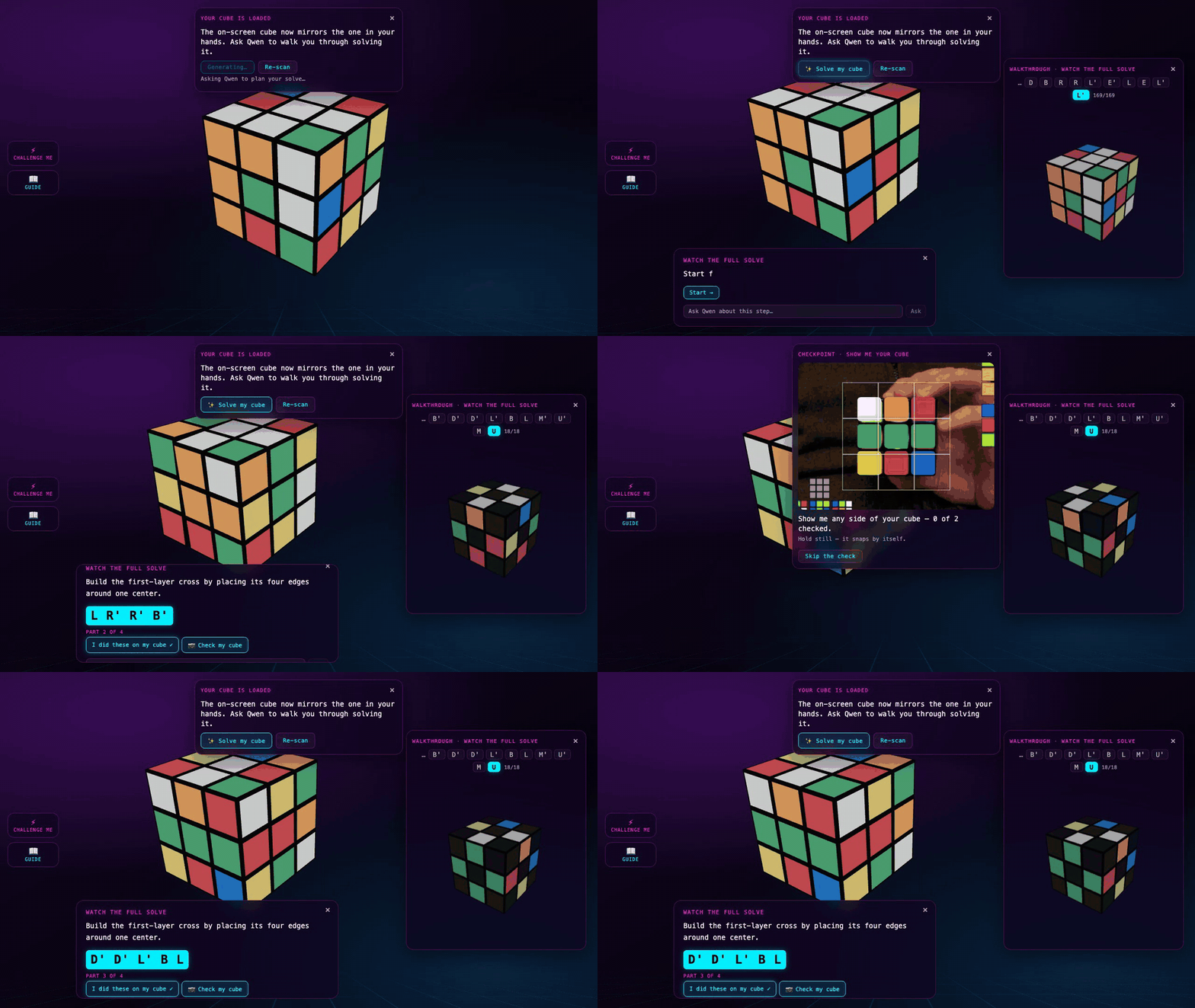
- "Solve my cube (Qwen)" uses a deterministic layer-by-layer solver to plan a solve for your exact scramble, and Qwen narrates it step by step over a live stream while a reference cube demonstrates. One click applies it to your cube, and it genuinely ends up solved.

- "Lesson from my cube (Qwen)": generates a lesson tailored to your current cube state, with steps, example moves, hints, and checkpoints you can always return to.

- Hints and grounded Q&A: every step includes hints, and an “Ask Qwen” box answers free-form questions against your live cube, so the answer is about your stickers, A memory that forgets: mastery, struggles, and review timing areas, and review timing are tracked as you practice, decayed over time (old mistakes fade, mastered skills come due for review), compressed into a small digest, and injected into every prompt. If you come back days later, Qwen greets you with “Welcome back,” and picks up where you actually are. With the optional database mirror, that memory follows you across devices.
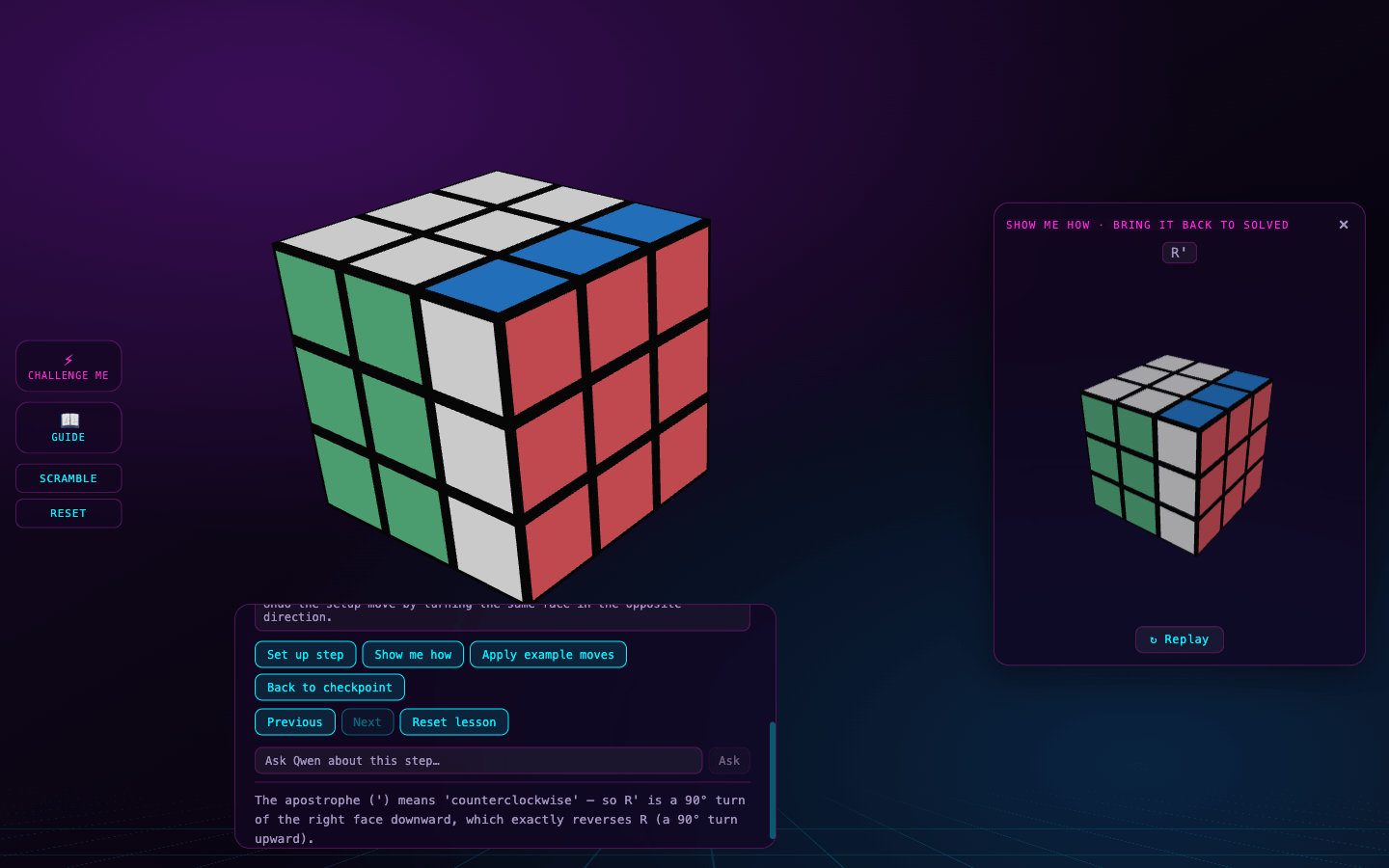
A memory that forgets: mastery, struggles, and review timing are tracked as you practice, decayed over time (old mistakes fade, mastered skills come due for review), compressed into a small digest, and injected into every prompt. Come back days later and Qwen opens with "Welcome back —" and picks up where you actually are. With the optional database mirror, that memory follows you across devices.
Lessons, drills, and walkthroughs: a full hand-authored layer-by-layer curriculum whose every algorithm is machine-verified, plus repeatable drills graded against the cube itself (not your move transcript).
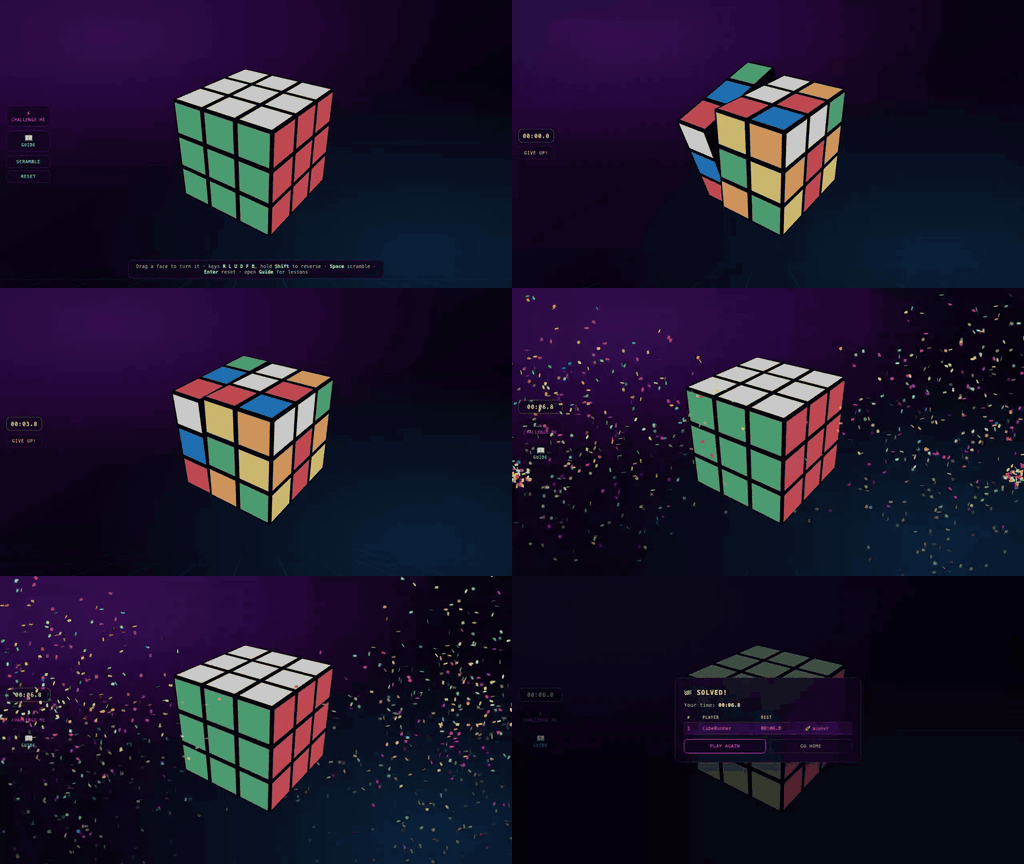
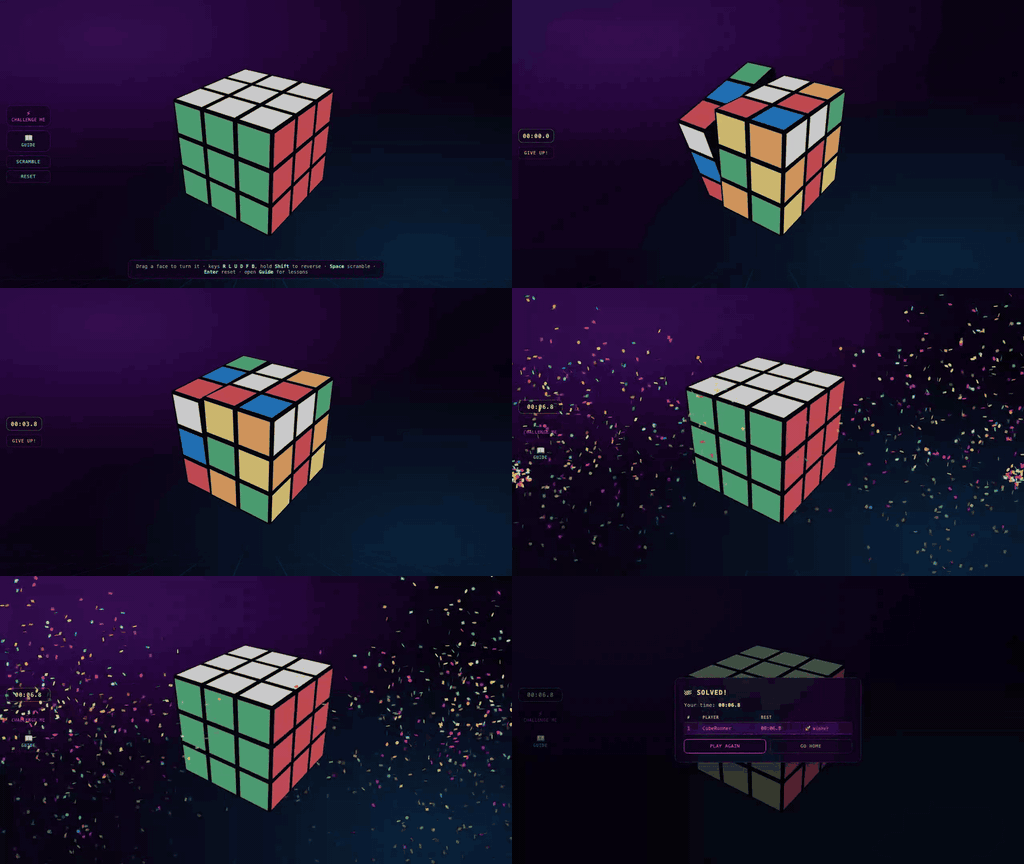
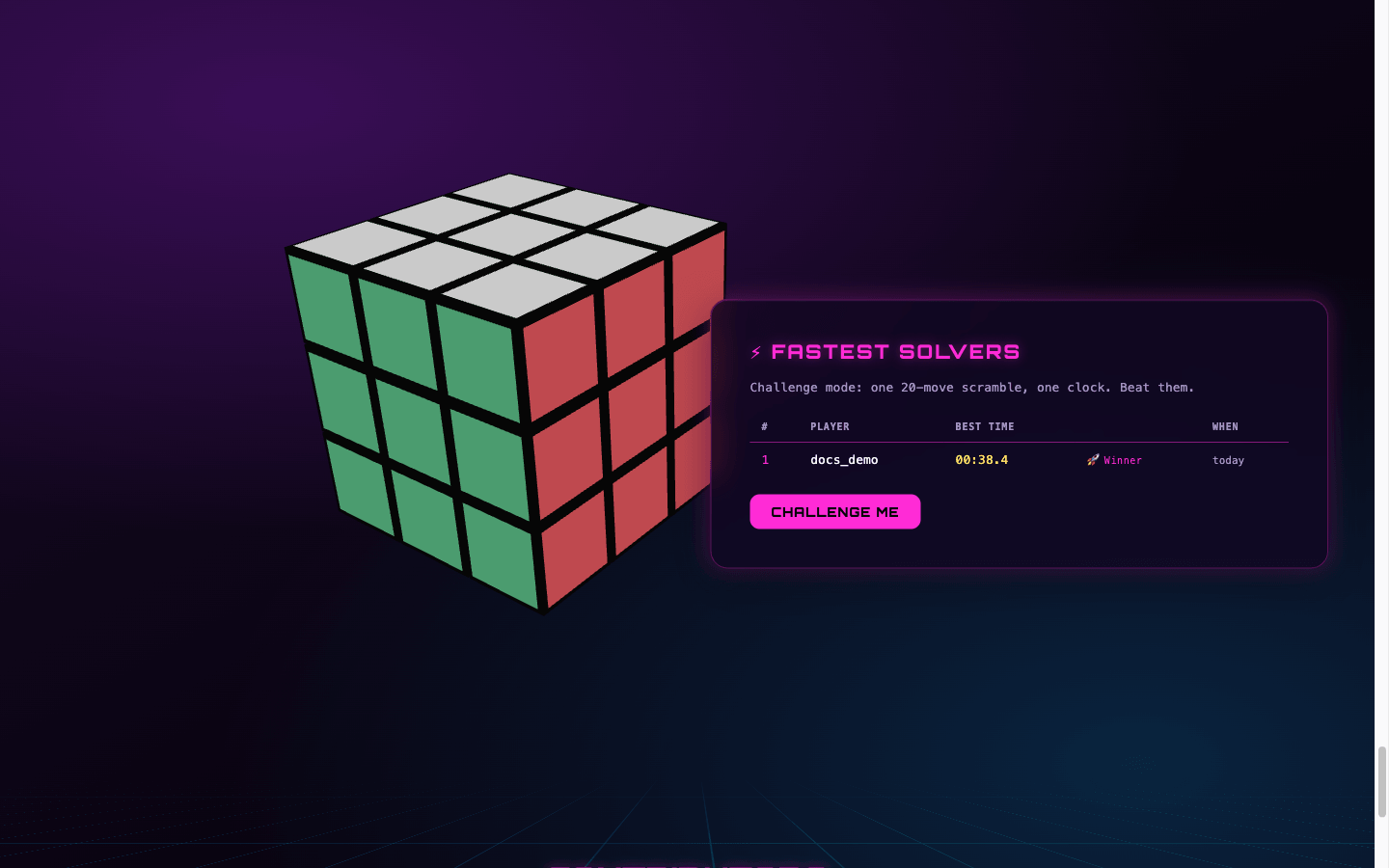
- Challenge Me is a full-cube race with Google sign-in, a server-side clock the client can’t lie to, anti-cheat handling, confetti, and a public leaderboard on the landing page.
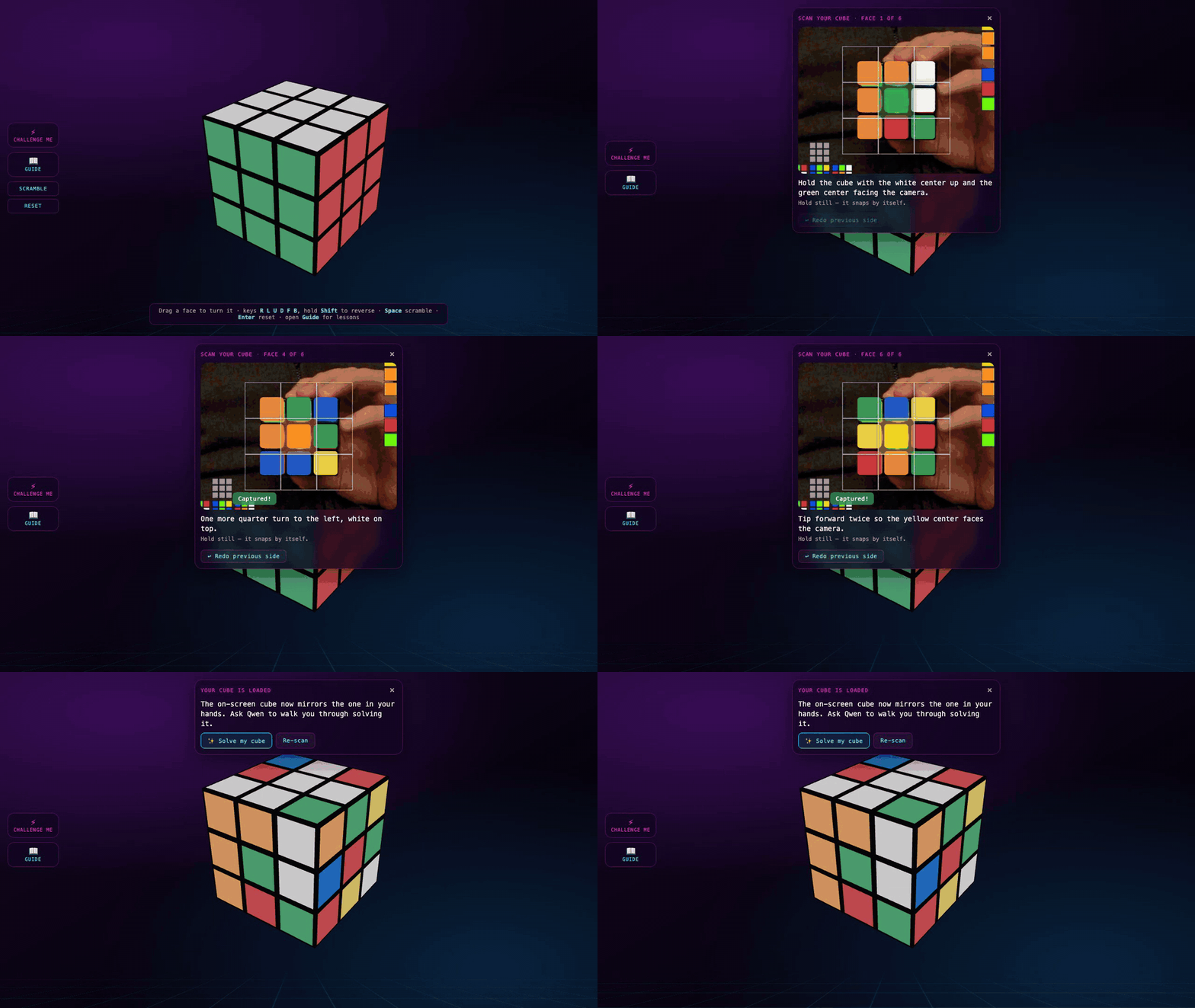
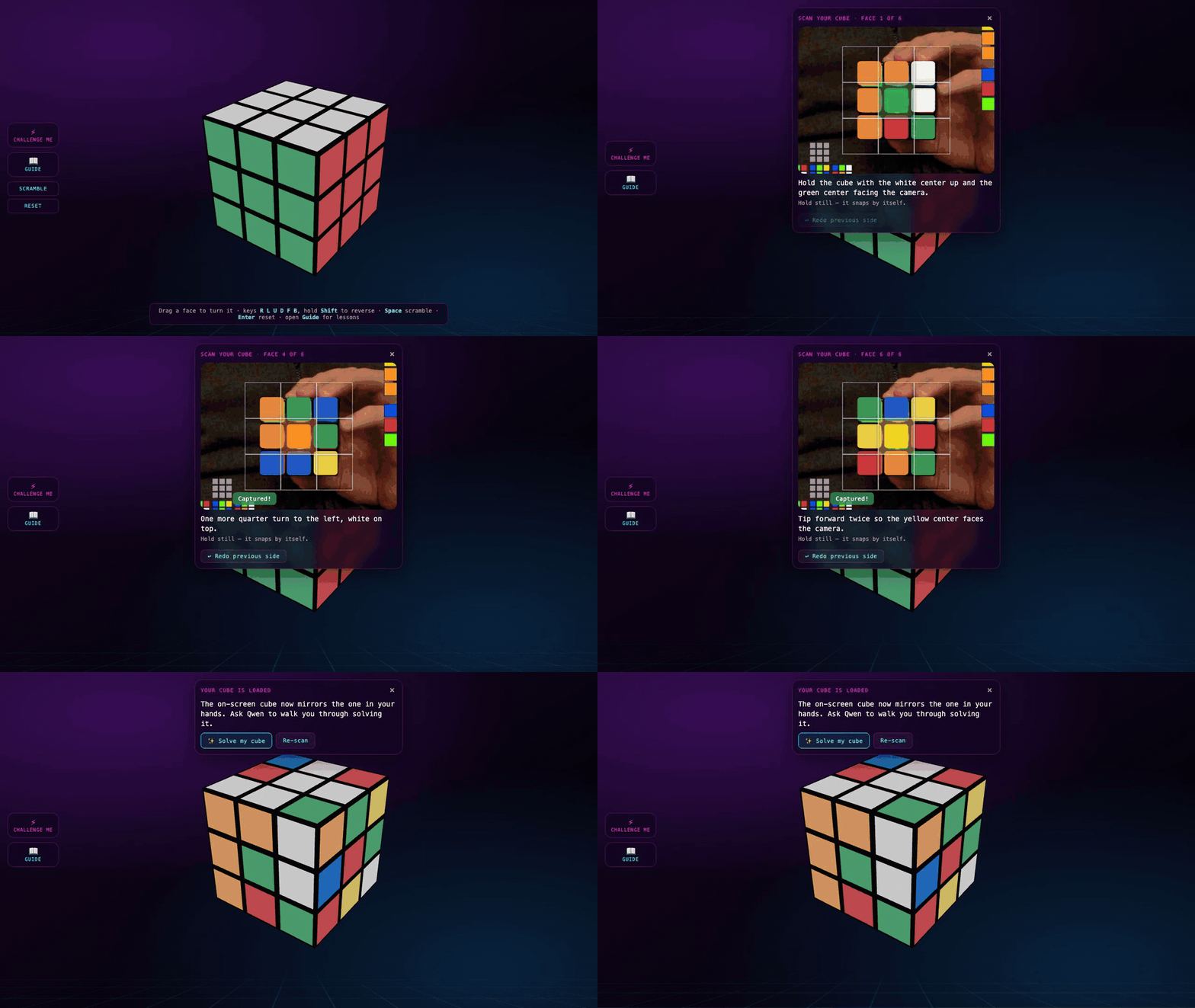
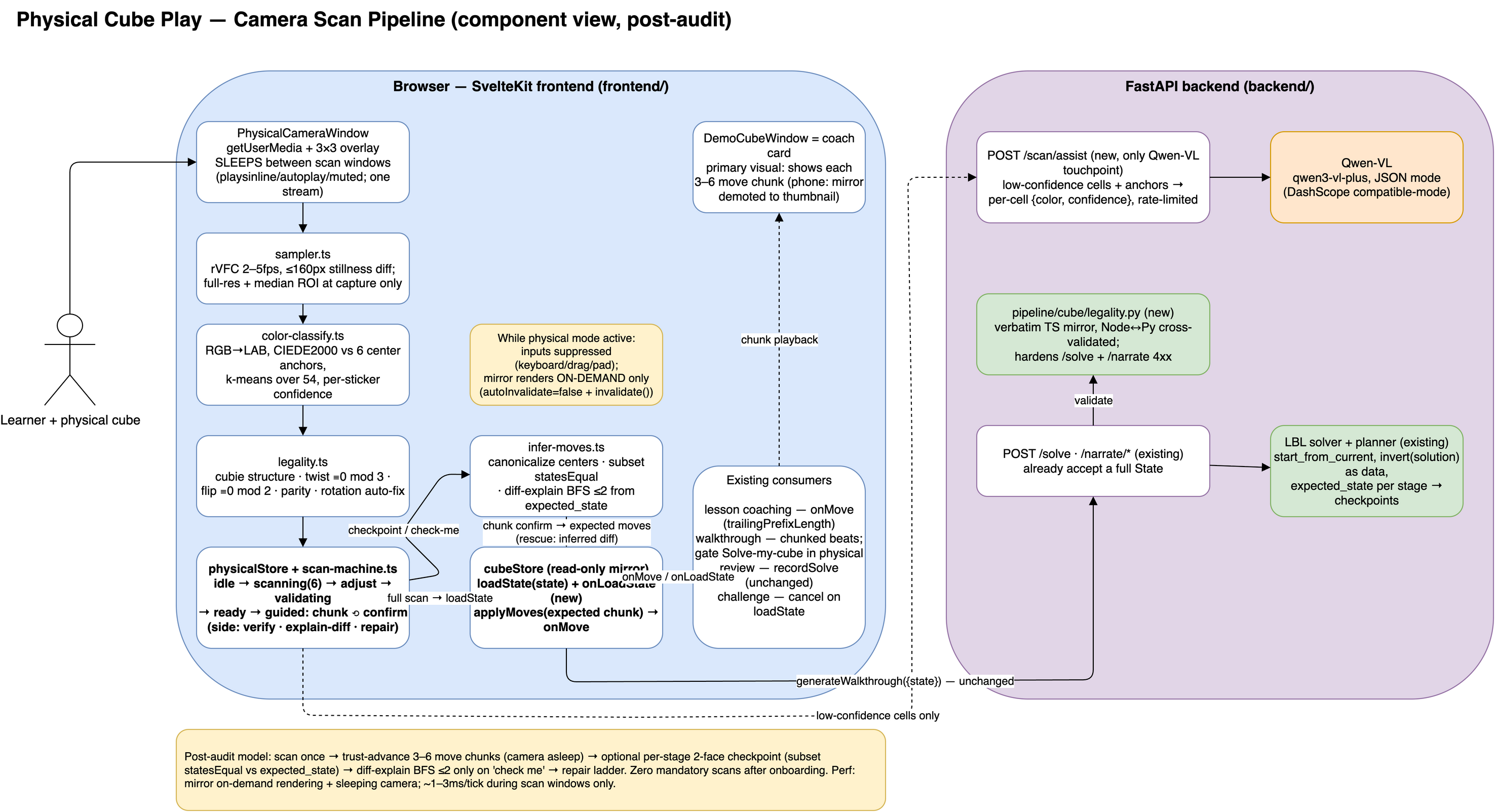
- Bring your own cube: point your camera at a real scrambled cube and the app scans it in: six guided captures with auto-capture when you hold still, then a guided solve of the physical cube in your hands. You confirm moves in 3–6 move chunks while the camera sleeps; at stage checkpoints it wakes, verifies your actual cube, and when a check fails a bounded search explains what went wrong instead of just saying “wrong.”
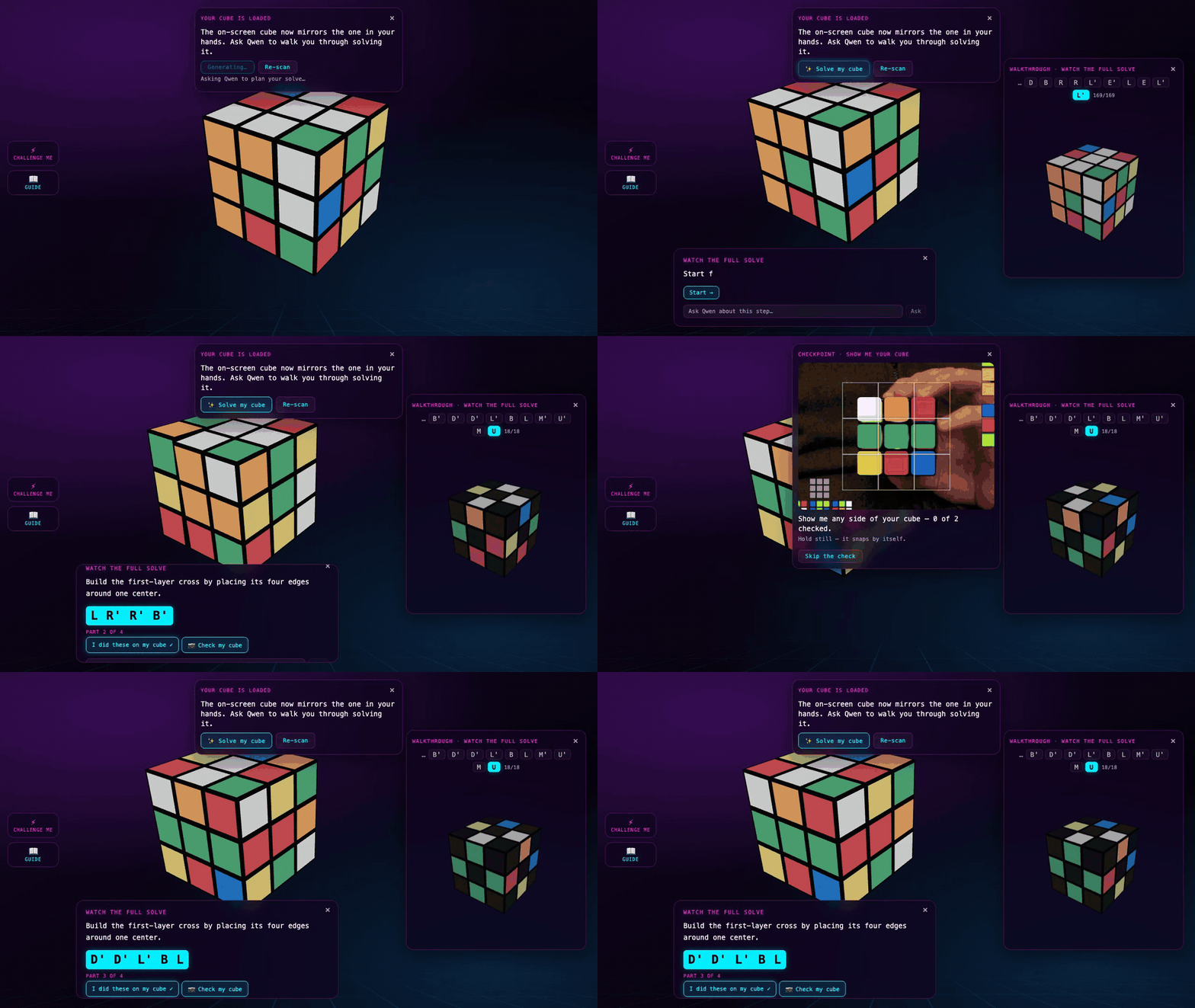
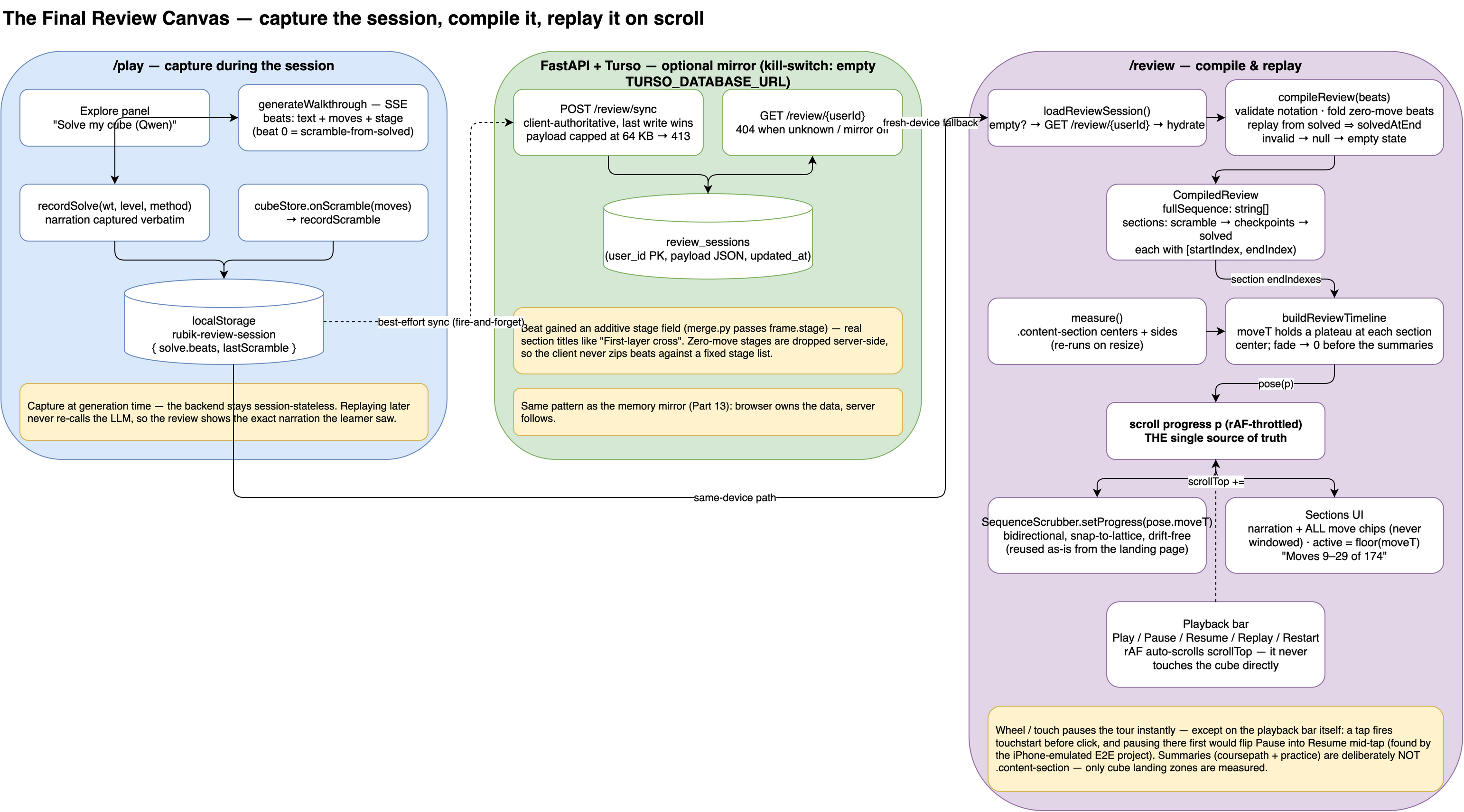
- Session review canvas: every narrated solve is captured as it streams and replayed at /review as a scroll-scrubbed tour: the scramble, each checkpoint with its original narration, and the full move notation (never windowed), designed to be followed on a real physical cube. Plays hands-free, works on the phone, and mirrors to Turso so a fresh device still has your last solve.

How we built it
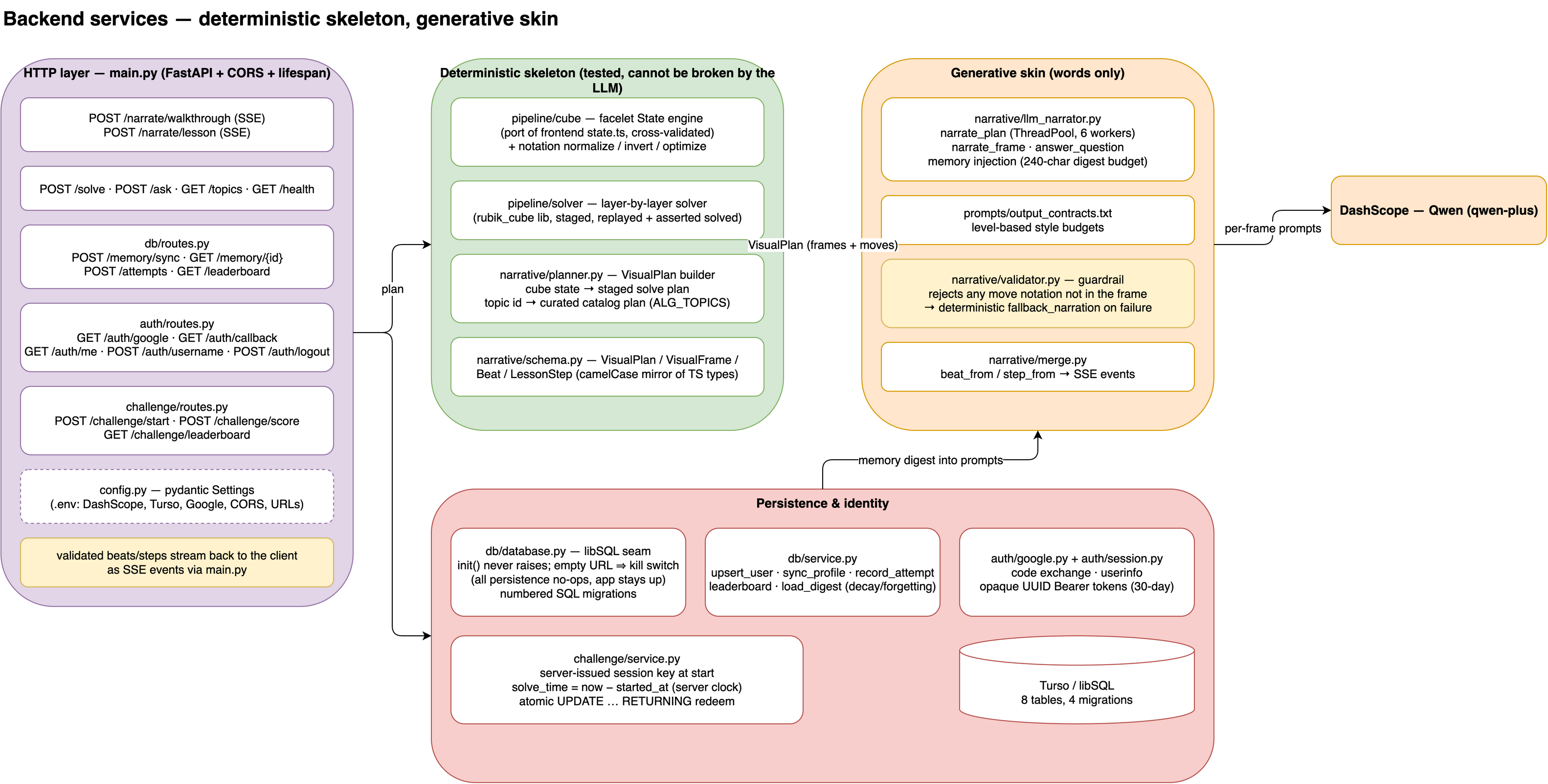
One rule shaped the whole system: keep the core deterministic, and add a generative layer on top. The cube math, the solver, the curriculum algorithms, and the grading are all deterministic and tested. The LLM only ever writes words over a structure it cannot break — a validator rejects any narration that mentions a move the plan doesn’t contain, and swaps in a deterministic fallback instead. That boundary is what makes an LLM tutor trustworthy, not just possibly wrong.
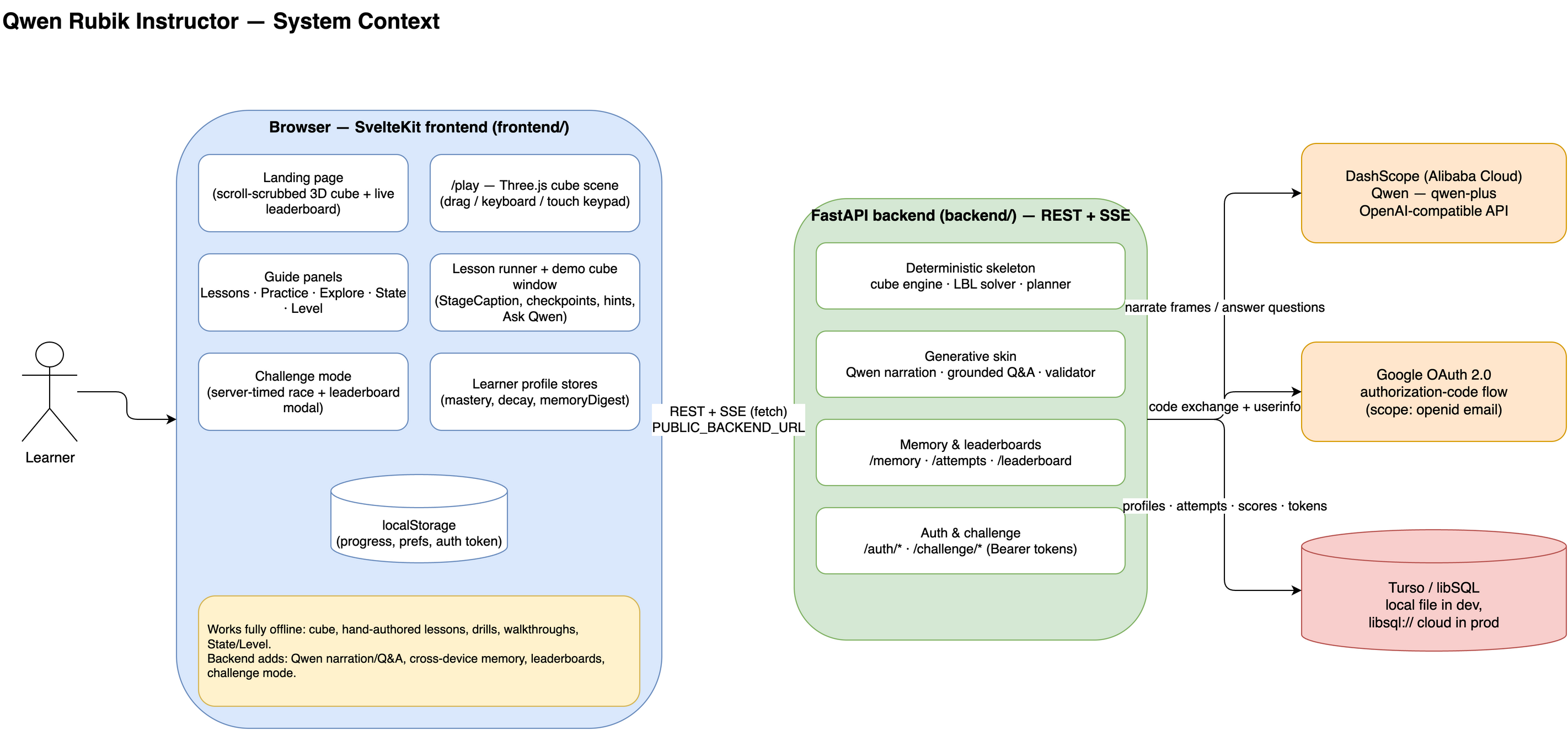
The frontend is SvelteKit with a Three.js cube; it works fully offline. The FastAPI backend adds the generative layer: a facelet engine (a bit-for-bit port of the frontend’s cube model, cross-validated between the two languages), a layer-by-layer solver that replays every solution and asserts it solved, a planner that turns cube states into narratable plans, and Qwen — qwen-plus via DashScope — narrating frames concurrently so the first beat lands in about a second while the rest stream in.
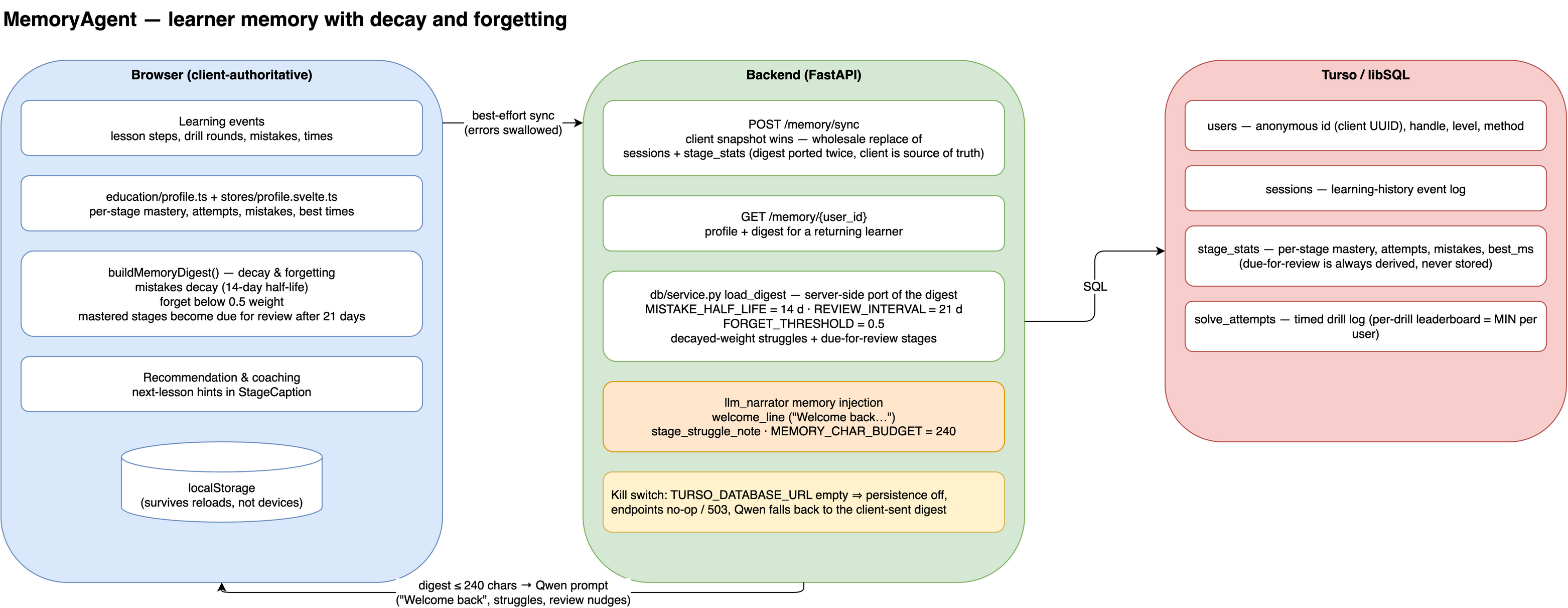
The memory system is deliberately client-authoritative: the browser owns the learner profile, applies the decay/forgetting model, and syncs snapshots to a Turso/libSQL mirror guarded by a single-env-var kill switch. The digest logic exists on both sides of the mirror, so a returning learner on a new device still gets remembered.
Challenge mode terminates Google’s sign-in flow in the backend and — the part that keeps the leaderboard honest. keeps the clock on the server: a run starts by minting a single-use session key with a server timestamp, and the score is computed server-side when the key is redeemed. The client never reports its own time.
The camera scanning doesn’t cost anything extra: the scanner uses classical computer vision running
entirely on-device. Median sampling per grid cell, LAB + CIEDE2000 color
classification calibrated against the cube’s own six center stickers so it
survives auto-white-balance drift. It’s built as pure functions and tested
against a 72-render fixture corpus before any camera code existed. A
~150-line group-theory legality validator (mirrored line-for-line in
TypeScript and Python, pinned by a frozen cross-validation fixture) rejects
impossible scans and points at the exact suspect stickers. Qwen-VL, via the
backend’s only vision endpoint (POST /scan/assist), is scoped as a second
opinion only on low-confidence cells. its suggestions stay user-confirmable
grid edits, and the validator has the last word.
The review canvas captures instead of regenerating. Narration runs at
temperature 0.7, so the words are never reproducible. and its trust boundary
is the compiler: compileReview validates every captured move, replays the
sequence from solved, and proves it lands solved, or compiles to nothing.
There is no way to ship a review that lies about solving the cube. The canvas
itself reuses the landing page’s scroll-scrubbed WebGL cube and the memory
system’s Turso mirror pattern.
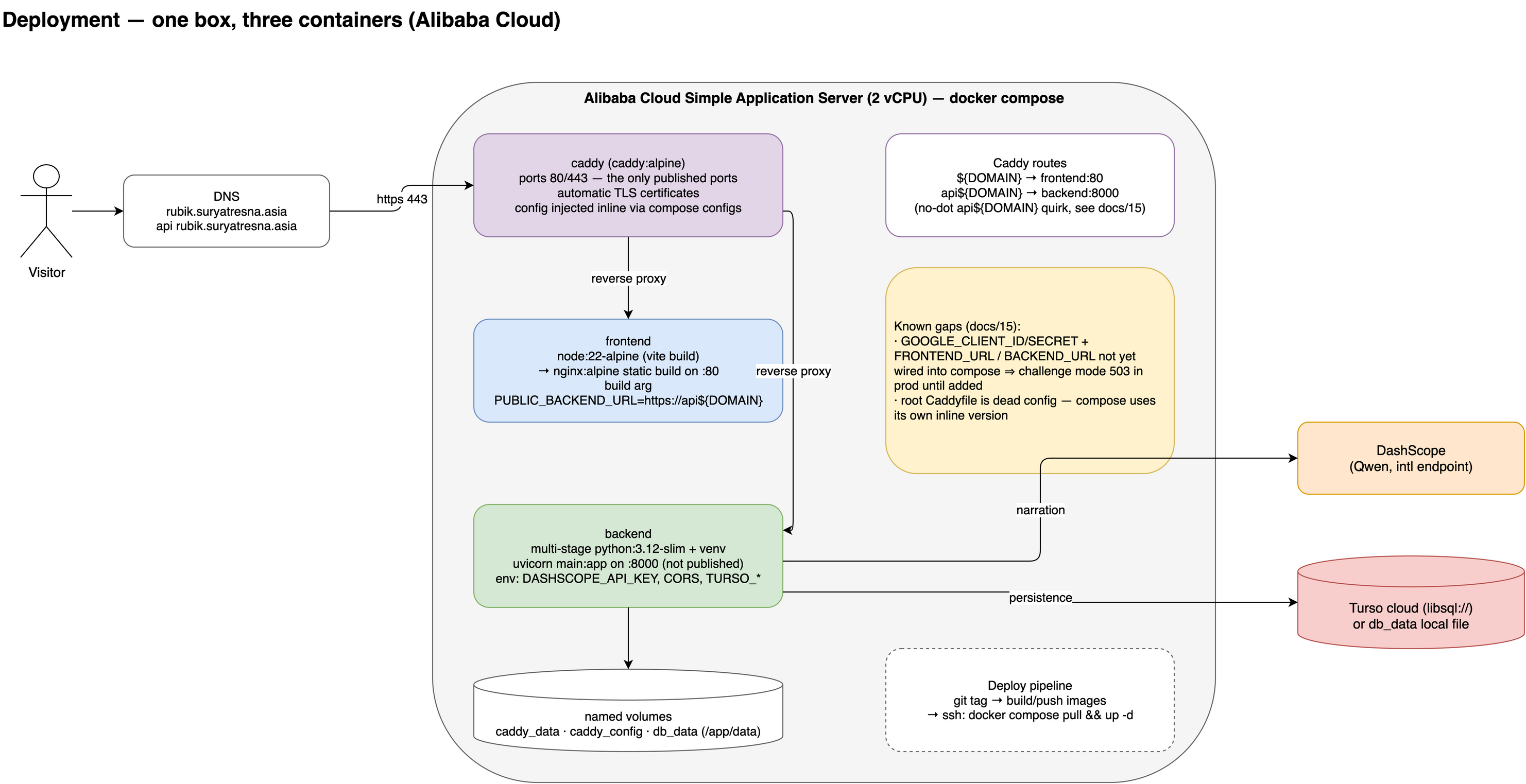
Everything ships as three containers (Caddy with automatic HTTPS, an nginx frontend, a uvicorn backend) on an Alibaba Cloud Simple Application Server, with a tag-to-deploy pipeline.
And it's tested like we mean it: 739 backend tests, 238 frontend unit tests,
and 25 end-to-end browser specs that play the whole game — scramble, stream a
narrated solve, assert the cube ends solved. with the LLM pinned to its
deterministic fallback so the suite costs nothing to run. The full set of
diagrams (narration pipeline, hint flows, challenge/auth sequence, data model)
lives in docs/diagrams/, and the sixteen-part build log
in docs/.
Challenges we ran into
- A correct solve that nobody could follow The first solver output was provably correct but completely unusable: 246 moves with 32 whole-cube rotations for a 13-move scramble. We eliminated the rotations by conjugation and verified the result against the engine; making correct making it easy to follow turned out to be half the challenge.
- The narration felt slow. We kept hearing “Qwen takes too long,” but had no way to measure it. behind it. Adding per-call latency and token logging revealed two unrelated causes: a deep-reasoning model was set as the default (about 33 seconds per frame), and a streaming pipeline that quietly waited for everything before sending now, the first narrated step happens in about a second. narrated beat lands in about a second.
- A problem where the tutor gave the wrong feedback A cynical QA pass caught the grader scoring the learner's move transcript instead of their cube. A wrong move followed by "apply the example" counted as correct. Grading was rebuilt to check cube state against each stage's target.
- Memory that was just a log. Held against the MemoryAgent rubric, our first "memory" was an append-only history. Real memory needed a decay curve, timely forgetting, relevance-ranked recall, and a strict injection budget. The model gets a few hundred characters of what matters now, not a transcript.
- The cheat that almost shipped. The cube doesn't know that Reset restores the solved state, so during a timed challenge run, Reset was an instant win. Anything the challenge didn't initiate now cancels the run, and the HUD strips down to a timer and a "Give Up!" button.
- The scan that was impossible 11 times out of 12. Counting nine stickers of each color isn't validation, a random such state is actually solvable with probability 1/12, and scan errors kept dying deep in the solver as an opaque HTTP 422. A group-theory legality validator moved the check to the scan itself, pointing at the exact suspect stickers ("these look swapped") without ever saying "parity."
- The feature we didn't build. Live camera move-tracking died to arithmetic before any code: a beginner solve is 80–120 turns, each scan gesture costs 5–10 seconds, and a single face shows 9 of 54 stickers — one move in six is invisible. Inverting the trust model, scan once, trust by default, verify at checkpoints was the design.
- Testing an LLM app without an API bill. The E2E suite runs the real stack, real solver, real streaming, with the model calls pointed at an unroutable address so the deterministic fallback narrates. The browser found bugs no unit test could: a server error wearing a CORS mask, a typewriter frozen by its own cleanup, a backdrop eating clicks.
Accomplishments that we're proud of
- An LLM that "solves" a Rubik's Cube honestly by never letting it touch the cube math. Scramble anything, click once, watch it narrate its way to a genuinely solved cube.
- A memory with a forgetting curve, not a chat log, decayed struggles, review-due skills, budgeted recall, and a visible "welcome back" that reflects what you actually did last time.
- A leaderboard you can believe, because the clock lives on the server and a solve can't be faked with a Reset.
- The cube in your hands, with no vision bill: a real cube scanned by classical CV running entirely on-device, free and instant on the happy path, with Qwen-VL reserved as a second opinion for genuinely ambiguous stickers (red vs orange in dim light).
- Over a thousand tests around one boundary: 817 + 375 + 34 across two languages, including a cross-validated cube engine ported bit-for-bit.
- It's live — three containers on Alibaba Cloud behind automatic HTTPS at rubik.suryatresna.asia, with the whole journey written up as an eighteen-part engineering log.
What we learned
- Verify before you build. Our first confident diagnosis of "the backend is broken" was simply wrong; reproducing in the real UI beat code surveys every time the two disagreed.
- Measure before you fix. Both "slow narration" causes were invisible until we logged latency and neither was the thing we'd guessed.
- LLMs should narrate state, not own it. Every failure mode we saw in prior art came from letting the model carry the cube; every guarantee we shipped came from refusing to.
- Memory is a product feature, not a database. Storing everything is easy; deciding what to forget, and how little to inject, is what makes the model feel like it knows you.
- A green suite isn't the finish line. After the E2E suite passed, a human pass and phone emulation each found bugs the green suite couldn't the browser, and then the human, remain the last two test layers.
- Do the arithmetic before the feature. The strongest design decision in the camera work was the one ruled out on paper live move-tracking lost to a back-of-the-envelope estimate before a line of code was written.
What's next for Rubik Instructor
- Deepen the physical-cube loop. Scanning and guided checkpoints work end to end; next is making the repair ladder smarter richer beginner error models, better "show me what I did wrong" explanations, and a smoother re-scan when a solve goes truly sideways.
- More courses. The layer-by-layer beginner track is complete and verified; next come the speedcubing tracks -> F2L, OLL, PLL. authored the same way: every algorithm machine-checked, every lesson narrated from the learner's own cube.
- Let the players in. It's deployed and public, and we expect people to just play it. Playtesting is ongoing. Some sessions went well, some players were genuinely impressed, and one honest finding: the Rubik's Cube learning curve is steep on its own, so it isn't everyone's cup of tea. But even the players who bounce off learning get their moment with "Solve my cube" they can gimmick their way to a solved cube and feel the payoff the puzzle usually gatekeeps.
- Meet the learners where they drop off. The playtest lesson is that the hard part isn't our UI, it's the puzzle so the next design work is gentler on-ramps: shorter wins early, more "show me" and less notation, and the memory system steering learners back to exactly the step that lost them.
Built With
- fastapi
- qwen
- svelte
- three.js
- threlte
- turso
- vite


Log in or sign up for Devpost to join the conversation.