-
-
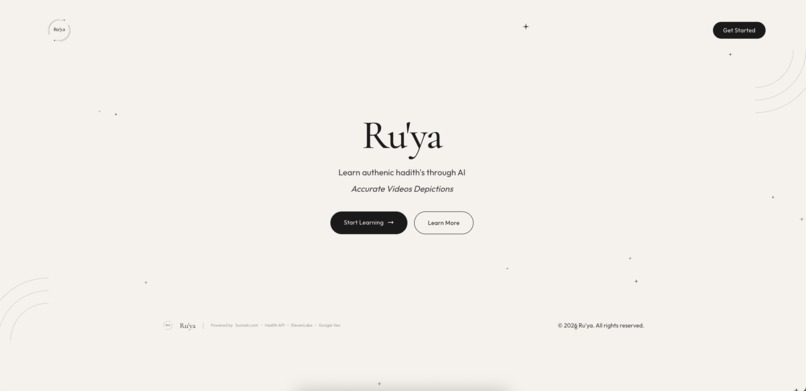
Landing
-
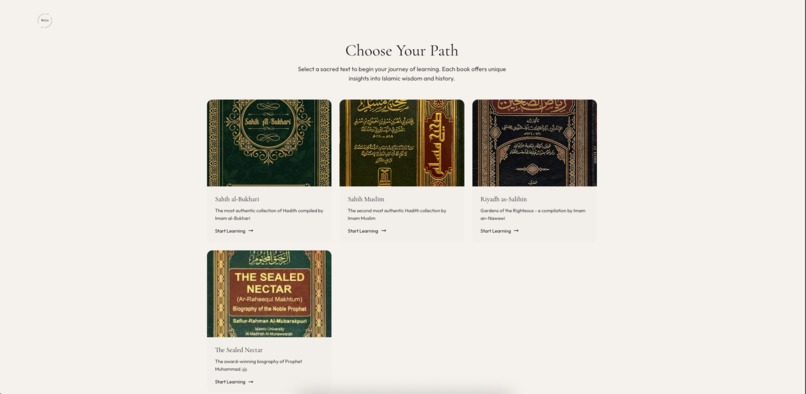
Dashboard
-
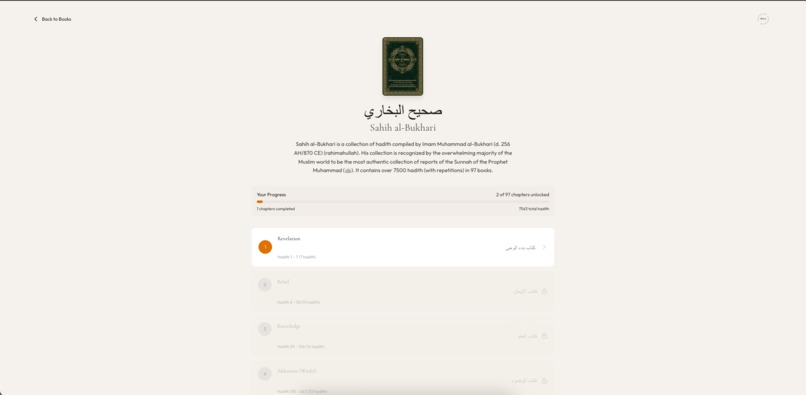
Dashboard2
-
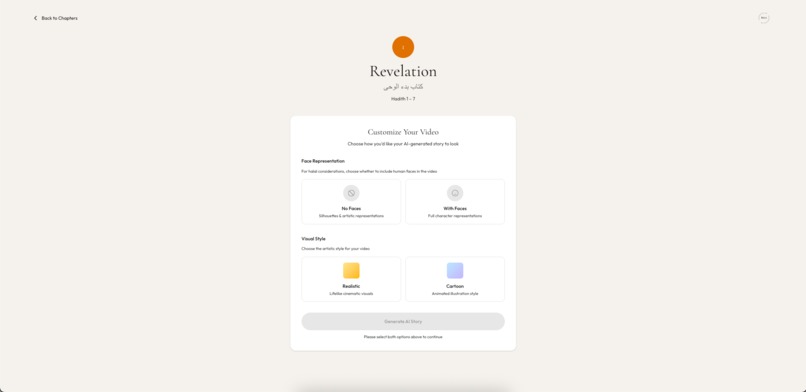
Dashboard3
-
Dashboard4
-
Backend Logic
🌙 Inspiration
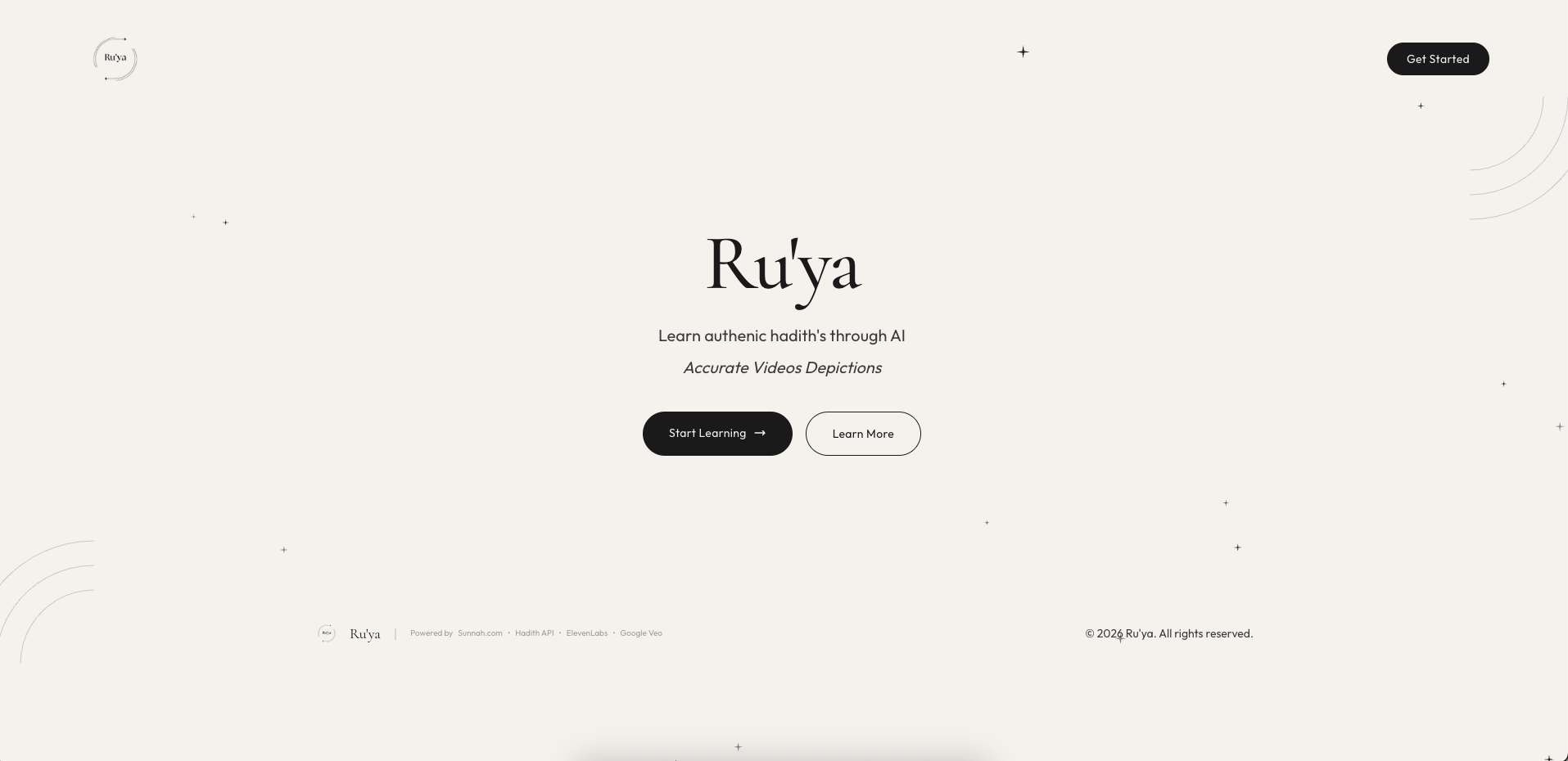
Many Muslims especially younger generations struggle to connect deeply with Hadith literature. Traditional text-based learning can feel distant in an age shaped by visual storytelling and interactive media.
We asked ourselves: What if the timeless wisdom of the Prophet Muhammad ﷺ could be experienced visually, not just read?
That question led to Ru'ya (رؤيا) meaning “vision” in Arabic. Ru'ya was created to make authentic Islamic knowledge more engaging, accessible, and memorable, while remaining fully respectful of Islamic values. Our goal was to bridge classical scholarship with modern AI in a way that enhances understanding rather than replacing tradition.
🧠 What It Does
Ru'ya is an AI-powered Islamic learning platform that transforms Hadith into cinematic visual experiences.
Core Features
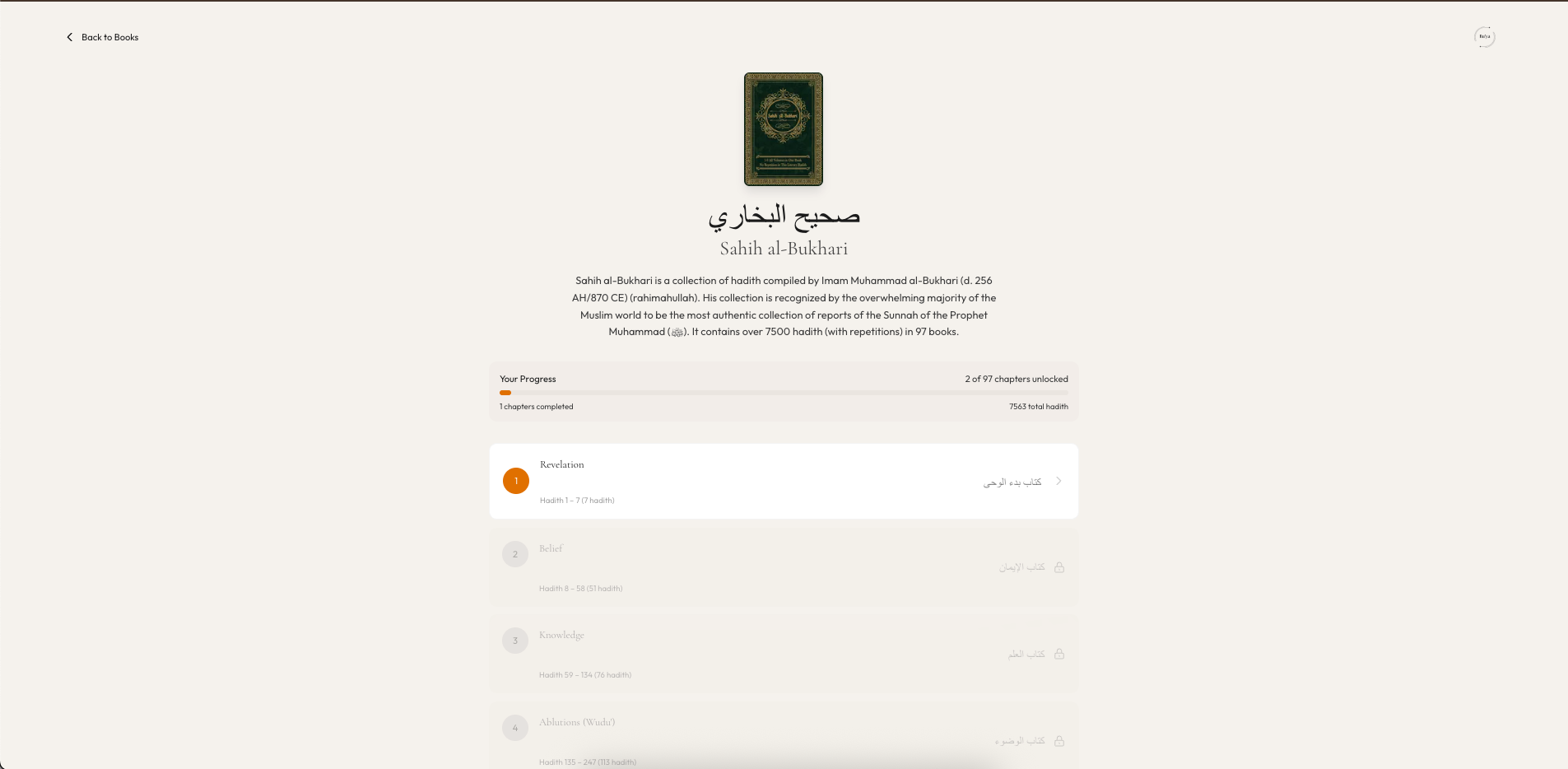
Progressive Learning Journey Users explore Sahih al-Bukhari’s 97 chapters in sequence, unlocking new content as they progress.
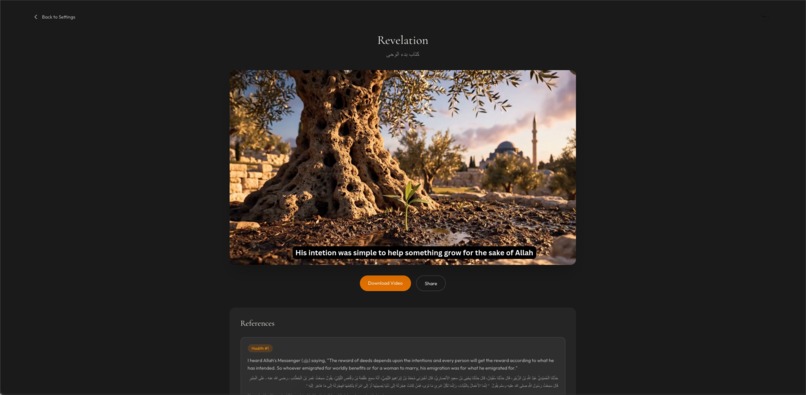
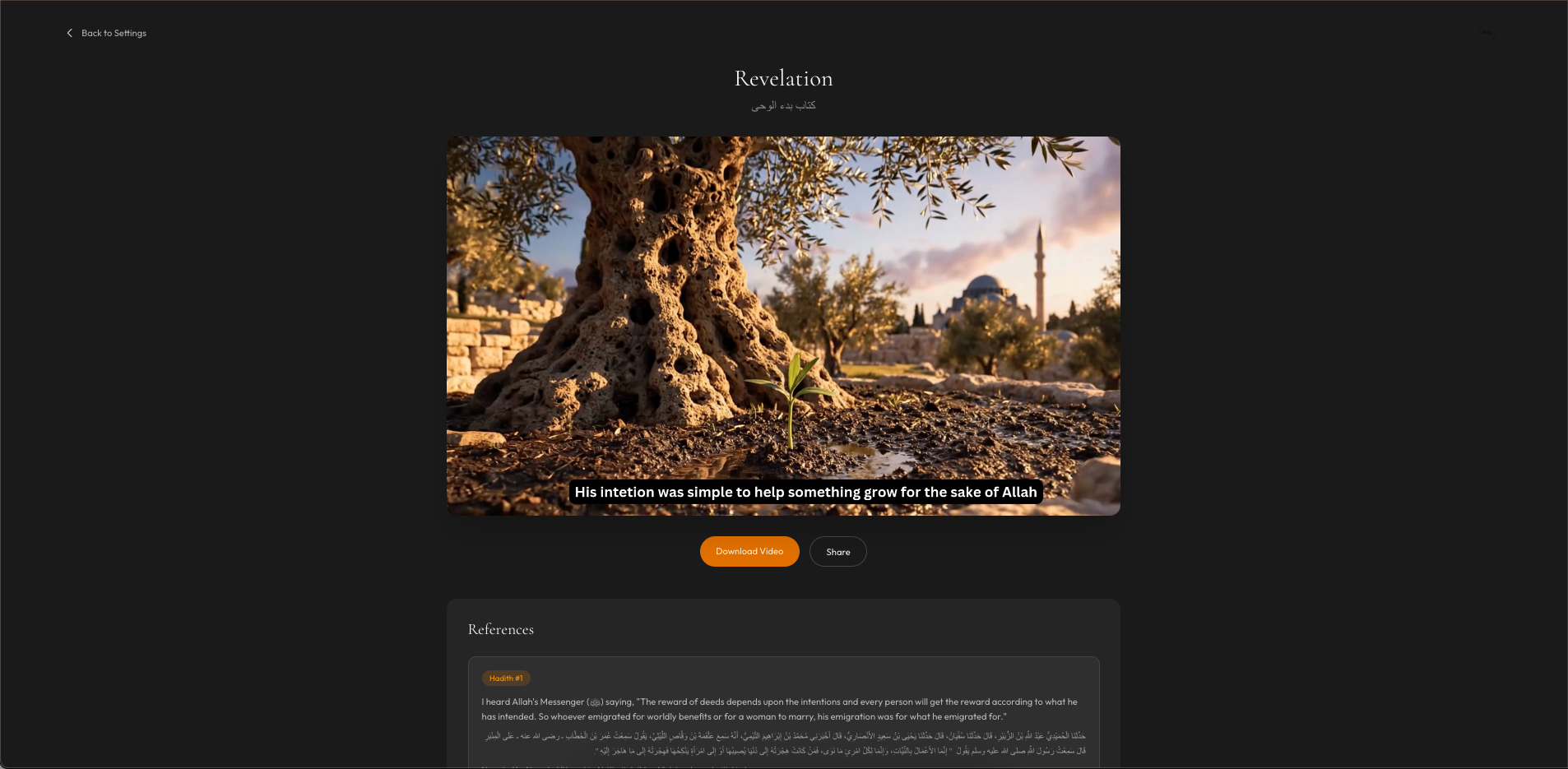
AI-Generated Visual Storytelling Each Hadith is analyzed using Google Gemini to extract its moral lessons and themes, then transformed into a short cinematic video using Google Veo.
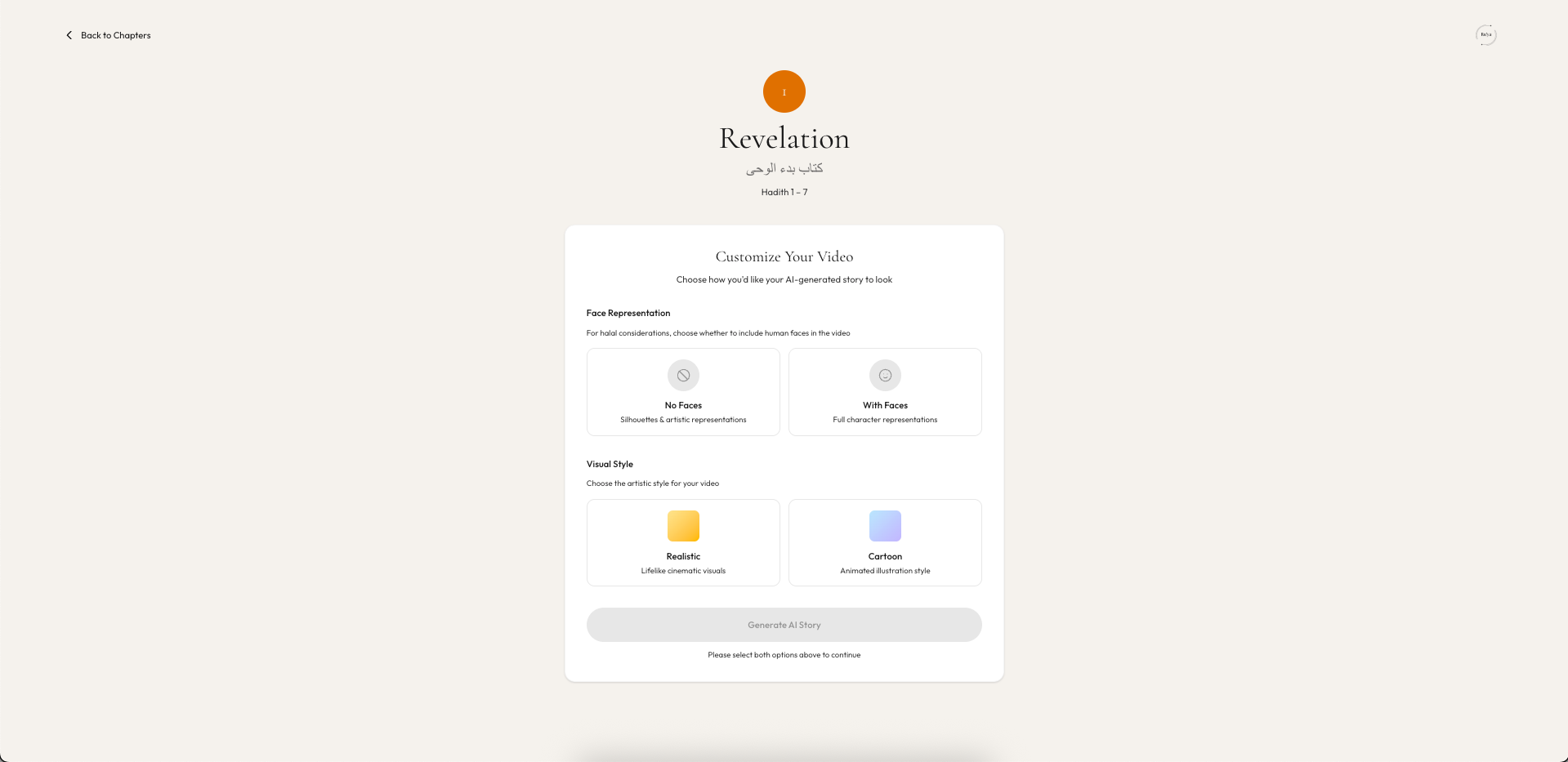
Halal-Conscious Design Users can choose whether videos include human figures, respecting different scholarly opinions.
Style Customization Choose between realistic visuals or artistic, abstract animation styles.
Multi-Scene Storytelling Longer Hadith are broken into cohesive 8-second segments that flow naturally together.
Authentic Sources All Hadith are fetched directly from verified sources via the Sunnah.com / Hadith API.
🛠 How We Built It Frontend
Next.js 15 + React
Tailwind CSS
Backend
FastAPI (Python)
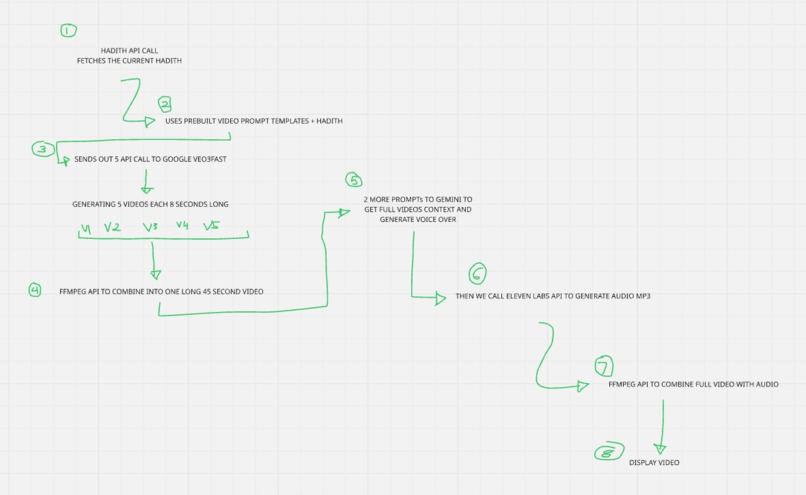
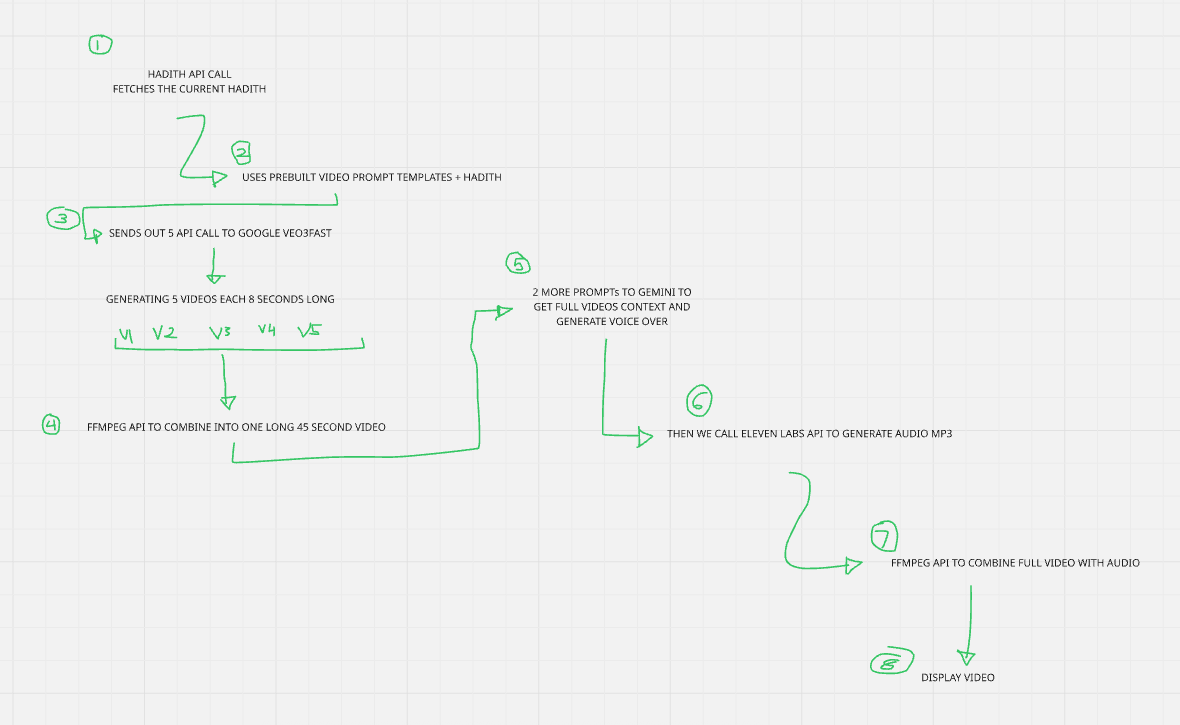
Hadith retrieval from external Hadith API
AI orchestration with Google Gemini
Video generation via Google Veo3Fast
FFmpeg for stitching clips with smooth cinematic transitions
ElevenLabs API for voiceover
Veo generates multiple 8-second clips in parallel
FFmpeg merges clips with transitions for a seamless final video
🚧 Challenges We Faced
API Rate Limits Veo’s quota restrictions required smart caching and demo modes.
Inconsistent Hadith API Formats Different field names (chapter vs chapterId) required defensive parsing.
Video Continuity Ensuring visual consistency across AI-generated clips required careful prompt engineering.
Halal Compliance Balancing meaningful visuals while respecting Islamic guidelines was a constant design challenge.
SDK Changes Mid-development updates to Google’s GenAI SDK required refactoring polling and download logic.
🏆 Accomplishments We’re Proud Of
⚡ 3× faster generation through parallel video rendering
🎬 Seamless cinematic output that feels like one continuous story
🎨 Thoughtful UX that gamifies learning without trivializing sacred content
🕌 Faith-first design built with Islamic values as a foundation
📖 Authentic sources only — no synthetic or fabricated content
📚 What We Learned
How to orchestrate multiple AI systems into a single pipeline
The importance of prompt engineering for visual consistency
How to balance innovation with religious responsibility
Building async video systems with real-time progress tracking
Using FFmpeg for professional-level video composition
🚀 What’s Next for Ru'ya
🔊 AI Voice Narration (Arabic & English via ElevenLabs)
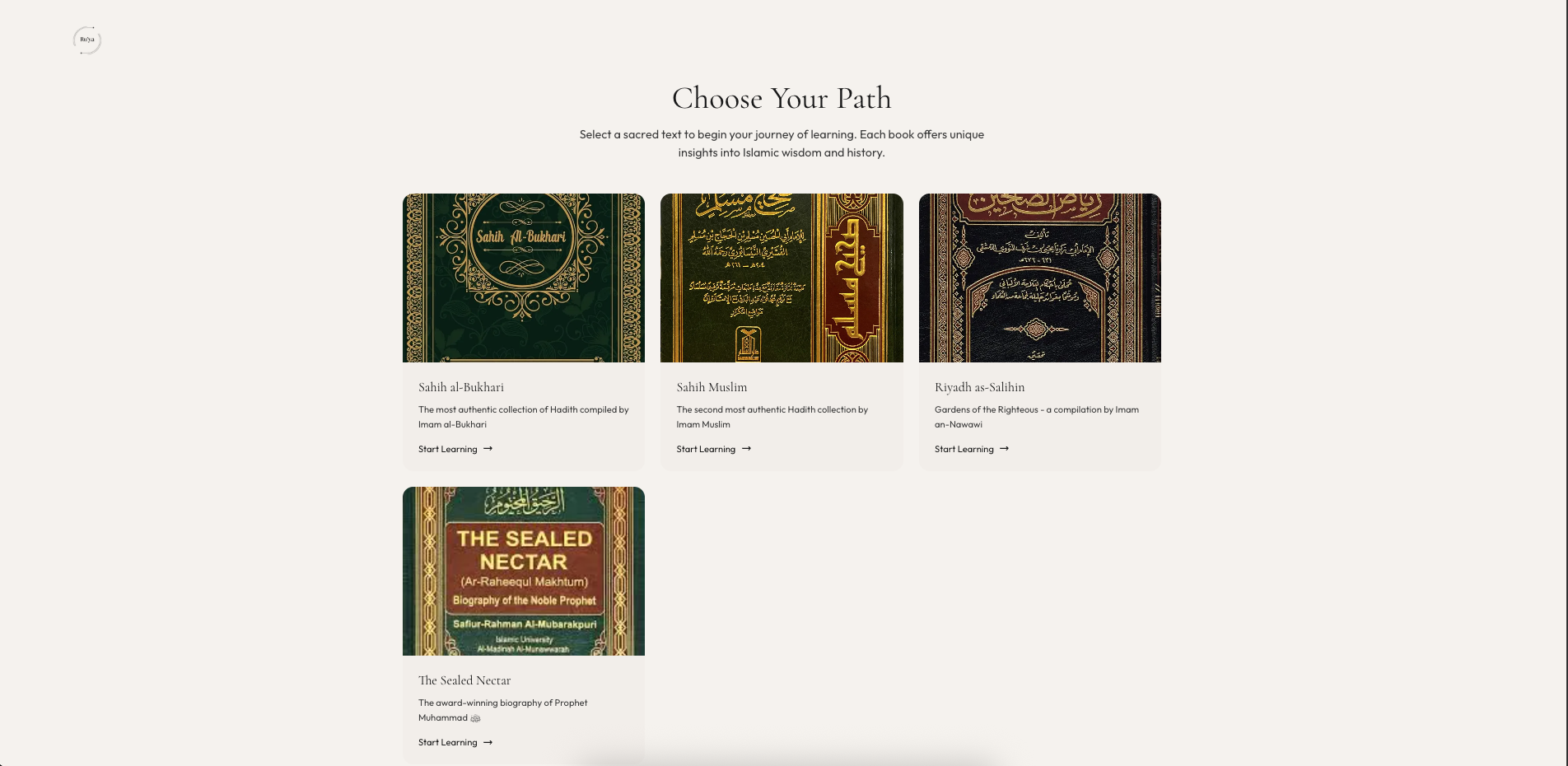
📘 More Sources (Sahih Muslim, Riyadh as-Salihin, Seerah)
🧠 Quizzes & Reflections after each chapter
👥 Community Features for sharing and discussion
📱 Mobile App for iOS & Android
📥 Offline Mode for learning without internet
🧑🏫 Teacher Dashboard for structured learning and progress tracking


Log in or sign up for Devpost to join the conversation.