Inspiration
Getting sick on campus can make simple tasks much harder. Students may not know which stores carry basic medicine, whether a location is open, or whether the item they need is actually in stock. At Rutgers New Brunswick, resources are spread across multiple campuses, making it frustrating to search for supplies while feeling unwell.
We built RU Sick to make that process faster and more reliable while still being transparent about what information is verified and what is simulated.
What it does
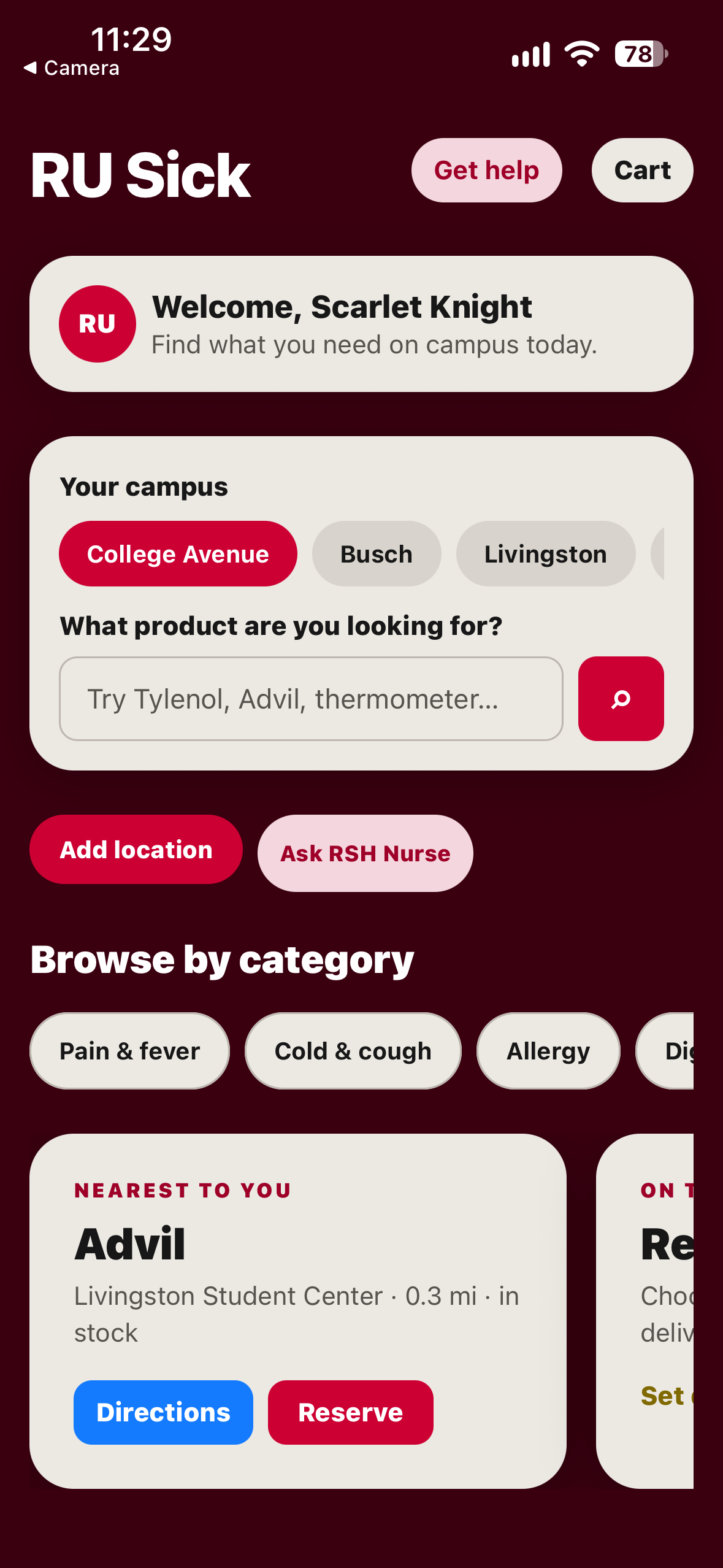
RU Sick is a campus-focused health-supply finder for Rutgers students. Users can:
- Search for medicine and first-aid supplies by category or product name.
- Filter results by College Avenue, Busch, Livingston, or Cook/Douglass.
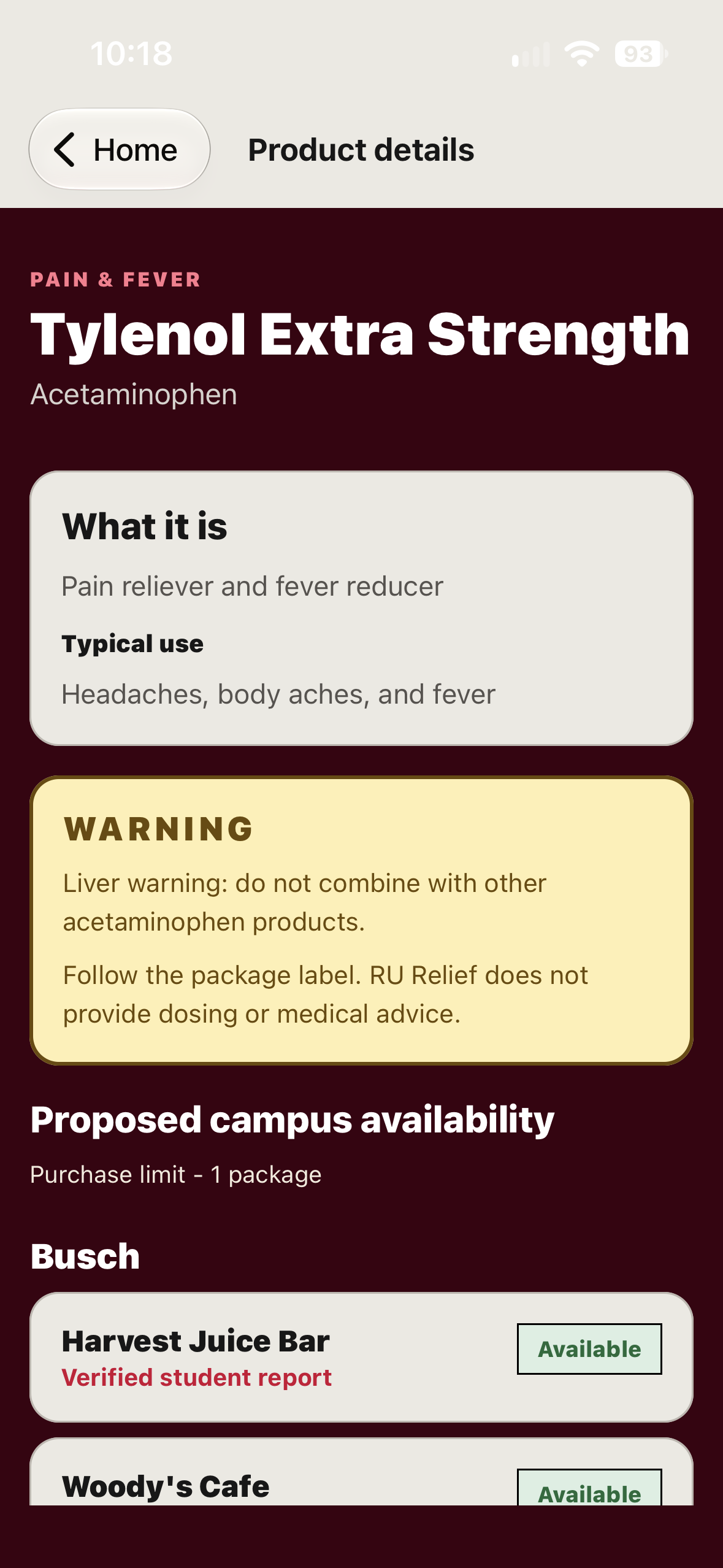
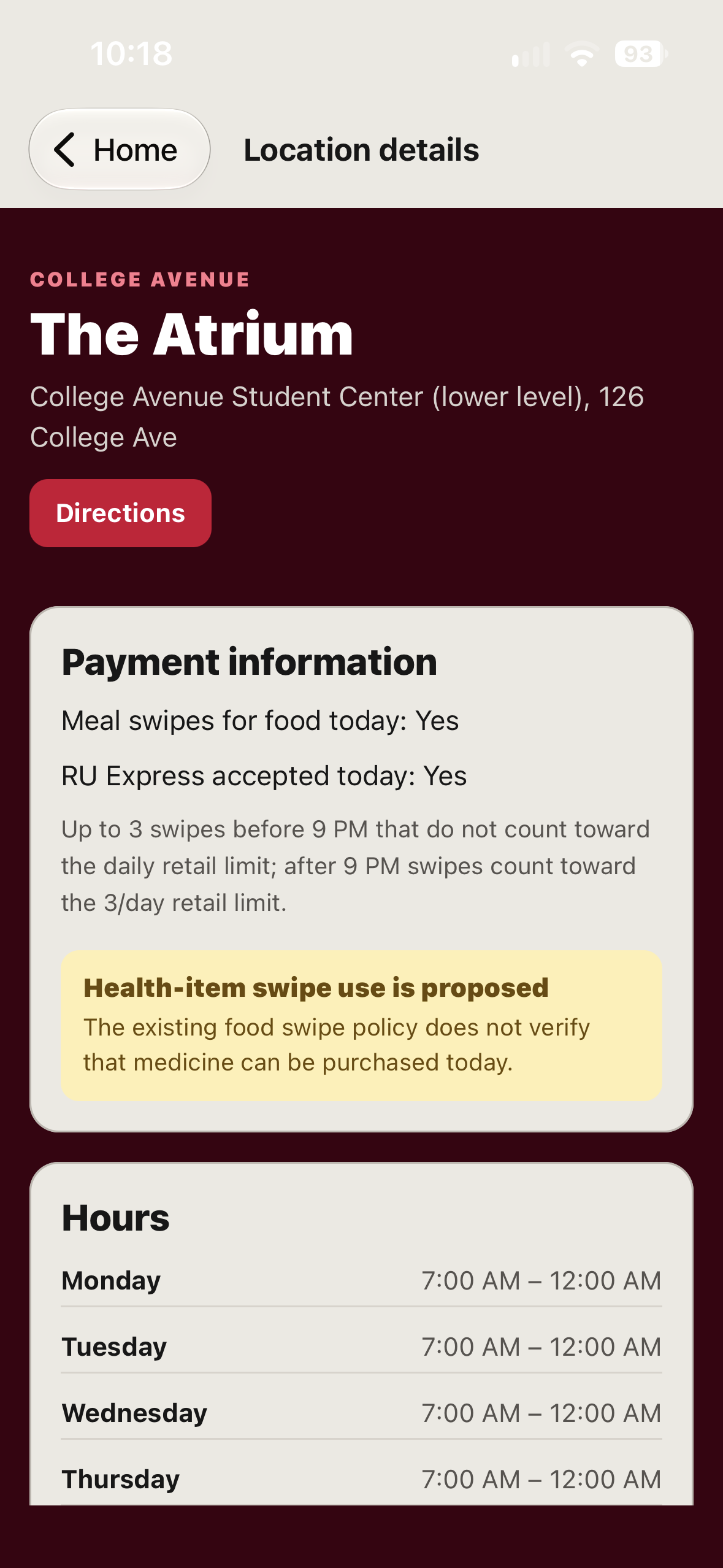
- See availability, report freshness, verification status, store hours, and distance.
- Find alternatives on nearby campuses when nothing is available locally.
- Get walking directions through Google Maps.
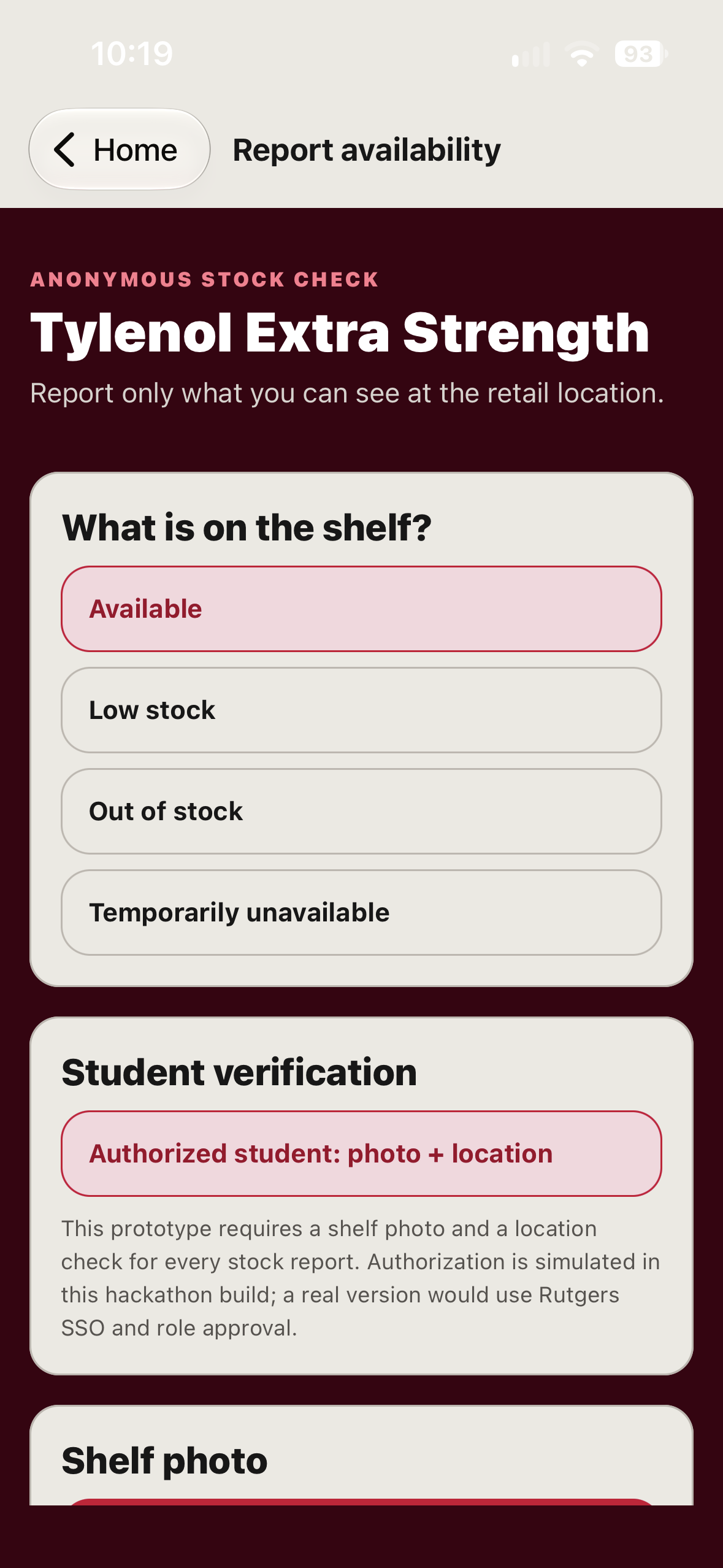
- Report stock using location and photo verification.
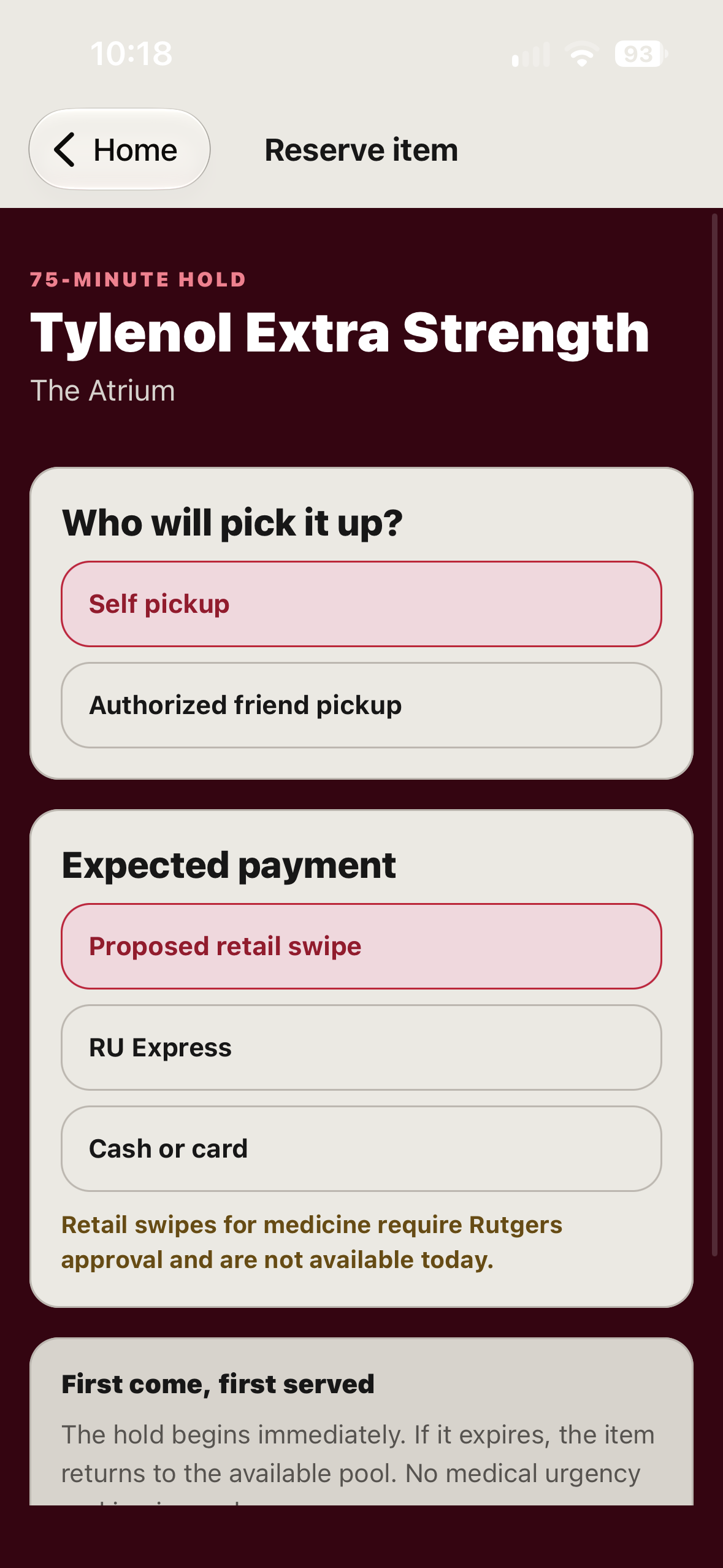
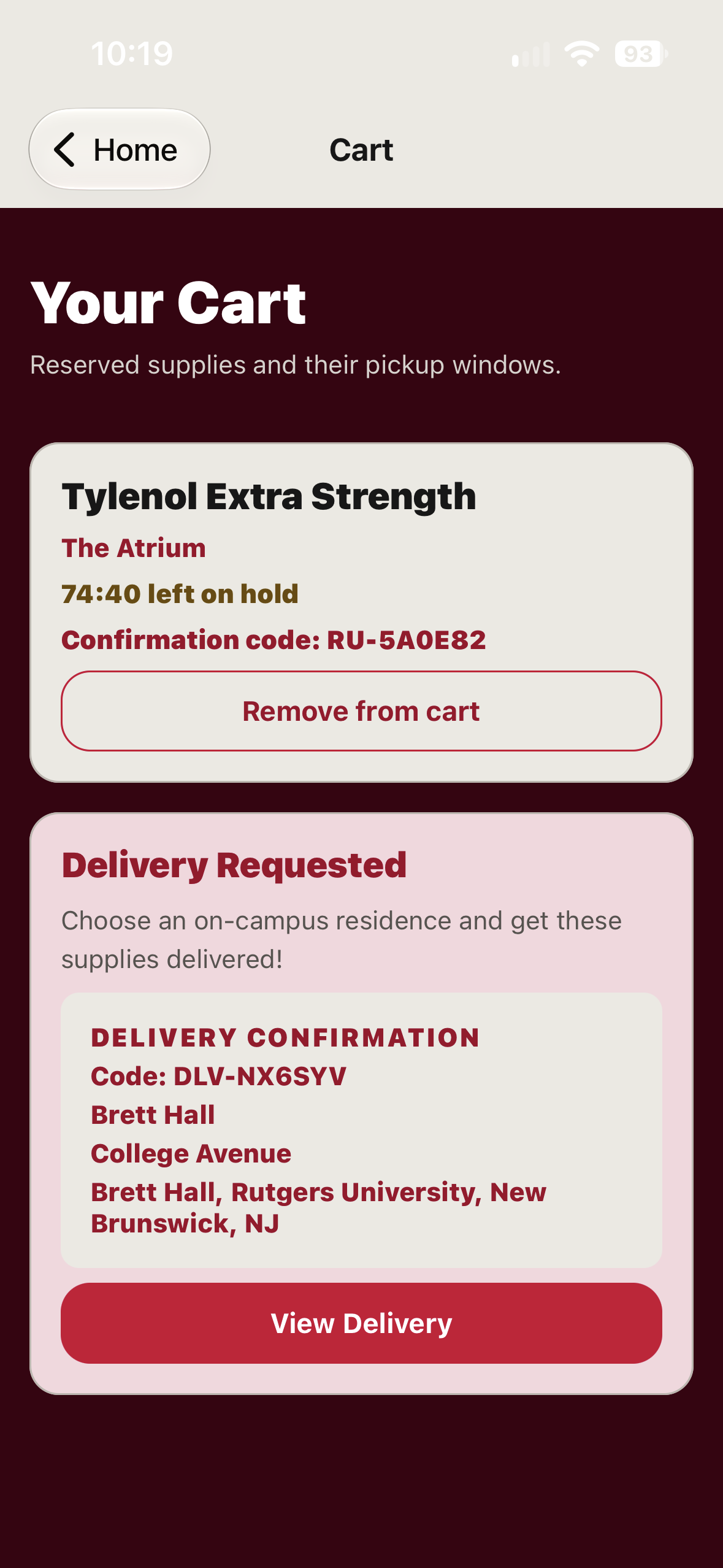
- Reserve products with a pickup confirmation code.
- Add supplies to a login-free cart.
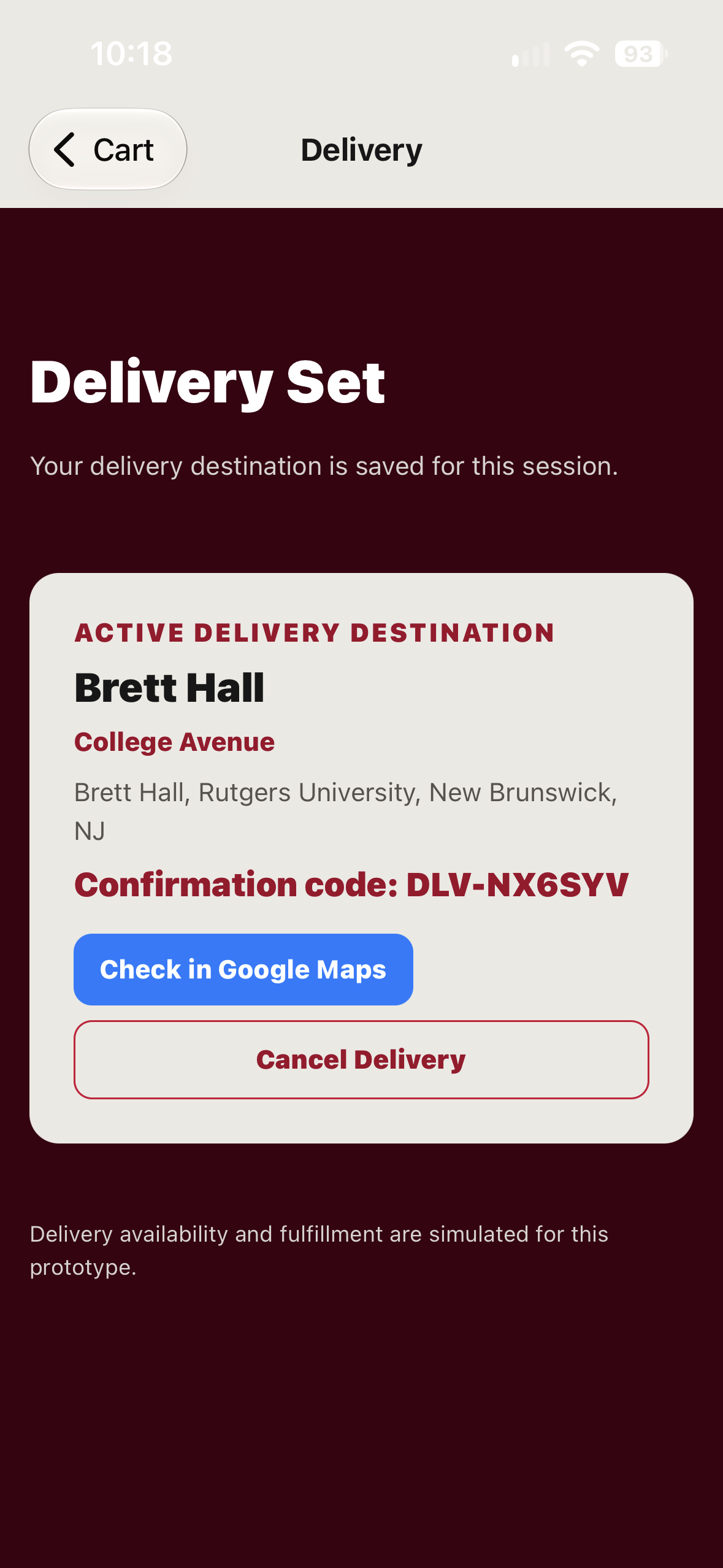
- Request delivery to an official on-campus residence.
- Contact the RSH Advice Nurse when they need human guidance.
RU Sick does not diagnose medical conditions or replace professional medical advice. It helps students find supplies and directs them toward appropriate support when needed.
How we built it
We built the mobile app using Expo, React Native, TypeScript, and Expo Router. The backend uses Python, Flask, and SQLite, with a seeded Rutgers health-supply dataset. The search and ranking system considers:
- Whether a location is open.
- Product availability.
- Verification source.
- Report freshness.
- Campus distance.
- Walking-time estimates.
Staff-verified information is prioritized over student reports, while newer data is still considered when reports have the same level of trust. When a selected campus has no available results, the app suggests open alternatives from other campuses.
We used Expo Location for permission-based location checks and Expo Image Picker for stock-report photos. The backend only stores verification results and related metadata rather than raw GPS coordinates or photo files.
Reservations, inventory, retail swipes, and delivery fulfillment are currently simulated for the prototype. Delivery and directions are connected to specific Rutgers campus and residence locations so that users can continue through a realistic flow.
Challenges we ran into
- Keeping availability rankings accurate when reports had different verification levels and ages.
- Separating a user’s current location from the location they were reporting.
- Handling open and closed locations across multiple Rutgers campuses.
- Connecting search results, reservations, cart items, delivery requests, confirmation codes, and directions.
- Making the app work reliably between a local Flask backend and Expo on a physical phone.
Accomplishments that we're proud of
- Building a complete campus health-supply workflow from search to reservation, delivery, and pickup confirmation.
- Creating a ranking system that considers availability, verification status, freshness, campus, and distance.
- Adding location-based stock reporting without storing raw GPS coordinates or uploaded photos.
- Connecting Rutgers locations to Google Maps directions.
- Designing a clear interface for students who need supplies quickly.
What we learned
- Health apps need to show report age, source, and verification status.
- Location features require permissions, distance calculations, geofencing, and clear error states.
- Reservations, cart items, delivery requests, and confirmation codes need to stay connected.
- Health technology should support professional care, not replace it.
What's next for RU Sick
Our next steps would be to connect RU Sick to real Rutgers inventory and store-hour data. We would also add Rutgers SSO so staff and authorized students could have clearly defined permissions.
We would like to build a staff dashboard for confirming stock reports, managing reservations, and seeing which supplies are most needed on each campus. We could also use anonymous demand trends to help campus organizations decide where to place emergency supplies.
Built With
- expo.io
- flask
- python
- reactnative
- sqlite
- typescript

Log in or sign up for Devpost to join the conversation.