Inspiration
The waste ecosystem already works through thousands of informal workers, but the entire flow remains invisible and unstructured. Valuable recyclable material is often lost because there is no trusted tracking mechanism connecting collectors, aggregators, and industries. We wanted to build a system that improves transparency and efficiency without disrupting the existing workflow of ragpickers and small waste traders.
What it does
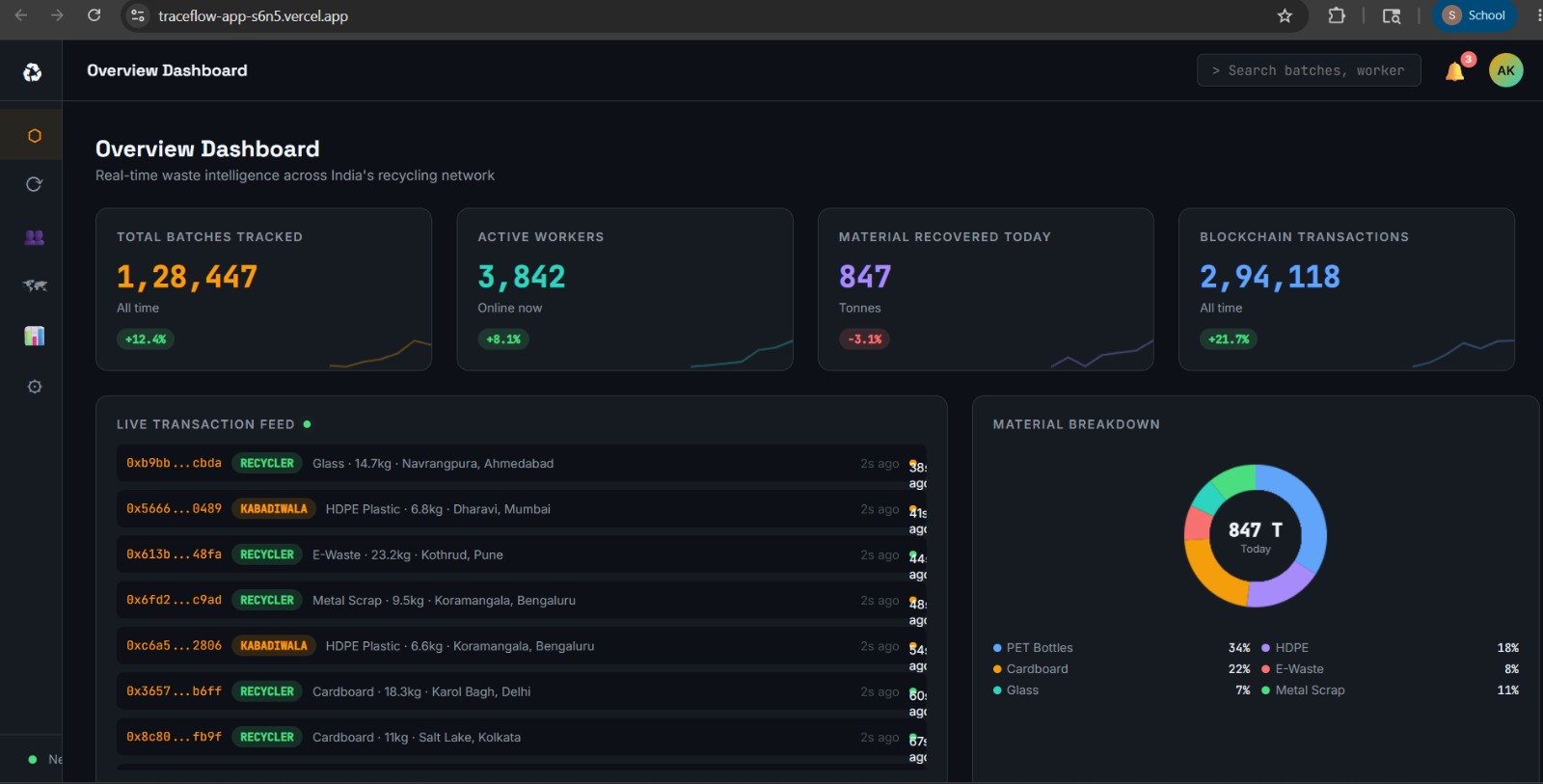
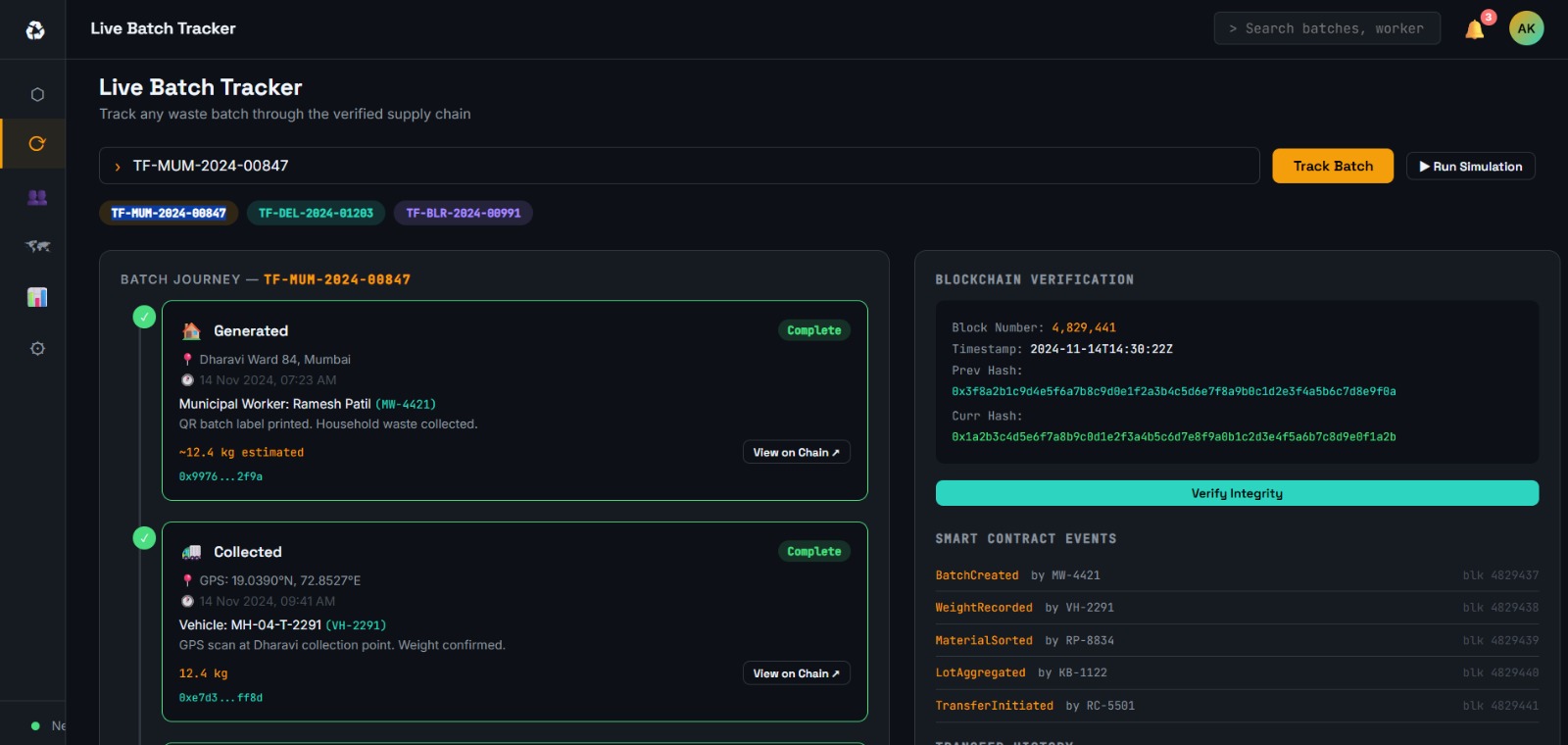
TraceFlow creates a digital identity for every waste batch from the moment it is collected. Each batch is assigned a QR based traceable ID and is tracked at every handoff point until it reaches recycling industries.
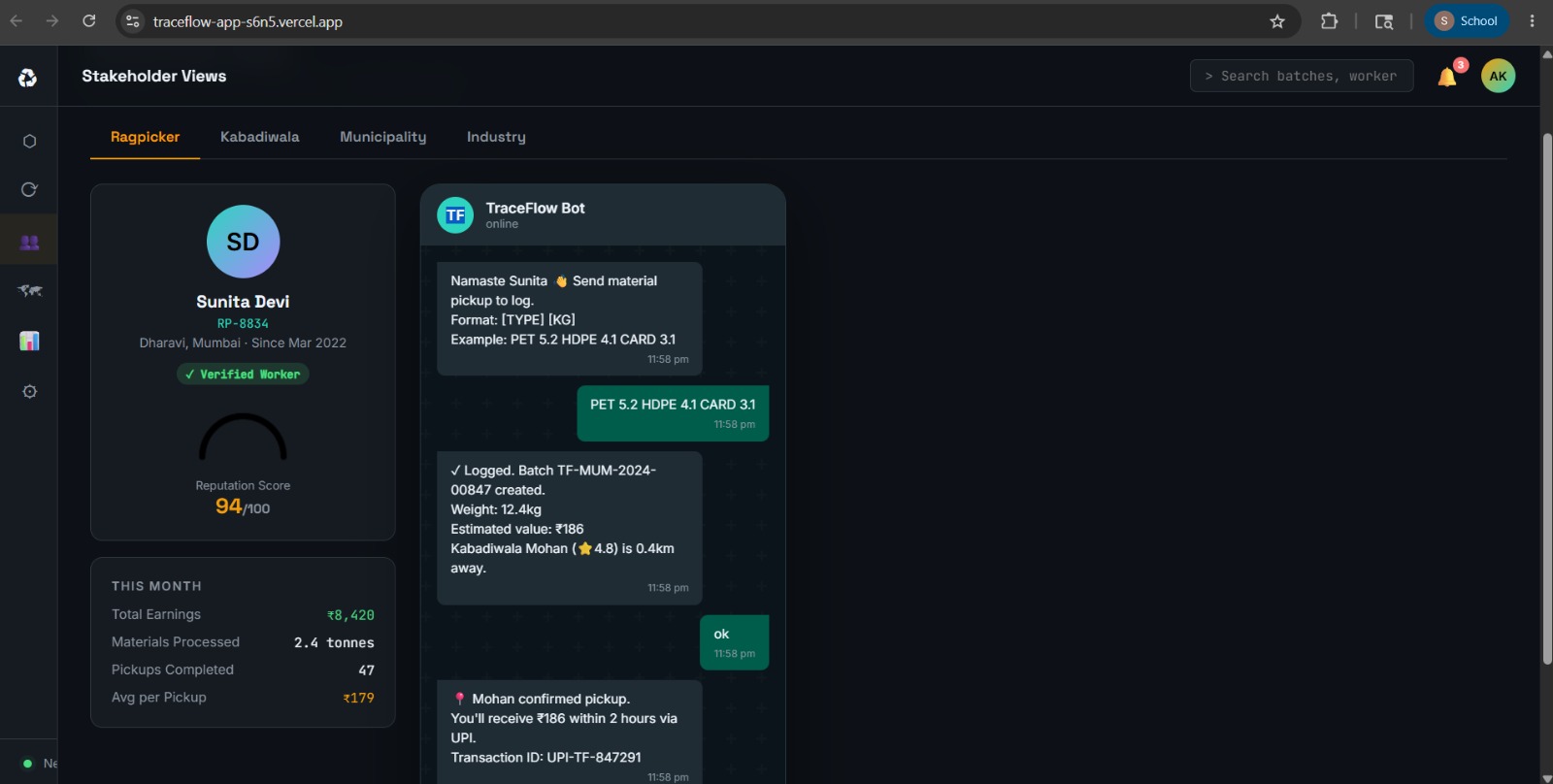
The system enables: • Digital tracking of waste movement across all stages • Real time visibility into recyclable supply for industries • Offline first logging for low connectivity environments • WhatsApp and SMS based participation for informal workers • AI powered waste classification and routing • Tamper proof transfer records using blockchain
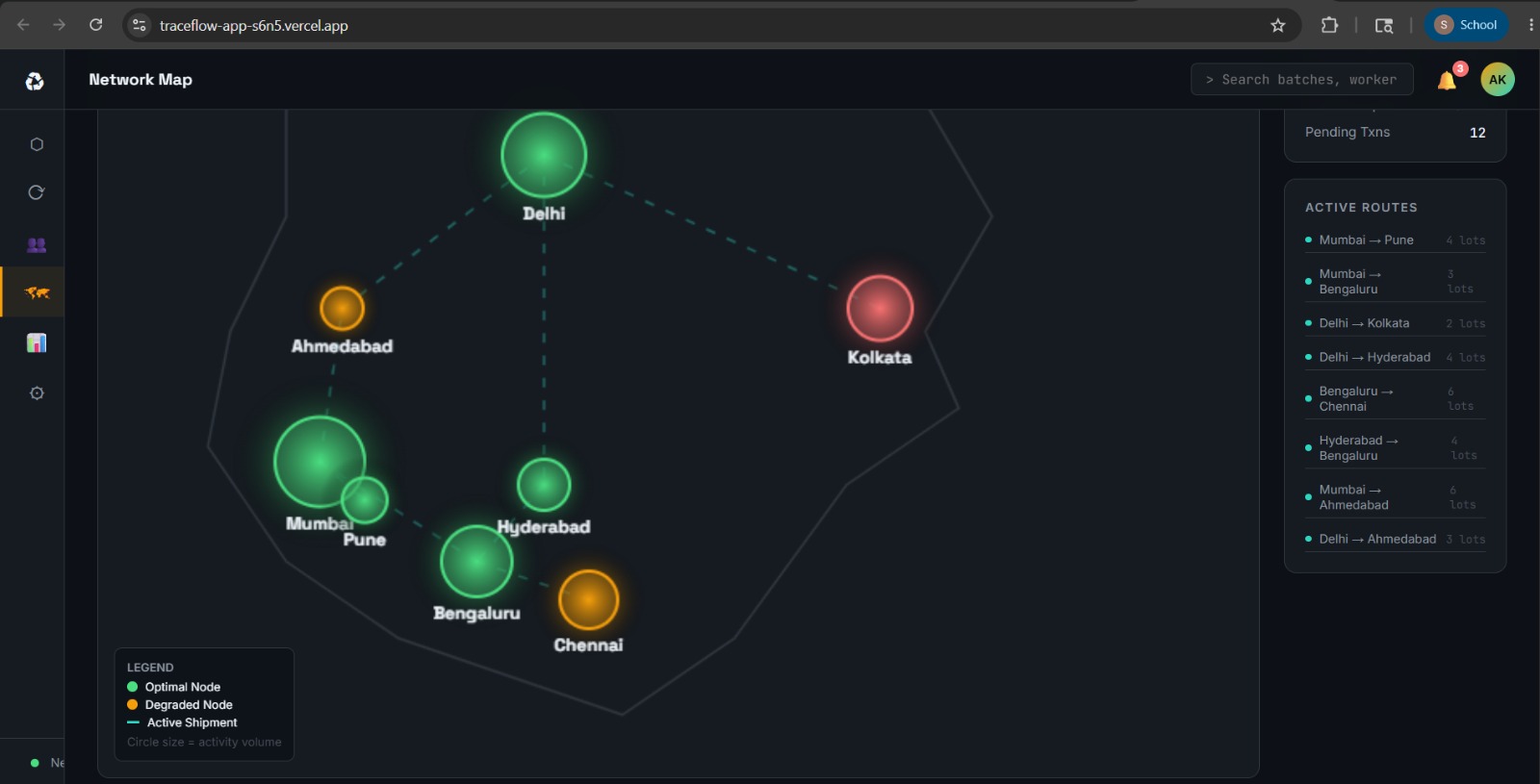
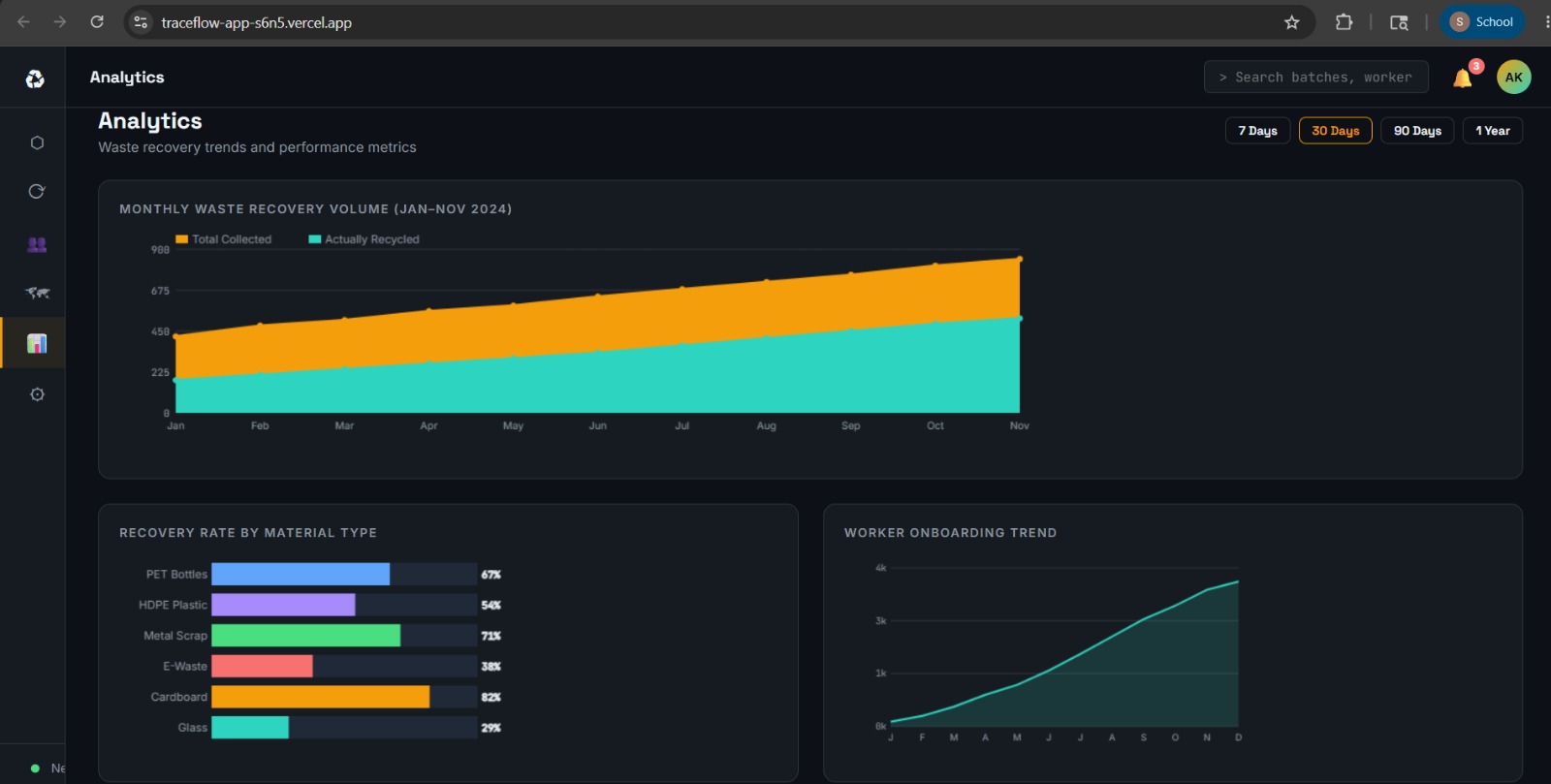
Industries can view live recyclable inventory by material type and location, while collectors and aggregators receive better matching opportunities and improved pricing transparency.
How we built it
We designed TraceFlow using a hybrid architecture that combines decentralized trust with centralized analytics.
Frontend React Native offline first mobile application with local SQLite storage for field operations.
Communication Layer SMS and WhatsApp based bot integration using Twilio so feature phone users can participate without installing apps.
Backend Node.js backend with GraphQL APIs handling authentication, transaction flow, matching logic, and analytics.
Data and Intelligence PostgreSQL stores operational and analytics data while Redis manages real time supply demand matching queues.
Tracking Infrastructure QR coded batch IDs, RFID tags, GPS logs, timestamps, and IoT enabled weight sensors at aggregation centers.
Trust Layer Hyperledger Fabric stores immutable transaction records with multi party confirmation for every transfer.
AI Layer Machine learning based material classification and predictive supply forecasting for industries.
Challenges we ran into
One of the biggest challenges was designing a system that could work within the realities of the informal waste ecosystem. Many workers operate without smartphones or stable internet access, so we focused heavily on low tech accessibility through SMS and WhatsApp based logging.
Another challenge was balancing blockchain transparency with practical scalability. We solved this using a hybrid architecture where blockchain stores only trust critical transfer events while operational analytics run on centralized databases.
Ensuring accurate data capture in offline environments and preventing fake or duplicate entries was also a major concern. Multi party confirmations, GPS validation, and reputation scoring were introduced to improve trust and authenticity.
What we learned
We learned that solving waste management is not only a logistics problem but also a trust and coordination problem. Building technology for informal ecosystems requires simplicity, accessibility, and incentives rather than forcing users to adapt to complex systems.
We also explored how blockchain, AI, and offline first systems can work together to create transparent supply chains in resource constrained environments.
What's next for TraceFlow-Waste Intelligence Network
Future improvements include: • Dynamic pricing recommendations based on recyclable demand trends • Carbon impact analytics for industries and municipalities • Government integration for compliance and reporting • Smart route optimization for collection vehicles • Regional multilingual voice based logging for non literate workers • Integration with recycling startups and circular economy marketplaces
Built With
- ai
- ethereum-anchoring
- fastapi
- gps-tracking
- graphql
- hyperledger-fabric
- iot-weight-sensors
- meta-cloud-api
- mobilenet
- node.js-microservices
- postgresql
- qr-based-batch-tracking
- react-native
- redis
- rfid
- sqlite
- twilio-whatsapp-api


Log in or sign up for Devpost to join the conversation.