-
-
App Icon
-
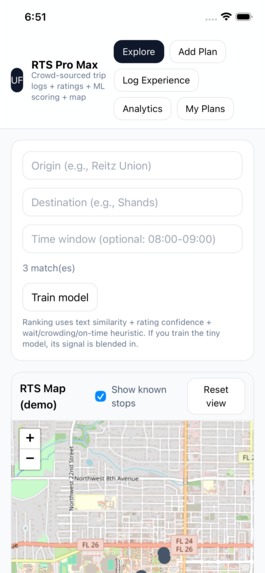
Home
-
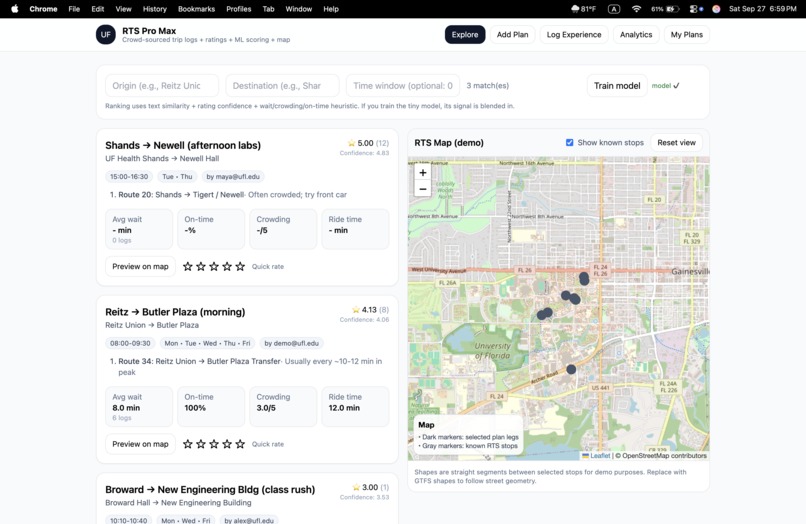
Module
-
Module
Inspiration
Our group member, Jinyi lives off campus. He suffers a lot the commuting system around the campus, including chaos in bus routes, limited parking lots, and unreasonable allocations of parking. He usually takes bus to commute around. On a typical class day at UF, Jinyi races from a 10:40 lecture, while always faces a packed bus, a missed transfer, resulting in a 20-minute late for the next class—problems that push him to feel a car is the only reliable option, even when that’s not affordable, (and parking is also a problem......) This initiative focuses on enhancing the campus transportation network. It will address current system inefficiencies by gathering student feedback and analyzing real-time traffic conditions. The project's core output will be a set of strategies for adjusting bus schedules and routes. By moving beyond a fixed-interval approach, the application will provide dynamic, data-driven insights to optimize bus service for the university community.
What it does
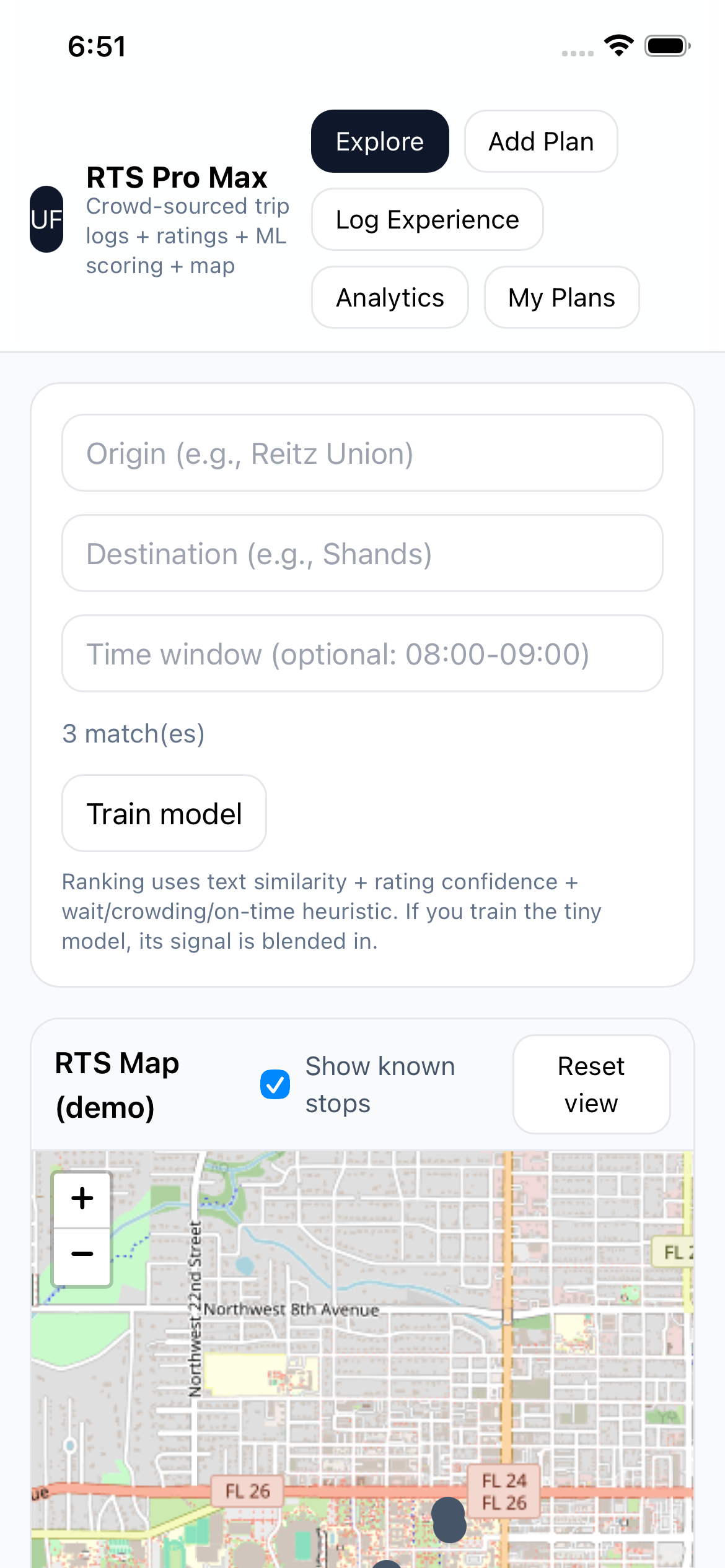
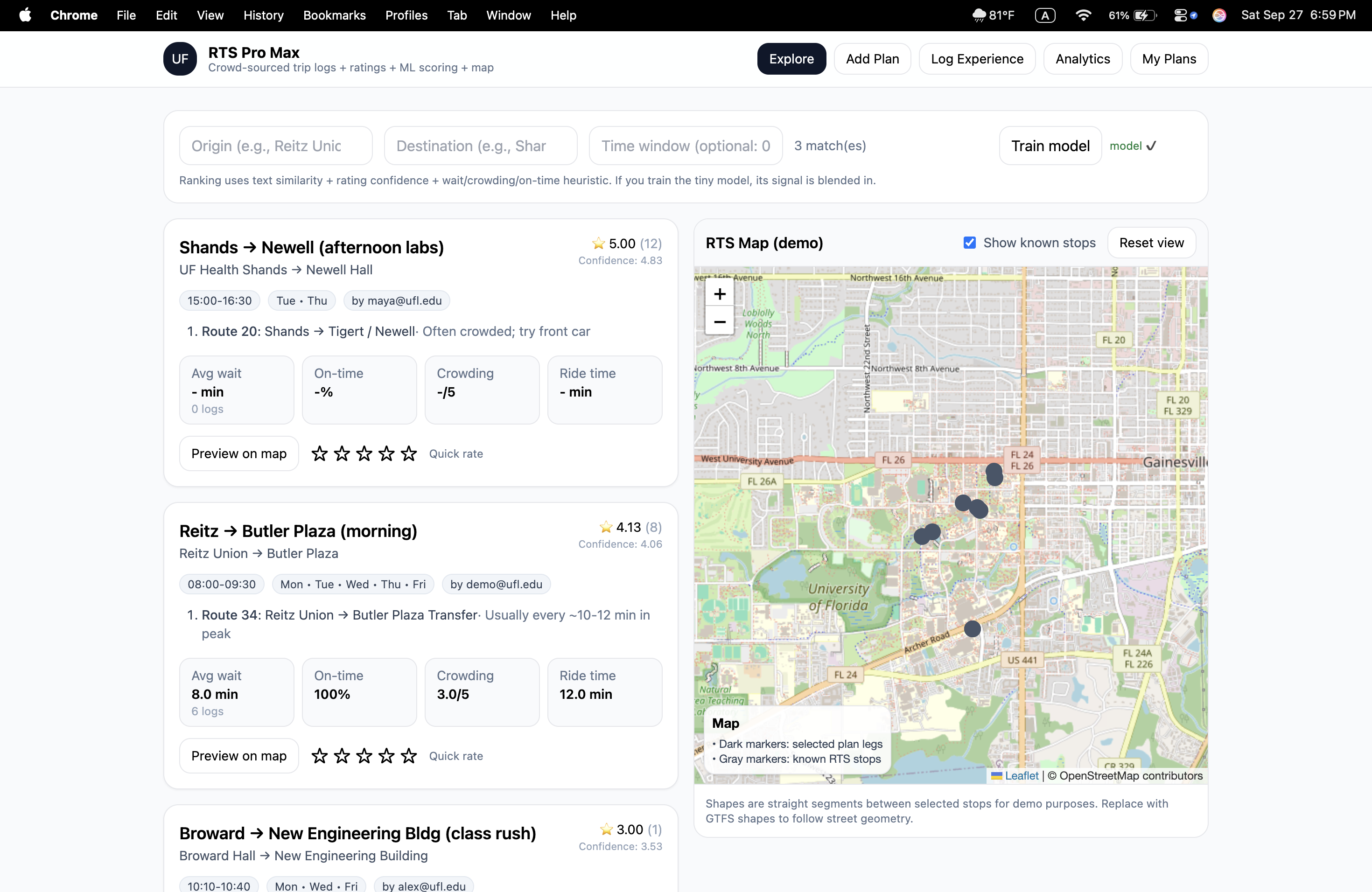
In RTS Pro Max, students evaluate stop-to-stop bus options across different times and locations, offering both subjective and objective signals—wait time, crowding, and on-time performance. A neural network embedded in the app continuously learns from this feedback to capture spatiotemporal patterns. It sends clear cues to operations—where it’s overcrowded and where transfers tend to break down—and, under varying time-and-place conditions, recommends the most reliable lines with personalized alternatives. Our goal is a human-in-the-loop system: riders co-create the recommendations, AI summarizes and personalizes, and operators act on actionable insights.
How we built it
- People-in-the-loop app. We started with simple trip planning, then added a two-way feedback loop: riders share quick, one-tap feedback, and the AI sends back smarter, more relevant suggestions.
- Hybrid model that learns. We mix hard data (wait time, delays, crowding, on-time rate) with soft signals (ratings, comments). A time-and-place aware regression powers recommendations by when you travel and where you start. As new logs roll in, the cloud model retrains so suggestions keep getting sharper.
- From better rides to better ops. The same signals highlight where to tweak service—headways, vehicle shifts, staggered departures—and even point to future route re-org ideas. Think reinforcement-style learning: learn from outcomes, then nudge the schedule in the right direction.
- Check Readme.md on our github for more.
Challenges we ran into
Under a tight deadline, we at first have a large debate when locking the idea, mapping the essential tasks, and setting clear priorities into a smallest-viable plan. Success hinges on fast, crisp communication and disciplined, logical scoping—making trade-offs quickly and aligning on what ships now vs. later. We’ve built the app skeleton and algorithm prototypes, but a production-grade data layer still depends on RTS’s partnership—provisioning/authorizing datasets (GTFS & Realtime), operational constraints, and database integration.
Accomplishments that we're proud of
- RTS pro max is designed for students and solves actual daily needs.
- RTS pro max successfully introduces the capability of user feedback rating, which is a new feature to the current transportation system.
- RTS pro max introduces AI-assisted regression algorithm to enhance the current model and successfully computes the route based on user interactive criteria.
- Our group quickly forms an idea after massive brain storming.
- All members work and contribute to the projects as a team. We collaborate and learn from others. Within limited timeframe, RTS pro max has been pulled to iOS system.
What we learned
Teamwork is the best. During the project, unforeseen issues will keep emerging and will require real-time iteration and improvement.
What's next for RTS-pro-max for improving UF campus commuting system
RTS pro max is aiming at applying to Android system. Move the neural network to the cloud; retrain/refresh as rider feedback grows (CI/CD for models, drift checks), serve via API with on-device fallback. Enhance the user experience with a cleaner, glanceable UI that surfaces key info instantly and automates wait-time logging so riders don’t have to enter it manually.


Log in or sign up for Devpost to join the conversation.