Inspiration
We wanted to make smart homes more accessible, helping people with visual impairments, mobility limitations, and older adults live more independently through context-aware AI.
What it does
AuraAssist helps users understand their home environment, find belongings, recall recent events, and manage multi-step smart-home routines through natural-language interaction. It combines environmental awareness, home-state context, and safer automation in one companion.
How we built it
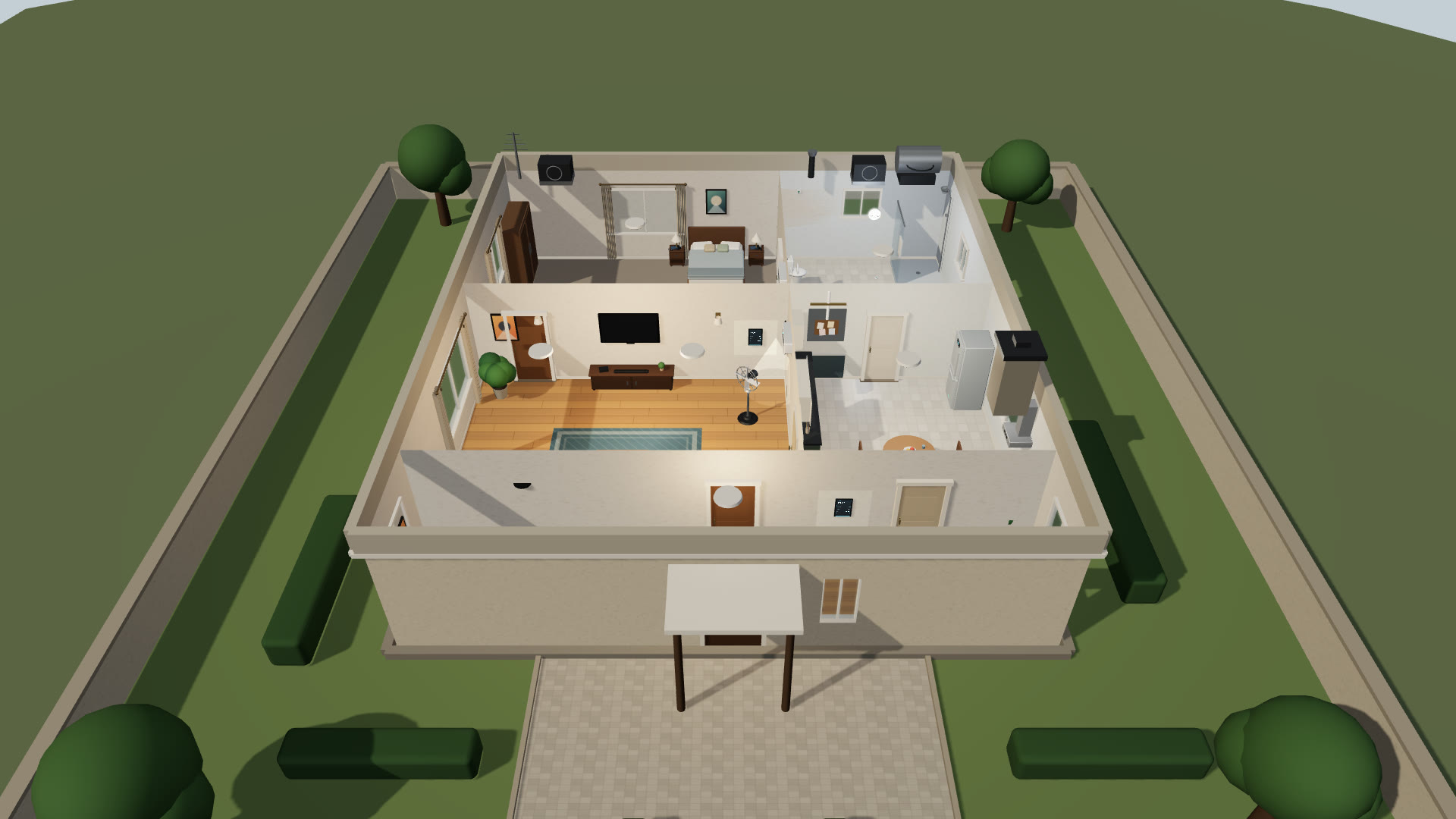
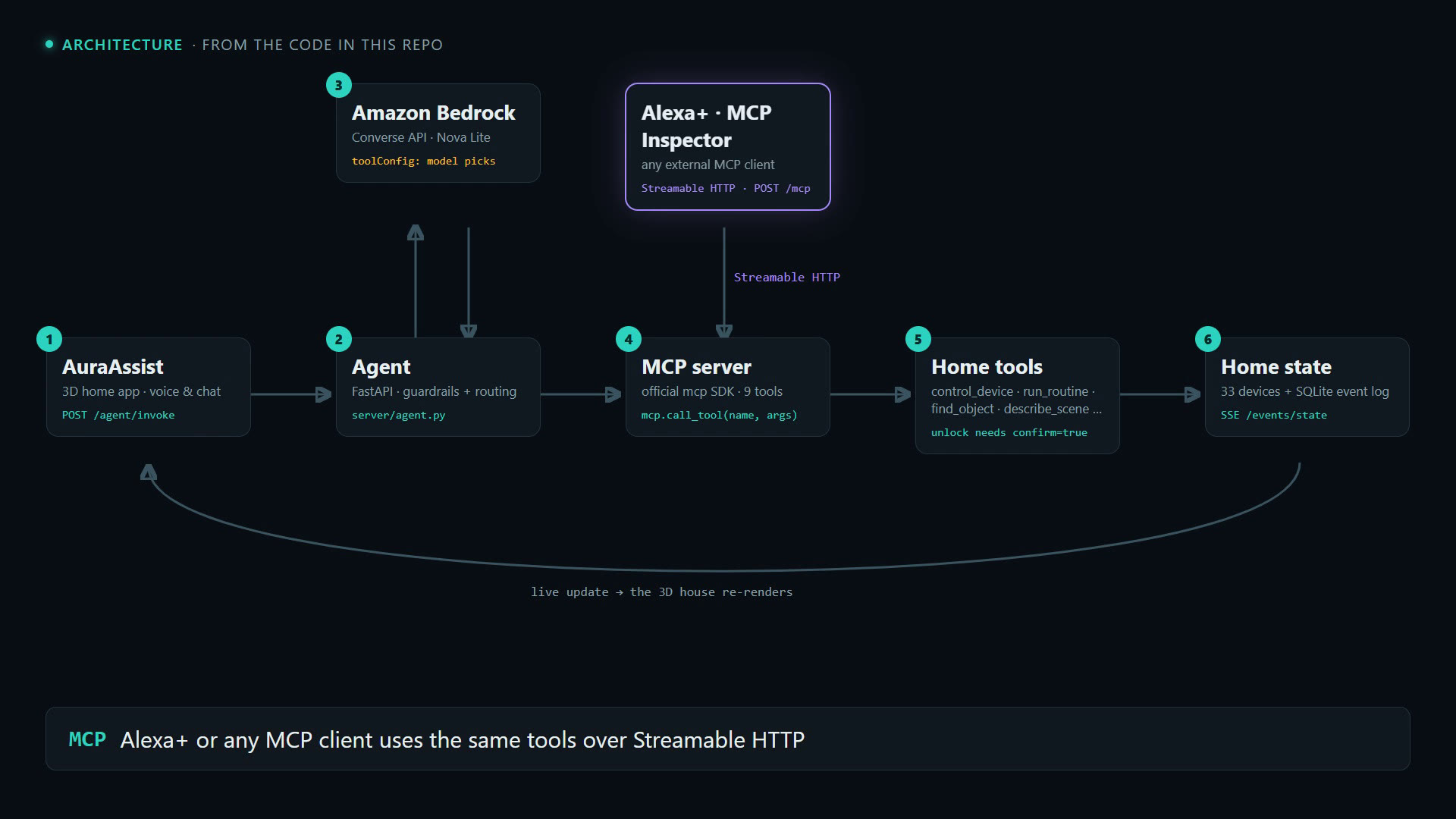
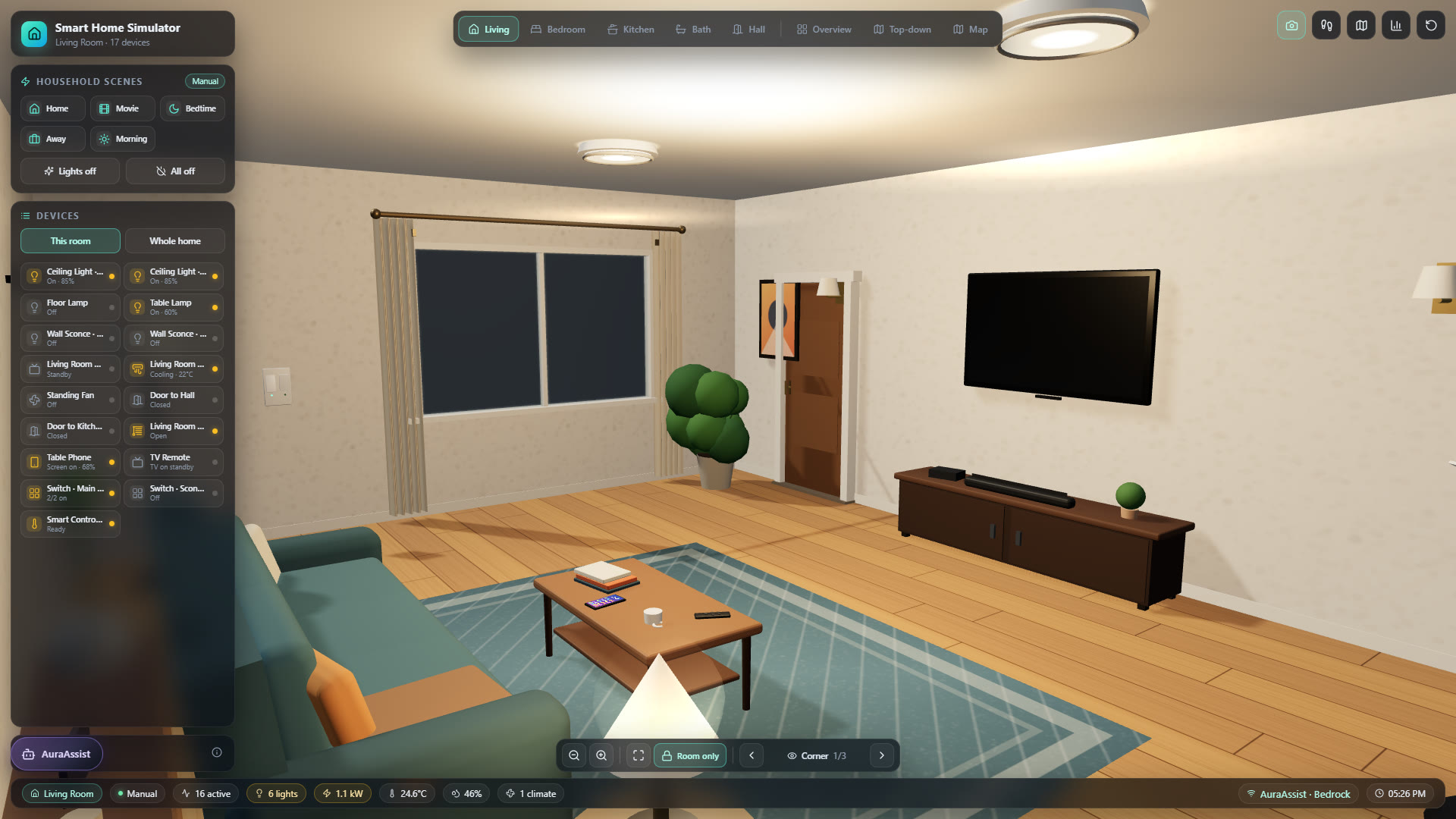
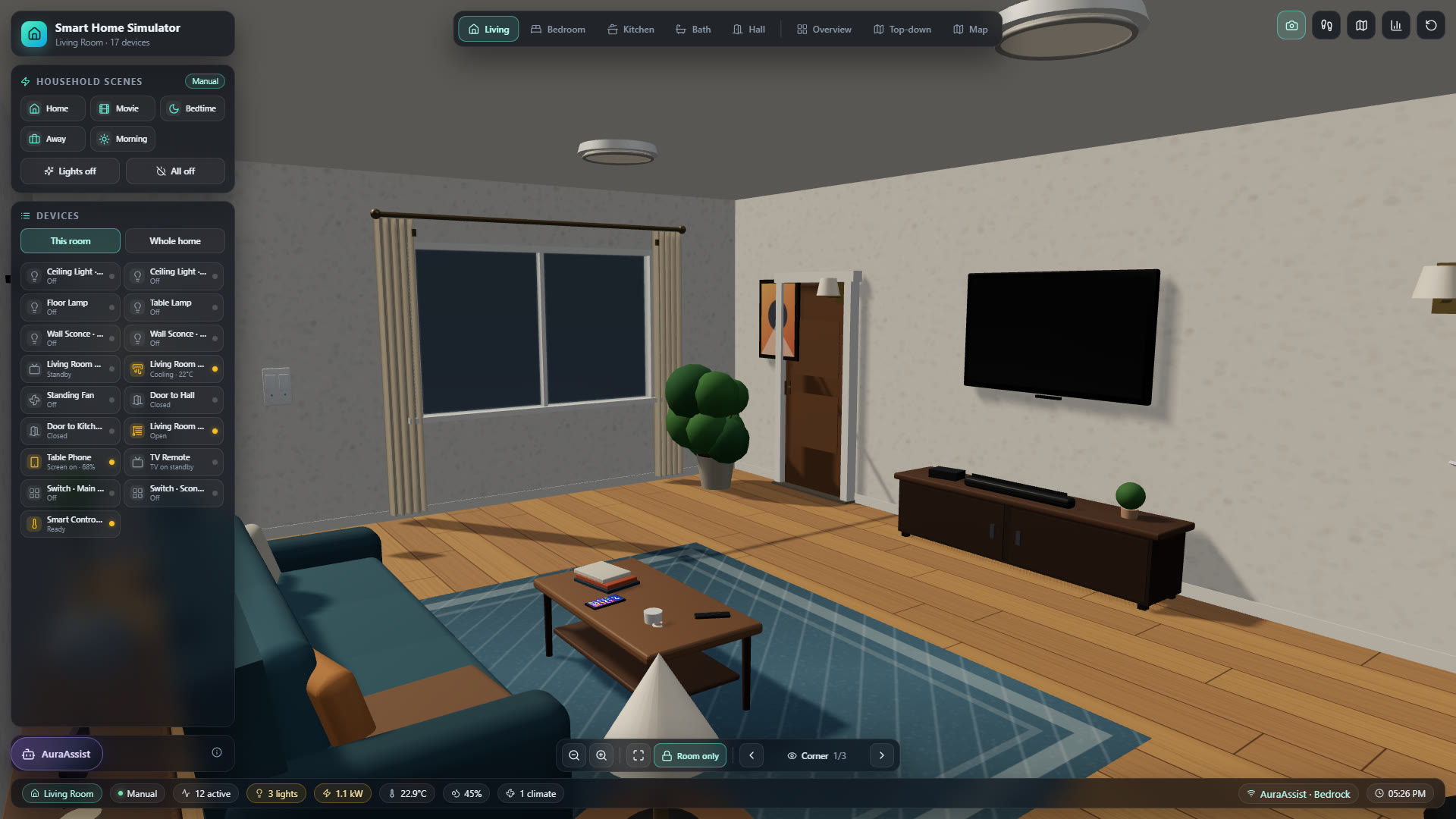
We built a web-based 3D smart-home simulator connected to an MCP server using Streamable HTTP. Amazon Bedrock powers AI reasoning and scene understanding, while event memory, simulated devices, and a routine orchestrator support contextual assistance and multi-step actions.
Challenges we ran into
Integrating AI reasoning, MCP tool execution, voice interaction, and smart-home state into one reliable experience while ensuring that actions are handled safely and responses reflect actual device states.
Accomplishments that we're proud of
We brought together a simulated smart home, AI-powered environmental understanding, event memory, and multi-step routine automation in an accessibility-focused companion designed around real everyday needs.
What we learned
We learned how to connect AI agents with MCP tools, integrate multimodal AI through Amazon Bedrock, manage contextual home events, and coordinate multi-step actions with confirmation and safety considerations.
What's next for AuraAssist
We plan to improve hands-free voice interaction, expand smart-home integrations, strengthen privacy controls, and develop more personalized, proactive assistance for users and caregivers.
Built With
- amazon
- javascript
- mcp
- python
- vite

Log in or sign up for Devpost to join the conversation.