-
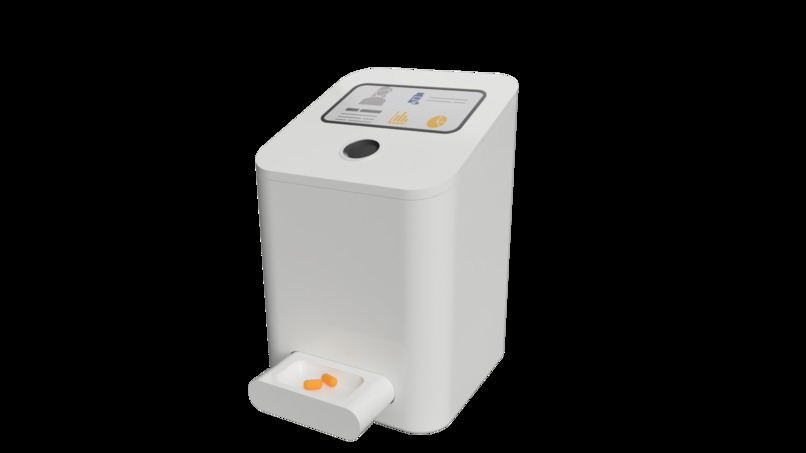
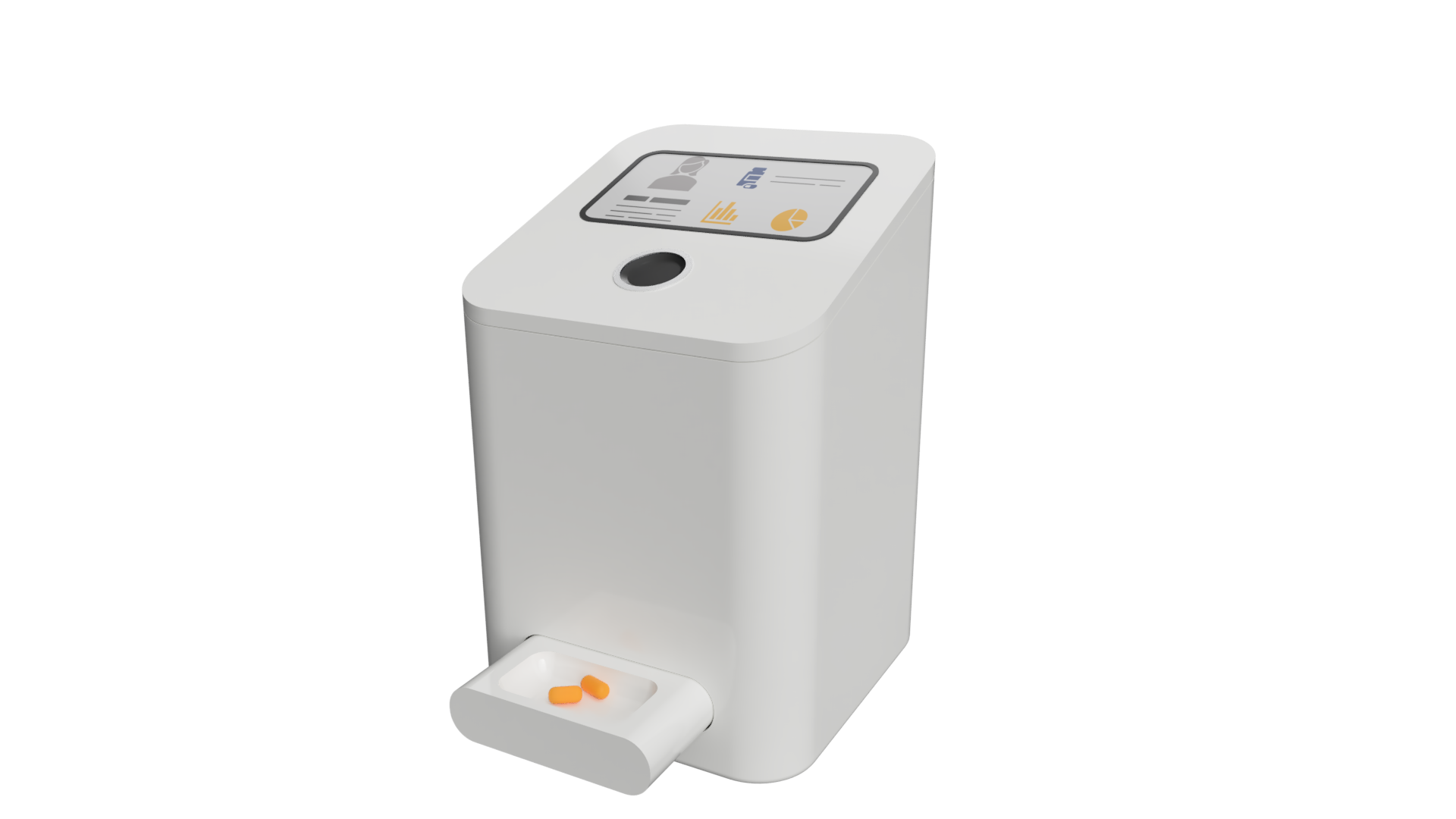
Render of Concept RPillPal Machine
-
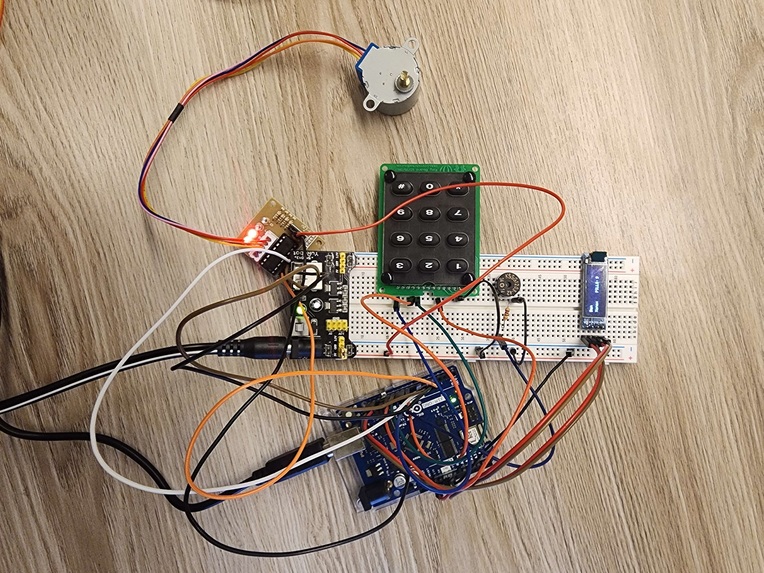
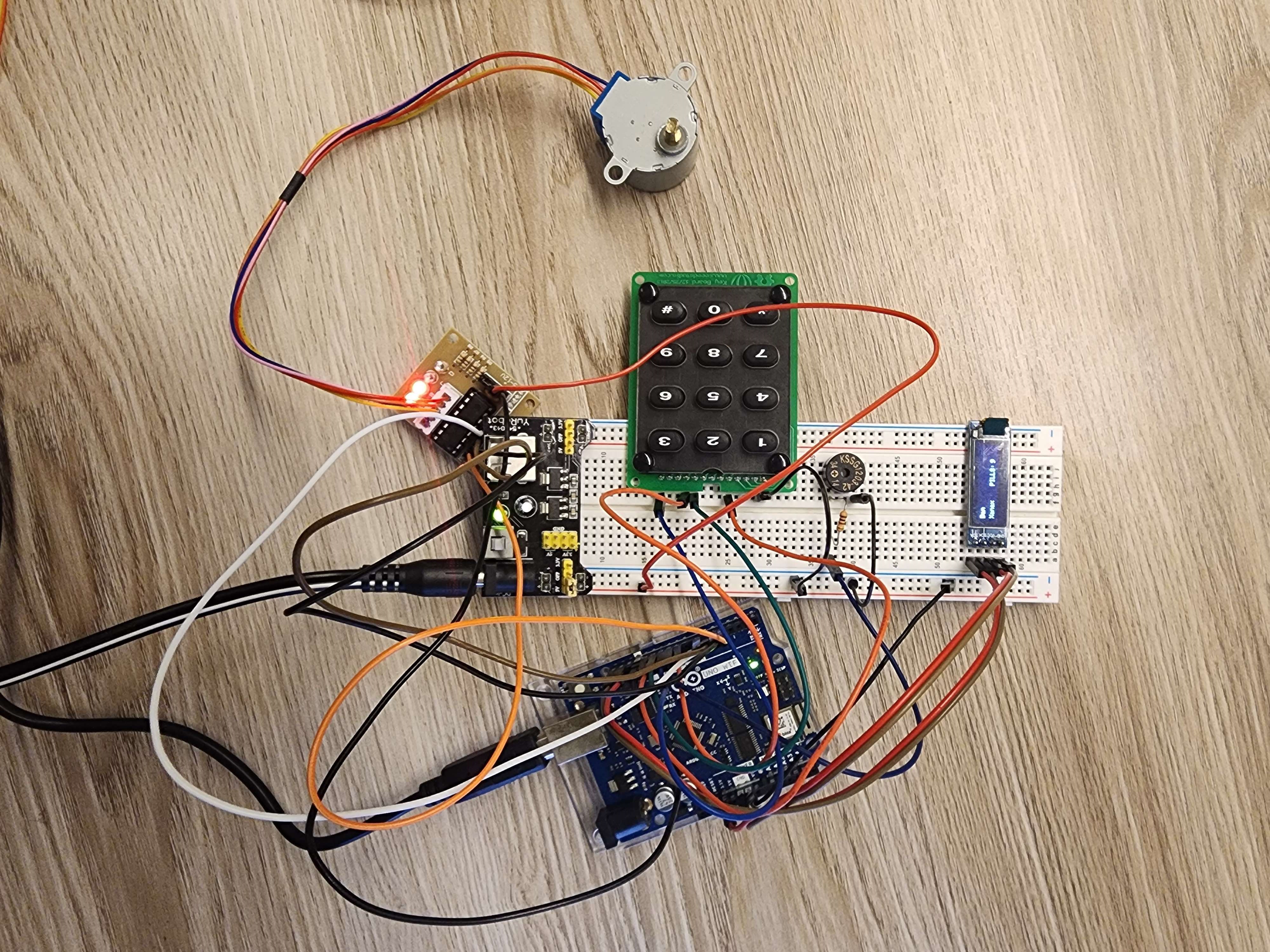
Hardware Prototype of RPillPal Circuit
-
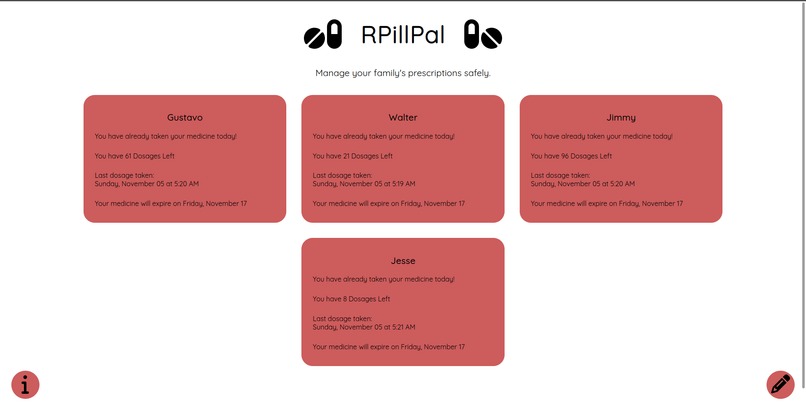
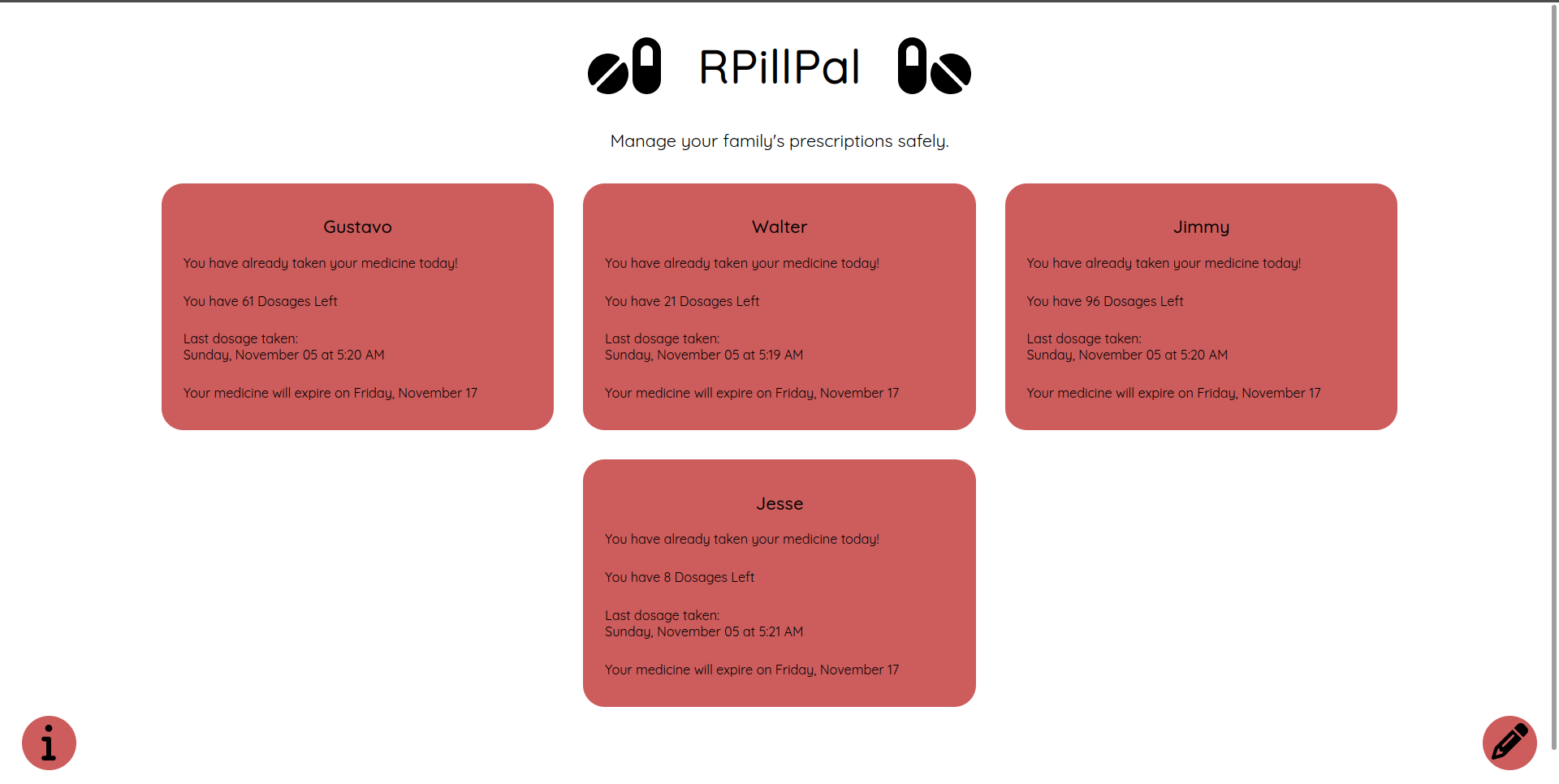
Patient Dashboard
-
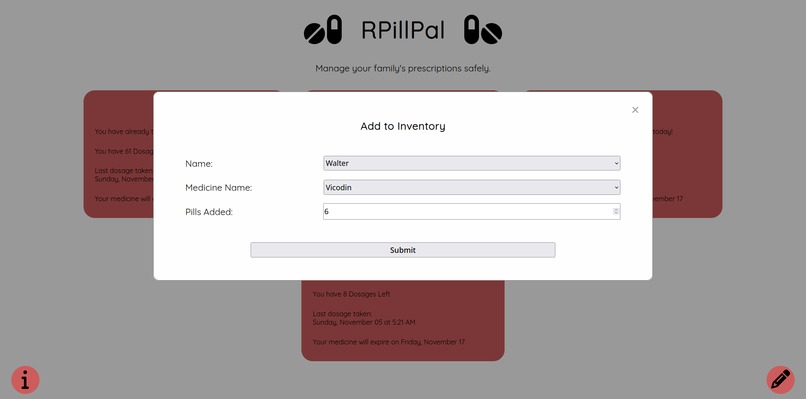
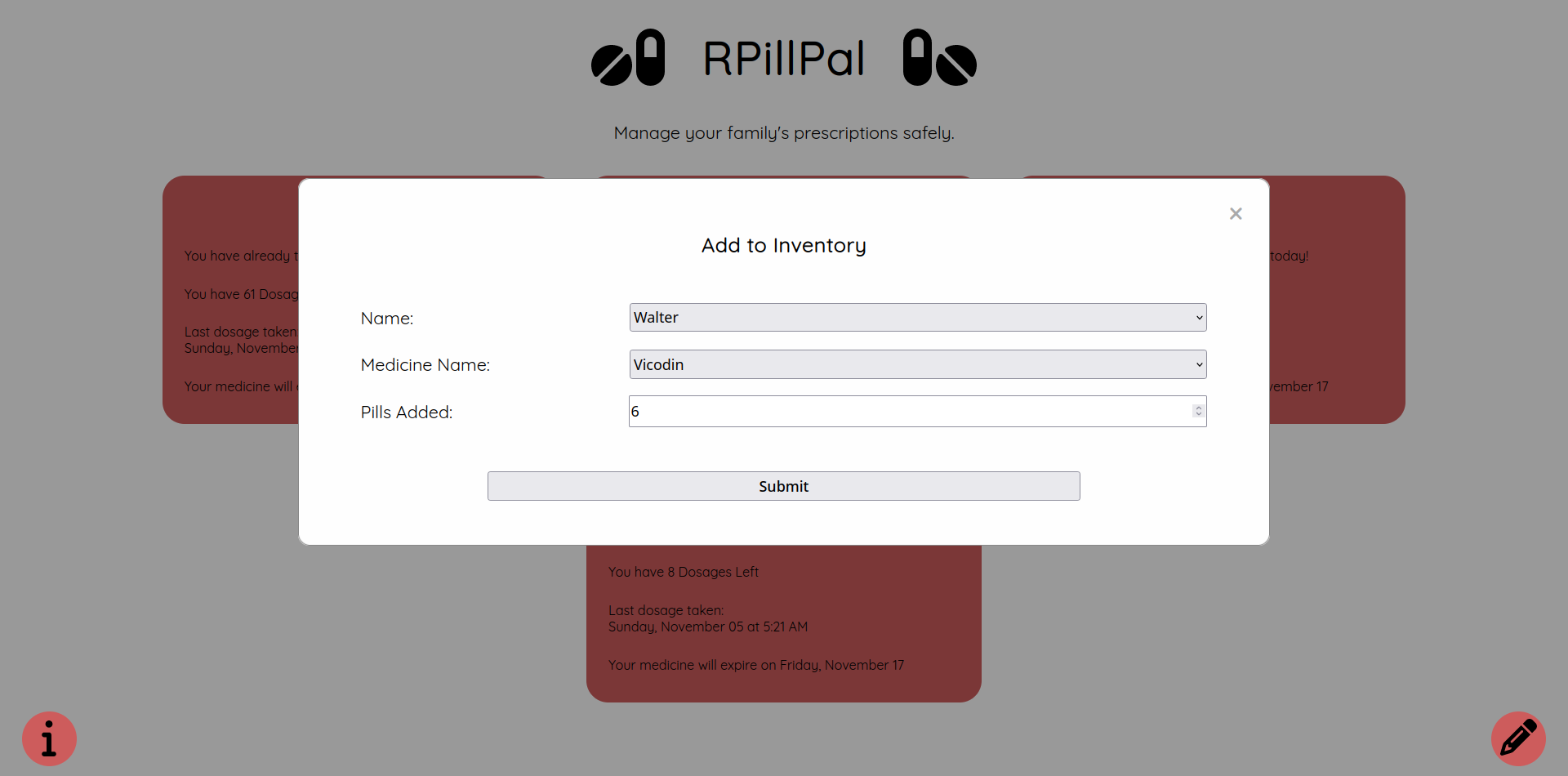
Pill Resupply Dialogue
-
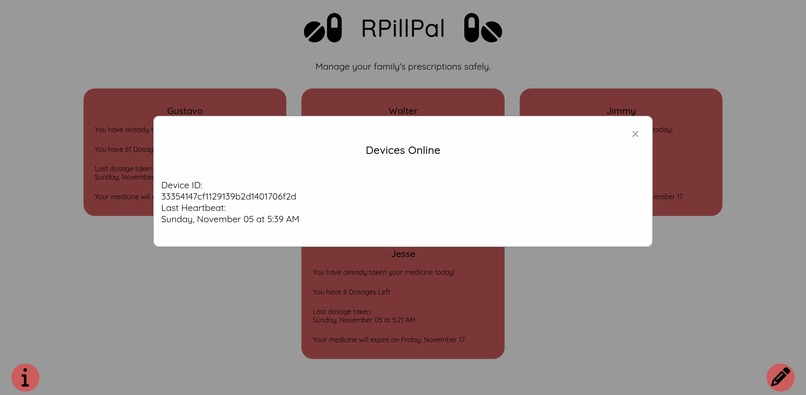
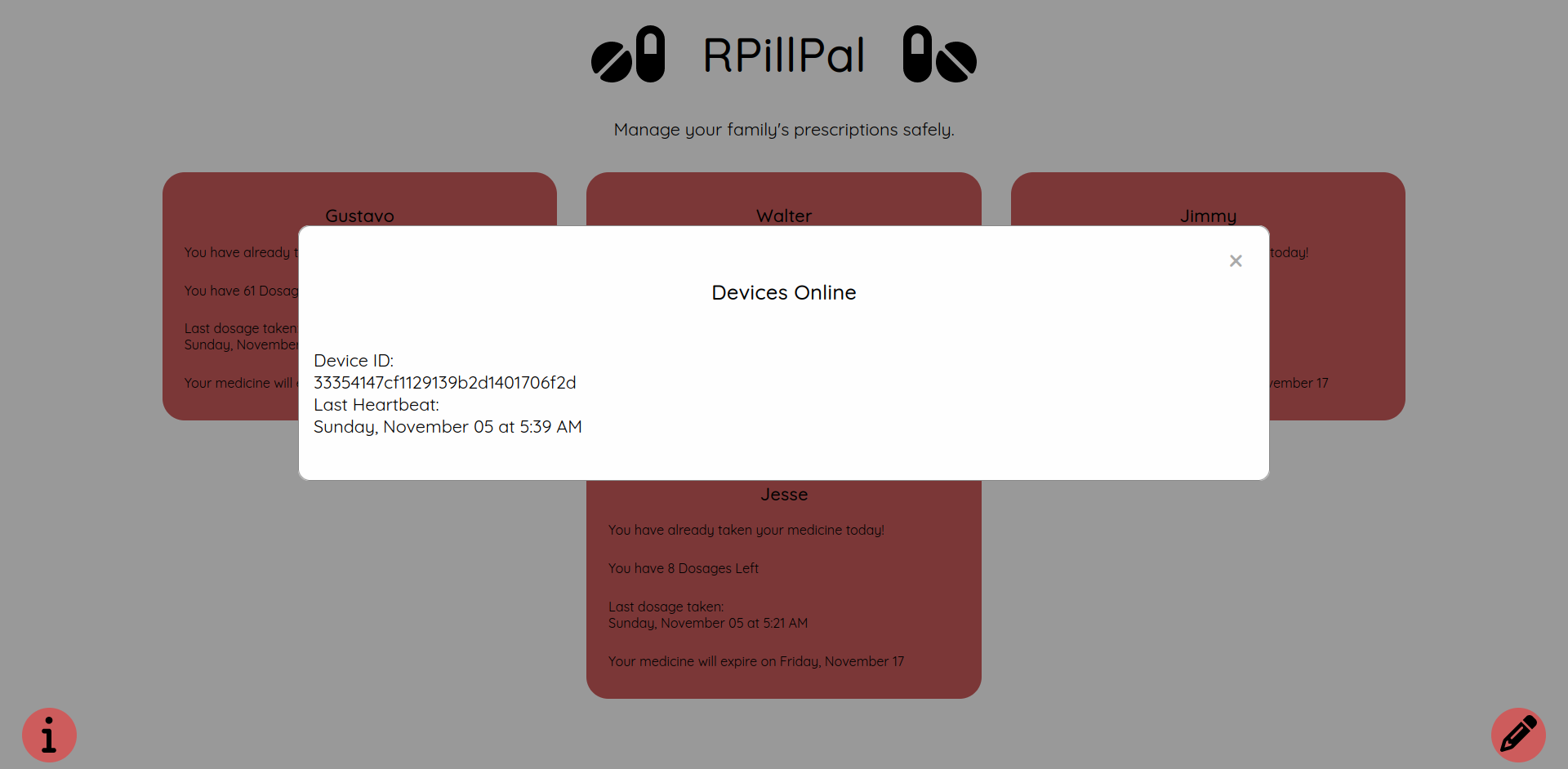
Machine Status Page
Inspiration
We came up with RPillPal as a potential solution to opiate overdoses after patients are discharged from the hospital. As patients cannot remain in a hospital for their entire recovery period, an at-home solution to effective medication management is needed. To mitigate the risk of incorrect dosages and potential opiate abuse, RPillPal was developed.
What it does
RPillPal is a biometric-based pill dispenser designed for home use. Its goal is to utilize biometric fingerprint data to determine patient identity and supply the correct dose based on doctor recommendations. It connects directly with a patient's healthcare providers, allowing them to monitor progress and make timely adjustments to treatment plans.
How we built it
The Machine:
The machine uses an Arduino UNO WiFi board connected to a keypad, OLED display, stepper motor, and a piezo speaker. The embedded code is written in Arduino and handles physical pill dispensing. It communicates with the online database through HTTP requests.
The Database
The front end utilizes the fetch API to send get and post requests to the back end to interact with data in the database. We can utilize the easy-to-implement reactivity features offered by Svelte to seamlessly update the UI upon database changes
Challenges we ran into
Throughout the development process, we encountered several challenges, including properly sending and receiving HTTP packets between the microcontroller on the dispenser and the online database. Additionally, we had to implement server-side processing when the system was approving the dispensing of a pill, which added complexity but led to a far more secure product.
Accomplishments that we're proud of
The biggest accomplishment the team had during the development of RPillPal was the level of interconnectivity between the different systems. The interfacing of the hardware, firmware, backend, and frontend was a complex task but came with a big payoff. Communication between these systems allowed for creative and innovative ways to circulate information.
What we learned
During the development of RPillPal, we gained valuable insights into the process of full-stack development, how to link hardware through Wi-Fi communication, how to use new APIs like fetch, and how to make a web server in Rust. We were also able to polish some weaker skills, such as using git.
What's next for RPillPal: A Biometric Pill Dispenser
Currently, RPillPall is in the ideation and prototype stage. Significant steps will be needed to develop the hardware and software necessary to make this commercially viable. Nevertheless, this is an excellent starting point for several improvements in robustness and user experience!
Built With
- arduino
- assembly
- autodesk-fusion-360
- c
- c++
- ci
- css3
- git
- github
- godaddy
- google-cloud
- html
- javascript
- mongodb
- porkbun
- rust
- svelte
- typescript
- yaml

Log in or sign up for Devpost to join the conversation.