-
-
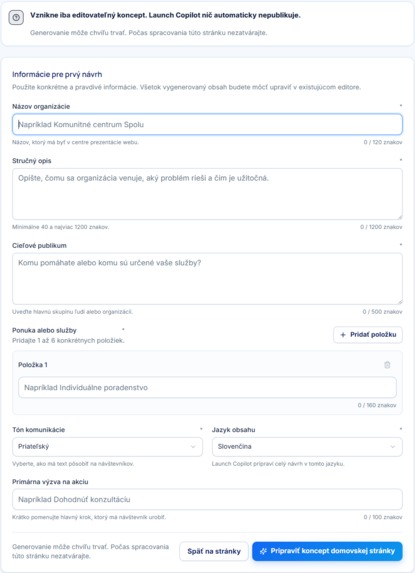
A short organization brief used to generate a structured homepage proposal with GPT-5.6.
-
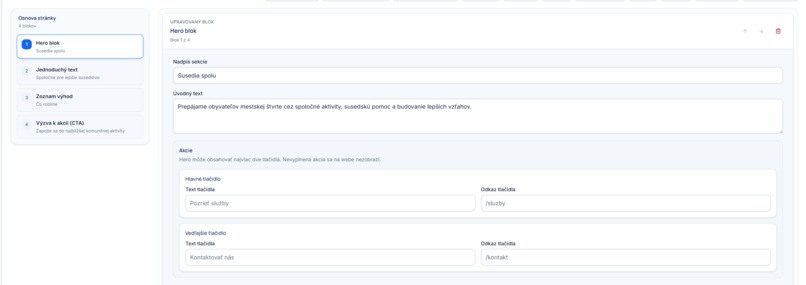
The generated content is saved as a normal editable ROZWEBUJ page draft.
-
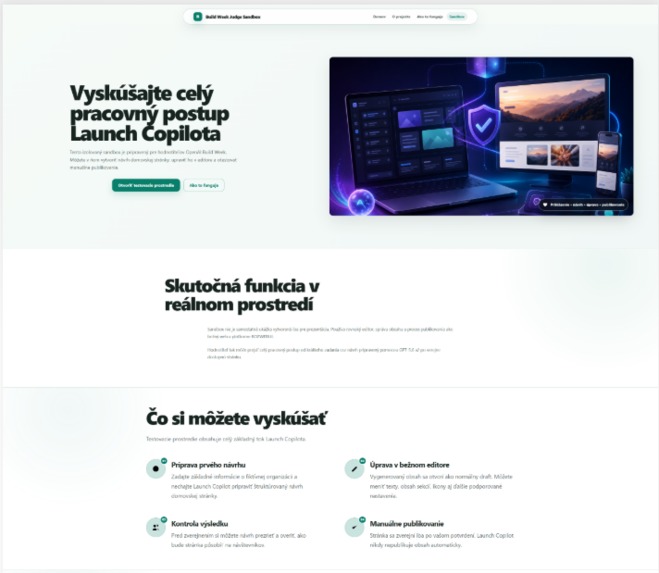
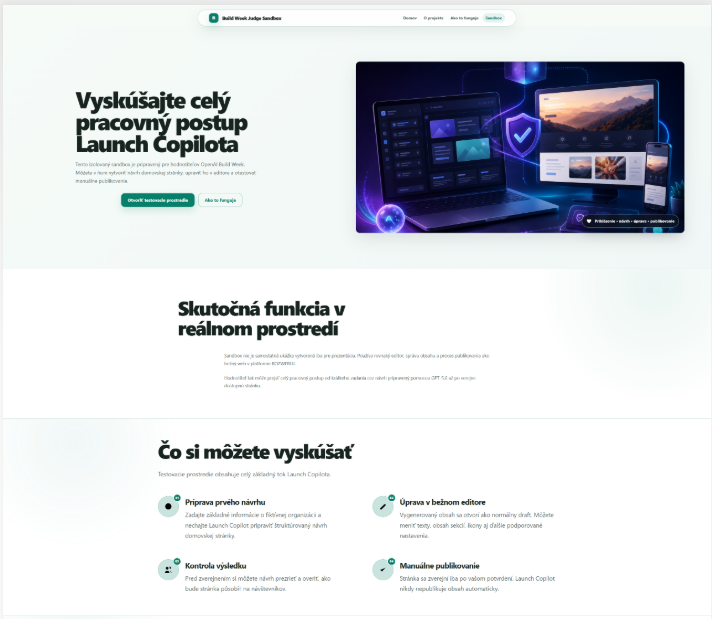
A dedicated evaluation sandbox where judges can test the complete human-controlled Launch Copilot workflow.
Inspiration
Many local organizations, community groups, and small teams need a credible website, but starting from a blank page is difficult. They often know what they do and whom they help, yet struggle to turn those facts into a clear website structure and usable copy.
ROZWEBUJ already provided the underlying website platform. During OpenAI Build Week, I built Launch Copilot to make the first content draft faster without giving AI control over publishing.
What it does
ROZWEBUJ Launch Copilot turns a short organization brief into a structured, editable homepage draft.
The user provides facts about the organization, its audience, activities, tone, and preferred call to action. GPT-5.6 generates a constrained set of website blocks:
- one hero section;
- explanatory text;
- a feature list;
- an optional call-to-action section.
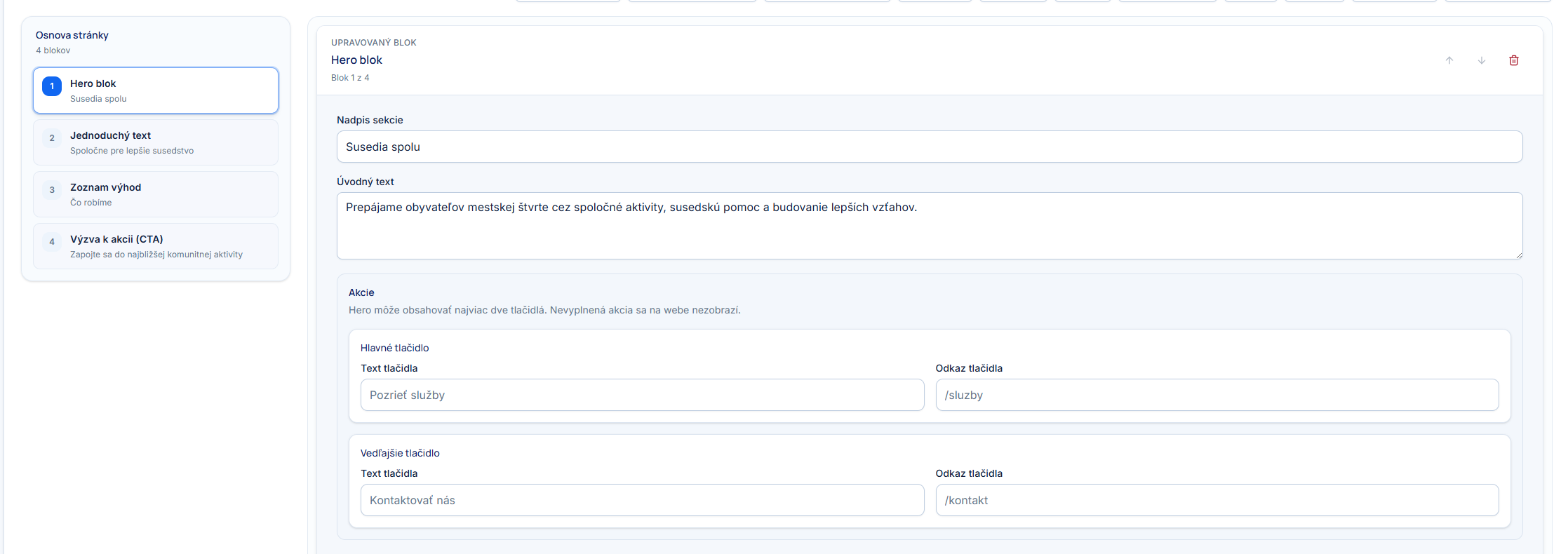
The result is saved as a normal draft inside the existing ROZWEBUJ page editor. The user can review every sentence, change the layout content, select icons, and publish manually.
Launch Copilot never publishes automatically.
What existed before Build Week
ROZWEBUJ was already an existing multitenant website platform with:
- Tenant Admin and Platform Admin;
- authentication, roles, and permissions;
- a page and block editor;
- templates and design configuration;
- a static publishing pipeline;
- tenant-isolated databases;
- media, forms, navigation, and legal-document tooling.
The full platform was not built during Build Week.
What I built during Build Week
The Build Week work added the complete Launch Copilot integration and the production foundation needed to demonstrate it safely:
- a provider-neutral page-generation contract;
- an OpenAI Responses API adapter using GPT-5.6;
- strict Structured Outputs through JSON Schema;
- deterministic server-side validation;
- tenant-scoped idempotency records;
- a Redis page lock to prevent concurrent generation;
- rate limiting and safe failure handling;
- a Tenant Admin onboarding interface;
- creation of an ordinary editable homepage draft;
- explicit separation of untrusted user input from developer instructions;
- targeted backend and frontend regression tests;
- a compact Feature List icon picker;
- a production Docker deployment and live demo environment.
How it works
The main flow is:
Tenant Admin form → LaunchCopilotController → LaunchCopilotGenerationService → PageGenerationProvider → OpenAI Responses API → strict validation → CreatePageDraftService → existing editor → manual publishing
The model is not allowed to choose tenant IDs, page IDs, permissions, routes, internal URLs, or publishing actions. The server accepts only the supported block types and rejects unknown fields, HTML, Markdown, URLs, unsupported claims, and invalid output structures.
How I used Codex
Codex was used throughout the Build Week implementation in one primary development thread.
It helped with:
- targeted architecture and deployment audits;
- breaking the work into small, reviewable commits;
- implementing the provider-neutral contract and OpenAI adapter;
- creating focused tests with fake API responses;
- reviewing tenant isolation, idempotency, locking, and rate limits;
- building the onboarding UI;
- diagnosing production issues involving sessions, authentication views, and exception rendering;
- identifying a tenant schema-version regression;
- performing the final submission and prompt-injection audit.
I made the product decisions, defined the security boundaries, reviewed the changes, ran the deployment, and performed the live GPT-5.6 test.
Challenges
The most important challenge was not generating text—it was integrating generation safely into an existing multitenant publishing workflow.
A paid AI request must not be duplicated by retries. Two requests must not overwrite the same page. Output must not cross tenant boundaries or bypass permissions. Generated content must remain an editable draft, and the model must never acquire publishing authority.
These constraints led to several independent protection layers rather than relying only on the prompt.
Accomplishments
Launch Copilot is deployed in production and has completed a successful live generation request with GPT-5.6.
The generated Slovak homepage was reviewed in the existing editor, refined, and published manually. The same workflow remains available as a normal part of the Tenant Admin rather than as a separate AI-only editor.
What I learned
The most useful role for AI in this product is not autonomous website management. It is producing a strong first draft inside a controlled workflow where the application remains responsible for permissions, validation, persistence, and publishing.
Codex was most effective when each task had explicit boundaries, concrete acceptance criteria, and targeted tests.
What's next
The next steps are additional locales, support for more page types, stronger fact provenance, and optional media assistance—while preserving the same draft-first and human-controlled publishing model.
Built With
- caddy
- codex
- docker
- github
- gpt-5.6
- inertia.js
- jsonschema
- laravel
- nginx
- openai
- openairesponsesapi
- php
- postgresql
- react
- redis
- structuredoutputs
- typescript
- vite

Log in or sign up for Devpost to join the conversation.