-
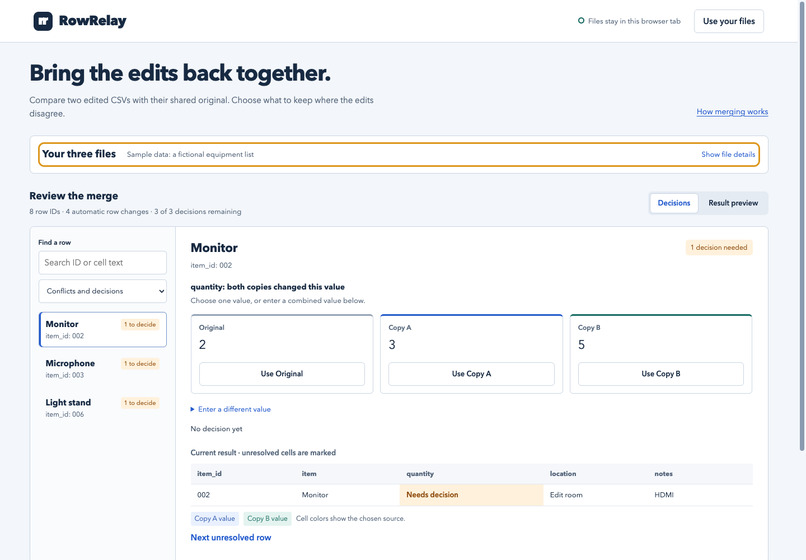
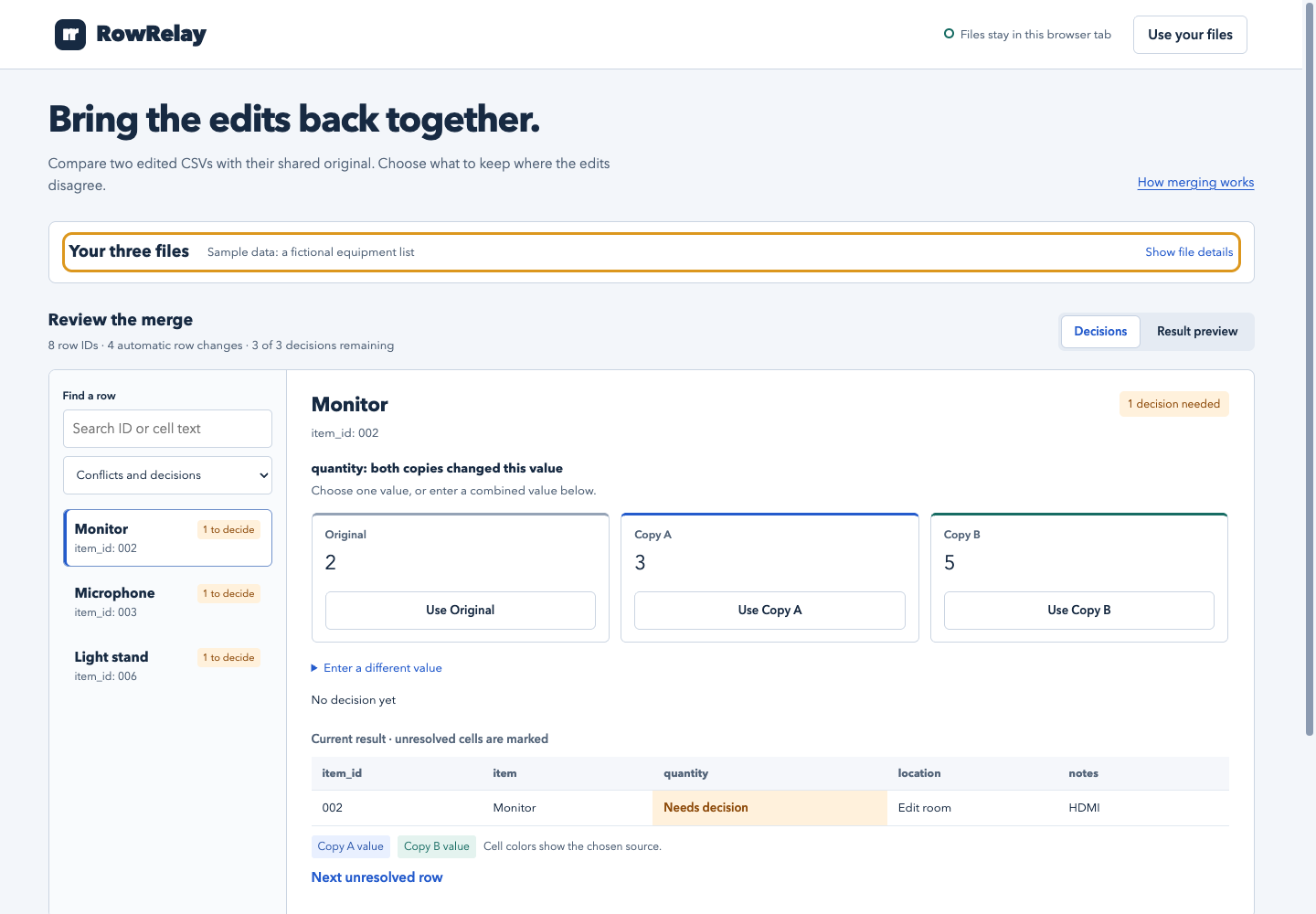
Compare the original with both edits and choose a value for each conflict.
-
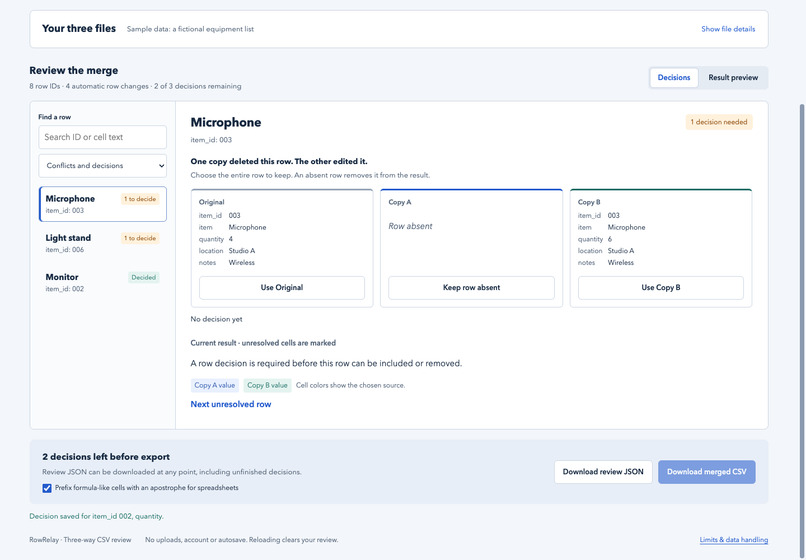
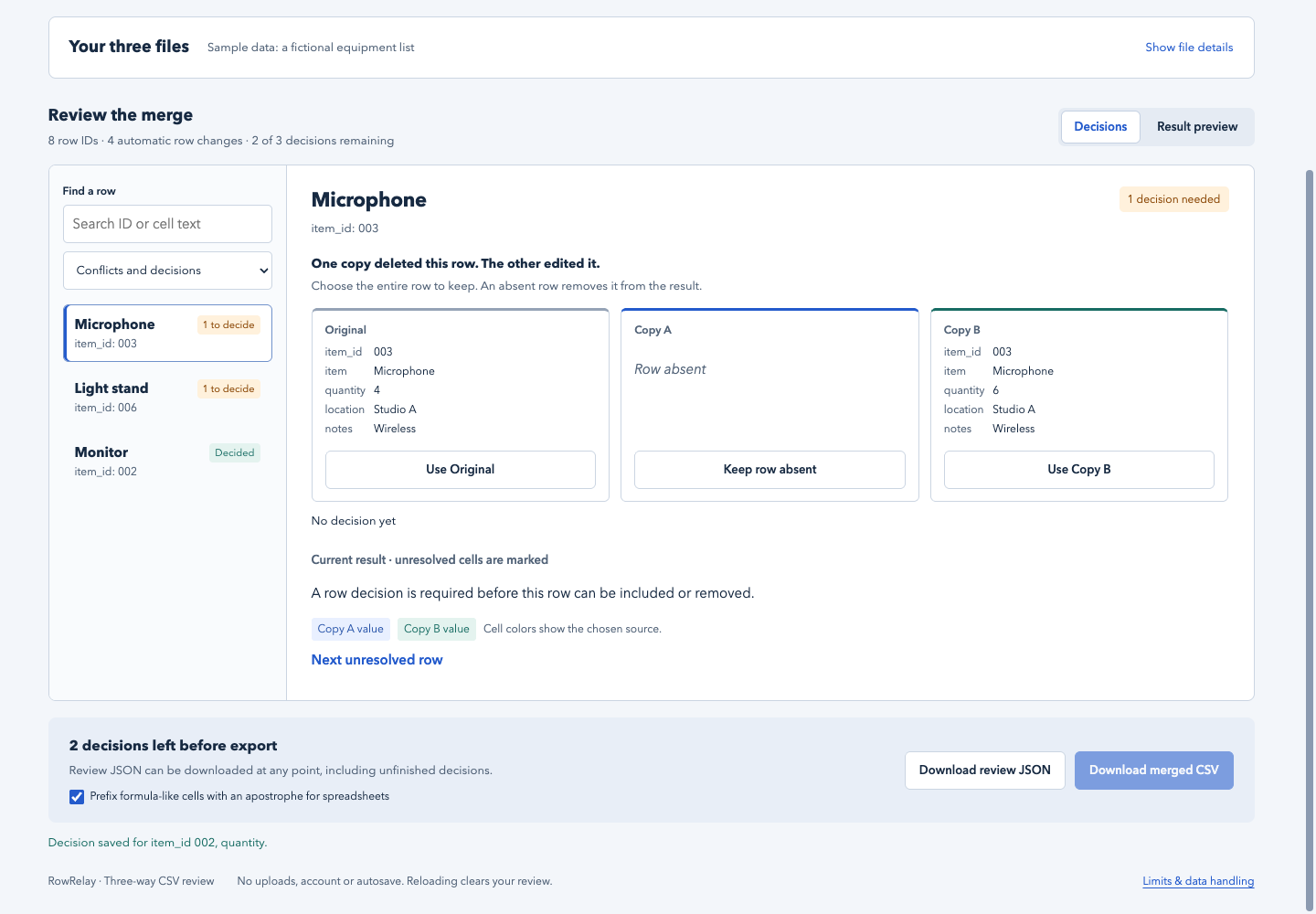
A deletion opposed by an edit requires a whole-row decision.
-
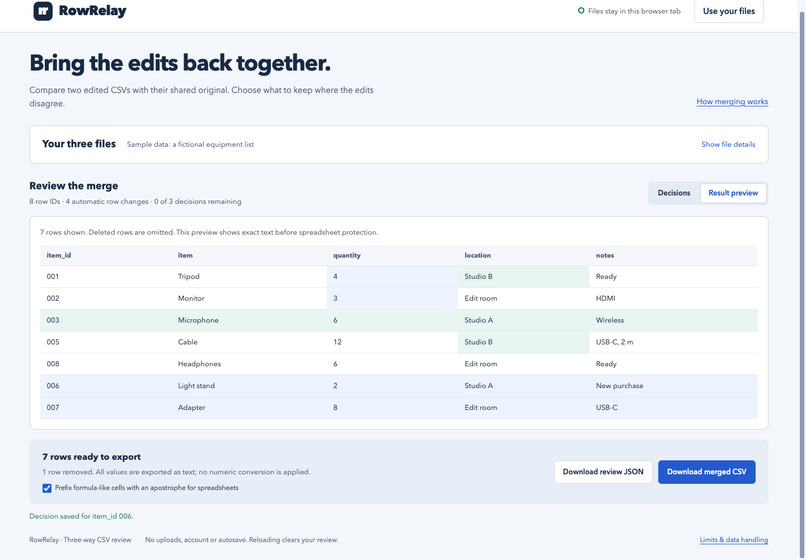
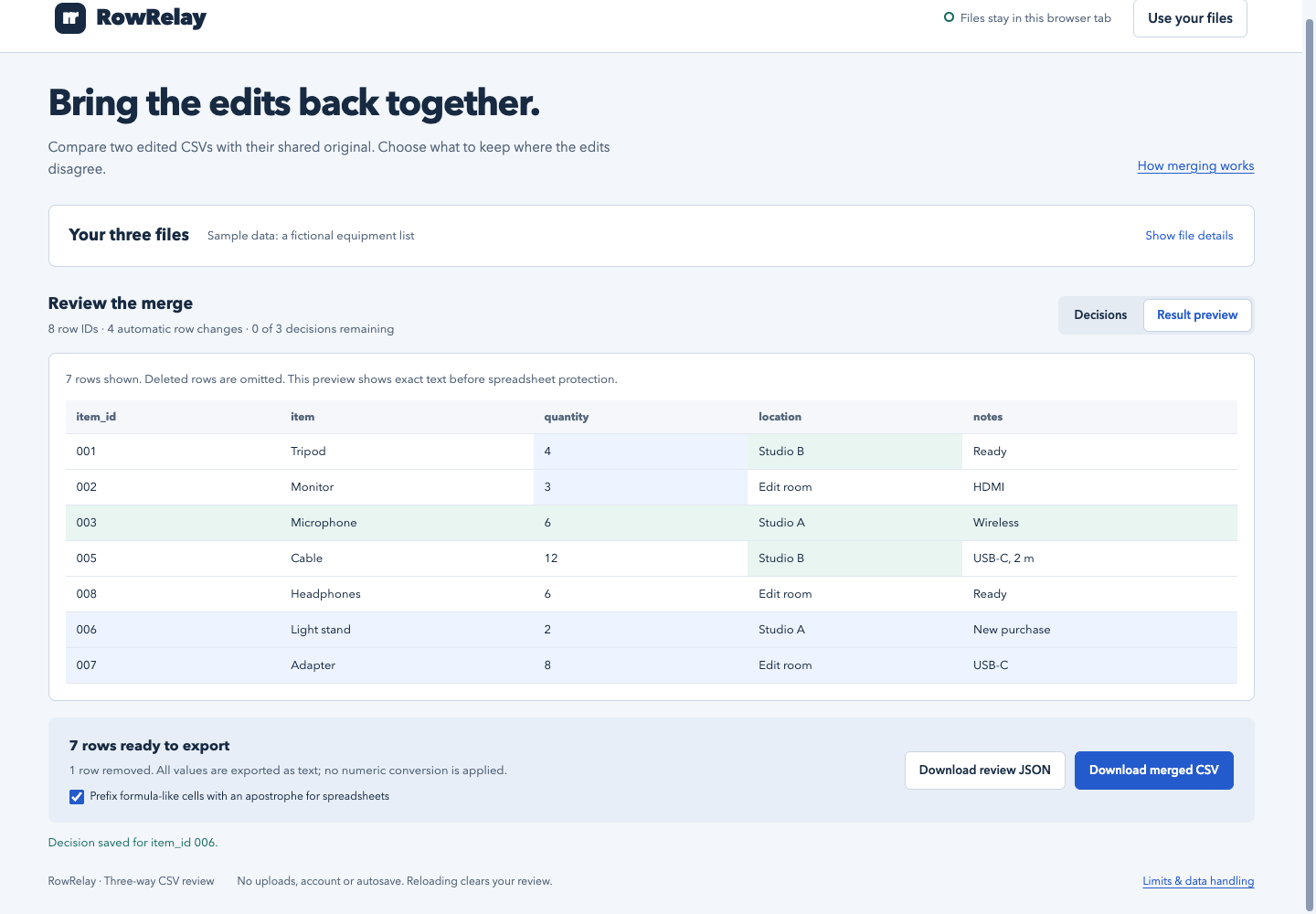
The resolved sample has seven rows and can be exported with its review record.
Why this exists
Two people start with the same equipment list and edit separate copies. One changes a quantity; the other moves an item to a different room. A comparison of the two final files shows differences but loses the information about who changed what.
RowRelay uses the shared original as a third input. It matches rows by a stable ID, combines compatible edits and asks for a decision when the changes conflict. Files stay in the browser tab.
What it does
The review opens with a fictional equipment list. The Tripod row combines a quantity change from Copy A with a location change from Copy B. Three other rows show situations that need a decision: different edits to the same quantity, a deletion opposed by an edit, and different new items assigned the same ID.
Each conflict shows the original and both copies together. Cell conflicts can use either copy, return to the original or take custom text. Deletion and addition conflicts require a whole-row choice. CSV export becomes available once every conflict has a decision. A separate JSON download records the source-text hashes, original values, automatic merge provenance and explicit choices, including an unfinished review if needed.
Implementation
The app uses JavaScript modules, HTML and CSS with no third-party runtime dependencies. A strict CSV parser handles quoted commas, escaped quotes, multiline cells and Unicode while preserving values as strings. The merge engine uses keyed maps and compares each cell with its original value. Reordering rows or columns does not change their identity.
Duplicate or empty IDs, inconsistent columns and malformed CSV records stop the comparison with an explanation. Spreadsheet protection optionally prefixes formula-like fields with an apostrophe; the preview and review record retain the exact unprefixed text.
Testing and iteration
The Node test suite has 29 passing tests. It includes an exhaustive 64-case comparison over row presence and values, generated CSV roundtrips, independent source-order checks, and the expected seven-row result from the sample workflow. Browser testing also downloaded the merged CSV and review JSON and checked the actual values.
The first mobile review put the file form above the decisions, requiring a long scroll. The revised interface collapses file details after comparison and expands them when the user supplies new files or needs to correct an error. A browser check also caught a singular/plural error in the export summary, which was corrected.
Scope and contribution
This is a new solo build created during the event window, starting November 11, 2026. OpenAI Codex assisted with implementation, tests, interface text and documentation; Aside assisted with browser testing. The sample data is synthetic, and no code or assets from earlier contest entries were reused. Browser APIs and system fonts provide the runtime; Node's built-in test runner and Python's static server support local testing.
This version requires comma-separated UTF-8 files with matching columns and one unique key. It does not reconcile schema changes, support composite keys or read Excel workbooks. Reviews are held in memory and cleared on reload; the JSON download is an inspection record, not an importable saved session.
