-
-
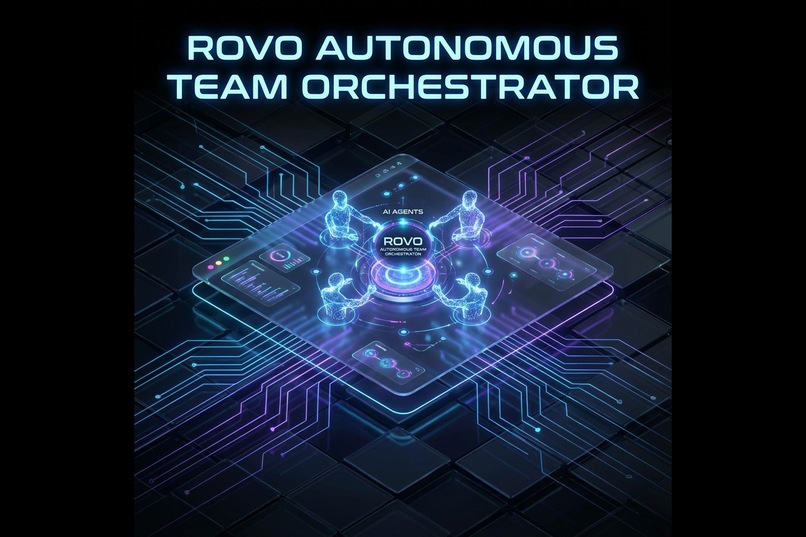
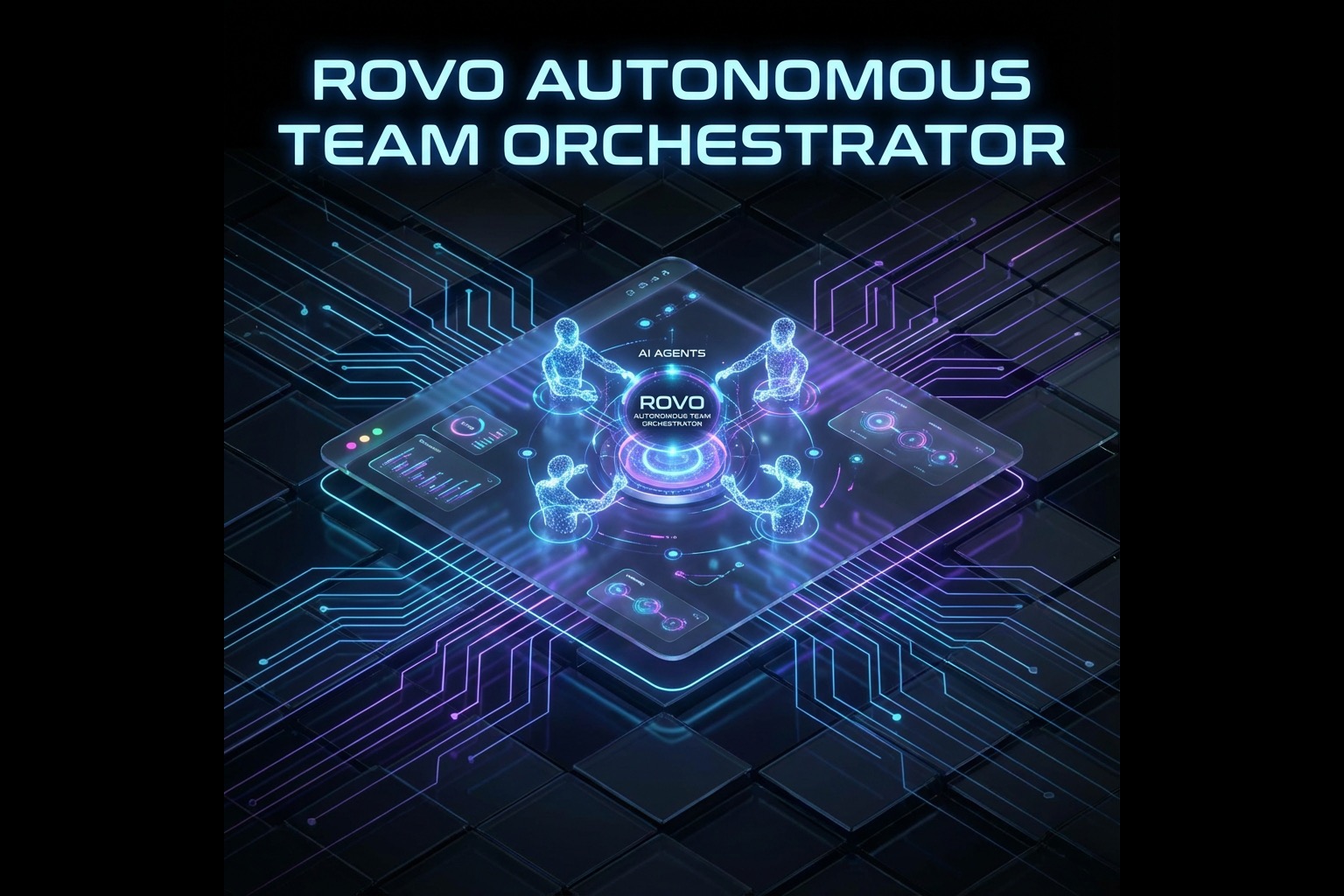
Rovo Autonoumous Team Orchestrator
-
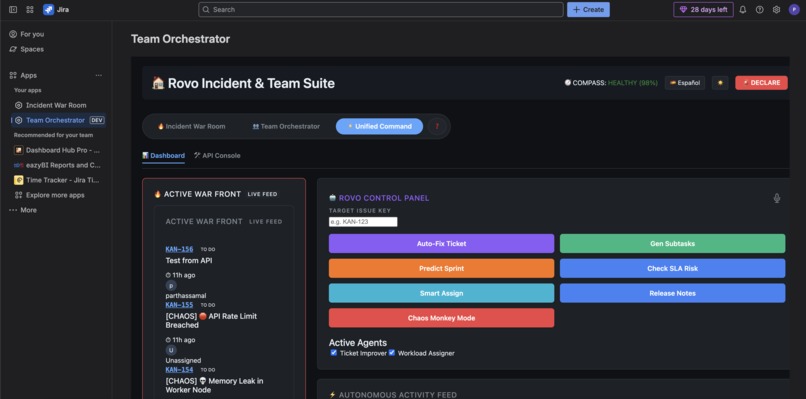
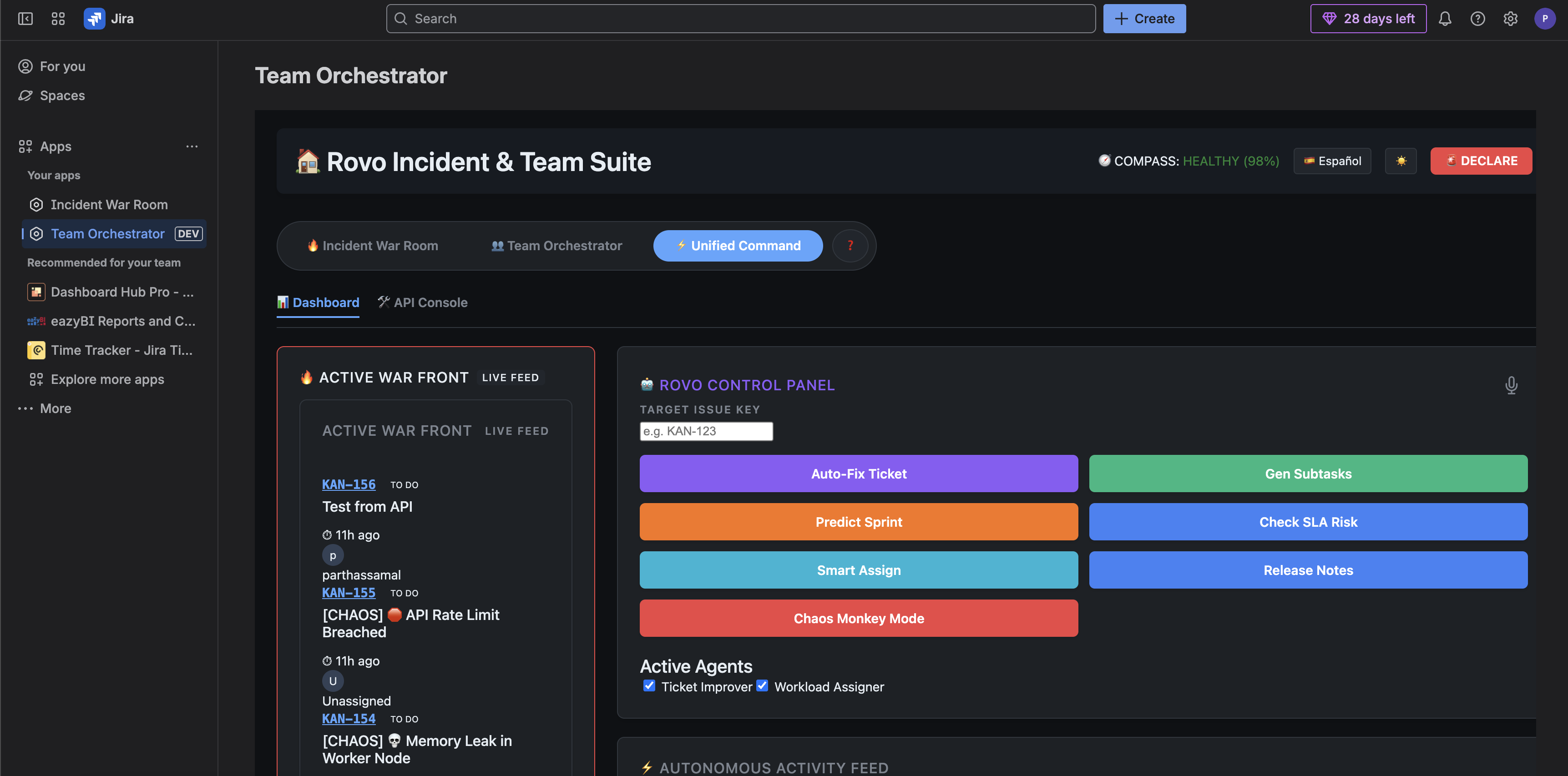
Team Orchestrator dashboard
-
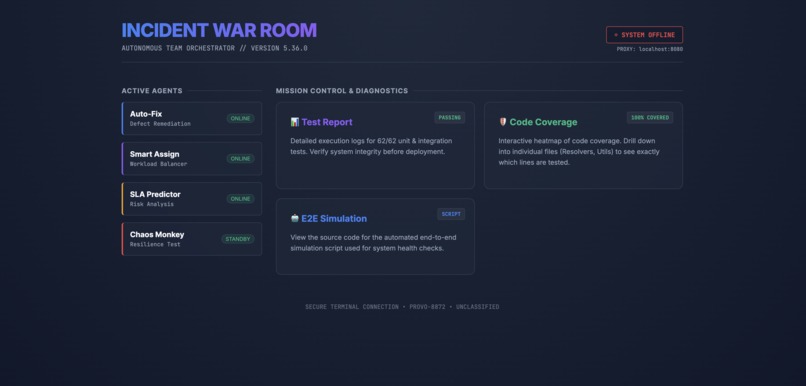
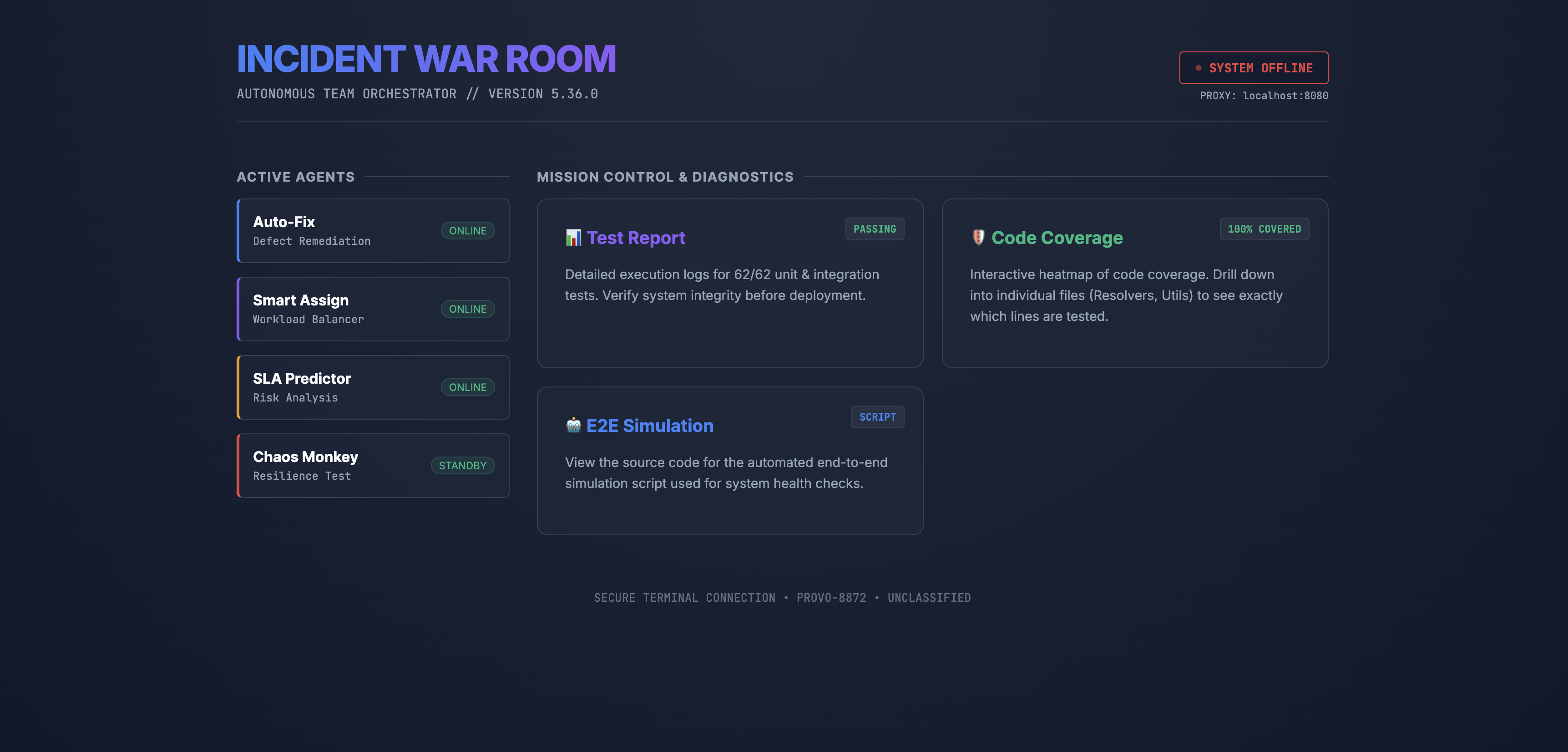
Report dashboard
-
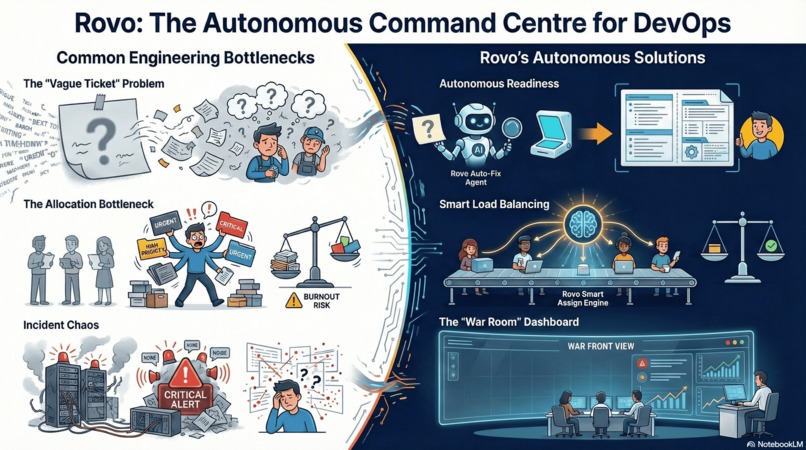
Project-Infographic

Inspiration
The inspiration for Rovo Autonomous Team Orchestrator came from a universal pain point in software engineering: friction.
High-velocity teams rarely fail because they lack technical skill. They fail because they drown in administrative toil that slows execution and erodes trust. We repeatedly observed three recurring patterns:
The “Lazy Ticket” Syndrome
Developers waste hours interpreting one-line bug reports such as “Fix login,” with no context, steps, or acceptance criteria.Burnout by Assignment
Tech leads manually assign work and unintentionally overload their strongest engineers, while others remain underutilized.Silent Failures
Critical alerts buried in Jira, email, or Slack go unnoticed until SLAs are already breached.
This led us to ask a fundamental question:
What if Jira were not just a record of work, but an active team member?
What if an AI agent could act as both a “pre-flight check” for tickets and a “traffic controller” for team workload?
What It Does
Rovo Autonomous Team Orchestrator is an agentic intelligence layer that sits on top of Jira, transforming it from a passive tracking system into a proactive teammate.
It provides three core capabilities:
Auto-Fix Agent (The “Pre-Flight Check”)
The system listens for newly created tickets. If a ticket lacks sufficient detail, the agent autonomously rewrites it using Rovo’s LLM, generating:
- User stories
- Acceptance criteria
- Structured implementation steps
This happens before a human engineer ever sees the ticket.
Smart Assign (The “Load Balancer”)
Instead of static or manual assignment, the system evaluates the live cognitive load of every developer. It filters out automation accounts and assigns the ticket to the engineer with the most available bandwidth, reducing burnout and balancing work distribution.
Incident War Room
A localized React dashboard embedded inside Jira visualizes:
- Active incidents
- SLA risk indicators
- System health signals
This creates a single, real-time operational view for the entire team.
How We Built It
The project was built as a Model Context Protocol (MCP)-powered application using Atlassian Forge.
Architecture Overview
The system is designed as a decoupled intelligence layer over Jira.
Frontend
- React dashboard embedded directly in Jira
- Uses
@forge/bridgefor secure communication - Custom Glassmorphism UI to distinguish intelligence from standard Jira tables
Backend (Forge Resolvers)
A modular, multi-agent system implemented in Node.js:
auto-fix.js– Expands vague tickets using Rovo’s LLMauto-assign.js– Computes workload-aware assignment decisionschaos-monkey.js– Injects controlled faults for resilience testing
Agent Communication
Agents follow Model Context Protocol (MCP) principles to standardize how they read Jira state and write actions back.
The Math Behind Smart Assign
To balance workload fairly, we implemented a weighted scoring model:
$$ Score_u = \frac{1}{(W_u + 1)} \times \mathbb{I}(u \in Humans) $$
Where:
- \(W_u\) is the number of active tickets assigned to user \(u\)
- \(\mathbb{I}\) filters out automation and bot accounts
Challenges We Ran Into
Jira Indexing Latency
Tickets created via API are not immediately searchable through JQL.
Solution:
Adaptive client-side polling and optimistic UI updates masked eventual consistency delays.
Structuring LLM Output
Producing consistently formatted user stories from vague inputs was difficult.
Solution:
Few-shot prompting with a strict Markdown template enforced output structure.
Safe Chaos Engineering
We wanted fault injection without risking production data.
Solution:
The Chaos agent operates only on tickets prefixed with [CHAOS].
Accomplishments We’re Proud Of
- 100% Unit Test Coverage for agents and resolvers
- Production-Grade UI with a custom Glassmorphism dashboard
- Latency Masking that makes Auto-Fix feel instant
What We Learned
- Agents > Chatbots – Users want Jira to act, not converse
- The Power of Forge – Serverless deployment without infrastructure overhead
- Transparency Builds Trust – Explaining assignment decisions increased adoption
What’s Next
- Predictive SLAs using historical signals
- Git Integration to account for PR review load
- Multi-Team Orchestration across Jira projects
Built With
- atlassian-forge
- bitbucket
- confluence
- glassmorphism-ui
- jest
- jira
- jira-cloud
- mcp
- mermaid-js
- node.js
- react
- rovo


Log in or sign up for Devpost to join the conversation.