Inspiration
Smart-home routines are designed to make everyday tasks easier, but when a routine fails, it can be difficult to understand what went wrong. We wanted to make troubleshooting more transparent by creating an interactive environment where users can investigate failures, understand the evidence, and verify a simulated fix without requiring physical smart-home hardware.
What it does
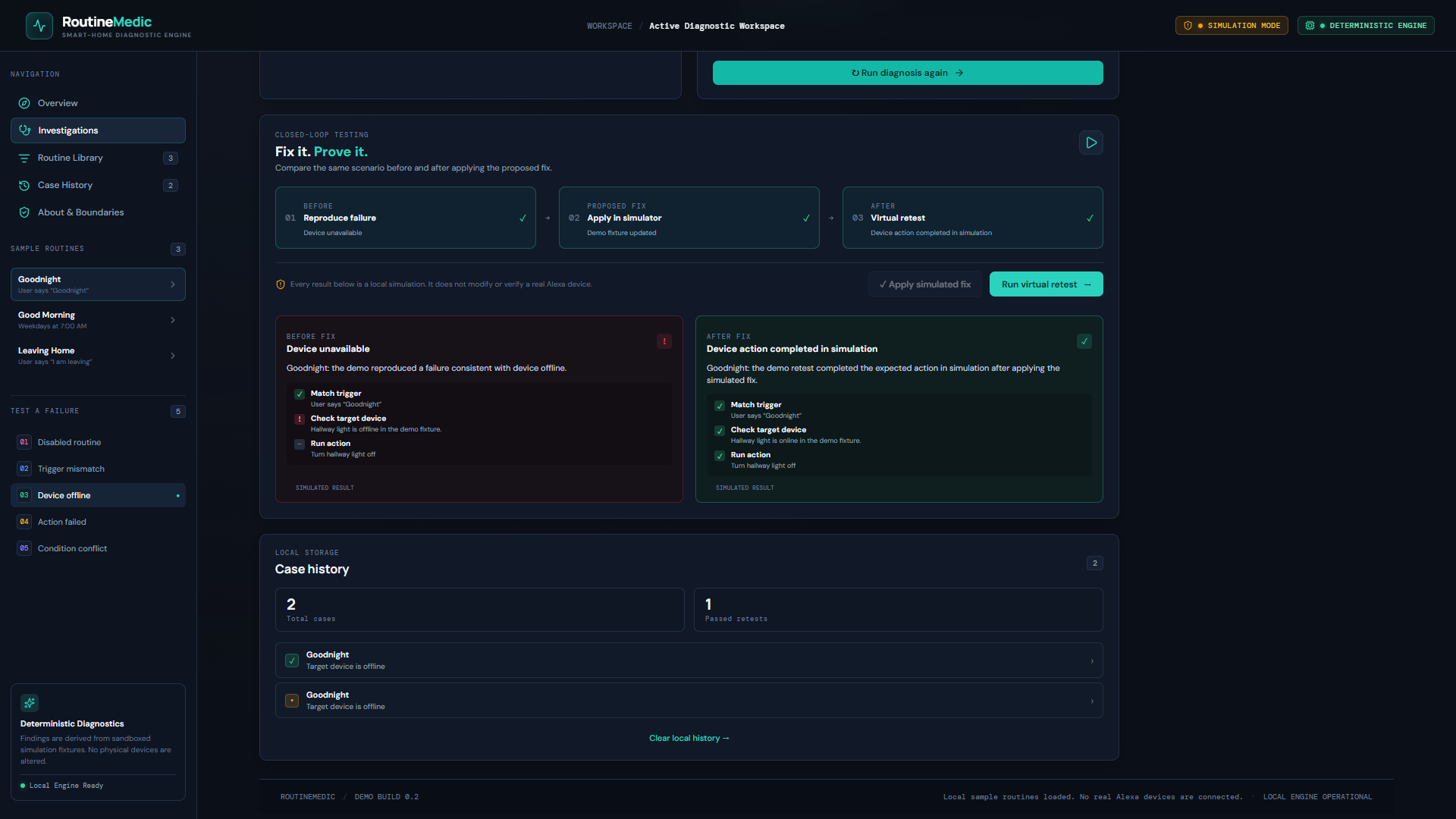
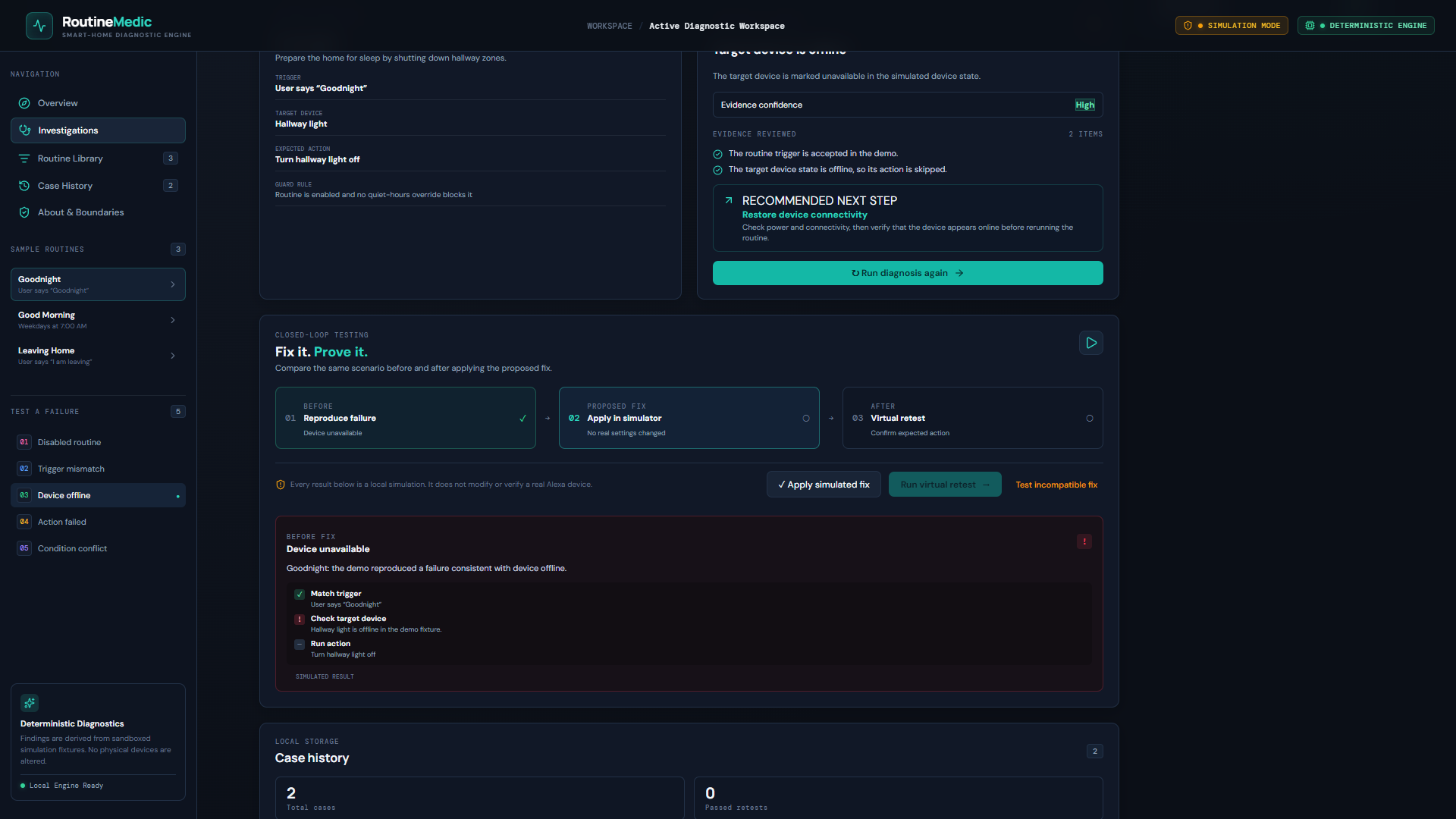
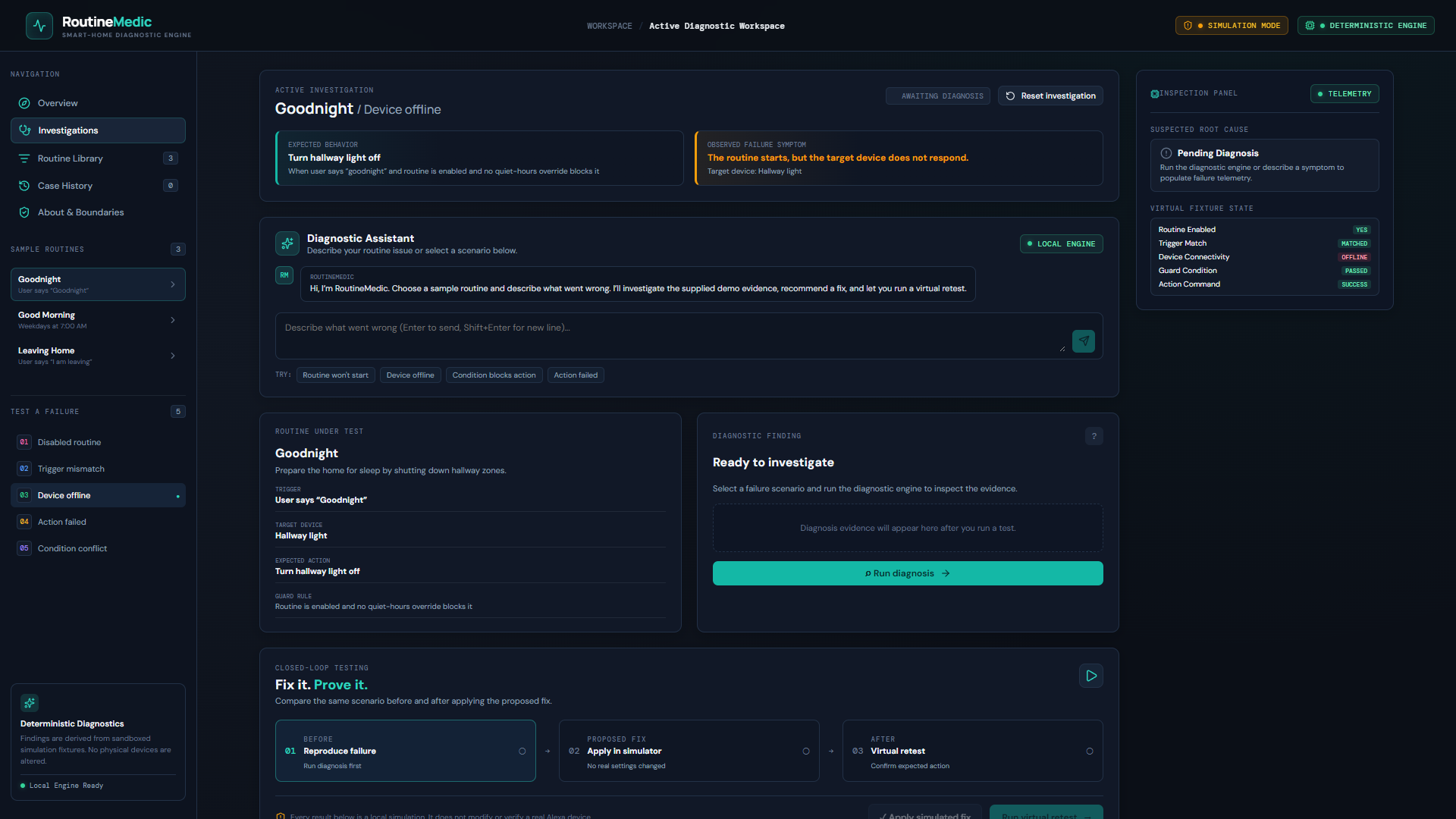
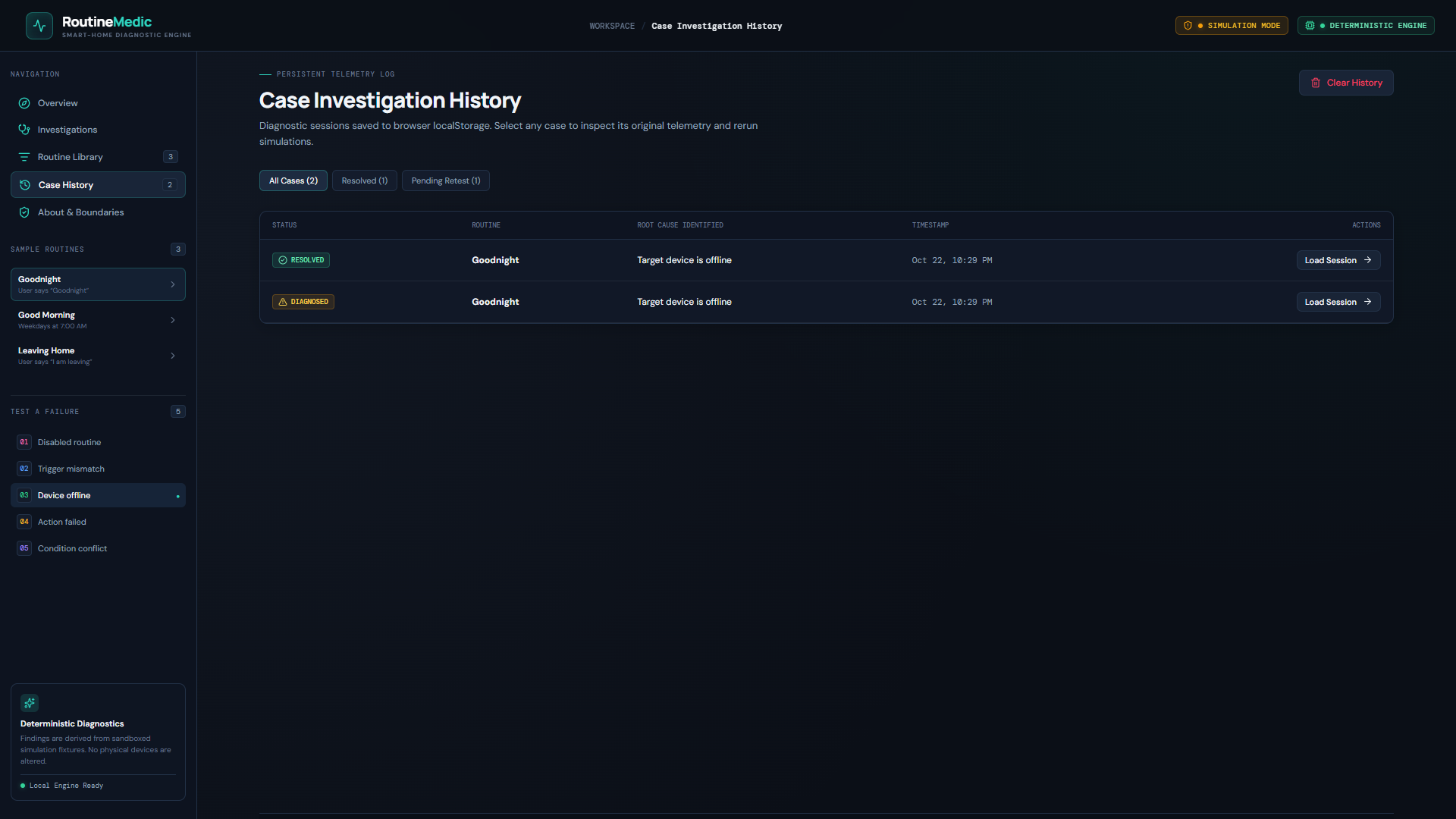
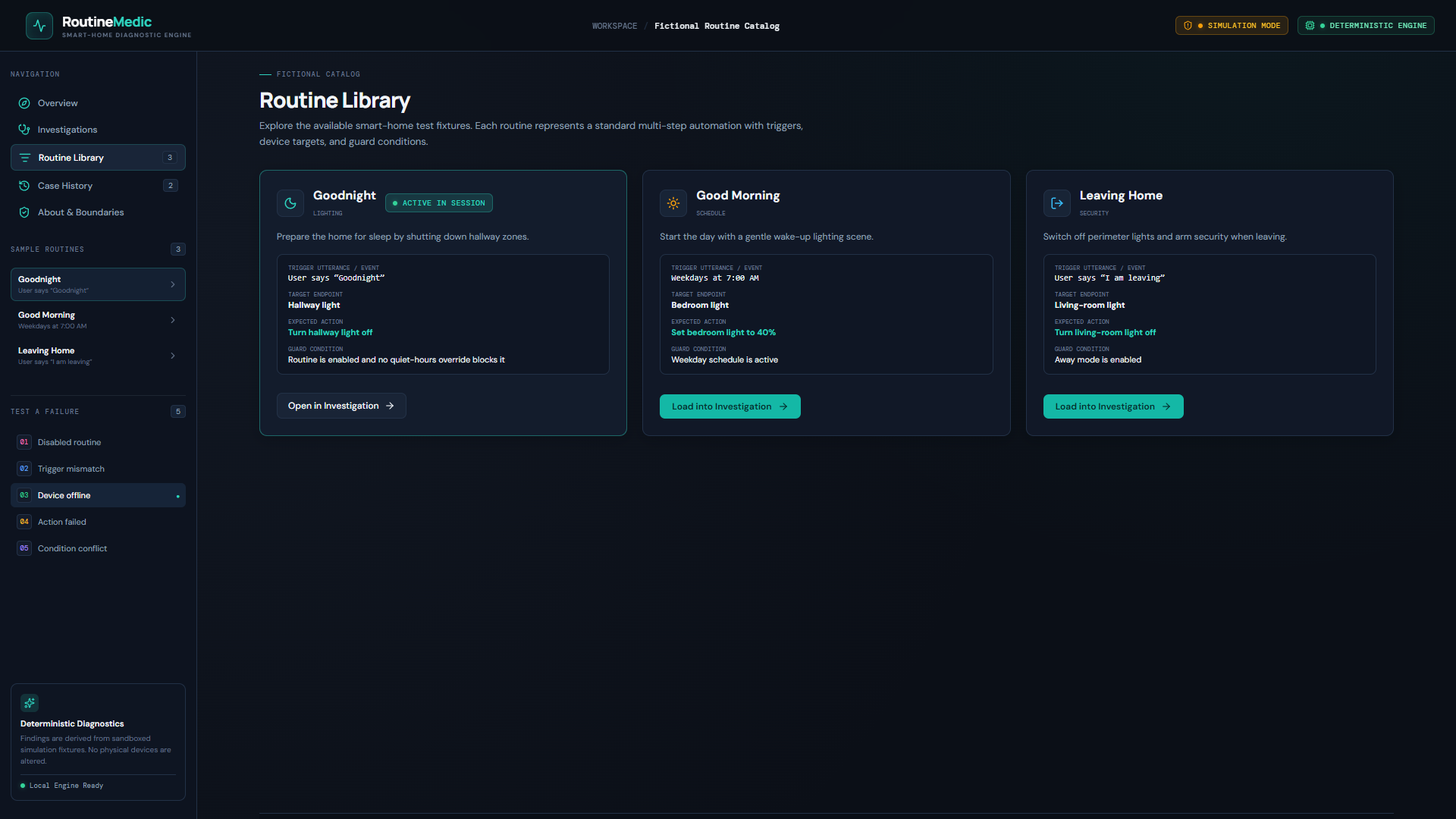
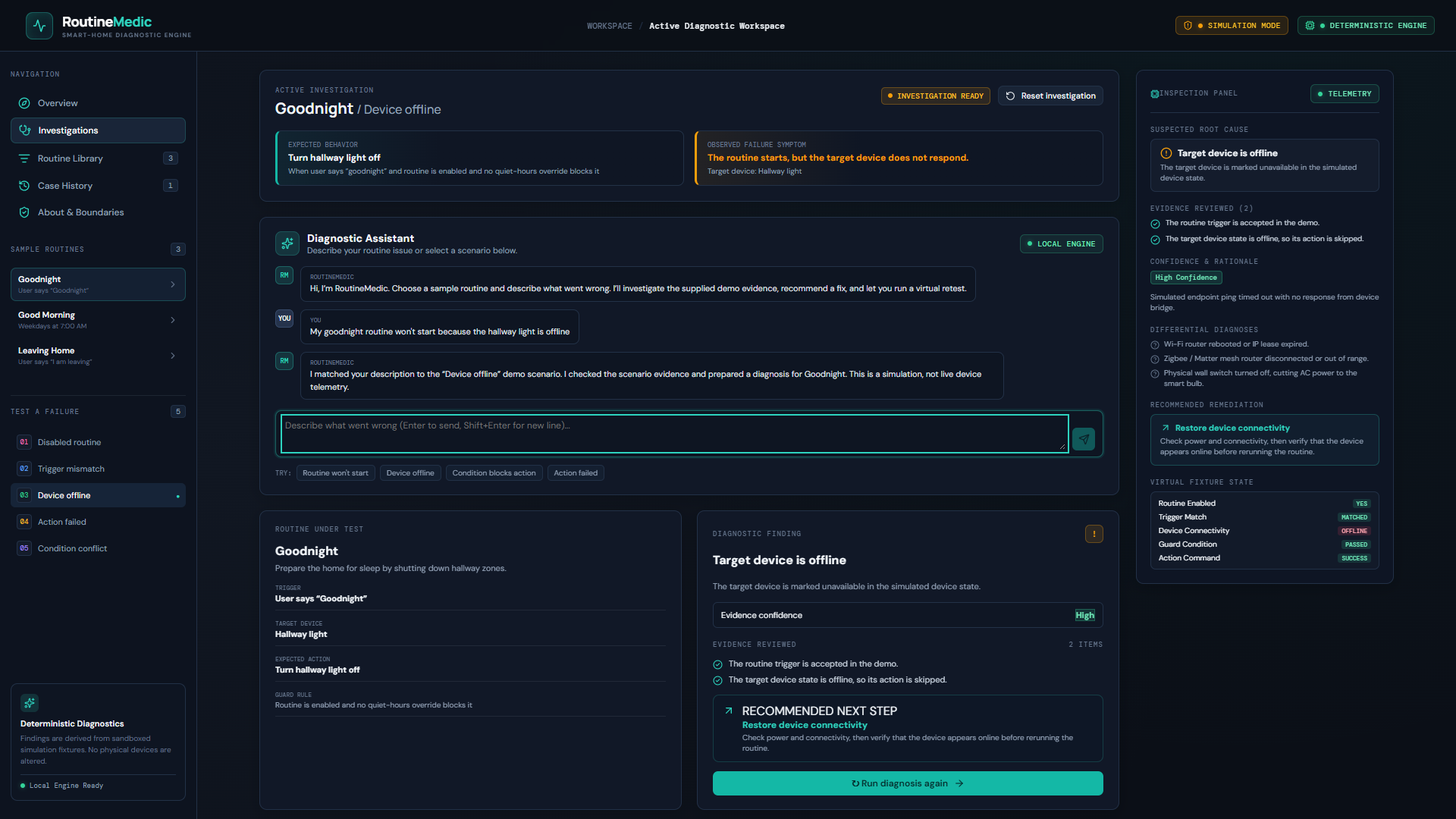
RoutineMedic is a browser-based smart-home routine diagnostic simulator. Users can explore fictional routines, investigate simulated failures, review diagnostic evidence and recommendations, apply virtual fixes, and run a retest to inspect the outcome. The application also provides a routine library and investigation history, allowing users to revisit previous cases.
Its core workflow is Diagnose → Understand → Fix → Retest → Review.
How we built it
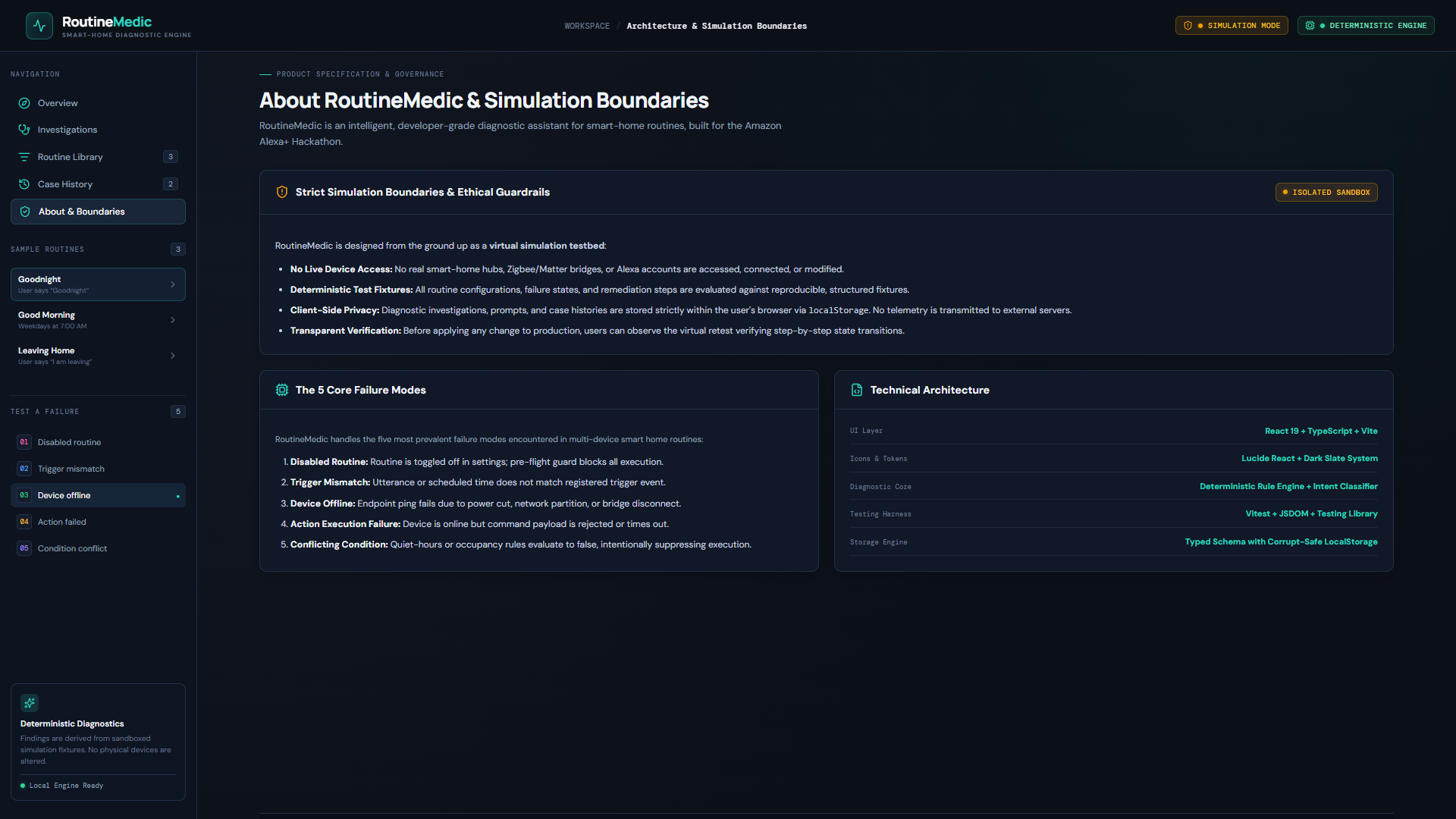
We built RoutineMedic as a web application using React, TypeScript, and Vite. Its interface is organized around the dashboard, routine library, investigation workflow, case history, and project information. The simulator presents predefined smart-home scenarios and guides users through a structured troubleshooting process.
The application focuses on making each step understandable and keeping the simulated investigation separate from real device control.
Challenges we ran into
One of the main challenges was demonstrating a useful troubleshooting workflow without connecting to physical Alexa devices. We needed to make failures, supporting evidence, proposed fixes, and retest results clear enough for users to follow. Another challenge was organizing the investigation screens and case history into a coherent experience while keeping the simulation's limitations transparent.
Accomplishments that we're proud of
We created an interactive end-to-end diagnostic experience rather than a static dashboard. Users can explore routine scenarios, follow an investigation, apply a simulated fix, review the virtual retest, and revisit saved cases. We are proud of building a practical demonstration of how structured troubleshooting can make smart-home routine failures easier to understand.
What we learned
We learned the importance of showing not just a suspected problem, but also the evidence behind a diagnosis and the result of a proposed fix. We also learned that a useful simulation should clearly explain what it can demonstrate and what it cannot do.
What's next for RoutineMedic
We plan to improve the clarity of diagnostic explanations, expand the range of simulated fault scenarios, improve accessibility, and explore ways to make investigation reports easier to share. Any future connection to real smart-home services would require an appropriate integration, permissions, and additional testing.
Built With
- css
- javascript
- localstorage
- playwright
- react
- typescript
- vite
- vitest

Log in or sign up for Devpost to join the conversation.