-
-
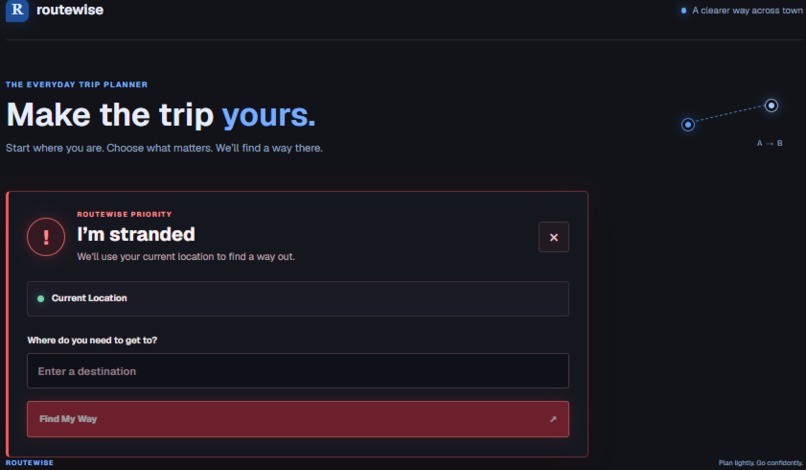
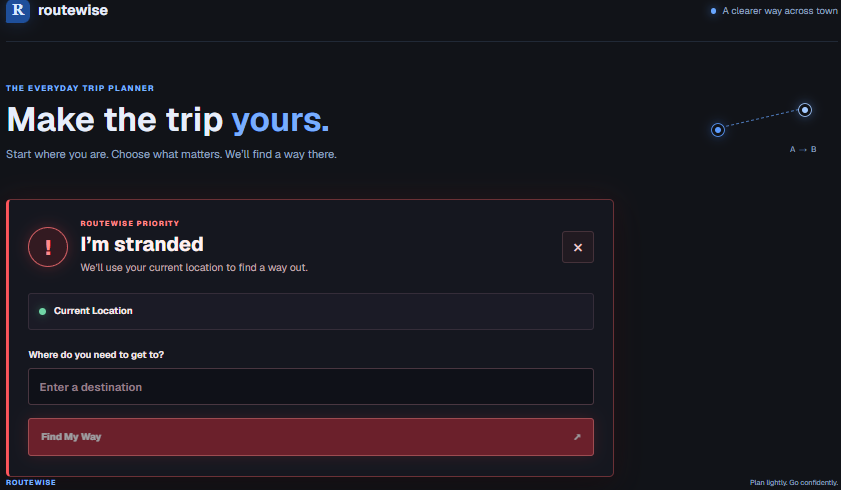
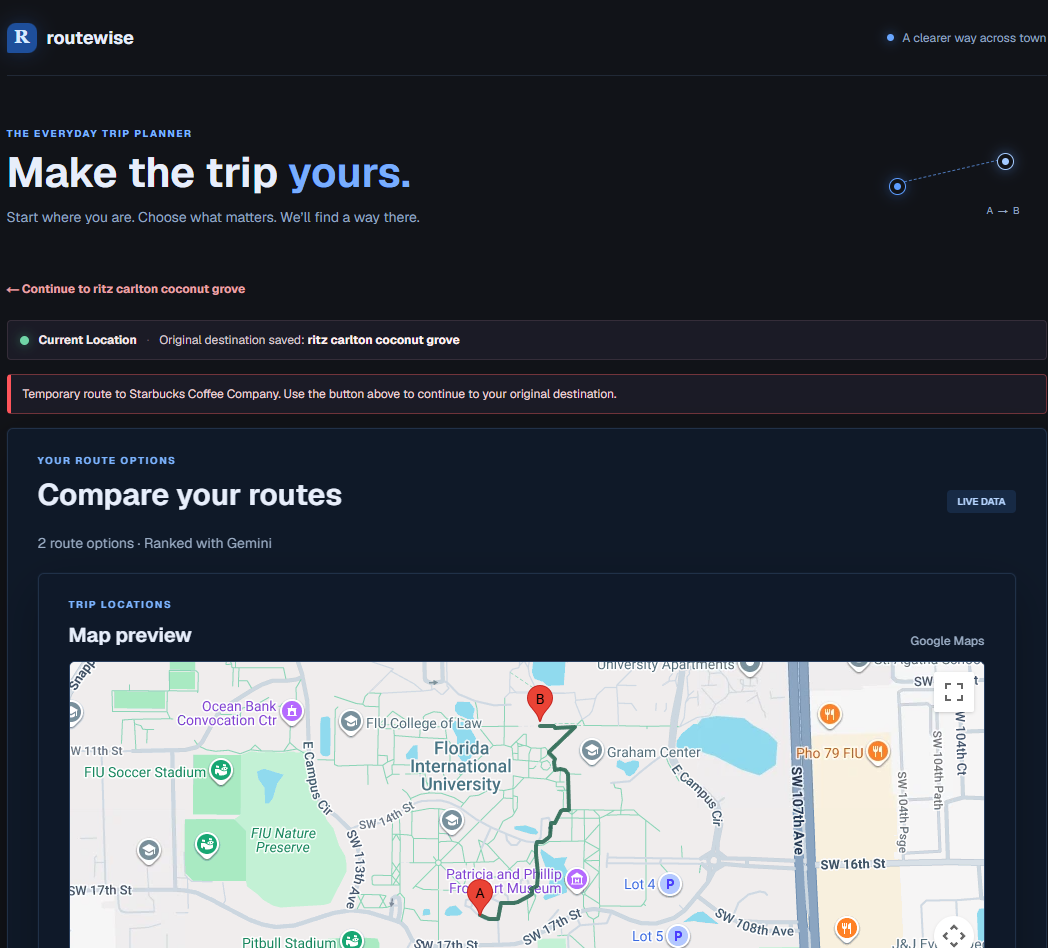
Simpler and Faster when in Stranded mode
-
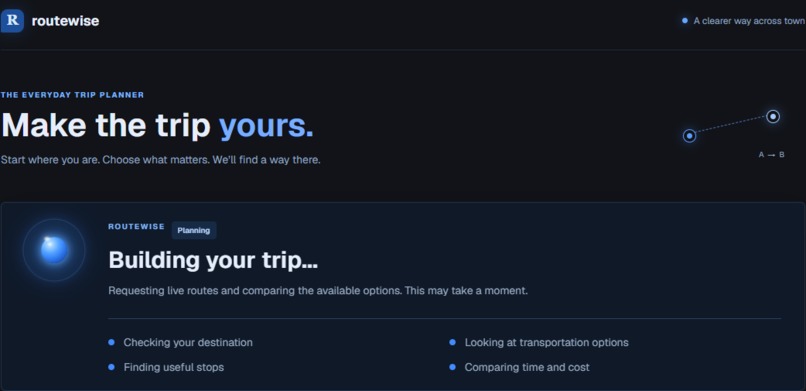
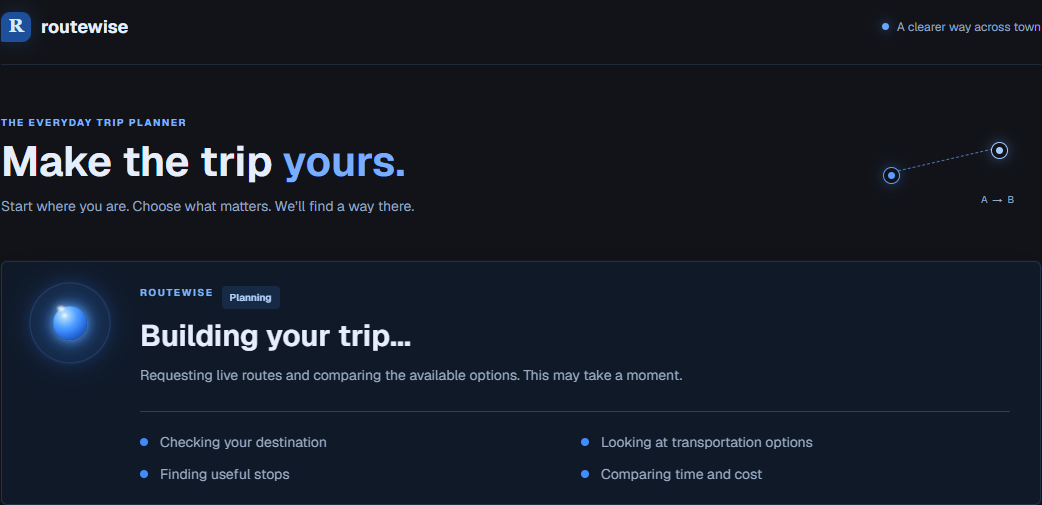
Typical loading screen
-
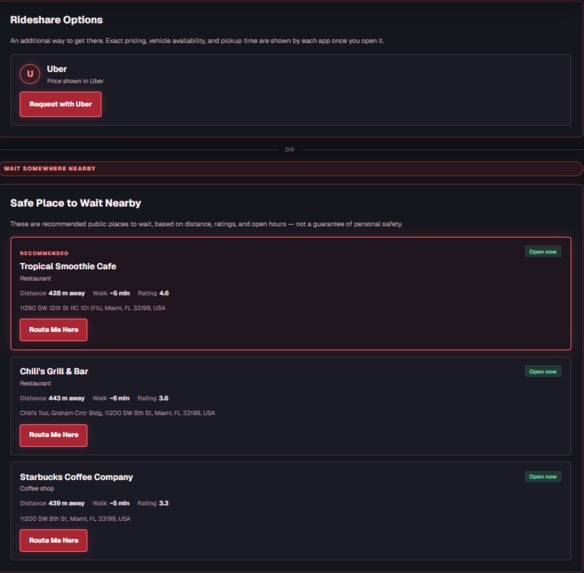
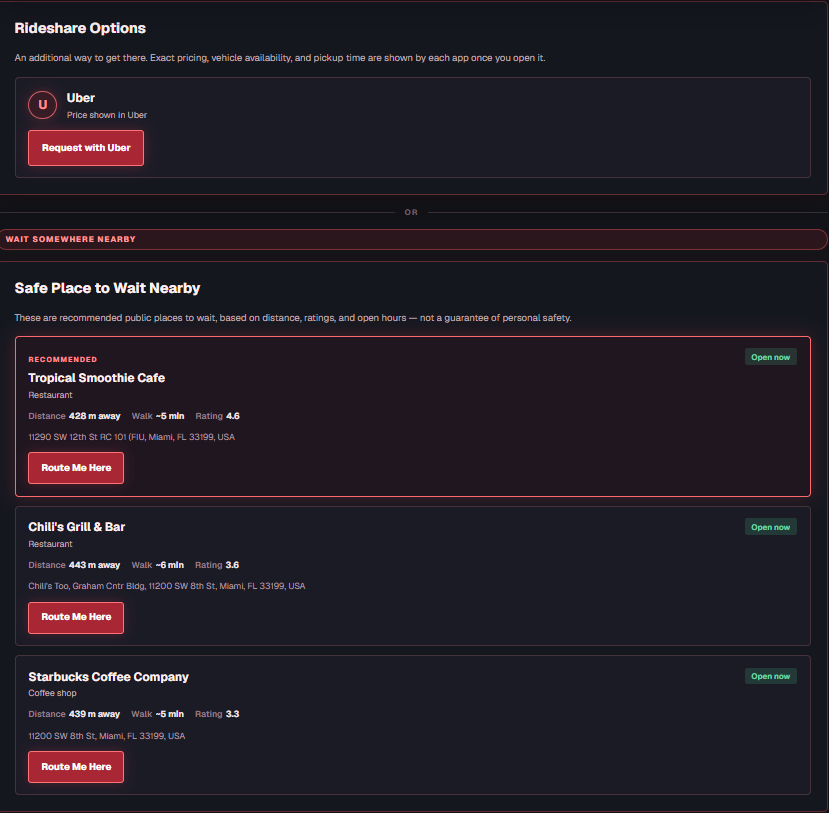
Safe Places to wait when stranded
-
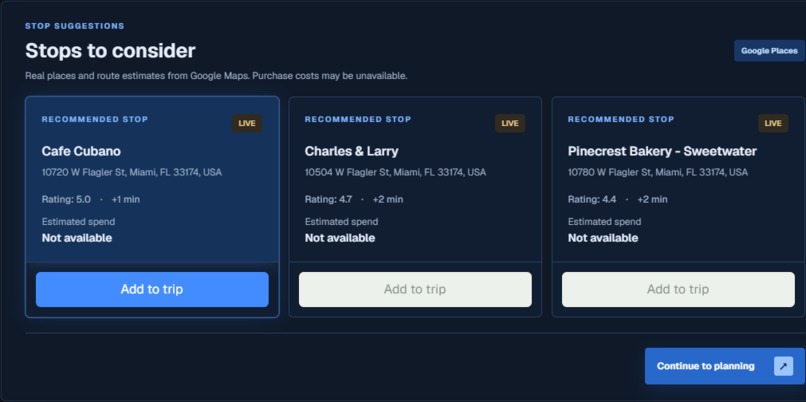
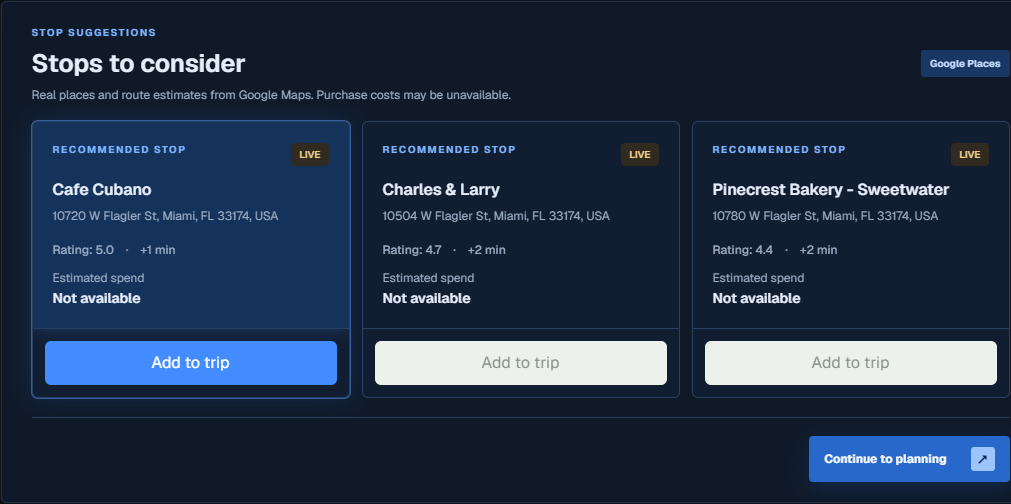
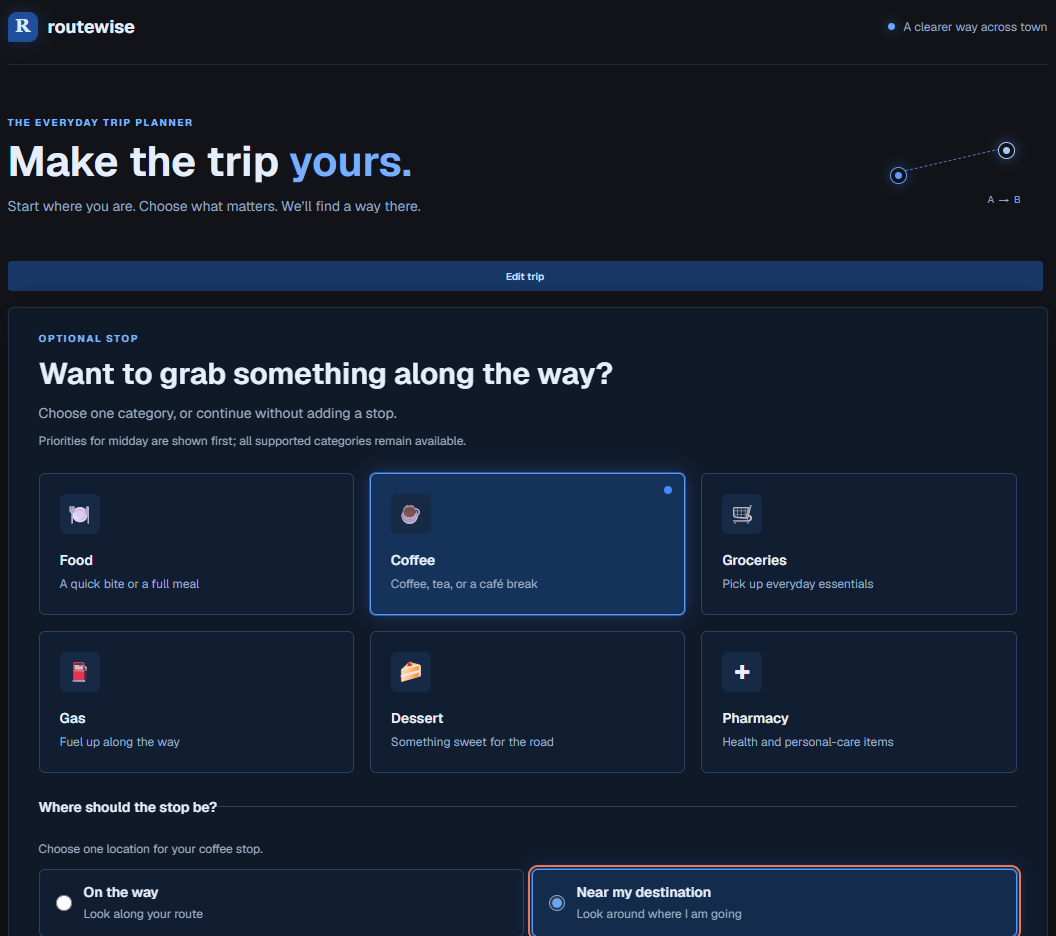
Additional stops
-
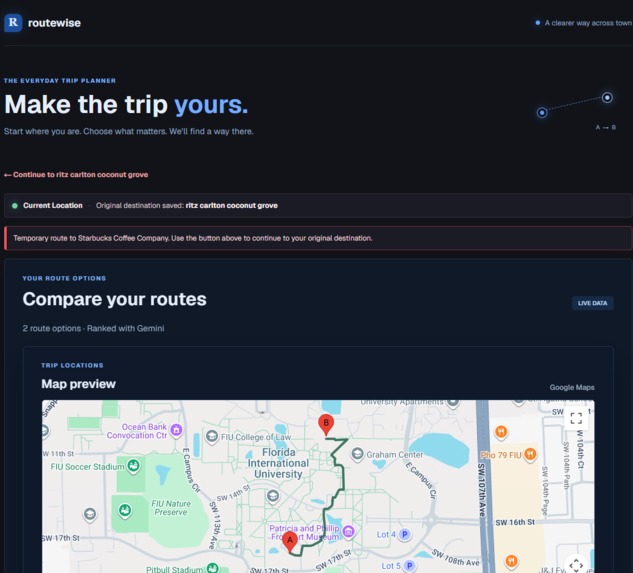
Directions to safe waiting space
-
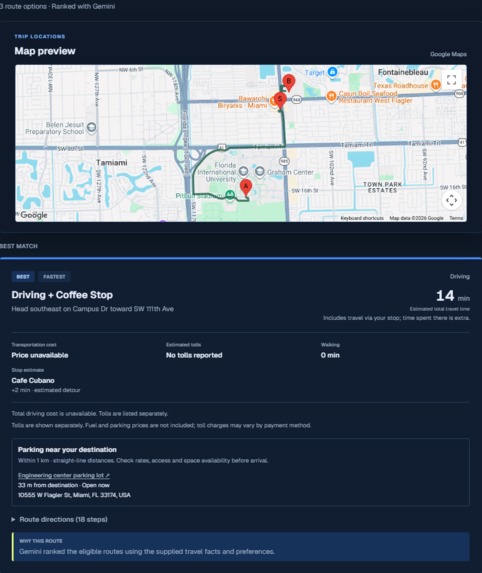
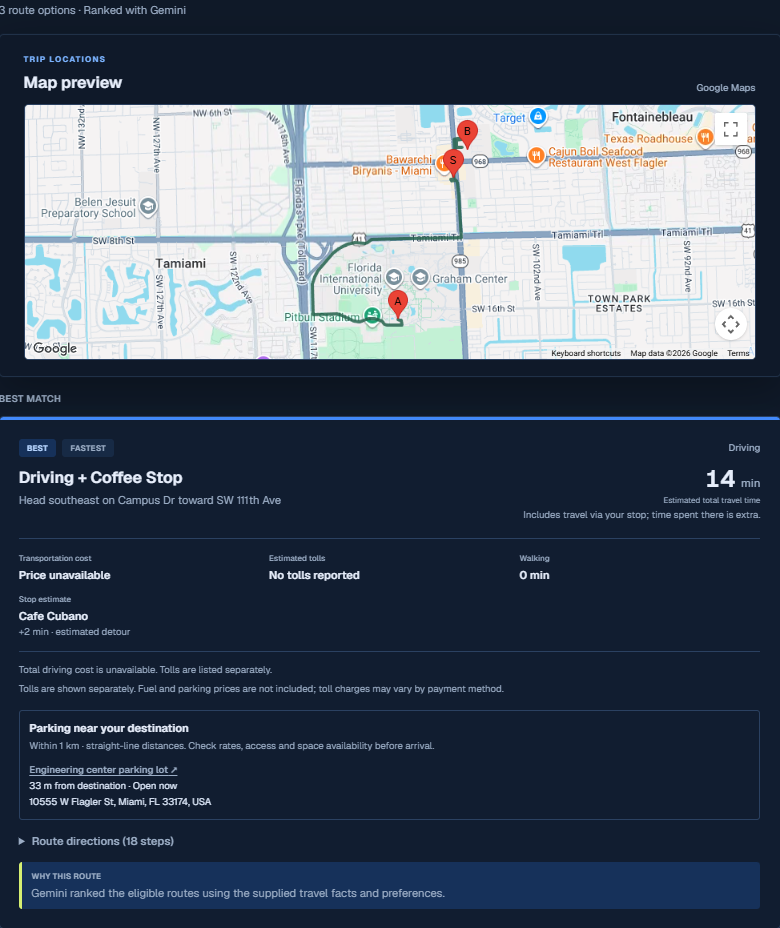
Typical results screen
-
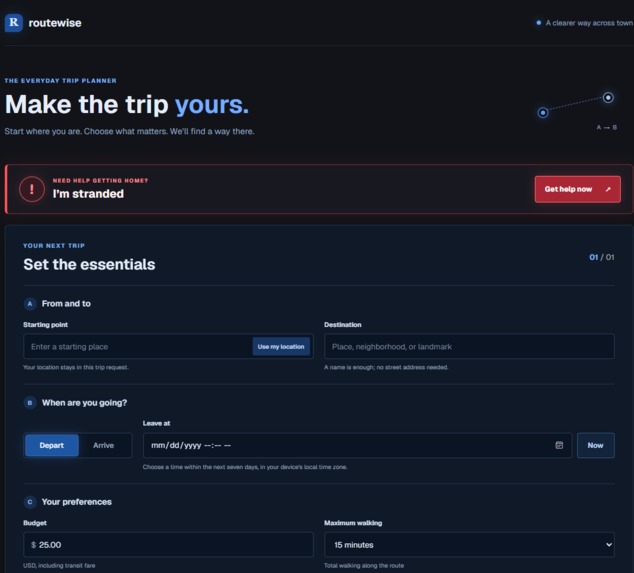
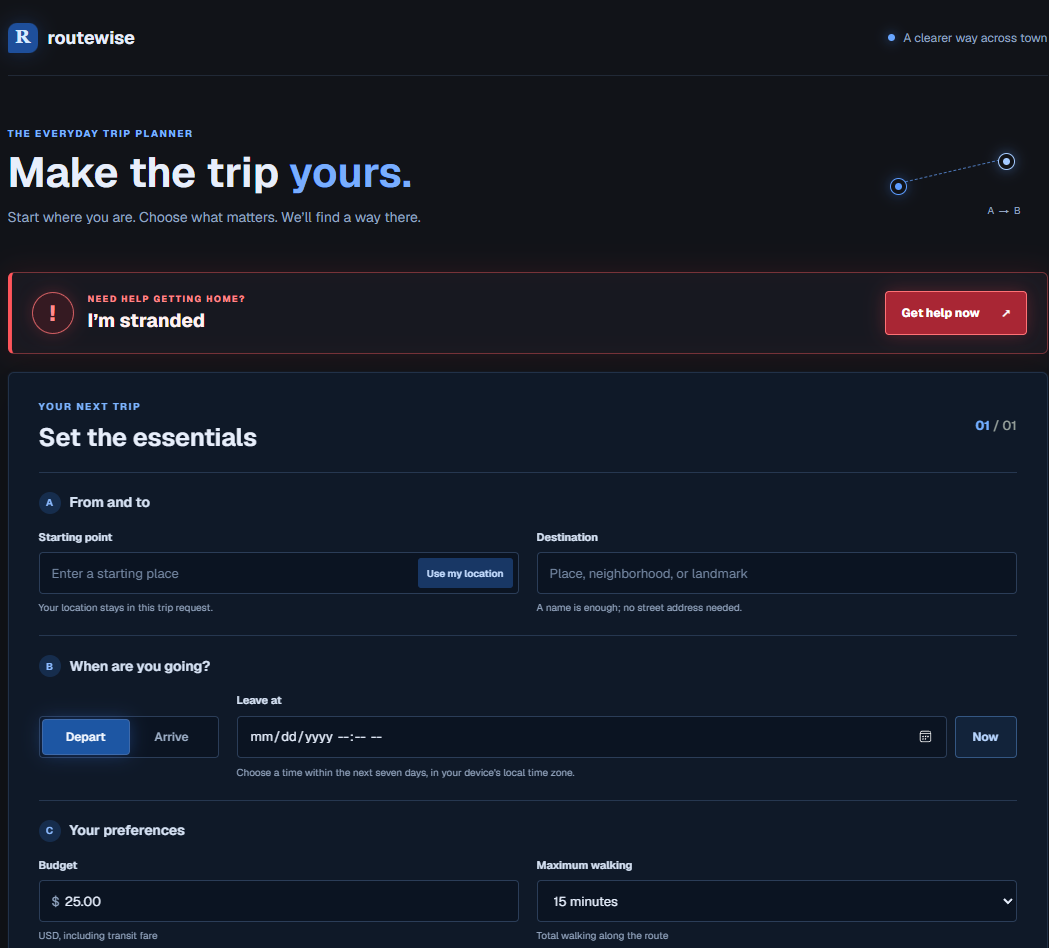
Homepage
-
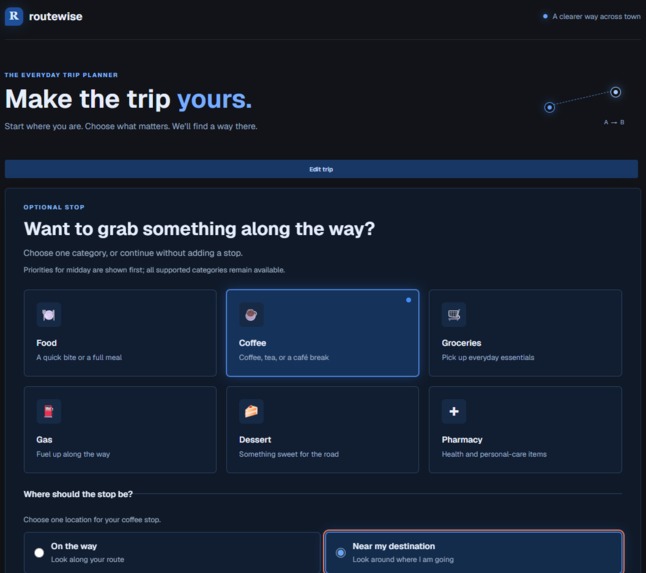
Additional stop option selector
Inspiration
With RouteWise, we wanted to build something that actually weighs the tradeoffs a student cares about, and implement safety features for real life scenarios. Most map apps optimize for one thing, usually just speed, and ignore budget or the fact that someone might rather wait ten extra minutes than pay for parking. Getting around Miami without a good maps service can be chaos, we built RouteWise to fix that.
What it does
RouteWise allows you to design a trip (origin, destination, budget, time window, and whether you have a car, will walk, or will take transit) and returns three ranked options: Best, Fastest, and Cheapest, built from real Google Maps route data and Google Places stop data rather than guesses. Along the way, you can optionally add a stop such as coffee, food, gas, groceries, dessert, or a pharmacy, either on your route or near your destination, with limits on how much extra time or money you're willing to spend on it. RouteWise will then generate its top 3 recommendations and allow you to add the stop while it automatically recalculates your trip time. If things go sideways mid-trip, the "I'm Stranded" Mode steps in with rideshare options including Waymo and Uber with a dedicated panel for finding somewhere safe to wait it out.
How we built it
The frontend is Next.js with the App Router, TypeScript, and Tailwind, built around a clear screen-state flow that moves from the trip form to checking the route, to an optional stop selection, to planning, to final results. The backend is a Node/TypeScript service with dedicated modules for Maps, Places, route normalization, and stop filtering, each kept isolated so real data and business logic stay separate from the ranking logic. For the AI layer, Gemini ranks the real candidate routes and stops that our services return. It's explicitly instructed never to invent a business or duration, and every ranking it returns is validated in code against the actual cheapest and fastest values before we trust it. If Gemini is ever unavailable, a deterministic fallback still produces a complete, valid plan. We deployed on Vercel with the frontend and backend unified into one same-origin Next.js app, so there's no CORS configuration needed in production.
Accomplishments that we're proud of
We're proud of shipping a working end-to-end BEST/FASTEST/CHEAPEST planner running on real Maps and Places data instead of mock data, so our website can be used by real people in real life scenarios. Also, an AI ranking layer that fails safely so the app never breaks or makes something up even when Gemini is down, and Stranded Mode, a full extra feature combining rideshare and safe-wait support that went beyond our original scope.
Built With
- css
- gemini-api
- html
- javascript
- json
- typescript

Log in or sign up for Devpost to join the conversation.