-
-
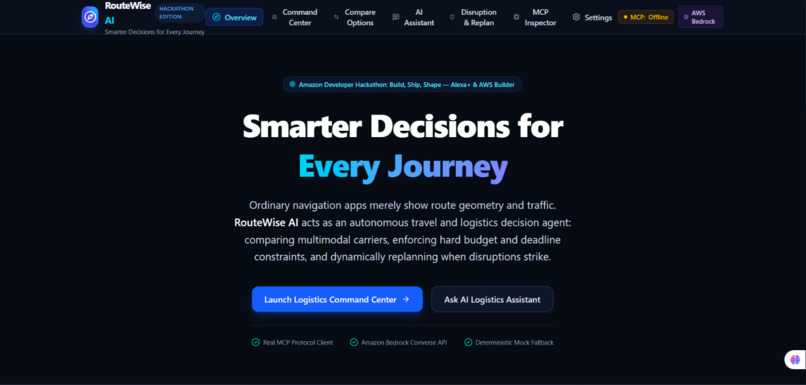
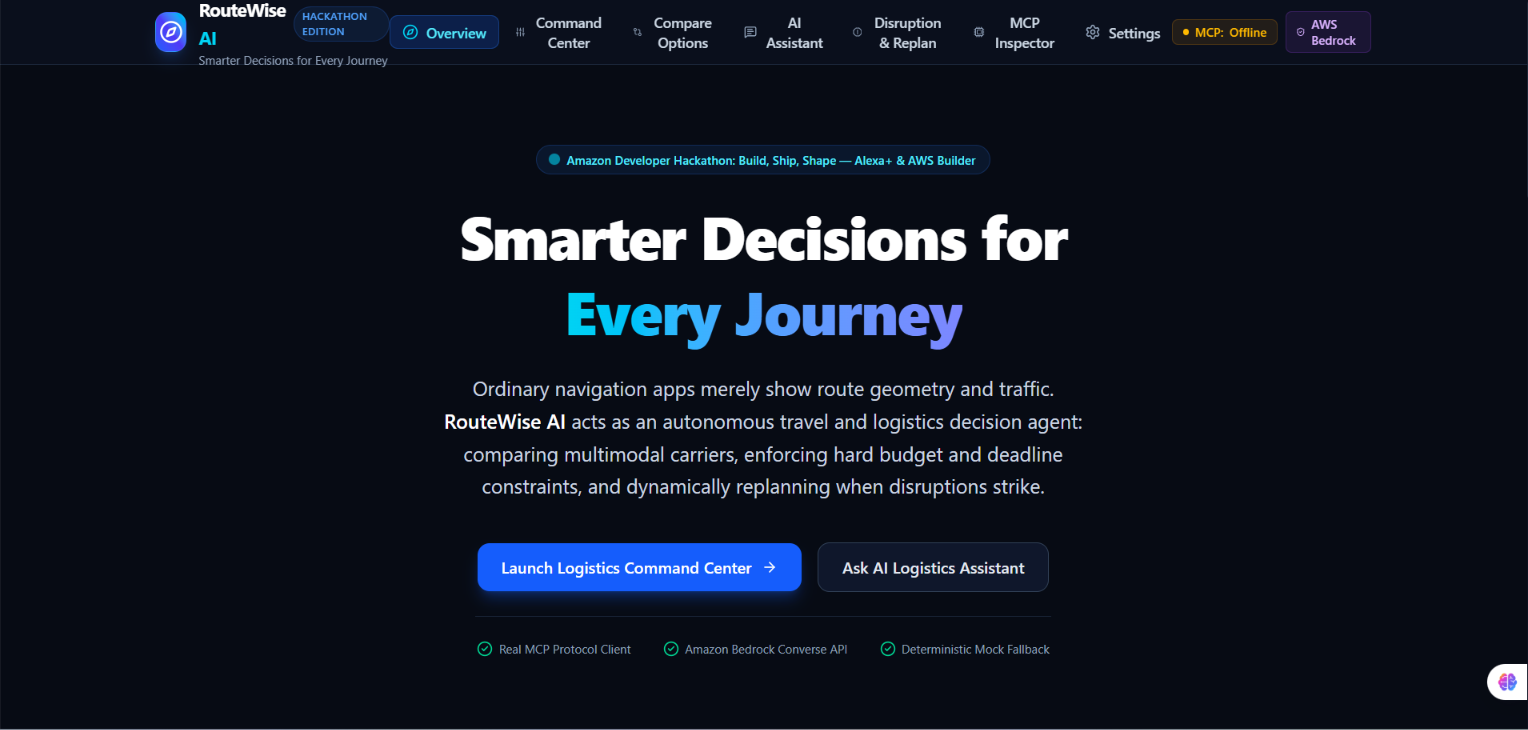
Introduces RouteWise AI for smart logistics planning and route optimization.
-
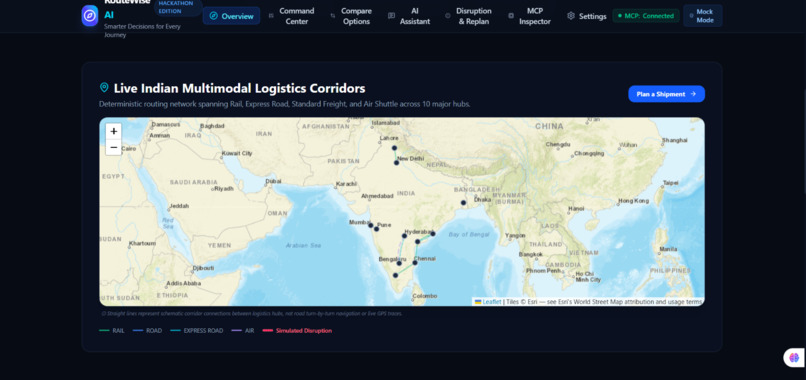
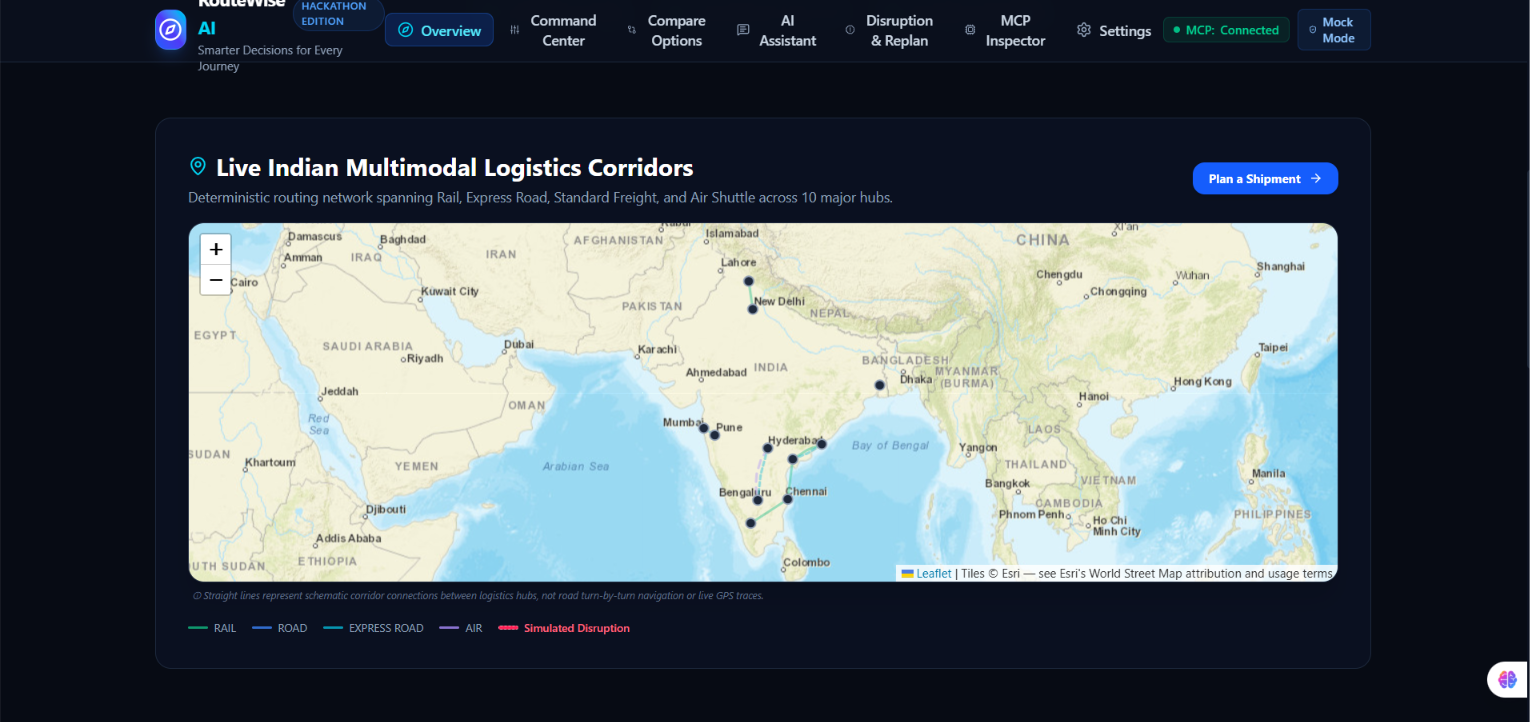
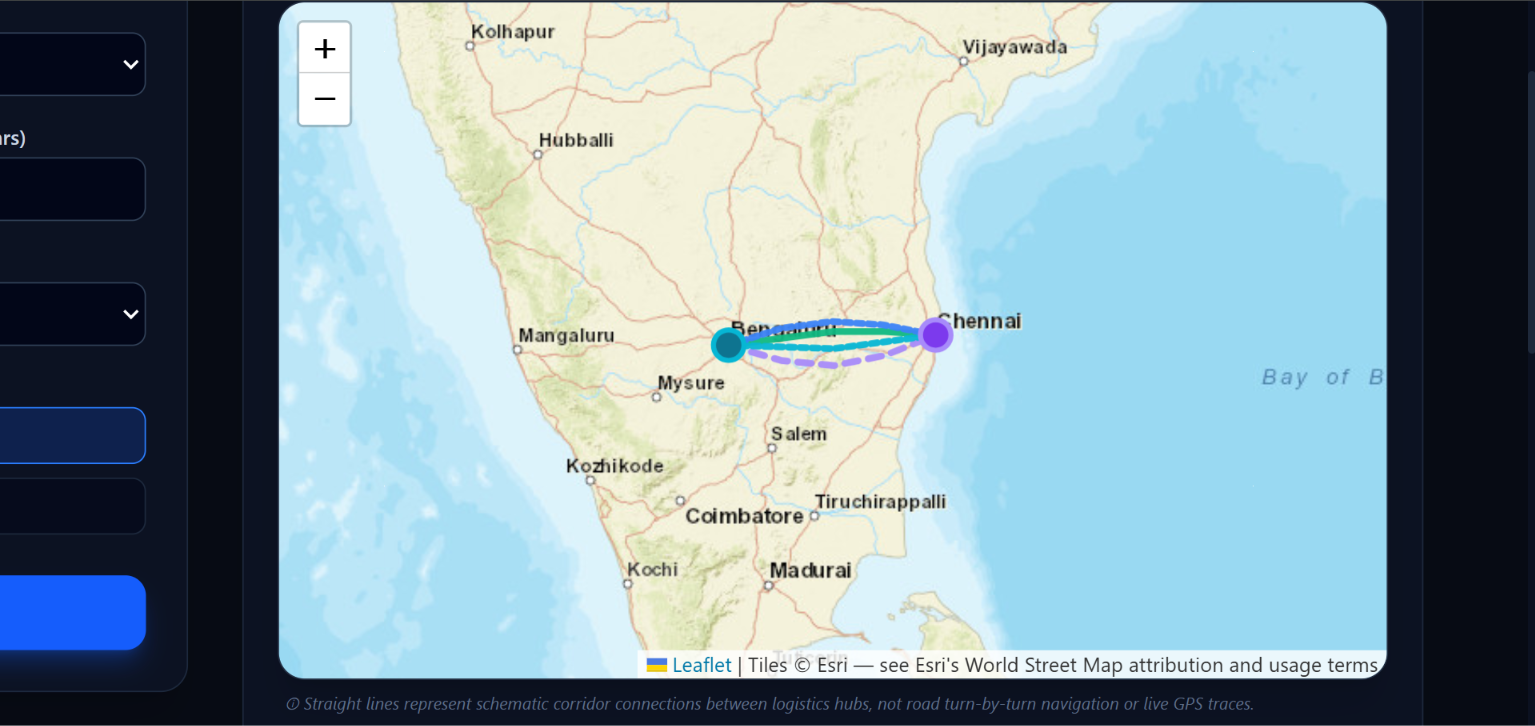
Logistics Corridors: Shows major Indian cities connected through different transport modes.
-
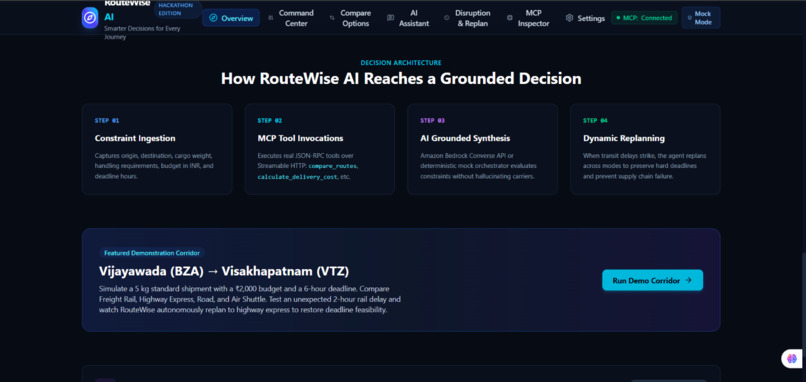
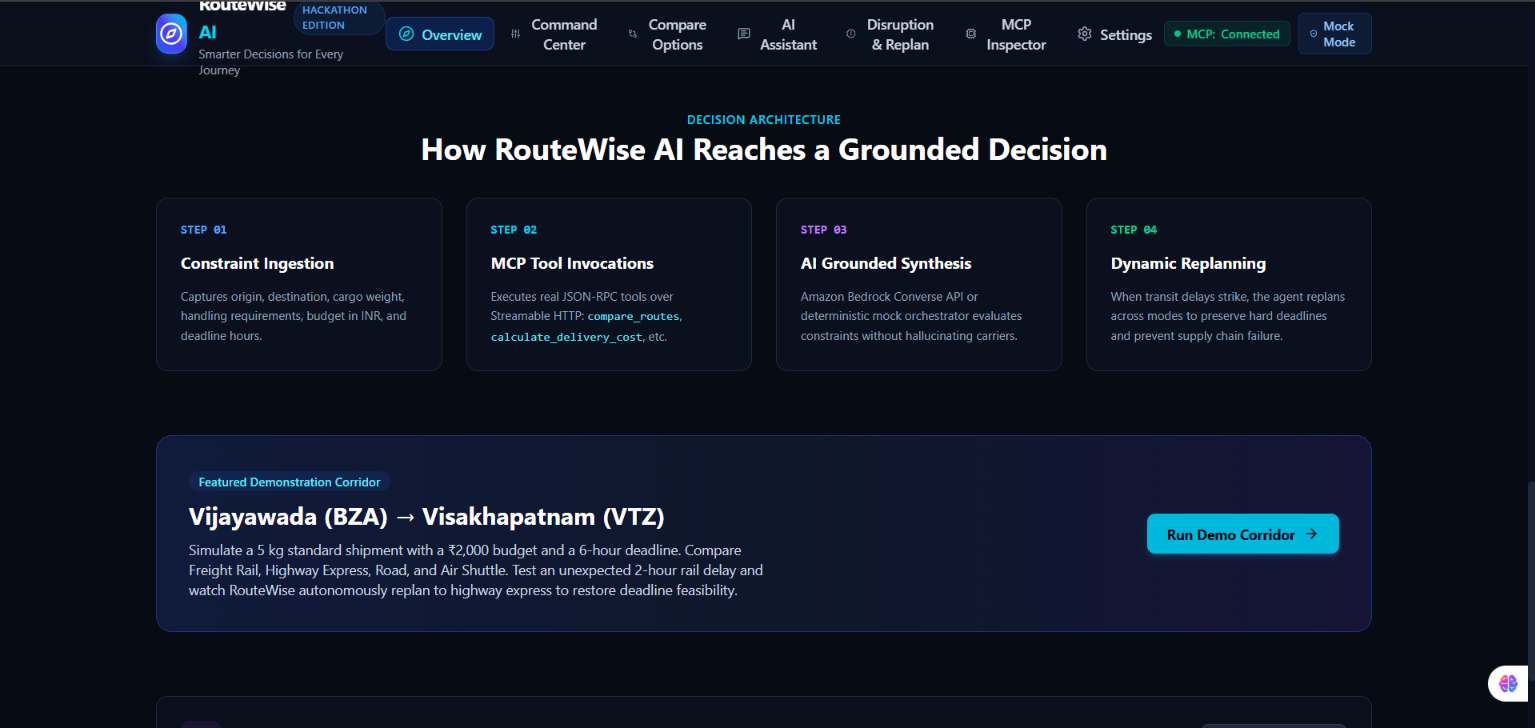
Decision Architecture: Explains how AI analyzes constraints and replans routes during disruptions.
-
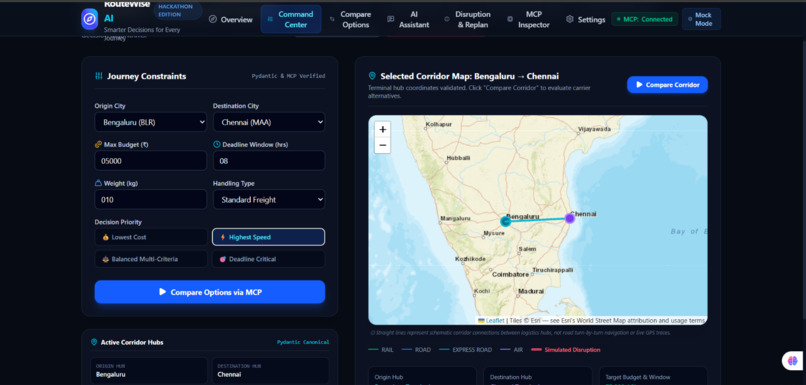
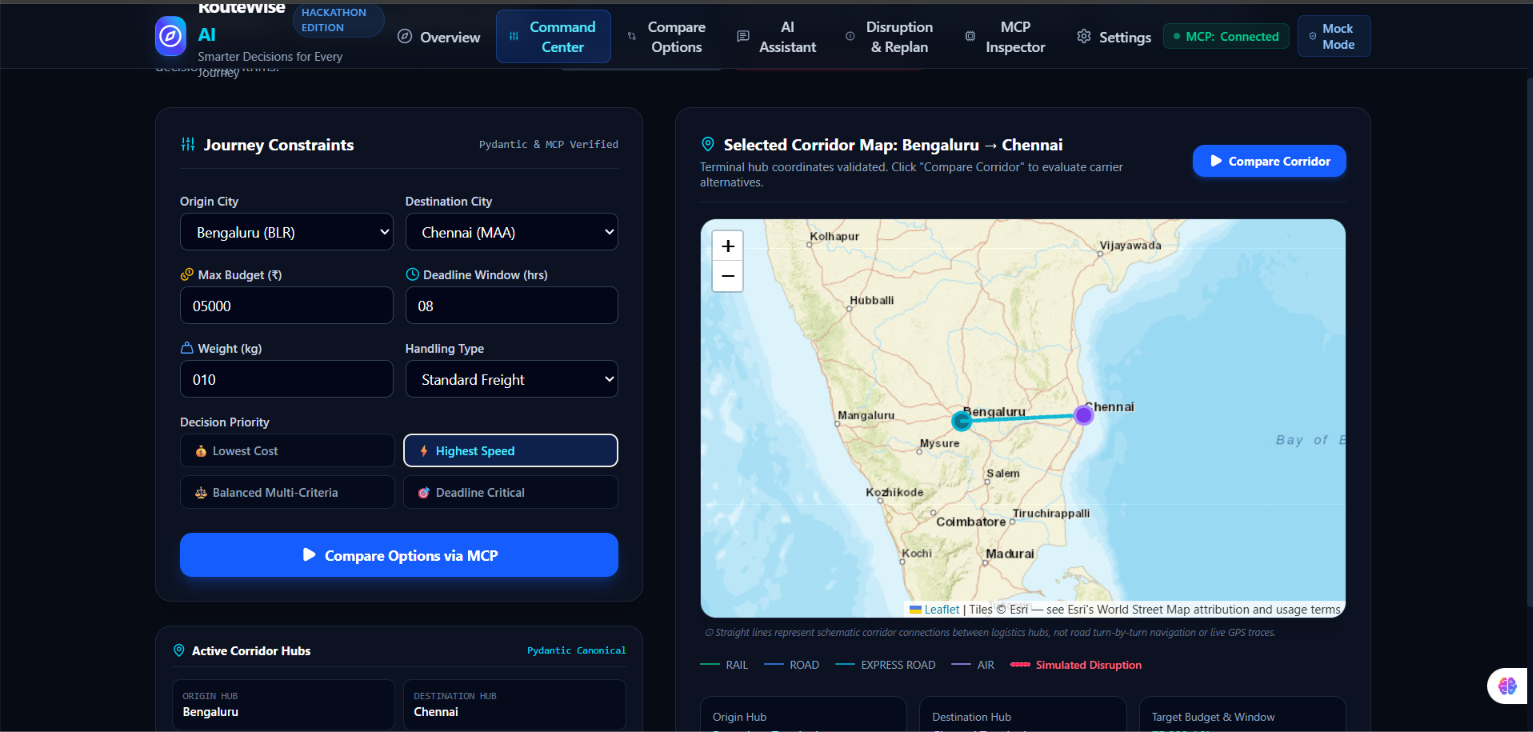
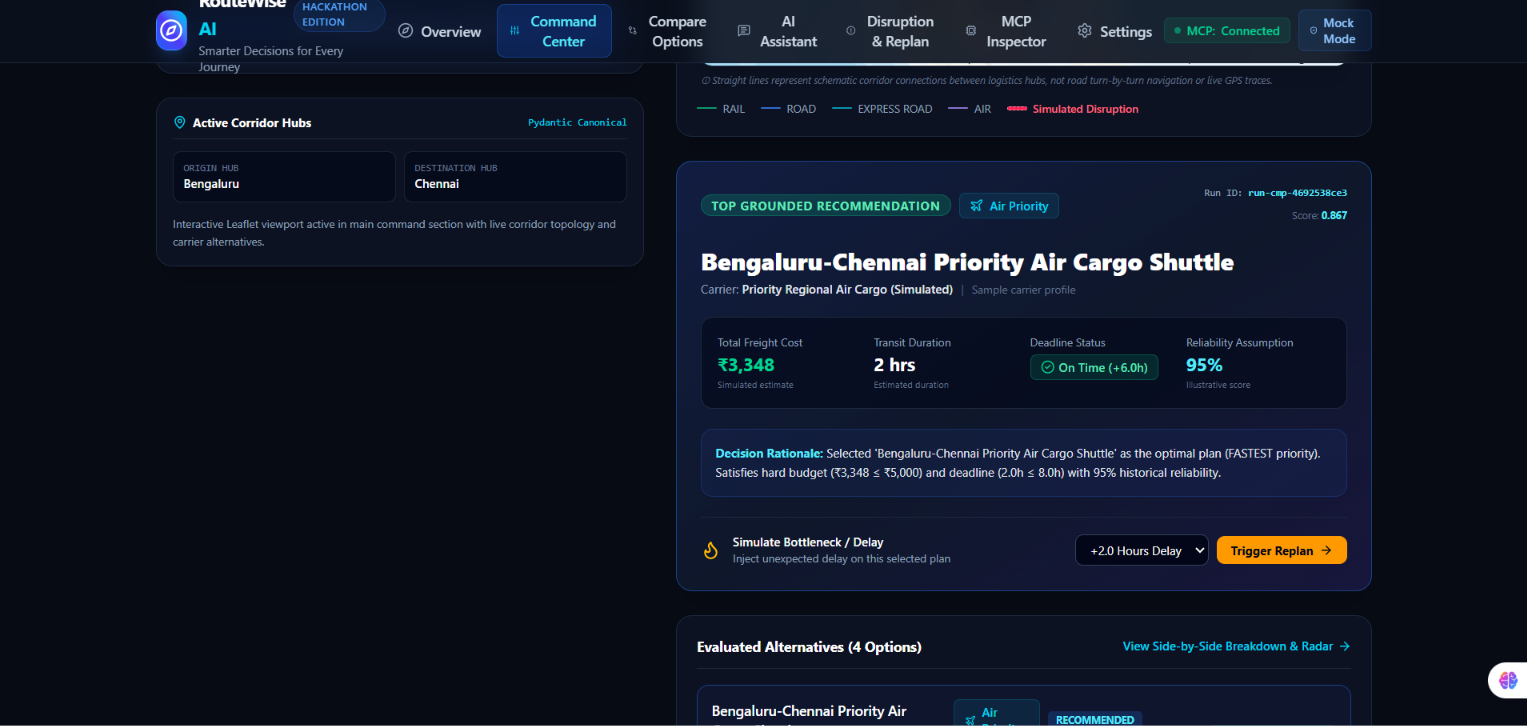
Command Center: Allows users to enter shipment details and compare transport options.
-
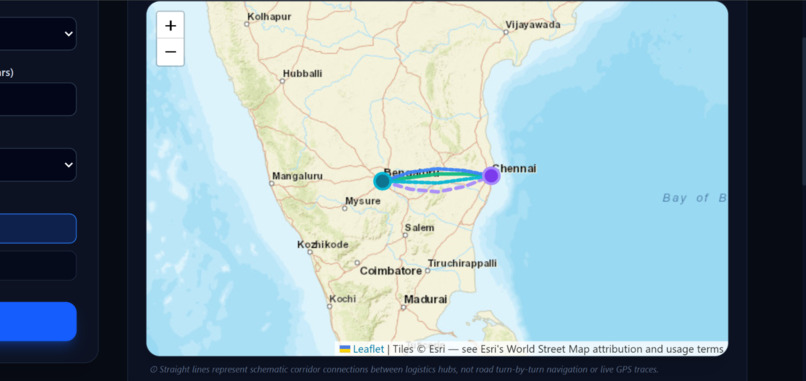
Route Comparison: Displays alternative transport routes between Bengaluru and Chennai.
-
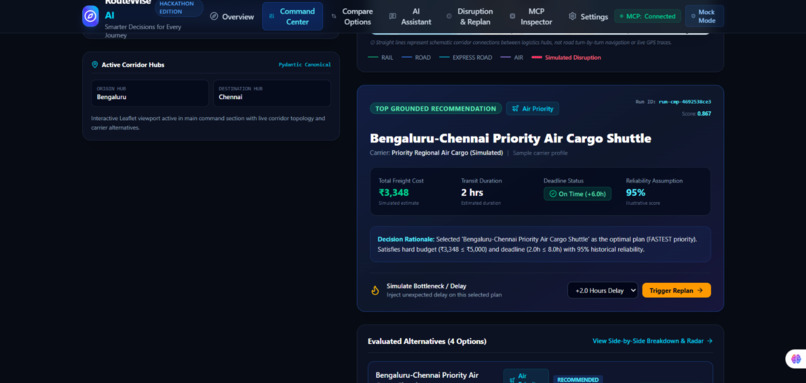
Recommended Option: Shows the best transport option based on cost, speed, and deadline.
-
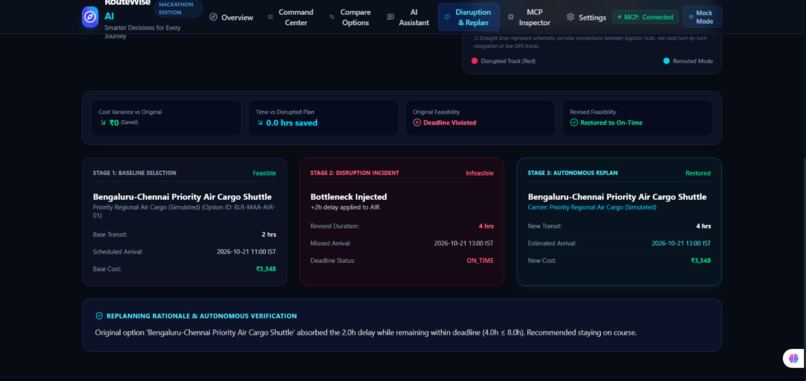
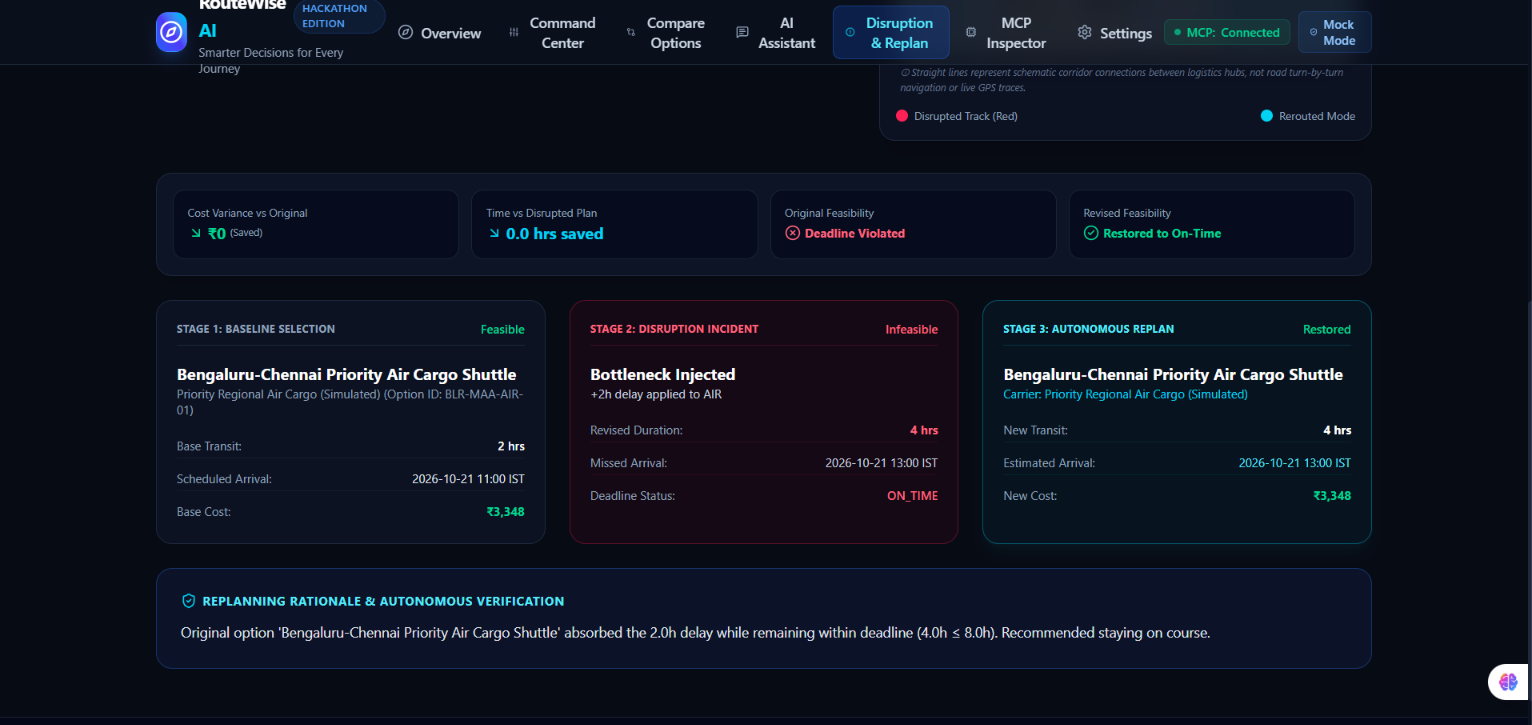
Replanning Results: Demonstrates how AI handles delays and evaluates delivery feasibility
-
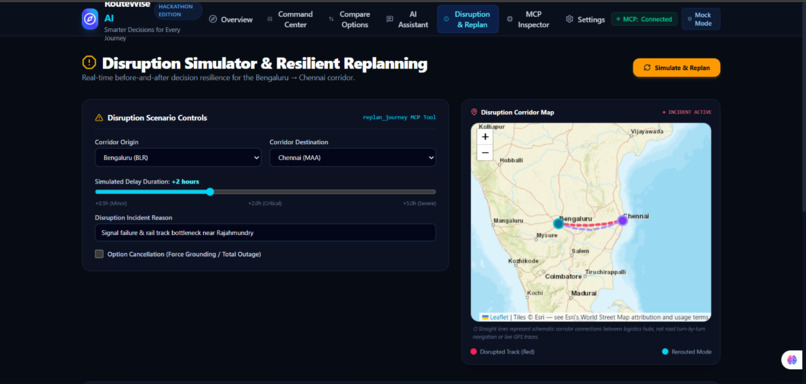
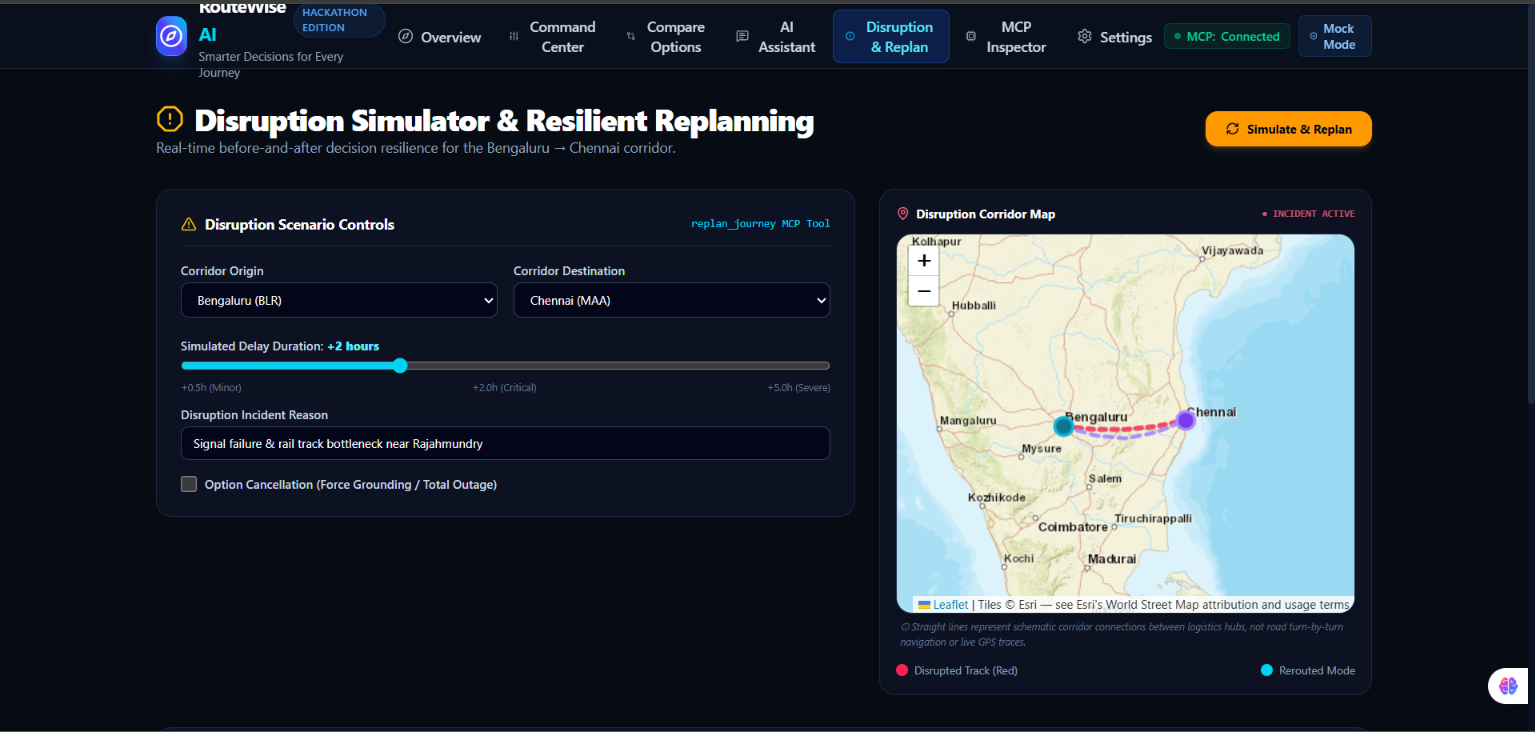
Disruption Simulator: Simulates transport delays and tests alternative routing strategies.
-
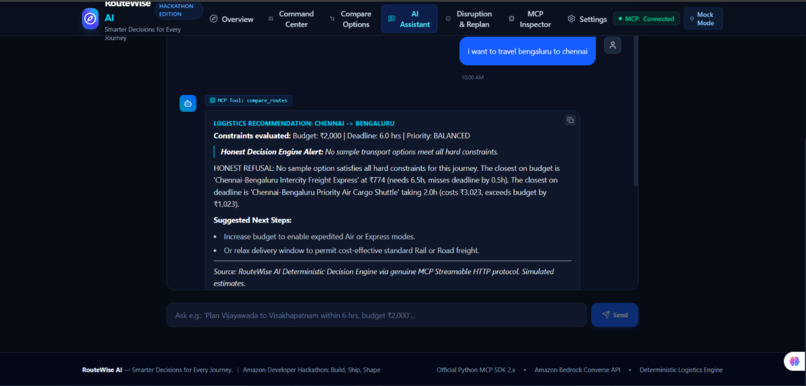
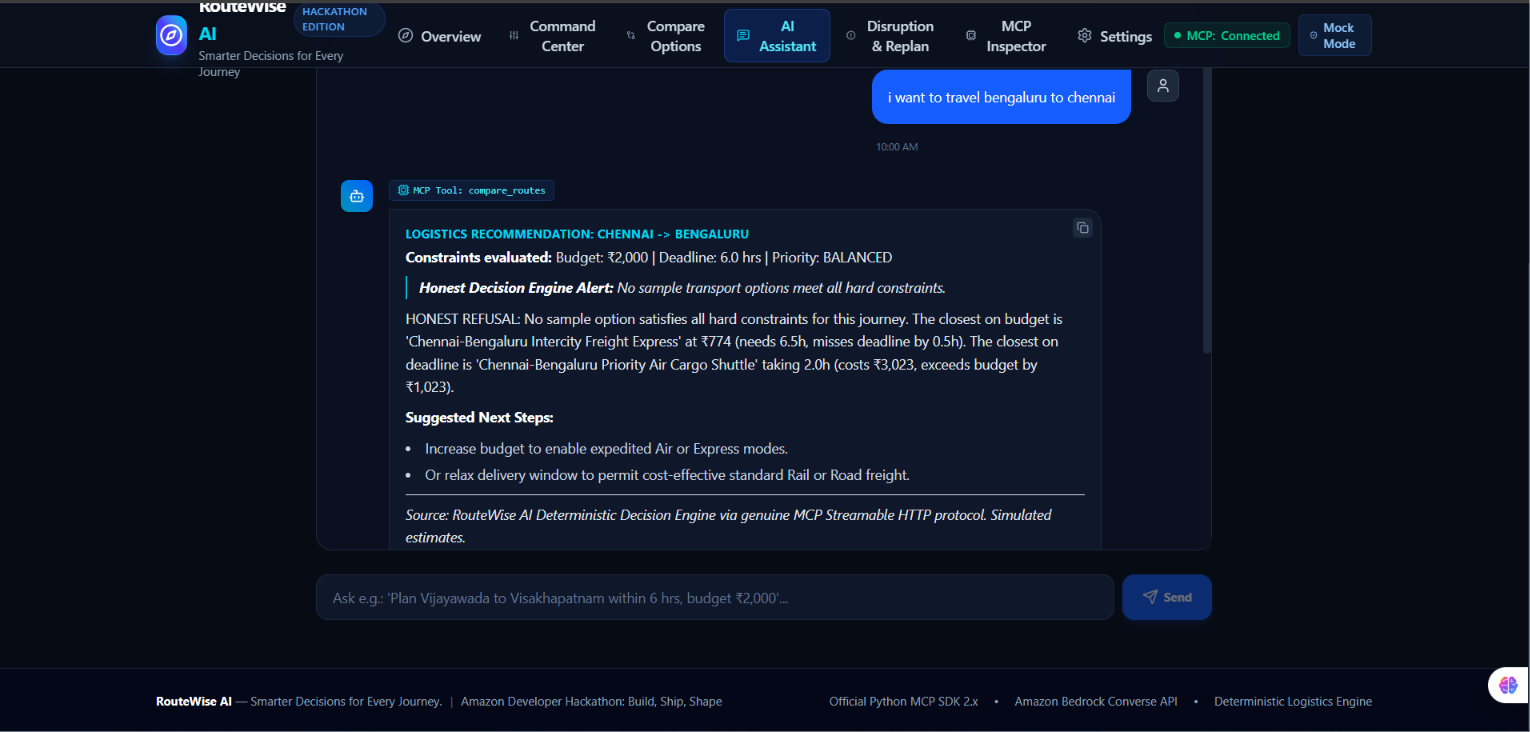
AI Assistant: Provides conversational logistics recommendations based on user requirements.
-
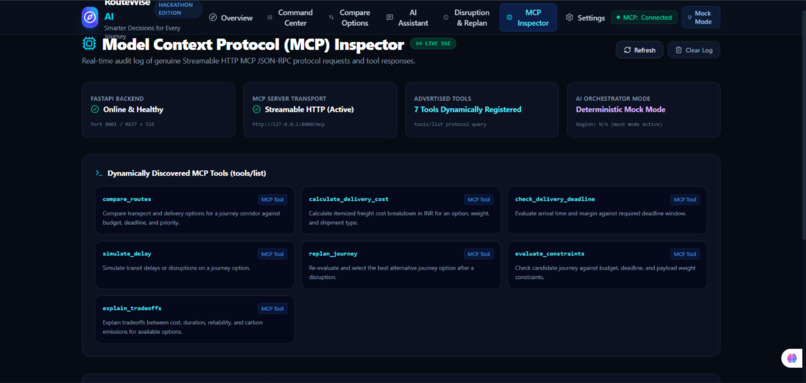
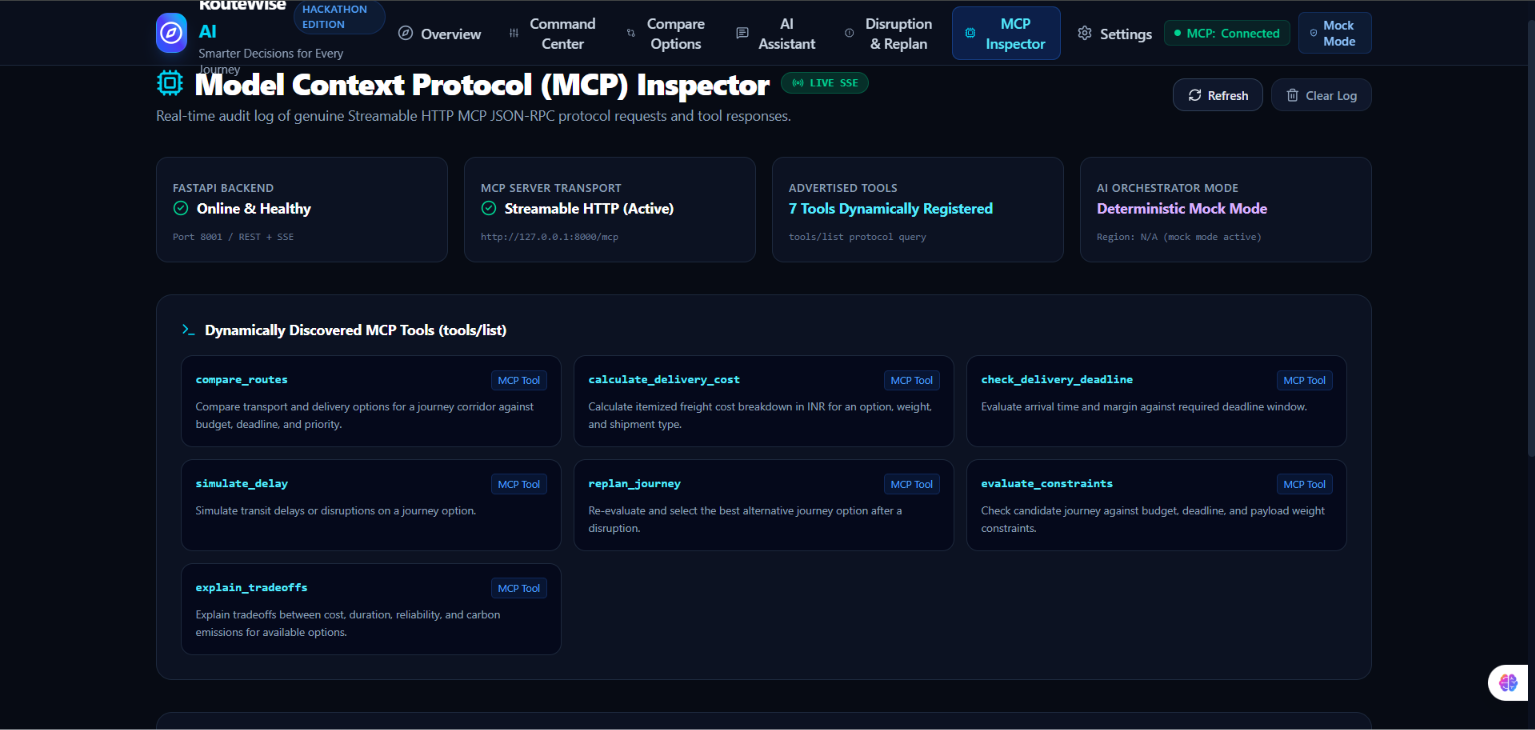
MCP Inspector: Displays available MCP tools and the system's connection status.
-
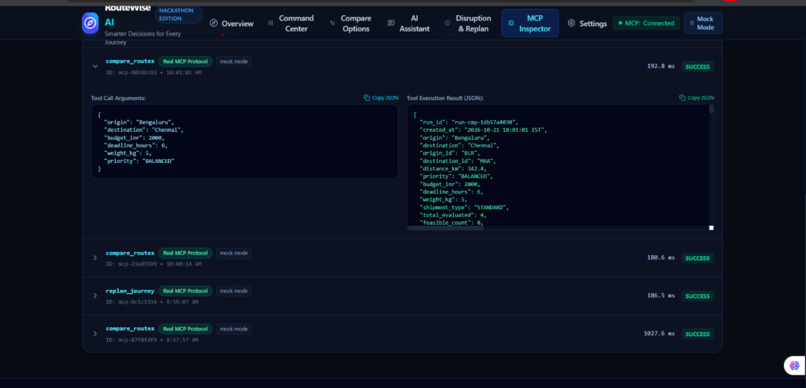
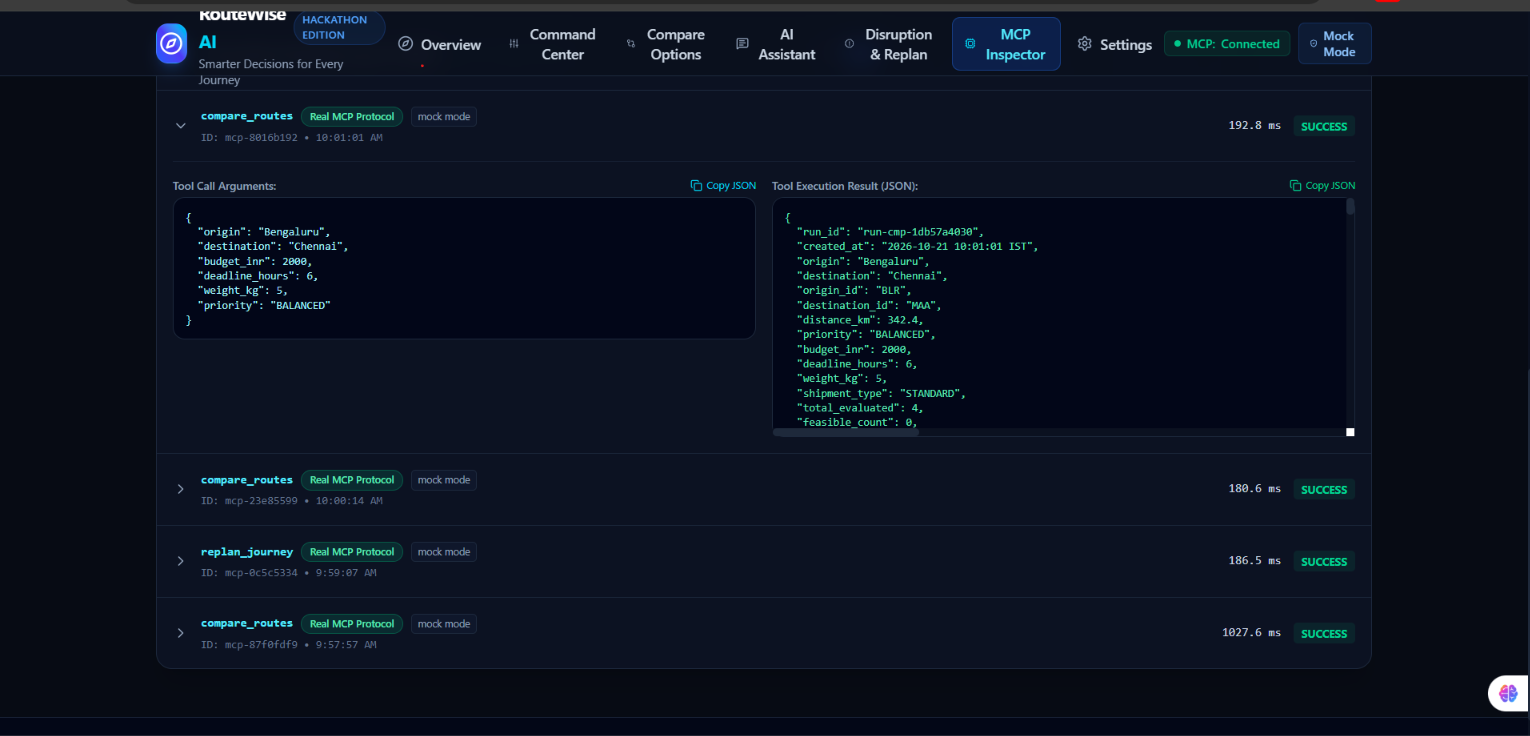
Execution Logs: Shows MCP tool inputs, outputs, execution times, and results.
-
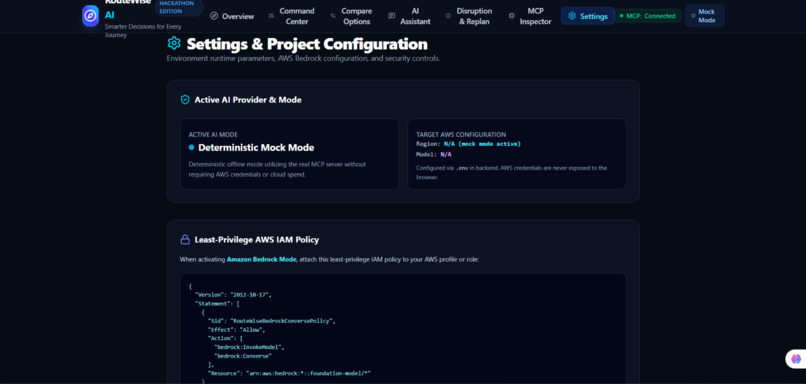
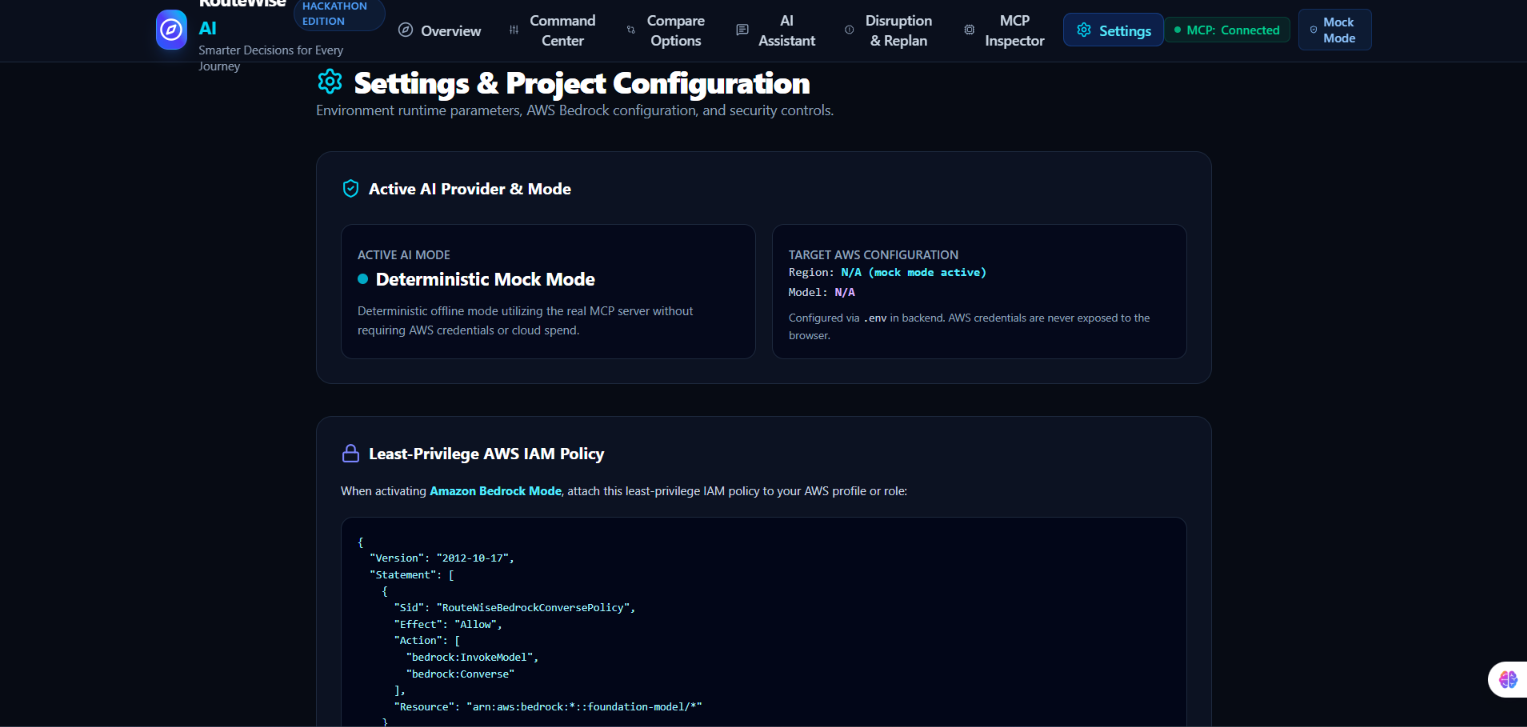
Settings: Manages AI configuration, AWS Bedrock integration, and security policies.
About RouteWise AI
Inspiration
Logistics decisions are often complicated by competing priorities: delivery speed, transportation costs, deadlines, and unexpected disruptions. We wanted to build a smarter way to compare delivery options and help users make better routing decisions. This inspired us to create RouteWise AI, an AI-powered logistics planning and decision-support platform.
What it does
RouteWise AI helps users compare transportation alternatives based on estimated cost, travel time, and delivery constraints. It visualizes routes on interactive maps, highlights trade-offs between alternatives, and supports replanning when disruptions occur. By combining AI-assisted decision-making with a logistics calculation engine, the platform aims to make route planning more transparent and efficient.
How we built it
We developed a web application using React, TypeScript, and Vite for the frontend, with Python and FastAPI powering the backend. We integrated interactive maps using React Leaflet and explored configurable map tile providers. A logistics engine evaluates transportation alternatives, while a Model Context Protocol (MCP) server exposes tools for AI-assisted workflows. We also designed the system to support Amazon Bedrock, with a mock provider available for development and testing.
Challenges we faced
One of our biggest challenges was ensuring that different origins and destinations produced appropriate route options instead of repeated results. We worked on input validation, route comparisons, budget and deadline constraints, and honest handling of journeys where no option meets all requirements. Integrating maps introduced additional challenges involving tile-provider access, environment configuration, and localhost versus forwarded-port networking. We addressed these issues through debugging, configuration changes, and regression testing.
What we learned
Building RouteWise AI taught us that a useful AI application requires more than a language model. Reliable calculations, validated inputs, clear visualizations, robust error handling, and transparent limitations are equally important. We also learned how to integrate frontend and backend services, structure tool-based AI workflows, and test application behavior across different development environments.
What's next
We aim to improve route coverage, integrate reliable external routing and geocoding services, enhance disruption recovery, and connect live logistics data where available. Our goal is to evolve RouteWise AI into a practical decision-support tool that helps make logistics smarter, more cost-aware, and more resilient.
Built With
- amazon-bedrock
- amazon-web-services
- artificial-intelligence
- decision-support
- fastapi
- geospatial
- interactive-maps
- logistics
- machine-learning
- mcp
- optimization
- python
- react
- route-optimization
- supply-chain
- tailwind-css
- transportation
- typescript
- vite
