-
-
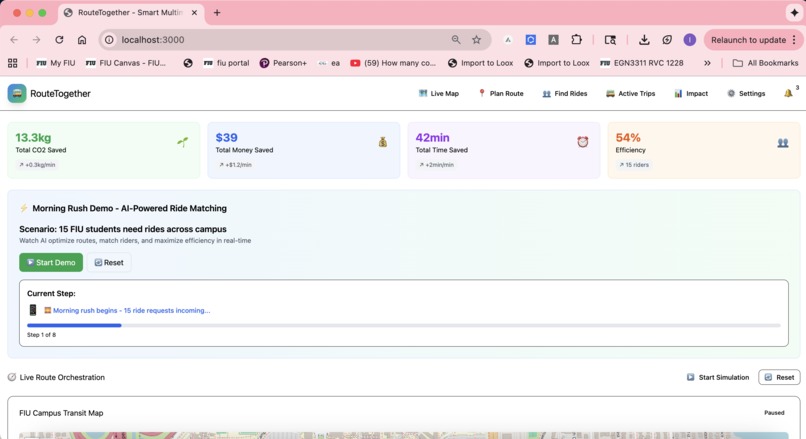
Main Screen
-
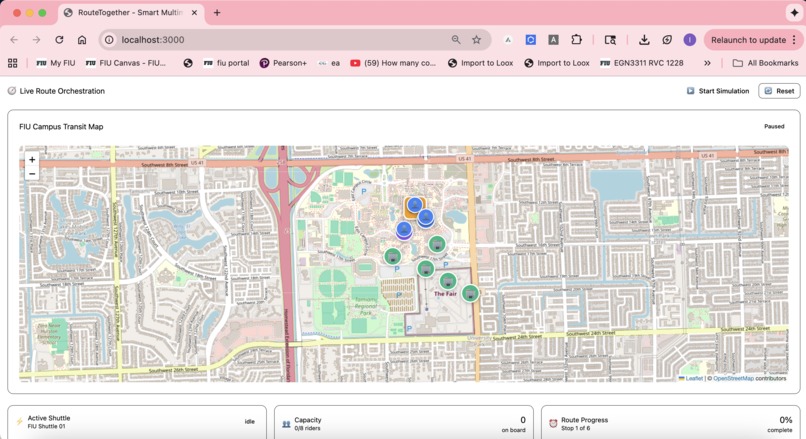
Main Screen
-
-
-
-
-
Inspiration
Campus transportation wastes time and money. Students wait for buses. They pay for individual rides. The environment suffers from inefficient trips. We saw AI could fix this. We built RouteTogether to turn chaotic campus mobility into an intelligent system.
What it does
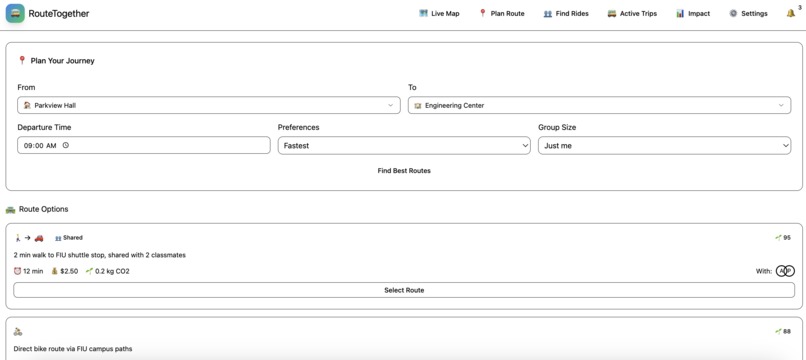
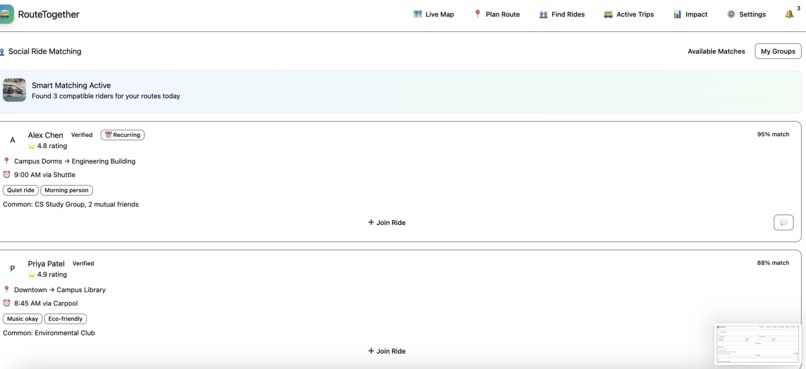
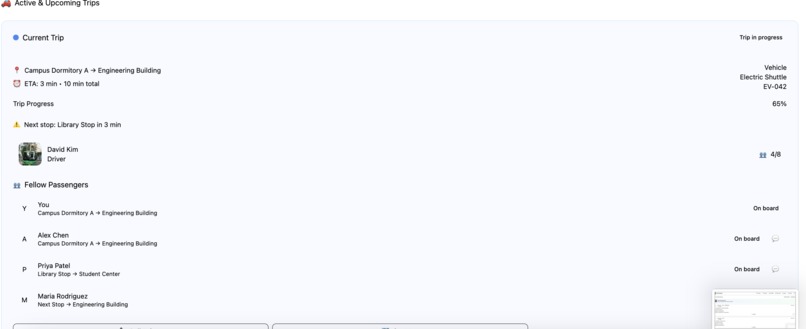
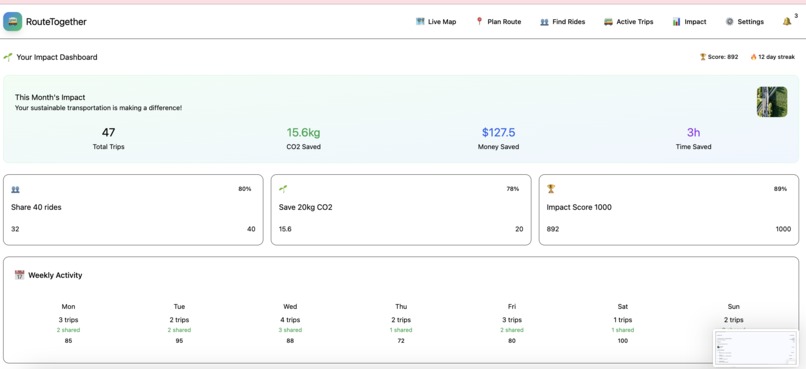
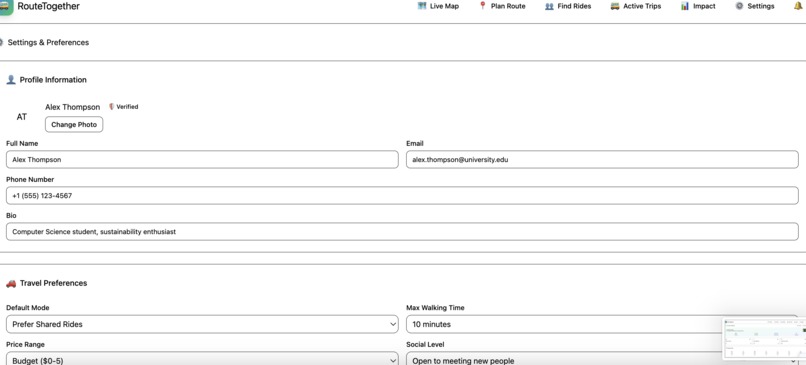
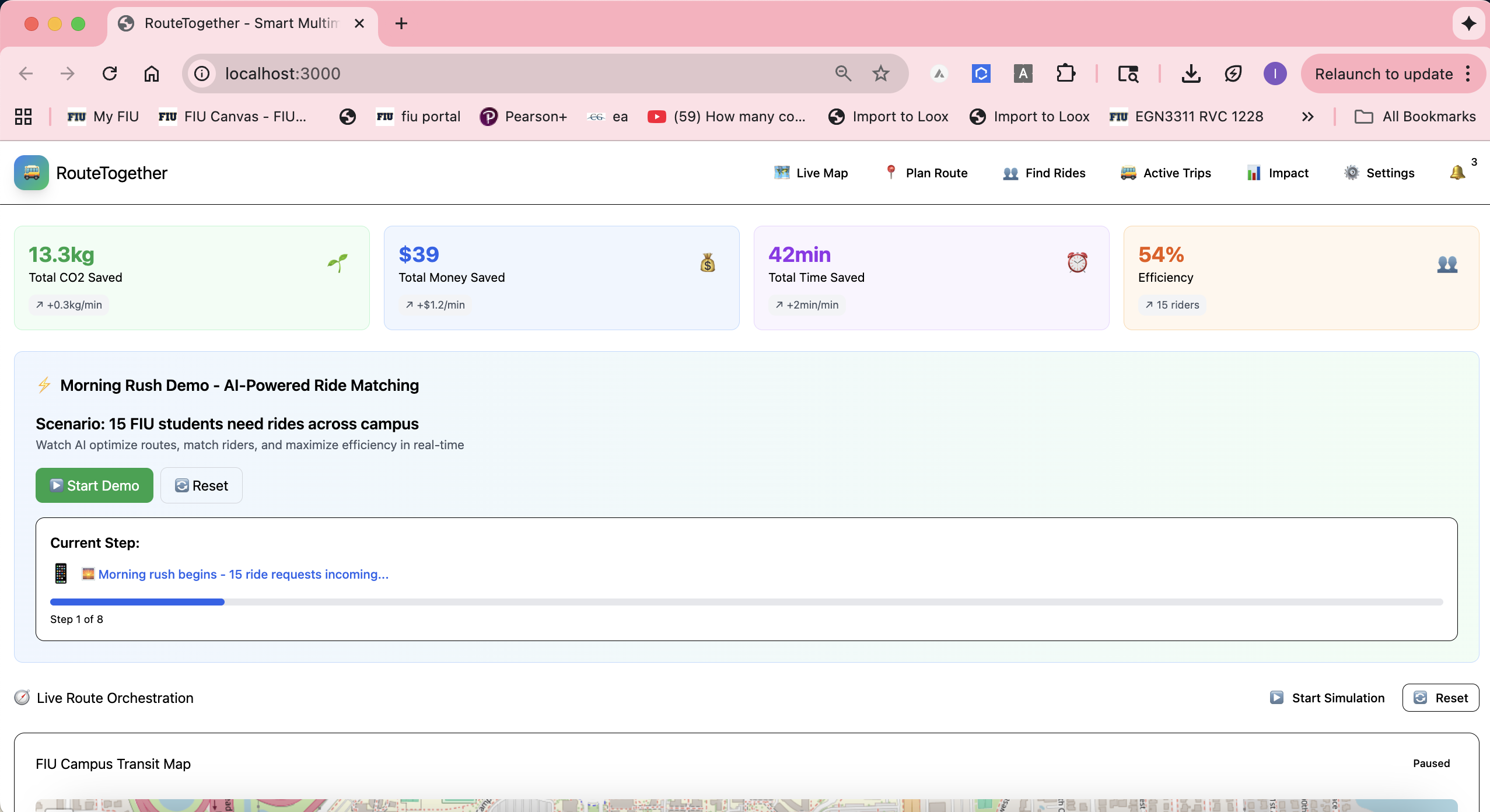
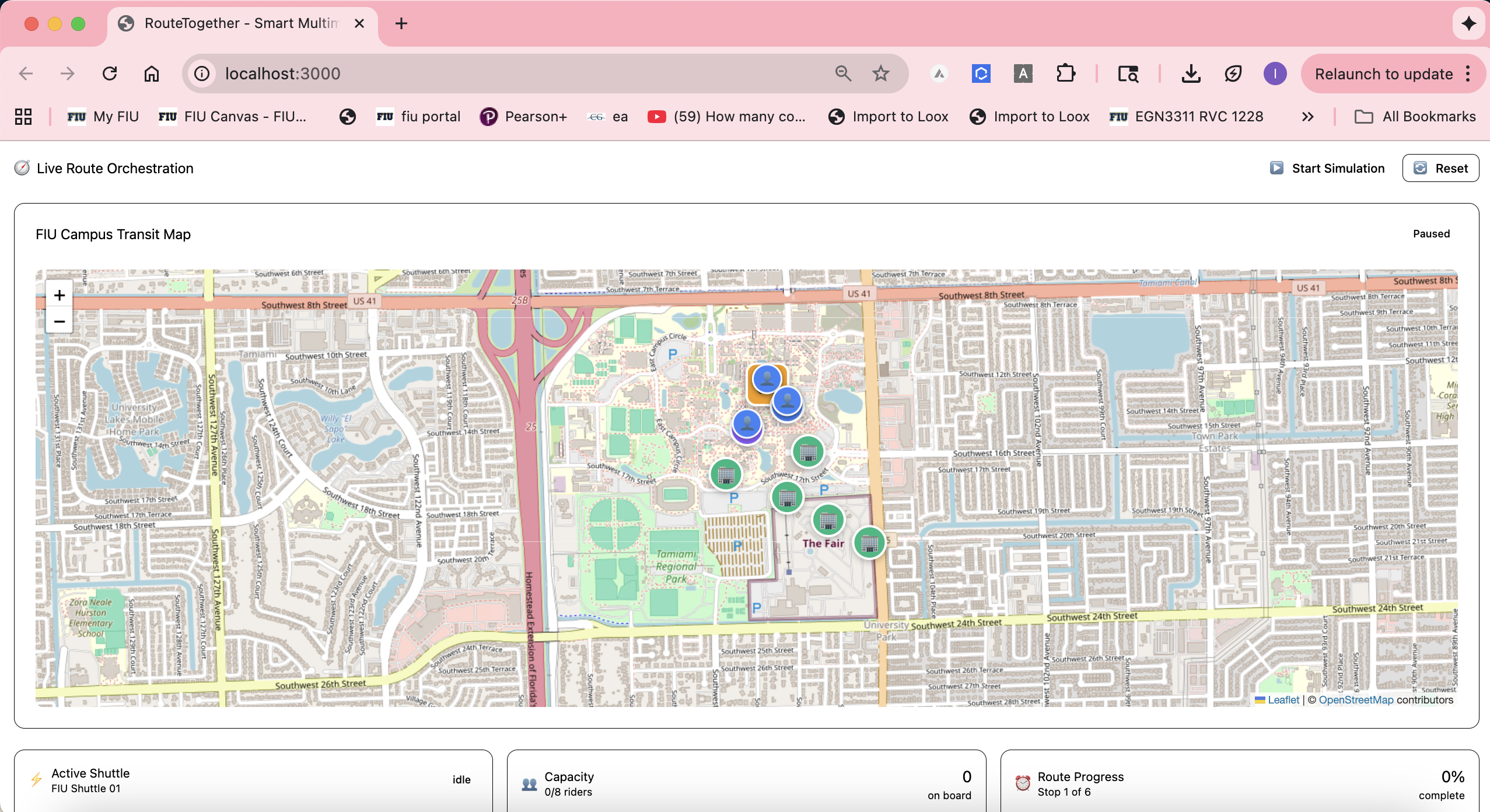
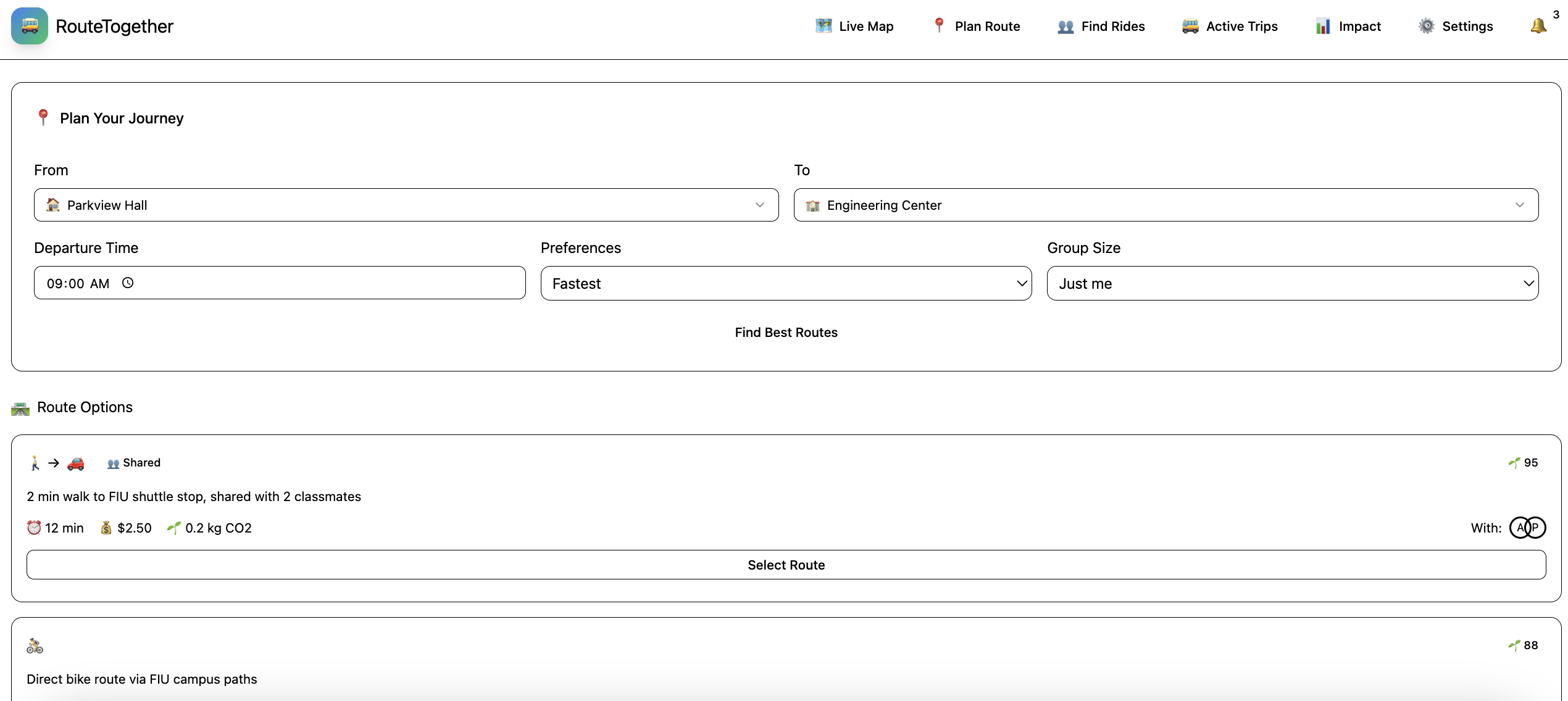
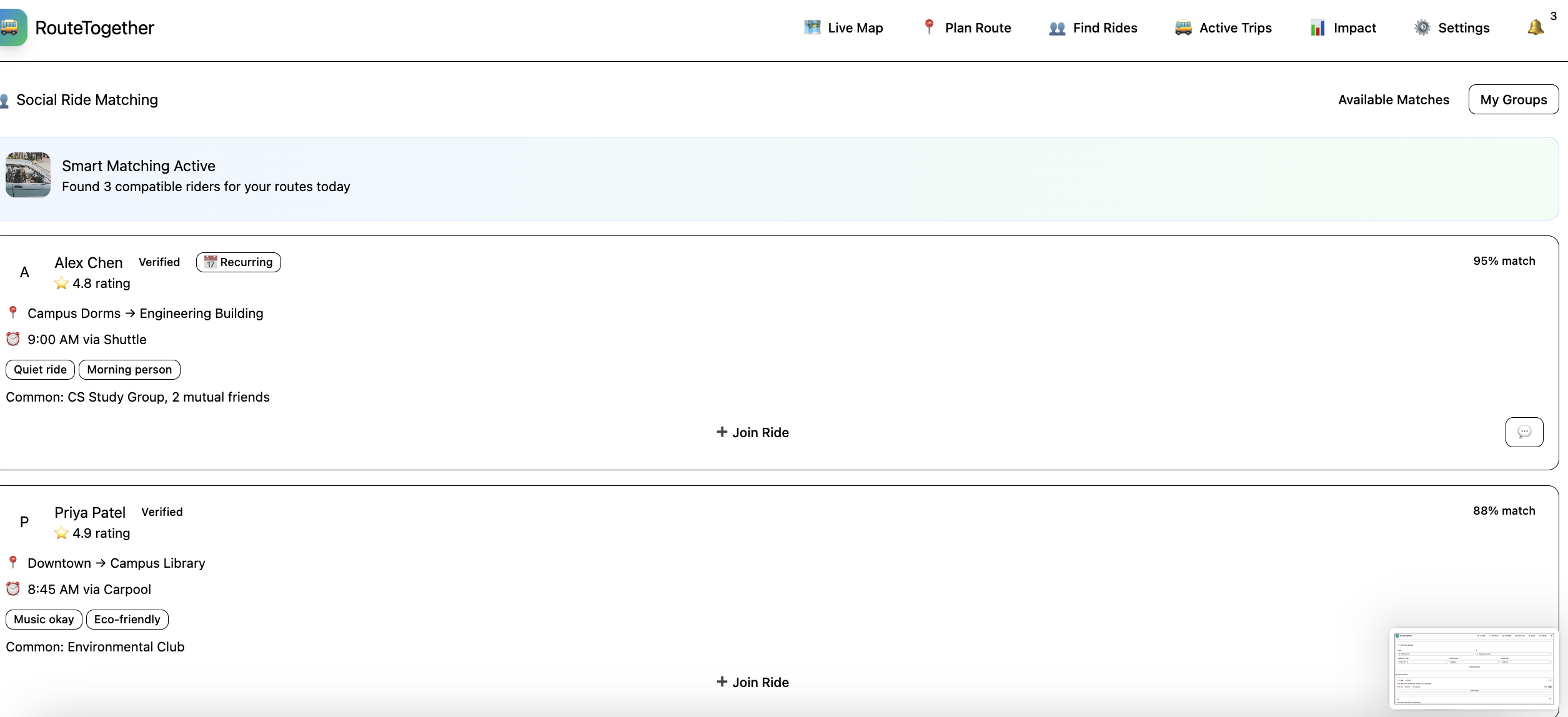
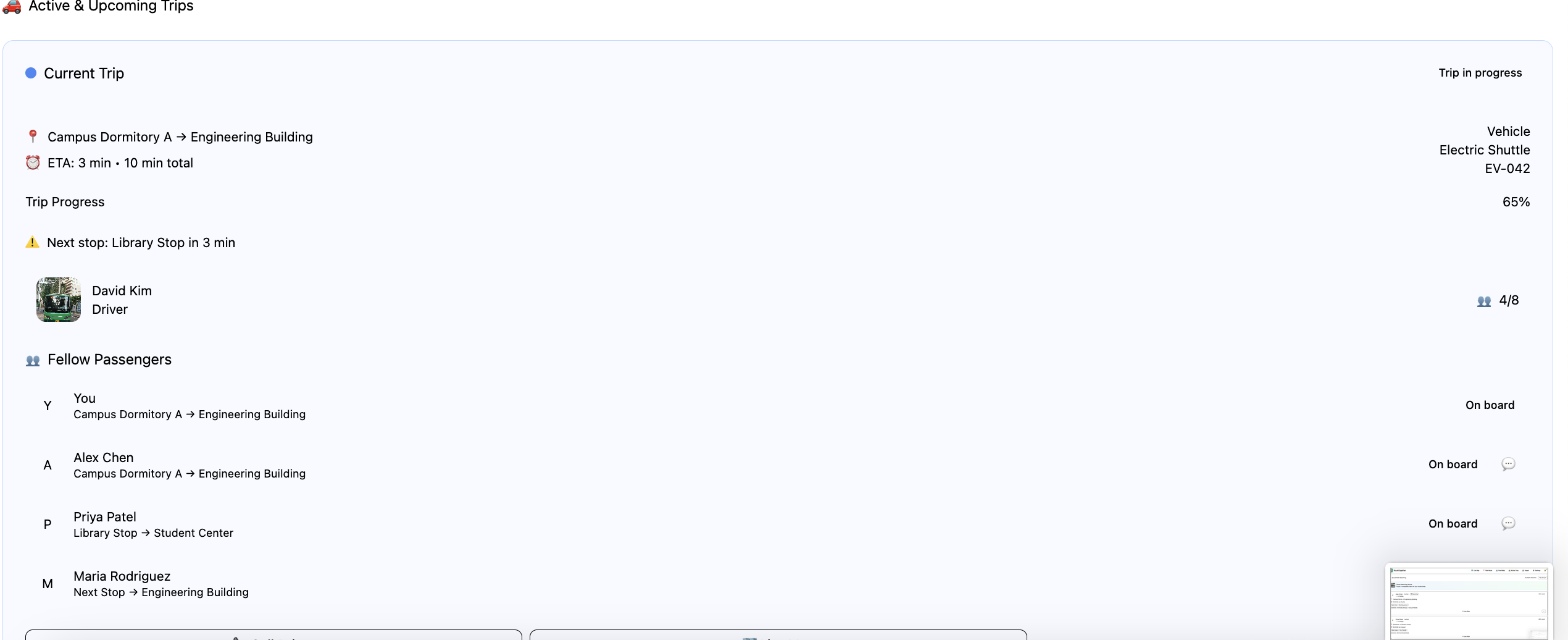
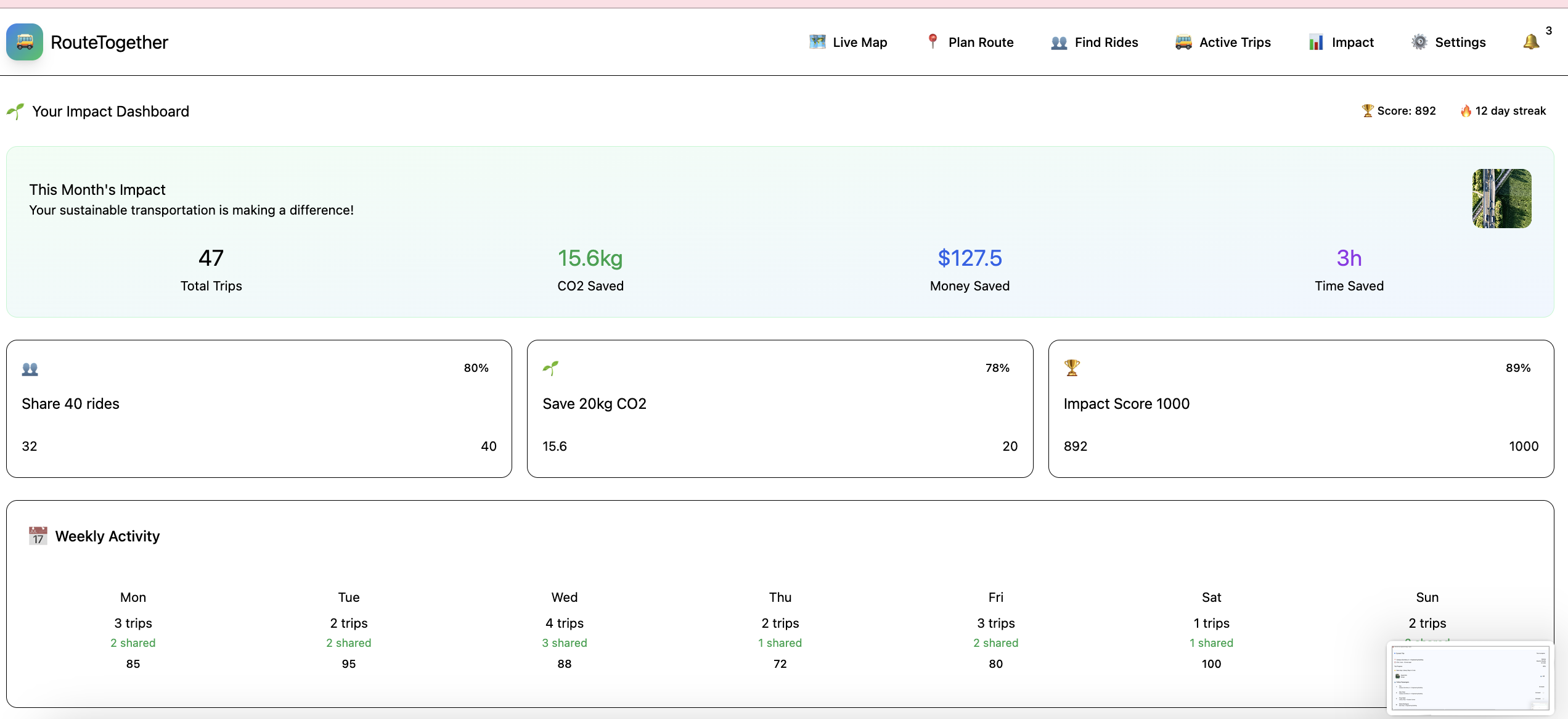
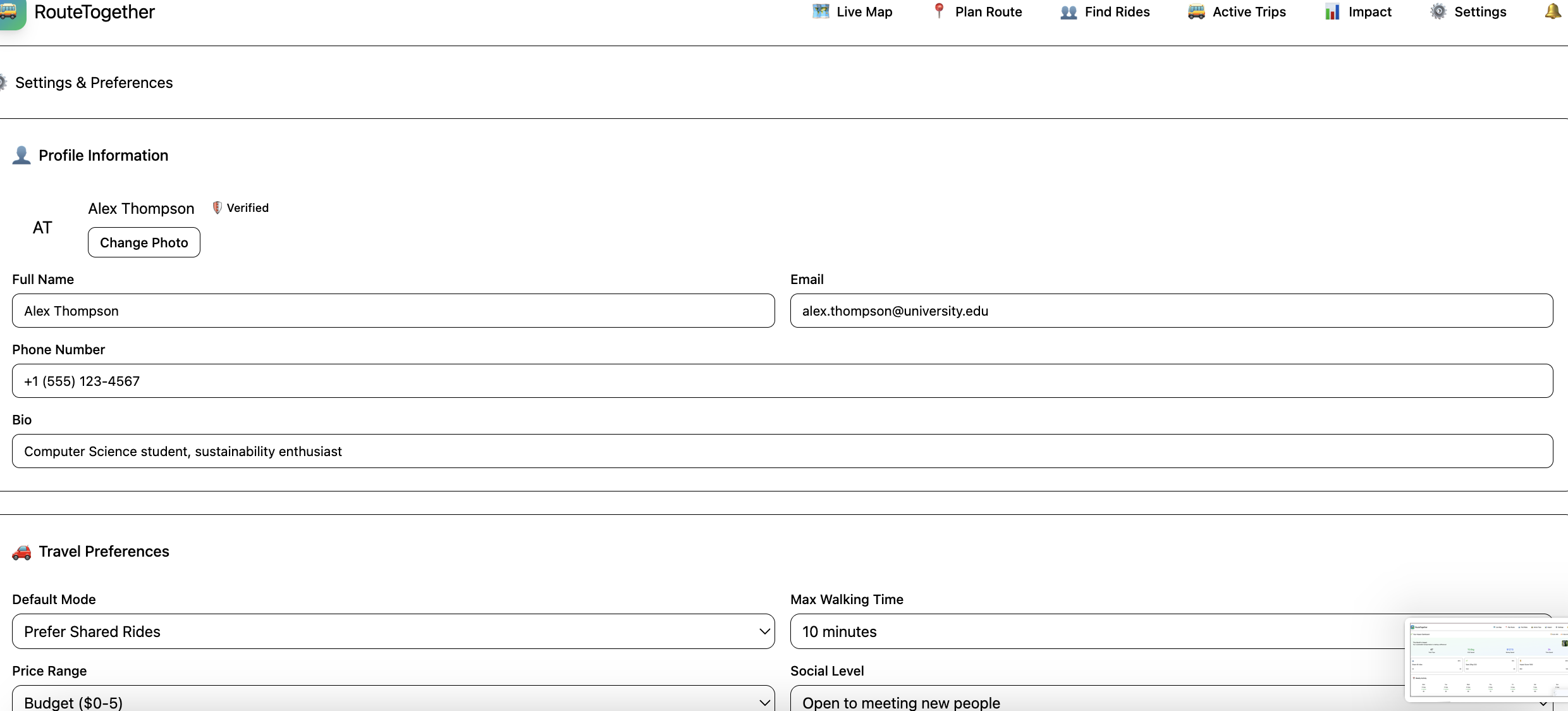
RouteTogether matches students for rides using AI. The system clusters riders by location and schedule. It optimizes shuttle routes for efficiency. Students save time and money. The environment benefits from fewer cars. The platform tracks real impact. Users see CO2 savings, cost reductions, and time saved. Live dashboards show shuttle locations and arrival times. Social features connect students for sustainable rides.
How we built it
We used React and TypeScript for the frontend. Node.js powers the backend with AI agents. The system includes route optimization algorithms and overlap detection for matching riders. Key components include live metrics dashboards, interactive campus maps, and AI demo scenarios. The social matching system connects students. Impact tracking shows environmental benefits.
Challenges we ran into
Icon libraries caused build failures. We replaced external dependencies with simple solutions. Managing real-time updates required careful performance tuning. Balancing AI complexity with user experience proved difficult. Component dependencies created maintenance issues. We simplified the architecture. Cross-platform compatibility required extensive testing. Real-time data updates needed optimization.
Accomplishments that we're proud of
We eliminated all external icon dependencies. The system updates live data every 2 seconds without performance loss. Interactive demos showcase AI capabilities effectively. Clean architecture reduces maintenance overhead. Impact visualization makes environmental benefits tangible. Users understand their contribution to sustainability. The platform demonstrates measurable results.
What we learned
External libraries introduce unexpected complexity. Simple solutions often work better. AI algorithms need intuitive interfaces. Performance optimization requires careful balance. Component architecture matters for reliability. Visual feedback makes AI features feel responsive. User experience drives adoption.
What's next for RouteTogether
We will implement predictive models for demand forecasting. Mobile apps will provide push notifications. Campus partnerships will integrate with university systems. Advanced analytics will show detailed sustainability impact. Gamification will reward sustainable choices. Multi-campus expansion will scale the platform. API development will enable third-party integrations. Immediate steps include production deployment with real data, user testing with students, university shuttle integration, mobile-responsive design, and advanced AI features like weather-based routing.
Built With
- css
- css3
- environment
- express.js
- git
- heroicons
- hosting
- html5
- javascript
- node.js
- npm
- openai
- react
- restful
- tailwind
- typescript
- vite


Log in or sign up for Devpost to join the conversation.