Inspiration:
"In a world where art knows no bounds, Router Draw NFT emerges as a beacon of creative empowerment. Imagine your every stroke of genius transformed into a digital masterpiece, forever etched on the blockchain. With Router Protocol as our guiding star, we set out to democratize art ownership, making it accessible to all. Join us on this journey to reshape the art world and celebrate the infinite possibilities of human creativity. Let's draw a new future together."
What it does:
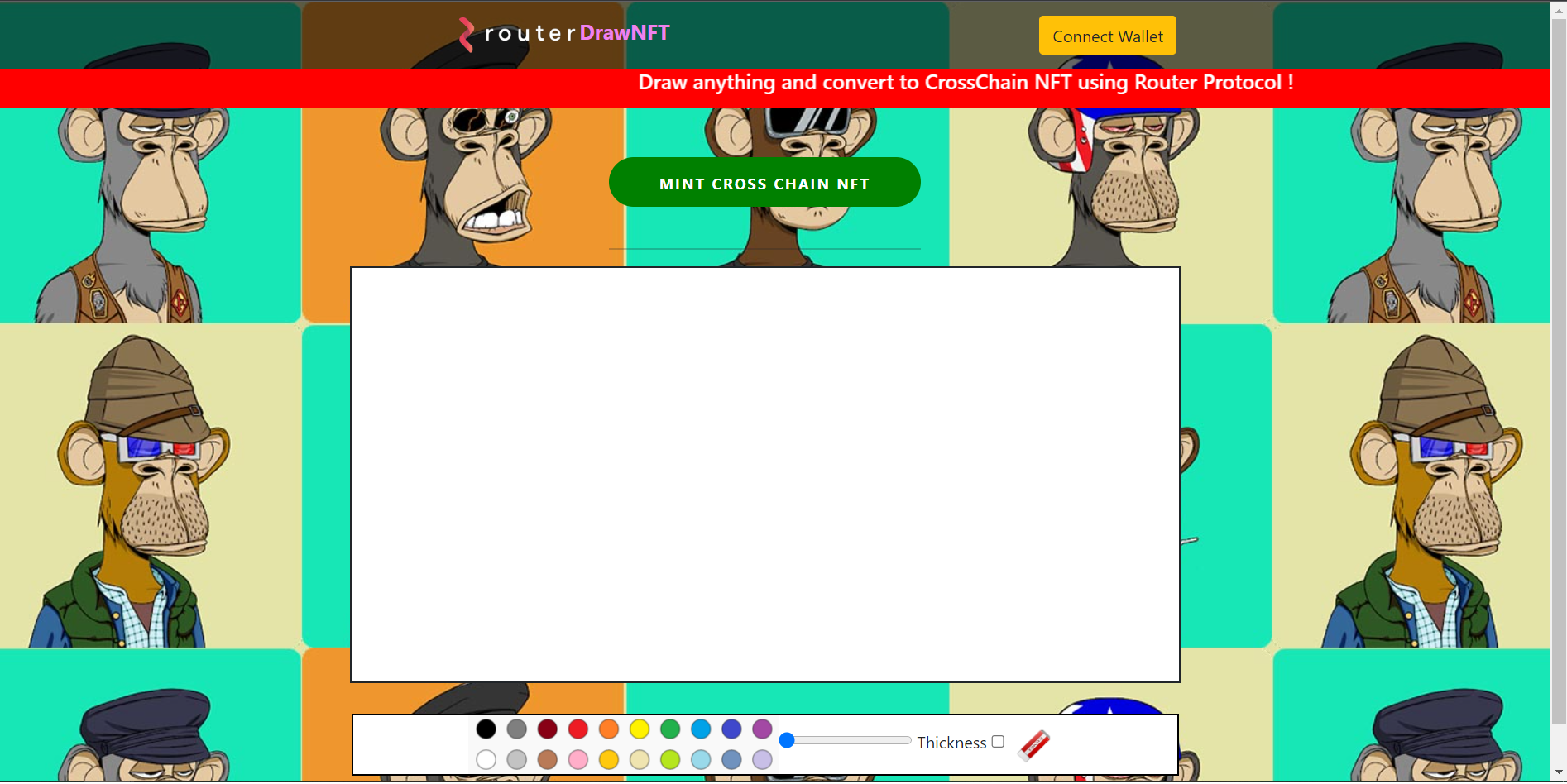
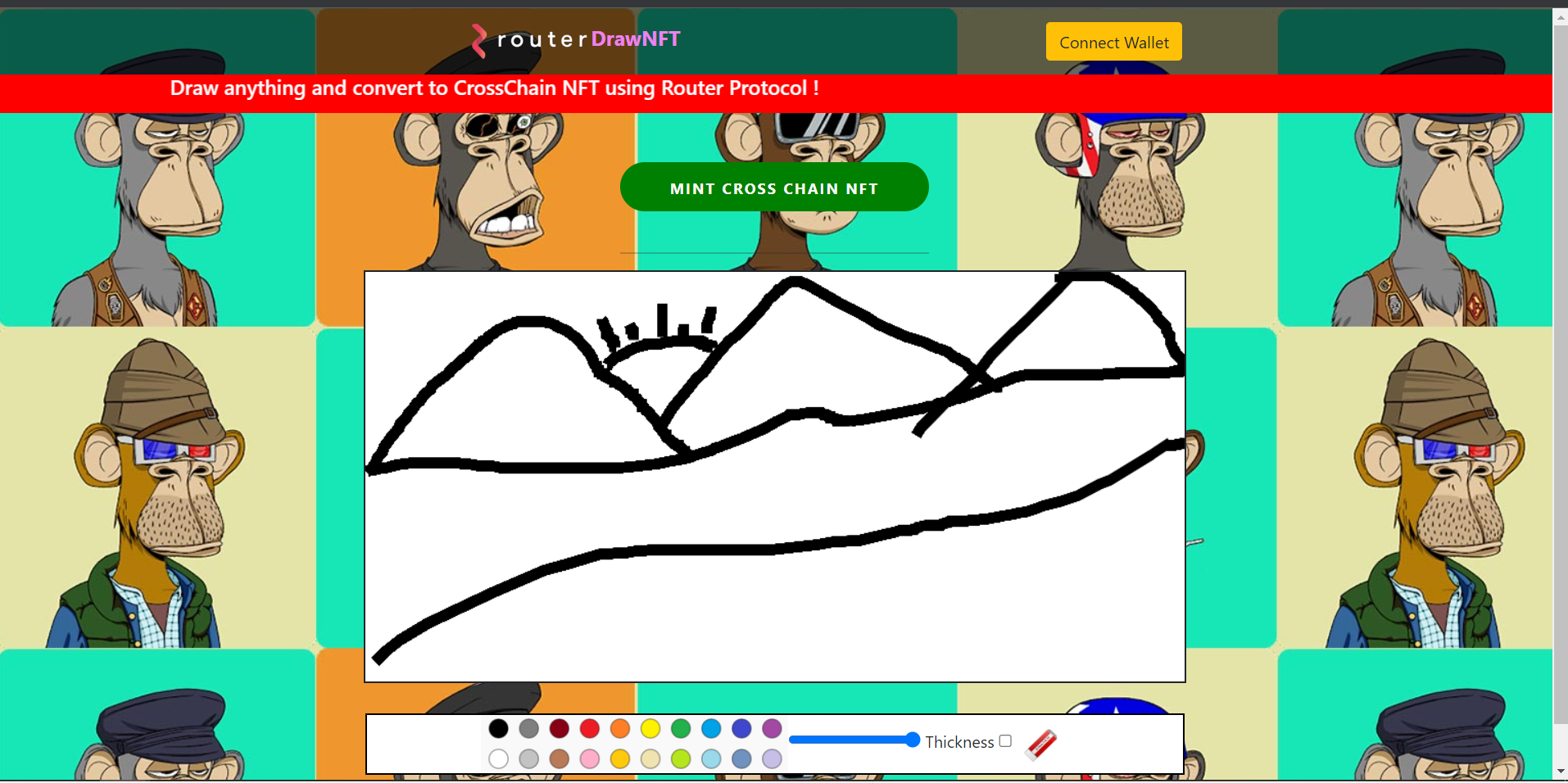
Router Draw NFT is an innovative platform that transforms traditional drawings into blockchain-based NFTs (Non-Fungible Tokens) using the Router Protocol. This technology allows artists and creators to tokenize their artwork, making it unique, verifiable, and tradable on various blockchain networks, thereby expanding its reach and potential value. Users can easily convert their drawings into digital assets, facilitating secure ownership, provenance tracking, and global exposure for their art. In essence, Router Draw NFT bridges the gap between traditional art and the blockchain, empowering artists and collectors in the digital age.
How we built it:
Router Draw NFT was built using a stack of technologies that seamlessly work together to create a robust and user-friendly platform. Here's how each of the mentioned technologies contributed to the project:
HTML/CSS: HTML and CSS were used for creating the front-end user interface of the platform. They provided the foundation for designing and structuring the web pages, ensuring a visually appealing and responsive layout.
React.js: React.js, a popular JavaScript library, played a crucial role in building the dynamic and interactive aspects of the user interface. It allowed for the creation of components that could be reused throughout the application, enhancing development efficiency and user experience.
Node.js: Node.js served as the server-side runtime environment. It allowed for efficient handling of server-side logic, routing, and APIs. Node.js's non-blocking, event-driven architecture was instrumental in ensuring smooth and responsive interactions on the platform.
Router Protocol: Router Protocol was the core blockchain technology integrated into the project. It facilitated cross-chain compatibility, enabling the conversion of drawings into NFTs and cross-chain trading. The integration of Router Protocol allowed Router Draw NFT to tap into multiple blockchain networks seamlessly.
Cross-talk: In the context of Router Draw NFT, "cross-talk" refers to the interaction and communication between various components and technologies within the system. This interaction is essential for the platform to function cohesively, ensuring that user actions, such as uploading drawings and minting NFTs, are properly processed and reflected across the HTML/CSS interface, React.js components, Node.js server, and the underlying Router Protocol integration.
By utilizing these technologies and enabling effective cross-talk between them, Router Draw NFT achieved its goal of providing a user-friendly platform for artists to convert their drawings into cross-chain NFTs, all while ensuring security and scalability.

Log in or sign up for Devpost to join the conversation.