-
-
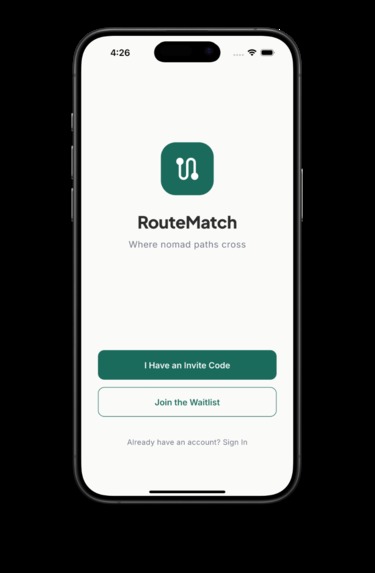
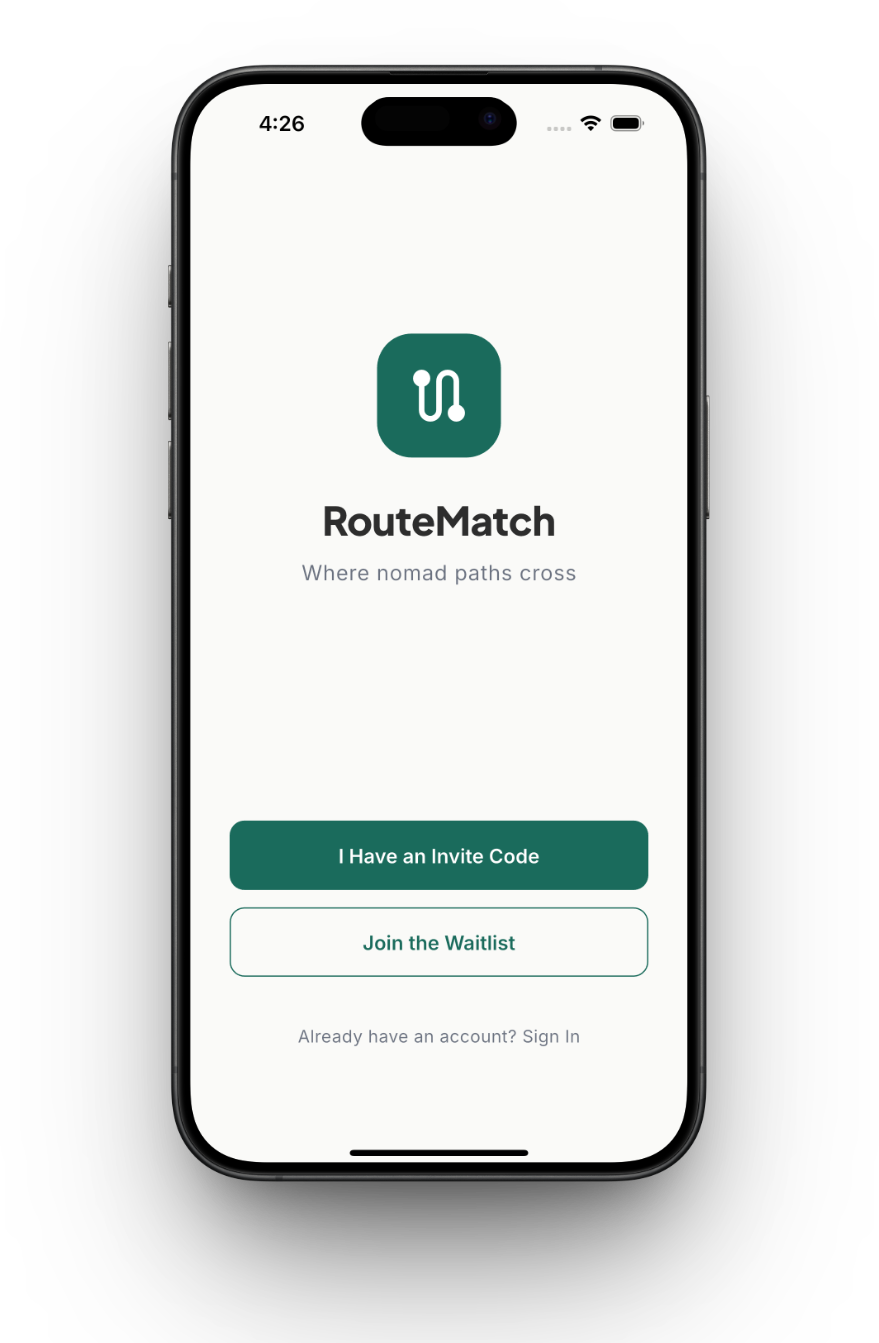
The system is currently invite only. One of the fastest ways to keep a community safe.
-
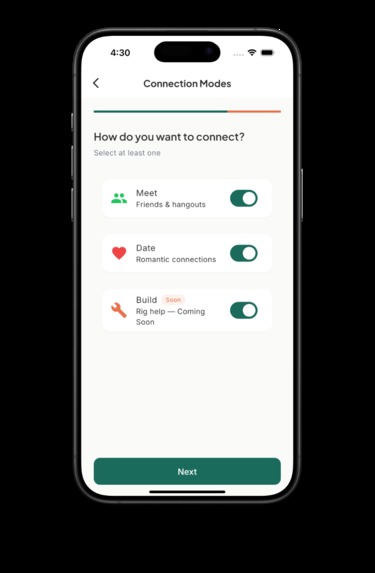
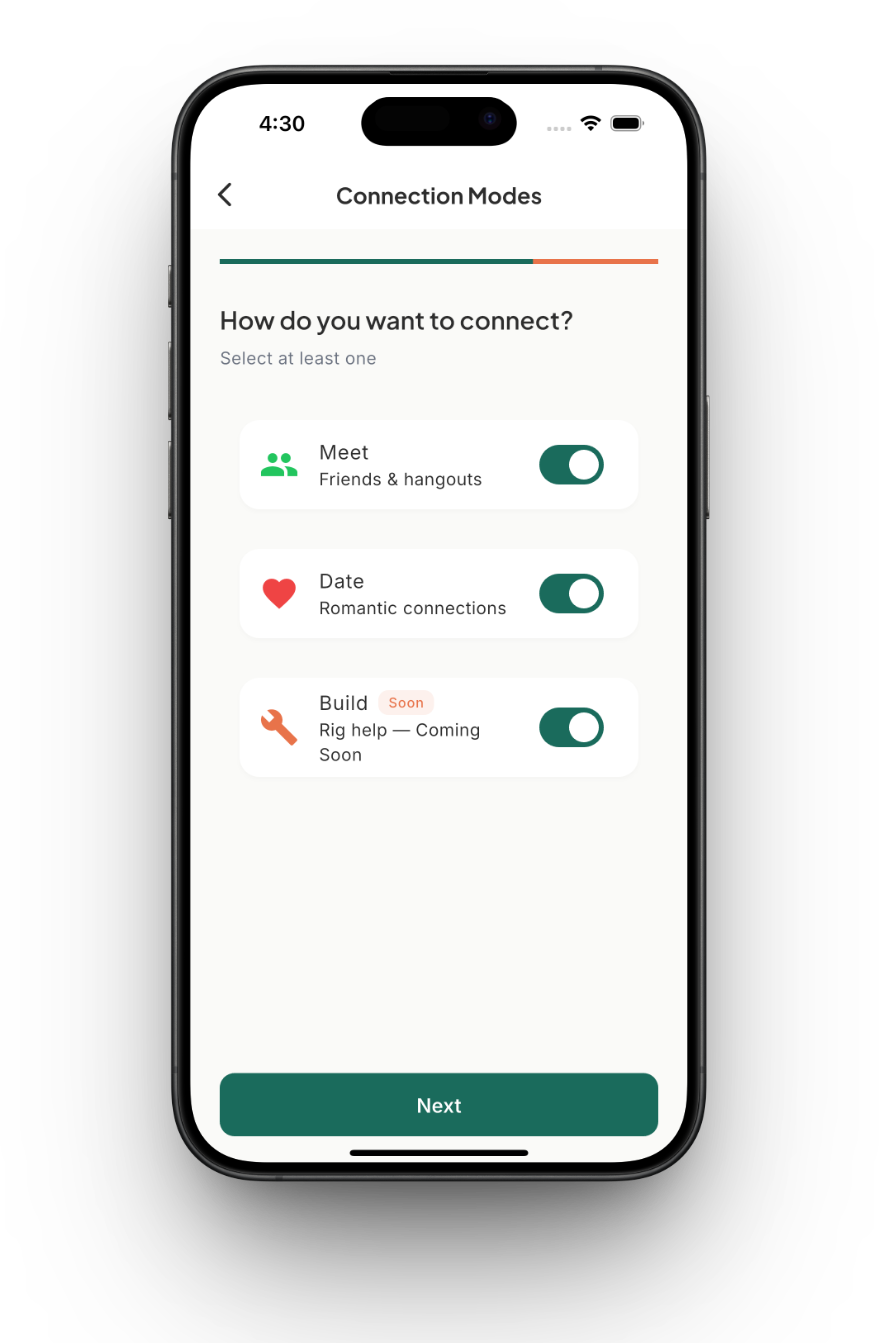
Set your preferences on how you want to use RouteMatch to meet new people
-
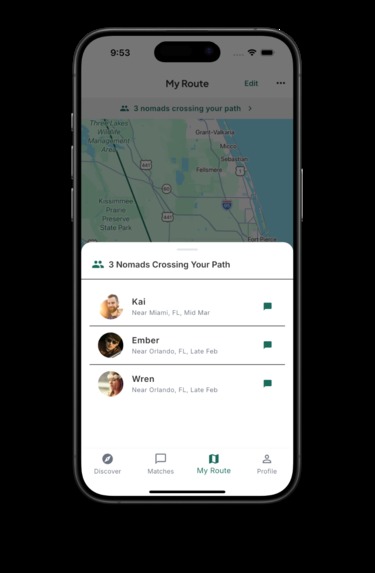
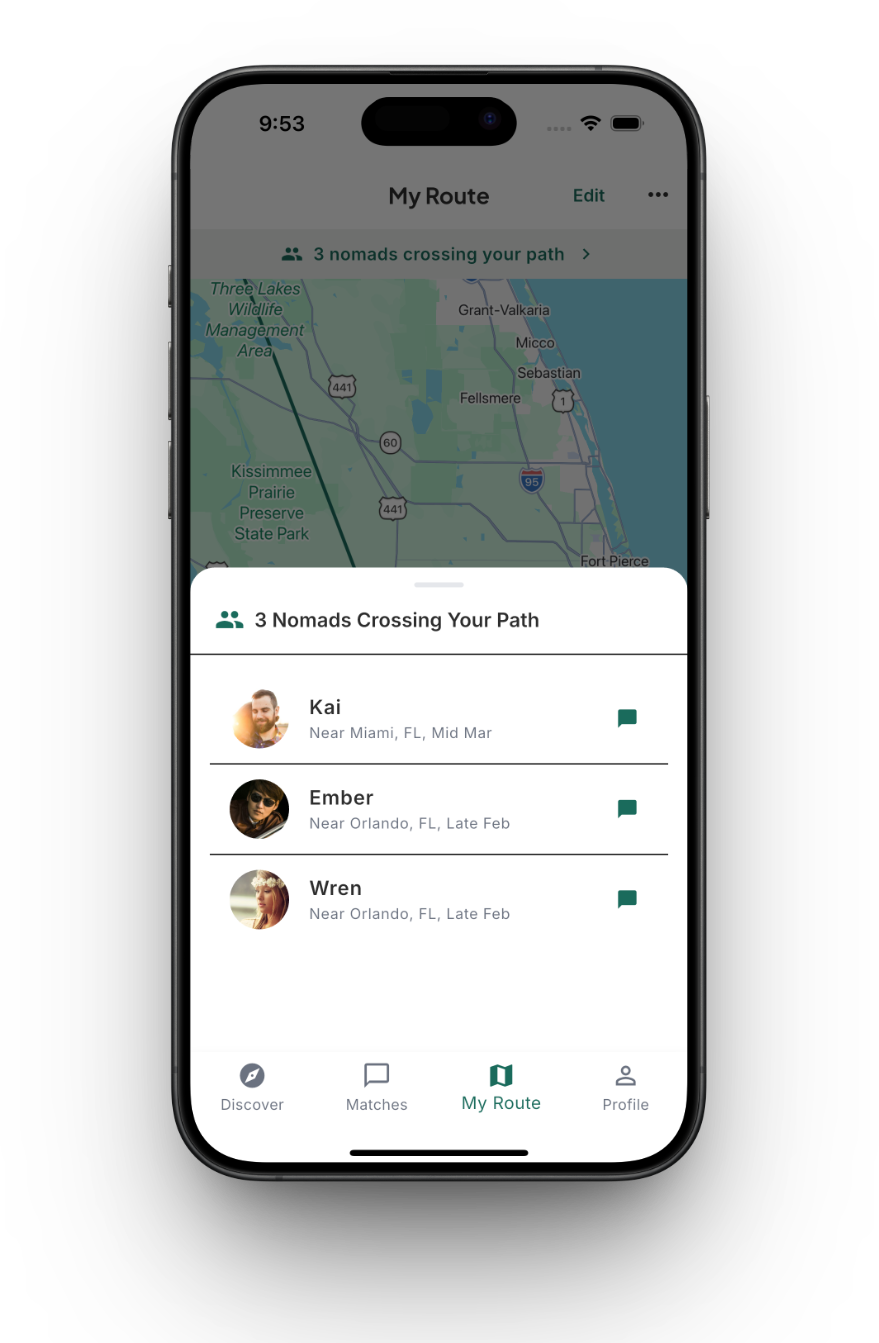
See Nomads in your route
-
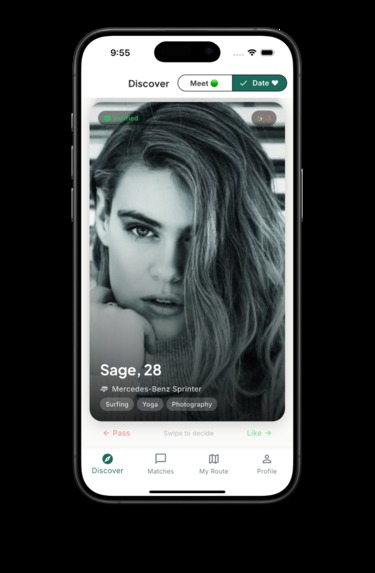
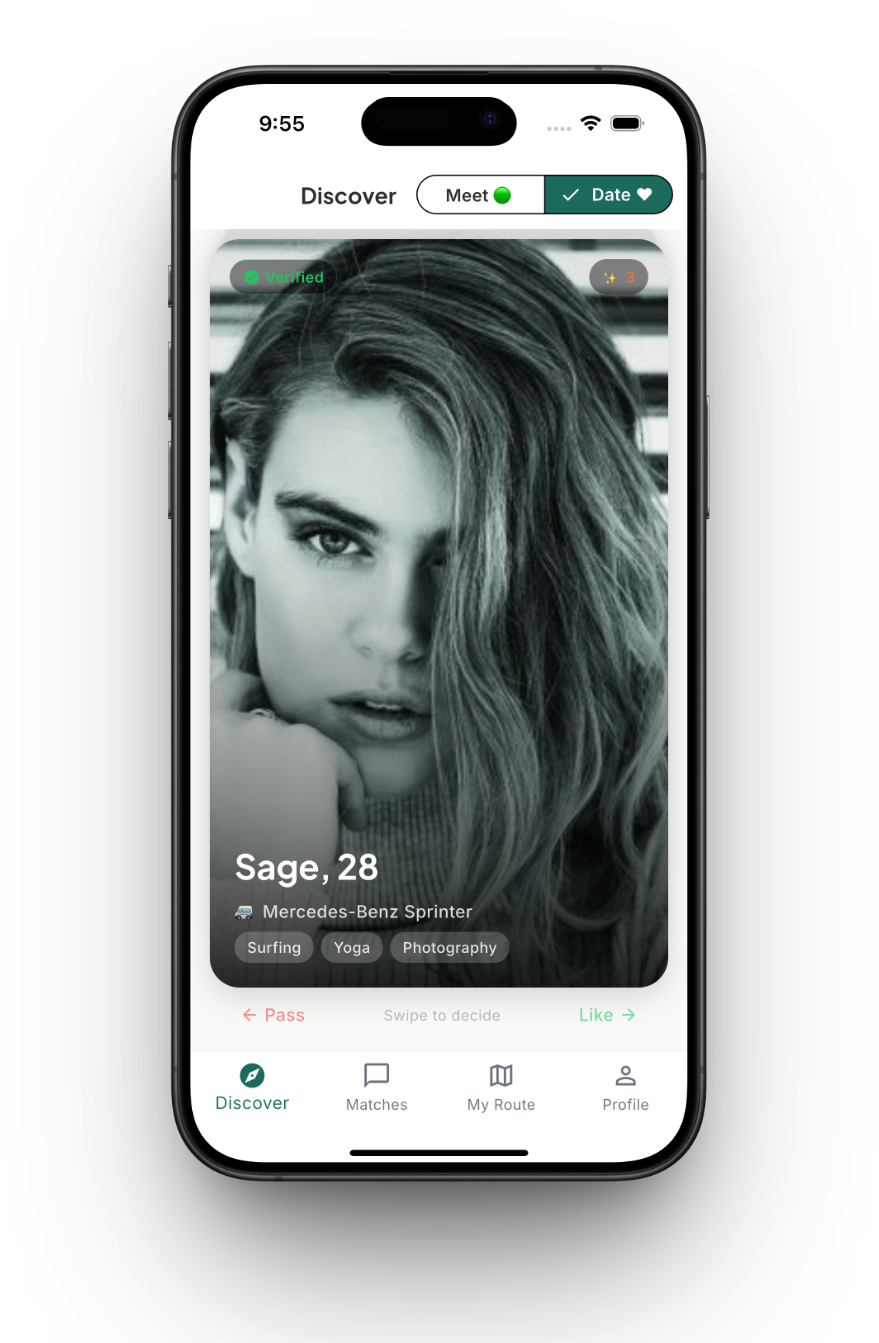
Match with of those who match your life style
-
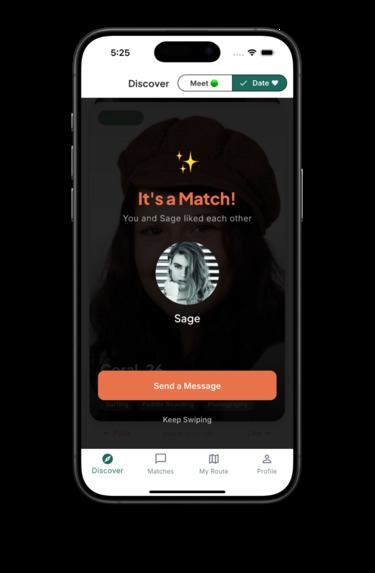
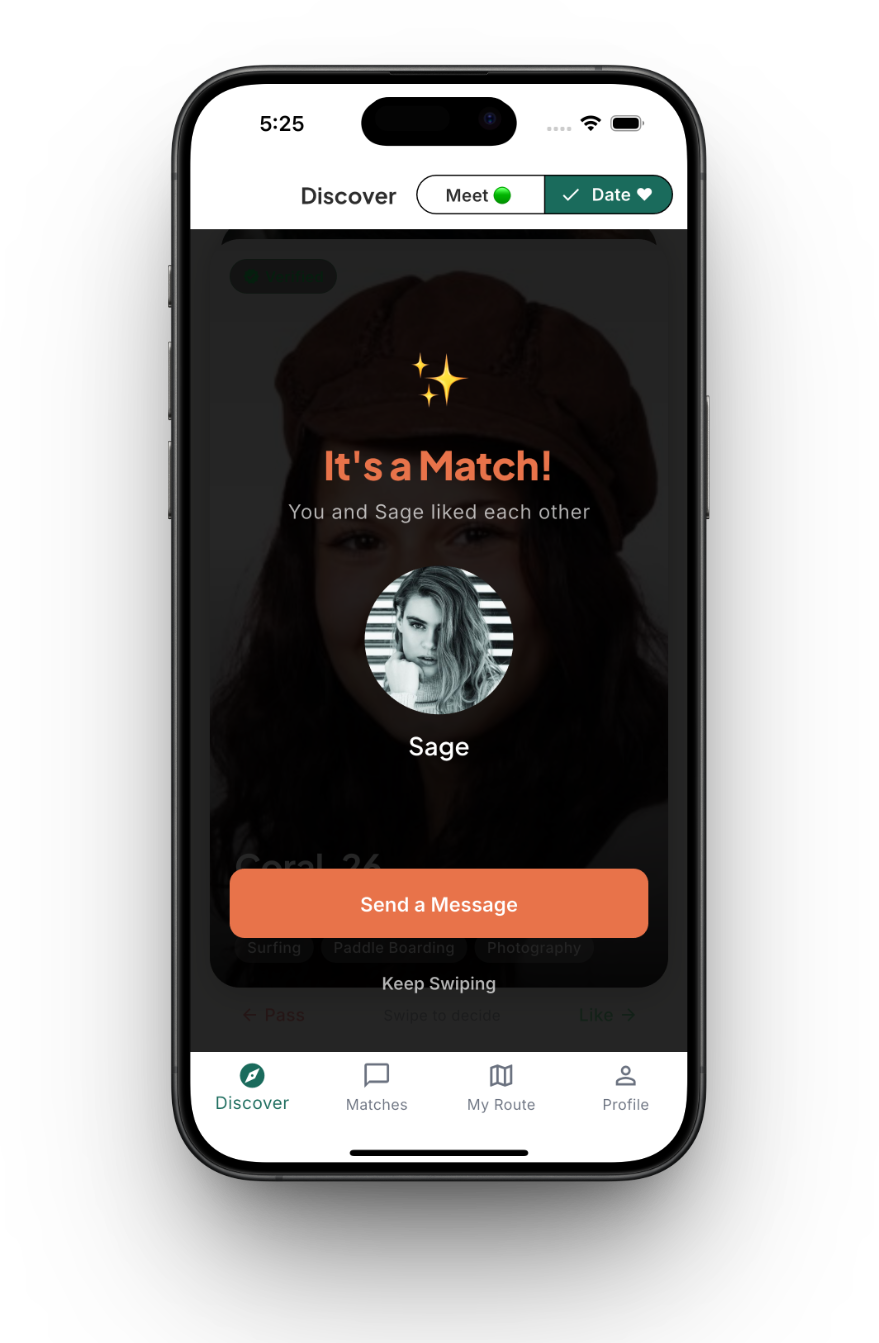
If both users connect, you can message each other and start a new friendship!
-
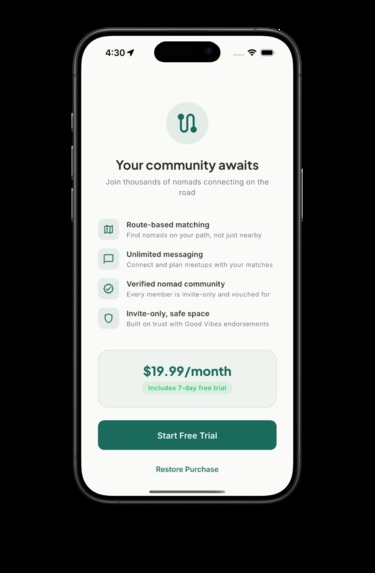
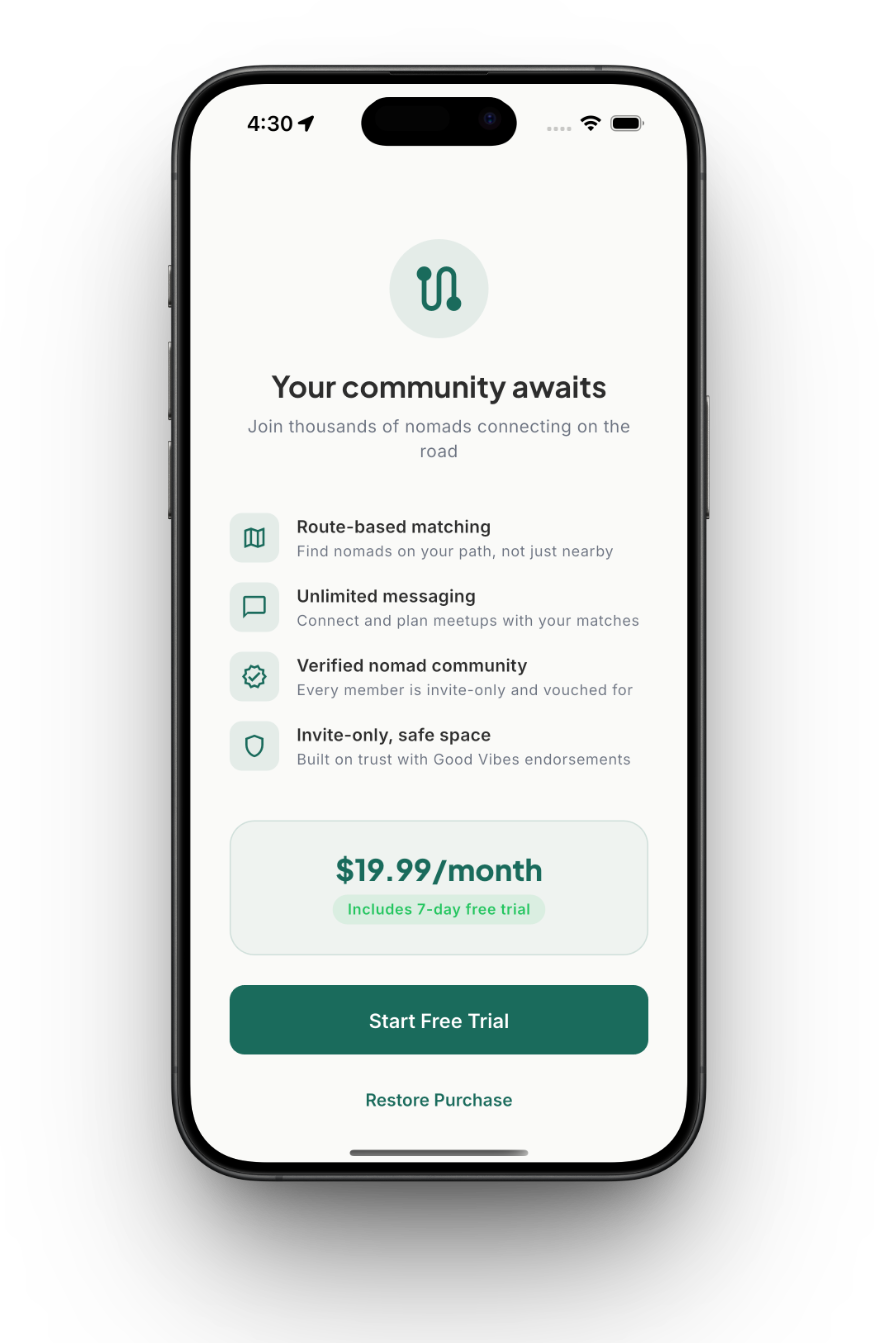
Free trial to see how the app works and connect with others before you commit
RouteMatch — Where Nomad Paths Cross
The Problem
There are over 3 million people living the van life in the US alone, and that number is growing every year. They're chasing sunsets, dodging winters, and exploring the country on their own terms. But there's a problem nobody talks about: it gets lonely out there.
Traditional dating and social apps don't work for nomads. You match with someone in Moab, have a great conversation, and by next Tuesday you're 600 miles apart. The entire premise of location-based matching breaks down when your location changes every few days.
The Solution
RouteMatch flips the model. Instead of matching you with people who are nearby right now, it connects you with nomads whose routes will cross yours in the future. Planning to be in Austin next month? RouteMatch shows you who else will be rolling through — so you can connect before you arrive, not after you've already left.
How It Works
Set Your Route — Drop your upcoming stops with approximate dates. Heading from Orlando to Asheville to Nashville over the next two months? Map it out. The route editor uses Google Places autocomplete with a visual map preview, so planning feels intuitive, not tedious.
Discover Crossing Nomads — This is the magic. Your route map comes alive with avatar pins showing real people whose paths intersect with yours. Tap any pin to see their profile, what they're driving, and exactly where your routes overlap. It turns abstract route data into real human connections.
Swipe & Match — Browse profiles through a familiar swipe interface, but with context that matters: shared hobbies, van type, and most importantly, where you'll actually be at the same time.
Chat & Meet — When you match, start a conversation. Plan a meetup at a campground. Caravan together for a stretch. The connections happen on the road, not just on a screen.
What Makes RouteMatch Different
Route-Based Matching — The core innovation. We compare waypoints and dates to find genuine path intersections, not just proximity pings.
Invite-Only Community — Every member enters through an invite from someone trusted. No bots, no catfishing, no random strangers. This is a community that polices itself.
Three Connection Modes — Meet (friendship), Date (romance), and Build (van projects, coming soon). Not everyone on the road is looking for the same thing.
Good Vibes Endorsements — Met someone in person and they were awesome? Vouch for them. These endorsements build a trust layer that no verification badge can replicate.
Safety First — Flag, report, and block with one tap. Van photo verification required. Phone number verified. We take safety seriously because the community depends on it.
Monetization
RouteMatch uses a freemium model with a $19.99/month subscription (7-day free trial). Free users can browse profiles, but messaging, full route matching, and crossing nomads features require a subscription. The invite-only model creates natural scarcity and perceived value — you're not just downloading another app, you're joining a vetted community.
The price point is intentional. Van lifers spend $50-150/night at campgrounds without blinking. $20/month to find people worth sharing those campfires with is an easy yes for anyone who's felt the isolation of solo travel.
Subscription management is powered by RevenueCat, handling trials, renewals, and entitlements seamlessly.
Technical Stack
- Flutter (iOS, Android-ready)
- Firebase (Auth, Firestore, Storage)
- RevenueCat (Subscription management)
- Google Maps & Places API (Route creation, crossing nomad visualization)
Try It
Invite Code for Judges: HLGA1D
When testing, try this flow:
- Enter the invite code → complete onboarding → start your free trial
- Set a route. Try Orlando - Late Feb -> Miami - Mid March ->New Orleans - Late March.
- Check the route map for crossing nomad pins — tap them
- Swipe through the discovery feed → get a match → send a message
- Check out Good Vibes endorsements on profiles
About the Developer
My name is Mario Velasquez Gomez. I'm 35, a CTO, and I've been building software for nearly 20 years. My background is in enterprise web applications for the medical and pharmaceutical industry — systems that handle sensitive data, require real compliance, and are used by thousands of people across the world every day. That experience shaped how I think about trust, safety, and building things that actually work at scale. Mobile is a newer frontier for me. I've shipped a couple of personal apps that I use daily and I'm proud of, but RouteMatch is different. This is the first project where I looked at a problem — nomads struggling to find meaningful connections on the road — and thought, "I know exactly how to solve this, and I want to be the one who does." No matter what happens with this contest, RouteMatch is getting launched. This isn't a hackathon project that lives on a shelf. It's the start of something I plan to take as far as it can go. I've spent my career building software that belonged to someone else. This one is mine.
Links
- Website: https://routematch.app
- Privacy Policy: https://routematch.app/privacy
- Terms of Service: https://routematch.app/tos
How we built it
RouteMatch was built using a sprint-based development approach. Each sprint had a clear scope: foundation and auth, onboarding, paywall integration, discovery and matching, chat, route creation, and finally polish.
The tech stack is Flutter for the frontend, Firebase for authentication, database, and storage, RevenueCat for subscription management, and Google Maps and Places APIs for the route and crossing nomads features.
The route-matching system was built from scratch. It compares each user's waypoints and approximate travel dates against every other user's route, calculating geographic proximity and temporal overlap to surface genuine path intersections. The results are visualized as interactive avatar pins on the map — tap one and you see exactly who you'll cross paths with, where, and when.
We prioritized mobile-first design throughout, building reusable components and keeping the UI clean and intuitive. Every screen went through multiple iterations based on real device testing, and we maintained zero analysis errors across the entire codebase from start to finish.
Challenges we ran into
The biggest technical challenge was Google Maps performance on iOS. We built an interactive route map with dashed polylines connecting waypoints coast-to-coast, and the app completely froze. After hours of debugging, we traced it to iOS simulator rendering — dashed line patterns were generating thousands of draw segments with no GPU acceleration. The fix was switching to solid polylines, but finding the root cause required isolating every component on the screen one by one.
Phone authentication on release builds was another battle. Everything worked perfectly in debug mode, but on TestFlight the reCAPTCHA callback would redirect users to the welcome screen instead of returning them to the verification code entry. This came down to the routing guard intercepting the Firebase callback URL — a bug that only appears in release builds, making it incredibly difficult to diagnose.
RevenueCat integration had its own set of challenges. Product IDs, entitlement names, and offering identifiers all need to match exactly between App Store Connect, RevenueCat's dashboard, and the app code. A single mismatch and the paywall silently fails with a generic error. We learned to always let RevenueCat import directly from App Store Connect rather than manually entering IDs.
We also had a critical data loss bug where navigating to the paywall from settings (as an existing user upgrading) would overwrite the entire user profile with empty defaults. The paywall's profile creation logic didn't distinguish between new users and existing users — a subtle but devastating issue that wiped real profile data.
Accomplishments that we're proud of
We're most proud of the route-matching algorithm and the crossing nomads experience. It's one thing to say "we match people based on routes" — it's another to see avatar pins appear on your map showing real people you'll cross paths with, tap one, see their profile, and start a conversation. That moment where route data transforms into human connection is the heart of RouteMatch, and we nailed it.
We're also proud of how polished the app feels. Loading skeletons, error states with retry buttons, empty states with helpful prompts, smooth transitions — these details don't show up in feature lists, but they're what separate a prototype from something that feels ready for real users. Every screen was tested on a physical device and refined until it felt right.
The invite-only system is something we're proud of from a product standpoint. It's not just a growth mechanic — it's a trust layer. When every member was invited by someone, the community starts with accountability built in. Combined with Good Vibes endorsements and a straightforward flag-and-block system, we've built safety into the DNA of the app rather than bolting it on as an afterthought.
What we learned
The biggest lesson was resilience. We hit showstopping bugs at almost every stage — app freezes, data wipes, authentication failures, subscription configuration mismatches — and each one felt like it could derail the entire project. But we learned to stay systematic. Isolate the problem, understand the root cause, fix it properly, and move on. No panic, no shortcuts.
We also learned that user experience decisions matter more than features. Early in development, we built a tap-to-drop-pins approach for route creation. It worked technically, but it felt clunky and unintuitive. We scrapped it and rebuilt with a hybrid search-plus-map system using Google Places autocomplete. The second version took longer to build but transformed the route creation experience from a chore into something that actually feels good to use. That willingness to throw away working code in favor of better UX made the app significantly stronger.
On the technical side, we learned that mobile development has an entirely different set of gotchas compared to web development. iOS simulator rendering limitations, release-only authentication bugs, sandbox purchase environments — these are things you can't anticipate from documentation alone. You have to put the app on a real device and test every flow end to end.
What's next for RouteMatch - Nomad Social
We're going after this. If we win, the prize money becomes seed funding to launch RouteMatch commercially in the US immediately after the contest.
The product roadmap is already defined: Build Mode for van conversion help and collaboration, Group Meetups for community gatherings, Campground Reviews sourced from actual nomads, Caravan Mode for coordinated group travel, and Seasonal Alerts so users know when to head south or which festivals are coming up along their route.
But the real next step is growth. We plan to launch in key van life hubs — Moab, Sedona, Austin, the Pacific Coast — and grow through the invite system organically. We'll get in front of VCs and angel investors to raise a proper round, because the van life market is large, growing, and completely underserved by existing social platforms.
The technology works. The product-market fit is clear to anyone who's spent a week on the road alone. Now it's about putting it in the hands of the people who need it most.
Built With
- firebase
- flutter
- google-places
- ios
- revenue-cat

Log in or sign up for Devpost to join the conversation.