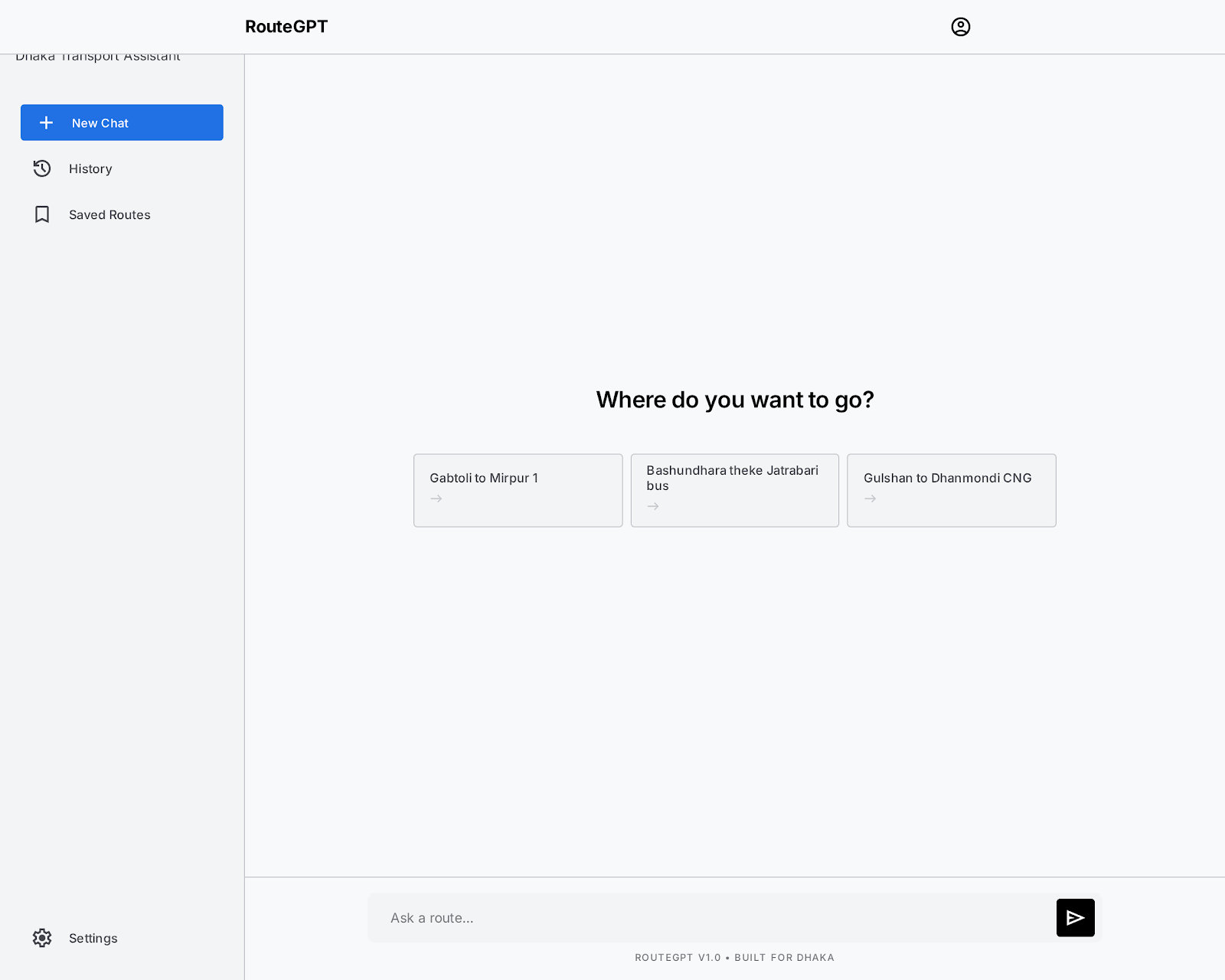
RouteGPT started from a simple observation: Dhaka does not need another complicated transport dashboard. It needs a simple answer to a simple question:
How do I get from here to there? So the product is built around chat. No map-first interface. No complex filters. No formal language requirement. A user can write the way they naturally text:
Bashundhara theke Jatrabari bus e jabo RouteGPT understands the request, extracts the origin, destination, and transport mode, then checks a structured local route database. The AI is used for language understanding, but the transport facts come from the database. This keeps the app useful without letting the model hallucinate fake bus routes.
For bus fare, RouteGPT uses a transparent station-based policy: minimum BDT 10, then BDT 10 per station, with 50% student fare and BDT 10 minimum student fare. For CNG and ride-hailing, it gives honest estimates based on distance and rate tables rather than pretending to have live Pathao or Uber prices.
The first version is intentionally focused: scrape route data, seed a local database, calculate fares, and show results in a clean ChatGPT-like interface. Every result includes a "Report wrong info" action, because Dhaka transport data changes and the community needs a way to keep it alive.
Long term, RouteGPT is more than a chat app. It can become a structured, verified Dhaka transport dataset that helps commuters, city planners, researchers, NGOs, and future mobility platforms understand how the city actually moves.
Demo Story Imagine a student needs to go from Gabtoli to Mirpur 1.
They open RouteGPT and type:
Gabtoli theke Mirpur 1 bus e jabo RouteGPT replies with matching buses, the route direction, the general fare, and the student fare:
Bus: Achim Paribahan Route: Gabtoli -> Technical -> Ansar Camp -> Mirpur 1 General fare: BDT 40 Student fare: BDT 20 If the user asks without mentioning a mode:
Mirpur 10 to Motijheel RouteGPT compares all available options:
Bus routes from the local database. CNG fare estimate. Pathao Bike and Car estimate. Uber Moto and Go estimate. The user gets one clear answer instead of opening multiple apps or relying on guesswork.
Why This Matters RouteGPT matters because it solves a real daily problem for a massive user base.
Dhaka commuters do not need perfect transport infrastructure before they can get better information. Even a practical route and fare assistant can reduce confusion, save time, and help people avoid unfair fares.
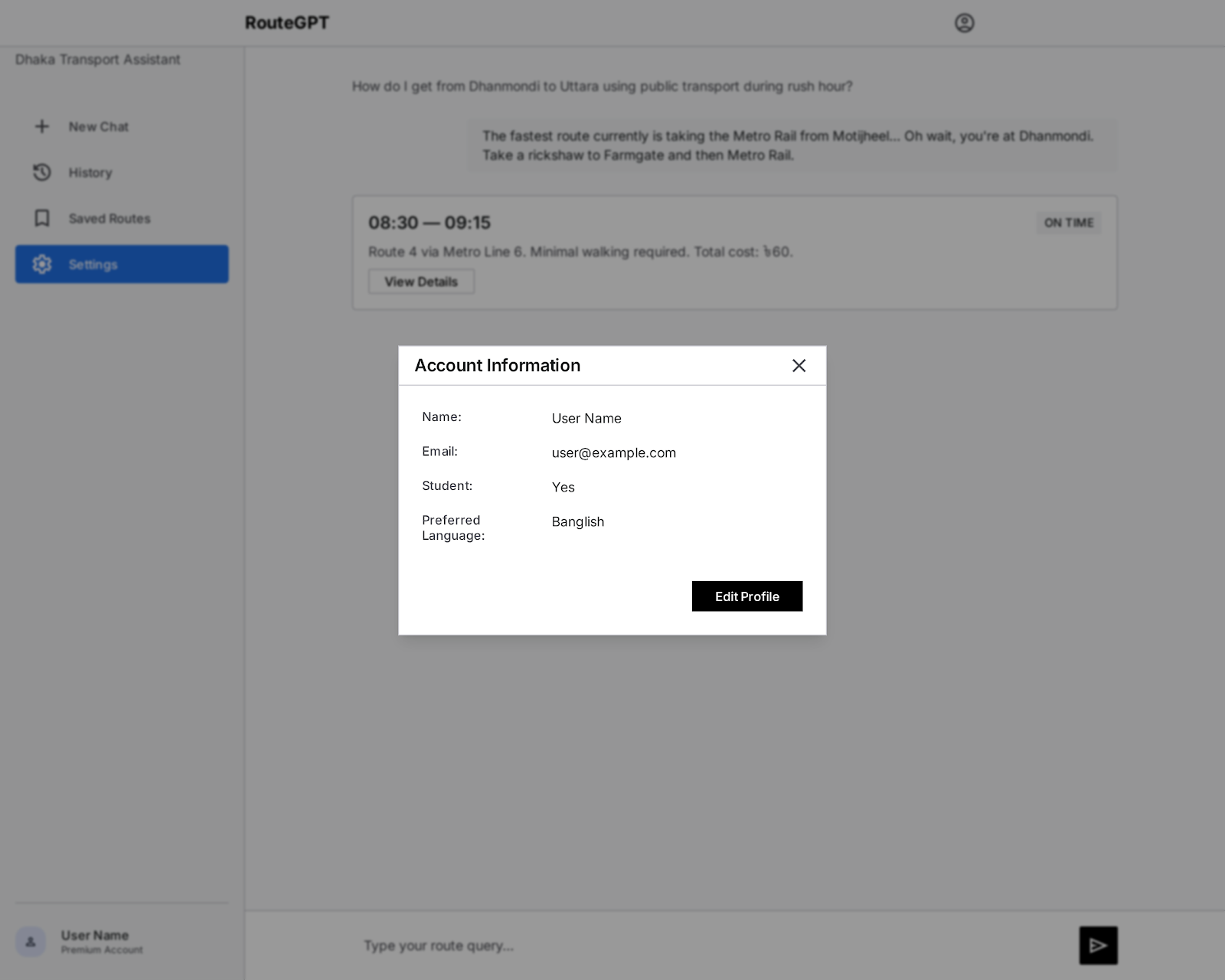
The product is also built around local behavior. People in Dhaka often do not type formal Bengali or formal English. They type Banglish. RouteGPT respects that from day one.
Closing Line RouteGPT turns Dhaka's informal transport knowledge into a simple chat assistant anyone can use.
Built With
- javascript
- llm
- react
- webscraping


Log in or sign up for Devpost to join the conversation.