Inspiration
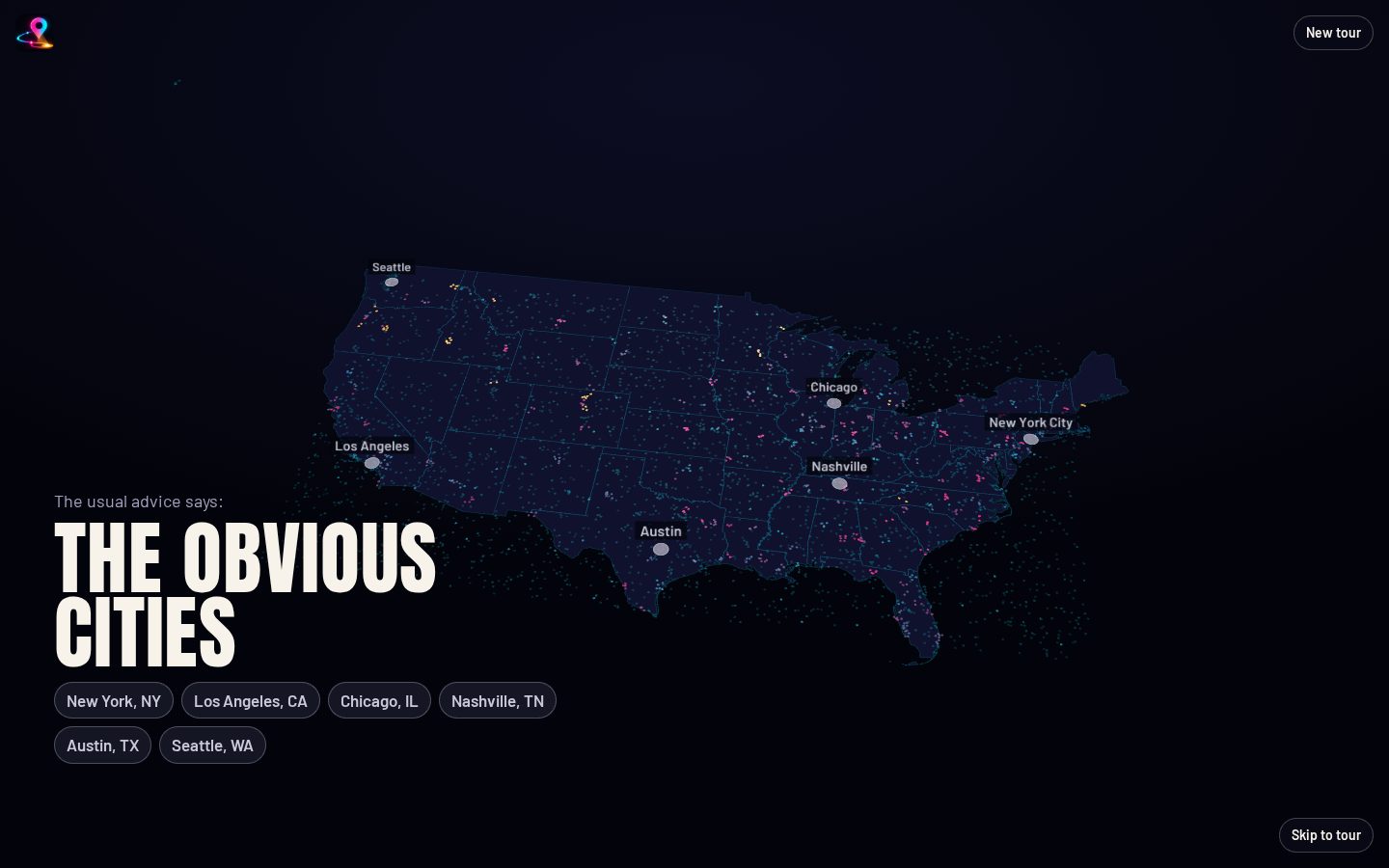
Independent musicians and comedians usually guess where to tour, or default to New York, LA and Chicago: the most expensive cities, already packed with shows like theirs. Many end up playing to half-empty rooms and losing money. Big acts have data teams that know where their fans are. Small acts don't. We wanted to give every independent artist that data team.
What it does
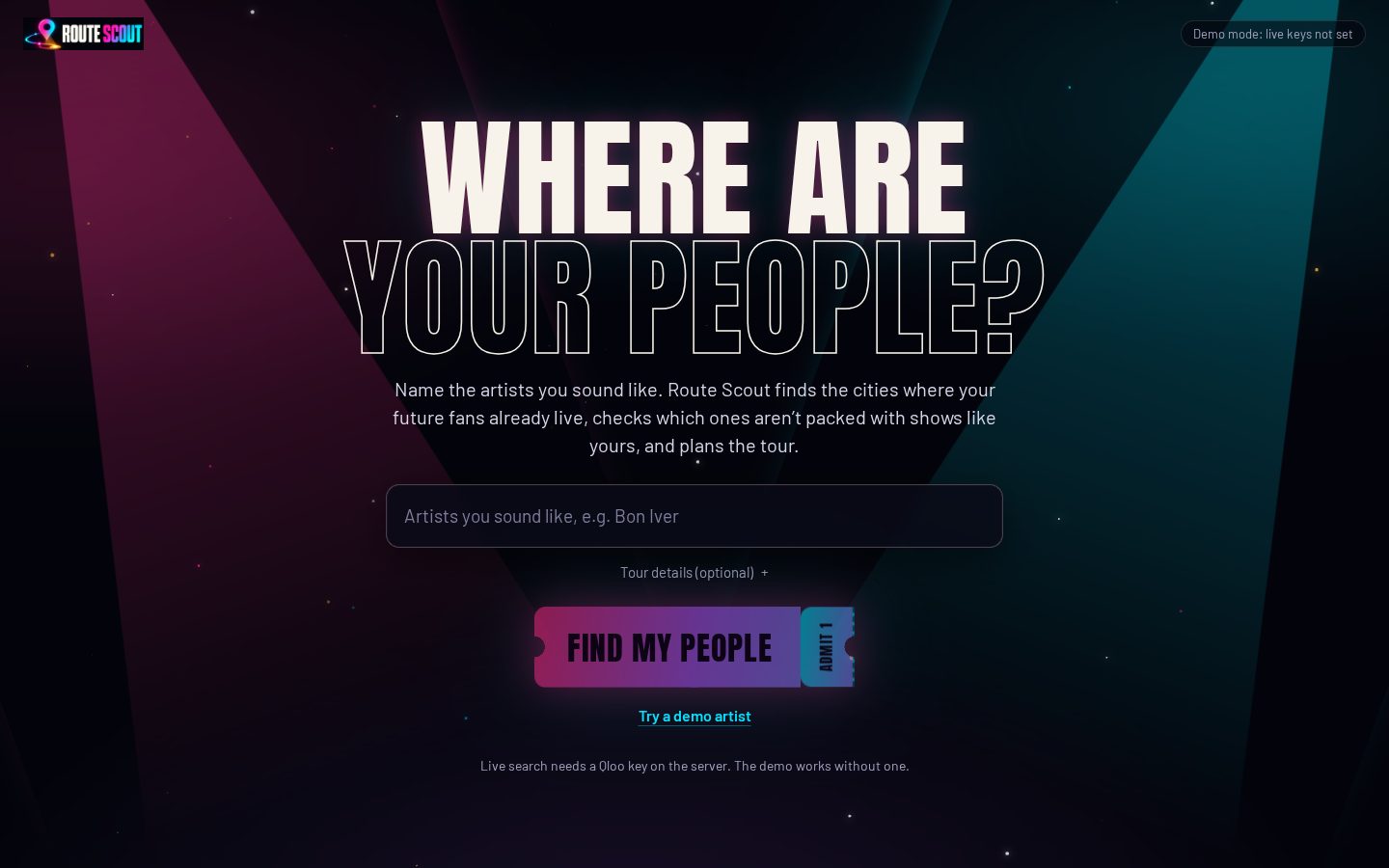
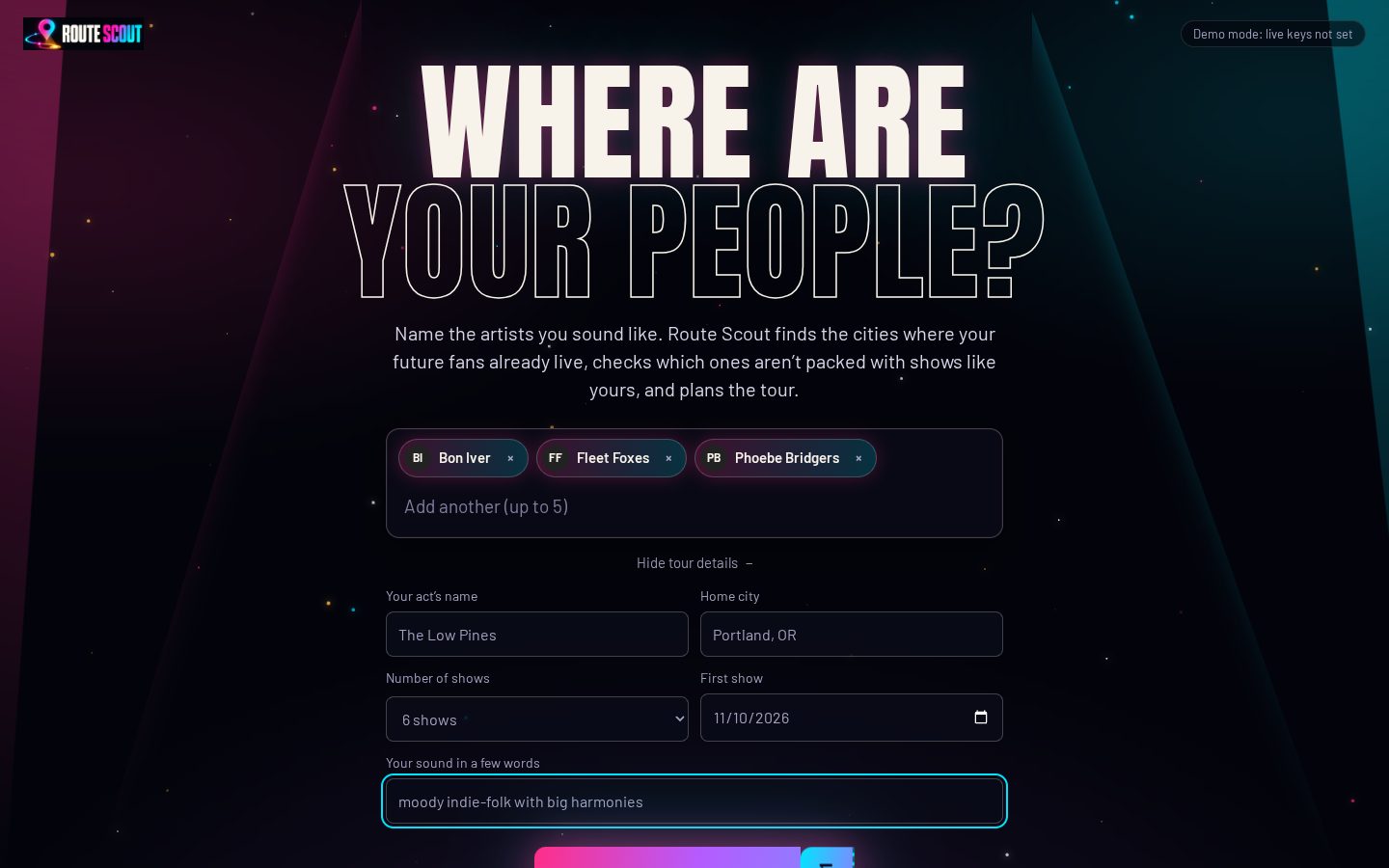
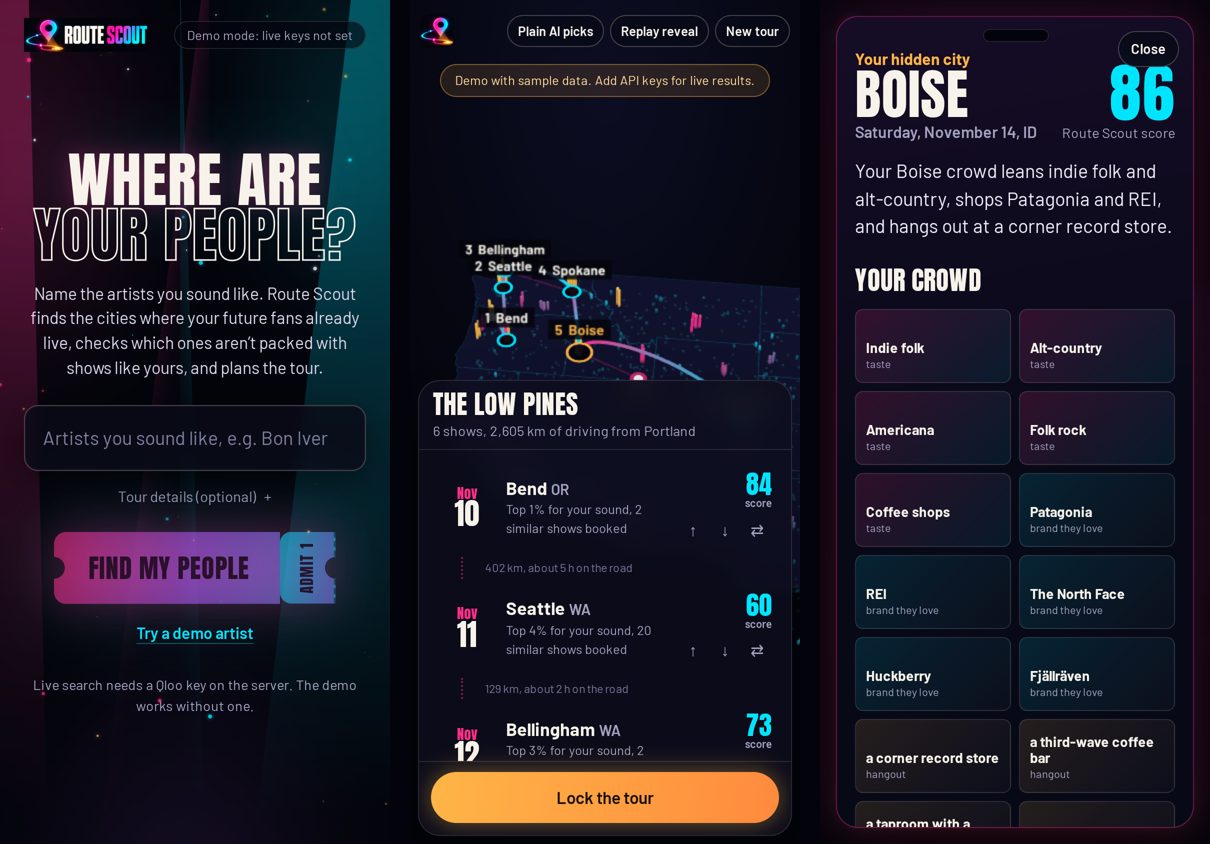
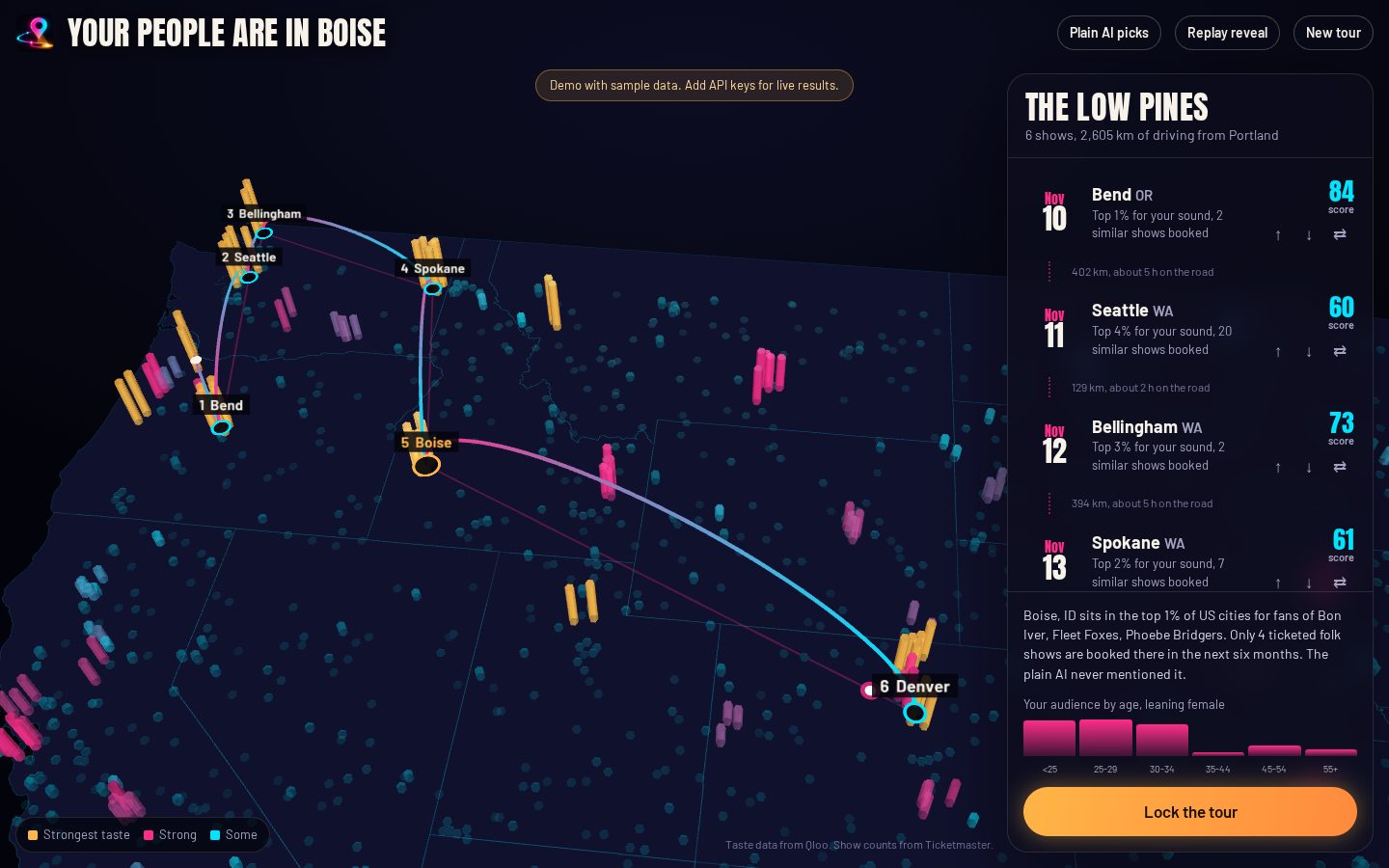
Route Scout asks one question: who do you sound like?
- Finds your people. It pulls Qloo's taste heatmap for the artists you name, roughly 9,700 cells across the US, and ranks cities by how strongly people there share that taste.
- Checks the competition. Using Ticketmaster, it counts upcoming ticketed shows in your genre in each city and checks where similar artists already have dates.
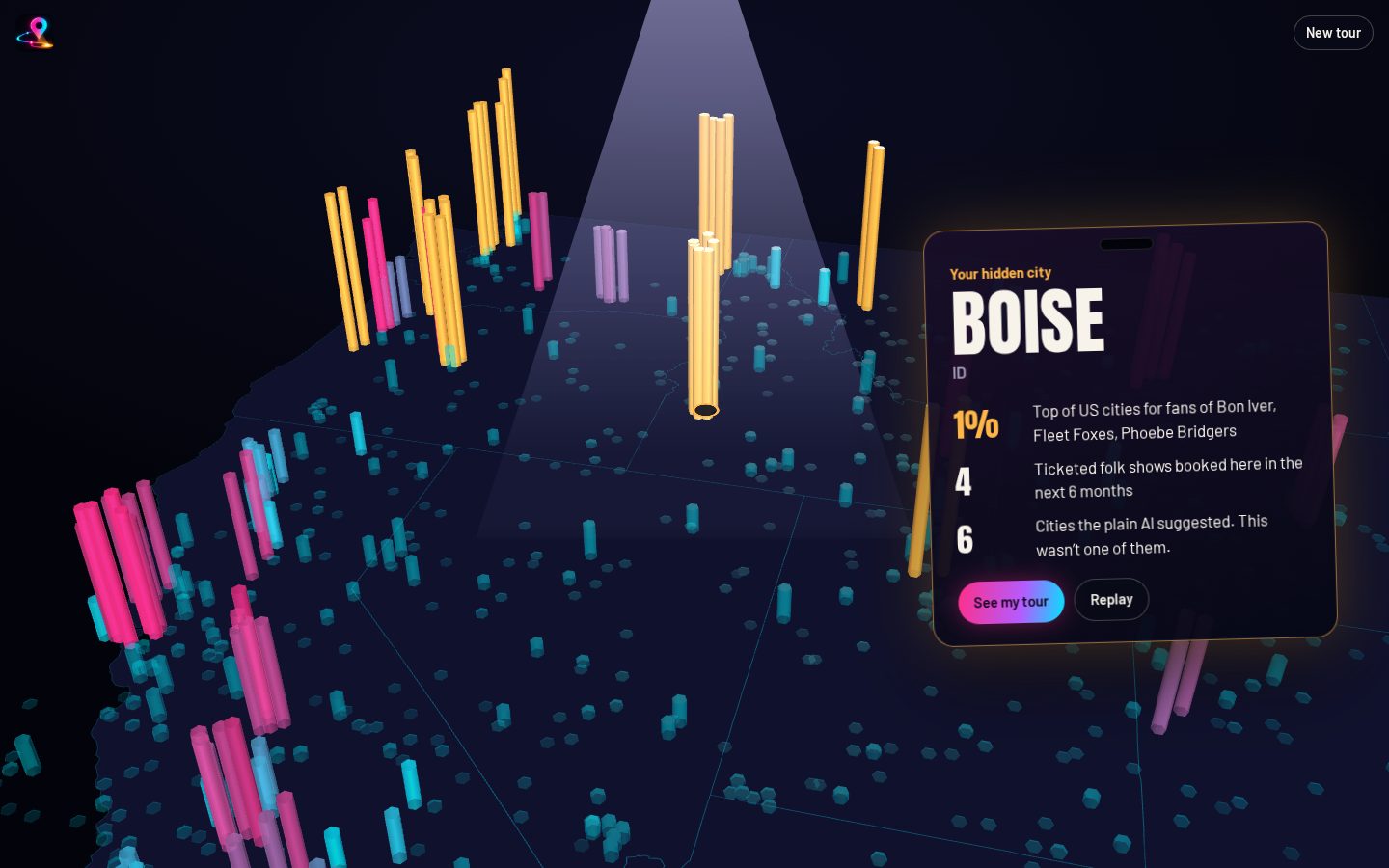
- Shows what a plain AI would say. It asks a model with no data tools where to tour, then reveals the high-scoring city that answer missed: your hidden city.
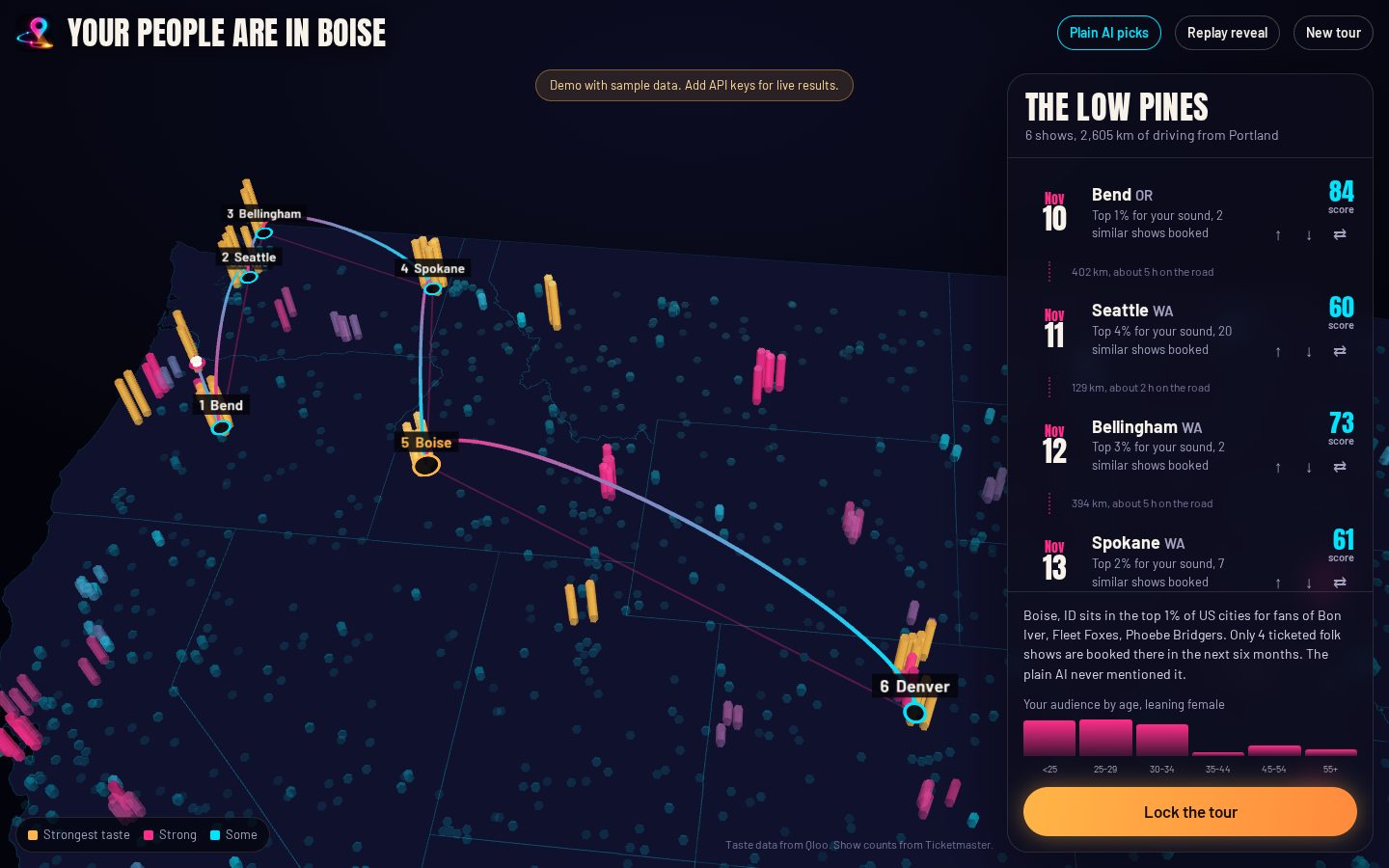
- Plans the tour. It picks cities that score well and fit a drivable route, puts them in order, and adds dates with travel days. You can reorder stops or swap any city for the next best one.
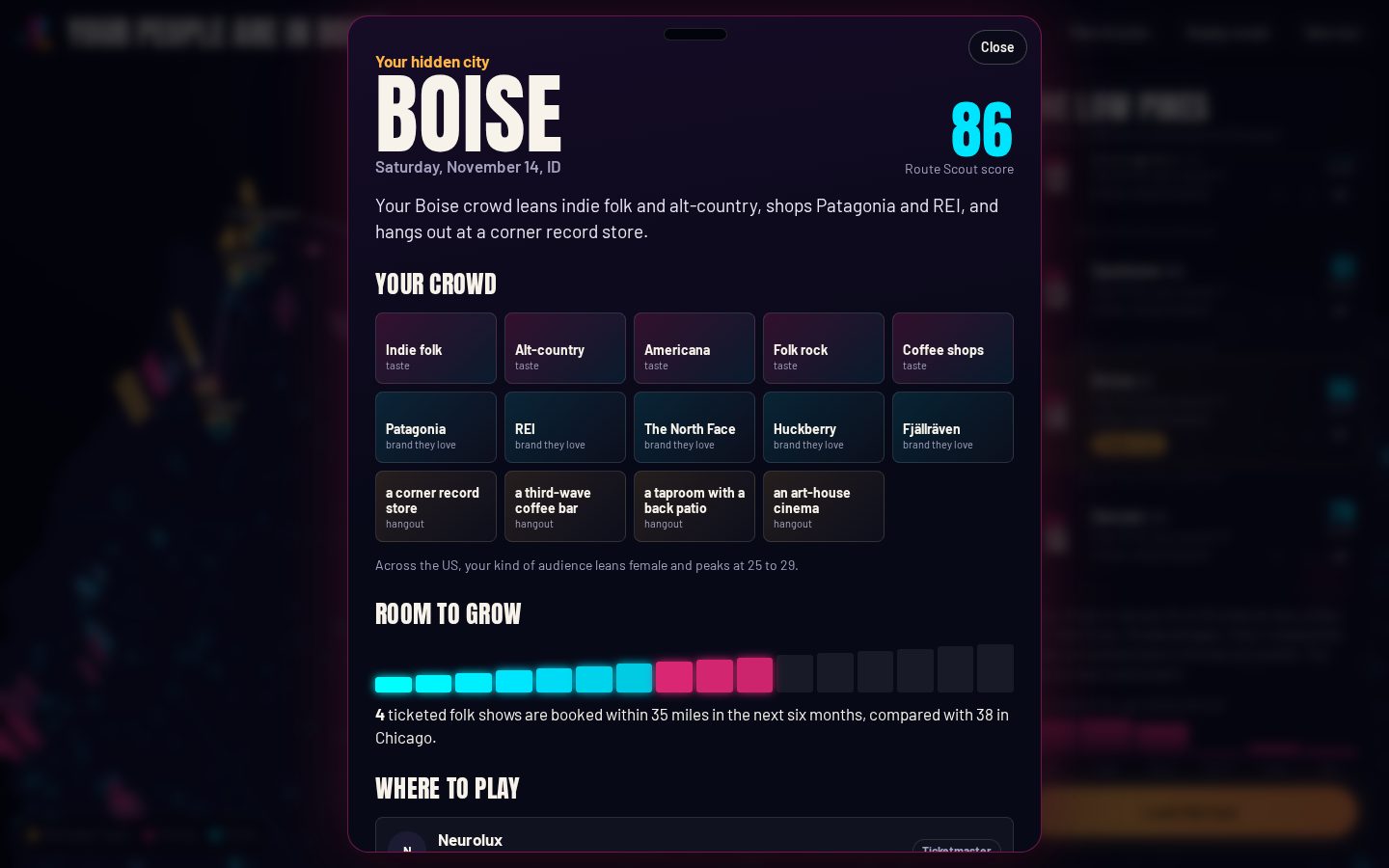
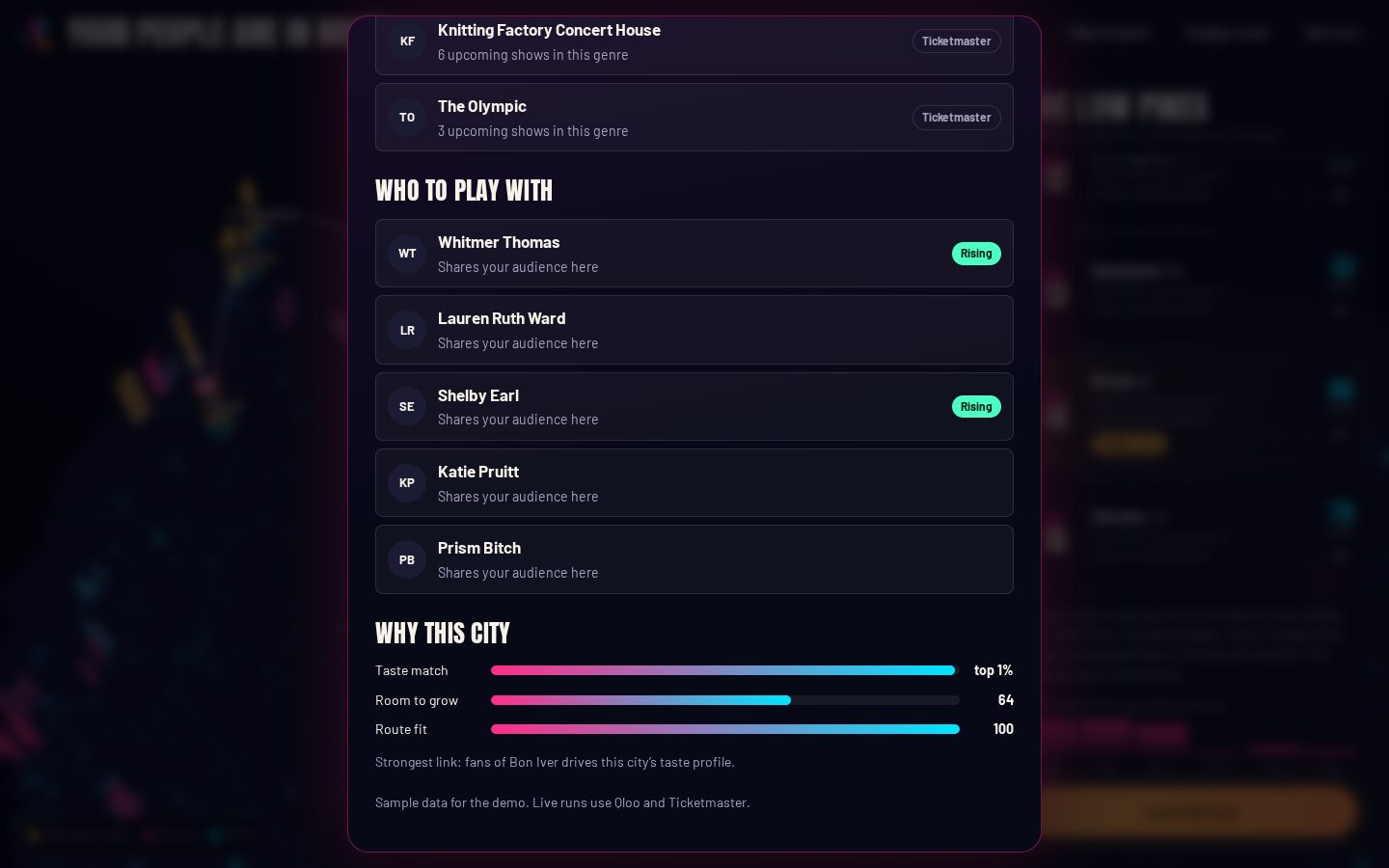
- Helps you win each city. Every stop gets a Backstage Pass: the crowd's taste, the brands and hangouts they love, real venues with upcoming shows, local support acts (with "Rising" badges from Qloo trends), and a score breakdown showing why the city was picked.
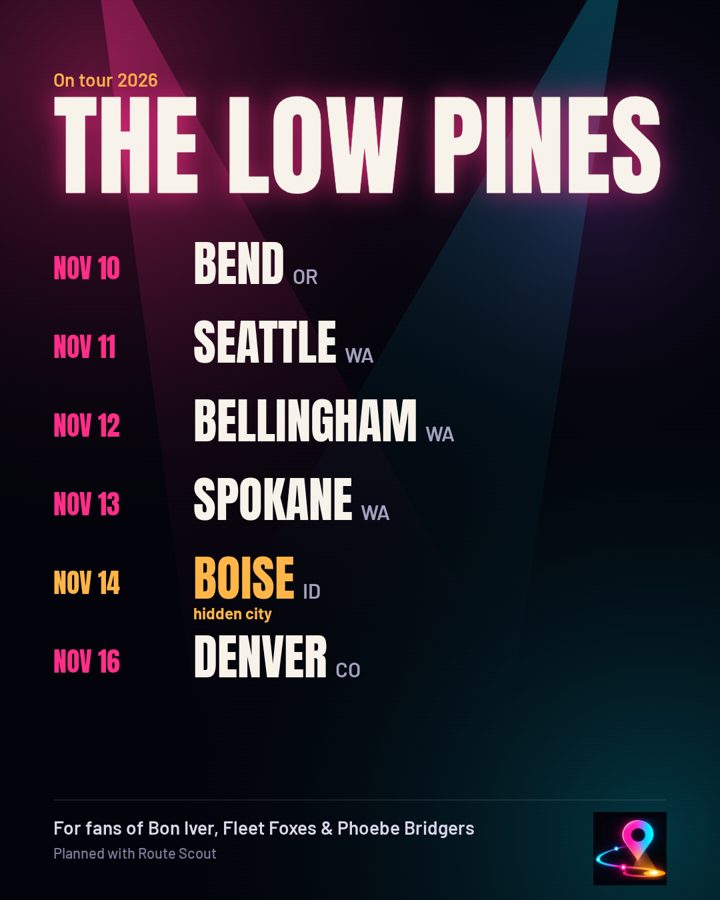
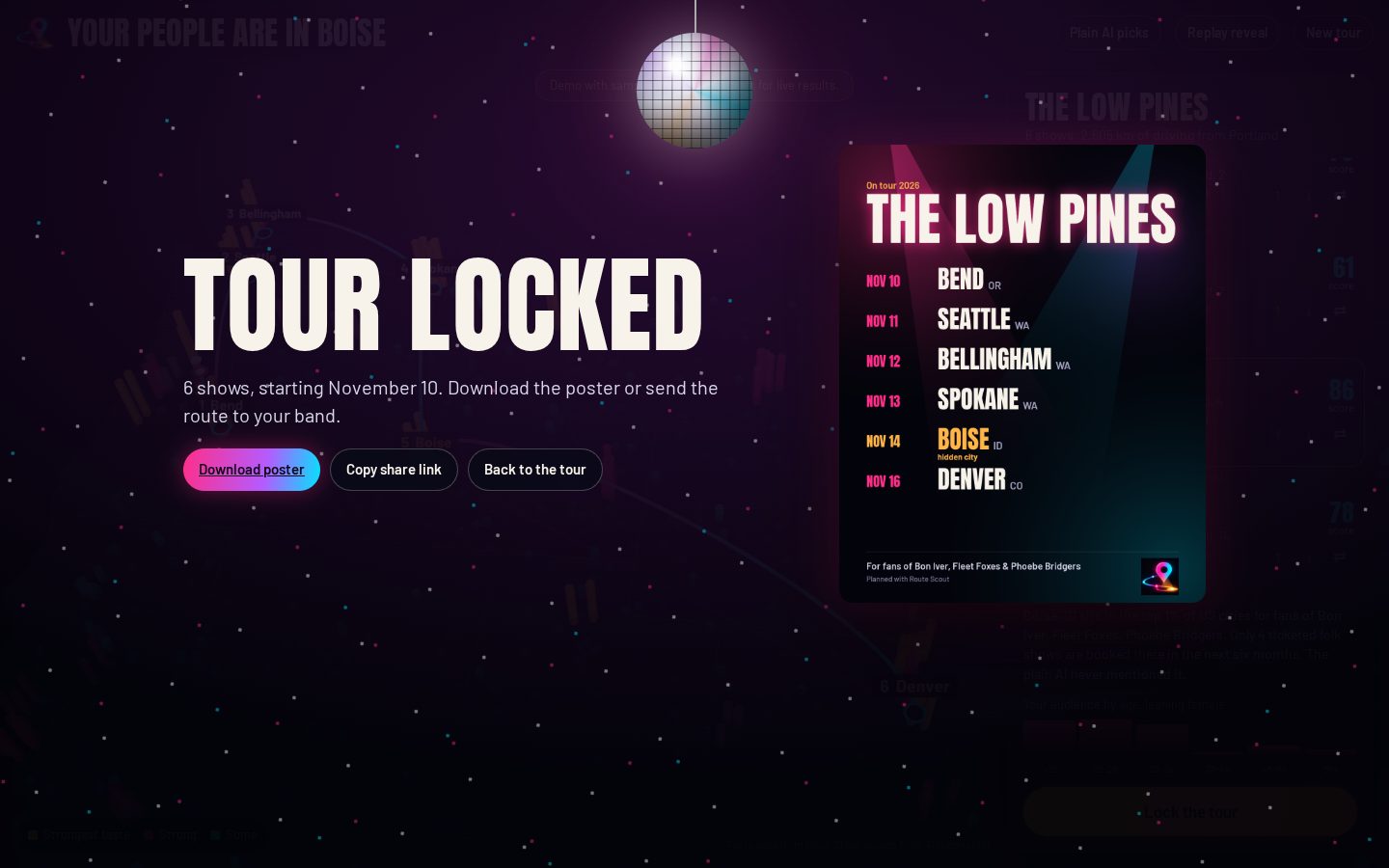
- Locks it in. You get a generated gig poster and a share link for your band.
Without Qloo there's no heatmap, no hidden city and no crowd. The product only works because it knows what people actually love, and where.
How we built it
- Qloo Taste AI is the core:
- Heatmap insights (
urn:heatmap) across a US polygon - Cross-domain insights for brands, places and taste tags in each city
- Artist insights with a location signal and popularity filter, for support acts at your level
- Venue tags, demographics, trending, compare
- Explainability, so every pick shows which of your artists drove it
- Heatmap insights (
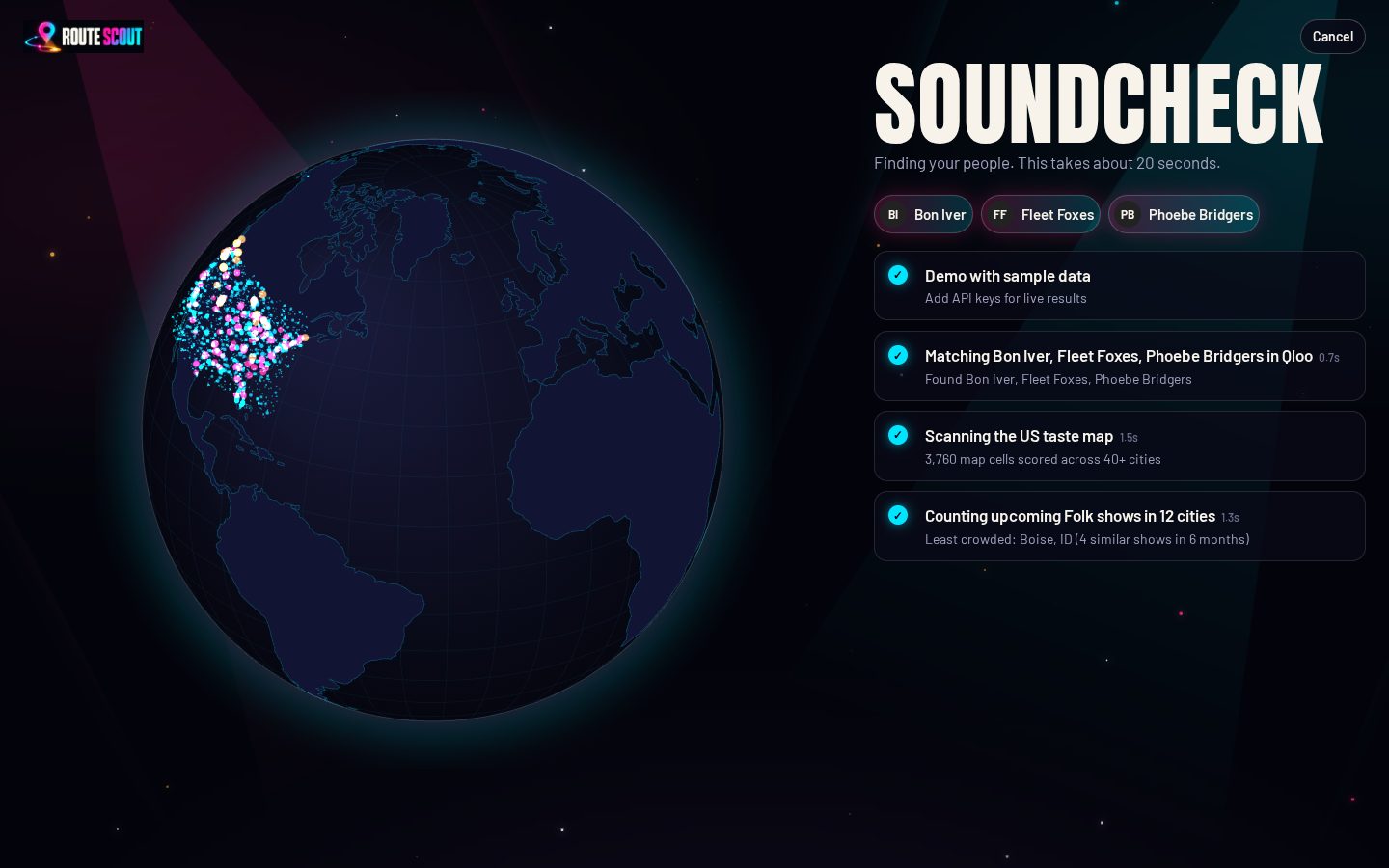
- Agent: an OpenRouter tool-calling loop with seven tools: resolve artists, scan taste map, check room to grow, check similar artist tours, ask plain AI, plan tour, finish. The model chooses the order and arguments. A coverage check guarantees every plan includes taste, competition, the plain-AI baseline and a route. Each step streams live to the "Soundcheck" screen.
- Guardrails: facts come from tools, not the model. The summary is assembled from tool results, so every number is real. The model's headline is only used if it names the final hidden city and contains no numbers.
- Scoring: 60% taste (Qloo affinity) + 40% room to grow (similar ticketed shows per 100k people), then route fit, nearest-neighbour + 2-opt ordering, and dates with travel days.
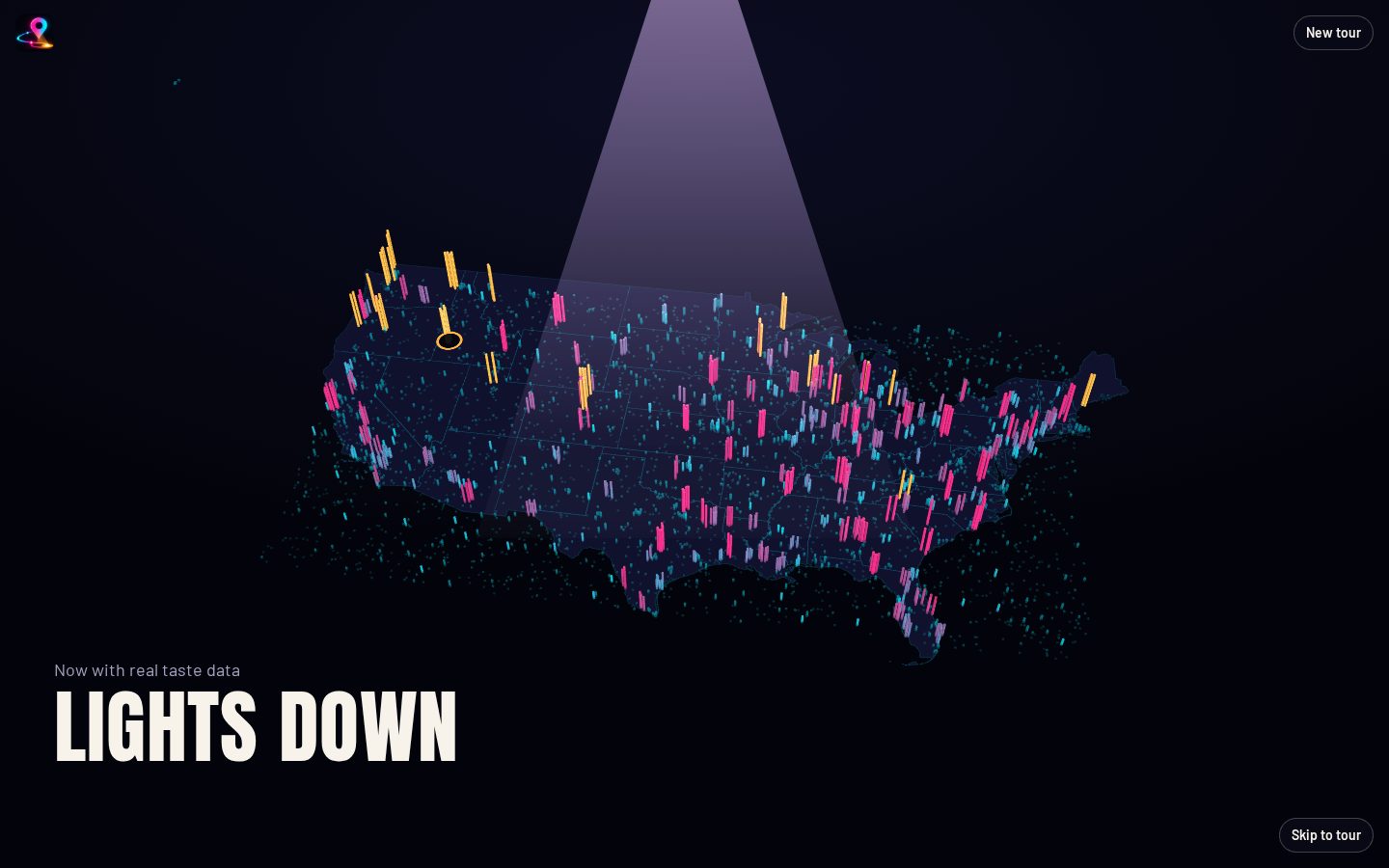
- Front end: Next.js 15 and React 19. deck.gl renders 3D light pillars built from the real heatmap cells, a canvas globe lights up during the live run, and the tour poster is drawn on canvas.
- Reliability: caching, retries, per-visitor rate limits, a Ticketmaster circuit breaker, a recorded demo that always loads instantly, and API keys kept server-side only. Deployed on Vercel.
Challenges we ran into
- Qloo's city-level heatmap output returned server errors in testing. We switched to the geohash grid and group thousands of cells into about 300 US metro areas ourselves, which also gave us the data for the 3D pillars.
- Affinity scores bunch up near the top, so raw numbers looked identical. We rank cities against each other and say "top 2% of cities", never "3x more likely", because Qloo returns ranks, not ratios.
- Qloo has no concert data, so it can't tell you if a city is already crowded. We added Ticketmaster to measure that, and made it optional so the app still works if Ticketmaster is down.
- Language models like to invent numbers. An early version wrote "shows in the last six months" when the data was for the next six. We moved every fact out of the model and into tool results.
- Superstar artists have fans everywhere, so their maps are less surprising. The hidden city shines most for independent and niche sounds, which is exactly who Route Scout is for.
Accomplishments that we're proud of
- The reveal: the plain AI's cities appear in grey, the lights go down, pillars of real taste data rise across the map, and spotlights land on a city the plain AI never mentioned.
- Every recommendation is traceable back to a Qloo or Ticketmaster result.
- A real agent that works in the open: you watch each tool call happen live.
- A complete product experience, from the first question to a downloadable tour poster, on desktop and mobile.
What we learned
- Cultural data changes the answer, not just the wording. The most valuable thing an agent can do is find what the user couldn't have found alone, and prove it.
- Agents are most trustworthy when the model decides what to do and the tools supply the facts.
- Combining taste data (where people love your sound) with supply data (where shows already are) beats either one alone.
What's next for Route Scout
- Beyond the US: cities in Canada, the UK and Europe.
- Right-sized venues: match venue capacity to an artist's likely draw.
- From plan to booking: draft outreach emails to venues and support acts for each stop.
- Close the loop: track ticket sales against each city's score to keep improving the predictions.
- Promoter mode: help small promoters find which acts would sell best in their city.
Built With
- deck.gl
- nextjs
- openrouter
- qloo
- ticketmaster
- vercel

Log in or sign up for Devpost to join the conversation.