Inspiration
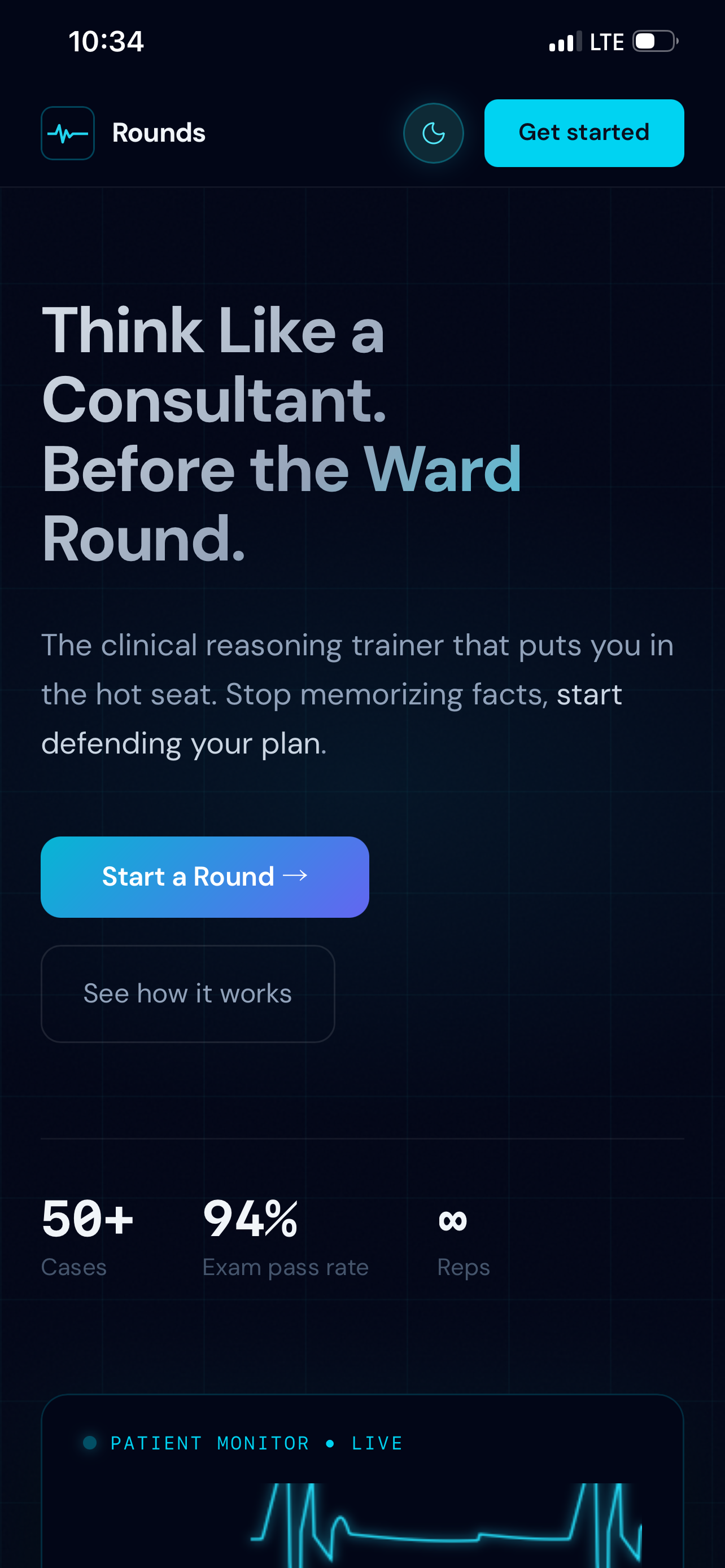
When I began my programming journey in 2025, I made a promise to myself: by the time I entered clinical school, I would build a tool that could genuinely impact my peers and improve our medical education. As I gained experience working on diverse projects—from building Instagram clones to contributing to a startup's event management platform—I realized in March 2025 that I had gathered the necessary skills to develop my own product. With clinical postings on the horizon, I wanted to move beyond the binary "true or false" approach common in medical testing. I am passionate about understanding the why behind clinical phenomena, preferring to reason from first principles rather than rote memorization. This inspired me to create Rounds, a platform where students are presented with clinical cases and challenged to defend their diagnostic reasoning in a non-binary, Socratic environment.
What it does
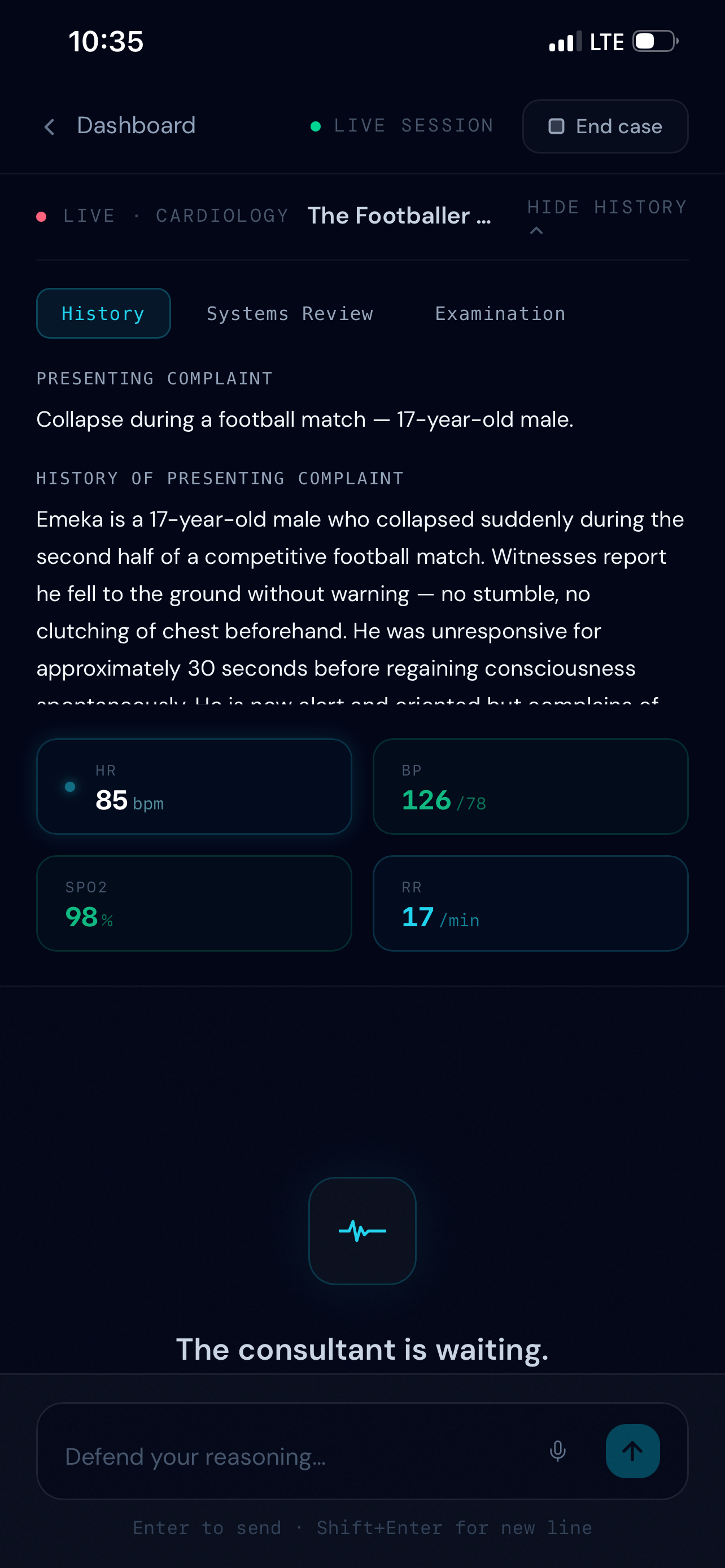
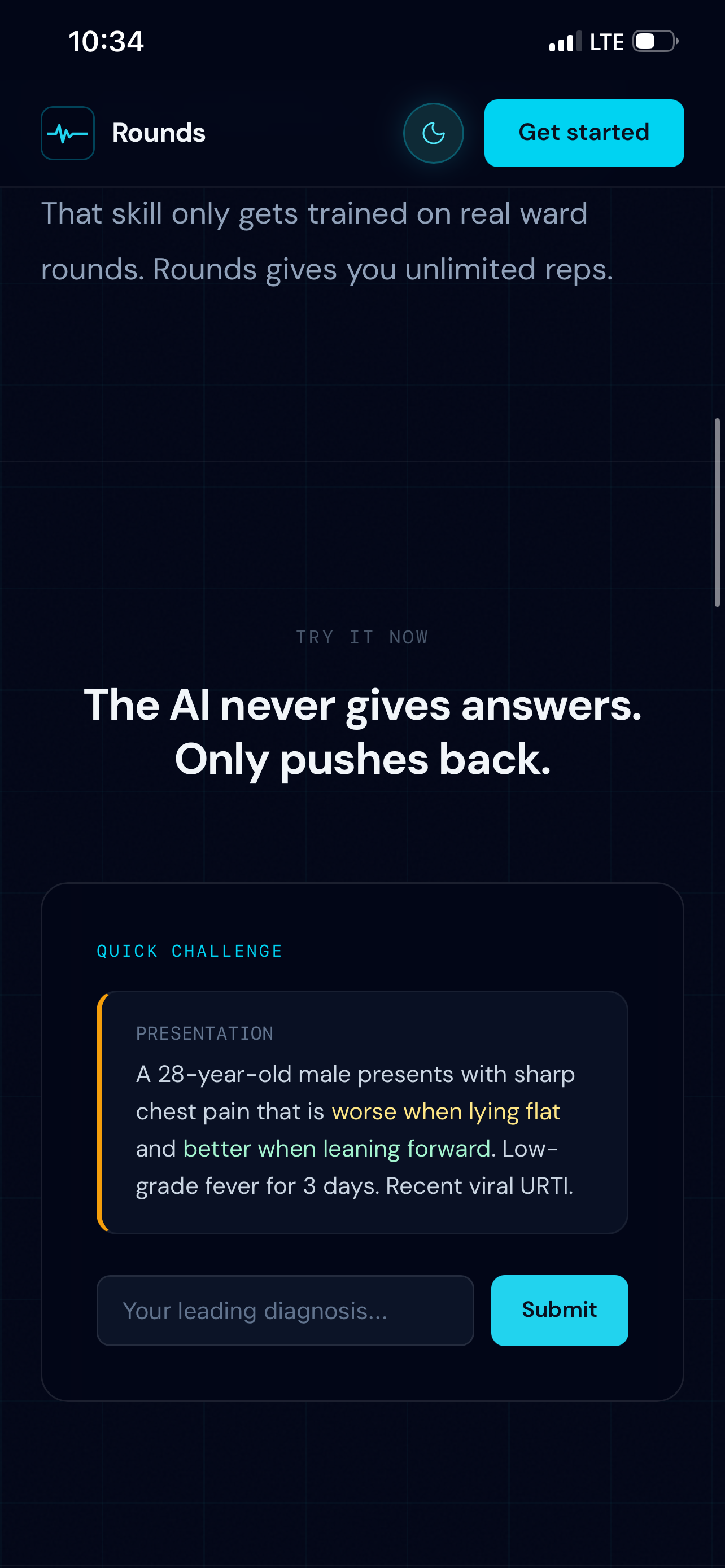
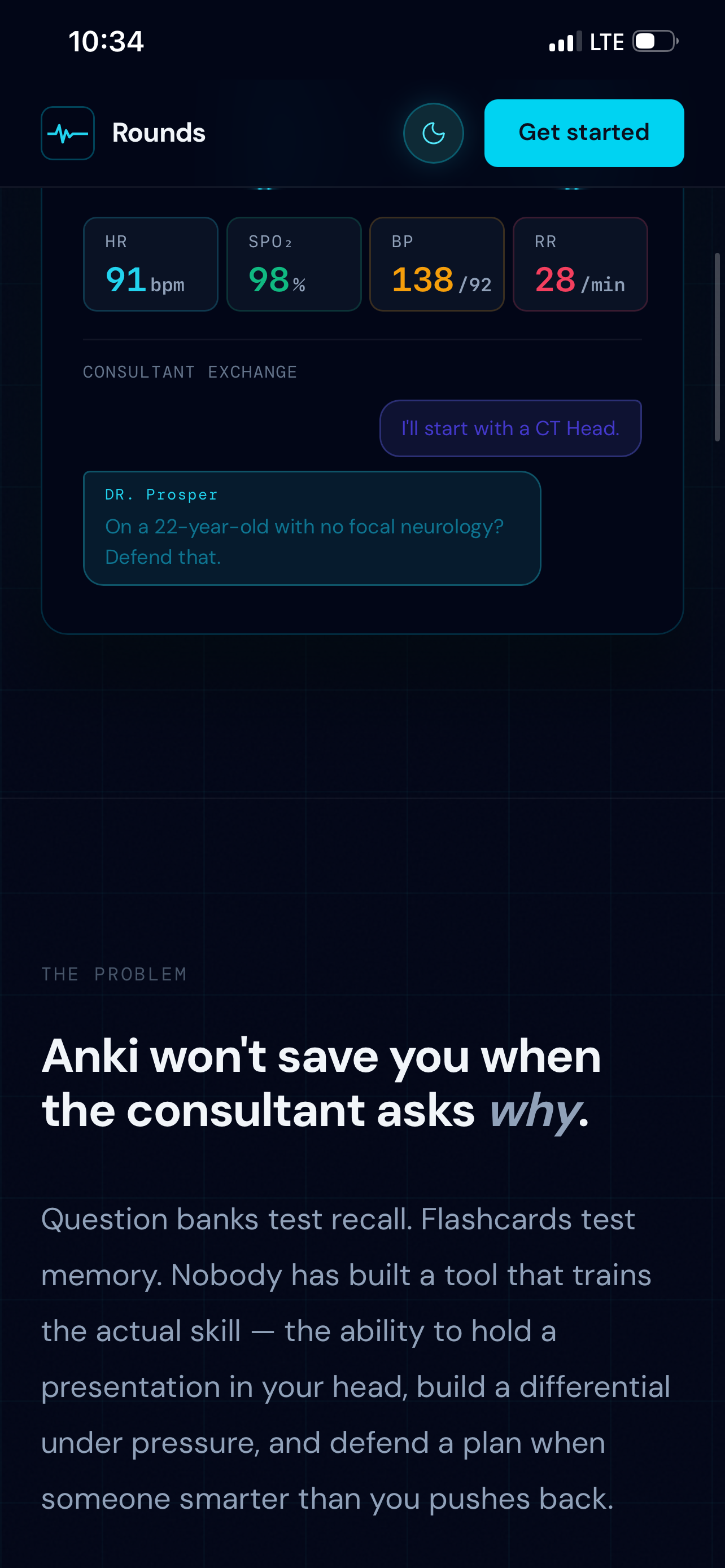
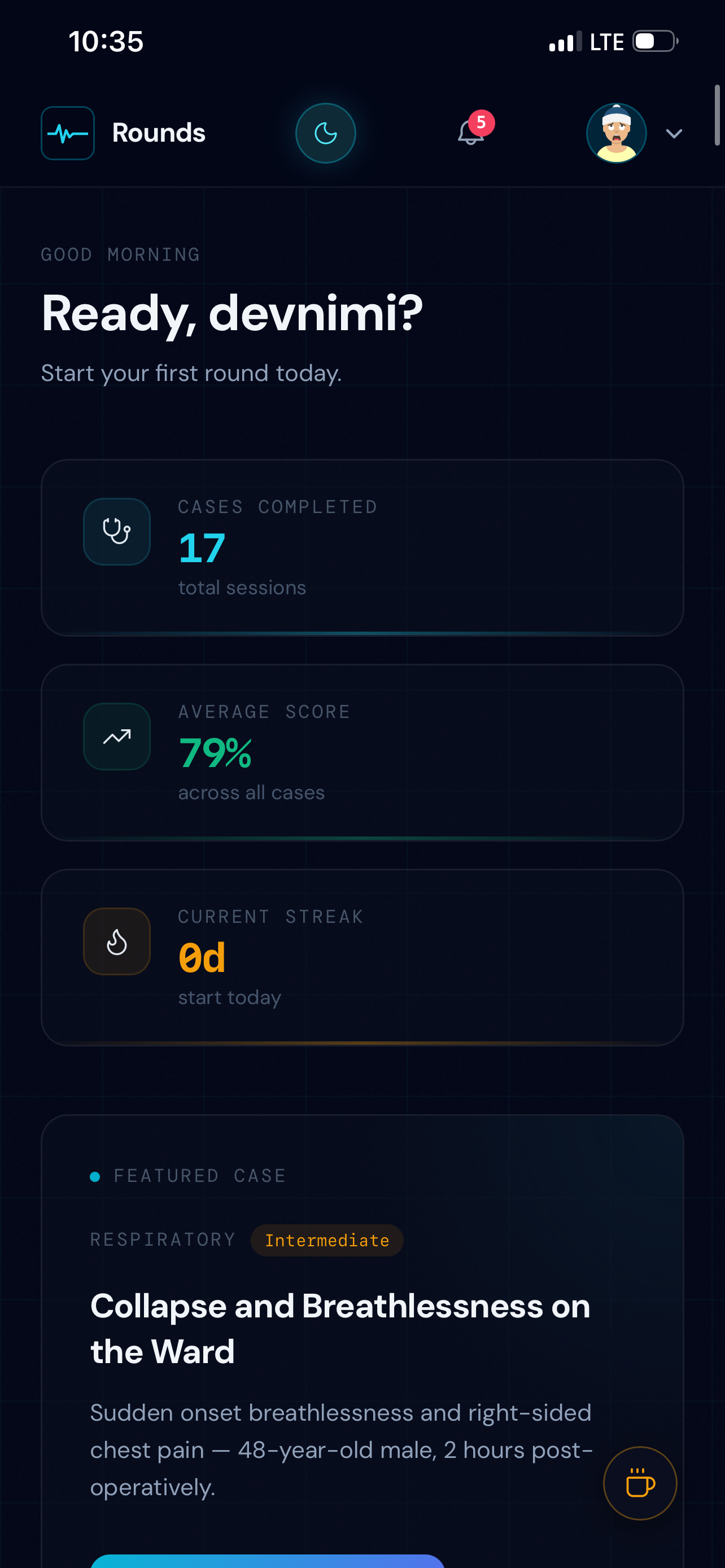
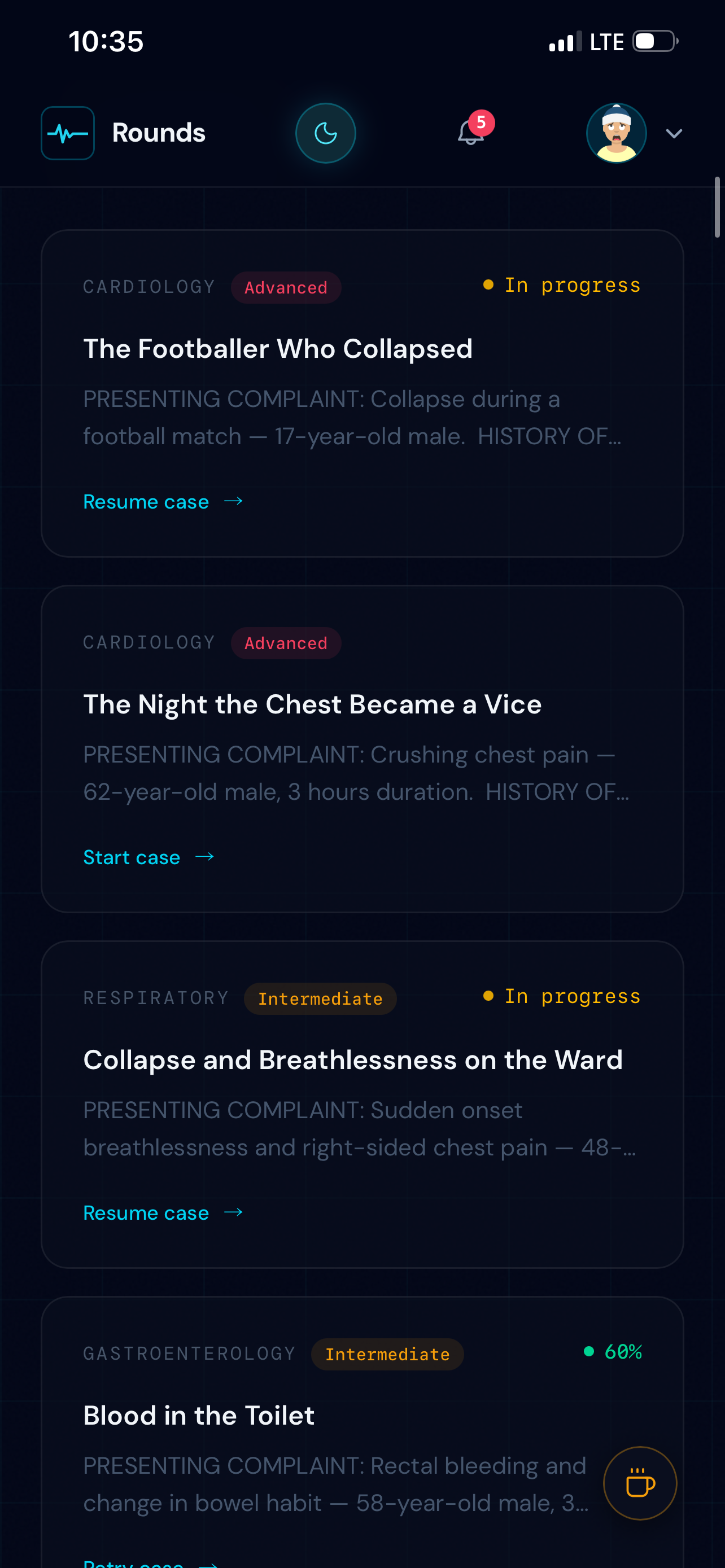
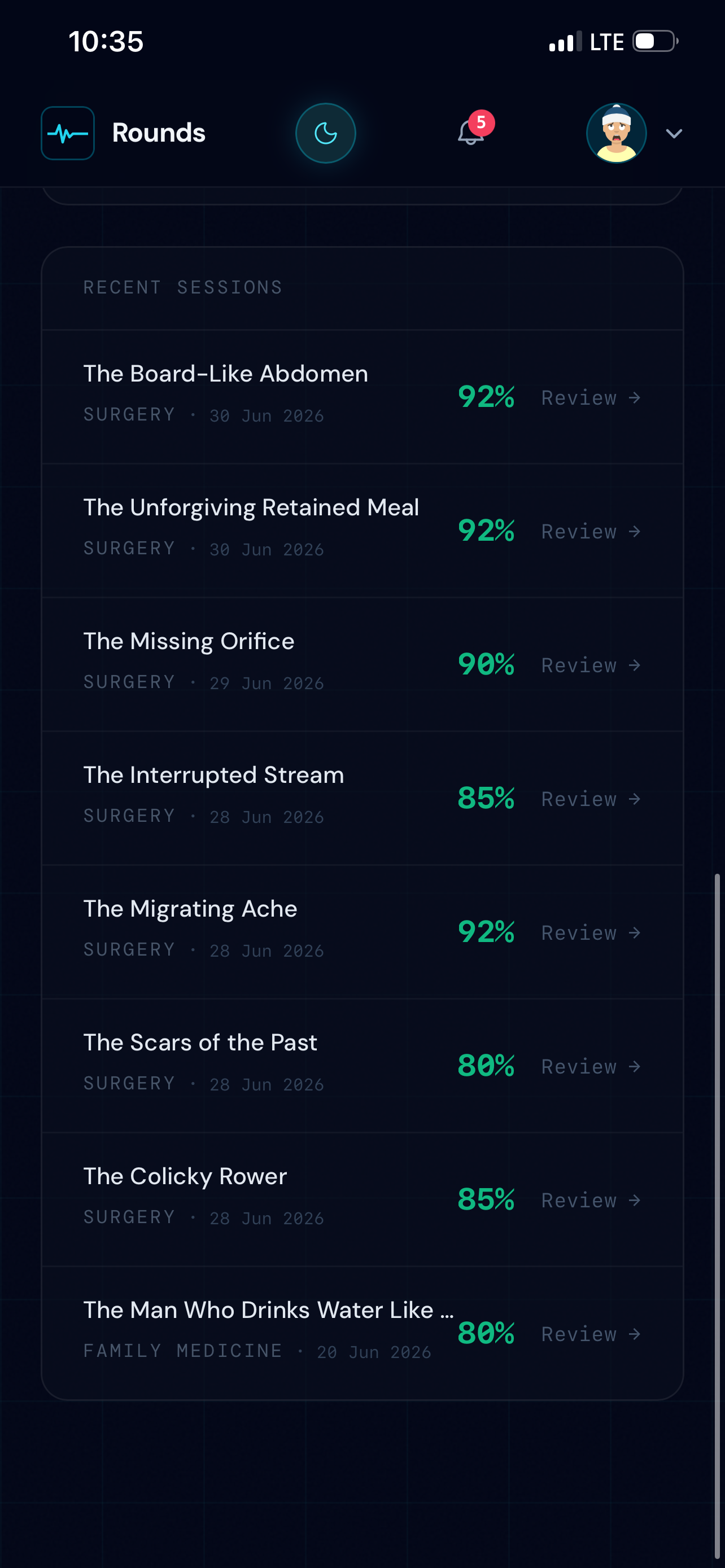
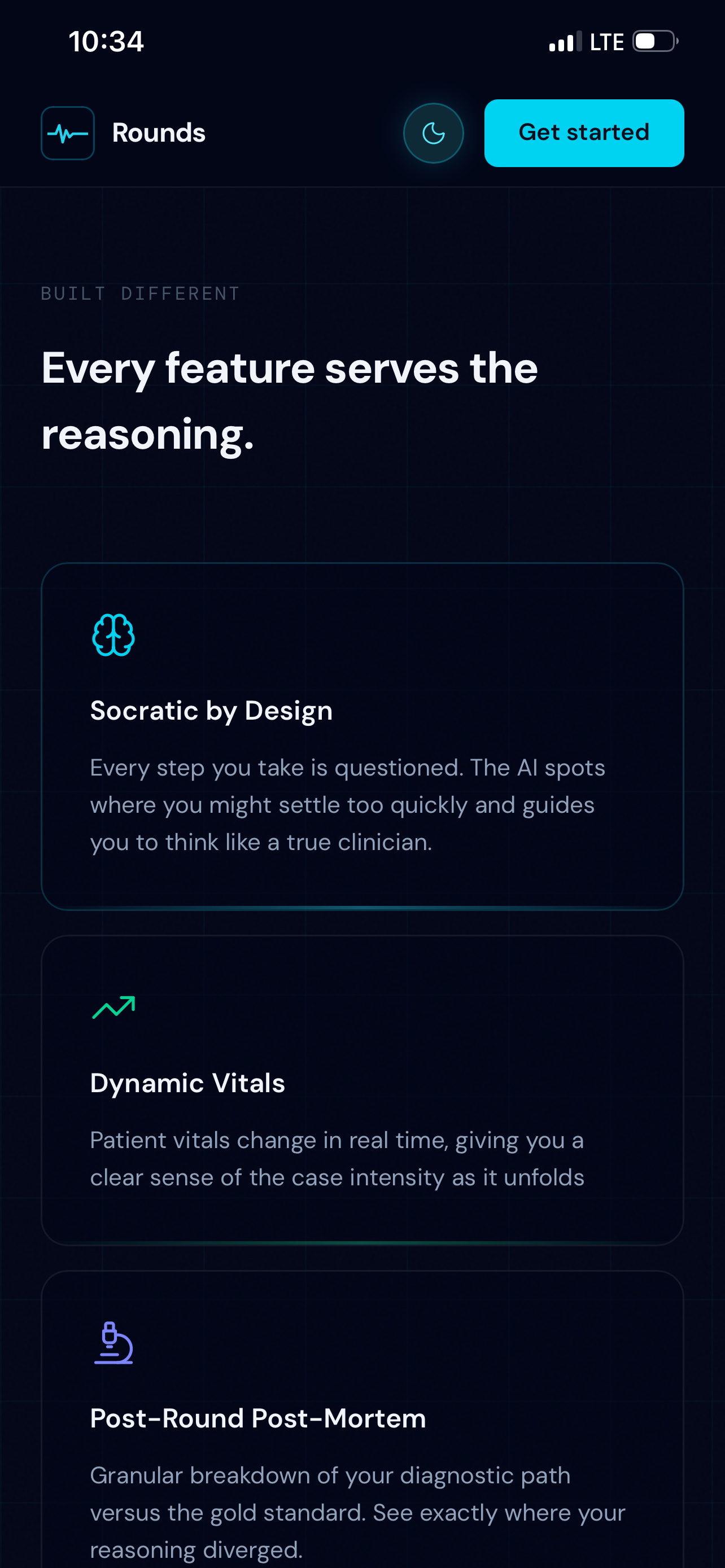
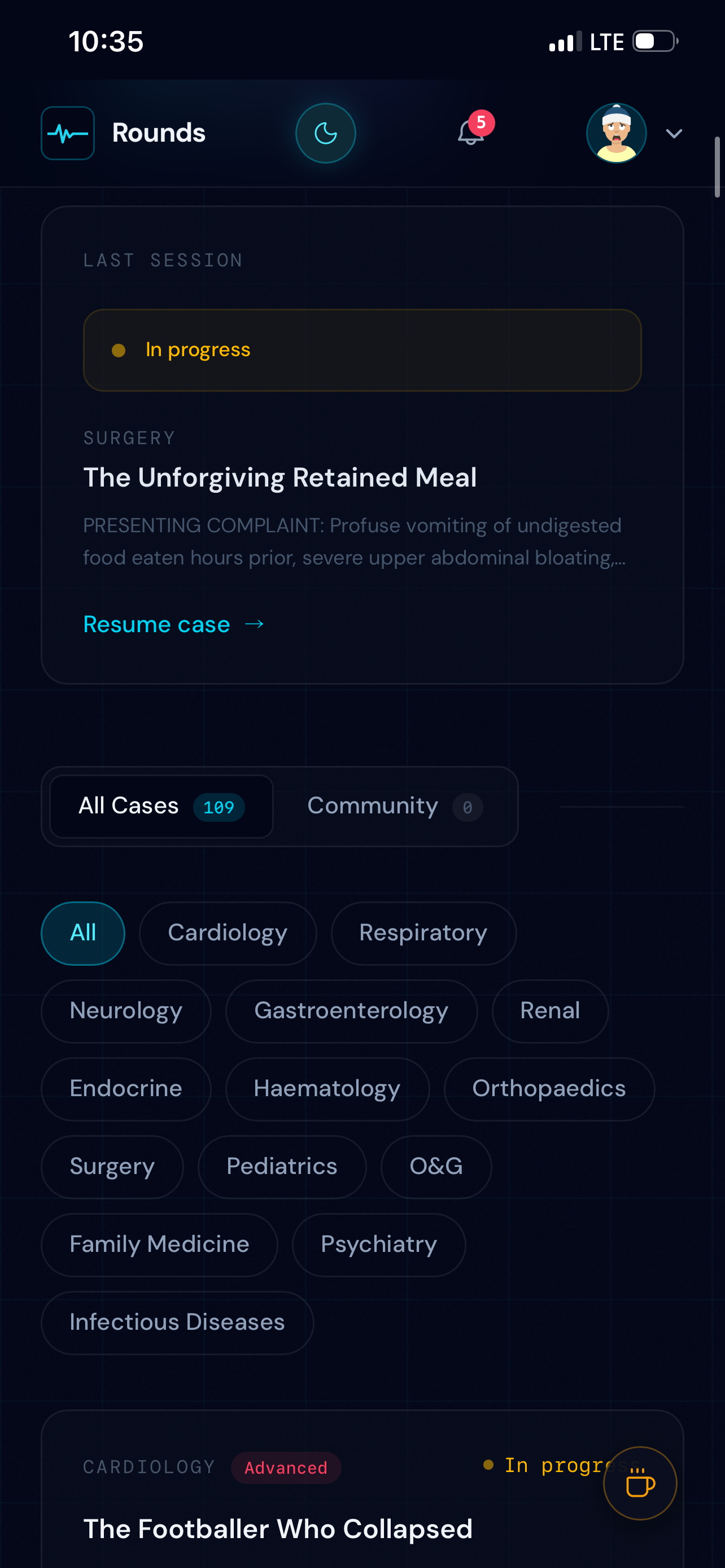
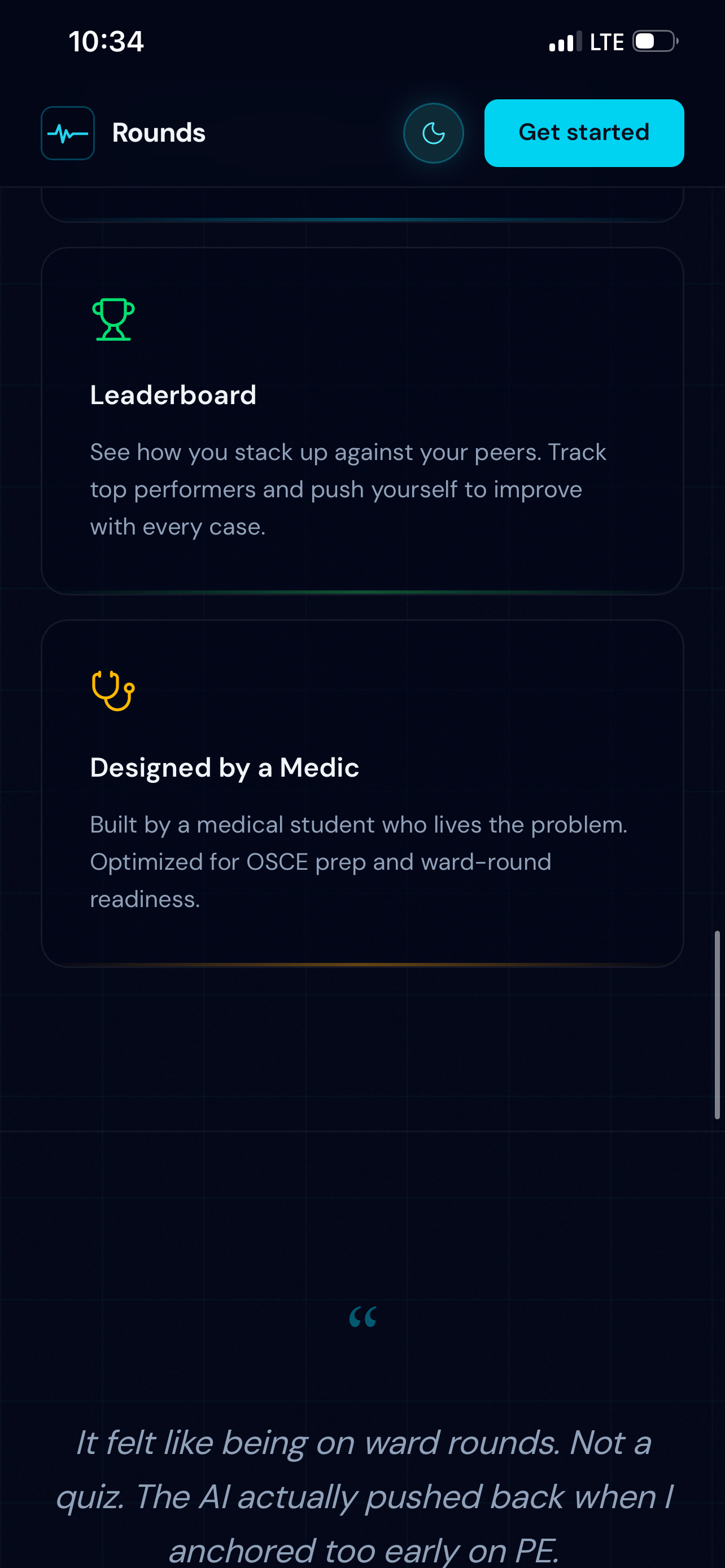
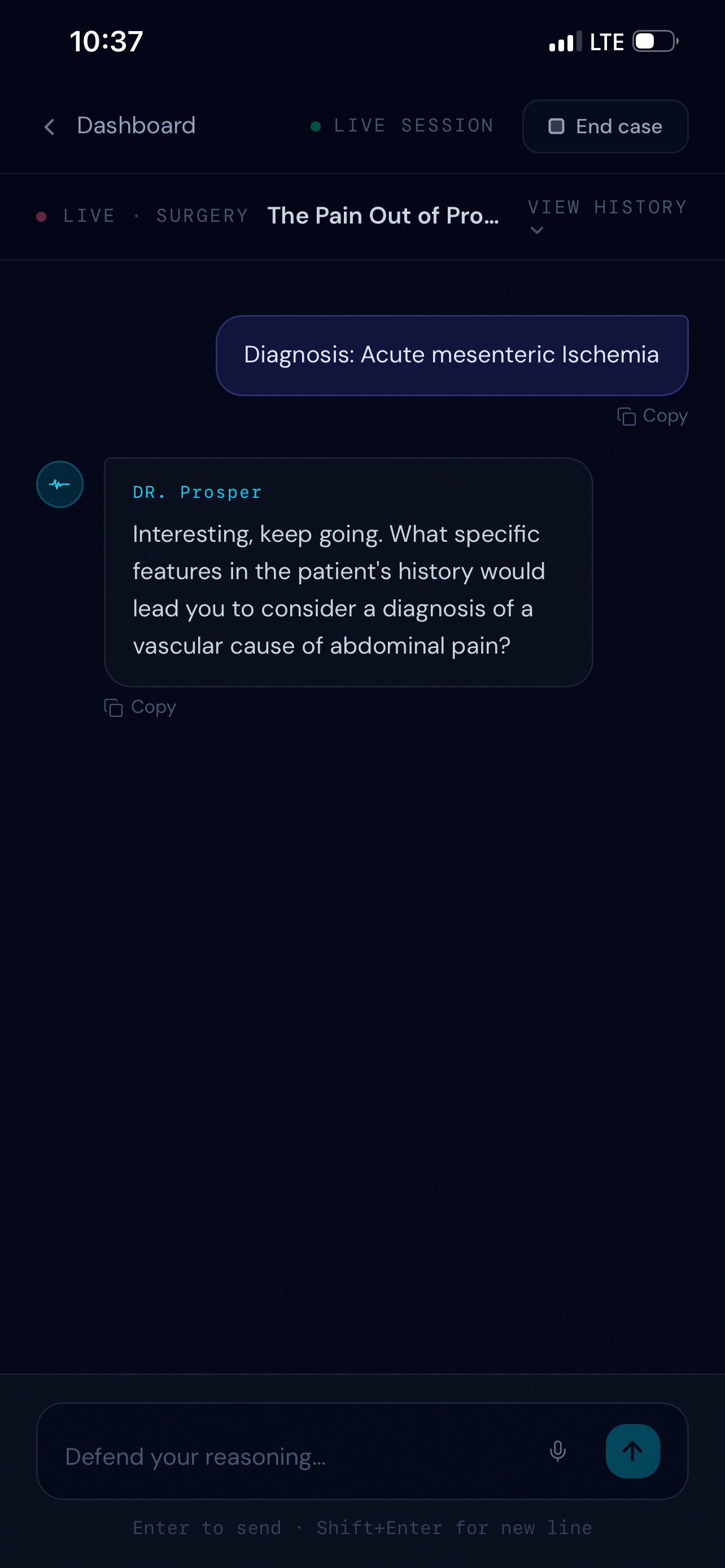
Rounds is an AI-powered clinical reasoning platform engineered to act as an Socratic consultant. Instead of passive learning, users are presented with clinical cases and tasked with formulating a diagnosis. The core of the experience is an AI model designed to push back and probe the student’s reasoning until they can thoroughly justify their clinical decisions. Upon completing the defense, the student receives a formal consultant-style brief, complete with synthesized key teaching points to solidify their understanding.
How we built it
Rounds is built as a robust Progressive Web App (PWA) to ensure seamless performance and accessibility. The technical architecture relies on Next.js, TypeScript, and Tailwind CSS for the frontend, while Supabase handles the backend infrastructure. Integrating advanced automation and cron jobs was essential to managing the platform's functionality as it scaled.
Challenges we ran into
As a fourth-year medical student, the primary challenge was balancing the intense rigor of clinical rotations with the high-velocity demands of software engineering. This required a constant, disciplined split of focus—often sacrificing sleep to code at night or staying back at the hospital to refine features. Managing this dual path demanded significantly more effort than a singular pursuit, forcing me to optimize my workflow to ensure the project kept pace with my medical studies.
Accomplishments that we're proud of
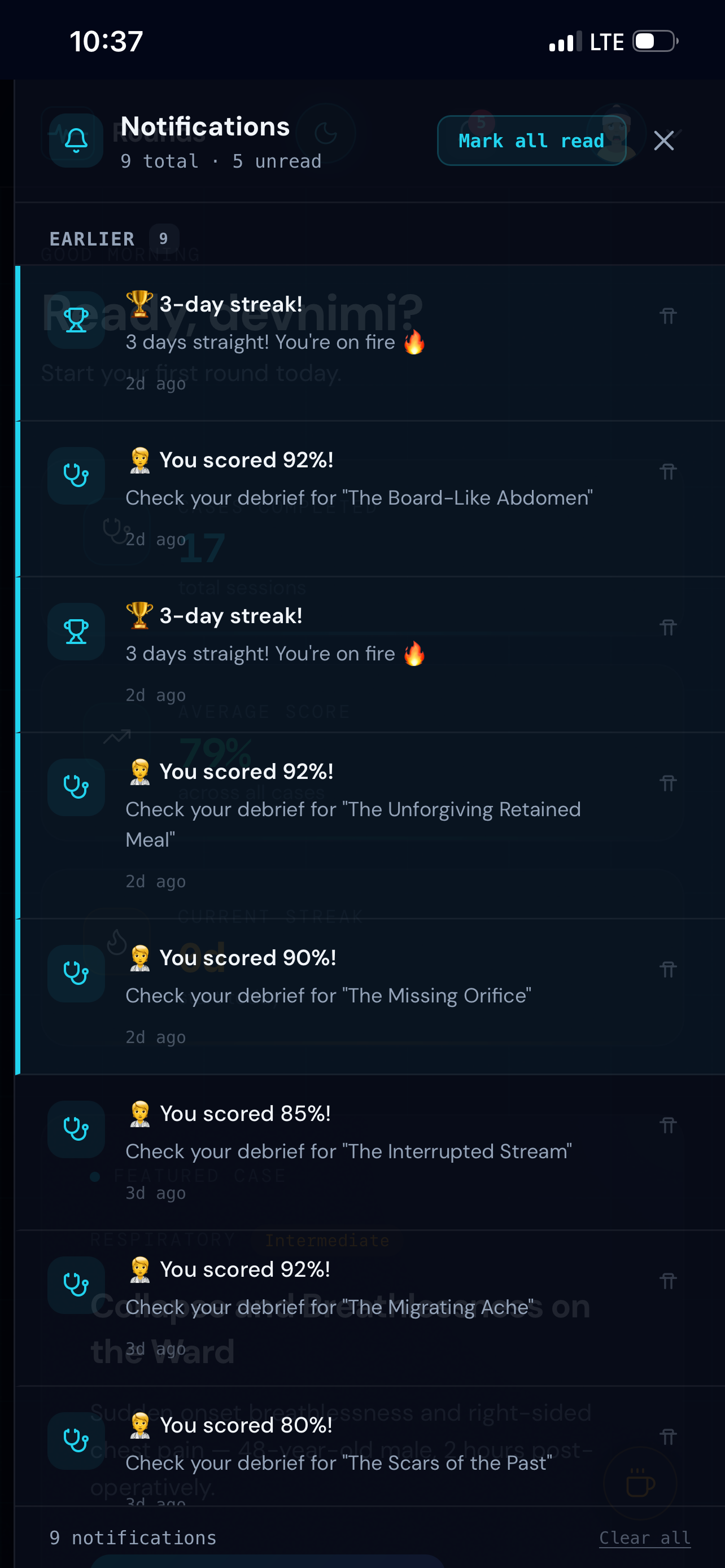
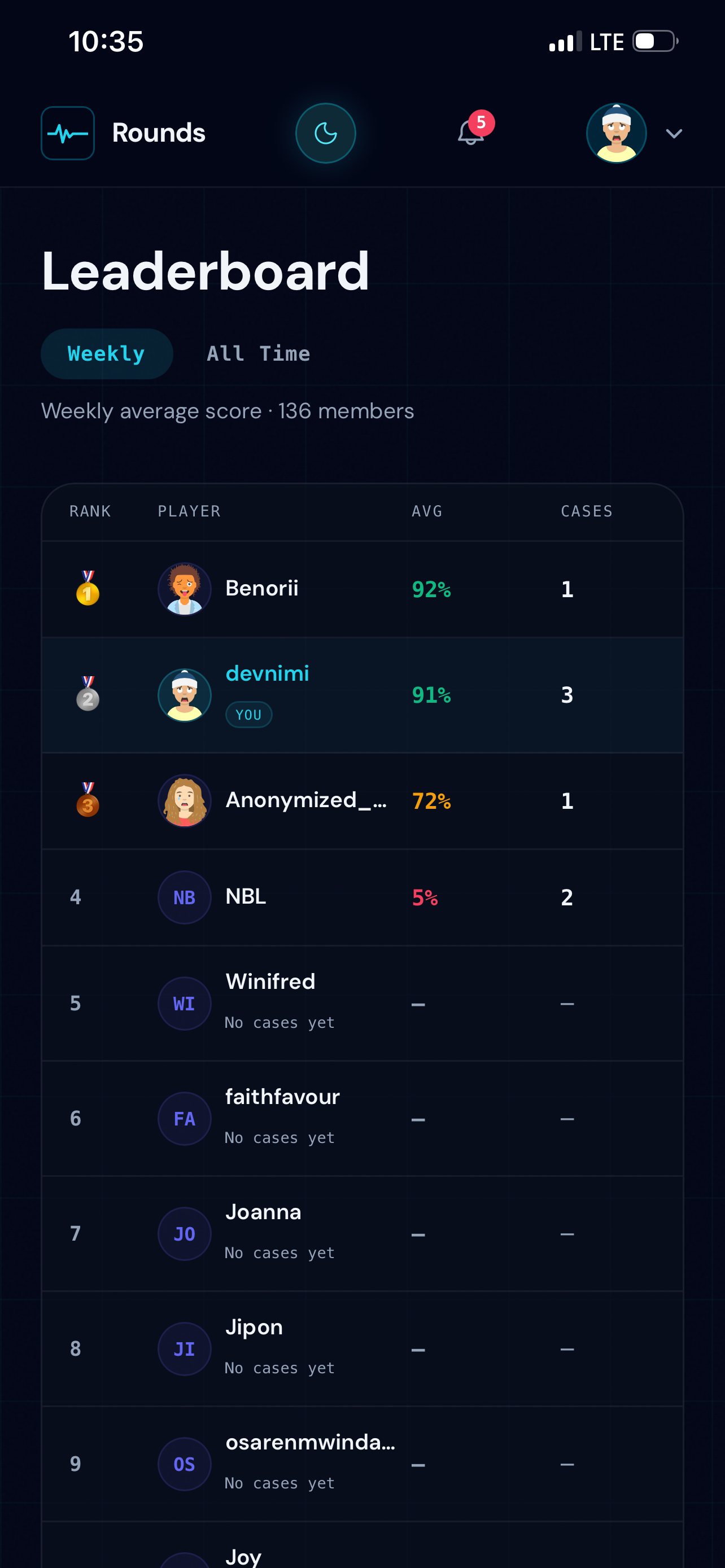
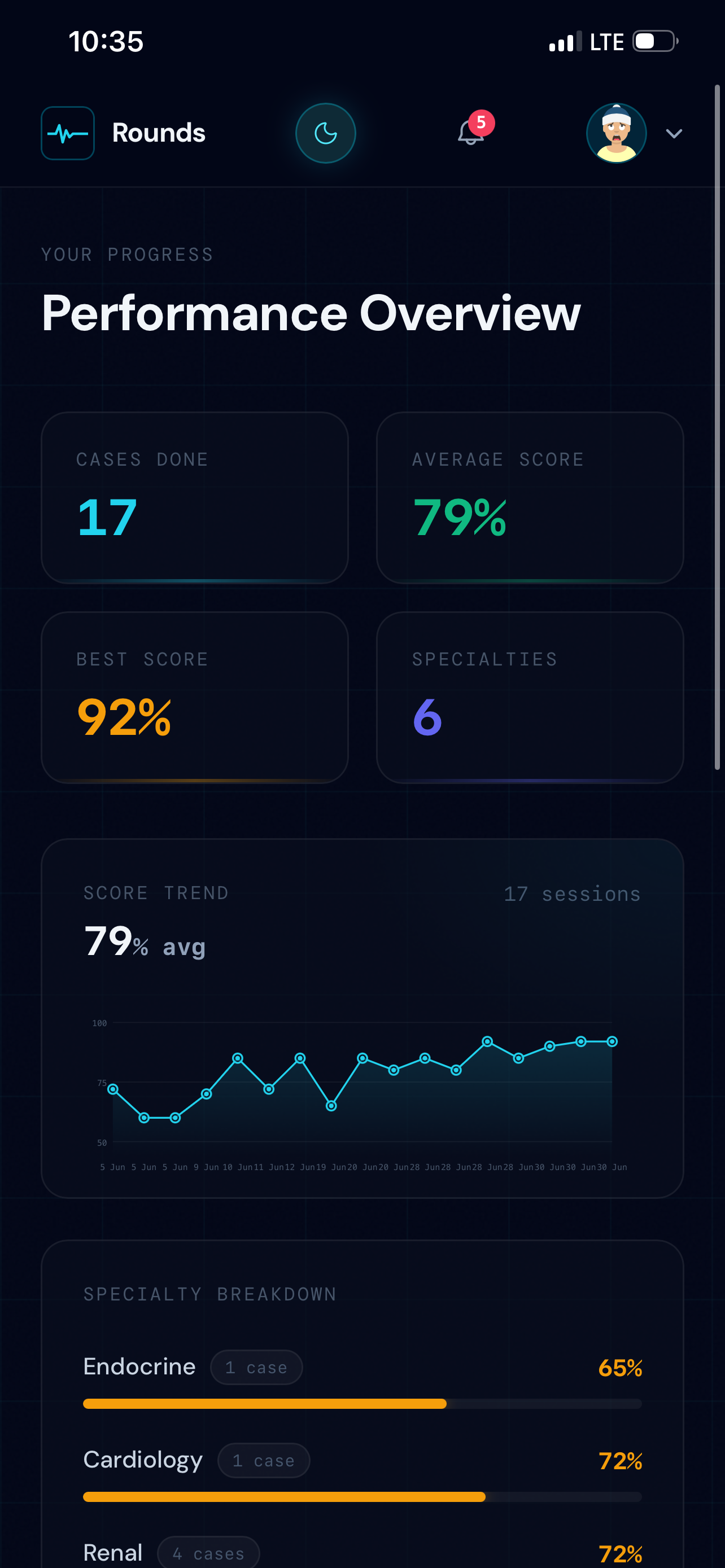
The most rewarding milestone has been the traction within my medical school community, where Rounds has already reached 140 registered users. The positive feedback from my classmates confirms that this Socratic approach is making a tangible difference in how students prepare for clinical practice.
What we learned
Building Rounds has been a continuous technical education. Beyond the foundational skills of Next.js and TypeScript, I navigated the complexities of PWA development, implemented custom automation, and mastered the integration of backend services. Each feature added to the platform taught me more about building scalable, user-centric architecture from the ground up.
What's next for Rounds
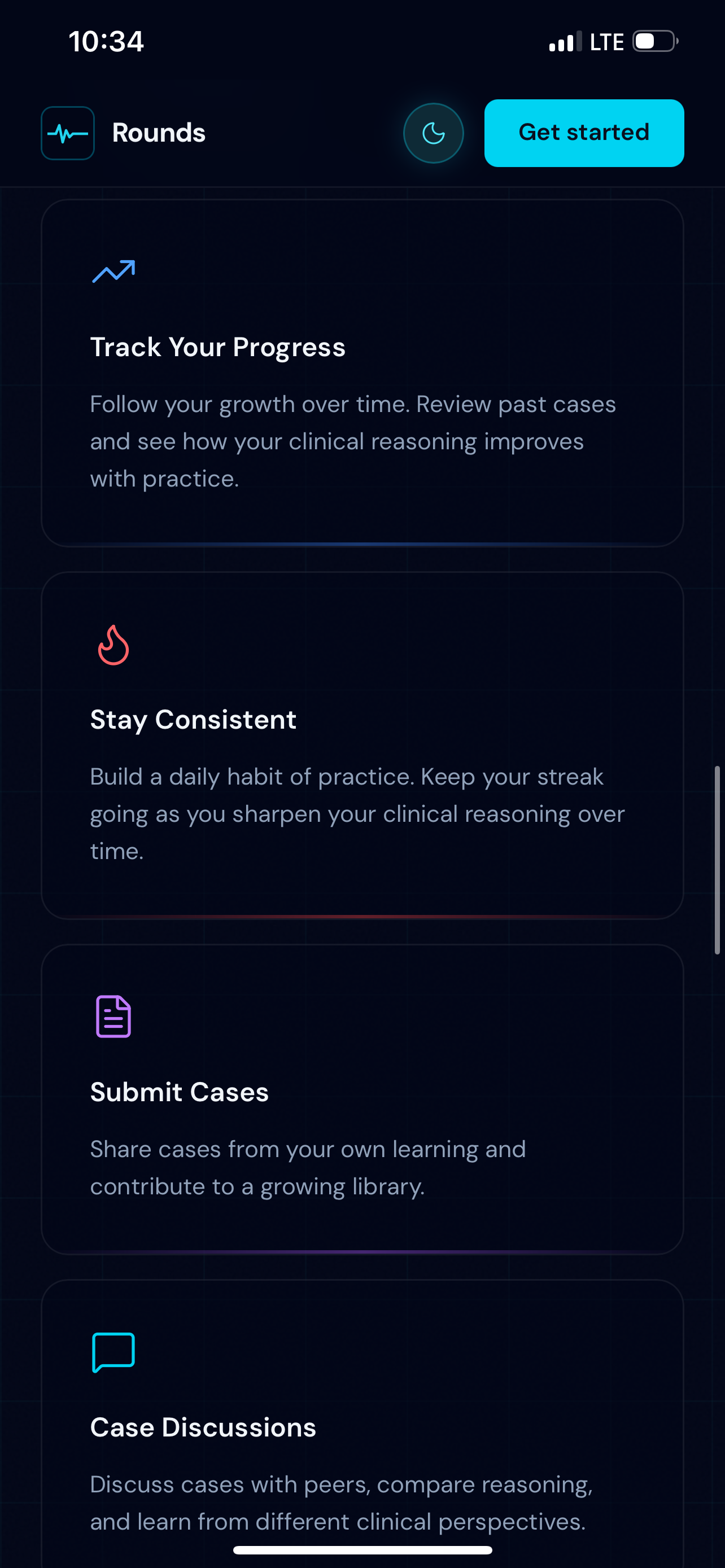
I envision Rounds evolving into an all-encompassing ecosystem for medical students and doctors alike. Beyond the current clinical reasoning module, the roadmap includes features like "Quick Aid," preclinical study tools, and "Case Battles," creating a unified platform that supports the entire journey of a medical professional.
Built With
- git
- github
- javascript
- nextjs
- react
- tailwind
- typescript

Log in or sign up for Devpost to join the conversation.