Inspiration
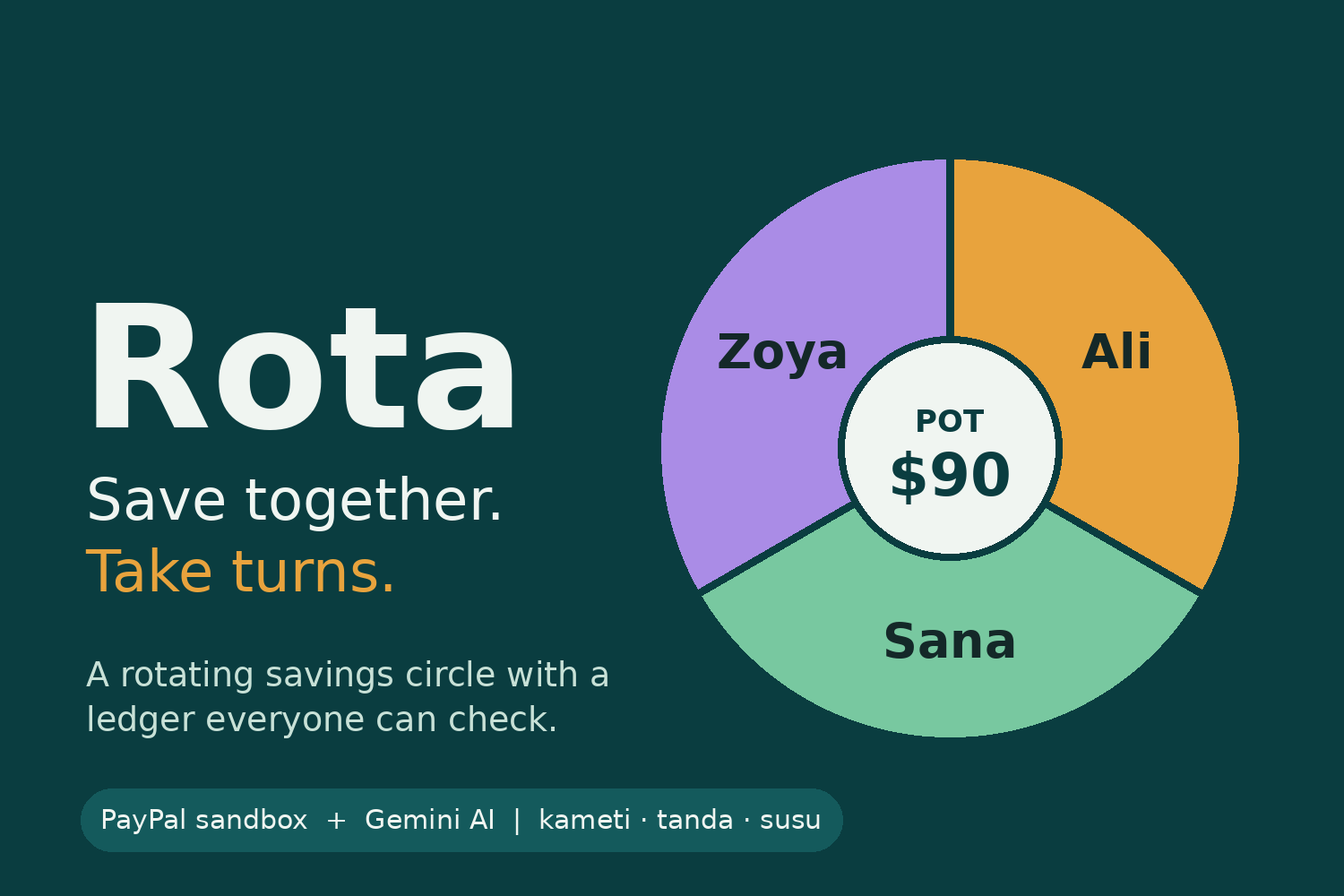
Rotating savings circles (kameti, tanda, susu, chama, paluwagan) are how millions of people save and borrow, but they run on trust, cash and an organizer’s notebook. We wanted every member to have a ledger they can check, and a fair, verifiable way to decide who goes first.
What it does
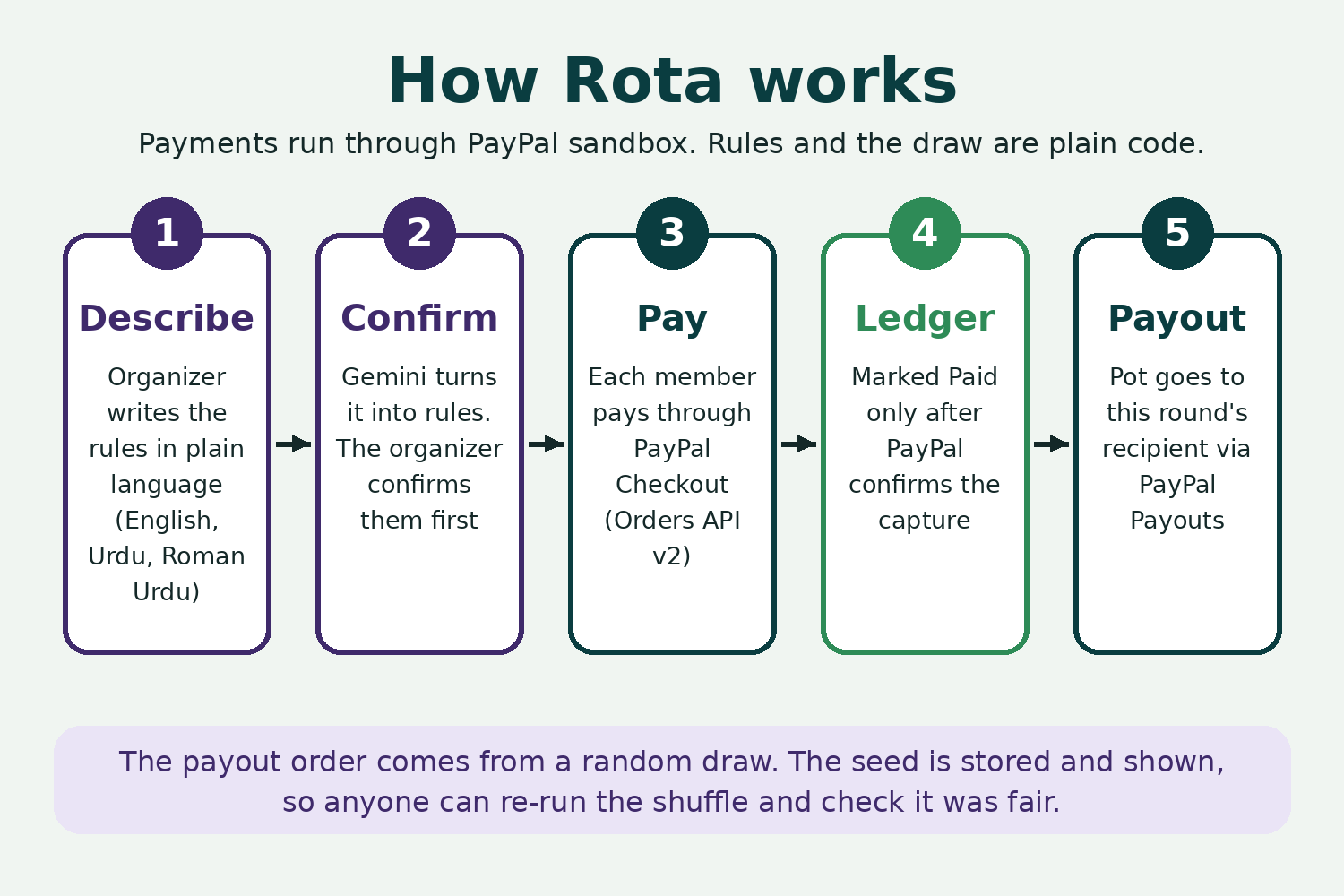
Rota moves a savings circle onto PayPal. The organizer describes the circle in plain language (English, Urdu or Roman Urdu) and Gemini turns it into structured rules that the organizer confirms. Each member pays their share every round through PayPal Checkout, and the ledger updates only after PayPal confirms the capture. When everyone has paid, the pot is sent to that round’s recipient through PayPal Payouts. The payout order comes from a random draw whose seed is stored and shown, so anyone can reproduce it. An explainable late-payment flag shows who is overdue and why. An AI “secretary” answers member questions from the ledger, drafts polite reminders, and writes group updates in three languages.
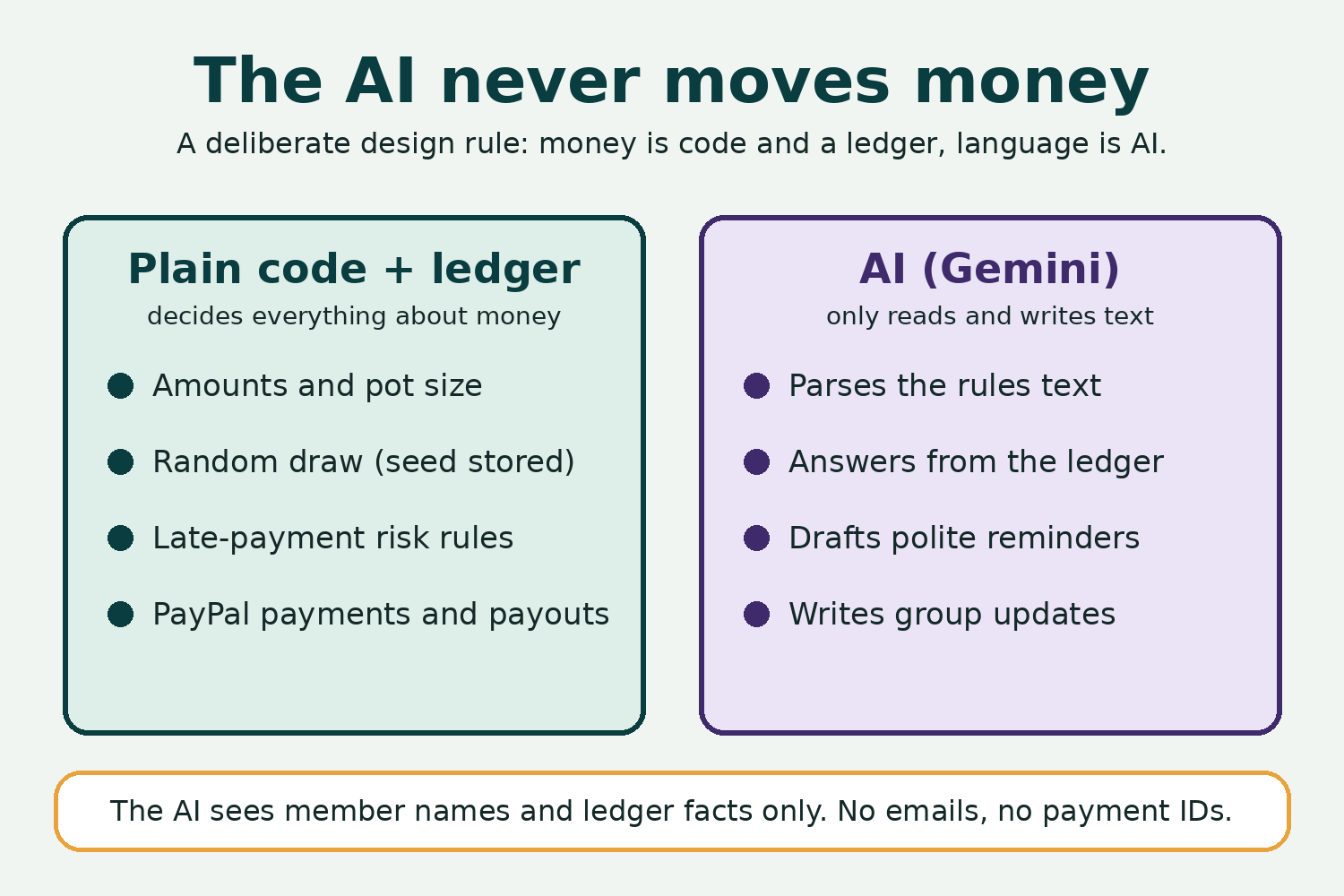
The AI never decides amounts and never moves money. Amounts, the draw, the risk rules and payouts are plain code and the ledger. The AI sees member names and ledger facts only, not emails or payment IDs.
How I built it
FastAPI backend with SQLite, and a single-page frontend in plain HTML, CSS and JavaScript. PayPal Orders v2 handles contributions, and PayPal Payouts sends the pot. A signature-verified webhook for PAYMENT.CAPTURE.COMPLETED is implemented as a backup path but is not enabled in the demo. Gemini (REST API) handles rule parsing, secretary Q&A, reminders and group updates. Hosted on Render.
Challenges I ran into
Choosing a Gemini model that responded reliably, because model names change often and one hung on requests. Getting PayPal sandbox accounts right (a US business app account so the currency matches USD, and US personal member accounts). Deciding where AI is safe in a money flow, so we limited it to reading and writing text. Render’s free plan erasing data when the app sleeps, which we handle by creating an example circle at startup.
Accomplishments that I'm proud of
A working end-to-end flow in the sandbox: describe, pay, ledger, draw, payout and a late-payer flow, with a verifiable random draw, an explainable risk rule, and an AI that works in English, Urdu and Roman Urdu.
What I learned
We learned that the safest way to use AI in a money flow is to keep it away from the money. In Rota, amounts, the random draw, the late-payment rules and payouts are plain code and a ledger, and Gemini only reads and writes text. That made the system easier to trust and easier to explain.
We learned how PayPal’s sandbox really works: the app, the business account and the personal accounts have to match in country and currency, and a payment should only count after PayPal confirms the capture, not when the buyer clicks “pay”.
We also learned that AI services change quickly (a model we started with was no longer available, and another hung on requests), so the model is set by an environment variable and we tested before choosing. Finally, free hosting wipes data on sleep, so we plan for it by creating an example circle at startup.
What's next for Rota
Identity checks and regulatory compliance for holding pooled funds, sign-in and private circles, production webhooks, multi-currency support, and mobile-first notifications.
