-
-
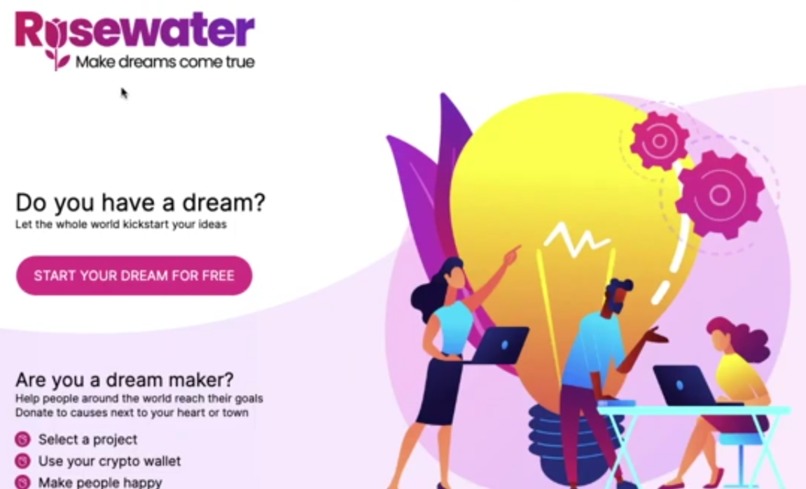
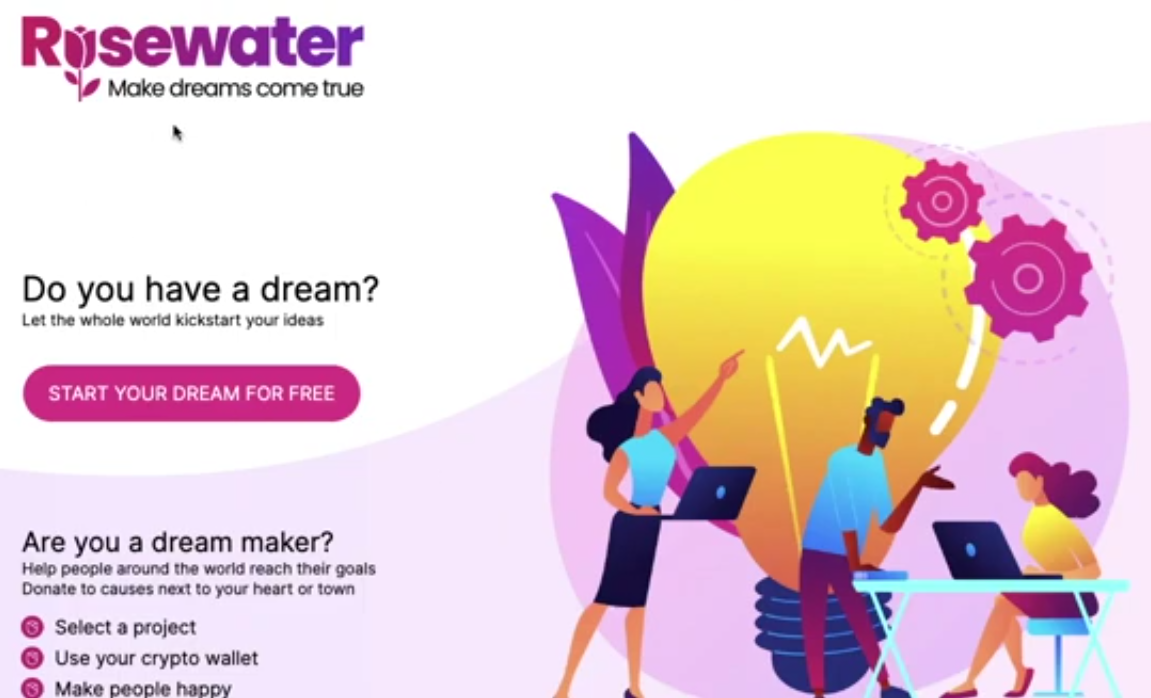
The Rosewater homepage
-
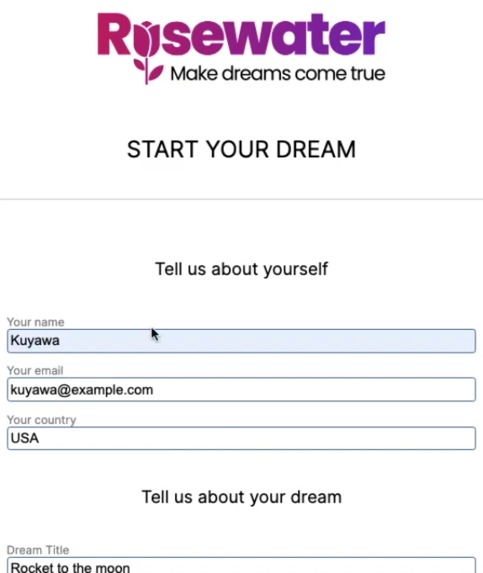
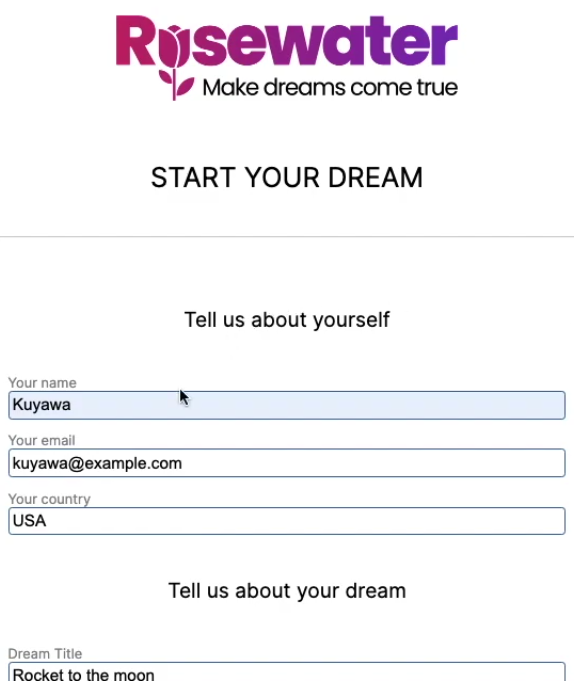
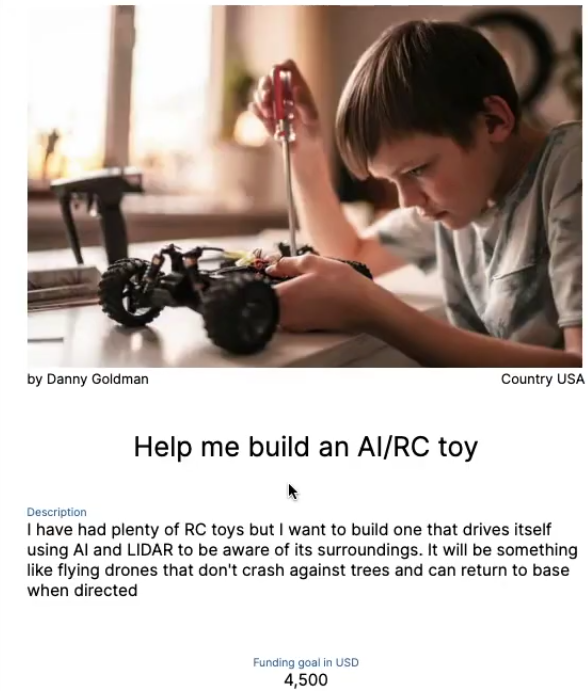
Creating a Rosewater fundraiser
-
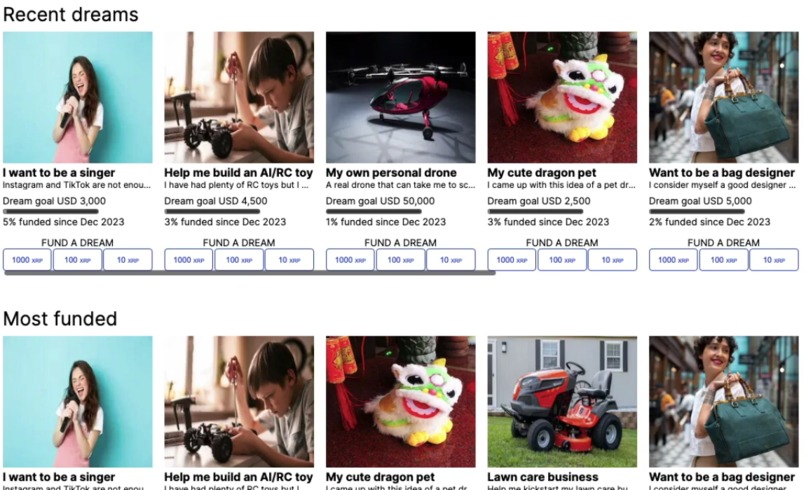
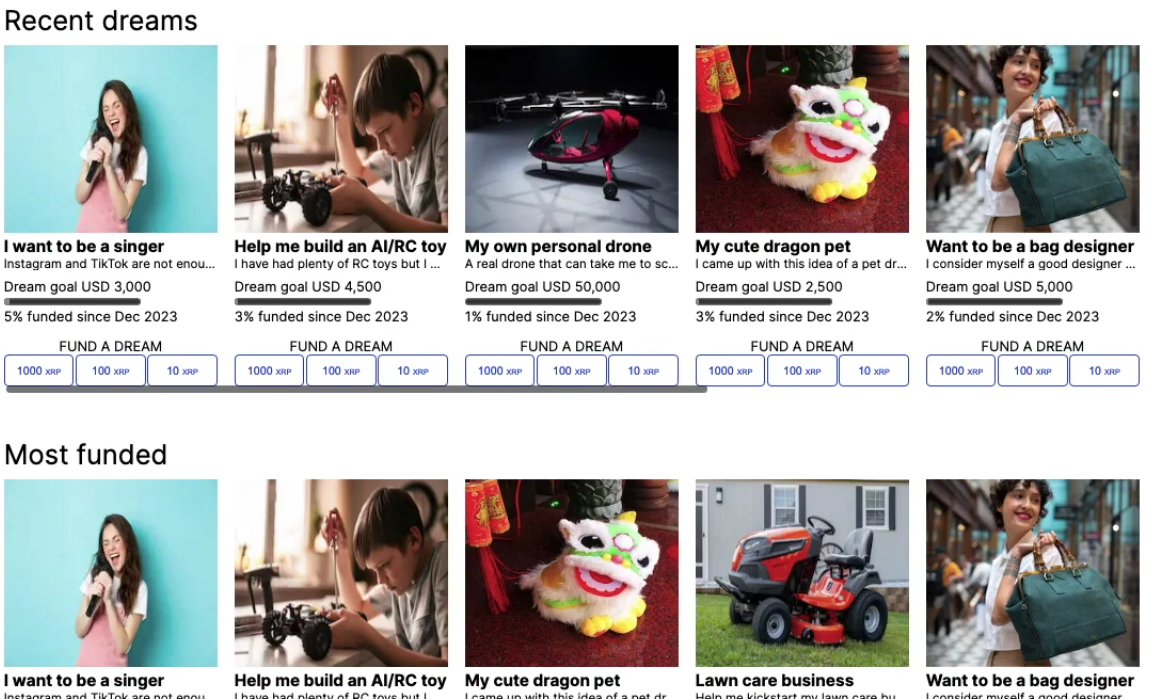
The Rosewater fundraiser marketplace
-
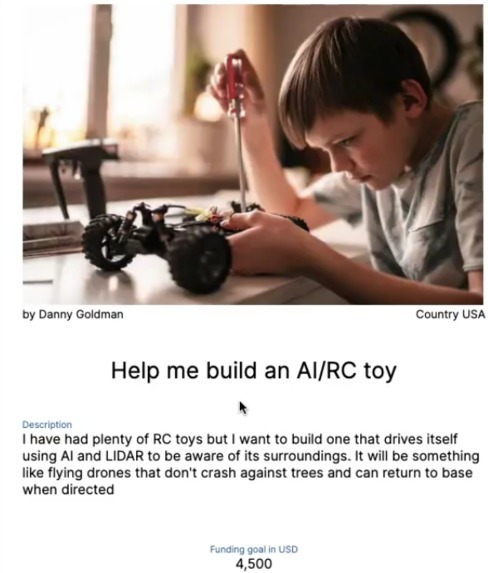
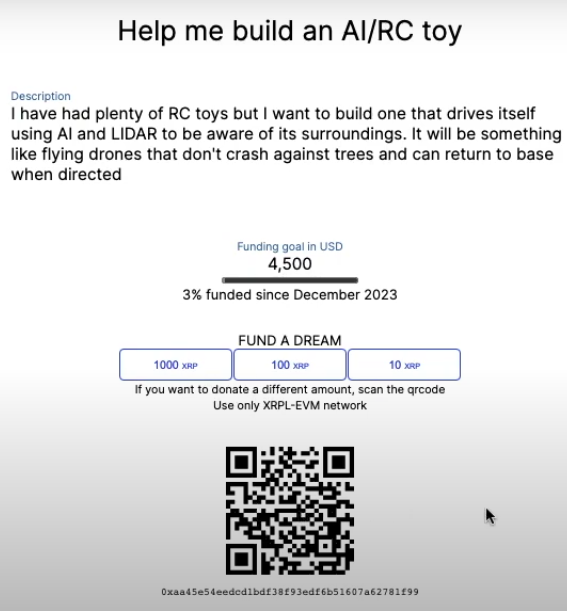
A shareable Rosewater fundraiser link
-
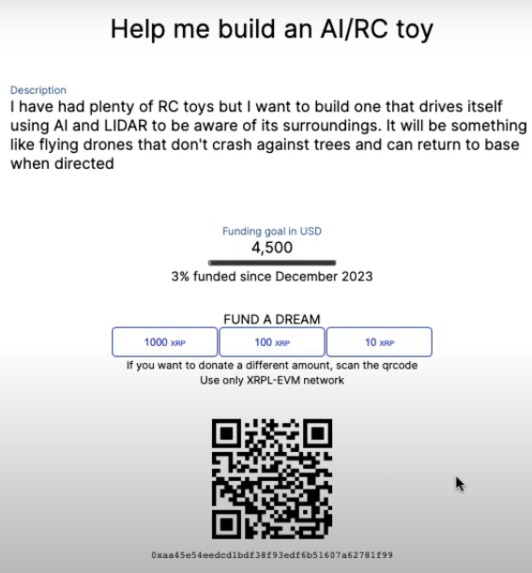
A QR code to send payments directly to the Rosewater fundraiser via our smart contract.
Inspiration
Rosewater was inspired by the question: how to leverage the XRPL EVM Sidechain to make an impact on people's lives? What can we build to enable the XRPL EVM Sidechain to not only provide value within the Web3/blockchain bubble, but to the billions of people who stand to benefit from this innovative technology?
Our answer is Rosewater- a "Kickstarter-like" platform where people with a vision can get their dreams funded by donors who want to make a difference and follow the story of their impact.
The name is inspired by the novel, "God Bless You, Mr. Rosewater" by Kurt Vonnegut, which tells the story of a wealthy man who decides that the best thing he can do with his money is to give it to people in need.
The idea for Rosewater came from the realization that our other apps, which are focused on funding registered nonprofits, are leaving out a huge part of the population.
Our initial idea was to create a direct aid platform for disaster relief and populations experiencing housing insecurity. We wanted to create something where people and projects who weren't legally registered could still receive funding.
What it does
Rosewater is designed as an "Web3 impact social network" which allows users to create profiles centered around projects they want to get funded. This goes beyond populations in crisis and can also be applied to a much wider range of use cases, ranging from students seeking assistance with tuition, entrepreneurs who have a great idea for a small business, regenerative projects or farms which aren’t registered as nonprofits, and more.
The smart contract for Rosewater handles donations for users, who can advertise their project on social media with the contract address QR code, which provides a link to the initiative's page and wallet. We deliberately structured the initiative/wallet creation process to be as accessible as possible. When funds are sent to the Rosewater contract, it automatically splits them and sends them to the appropriate wallet, while updating the relevant information in the fundraiser profile page and database.
How we built it
The app was deployed using Vercel, and the donation/user database was created using PostgresQL. The UI and client-side features were programmed in React and NextJS.
As a side note, our programmer George (Kuyawa) found working on the XRPL EVM Sidechain to be simple as it uses the same building blocks as programming on Ethereum Main Net or any other EVM chain- Solidity, Remix, and Hardhat. He noted that any developer familiar with EVM chains should have no problem working with the EVM sidechain.
Challenges we ran into
The main challenge was time. Our submission for the New Horizons hackathon only represents the tip of the iceberg for this concept's potential, which really deserves at least one developer working on it full-time in order to build out and refine the different functions- for example, expanding the smart contract and social networking aspects.
Accomplishments that we're proud of
We built something with the potential to provide value outside the Web3 bubble to the billions of people who have a vision but lack the resources to bring it into reality.
Rosewater is intuitive enough that anyone could use it. Everything our team builds, we ask ourselves: is this something we could teach our grandma how to use in under five minutes?
Additionally, Rosewater aligns with our core principles of financial inclusion, and uses blockchain to address existing problems:
Our lead programmer George/Kuyawa lives in Venezuela, and is therefore excluded from using credit cards. Right off the bat, he can't participate in most of the world's digital payment systems.
There are billions of people who have the same problem, who are shut out of economic structures by no fault of their own. Rosewater uses the XRPL EVM Sidechain to open doors for the people that need it most.
Finally, Rosewater uses the XRP Ledger's fast, cheap, trustworthy payments and the EVM's smart contract functionality to reduce friction and address blind spots in existing philanthropy platforms. First, payments on the XRPL are settled in seconds, for fractions of a penny. The EVM Sidechain is similarly cost-effective, allowing fees to be correspondingly lower on Rosewater.
Rosewater helps increase donation trust and transparency. It is well known that platforms like GoFundMe and KickStarter have struggled with fraud- people creating fake fundraising campaigns, or receiving funds but not doing what they said they'd do. Distributed ledgers allow the sending and receiving of donations to be completely transparent and automated using smart contracts, removing opportunities for fraud or human error.
What we learned
First- the XRPL EVM Sidechain is a great bridge. It leverages the strengths of both the XRPL and EVM, and will be ideally suited to bringing value to both developer and user communities.
Second- tasks that appear simple at the outset often telescope and magnify into much more complicated sets of tasks when undertaken. Focus on one thing at a time, iterate, don't reinvent the wheel, work together and dreams can become reality.
What's next for Rosewater - Web3 Microgrant Platform
In the future, we would like to develop the Rosewater smart contract further, specifically to enable time-based and event-based options for funding (for example, rewards for engaging in desired behaviors or for reaching monthly goals with additional payments) and enable additional functions such as matching funds, quadratic funding, conditional release of funds when certain milestones are met, and so forth.
Additionally, we feel that Rosewater's social technology aspect has a great deal of potential. We see great potential value both in developing Rosewater itself as an impact-focused social network, and enabling greater/more nuanced interaction with Rosewater initiatives on other social networking platforms.
Built With
- hardhat
- next.js
- node.js
- postgresql
- react
- solidity
- vercel

Log in or sign up for Devpost to join the conversation.