

Inspiration
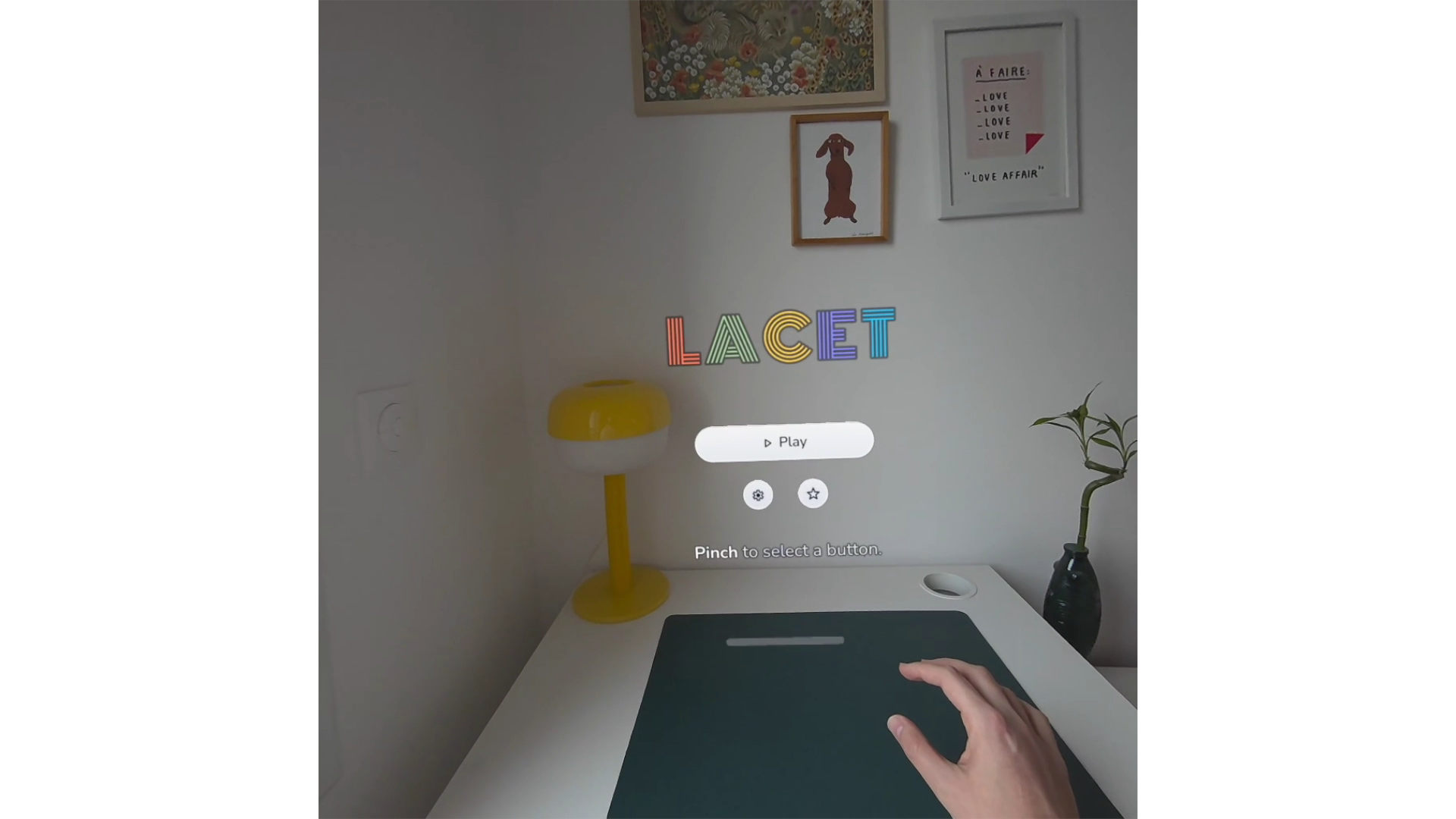
I wanted to make a game for my mother. She knows nothing about VR or XR, and I wanted to create something she could enjoy without controllers, complex interfaces, or any previous gaming experience. I wanted to explore a simple, intuitive interaction: connecting colorful ropes with your own hands. That's how LACET was born. A cozy, relaxing spatial puzzle game designed to be enjoyed at your own pace, even if you're discovering mixed reality for the very first time.
What it does
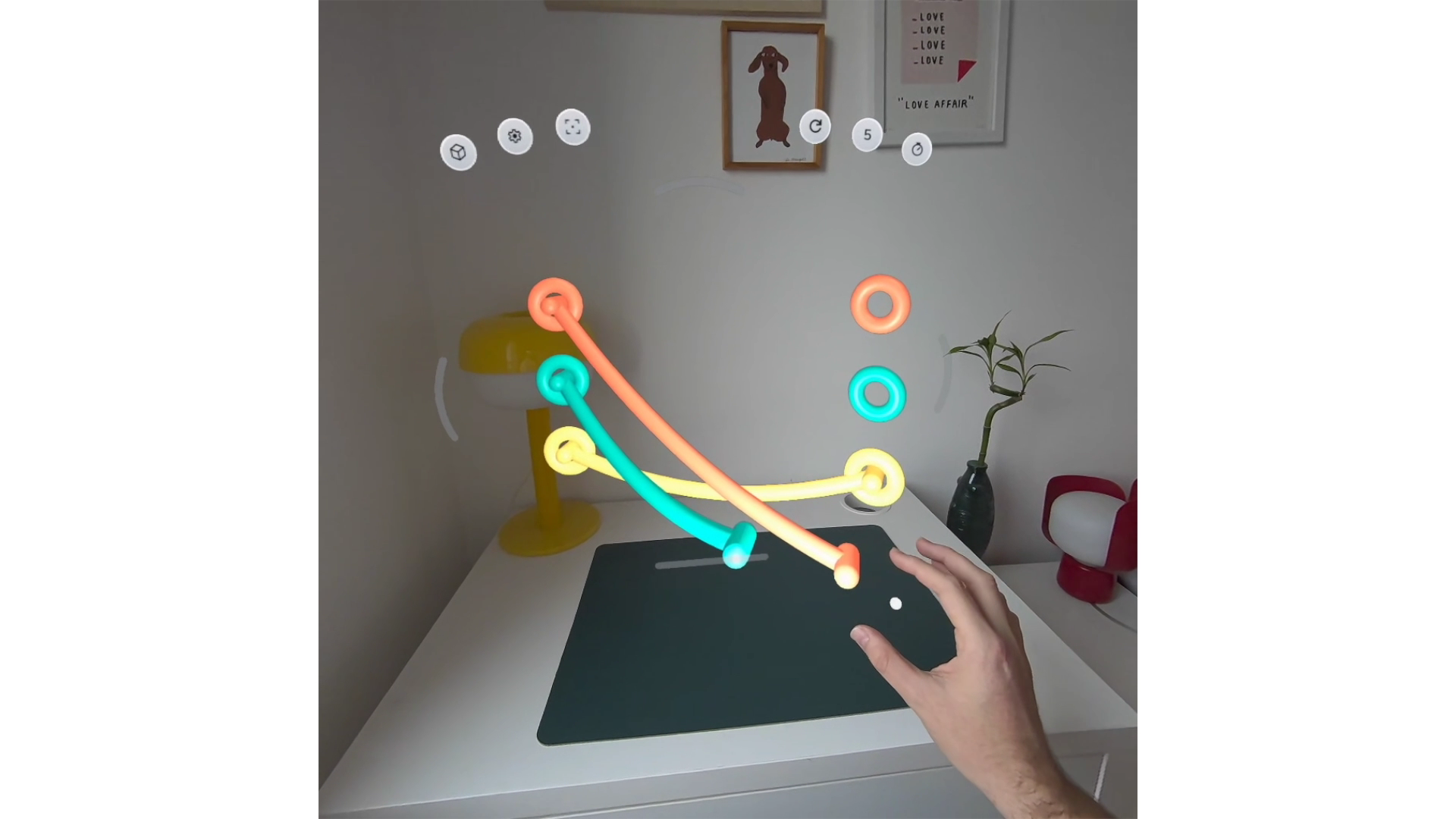
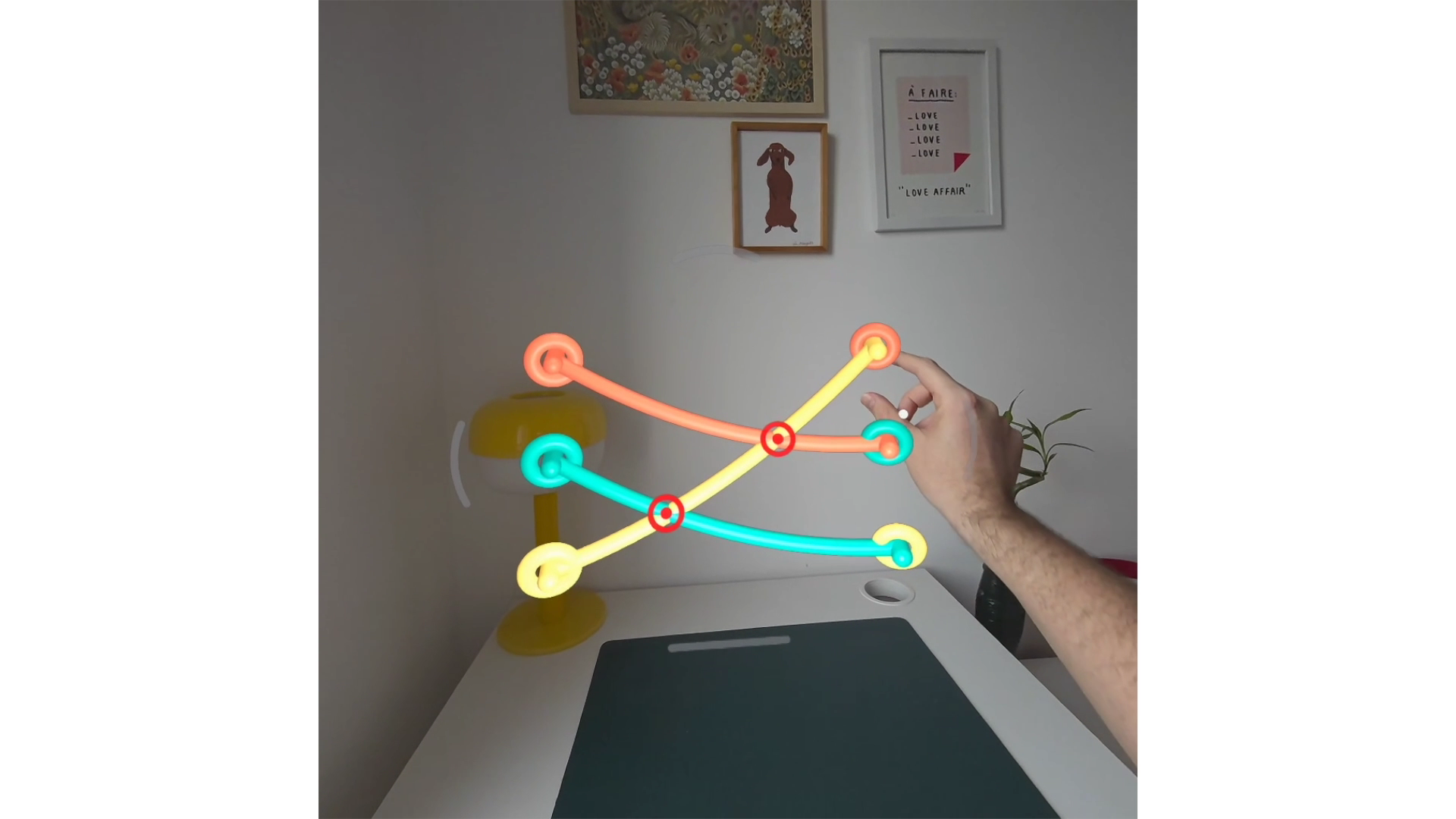
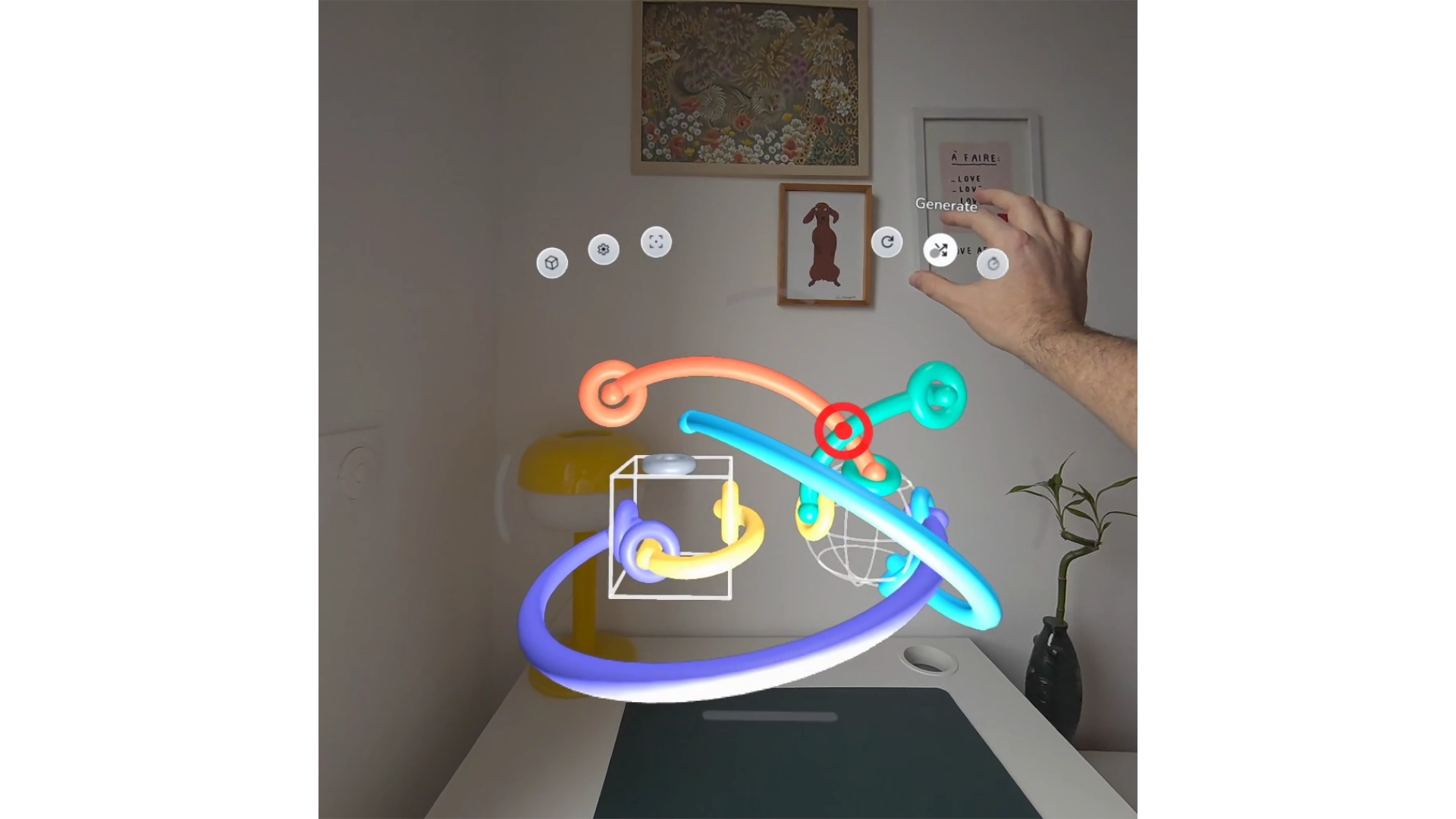
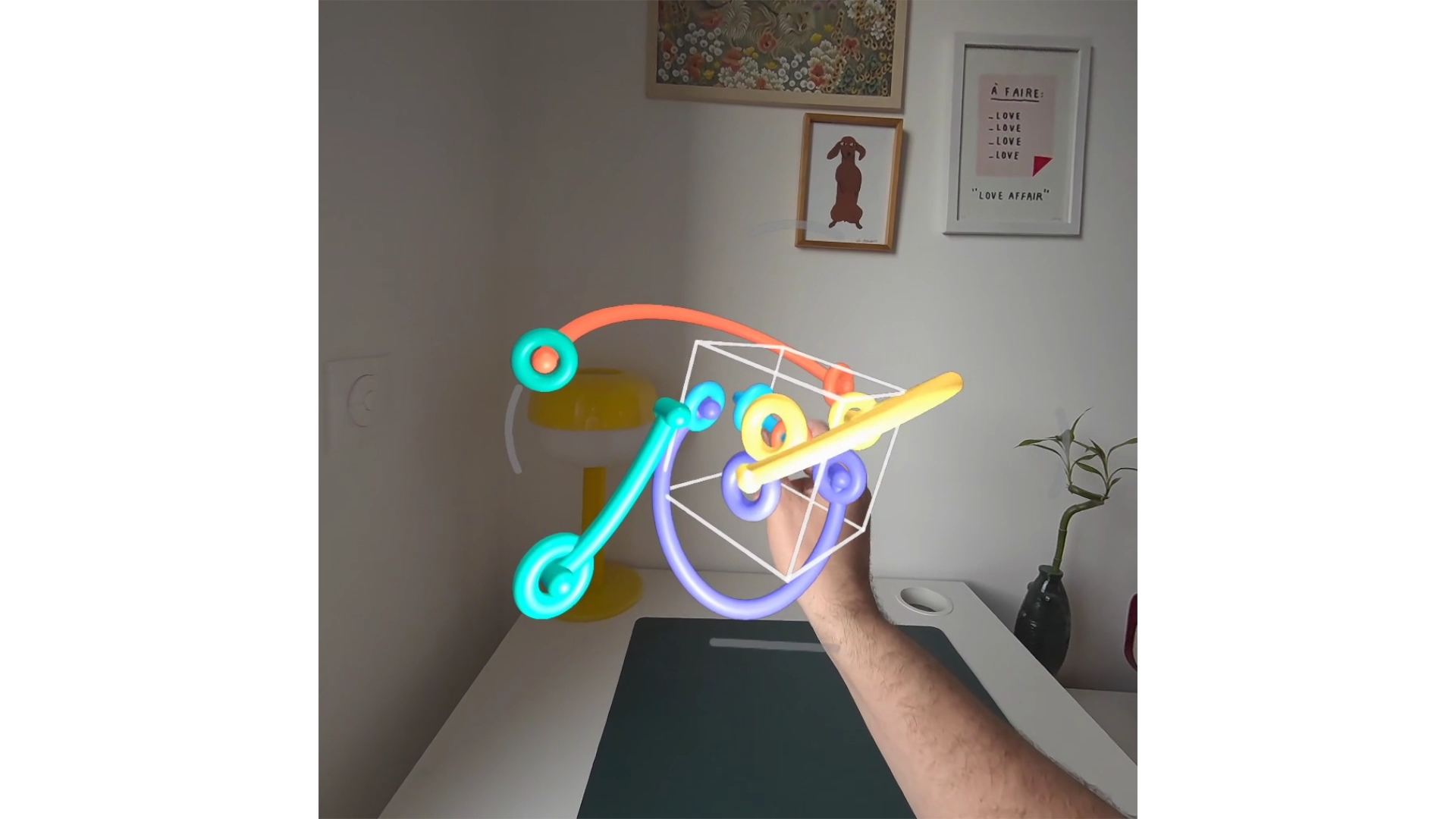
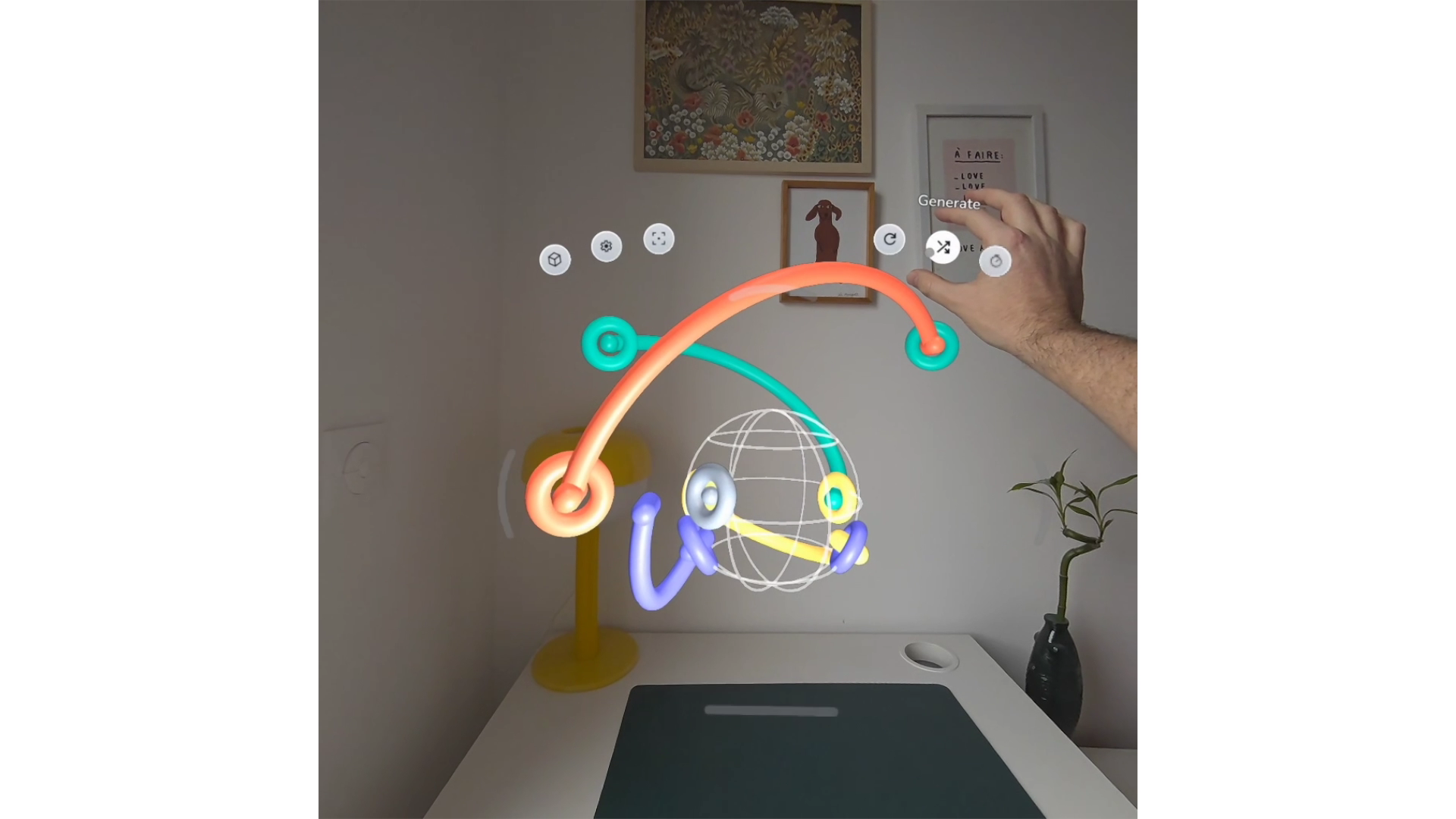
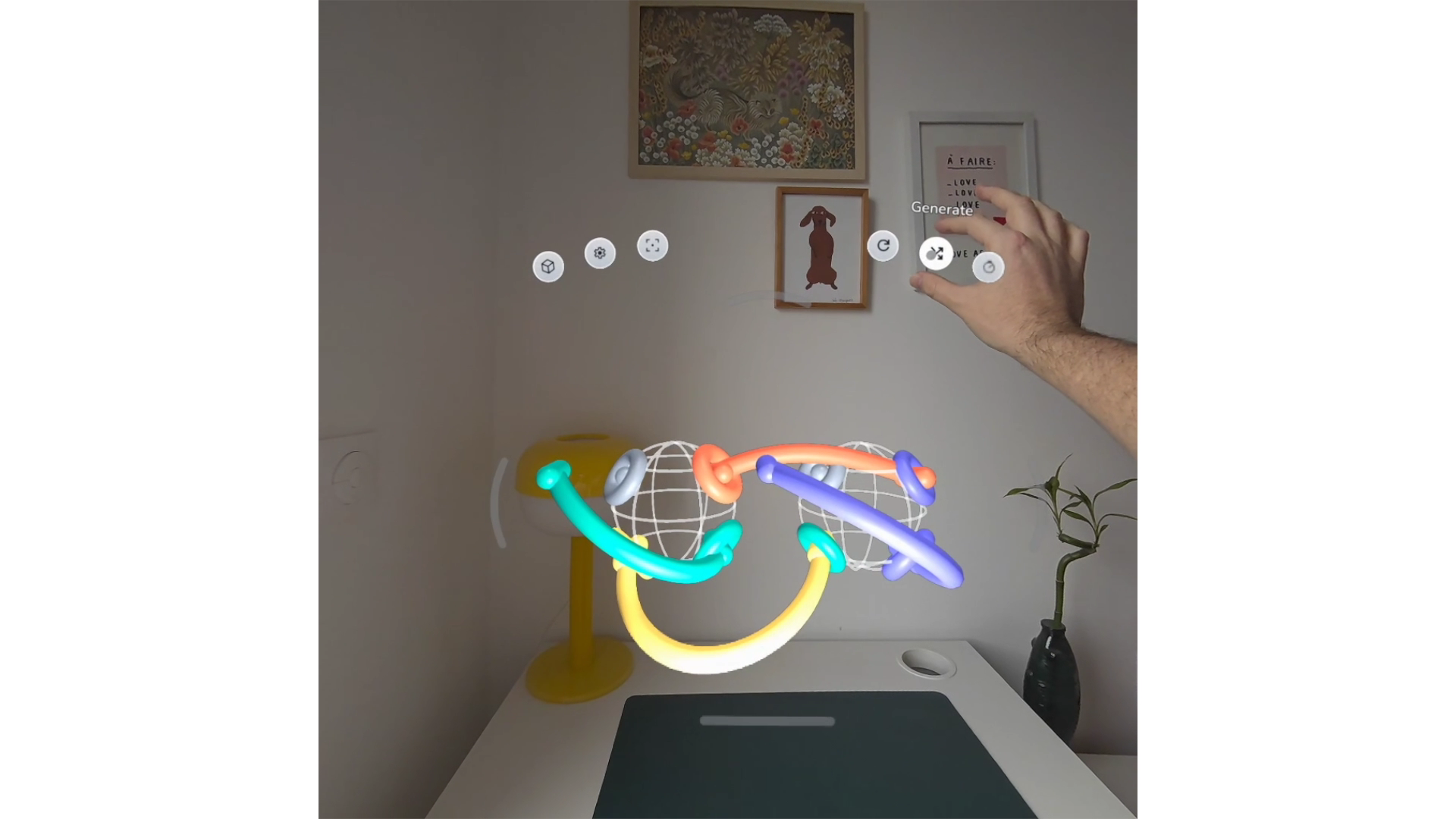
LACET is a cozy spatial puzzle game where you connect colorful ropes to matching nodes.
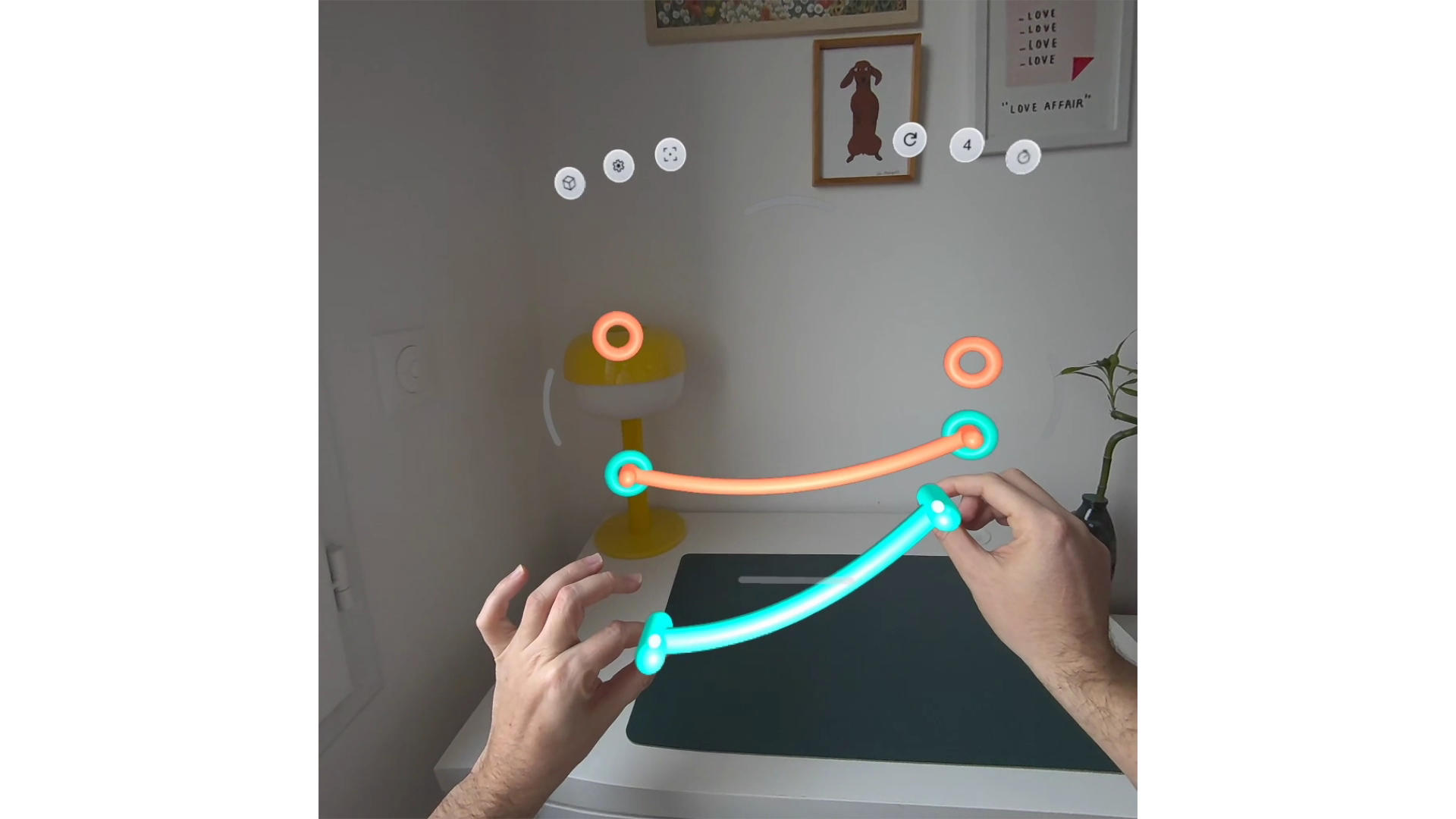
- 🖐️ Hand-tracking only: Grab, stretch, and manipulate ropes in 3D space to connect matching nodes without crossing them.
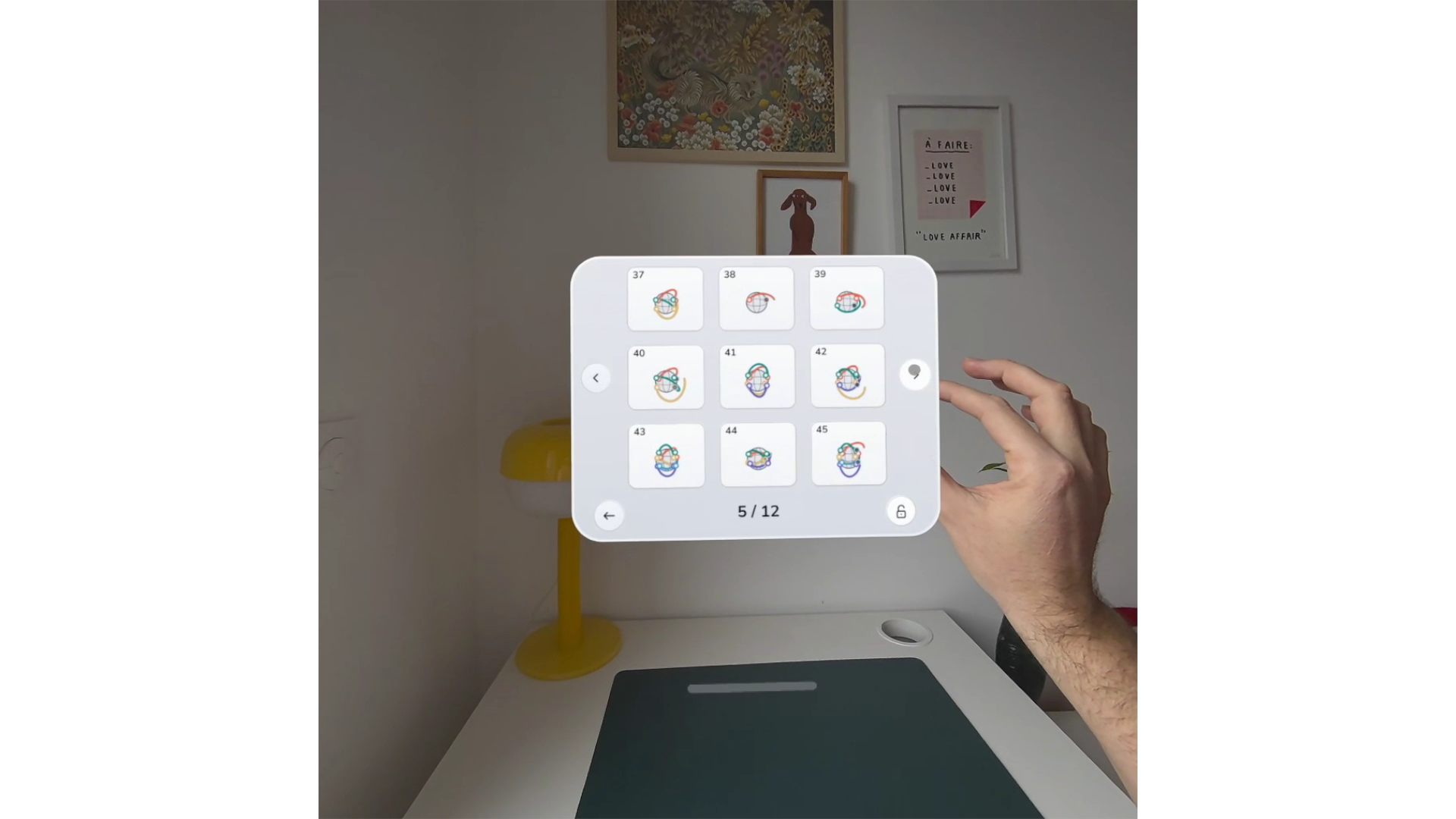
- 🧩 100 handcrafted challenges: Progress from simple connections to increasingly complex spatial puzzles.
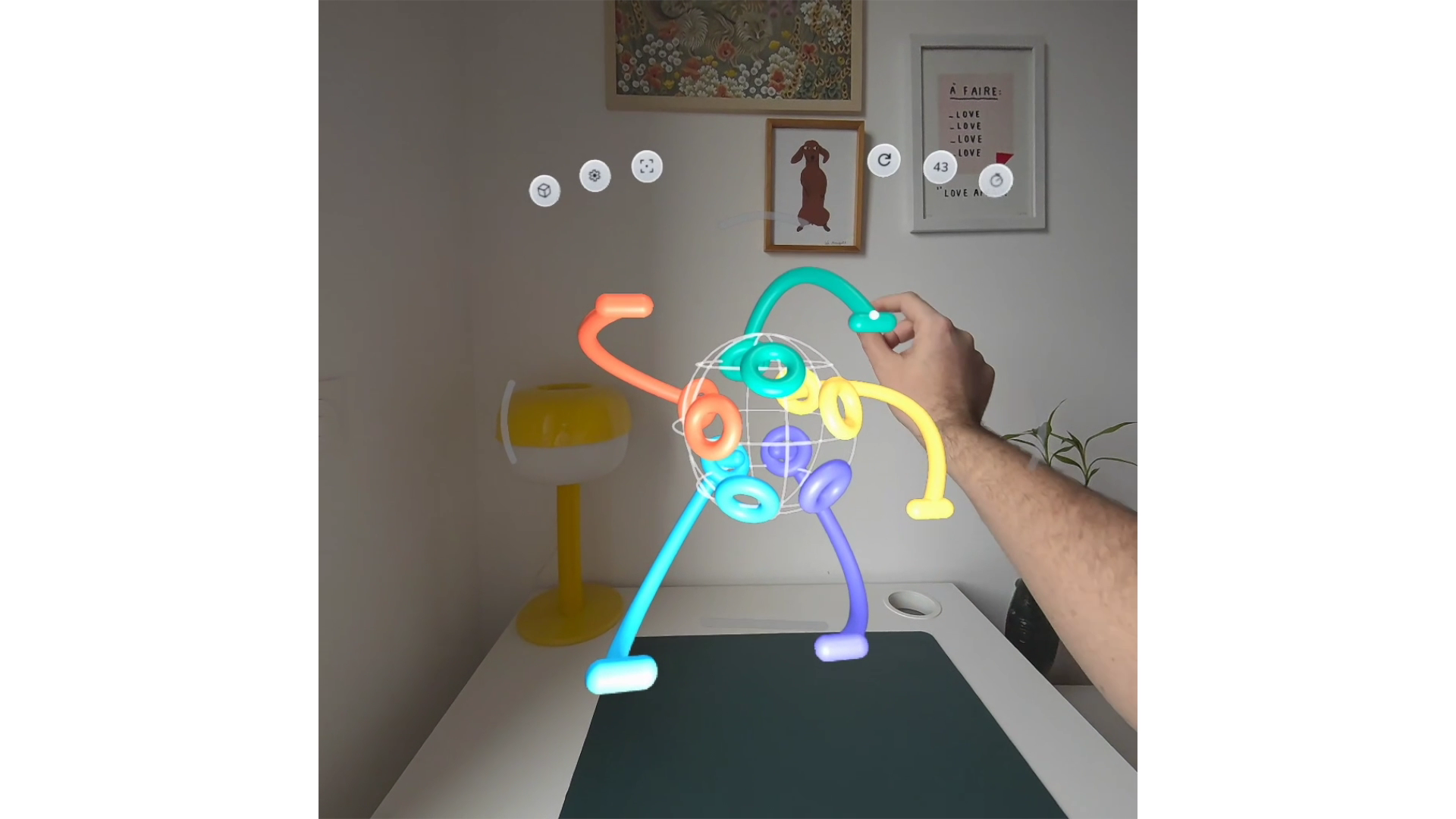
- 🪢 New mechanics to discover: Explore floating nodes, cubes, spheres, curved ropes, and even puzzles hidden inside other puzzles.
- ✨ Endless possibilities: Enjoy procedurally generated puzzles beyond the handcrafted challenges.
- 🌸 Cozy or challenging: Relax at your own pace, or switch to Time Rush mode for an extra challenge against the clock!
- 🛋️ Play anywhere: Enjoy comfortable seated play on your sofa or even on a plane.
- 🌐 WebXR. No installation required: Play directly in Meta Quest Browser, with no app to download.
How I built it
LACET was built using XR Blocks, Three.js, and WebXR, creating a lightweight mixed reality experience that runs directly in Meta Quest Browser. This is my first game developed solo with the assistance of agentic AI, combining my experience in game design, creative direction, and immersive experiences with a new AI-assisted workflow. I led the creative vision, gameplay, and interaction design, while collaborating with AI agents to implement, test, and refine the experience. The game combines custom puzzle logic, straight and curved ropes, collision detection, nested puzzles, and procedural generation, with a colorful, minimalist visual style designed for standalone XR headsets. Development and testing have primarily taken place on Meta Quest 3.
Challenges I ran into
LACET is the first game I've developed entirely on my own, built from scratch in just 14 days for the Meta VR Start Developer Competition 2026. With limited access to agentic AI tools, I had to be both resourceful and patient. One of the biggest challenges was making rope interactions feel intuitive and reliable in 3D space. Connecting two nodes sounds simple, but things become more complex when players can rotate puzzles, manipulate ropes, or connect nodes across different geometric surfaces. Balancing straight and curved connections, visual clarity, and accurate collision detection required a lot of iteration. Hand-tracking was another major challenge. Every gesture needed to feel natural, responsive, and comfortable, while maintaining good performance on a standalone headset.
Accomplishments I'm proud of
I'm particularly proud of turning a simple idea into a flexible spatial puzzle system capable of generating a wide variety of challenges from a small set of mechanics. Bringing this experience to life in just 14 days was also a significant personal achievement. Another important milestone was making LACET easily accessible through a simple web link, without requiring players to install an application.
What I learned
Developing LACET reinforced a simple belief: spatial computing should feel natural, even to people experiencing it for the first time. It taught me how much small details matter in mixed reality, from the way ropes snap into nodes to visual feedback, interface placement, and the comfort of hand interactions. Working with agentic AI also opened up new creative possibilities, allowing me to experiment, prototype, and iterate at a pace that would previously have required a much larger team. Above all, it reinforced the importance of having a clear creative vision, regardless of the tools used to bring it to life.
What's next for LACET: A Cozy Spatial Rope Puzzle
This is just the beginning for LACET. I want to keep refining the gameplay, polishing existing challenges and adding new ones, improving visual effects, lighting, sound, and music, and expanding procedural puzzle generation. Accessibility, optimization, performance, and hand-tracking improvements will also remain priorities as I work toward a complete, relaxing spatial puzzle experience that anyone can enjoy at their own pace. I'm aiming for a release on the Meta Horizon Store in 2027, hopefully in time for Meta's upcoming VR glasses. And of course, I can't wait to see my mother play it!
Built With
- agentic
- ai
- ar
- mr
- three.js
- typescript
- webxr
- xrblocks