-
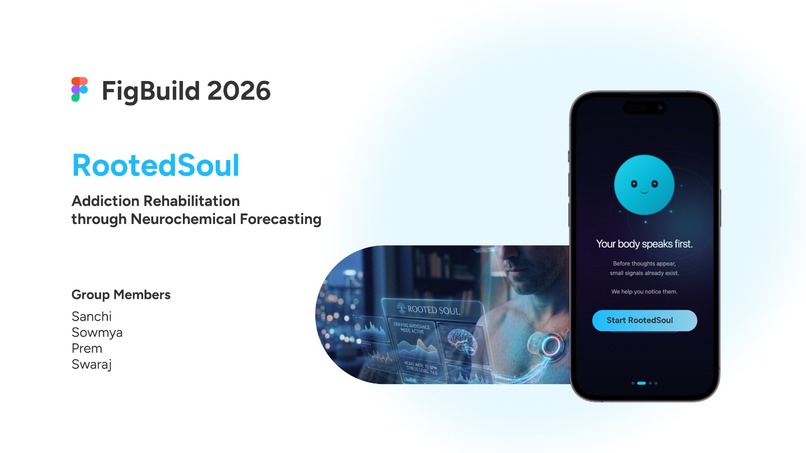
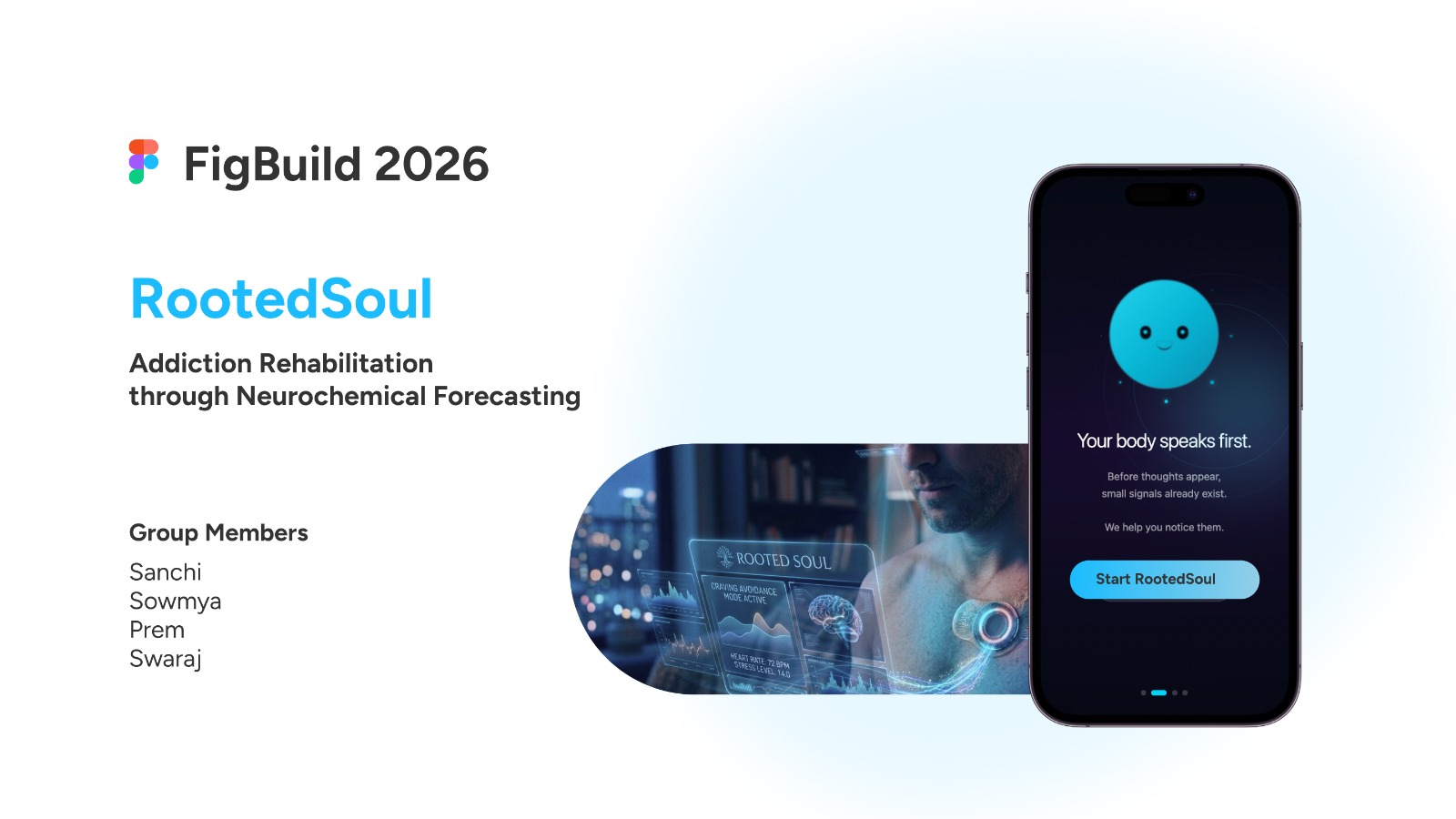
RootedSoul: A Kinder and Safe Rehabilitation Companion
-
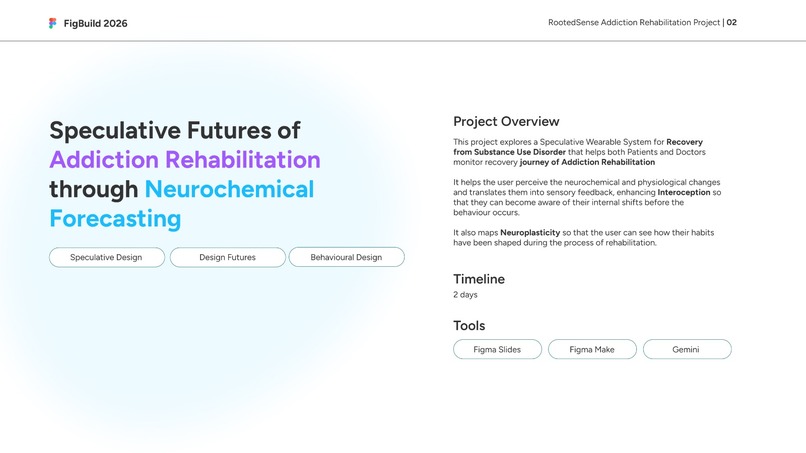
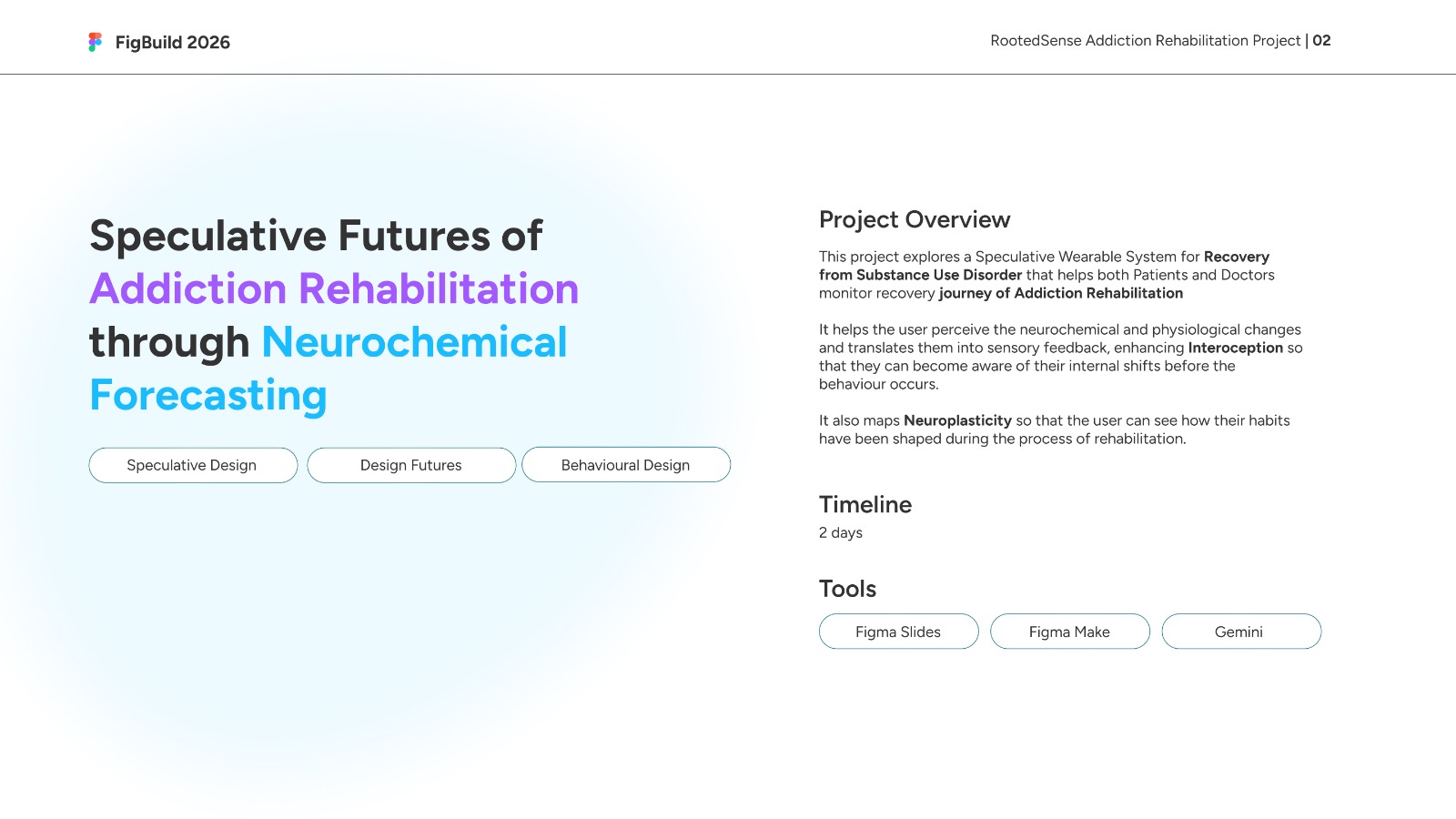
Project Overview: A Speculative Wearable System for Recovery from Substance Use Disorder
-
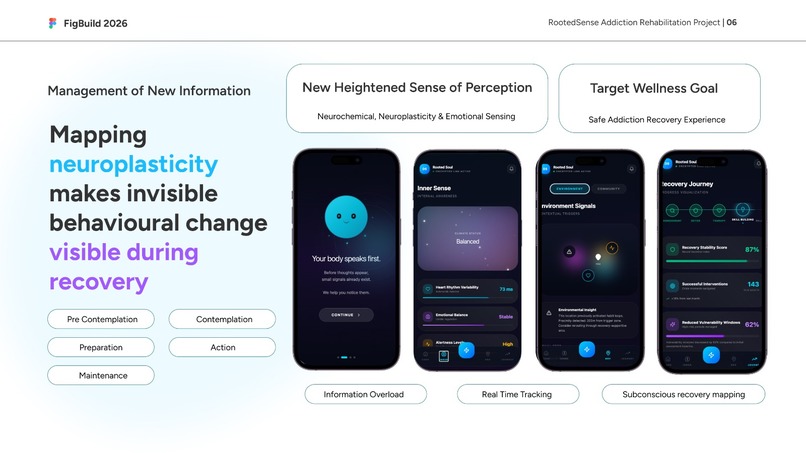
Heightened Sense of Perception: Mapping Neurochemicals & NeuroPlasticity
Inspiration
Our team was moved by a startling reality: 40–60% of individuals in substance addiction recovery show relapse behaviours within the first year. We realised that many relapses occur because neurochemical impulses emerge before conscious awareness. We wanted to bridge this gap between the subconscious body and conscious action to build a kinder, more comfortable, and safer journey for those in recovery.
What it does
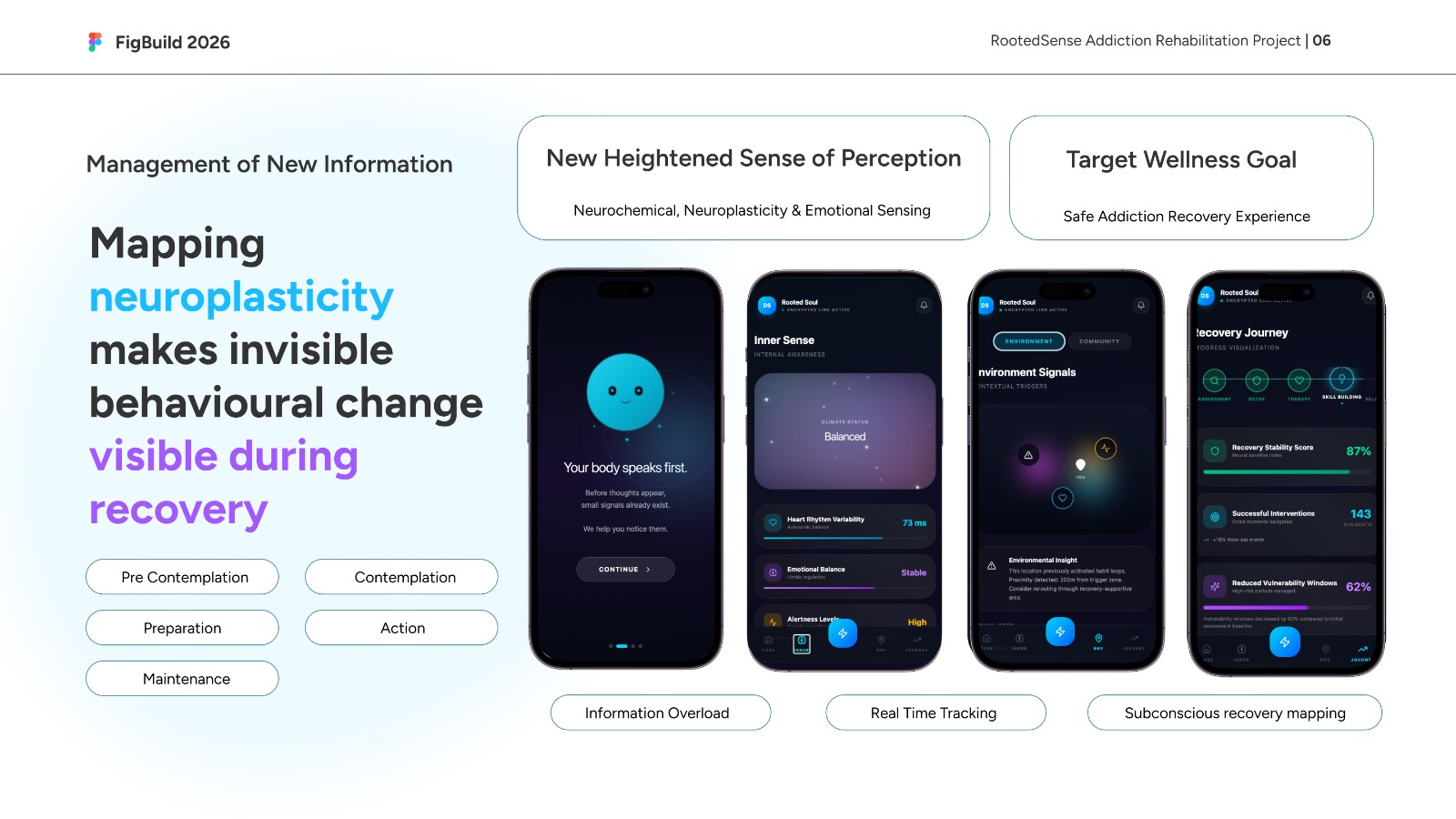
RootedSoul is a speculative wearable biopatch system designed to make "invisible" behavioural changes visible. It functions by: 1) Detecting Neurochemical Signals:Monitoring fluctuations in cortisol and dopamine. 2)Forecasting Risk: Identifying cravings and environmental triggers before a behaviour occurs. 3) Providing Biofeedback: Translating internal shifts into sensory feedback to enhance interoception. 4) Mapping Neuroplasticity:Helping users and doctors visualise how habits and brain activity are being reshaped over time during the recovery journey. 5) The "Soul" Companion: Featuring a character called Soul that accompanies the user through every stage of their recovery.
How we built it
The project was developed as a speculative design and behavioural design initiative over a focused 1-day timeline. Our workflow included: 1) Research: Analysing the current recovery process from detoxification to relapse prevention. 2) Tools: We utilised Figma Slides for presentation, Figma Maker for prototyping, and Gemini for image generation. 3) System Design: Creating a flow that connects a wearable biopatch with our RootedSoul App for real-time tracking and therapist support.
Challenges we ran into
One of the primary hurdles was addressing information overload. We had to design an interface that provides a "heightened sense of perception" without overwhelming a user already struggling with withdrawal stress. This is why the presence of Soul was so critical, to ensure the data felt supportive rather than clinical.
Accomplishments that we're proud of
We are particularly proud of creating a system that shifts the focus from reactive treatment to proactive intervention. By integrating the character Soul, we successfully designed a "Safe and Kind Addiction Recovery Experience" that prioritises the user's emotional well-being and long-term regulation.
What we learned
We discovered that interoception - sensing one’s internal state, is a critical but often neglected tool in recovery. We learned that addiction is as much a biological challenge as a behavioural one, and that providing "continuous guidance outside therapy sessions" is essential for long-term success.
What's next for RootedSoul: Addiction Rehabilitation Biopatch
Moving forward, we aim to further develop the Habit Redirection and Confidence Mapping features.We also want to expand Soul’s interactive capabilities, ensuring the character can provide even more personalised, real-time encouragement when environmental triggers are detected.


Log in or sign up for Devpost to join the conversation.