-
-
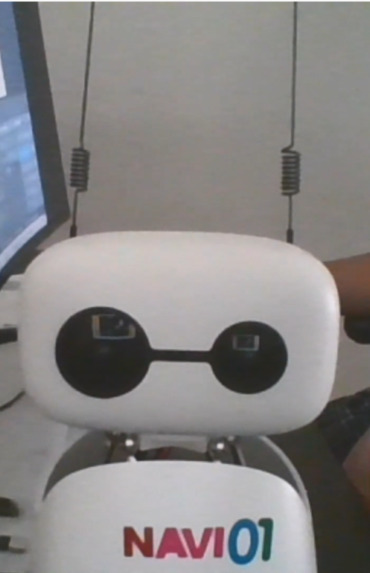
RootCause AI - A Conversational Robot for Intelligent Error Investigation
-
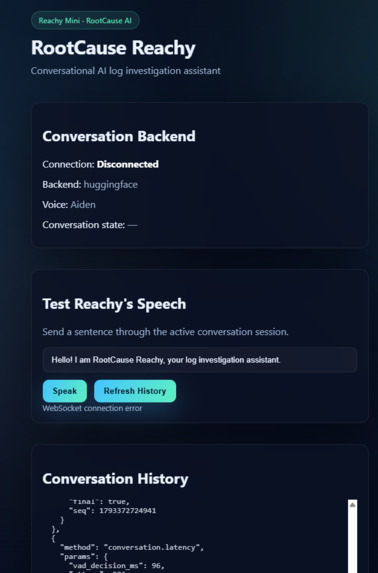
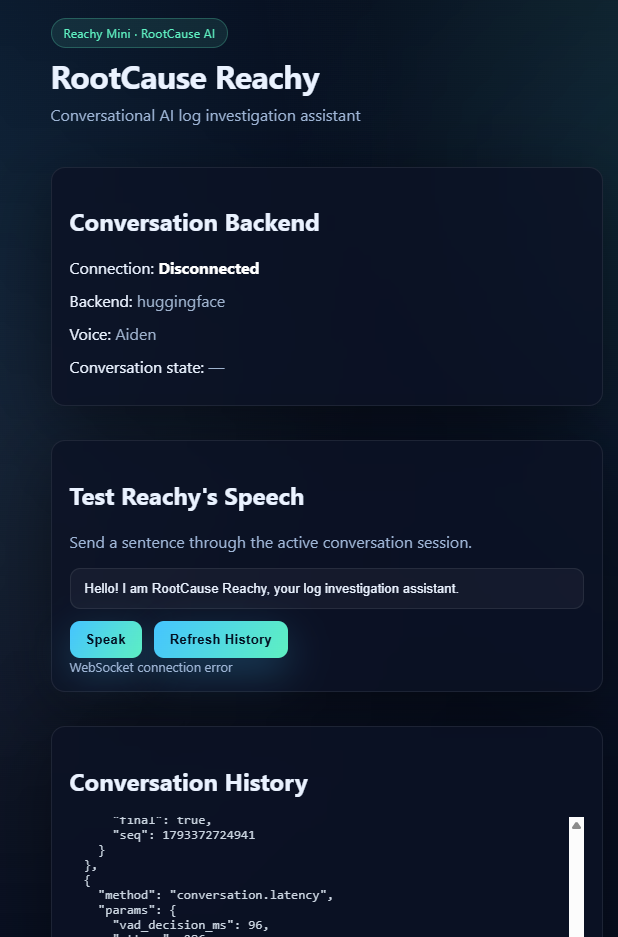
Reachy Mini Robot app Interface
-
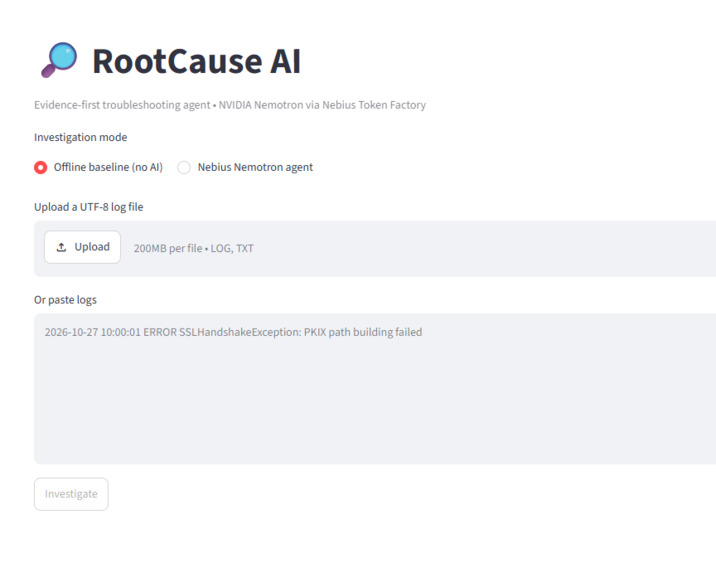
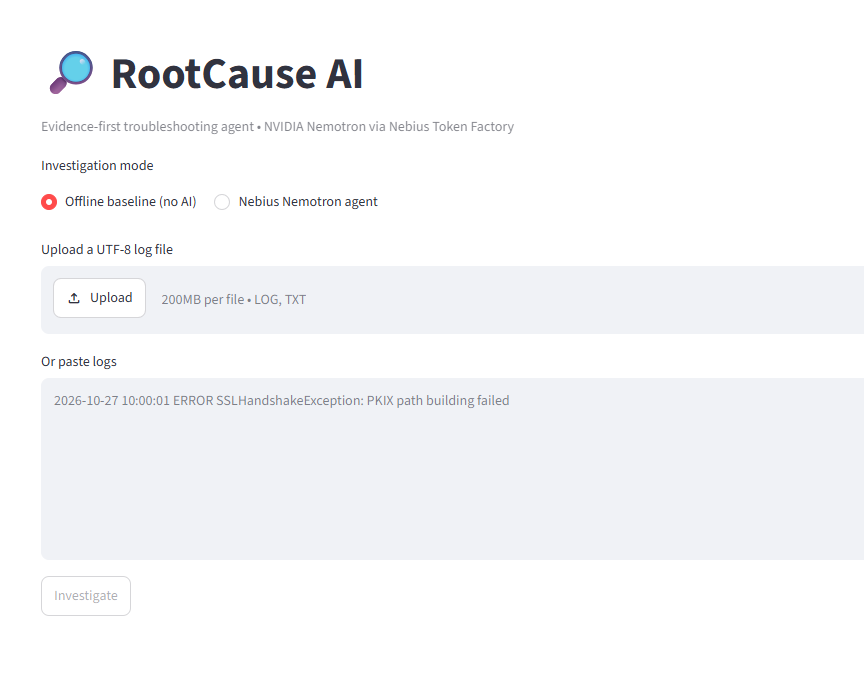
Streamlit Web interface
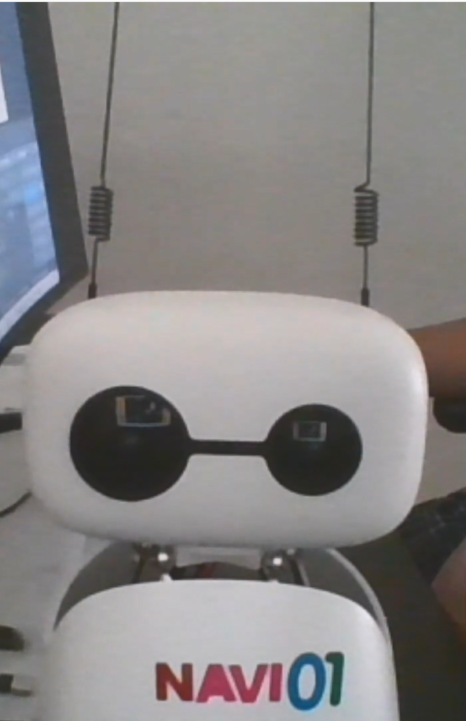
RootCause AI - A Conversational Robot for Intelligent Error Investigation
Inspiration
Troubleshooting application failures often requires engineers to sift through lengthy logs, identify patterns, reconstruct event timelines, and determine what went wrong.
I wanted to explore a different approach: What if you could simply ask a robot to investigate an application failure and then have a natural conversation about its findings?
That idea led me to combine NVIDIA Nemotron's agentic reasoning capabilities with Reachy Mini, a conversational desktop robot.
The goal was to make technical investigations more interactive, accessible, and evidence-driven, not just through a web interface, but through a physical AI assistant.
What It Does
RootCause AI transforms Reachy Mini into a conversational AI-powered troubleshooting assistant.
Users can interact with the robot naturally, without navigating through dashboards or manually examining logs.
For example, a user can say:
"Reachy, investigate the error log."
Reachy invokes the RootCause AI investigation agent, powered by NVIDIA Nemotron 3 Super through Nebius Token Factory.
Rather than simply summarizing the log, the agent autonomously selects and executes read-only tools to investigate the incident.
It can:
- Search application logs for relevant errors and events.
- Detect patterns and related failures.
- Reconstruct incident timelines.
- Validate findings against actual log entries.
- Identify plausible root causes while distinguishing hypotheses from confirmed evidence.
- Suggest troubleshooting steps and preventive measures.
Once the investigation is completed, Reachy can explain its findings conversationally while a detailed report is saved for further review.
Users can then ask follow-up questions such as:
"Why did the application return HTTP 500 errors?"
Reachy retrieves an evidence-based explanation from the investigation context without requiring the entire analysis to run again.
RootCause AI also includes a Streamlit web application for users who prefer to upload logs, inspect tool execution traces, and review detailed reports visually.
How I Built It
The solution combines physical robotics, conversational AI, and agentic investigation.
Reachy Mini - Physical AI Interface
I developed a native Reachy Mini conversation application that uses the robot's microphone and speaker for natural voice interaction.
Two custom tools connect the robot to RootCause AI:
- 'investigate_log' initiates a fresh Nemotron powered log investigation.
- 'ask_about_report' answers follow-up questions using the latest investigation findings.
These tools communicate with a Python FastAPI service through authenticated API requests.
NVIDIA Nemotron + Nebius Token Factory – Agentic Reasoning
The core investigation engine uses NVIDIA Nemotron 3 Super (120B A12B) through the Nebius Token Factory API.
Nemotron is responsible for reasoning about the incident and deciding which tools to execute.
The agent uses four read-only investigation tools:
- 'search_logs'
- 'detect_patterns'
- 'extract_timeline'
- 'validate_evidence'
The investigation follows an iterative tool-calling loop. Nemotron selects tools, examines their results, and continues reasoning before producing a final report.
The application sanitizes sensitive information before sending logs for inference and maintains a trace of tool execution.
Backend and Reporting
A Python FastAPI service connects Reachy Mini to the investigation engine. It manages investigation requests, saves Markdown reports and JSON tool traces, and maintains context for follow-up questions.
The backend ran on my Windows development machine during the working robot demonstration, connected through an authenticated SSH tunnel.
Web Interface
I also built and deployed a Streamlit application that provides an alternative interface for uploading logs, triggering investigations, and examining detailed results.
Both interfaces use the same underlying Nemotron-powered investigation logic.
Challenges I Ran Into
1. Connecting physical robotics with agentic AI
Integrating Reachy Mini with a remote investigation engine required coordinating realtime voice conversations, custom tool execution, asynchronous API calls, and robot interactions.
2. Reliable communication between Reachy and the backend
I implemented authenticated communication between the robot and a Windows-hosted FastAPI service using an SSH tunnel. Managing service connectivity, credentials, and application configuration required additional troubleshooting.
3. Designing genuinely agentic investigations
I wanted Nemotron to decide which investigation tools were necessary rather than simply executing a predefined pipeline.
This required building a bounded tool-calling loop capable of handling multiple investigation steps and returning structured results.
4. Keeping conclusions grounded in evidence
A connection failure may have several plausible explanations. I designed the investigation workflow to cite actual log entries and distinguish observed failures from unproven root-cause hypotheses.
Accomplishments I'm Proud Of
- Successfully transformed Reachy Mini into a voice-driven application troubleshooting assistant.
- Demonstrated a complete workflow from spoken investigation request to Nemotron-powered analysis.
- Enabled natural conversational follow-up questions about previous investigations.
- Built an autonomous agent that selects and executes read-only investigation tools.
- Generated evidence-backed investigation reports with log-line citations.
- Integrated a physical robot with an authenticated remote Python backend.
- Developed a complementary Streamlit web application for detailed investigation and reporting.
The most rewarding moment was asking Reachy to investigate an error log and then hearing the robot explain why database connection failures preceded HTTP 500 errors, using findings from a real Nemotron investigation.
What I Learned
This project demonstrated how a physical robot can serve as a practical interface to a specialized AI agent.
I gained hands-on experience with Reachy Mini's conversational application framework, custom tools, realtime voice interaction, API integration, and NVIDIA Nemotron's multi-step reasoning capabilities through Nebius Token Factory.
I also learned the importance of designing AI systems that clearly communicate uncertainty, especially when analyzing incomplete technical evidence.
What's Next
I plan to extend RootCause AI with:
- Cloud-hosted investigation services so Reachy Mini devices can connect without a local Windows computer.
- Installable Reachy Mini applications so other robot owners can use the solution.
- Voice-based log selection to investigate different applications and services.
- Multi-log correlation for troubleshooting incidents across distributed systems.
- Proactive incident analysis to identify recurring issues and suggest preventive actions.
- Monitoring platform integration to connect investigations with real operational workflows.
My long-term vision is to make Reachy Mini more than a conversational companion—turning it into an intelligent technical assistant that can help engineers investigate problems, understand evidence, and make better operational decisions.
RootCause AI brings agentic investigation out of the browser and into the physical world.
