Inspiration
Astronauts on long-duration missions face extreme isolation, disrupted sleep cycles, and constant cognitive pressure. Over time, this can lead to mental fatigue, reduced performance, and long-term behavioral health risks. We were inspired by the idea of giving astronauts something they don’t have in space, a connection back to Earth. Instead of creating another clinical monitoring tool, we wanted to design something intuitive, calming, and engaging that supports mental health through daily interaction.
What it does
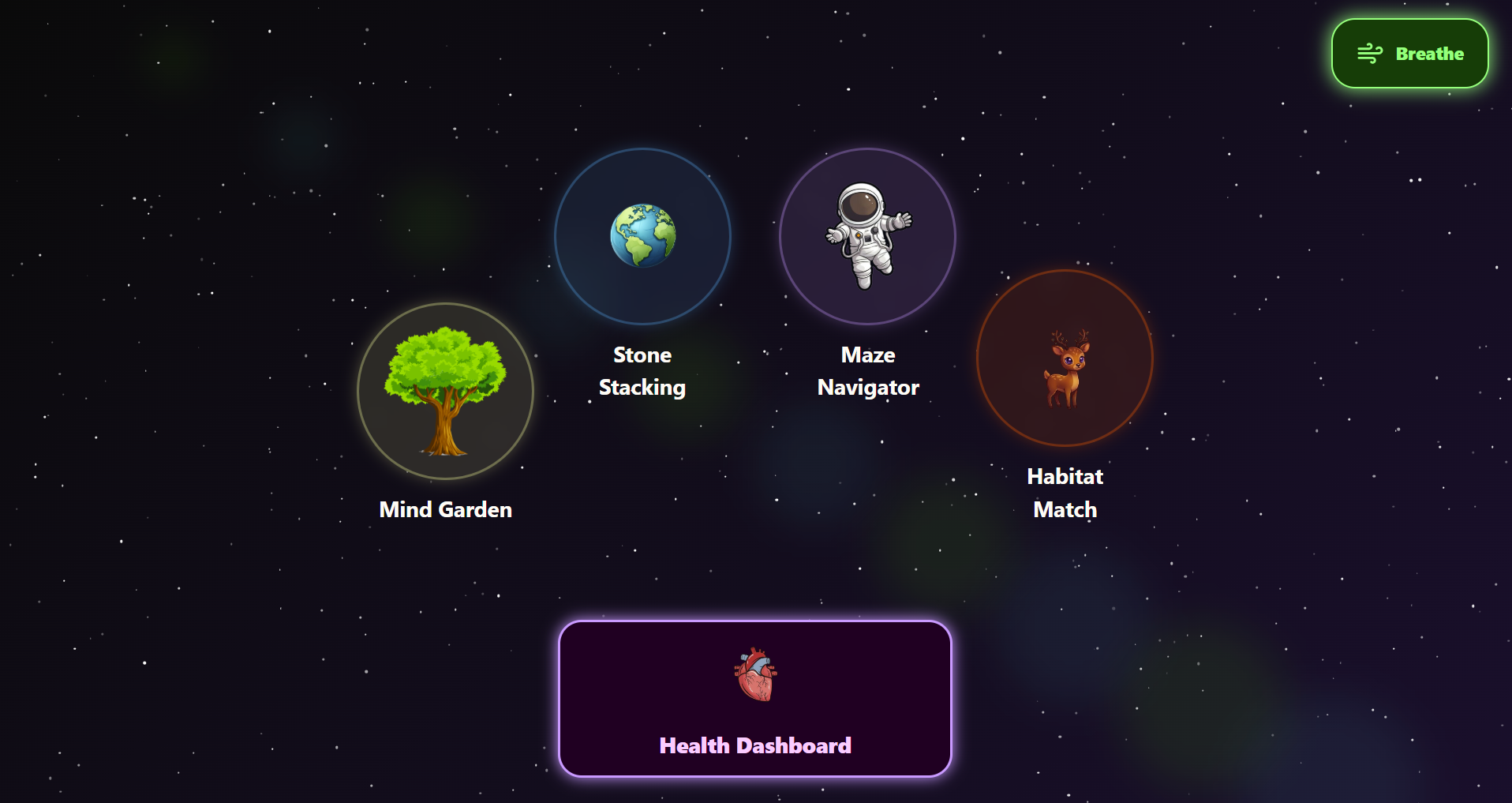
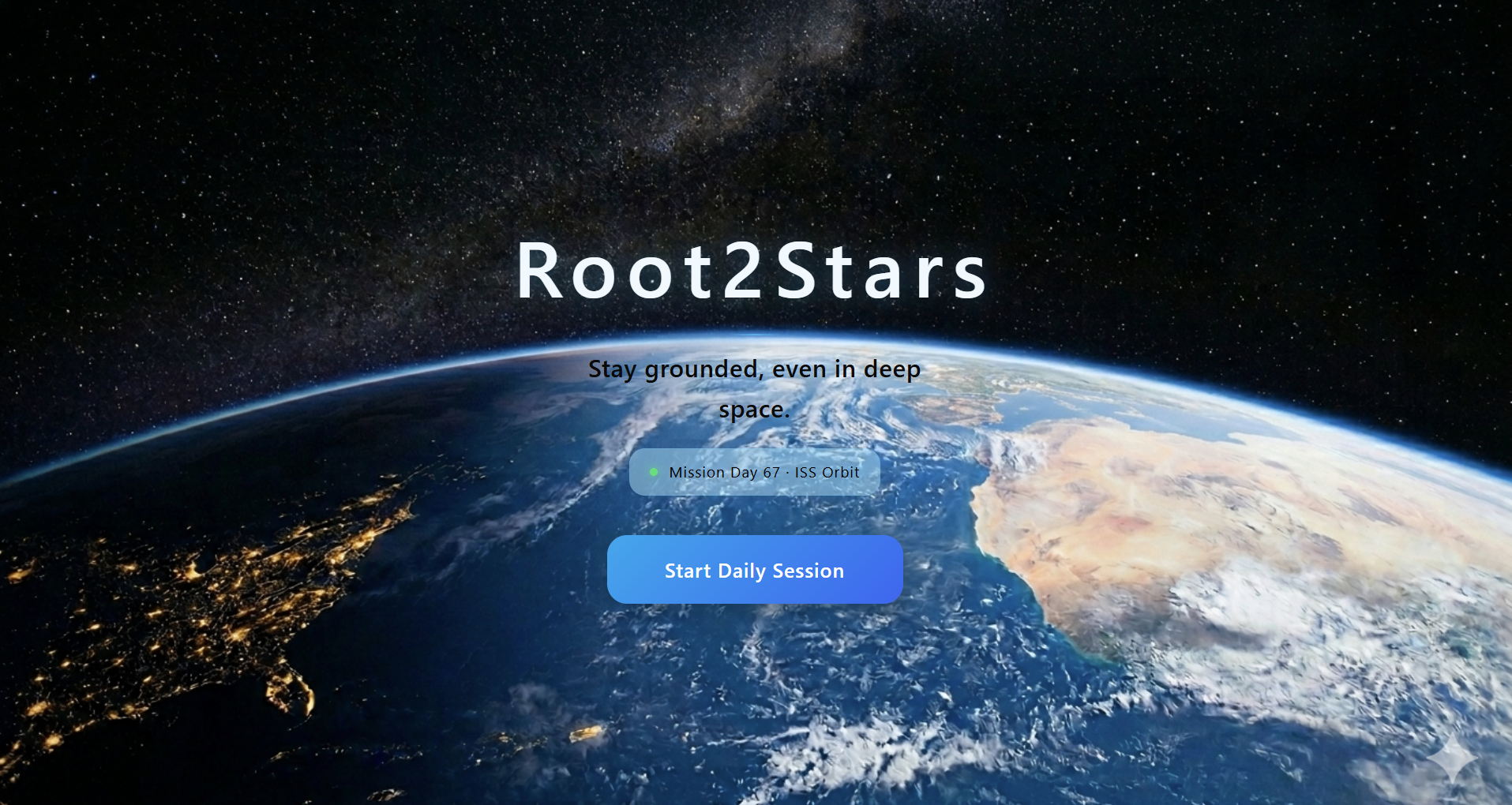
Root2Stars helps astronauts stay grounded during long space missions using short daily sessions that combine cognitive games and guided breathing. The games are designed to target key areas of mental performance:
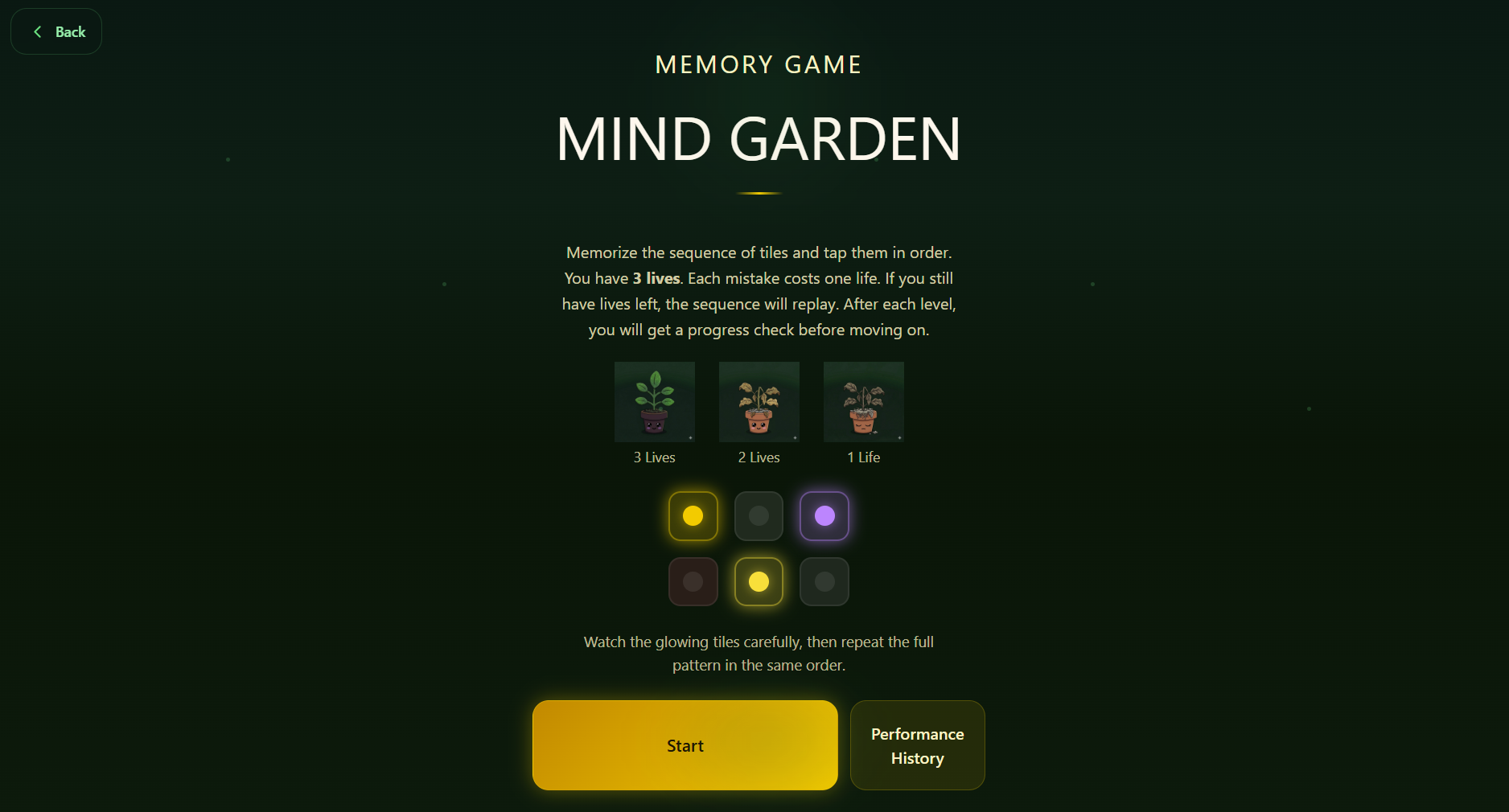
- Memory through pattern recall
- Focus through precision based tasks like stone stacking
- Reaction time through quick response challenges
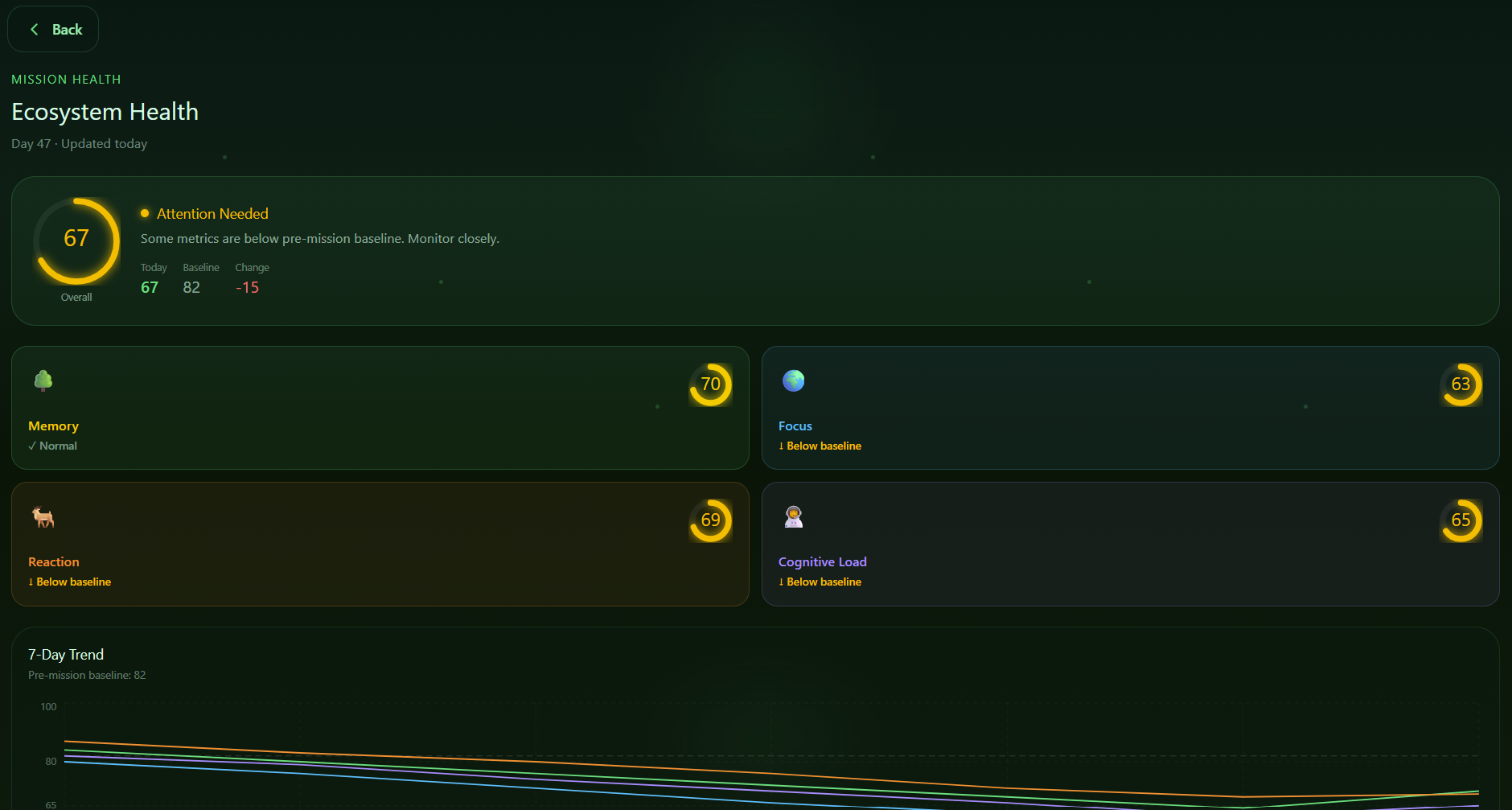
- Cognitive load through maze navigation and problem solving At the same time, the app tracks performance over time and visualizes it in a dashboard, helping detect patterns, improvements, or potential decline in cognitive function. By combining performance tracking with a nature-based ecosystem, Root2Stars turns mental health into something interactive, visual, and easy to understand.
How we built it
We started by defining the problem space and creating a clear core user flow in FigJam, mapping out how an astronaut would move through a daily session. From there, we built a simple design system in Figma Design focused on calm visuals, minimal friction, and clear interactions. Using Figma Make, we created an initial prototype and iterated on layout, hierarchy, and usability. We then translated this into a fully working prototype in VS Code using TypeScript, HTML, and CSS. Each game was implemented with its own logic, and we connected them to shared state for tracking performance and session data. We also built a working performance dashboard that pulls in real session data and visualizes trends over time.
Challenges we ran into
One of the biggest challenges was implementing realistic physics for the stone stacking game. Early versions allowed stones to stack in ways that didn’t reflect actual balance, which made the results unreliable. We had to refine collision logic, positioning, and balance detection to make the game feel both realistic and fair. Another challenge was making sure all performance data stayed consistent across sessions. We had to carefully manage how data was stored and updated so that the dashboard reflects real, current performance instead of resetting or showing incorrect values.
Accomplishments that we're proud of
We’re especially proud of building a fully functioning end to end prototype, not just static screens, but a complete experience from onboarding to gameplay to performance tracking.
The maze navigation game is something we’re really proud of because it directly targets cognitive load and problem solving in a way that feels engaging but not overwhelming. It reflects real mental challenges astronauts might face when navigating complex tasks under pressure. We’re also proud of how all the pieces connect:
- Games feed into real performance data
- Data updates the dashboard
- The experience stays consistent across sessions Most importantly, we built something that could actually help astronauts by providing early signals of cognitive fatigue, encouraging daily mental check ins, and offering a simple way to reset through breathing and nature based interaction.
What we learned
We learned how important it is to balance engagement with simplicity, especially in high stress environments like space. More features doesn’t mean better, clarity and ease of use matter more. We also learned how to translate abstract ideas like “mental health” and “cognitive load” into concrete, interactive features that users can actually engage with. On the technical side, we gained experience managing state across multiple components, handling real time data updates, and building systems where different parts of the app depend on each other.
What's next for Root2Stars
Next, we want to expand Root2Stars into a more intelligent and personalized system. This includes:
- Adapting game difficulty dynamically based on user performance
- Enhancing the ecosystem so it visually evolves based on long term trends
- Adding more advanced analytics and insights for both astronauts and mission control
- Integrating biometric data like sleep or heart rate for deeper behavioral health monitoring We also want to explore team based features, where astronauts can share progress and maintain a sense of connection, even in isolated environments. Long term, Root2Stars could extend beyond space missions to support people in any high stress or isolated environment.

Log in or sign up for Devpost to join the conversation.