-
-
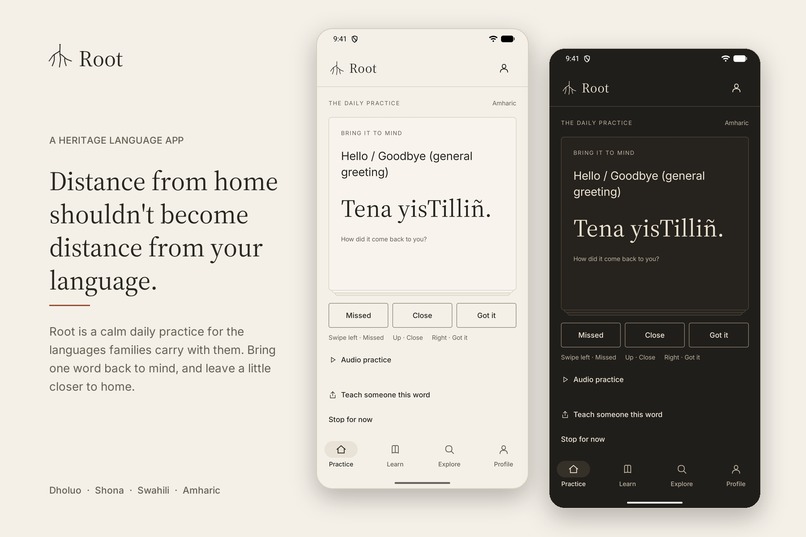
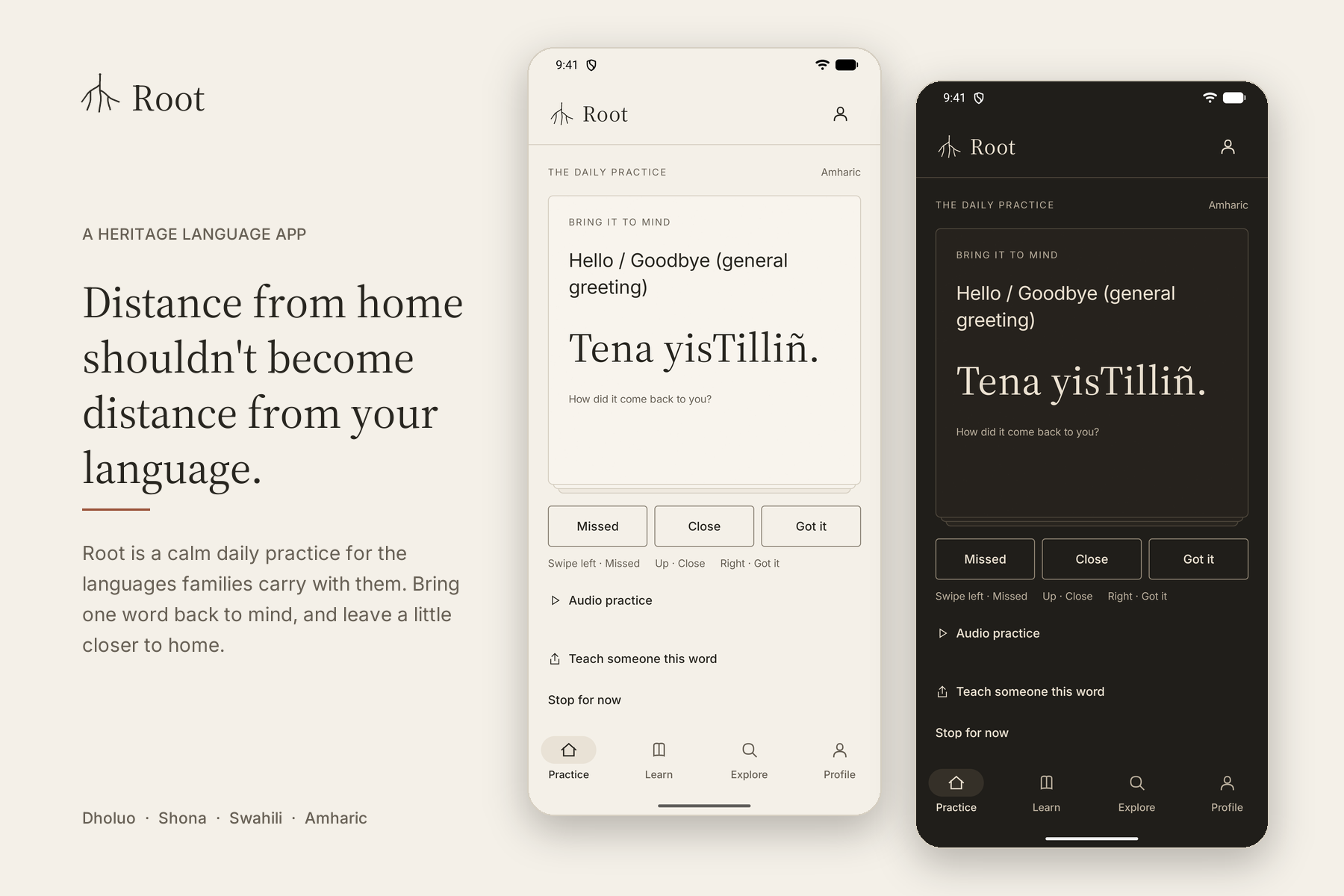
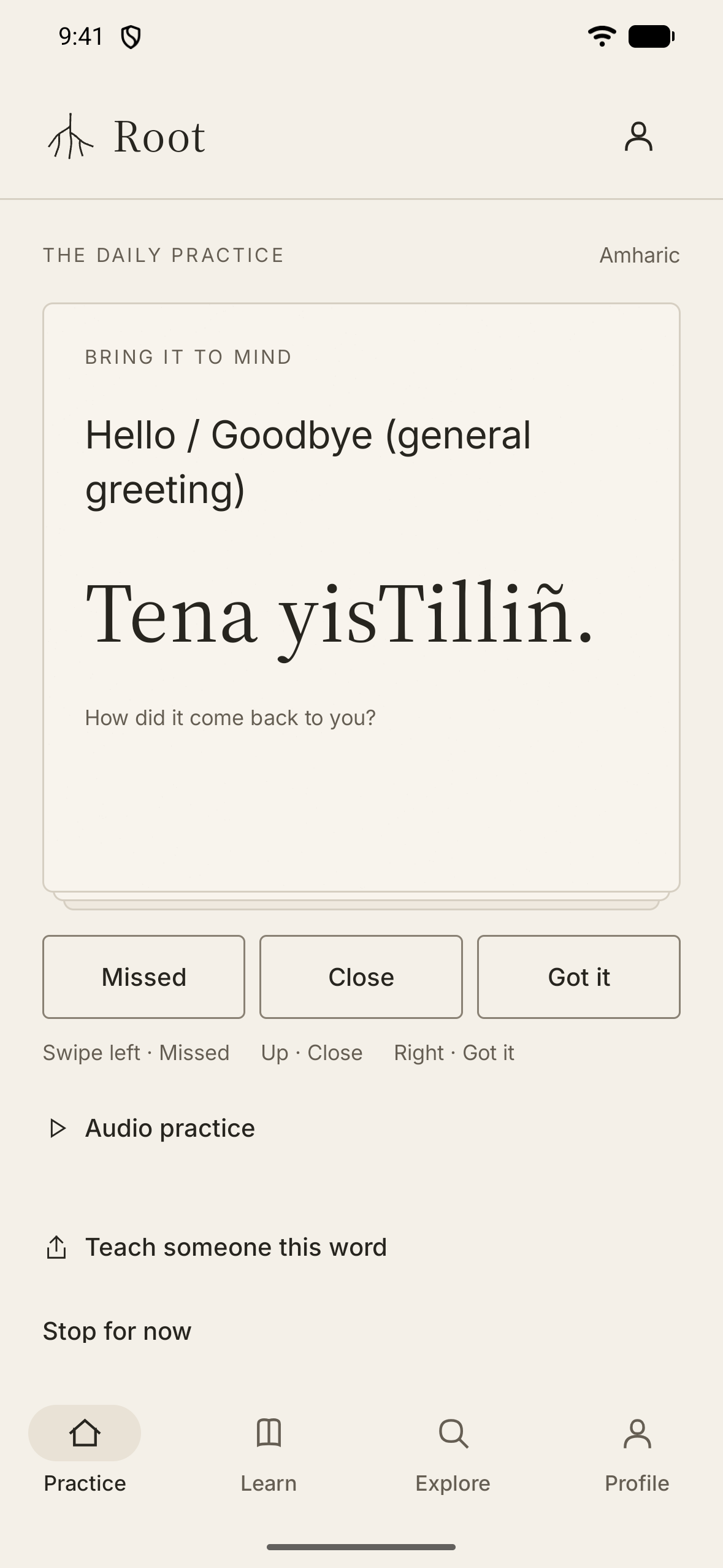
The Practice card in light and dark themes: an Amharic greeting revealed, ready to rate as Missed, Close or Got it.
-
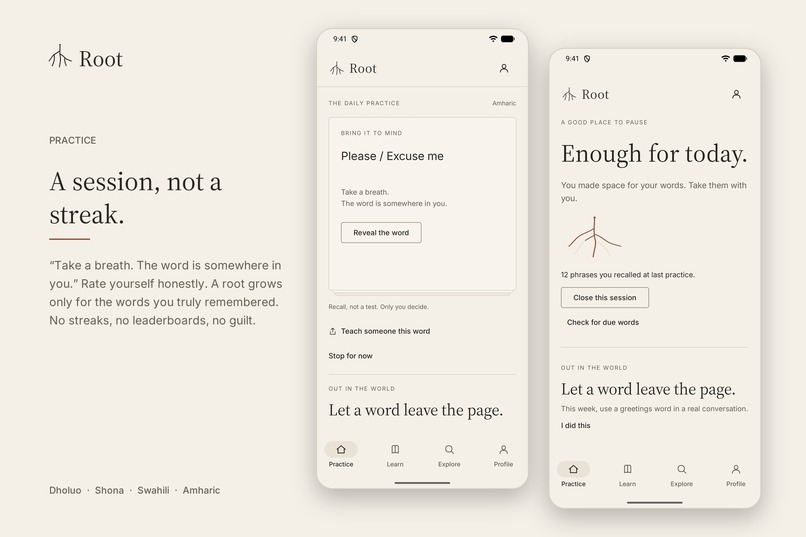
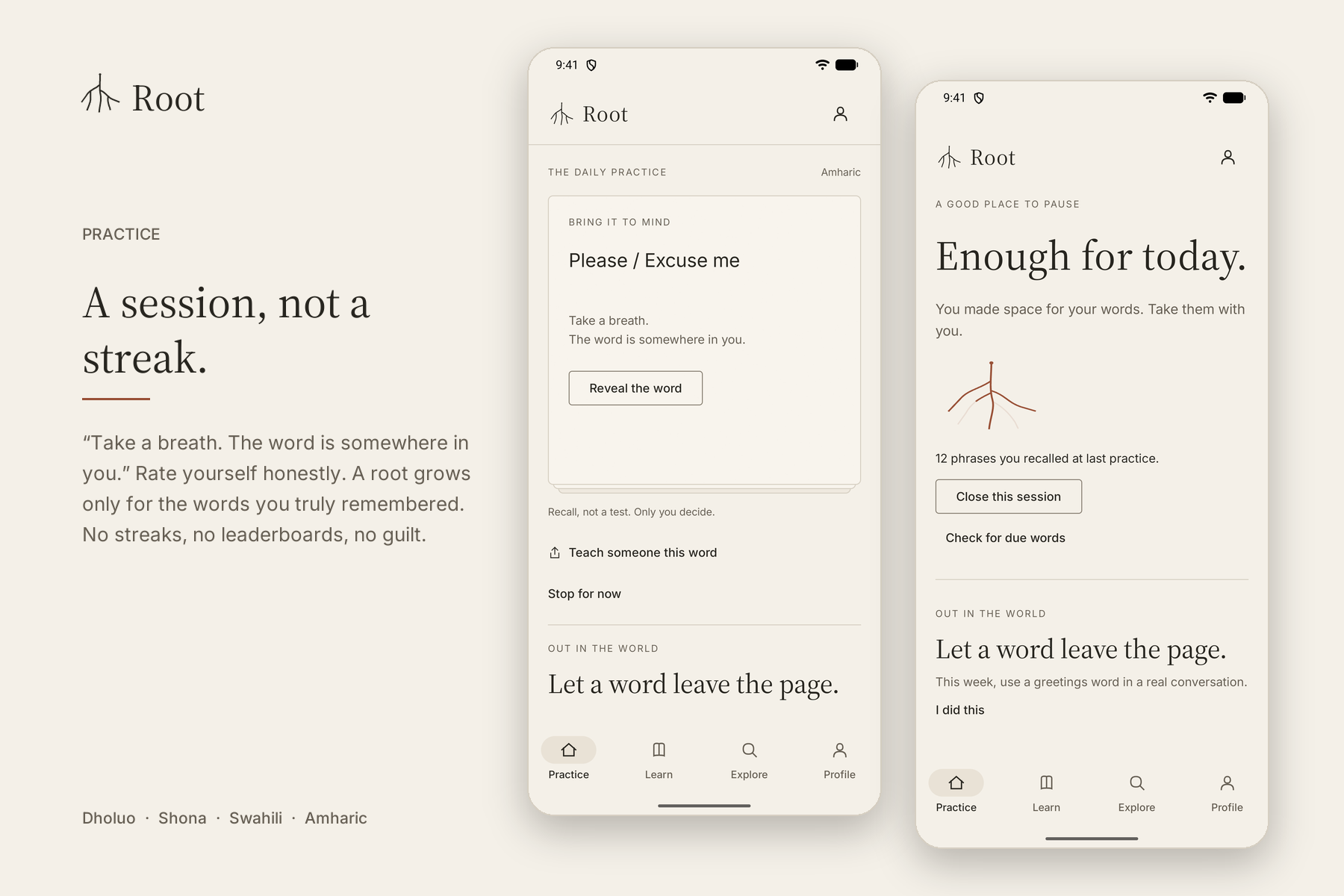
Left: a practice prompt waiting to be recalled. Right: the end of a session, where a root has grown for 12 recalled phrases.
-
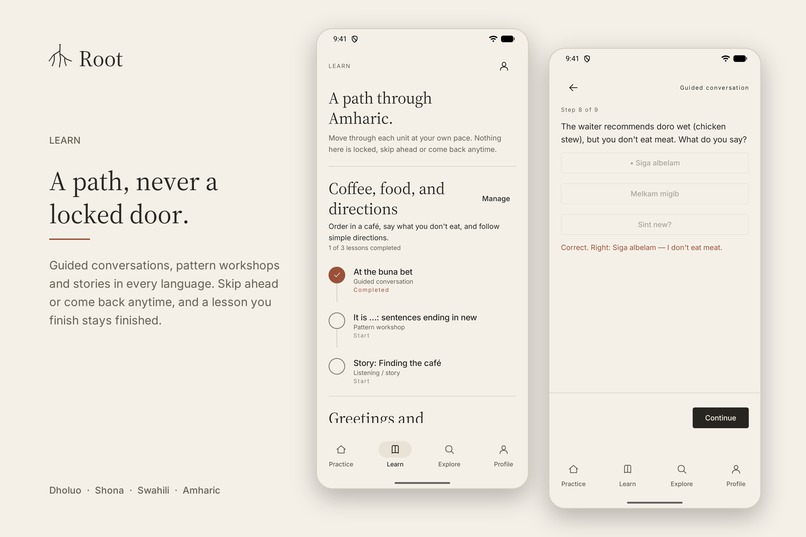
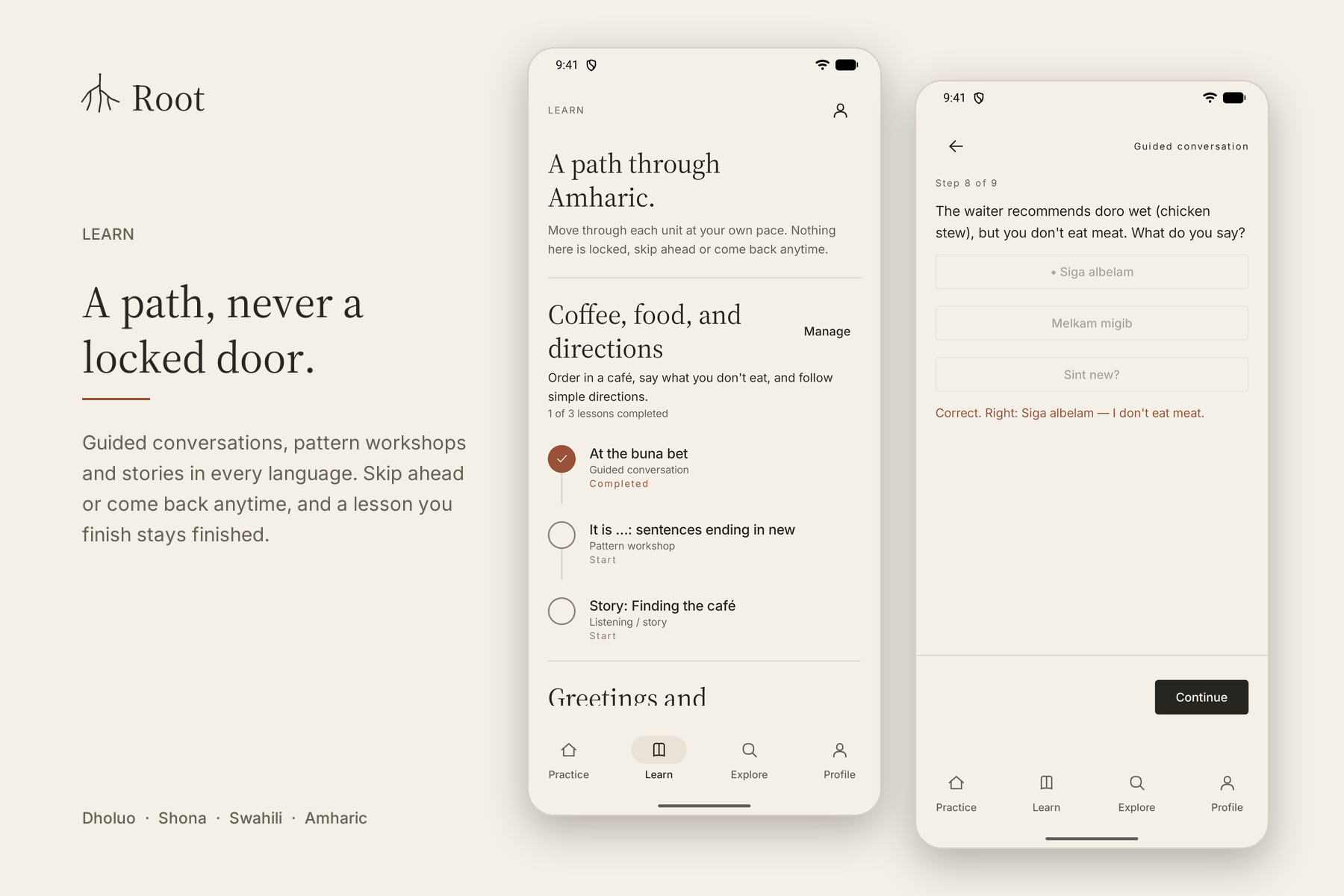
The Amharic Learn path with one lesson marked Completed, and a guided conversation step set in a cafe in Addis Ababa.
-
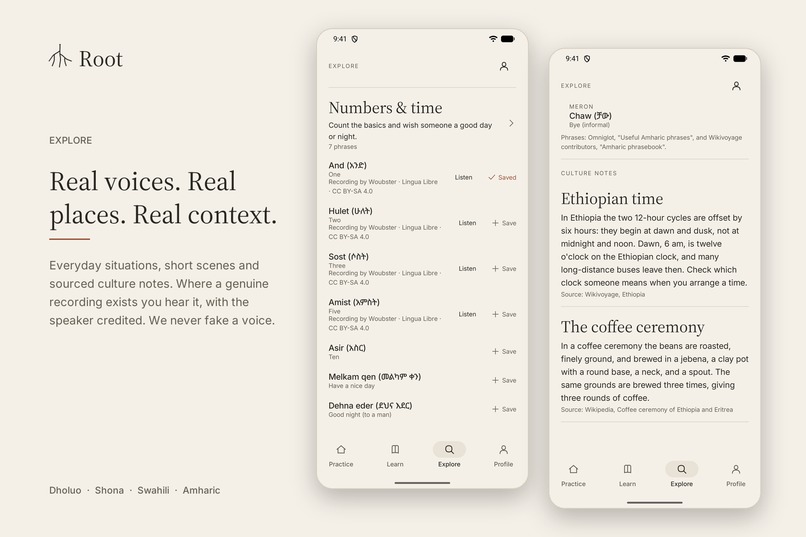
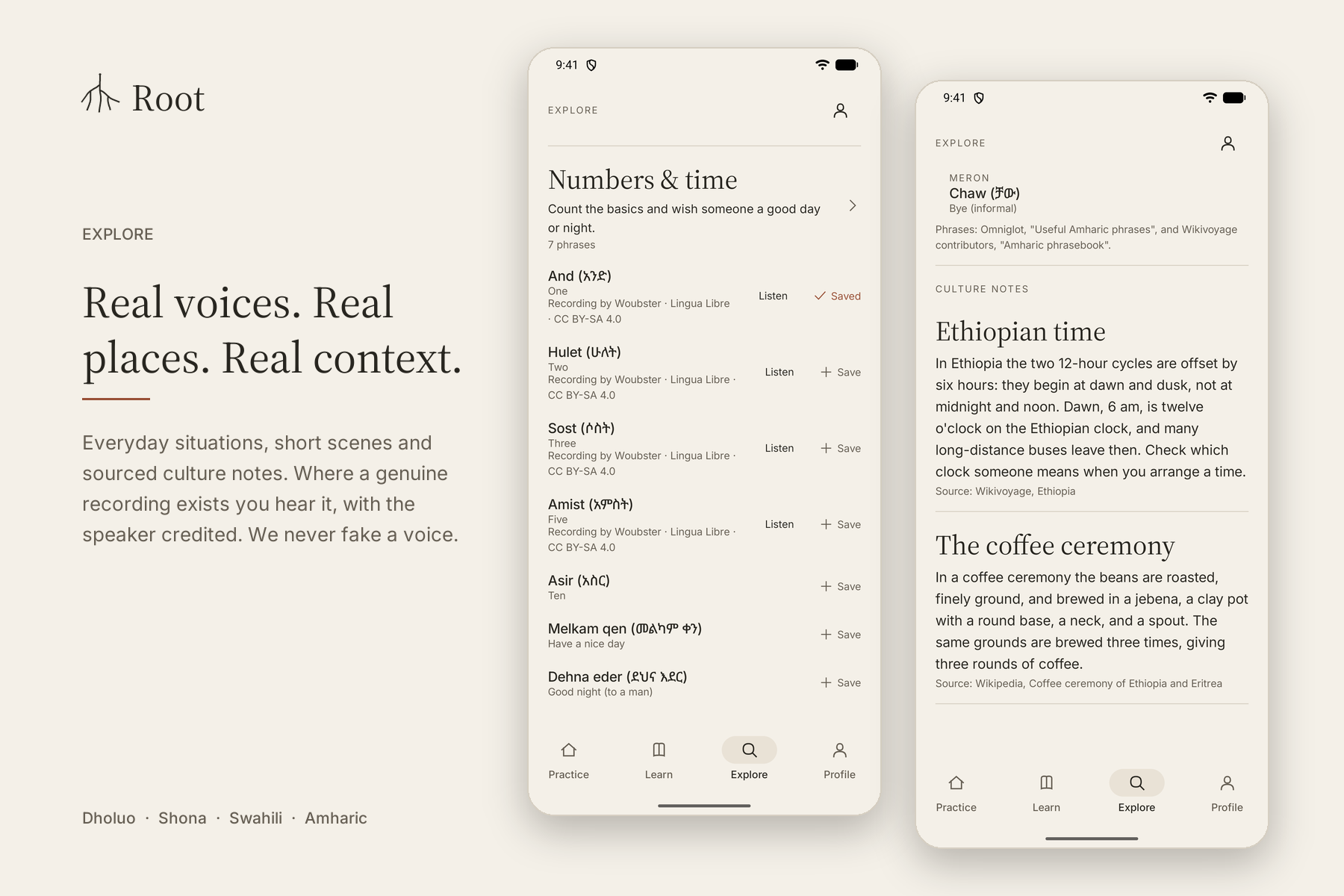
Explore: Amharic numbers with credited Lingua Libre recordings and Save buttons, next to culture notes on time and coffee.
-
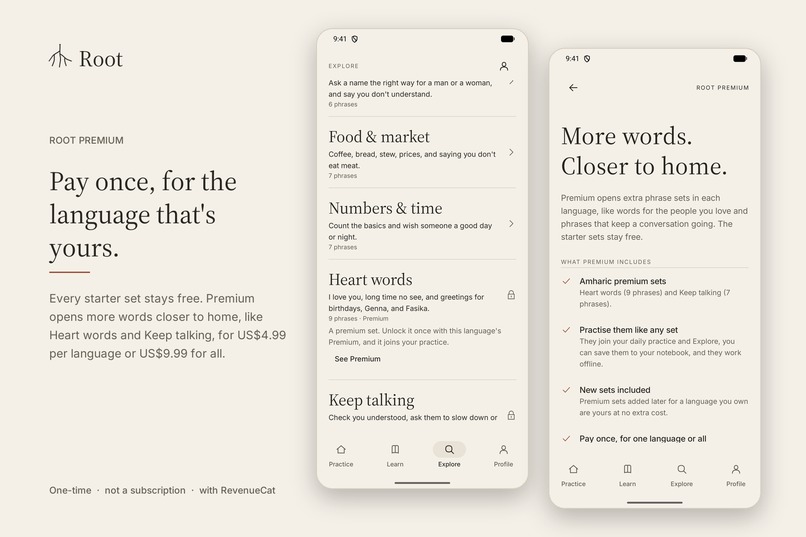
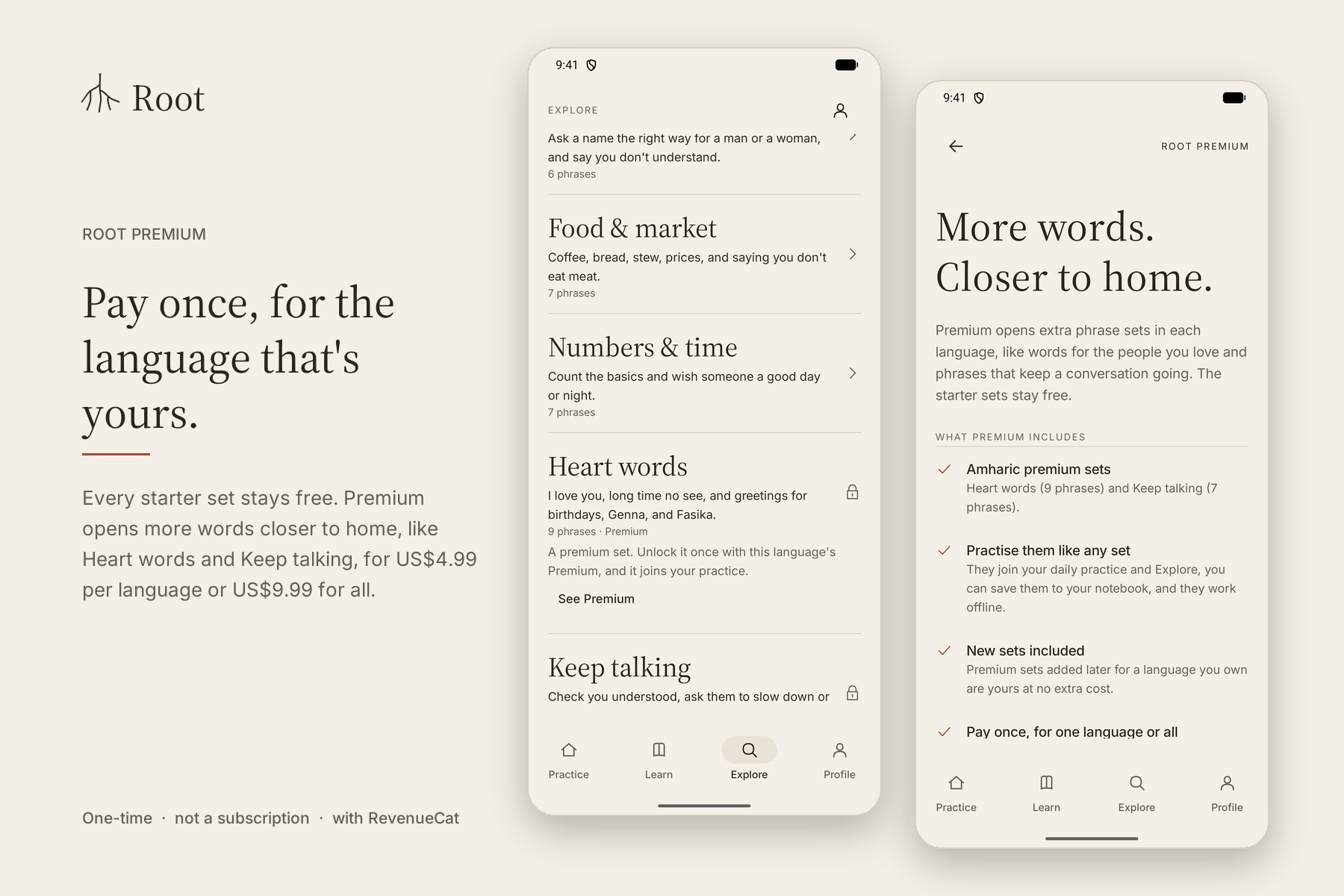
A locked premium set and the Premium screen
-
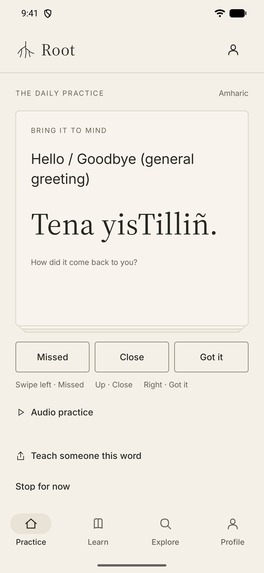
The Practice tab in Amharic: the greeting Tena yisTilliñ revealed, with Missed, Close and Got it to rate your recall.
-
Root's app icon: the hand-drawn root mark on warm paper.
Inspiration
The inspiration for the project stems from a lifelong draw to cultures and languages. We repeatedly encountered individuals who could recognize their grandmother's greetings or name traditional family dishes, but who could not respond in their indigenous language. This language loss often occurs because these individuals grew up away from where the language is spoken daily, often in cities, foreign countries, or English-speaking school environments. Because major language apps are largely built for tourists looking to navigate hotels or cafes, the team built Root specifically for heritage learners who want to greet elders properly and understand cultural proverbs. The project is built around the single belief that distance from home should not equate to distance from one's language.
What it does
Root is a calm Android app designed for reconnecting with heritage languages, currently featuring Dholuo, Shona, Swahili, and Amharic. It features a "Practice" mode with recall cards where users rate their memory honestly (Missed, Close, or Got it), without streaks, leaderboards, or guilt. The "Learn" section offers a gentle path of guided conversations, pattern workshops, and stories where finished lessons stay finished. An "Explore" section covers everyday situations, culture notes, and a notebook for users to save and record their own family's specific phrases. The app uses only real voices, crediting the volunteer speaker by name, and explicitly states when a recording is unavailable rather than faking one with text-to-speech. It works entirely offline without requiring an account, and includes warm-paper light and warm-charcoal dark themes, a home-screen widget, and a shareable card.
How we built it
Root was built natively using Kotlin, Jetpack Compose, and Material 3. It utilizes a versioned Room database to store all progress, saved phrases, and recordings locally on the device, while WorkManager handles hash-verified, size-bounded content downloads and Glance powers the widget. Content is managed through a Python toolchain, and every starter phrase was verified against public references like Wikivoyage, Omniglot, Wiktionary, or the FSI Amharic course. For monetization, RevenueCat powers a non-subscription, one-time unlock for either a single language or all languages, which provides access to premium conversational sets like "Heart words" and "Keep talking". The app's quiet design pairs the Source Serif 4 font for words and Inter for the interface, featuring a hand-drawn root animation and an original startup sound.
Challenges we ran into
Earning money without betraying the mission: Finding a monetization model that kept all basic practice free while only charging for extra premium sets, ensuring nothing is sold before it exists in the app.
Accomplishments that we're proud of
Delivering a fully working app across four African languages, featuring over 220 source-checked phrases, 24 lessons, 8 short stories, and 8 culture notes.
What we learned
The technological aspect of a language app is easy, but finding an app flow that works, building trust through accurate sources, authentic recordings, and proper credits is the hard part.
Heritage learners don't need pressure or gamification; they simply need a doorway to the language and a reason to return.
What's next for Root
Working directly with native speakers and elders to review phrases and record them with proper consent and credit.
Expanding to more languages based on what learners ask for.
Including proverbs and longer spoken stories.
Publishing the Root app on Google Play.


Log in or sign up for Devpost to join the conversation.