-
-
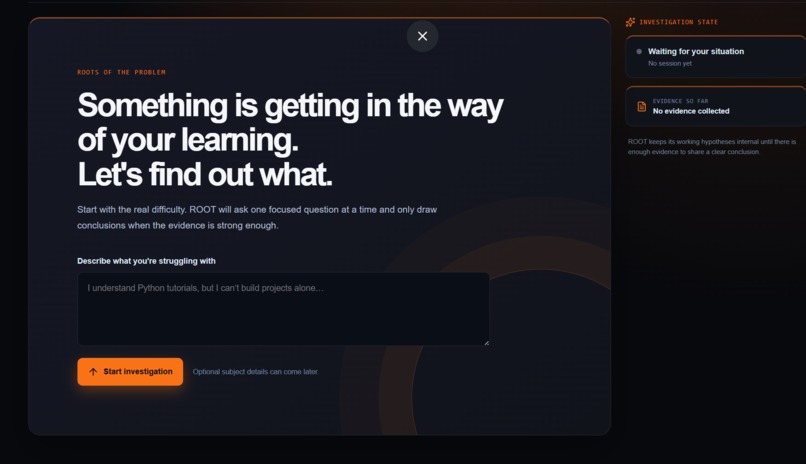
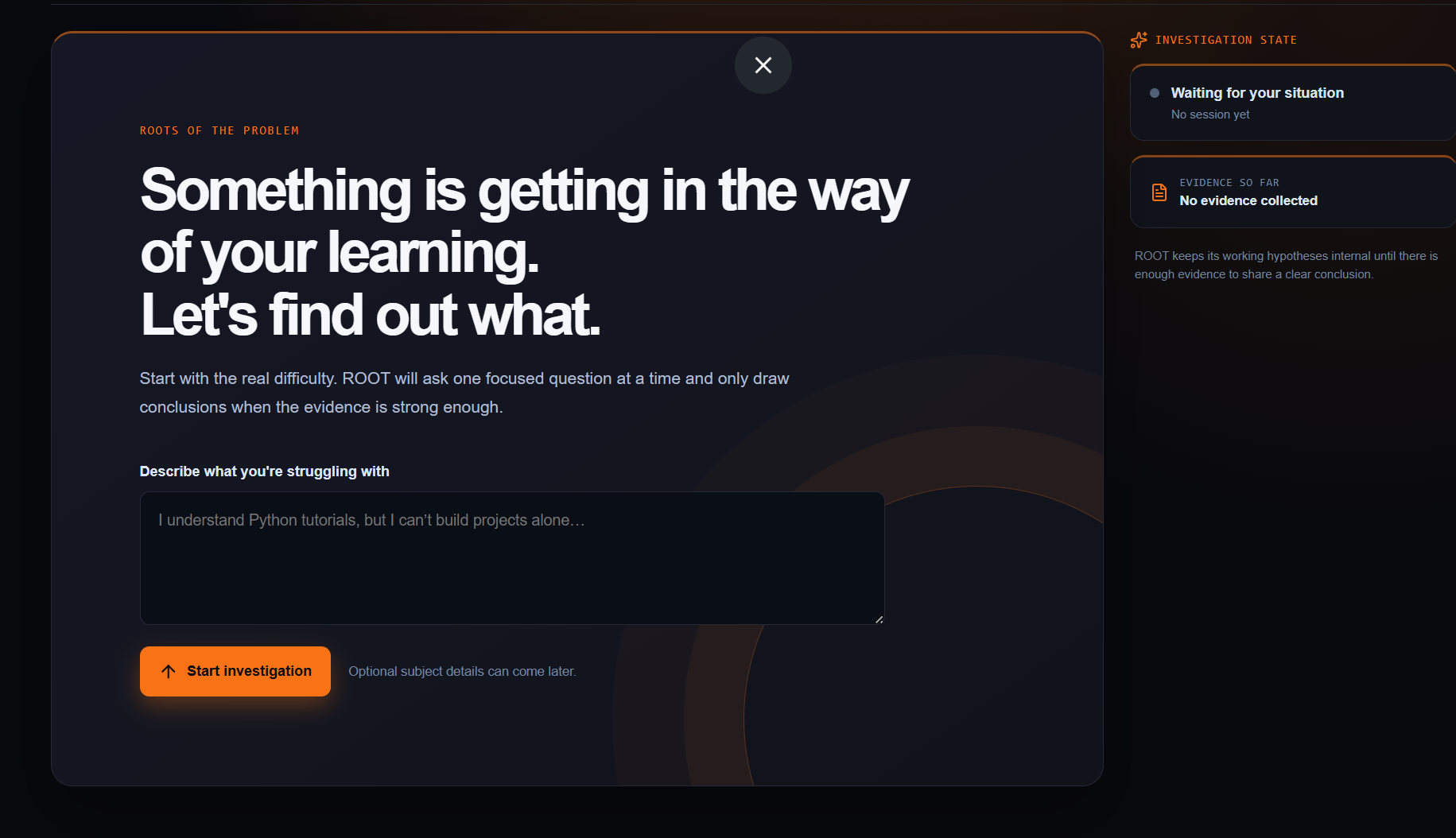
"Investigate — ROOT guides you through evidence-based discovery instead of giving direct answers"
-
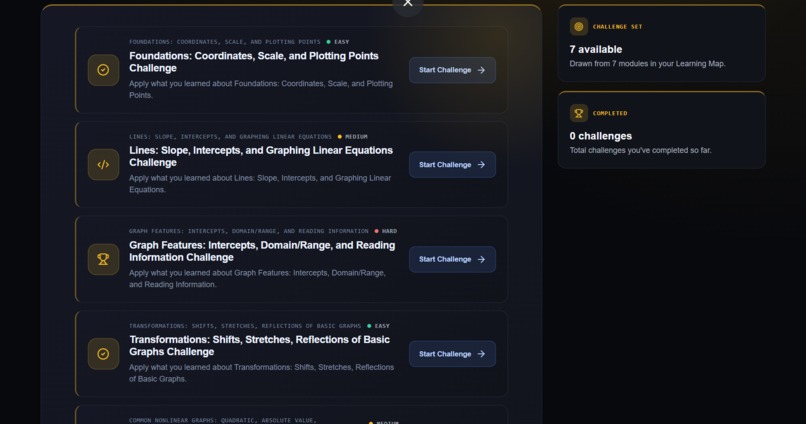
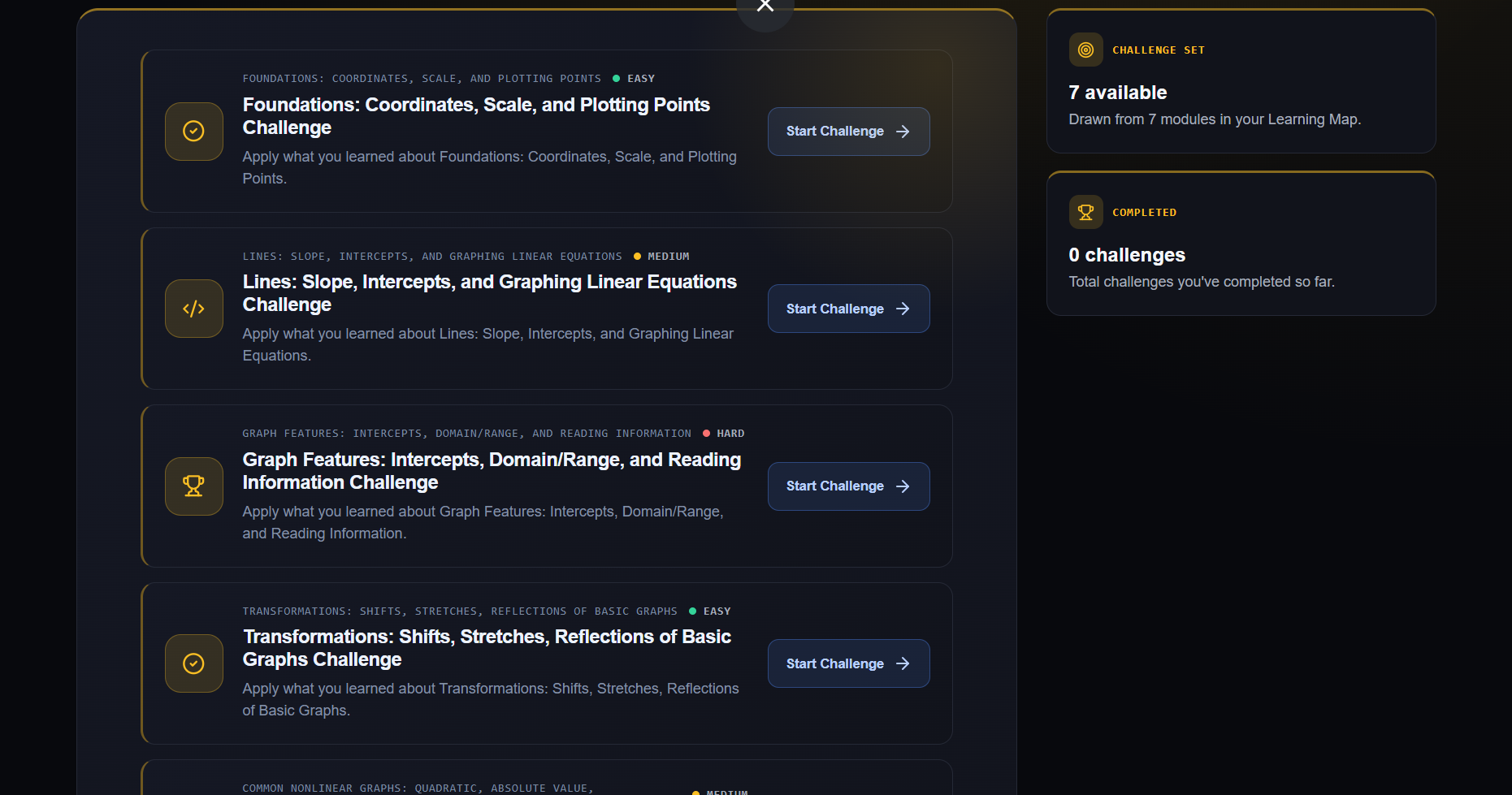
"Challenges — auto-generated questions tied to your Learning Map"
-
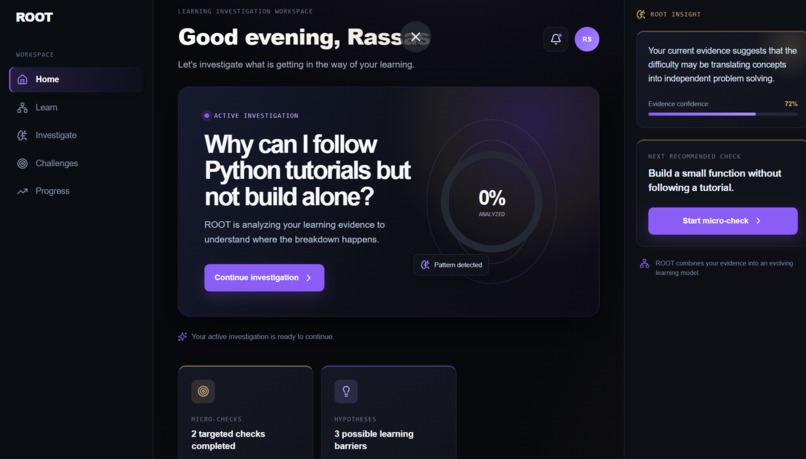
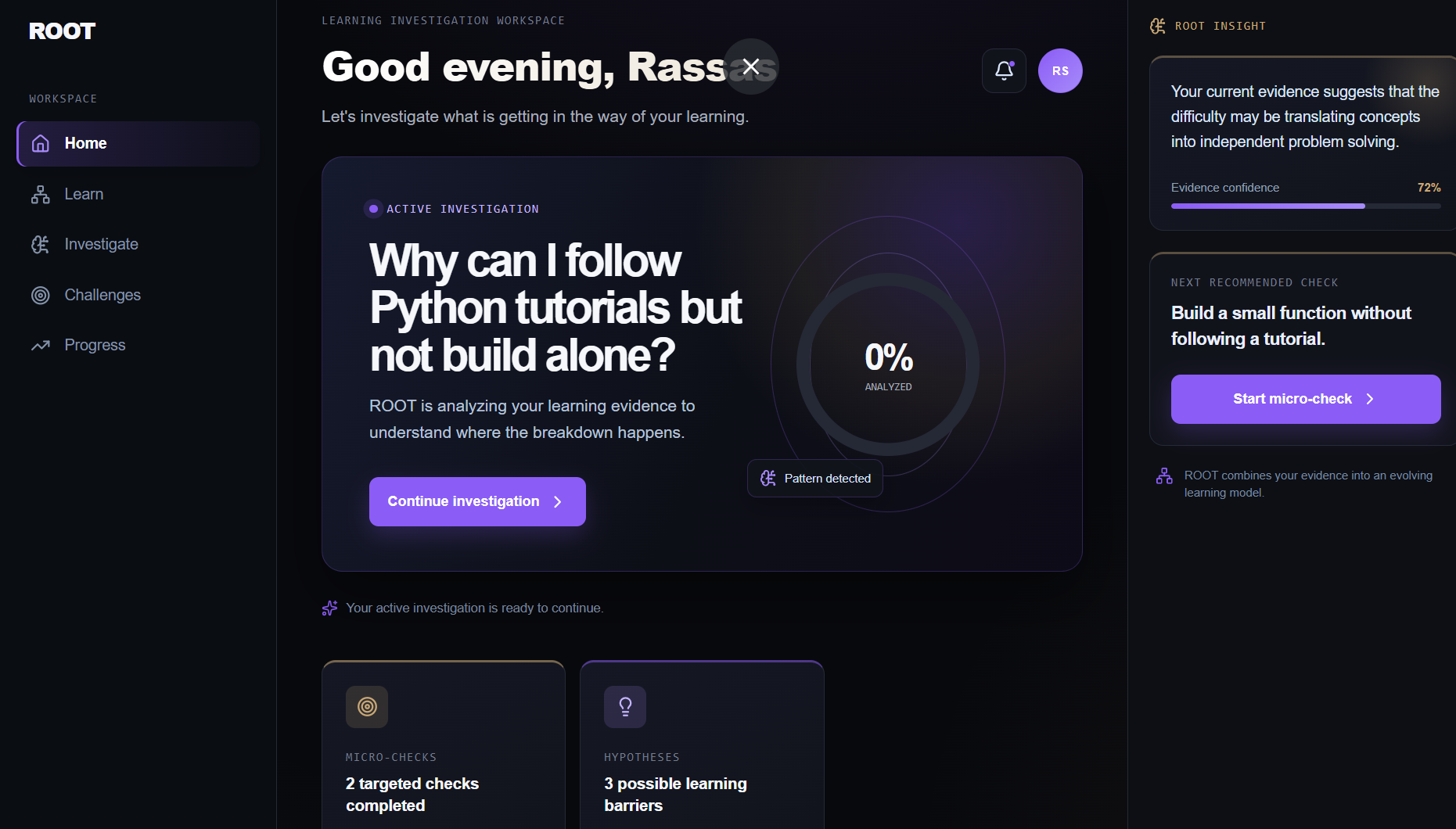
"Home — overview of your active learning session and recent activity"
-
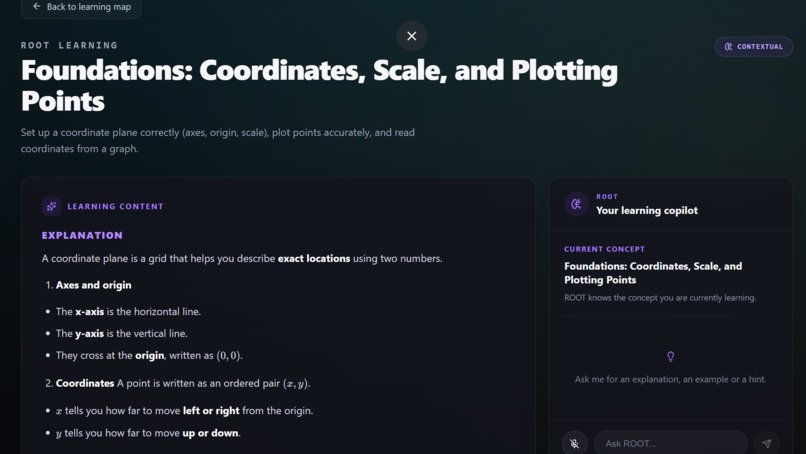
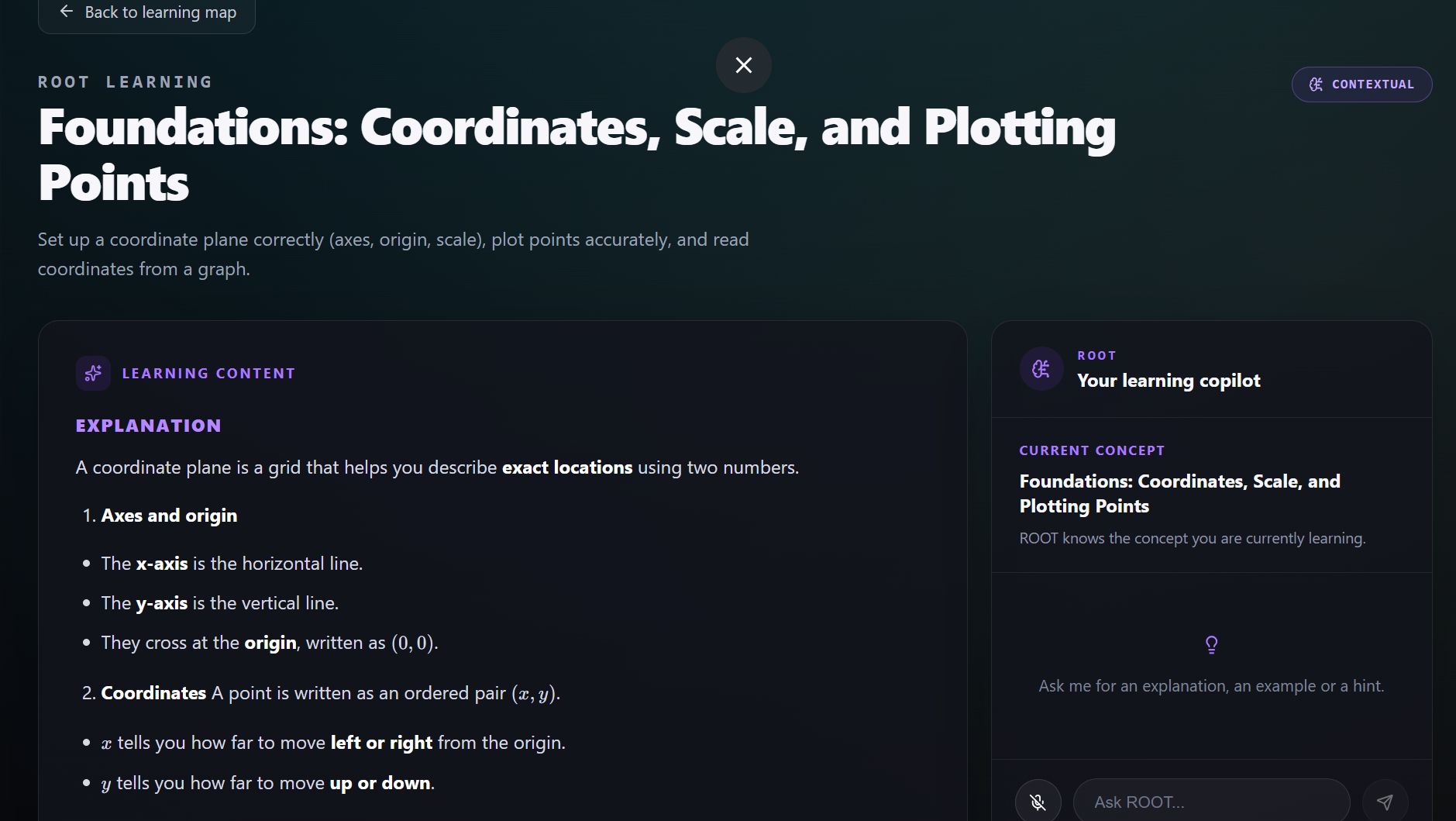
"Learn — AI turns any topic into a structured, personalized Learning Map"
-
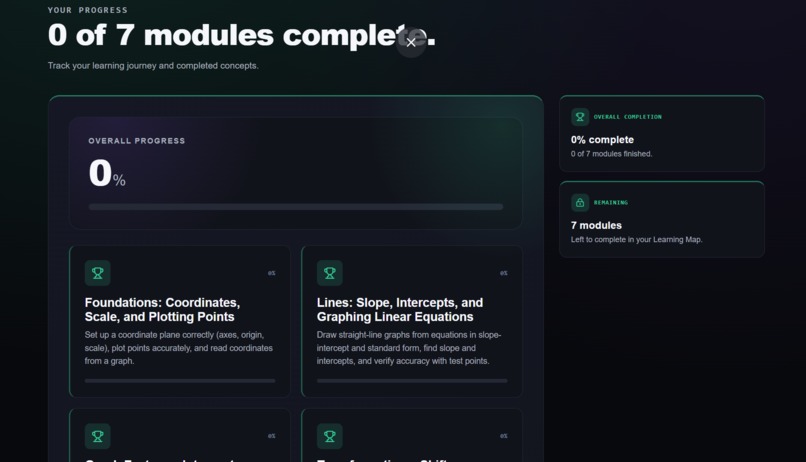
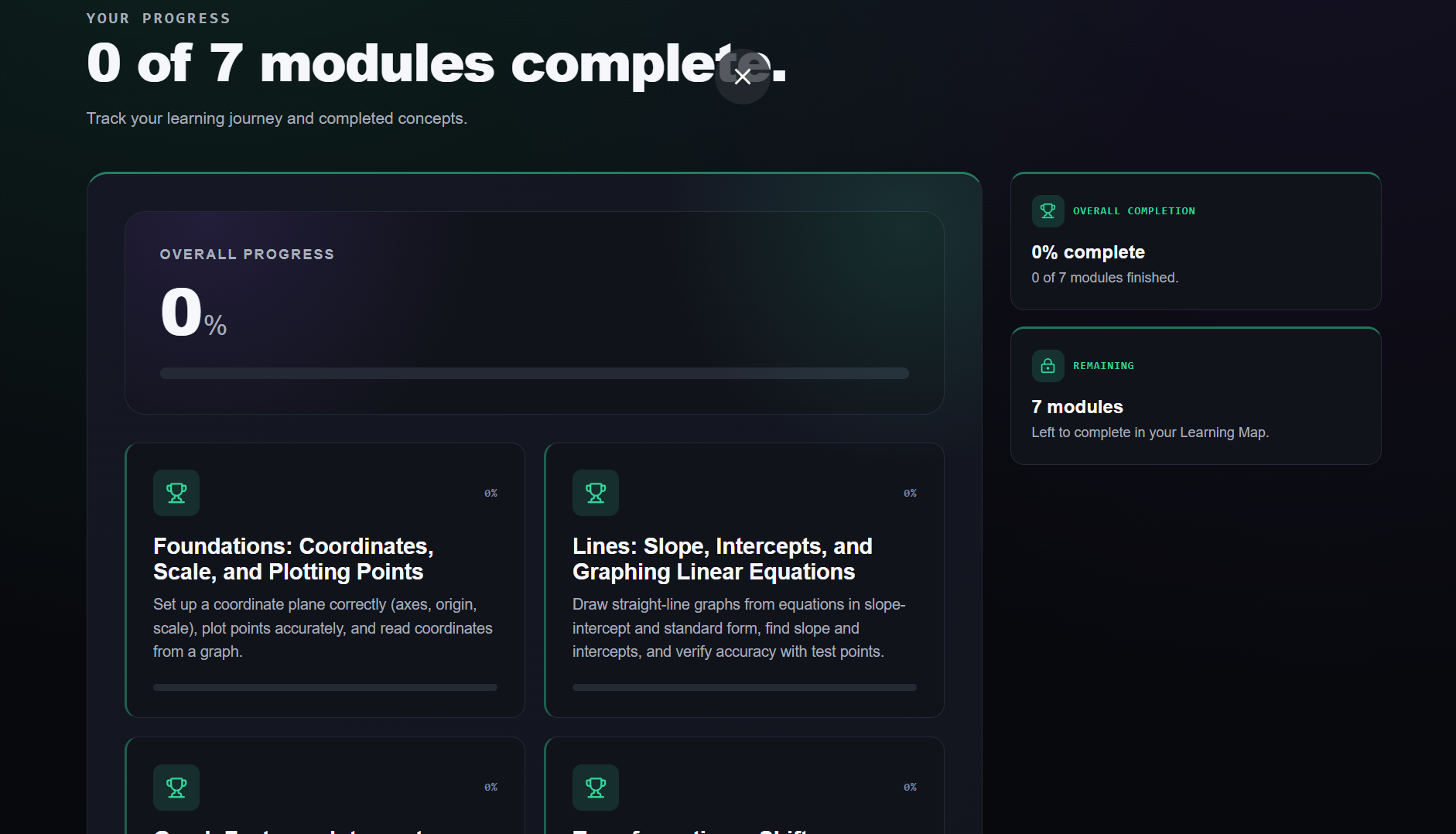
"Progress — track mastery and completion across your course"
Inspiration
Most AI tutors do the same thing: you ask a question, they give you an answer. It feels productive — until the exam, when you realize you never actually understood why you were stuck in the first place.
I kept running into this myself. I could "understand" a topic in theory, then completely freeze the moment I had to apply it. Every AI tool I tried just handed me the answer faster, which felt like the opposite of learning.
So I asked a different question: what if an AI tutor didn't answer — what if it investigated?
That question became ROOT.
What it does
ROOT is an AI-powered learning platform that treats a learning difficulty like a mystery to solve, not a question to answer.
Investigate — instead of a Q&A chatbot, ROOT presents a problem and guides the student through Problem → Hypothesis → Test → Evidence → Discovery → Conclusion, helping them uncover the real reason they're stuck Learn — turns any topic, course, or uploaded document into a personalized, structured Learning Map, worked through module by module with an AI tutor Challenges — auto-generated questions tied directly to the student's Learning Map, so practice always targets what they actually need Progress — tracks mastery and completion across the whole course, not just isolated chat history
Example: a student says "I understand Python basics, but I can't use them correctly." Instead of re-explaining syntax, ROOT asks targeted questions and gives small tasks to pin down exactly where the gap is — then builds a path to close it.
How we built it
I built ROOT solo, end to end: product design, frontend, backend, and the AI logic behind the Investigate and Learn flows.
Frontend: Next.js (App Router), React, TypeScript — with KaTeX for math rendering and react-markdown for AI responses Backend: FastAPI (Python), handling the learning logic, Learning Map generation, and challenge generation The two communicate over a REST API, with the frontend deployed on Vercel
The hardest part wasn't the tech stack — it was designing the Investigate flow itself: making sure every question ROOT asks a student actually collects evidence about their understanding, instead of just feeling like another chatbot exchange.
Challenges we ran into
The core challenge was resisting the easy path. It's simple to build a chatbot that answers questions well — it's much harder to build a system that deliberately doesn't give the answer away, and instead guides someone to find it themselves without feeling frustrating or evasive.
I also had to stitch together several distinct product surfaces — Learning Maps, guided investigations, generated challenges, and progress tracking — into one experience that feels like a single coherent tutor, not five separate tools bolted together.
Accomplishments that we're proud of
Designed and shipped a genuinely different interaction model for AI tutoring — investigation instead of instruction Built the full Problem → Hypothesis → Test → Evidence → Discovery → Conclusion flow from scratch Connected a Next.js frontend to an AI-driven FastAPI backend into one smooth learning experience Did it all solo, from architecture to UI polish
What we learned
Building ROOT taught me that the hard part of educational AI isn't generating a correct answer — models are already good at that. The hard part is designing friction that helps: guiding someone to think instead of just consuming an answer.
I also learned a lot about structuring an AI-driven backend so it can support multi-step guided flows, not just single-turn Q&A.
What's next for ROOT — AI-Powered Learning Platform
Using investigation results and challenge performance to continuously refine each student's personalized Learning Map Expanding Investigate to support more subjects and problem types Voice-based investigation sessions Long-term memory across courses and semesters
Built With
- fastapi
- katex
- next.js
- openai
- python
- react
- typescript
- vercel

