-
-
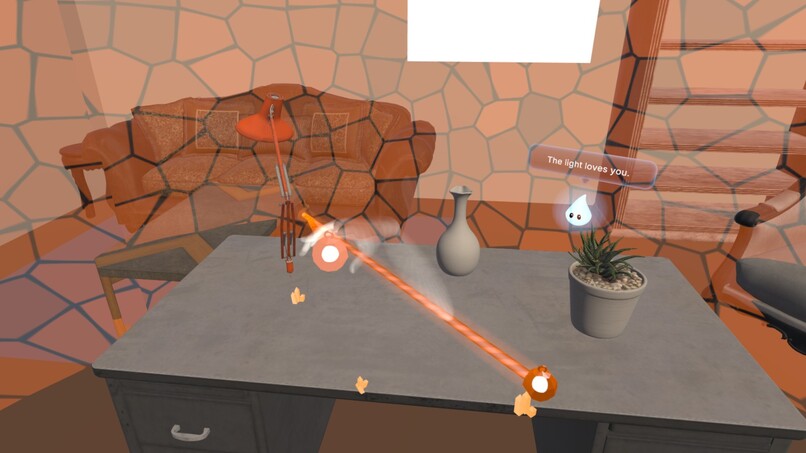
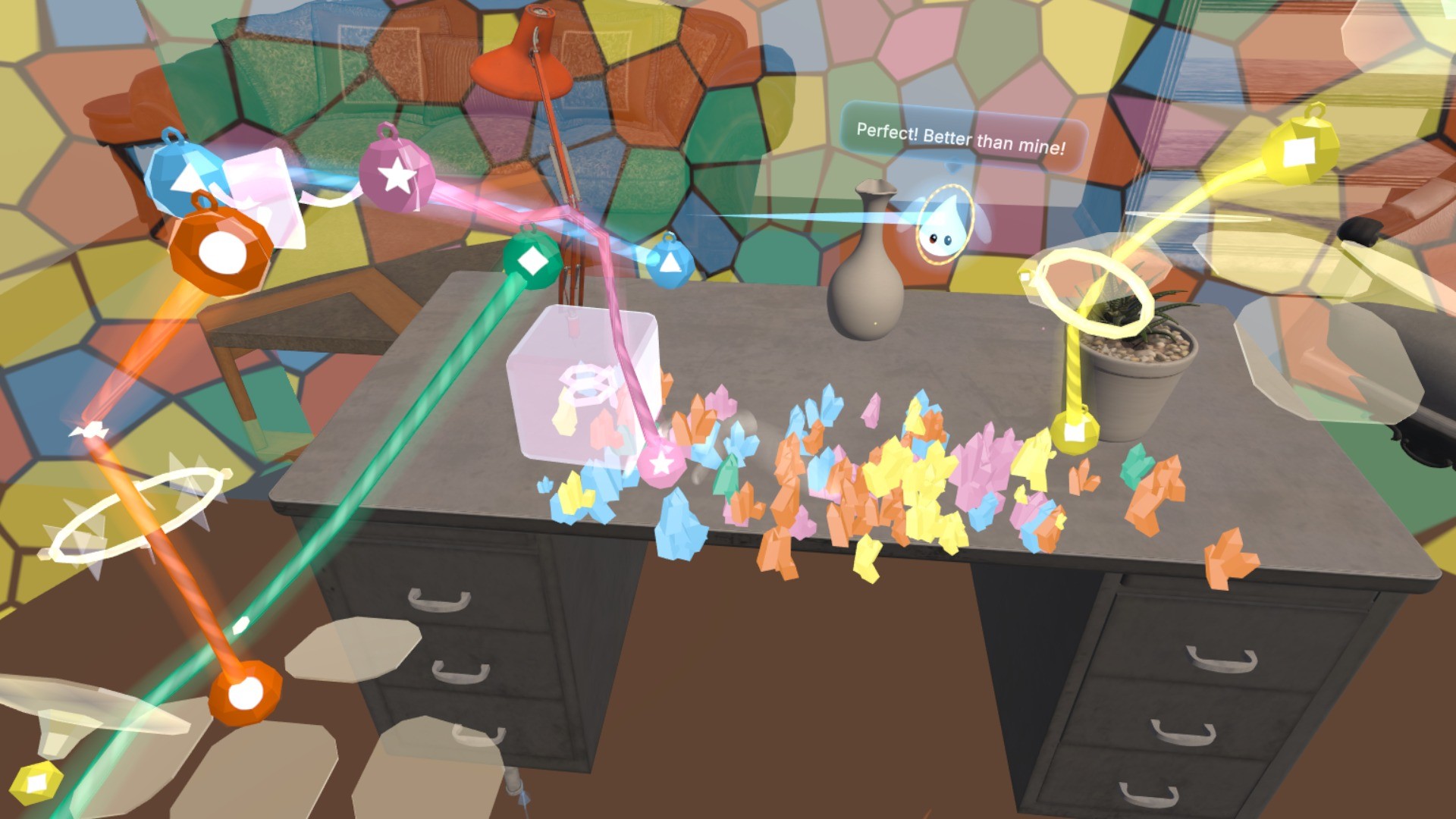
Lock the last thread and the room turns to stained glass.
-
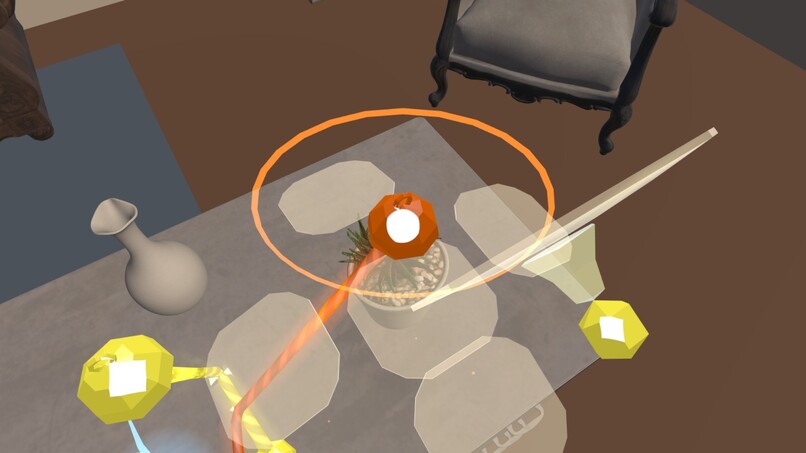
Lock the key color and the bud opens.
-
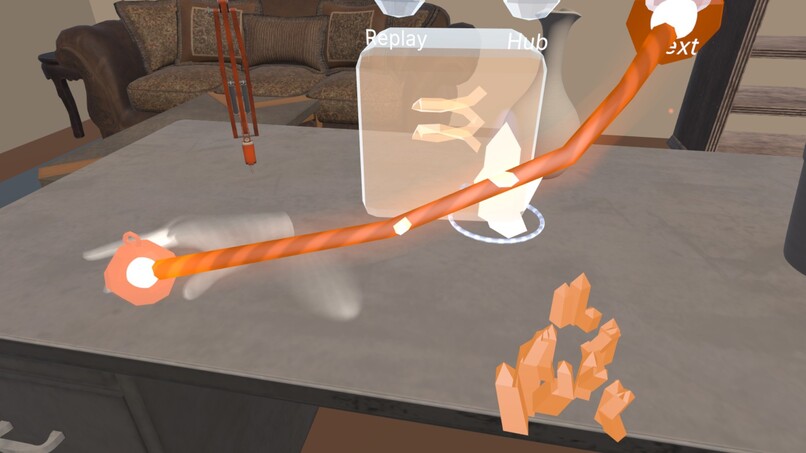
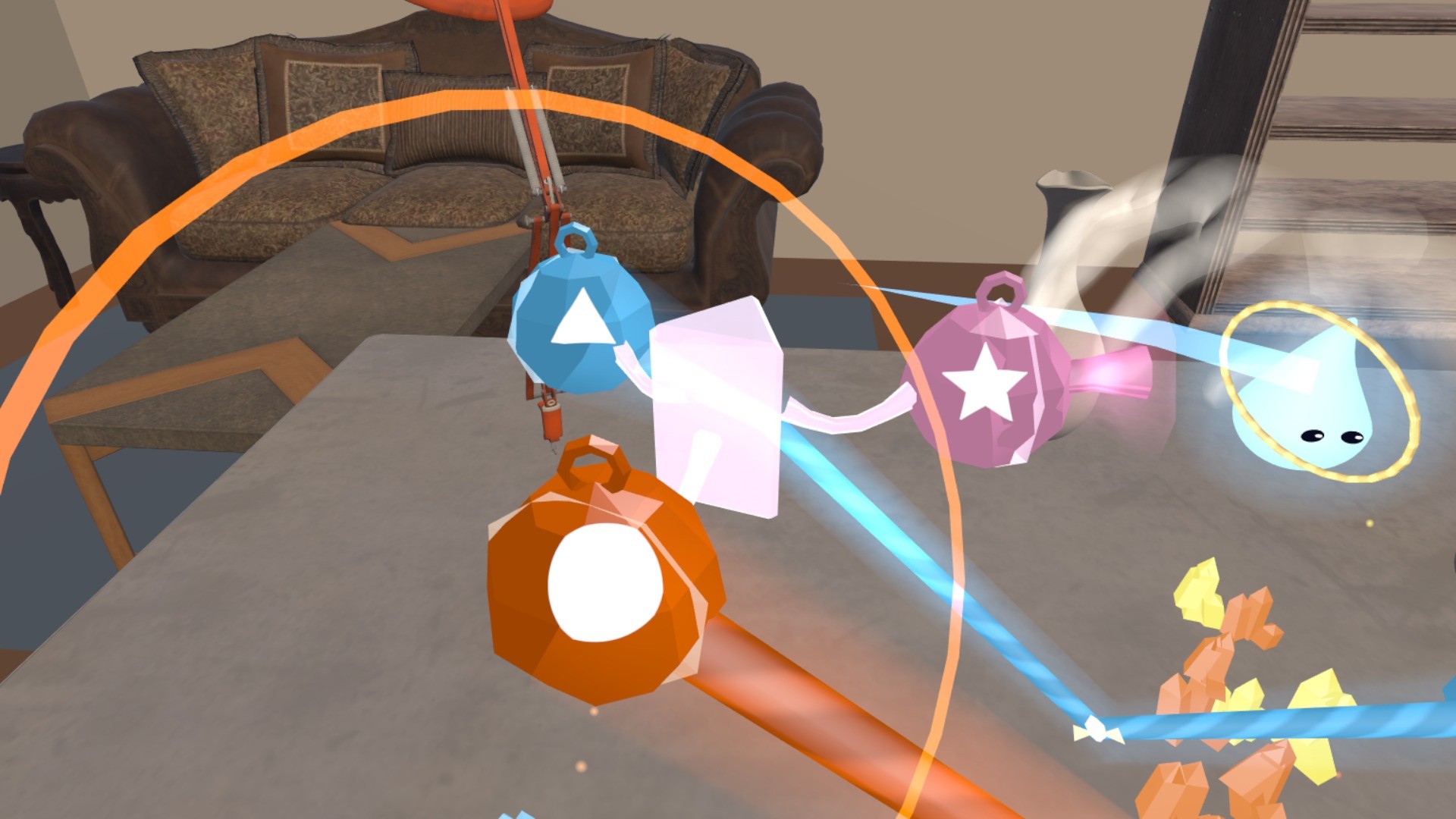
A thread bends past a glass lantern to catch the fireflies.
-
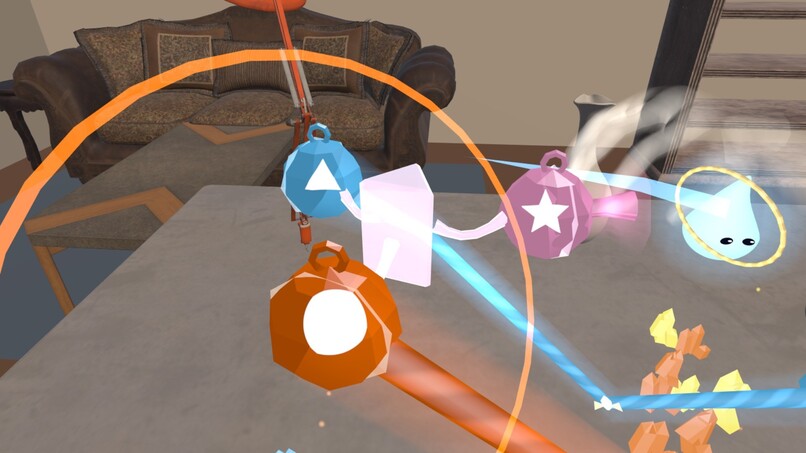
Red and blue go into the prism, pink comes out.
-
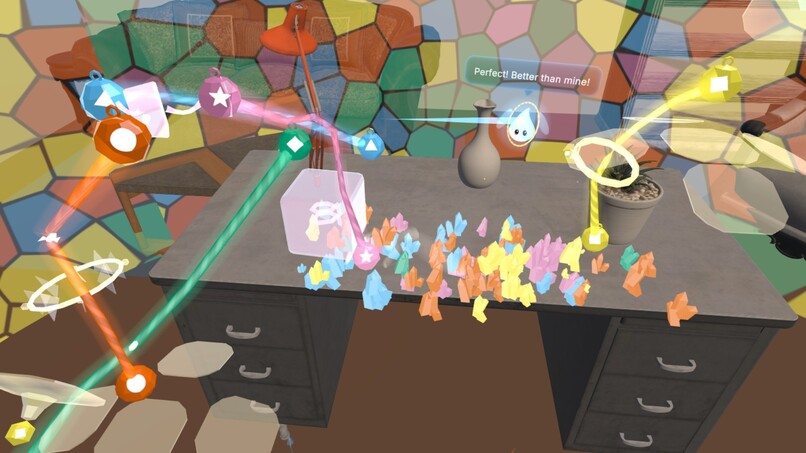
The level 32 finale, all around you.
Inspiration
I love connect-the-dots puzzles like Flow, and drawing a line with your finger is one of the few things that already feels right with hand tracking. In mixed reality the board can be my desk, my couch and the lamp in the way. So I tried to build a puzzle where the room is the level.
What it does
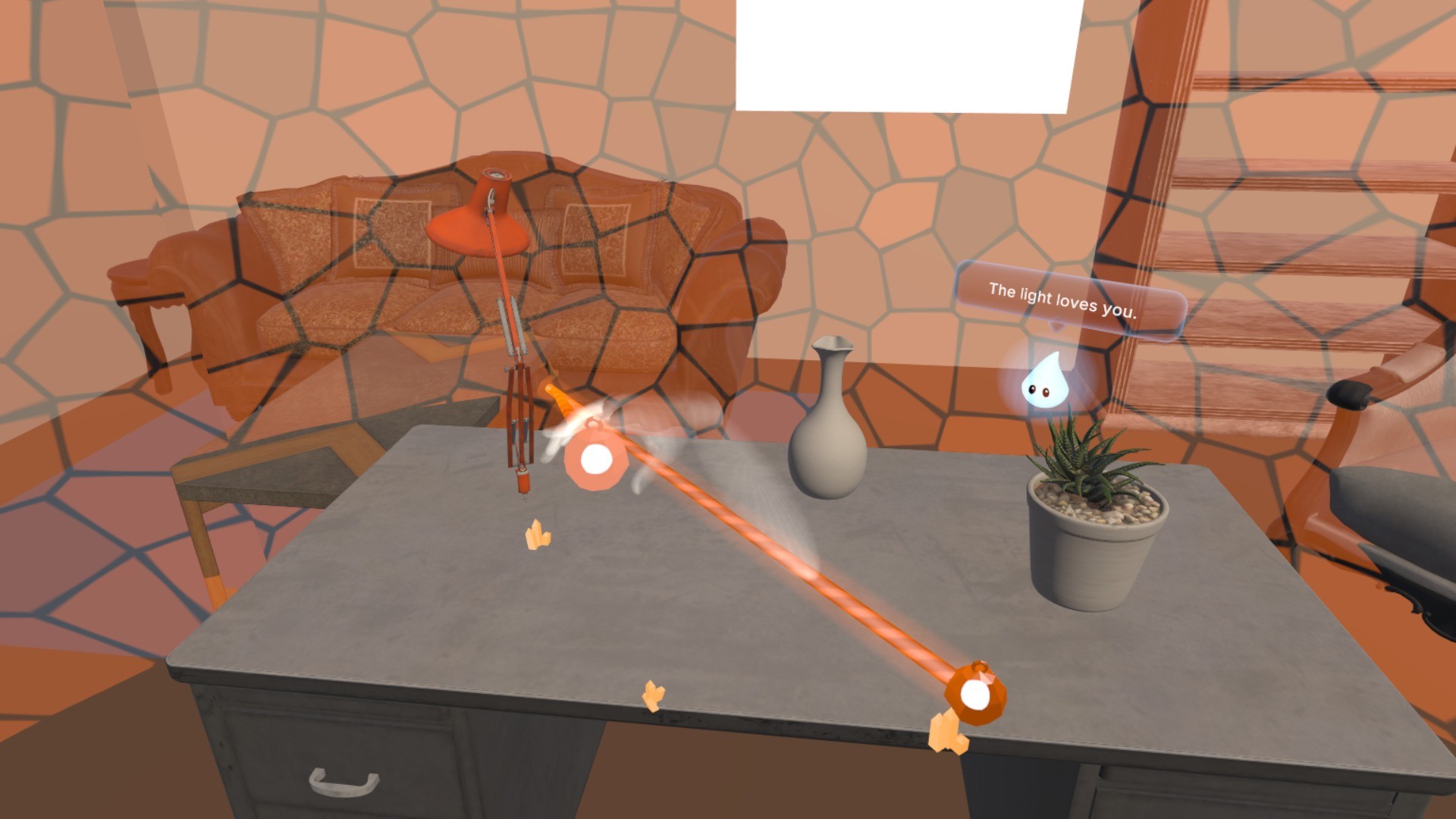
Glass beads appear on your desk and around you. You pinch one and pull a thread of light to its twin, around your real furniture, without letting two colors touch. Two fireflies wander near each puzzle. Bend your thread past them to catch them: one star for the win, one for each firefly.
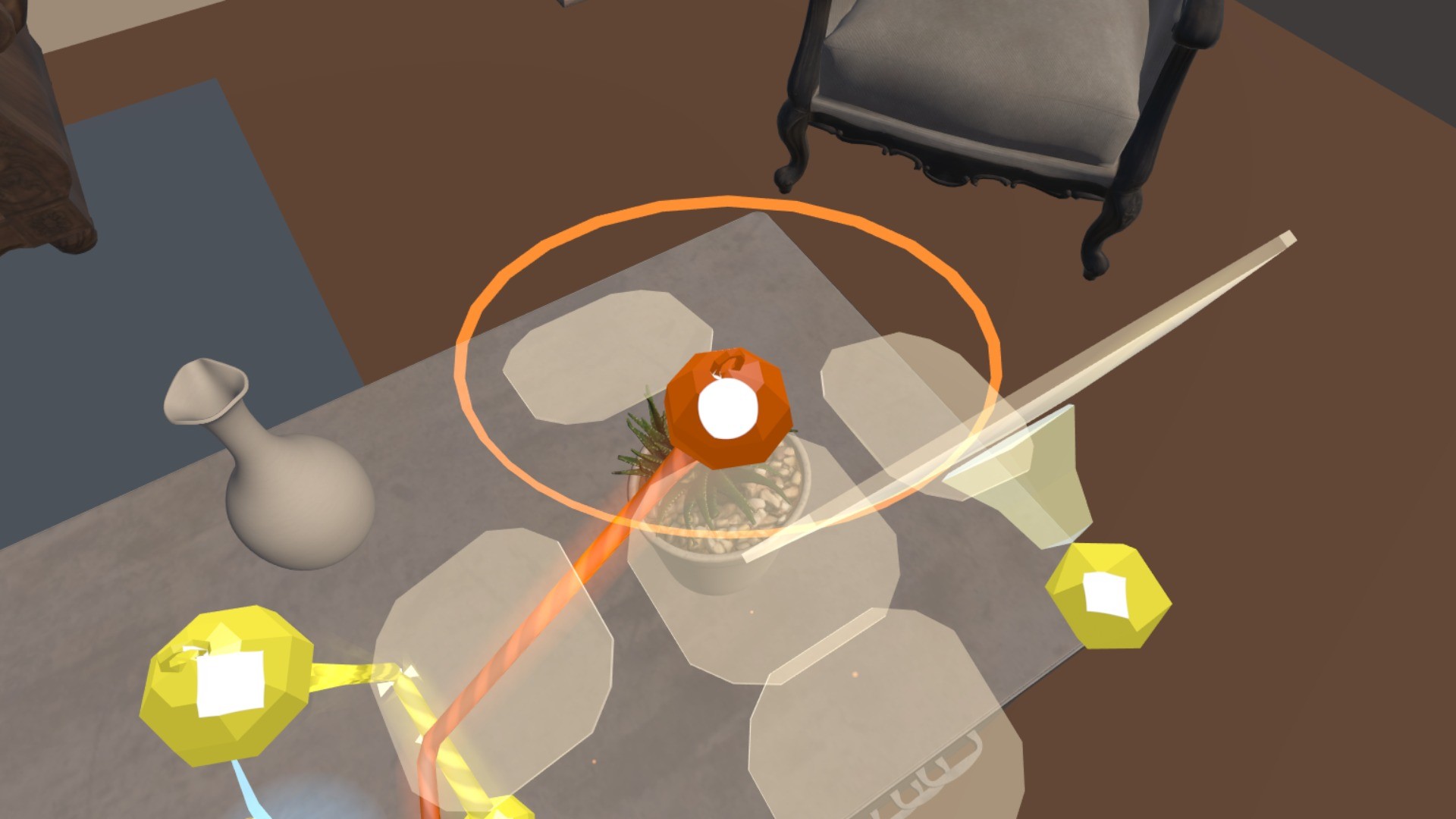
Each chapter adds a glass piece that reacts to your threads. Lanterns light up in your thread's color. Buds open when their key color is locked, and one bud can free the color for the next. Prisms take red and blue and pour out pink. Irises open on the beat. Tangles block the way until you feed them to Wisp, the little light spirit who travels with you, or flick a nearby thread like a guitar string.
Wisp knows your furniture ("Go around the lamp?"), spots dead ends by re-solving your board, and gives hints that never cost stars.
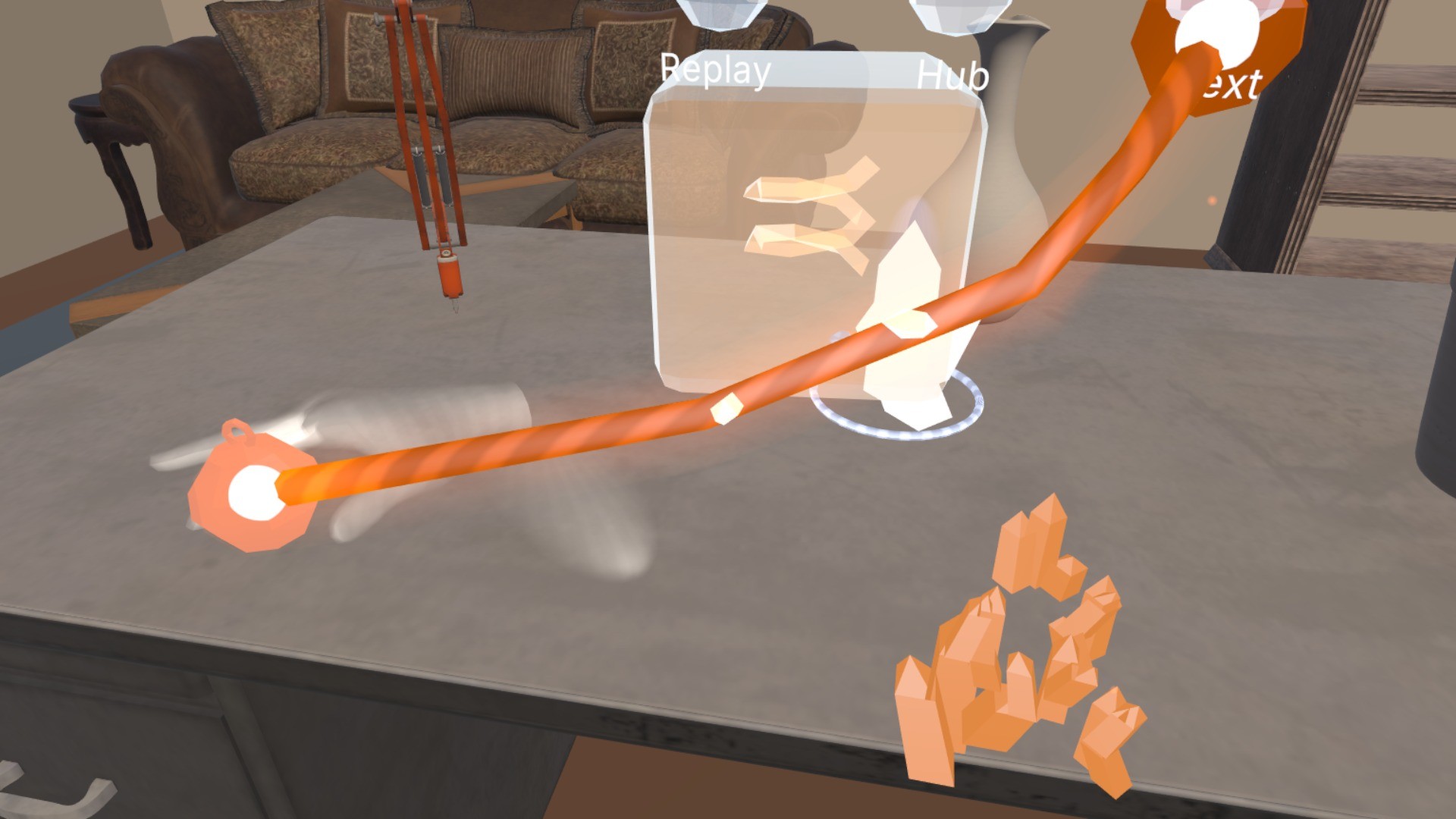
There are 32 levels in 4 chapters, plus a Daily Weave, endless Drift and Flow Rush. Every thread you lock adds an instrument to the music. Big wins turn your room into stained glass, and small glass sprouts stay on your furniture between sessions.
How I built it
Unity 6 with the Meta XR SDKs. MR Utility Kit gives me the room's furniture, which becomes a voxel grid. A 3D A* solver routes every thread with real clearance between colors, in the order buds open, before the puzzle is shown. A second pass bends one route past each firefly and replays the whole order to prove 3 stars are reachable. Any room works, even with no room scan: glass lanterns fill in at the same difficulty.
The glass pieces are made with Python scripts in Blender and drawn with one instanced shader. The music stems and sound effects are generated in code on the C major pentatonic, so every pluck and chime stays in key.
Challenges
I don't have a Quest headset, so I tested in the Unity Editor. Automated tests drive the real game with simulated hands: all 32 levels get played to 3 stars, and thousands of generated puzzles are checked across different fake rooms. The trailer is captured the same way.
Generation speed was the other fight. Prism levels first took several seconds. Most levels now build in 2 to 50 ms on my PC; two hoop levels in whole-room mode still average 300 to 560 ms.
What's next
Testing on a real Quest 3, sharing your Loom with friends' rooms, and a level editor.

