Inspiration
Living in a pricey urban European city, I’d struggled for months to find a roommate who didn’t clash with my lifestyle—early nights vs. late nights, neat vs. messy, quiet vs. social. I realized so many young professionals and students faced the same issue: generic matching tools ignored the small daily habits that make or break co-living. That’s when I set out to build something that prioritized actual compatibility, not just location or budget.
What it does
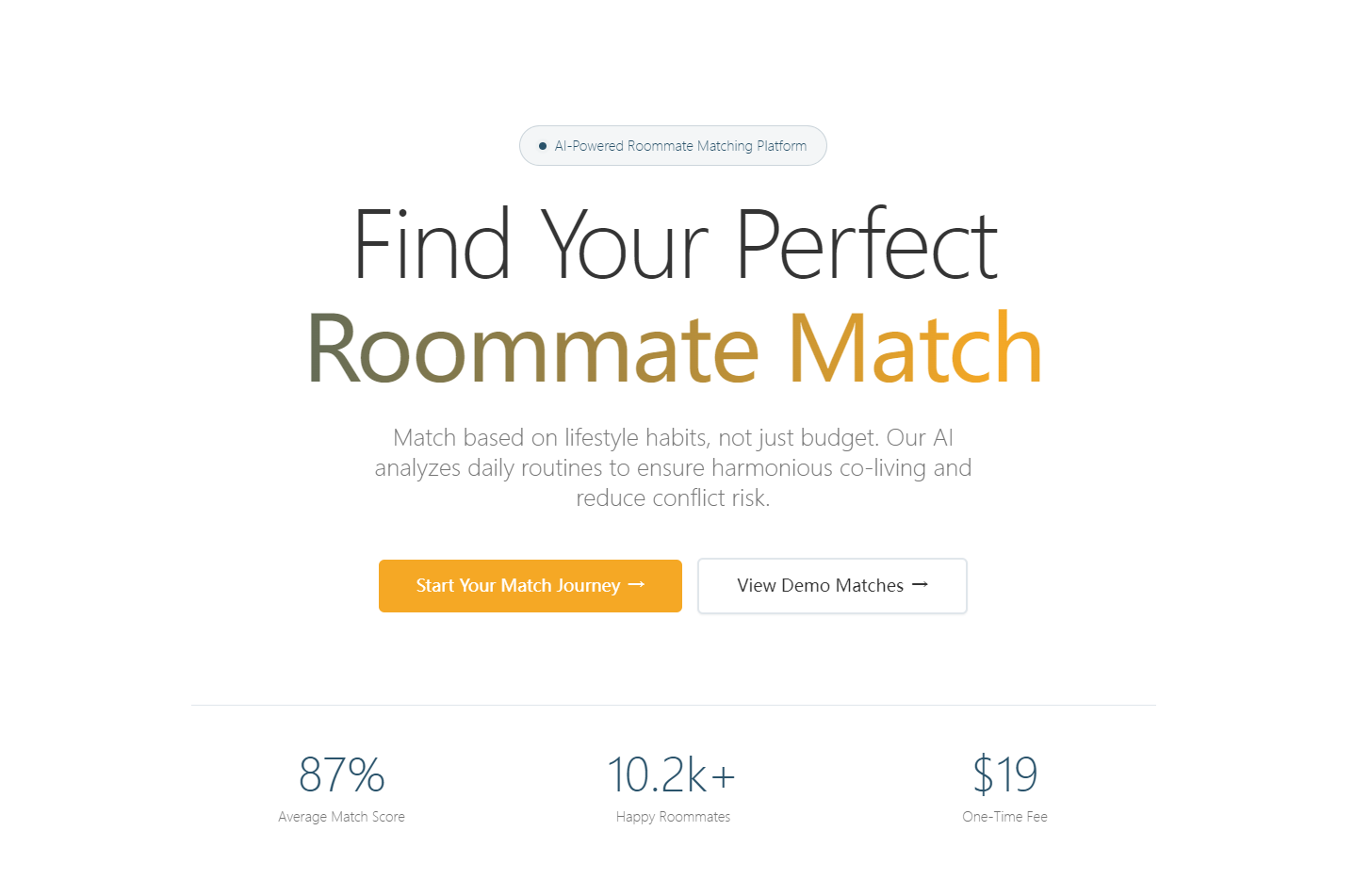
Roommate Finder Pro is a web platform that matches users with roommates based on 6 core lifestyle pillars: sleep patterns, cleanliness, social preferences, smoking status, pet tolerance, and cooking frequency. It calculates a compatibility score (with category breakdowns) and verifies trust via background/rental history checks. Users can arrange trial stays, access conflict resolution tools (chore schedules, quiet hour agreements), and unlock full match details for a one-time fee.
How we built it
First, I mapped out user flows—from the lifestyle questionnaire to match results to trial stay booking—using Figma for UI/UX design (sticking to a clean, minimalist palette). I built the frontend with React, HTML, and CSS, using Chart.js to visualize compatibility scores. The backend (Node.js/Express) powered the AI scoring algorithm, which weights lifestyle factors to generate percentage matches, and MongoDB stored user lifestyle data. AWS hosted the platform for scalability in North American/European urban markets.
Challenges we ran into
The biggest hurdle was refining the AI scoring algorithm to balance weight across lifestyle factors—e.g., ensuring sleep pattern alignment didn’t overshadow cleanliness compatibility. I also struggled with designing intuitive trust verification badges that felt credible without overcomplicating the UI. Testing date selection for trial stays (to avoid conflicts) required iterative tweaks to the calendar plugin integration.
Accomplishments that we're proud of
Crafting a scoring system that users find accurate (beta testers said matches felt “tailored to their daily lives”) and building a seamless flow from questionnaire to payment. The conflict resolution tools—like customizable chore schedules—resonated deeply with users, who said they solved common co-living pain points they’d faced before.
What we learned
I learned how to translate user pain points into actionable product features (e.g., turning “I hate messy roommates” into a weighted cleanliness metric in the algorithm). I also gained hands-on experience with API integration for real-world functionality (calendar, payment) and UX design for cross-cultural urban users (prioritizing clarity and trust in the UI).
What's next for this project
I plan to add advanced filtering (location, budget, move-in date) to refine matches further, integrate real-time messaging between users, and expand the conflict resolution toolkit with legal agreement templates. I also want to launch a mobile version—critical for on-the-go urban users—and add multi-language support for non-English speakers in European cities.
Built With
- amazon-web-services
- express.js
- figma
- mongodb
- rest-api

Log in or sign up for Devpost to join the conversation.